From Surf Wiki (app.surf) — the open knowledge base
Execution of Charles I
1649 beheading of Charles I of England
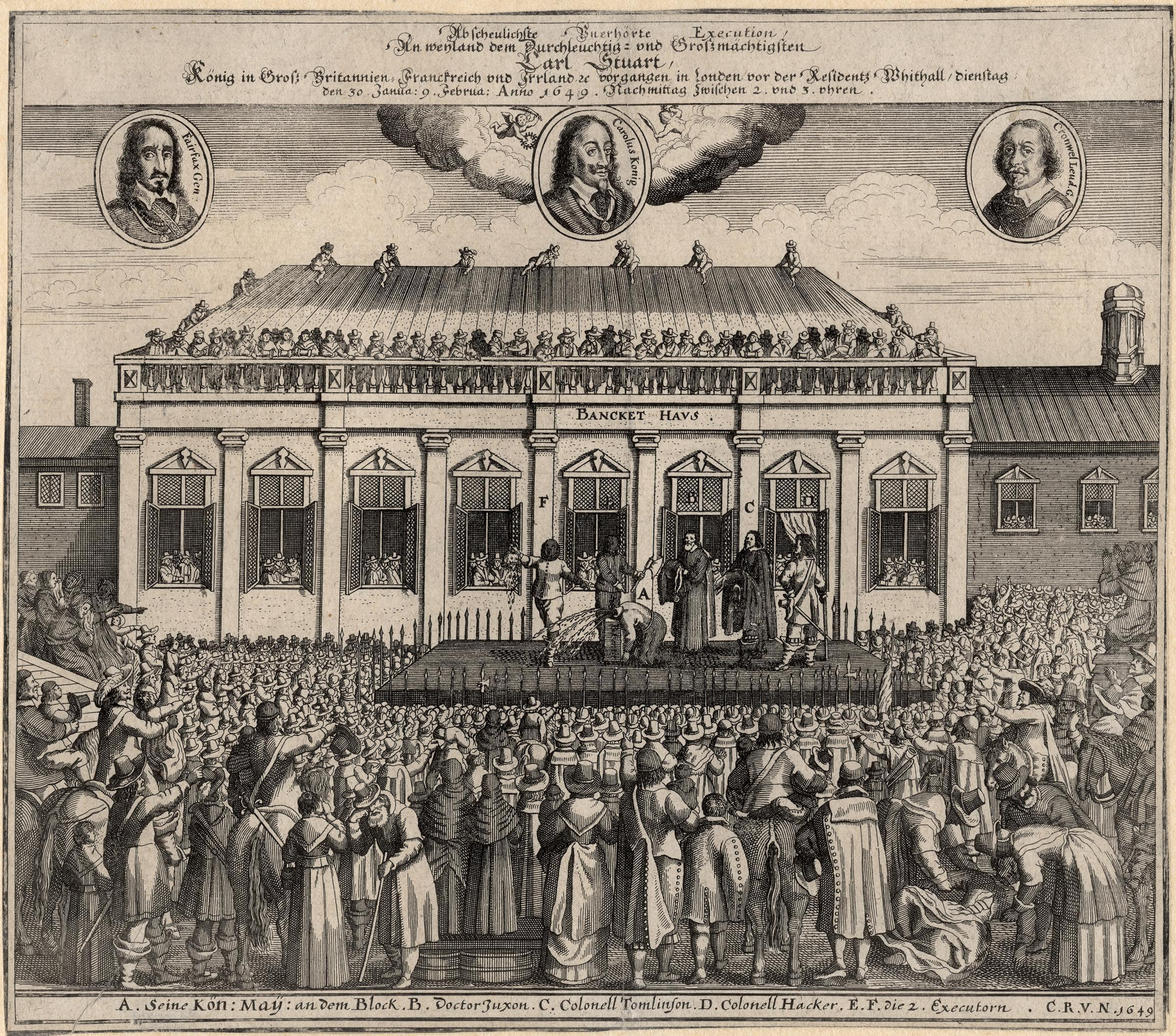
1649 beheading of Charles I of England
Charles I, King of England, Scotland and Ireland, was publicly executed on 30 January 1649 outside the Banqueting House on Whitehall, London. The execution was the culmination of political and military conflicts between the royalists and the parliamentarians in England during the English Civil War, leading to Charles's capture and his trial. On 27 January 1649 the parliamentarian High Court of Justice had declared Charles guilty of attempting to "uphold in himself an unlimited and tyrannical power to rule according to his will, and to overthrow the rights and liberties of the people" and sentenced him to death by beheading.
Charles spent his last few days in St James's Palace, accompanied by his most loyal subjects and visited by his family. On 30 January he was taken to a large black scaffold constructed in front of the Banqueting House, where a large crowd had gathered. Charles stepped onto the scaffold and gave his last speech, declaring his innocence of the crimes of which parliament had accused him, and claiming himself a "martyr of the people". The crowd could not hear the speech, owing to the many parliamentarian guards blocking the scaffold, but Charles's companion, Bishop William Juxon, recorded it in shorthand. Charles gave a few last words to Juxon, claiming an "incorruptible crown" for himself in Heaven, and put his head on the block. He waited a few moments, and after giving a signal that he was ready, the anonymous executioner beheaded Charles with a single blow and held Charles's head up to the crowd silently, dropping it into the swarm of soldiers soon after.
The execution has been described as one of the most significant and controversial events in English history. Some viewed it as the martyrdom of an innocent man; the contemporaneous historian Edward Hyde described "a year of reproach and infamy above all years which had passed before it; a year of the highest dissimulation and hypocrisy, of the deepest villainy and most bloody treasons that any nation was ever cursed with"; and the later Tory writer Isaac D'Israeli wrote of Charles as "having received the axe with the same collectedness of thought and died with the majesty with which he had lived", dying a "civil and political" martyr to Britain. Still others viewed it as a vital step towards democracy in Britain, with the prosecutor of Charles I, John Cook, declaring that it "pronounced sentence not only against one tyrant but against tyranny itself" and Samuel Rawson Gardiner, a Whig historian, writing that "with Charles's death the main obstacle to the establishment of a constitutional system had been removed. [...] The monarchy, as Charles understood it, had disappeared forever".
Execution
.jpg)
The execution was set to be carried out on 30 January 1649. On 28 January the King was moved from the Palace of Whitehall to St James's Palace, likely to avoid the noise of the scaffold being set up outside the Banqueting House (at its rear side on the street of Whitehall). Charles spent the day praying with the Bishop of London, William Juxon.
On 29 January Charles burnt his personal papers and ciphered correspondence. He had not seen his children for 15 months, so the parliamentarians allowed him to talk to his children, Elizabeth and Henry, for one last time. He instructed the 13-year-old Elizabeth to be faithful to "true Protestant religion" and to tell her mother that "his thoughts had never strayed from her". He instructed the 10-year-old Henry to "not be made a king" by the Parliamentarians, being that many suspected they would install Henry as a puppet king. Charles divided his jewels among the children, leaving him with only his George (an enamelled figure of Saint George, worn as a part of the ceremonial dress of the Order of the Garter). Charles spent his last night restless, going to sleep only at 2 am.
Charles awoke early on the day of his execution. He began dressing at 5 am in fine clothes, all black, and his blue Garter sash. His preparation lasted until dawn. He instructed the Gentleman of the Bedchamber, Thomas Herbert, on what would be done with the few possessions he had left. He requested one extra shirt from Herbert, so that the crowd gathered would not see him shiver from the cold and mistake it for cowardice. Before leaving, Juxon gave Charles the Blessed Sacrament. At 10 am Colonel Francis Hacker instructed Charles to go to Whitehall, ready for his execution. At noon Charles drank a glass of claret wine and ate a piece of bread, reportedly having been persuaded to this effect by Juxon.
A large crowd had amassed outside the Banqueting House, where the platform for Charles's execution was set up. The platform was draped in black and staples had been driven into the wood for ropes to be run through if Charles needed to be restrained. The execution block was so low that the King would have had to prostrate himself to place his head on the block, a submissive pose as compared to kneeling before the block. The executioners were hidden behind face masks and wigs to prevent identification.
Just before 2 pm, Colonel Hacker called Charles to the scaffold. Charles came through the window of the Banqueting Hall to the scaffold in what Herbert described as "the saddest sight England ever saw". Charles saw the crowd and realised that the barrier of guards prevented the crowd from hearing any speech he would make, so he addressed his speech to Juxon and the regicide Matthew Thomlinson, the former of whom recorded the speech in shorthand. He declared that he was innocent of the crimes of which he was accused, that he was faithful to Christianity, and that it was Parliament that had been the cause of the wars leading up to his execution. He called himself "a martyr of the people"—one who would die for their rights.
Charles asked Juxon for his silk nightcap to put on, so that the executioner would not be troubled by his hair. He turned to Juxon and declared he "would go from a corruptible crown to an incorruptible crown"—claiming his perceived righteous place in Heaven. Charles gave Juxon his George, sash and cloak—uttering one cryptic word: "remember". Charles laid his neck out on the block and asked the executioner to wait for his signal to behead him. A moment passed and Charles gave the signal; the executioner beheaded him in one clean blow.
The executioner silently held up Charles's head to the spectators. He did not utter the customary cry of "Behold the head of a traitor!" either from inexperience or fear of identification. According to the royalist Philip Henry, the crowd let out a loud groan—a 17-year-old Henry writing of "such a groan [...] as I never heard before and I desire I may never hear again"—though such a groan is not reported by any other contemporary account of the execution. The executioner dropped the King's head into the crowd and the soldiers swarmed around it, dipping their handkerchiefs in his blood and cutting off locks of his hair. The body was then put in a coffin and covered with black velvet. It was temporarily placed in the King's former 'lodging chamber' within Whitehall.
Executioner
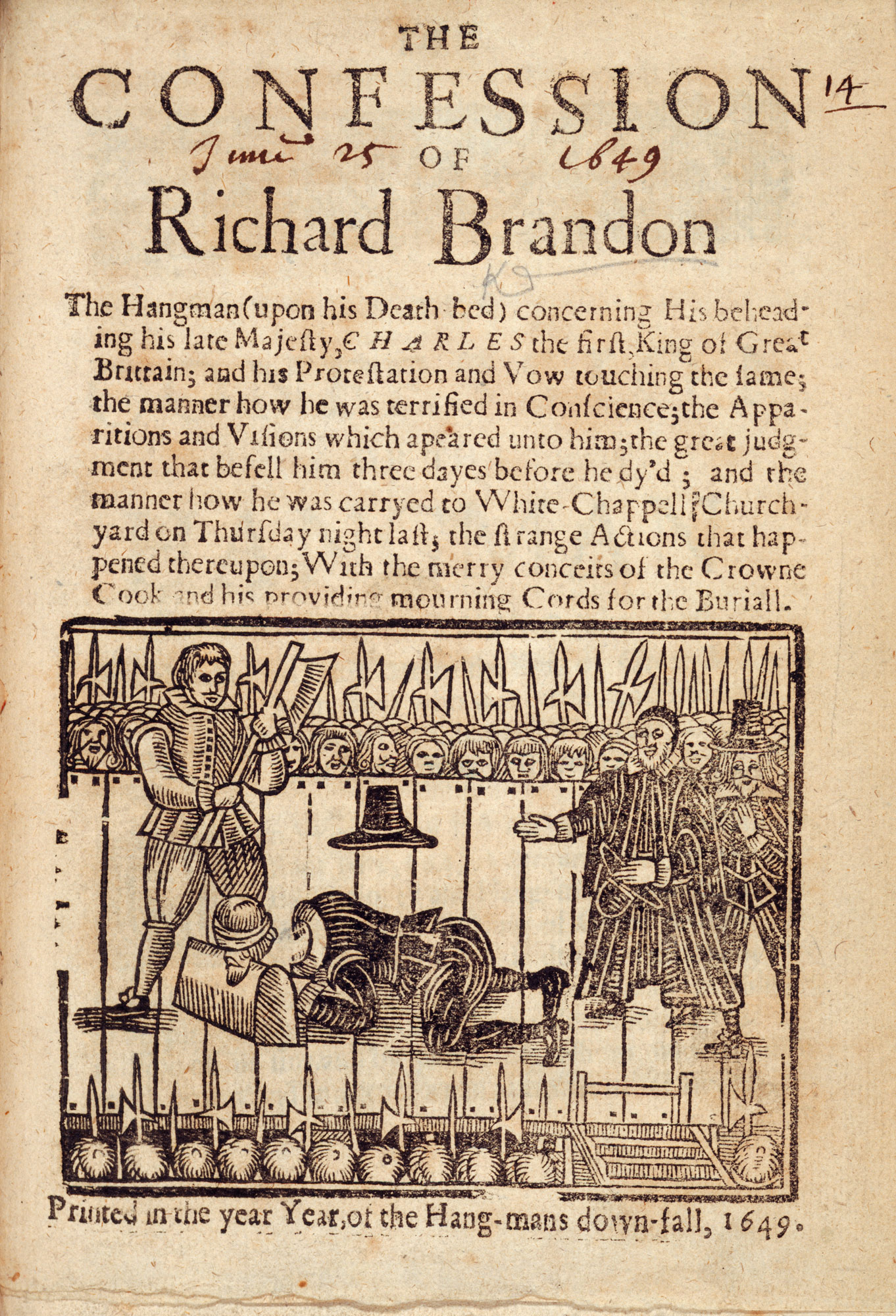
The identities of the executioner of Charles I and his assistant were never revealed to the public, with crude face masks and wigs hiding them at the execution, and they were probably known only to Oliver Cromwell and a few of his colleagues. The clean cut on Charles's head and the fact the executioner held up Charles's head after the execution suggests the executioner was experienced in the use of an axe, although the fact he did not call out "Behold the head of a traitor!" could suggest either that he was inexperienced in the public execution of traitors, or that he simply feared identification from his voice.
There was much speculation among the public on the identity of the executioner, with several contradictory identifications appearing in the popular press. These included Richard Brandon, William Hulet, William Walker, Hugh Peter, George Joyce, John Bigg, Gregory Brandon and even—as one French report alleged—Cromwell and Thomas Fairfax themselves. Though many of these proved to be unfounded rumours (the accusations directed towards the then-dead Gregory Brandon, and towards Cromwell and Fairfax, have not been taken seriously by historians), some may have been accurate.
Colonel John Hewson was given the task of finding an executioner and he offered 40 soldiers the position of executioner or assistant in exchange for £100 and quick promotion, though none came forward immediately. It has been suggested that one of these soldiers later accepted the job, the most probable candidate among the men being Hulet. Shortly after the execution, Hulet received a prominent and swift promotion and he was not seen to be present on the day of Charles's execution. His alibi consisted of the claim he was imprisoned on the day for refusing the position, though this seems to conflict with his promotion soon after. William Hulet was tried as the executioner in October 1660, upon the Restoration, and he was sentenced to death for his supposed part in the execution. This sentence was soon overturned and Hulet was pardoned after some exculpatory evidence was presented to the judge.
Overall, the most likely candidate for the executioner was Richard Brandon, the common hangman at the time of Charles's execution. He would have been experienced, explaining the clean cut, and he is reported to have received £30 around the time of the execution. He was also the executioner of other royalists before, and after, Charles's execution—including William Laud and Lord Capel. Despite this, Brandon denied being the executioner throughout his life, and a contemporary letter claims that he refused a parliamentarian offer of £200 to perform the execution. A tract published shortly after Brandon's death, The Confession of Richard Brandon, claims to contain a deathbed confession of Brandon to the execution of Charles, though it attracted little attention in its time and is now regarded as a forgery.
Of the other suggested candidates: Peter had prominently advocated for Charles's death but was absent from his execution, though he was reported to have been kept at home through illness. Joyce was a loyal fanatic of Cromwell and had, earlier in the war, captured the King from Holdenby House. William Walker was a parliamentarian soldier who, according to local tradition, had confessed to the regicide several times. Bigg was a clerk of the regicide Simon Mayne and later hermit who, according to local tradition, became a hermit shortly after the Restoration out of fear for being tried as the executioner.
Reaction
In Britain
right
The tragic scaffold might adorn: While round the armèd bands Did clap their bloody hands. He nothing common did or mean Upon that memorable scene, But with his keener eye The axe's edge did try;}} On his execution day, the reports of Charles's last actions were fitting for his later portrayal as a martyr—as the biographer Geoffrey Robertson put it, he "played the martyr's part almost to perfection". This was certainly no accident; a flurry of royalist reports overstated the horror of the crowd and the "biblical innocence" of Charles in his execution. Even Charles showed planning for his future martyrdom: apparently delighted that the biblical passage to be read upon the day of his execution was Matthew's account of the Crucifixion. He had hinted to his cousin the Duke of Hamilton in 1642:
In the opinion of Daniel P. Klein: "Charles was a defeated and humiliated king in 1649. Yet by tying his trial to Christ's, the King was able to lay claim to martyrdom, connecting his defeated political cause with religious truth."
Almost immediately after Charles was executed, the supposed meditations and autobiography of Charles, Eikon Basilike, began to circulate in England. The book gained massive popularity in a short time, going into twenty editions by the first month of its publication, and has been named by Philip A. Knachel "the most widely read, widely discussed work of royalist propaganda to issue from the English Civil War". The book presented Charles's supposed meditations on the events of his kingship and his justifications for his past actions, widely disseminating the view of Charles as the pious "martyr of the people" he had declared himself to be. It aggravated the fervour of the royalists in the wake of Charles's execution and their high praise led to the wide circulation of the book; some sections even put into verse and music for the uneducated and illiterate of the population. John Milton described it as "the chiefe strength and nerves of their [royalist] cause".
On the other side, the parliamentarians led their own propaganda war against these royalists reports. They suppressed royalist works, among them Eikon Basilike and various other elegies to the deceased king, by arresting and suppressing the printers of such books. Simultaneously, they worked with radical booksellers and publishers to push pro-regicide works, outprinting their opponents by two to one in the month of February, following Charles's execution. John Milton was commissioned to write Eikonoklastes as a parliamentarian rejoinder to Eikon Basilike—sharply mocking the piety of Eikon Basilike and the "image-doting rabble" who latched on to its depiction of Charles, attacking its royalist arguments in a chapter-by-chapter fashion. Charles's prosecutor, John Cook, published a pamphlet defending the execution of Charles, giving "an appeal to all rational men concerning his tryal at the High Court of Justice", in which he asserted that the execution had "pronounced sentence not only against one tyrant but against tyranny itself". A contemporary source described Cromwell and Henry Ireton as "very cheerfull & well pleased" at the events by 24 February.
In Europe
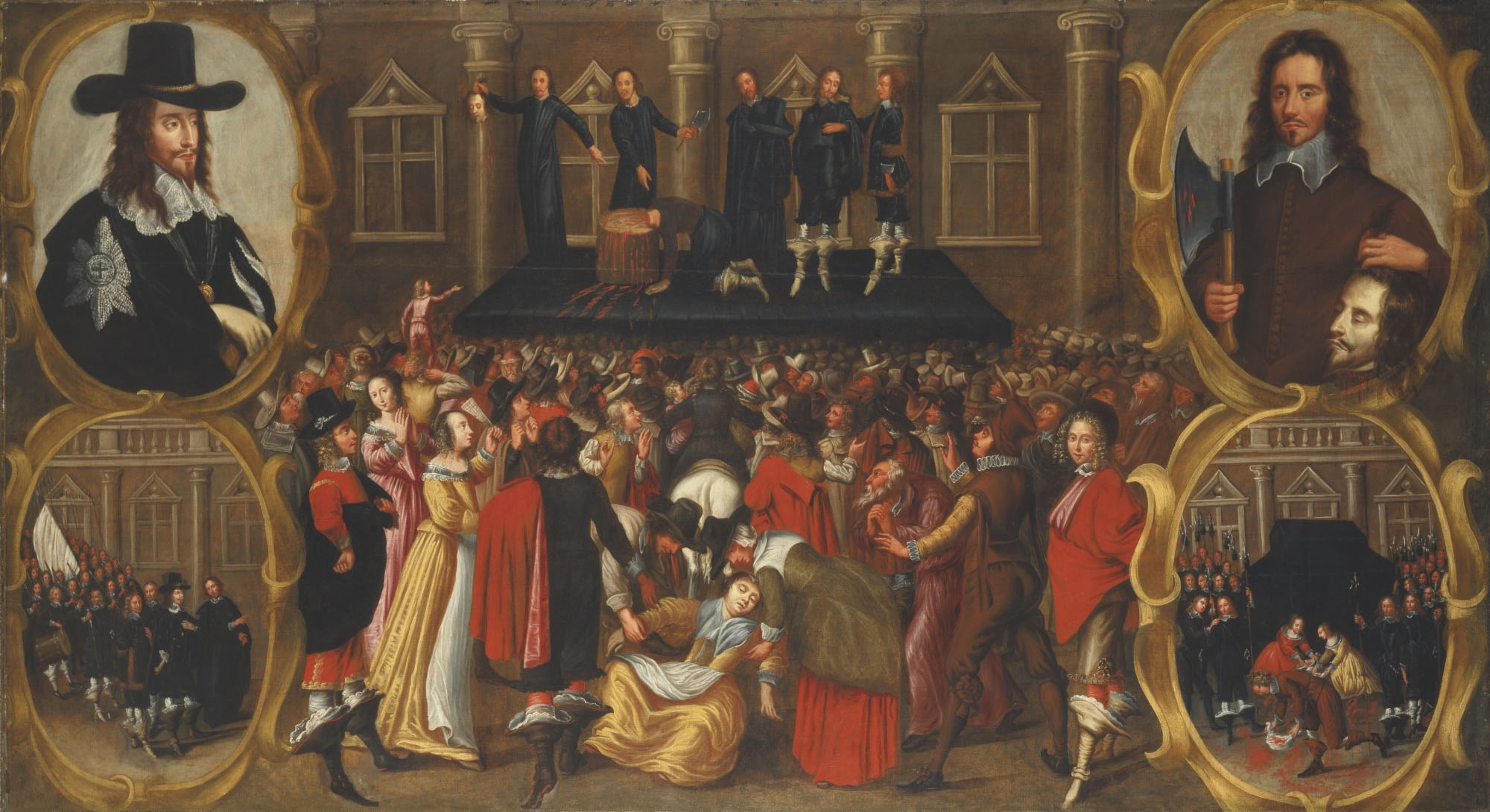
The reaction among European statesmen was almost universally negative, with the princes and rulers of Europe quick to voice their horror at the regicide. Despite this, very little action was taken against the new English government, as foreign governments carefully avoided cutting off relations with England over their condemnations of the execution. Even the allies of the royalists in the Vatican, France and the Netherlands avoided straining relationships with the parliamentarians in England; the official statement of sympathy to Charles II from the Dutch went as far as possible to avoid calling him "your majesty". Most European nations had their own troubles occupying their minds, such as negotiating the terms of the recently signed Peace of Westphalia, and the regicide was treated with what Richard Bonney described as a "half-hearted irrelevance". As C. V. Wedgwood put it, the general conduct of the statesmen of Europe was to "pay lip-service alone to the idea of avenging the outrage [of the execution], and to govern their conduct towards its perpetrators by purely practical considerations".
One notable exception was the Russian Tsar Alexis, who broke off diplomatic relations with England and accepted royalist refugees in Moscow. He also banned all English merchants from his country (notably members of the Muscovy Company) and provided financial assistance to Charles II, sending his condolences to Henrietta Maria, "the disconsolate widow of that glorious martyr, King Charles I".
In the American colonies
News of the execution of Charles I travelled slowly to England's North American colonies; on 26 May Roger Williams of Rhode Island reported that "the King and many great Lords and Parliament men are beheaded", and on 3 June Adam Winthrop reported from Boston that "heer is now a London shipp come in, that bringeth the newes that the King is beheaded." However, the initial content of the discussion from letters and diaries remains unclear:
|Francis J. Bremer}}
Legacy

The image of Charles's execution was central to the cult of King Charles the Martyr, a major theme in English royalism of this period. Shortly after Charles's death, relics of Charles's execution were reported to perform miracles—with handkerchiefs of Charles's blood supposedly curing the King's Evil among peasants. Many elegies and works of devotion were produced to glorify the dead Charles and his cause. After the Restoration of the English monarchy in 1660, this private devotion was transformed into official worship: in 1661 the Church of England declared 30 January a solemn fast for the martyrdom of Charles. Charles occupied a saint-like status in prayer books of this time. In Charles II's reign, (as estimated by Francis Turner) around 3000 sermons were given annually to commemorate the martyrdom of Charles. Much Restoration historiography of the Civil War emphasised the regicide as a grand and theatrical tragedy, depicting the last days of Charles's life in a hagiographical fashion. Few saw the executed king's character as fallible. Britain's Lord Chancellor after the Restoration, Edward Hyde, in his monumental History of the Rebellion (1702–1704), was one of the few sometimes critical of Charles's actions and to perceive his flaws as a king, but his account the year of Charles's execution ended with a passionate condemnation of:
After the Glorious Revolution, even as royalism declined, the cult continued to enjoy support; the anniversaries of Charles's execution created an annual "general madding-day" of Royal support—as Whig Edmund Ludlow put it—up until the 18th century. Early Whig historians such as James Wellwood and Roger Coke, even as they criticised and mocked the Stuarts, were hesitant to criticise Charles and quick to condemn the execution as an abomination. The memory of Charles's execution remained uncomfortable for many Whigs in Britain. To delegitimise this cult, later Whigs spread the view of Charles as a tyrant, and his execution as a step towards constitutional government in Britain. In opposition, British Tory literary and political figures, including Isaac D'Israeli and Walter Scott, attempted to rejuvenate the cult with romanticised tales of Charles's execution—emphasising the same tropes of martyrdom the royalists had done before them. D'Israeli narrated the execution of Charles I in his Commentaries on the Life and Reign of Charles the First (1828), in which Charles dies "having received the axe with the same collectedness of thought and died with the majesty with which he had lived". The observance of 30 January as the "martyrdom" of Charles was officially removed from the services of the Church of England with the Anniversary Days Observance Act 1859, and the number of sermons given upon the death of Charles I dwindled. This Whig view was exemplified by the Victorian historian Samuel Rawson Gardiner as he closed his 1886–91 History of the Great Civil War:
Charles I's life and his execution has often been a subject of popular representations in the modern day. Popular historians, such as Samuel Rawson Gardiner, C.V. Wedgwood and J.G. Muddiman, have retold the tale of Charles I's decline and fall, through his trial and to his execution, in narrative histories. Films and television have exploited the dramatic tension and shock of the execution for many purposes: from comedy as in Blackadder: The Cavalier Years, to period drama as in To Kill a King. The subject of the execution, though, has suffered from a notable lack of serious scholarship throughout the modern era; perhaps partly out of what Jason Peacey, a leading figure in the scholarship of Charles I's execution, has called a discomfort at "such a thoroughly 'un-English' project as removing the head of their monarch". This stigma has slowly been lifted, as academic interest has risen into the late 20th century, eliciting much interest in 1999, upon the 350th anniversary of the trial and execution of Charles I.
Notes
Explanatory notes
Citations
General sources
Books
Articles
- {{Citation |last=Beddard |first=R. A. |author-link=Robert Beddard |year=1984 |title=Wren's Mausoleum for Charles I and the Cult of the Royal Martyr |journal=Architectural History |volume=27 |pages=36–49 |doi=10.2307/1568449
References
- "The Execution of King Charles I".
- (1906). "The Charge against the King". [[Oxford University Press]].
- Hyde, Edward. (1706). "The History of the Rebellion and the Civil Wars in England, Volume 3, Part 1".
- {{harvnb. D'Israeli. 1851
- {{harvnb. D'Israeli. 1851
- Quoted in {{harvnb. Robertson. 2005. Wedgwood. 1981
- Cook, John. (1649). "King Charls, his case, or, An appeal to all rational men concerning his tryal at the High Court of Justice". Peter Cole.
- {{harvnb. Gardiner. 1901
- "A liuely Representation of the manner how his late Majesty was beheaded uppon the Scaffold Ian 30: 1648: / A representation of the execution of the Kings Judges".
- {{harvnb. Carlton. 1983
- {{harvnb. Carlton. 1983. Gardiner. 1901
- {{harvnb. Carlton. 1983. Gardiner. 1901. Wedgwood. 1981
- {{harvnb. Carlton. 1983. Gardiner. 1901. Wedgwood. 1981
- {{harvnb. Carlton. 1983. Gardiner. 1901. Wedgwood. 1981
- {{harvnb. Gardiner. 1901
- Cox, Noel. (1999–2000). "The ceremonial dress and accoutrements of the Most Noble Order of the Garter".
- {{harvnb. Carlton. 1983
- {{harvnb. Edwards. 1999
- {{harvnb. Edwards. 1999
- {{harvnb. Edwards. 1999. Wedgwood. 1981
- {{harvnb. Carlton. 1983. Robertson. 2005
- {{harvnb. Hibbert. 1968
- {{harvnb. Edwards. 1999
- Journal of Robert, 2nd Earl Leicester – Kent Archives U1475/F24 p.38
- {{harvnb. Edwards. 1999
- {{harvnb. Carlton. 1983. Edwards. 1999. Hibbert. 1968. Robertson. 2005. Wedgwood. 1981
- {{harvnb. Carlton. 1983. Sidney. 1905
- {{harvnb. D'Israeli. 1851. Edwards. 1999. Robertson. 2005. Wedgwood. 1981
- {{harvnb. Carlton. 1983. Gardiner. 1901. Robertson. 2005. Wedgwood. 1981
- {{harvnb. Sidney. 1905
- {{harvnb. Hibbert. 1968. Robertson. 2005
- Herbert, Thomas. (1815). "Memoirs of the Two Last Years of the Reign of King Charles I".
- {{harvnb. Carlton. 1983. Edwards. 1999. Gardiner. 1901. Hibbert. 1968. Holmes. 2010. Robertson. 2005. Wedgwood. 1981
- {{harvnb. Edwards. 1999. Hibbert. 1968
- Charles I. (1654). "The full proceedings of the High Court of Iustice against King Charles in Westminster Hall".
- {{harvnb. Edwards. 1999. Robertson. 2005. Wedgwood. 1981
- {{harvnb. Carlton. 1983. Edwards. 1999. Robertson. 2005. Sidney. 1905. Skerpan-Wheeler. 2011
- {{harvnb. Edwards. 1999. Hibbert. 1968. Robertson. 2005. Wedgwood. 1981
- {{harvnb. Edwards. 1999
- {{harvnb. Edwards. 1999. Gardiner. 1901. Wedgwood. 1981
- Henry, Philip. (1882). "Diaries and Letters of Philip Henry". Kegan Paul, Trench & Co..
- {{harvnb. Robertson. 2005
- {{harvnb. Edwards. 1999. Hibbert. 1968. Sidney. 1905
- Journal of Robert, 2nd Earl of Leicester, Kent Archives, U1475/F24 p.38
- "The confession of Richard Brandon".
- {{harvnb. Edwards. 1999. Robertson. 2005
- {{harvnb. Sidney. 1905
- {{harvnb. Robertson. 2005
- {{harvnb. Edwards. 1999. Sidney. 1905
- {{harvnb. Edwards. 1999. Sidney. 1905. Wedgwood. 1981
- {{harvnb. Sidney. 1905
- {{harvnb. Edwards. 1999. Robertson. 2005
- {{harvnb. Robertson. 2005
- {{harvnb. Sidney. 1905
- {{harvnb. Robertson. 2005
- {{harvnb. Robertson. 2005
- {{harvnb. Edwards. 1999
- {{harvnb. Sidney. 1905
- {{harvnb. Robertson. 2005. Sidney. 1905. Wedgwood. 1981
- (1649). "The Confession of Richard Brandon The Hangman (upon his Death bed) concerning His beheading his late Majesty, Charles the first, King of Great Brittain".
- {{harvnb. Sidney. 1905
- {{harvnb. Sidney. 1905
- {{harvnb. Sidney. 1905
- {{harvnb. Sidney. 1905
- Marvell, A.. "An Horatian Ode upon Cromwell's Return from Ireland".
- {{harvnb. Holmes. 2010. Lacey. 2003. Robertson. 2005. Kelsey. 2002
- {{harvnb. Robertson. 2005. Gheeraert-Graffeuille. 2011
- {{harvnb. Robertson. 2005. Sharpe. 2000
- Quoted in {{harvnb. Wilcher. 1991
- {{harvnb. Klein. 1997
- {{harvnb. Knachel. 1966
- {{Harvnb. Skerpan-Wheeler. 2011
- {{harvnb. Knachel. 1966
- {{harvnb. Knachel. 1966. Sharpe. 2000. Wilcher. 1991
- {{harvnb. Knachel. 1966
- {{harvnb. Tubb. 2004
- {{harvnb. Tubb. 2004
- {{harvnb. Knachel. 1966. Skerpan-Wheeler. 2011
- Tubb. 2004
- Quoted in {{harvnb. Tubb. 2004
- "The King's Last Day: The Execution of Charles I".
- Quoted in {{harvnb. Bonney. 2001
- {{harvnb. Bonney. 2001. Wedgwood. 1965
- {{harvnb. Wedgwood. 1965
- {{harvnb. Bonney. 2001
- {{harvnb. Wedgwood. 1965
- Massie, Robert K. ''Peter the Great: His Life and World''. Knopf: 1980. {{ISBN. 0-394-50032-6. p. 12.
- Bremer, Francis J. "In Defense of Regicide: John Cotton on the Execution of Charles I." The William and Mary Quarterly, vol. 37, no. 1, 1980, pp. 103–24. JSTOR, https://doi.org/10.2307/1920971.
- "'The Apotheosis, or, Death of the King' ('The Beheading of King Charles I')".
- {{harvnb. Lacey. 2003. Sharpe. 2000. Toynbee. 1950
- {{harvnb. Lacey. 2001. Lacey. 2003
- {{harvnb. Beddard. 1984. Klein. 1997. Lacey. 2003. Sharpe. 2000. Worden. 2009
- {{harvnb. Klein. 1997. Lacey. 2003
- {{harvnb. Gheeraert-Graffeuille. 2011
- {{harvnb. Sharpe. 2000. Worden. 2009
- MacGillivray, R. C.. (1974). "Restoration Historians and the English Civil War". Springer Science & Business Media.
- {{harvnb. Worden. 2009
- {{harvnb. Napton. 2018
- Napton. 2018. Worden. 2009
- {{harvnb. Lacey. 2003
- {{harvnb. Peacey. 2001
- {{harvnb. Gardiner. 1901
- {{harvnb. Peacey. 2001
- {{harvnb. Klein. 1997. Peacey. 2001
This article was imported from Wikipedia and is available under the Creative Commons Attribution-ShareAlike 4.0 License. Content has been adapted to SurfDoc format. Original contributors can be found on the article history page.
Ask Mako anything about Execution of Charles I — get instant answers, deeper analysis, and related topics.
Research with MakoFree with your Surf account
Create a free account to save articles, ask Mako questions, and organize your research.
Sign up freeThis content may have been generated or modified by AI. CloudSurf Software LLC is not responsible for the accuracy, completeness, or reliability of AI-generated content. Always verify important information from primary sources.
Report