From Surf Wiki (app.surf) — the open knowledge base
Eurovision Song Contest 1964
International song competition
International song competition
| Field | Value | |
|---|---|---|
| name | Eurovision Song Contest | |
| year | 1964 | |
| logo | ESC 1964 logo.png | |
| final | 21 March 1964 | |
| presenter | Lotte Wæver | |
| producers | ||
| director | Poul Leth Sørensen | |
| musdirector | Kai Mortensen | |
| scrutineer | Miroslav Vilček | |
| winner | ||
| "Non ho l'età" | ||
| vote | Each country awarded 5, 3 and 1 points (or combinations thereof) to their three favourite songs | |
| organiser | European Broadcasting Union (EBU) | |
| host | Danmarks Radio (DR) | |
| venue | Tivolis Koncertsal | |
| Copenhagen, Denmark | ||
| entries | 16 | |
| debut | ||
| nonreturn | ||
| <!-- Map Legend Colours --> | Map NoSemis | Y |
"Non ho l'età" Copenhagen, Denmark
The Eurovision Song Contest 1964 was the 9th edition of the Eurovision Song Contest, held on 21 March 1964 at Tivolis Koncertsal in Copenhagen, Denmark, and presented by Lotte Wæver. It was organised by the European Broadcasting Union (EBU) and host broadcaster Danmarks Radio (DR), who staged the event after winning the for with the song "Dansevise" by Grethe and Jørgen Ingmann. Broadcasters from sixteen countries participated in the contest. made its debut this year, whereas decided not to enter.
The winner of the contest was with the song "Non ho l'età", performed by Gigliola Cinquetti, written by Nicola Salerno and composed by Mario Panzeri. At the age of 16 years and 92 days, Gigliola Cinquetti became the youngest winner of the contest yet; a record she held until . The entry had one of the widest margins of victory ever witnessed in the competition. It garnered almost three times as many points as the second-placed song.
Besides the , the 1964 contest is the only other one of which there are no complete surviving video recordings.
Location
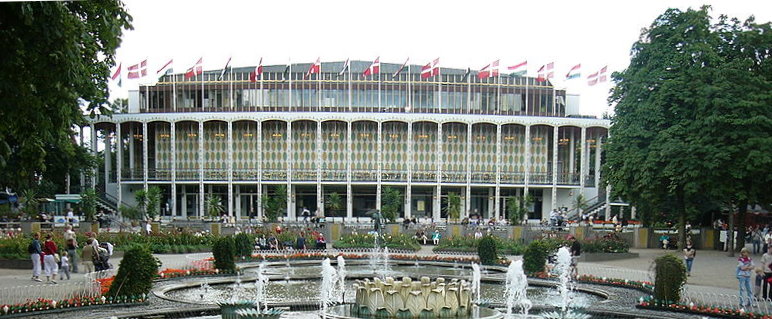
Danmarks Radio (DR) staged the 1964 contest in Copenhagen, after winning the for with the song "Dansevise" by Grethe and Jørgen Ingmann. The venue selected was Tivolis Koncertsal (Tivoli Concert Hall), which lies within the amusement park and pleasure garden Tivoli Gardens. The park, alluding by its name to the Jardin de Tivoli that existed in Paris, was opened on 15 August 1843, and is the second oldest amusement park in the world, after Dyrehavsbakken in nearby Klampenborg. At the night of the contest, 800 spectators followed the show in the audience.
Participants
Broadcasters from sixteen countries participated in the 1964 contest. Of the sixteen countries that participated in 1963 only was absent. Sveriges Radio (SR) did not participate due to a strike among members of the Swedish Union for Performing Arts and Film (). was represented in the contest for the first time, however it became the first country to score nul points on its début entry. Germany, Switzerland, and Yugoslavia also scored nul points for the first time. The Netherlands became the first country to be represented by a singer of non-European ancestry, Anneke Grönloh who was of Indonesian descent. Spain was represented by the Italian-Uruguayan group Los TNT who were the first group of three or more participants in the history of the contest.
Only one of the performing artists had previously competed representing the same country in past editions: Anita Traversi had represented , and had also provided backing vocals for .
| Country | Broadcaster | Artist | Song | Language | Songwriter(s) | Conductor | |
|---|---|---|---|---|---|---|---|
| ORF | Udo Jürgens | "Warum nur, warum?" | German | Udo Jürgens | Johannes Fehring | ||
| RTB | Robert Cogoi | "Près de ma rivière" | French | Robert Cogoi | |||
| DR | Bjørn Tidmand | "Sangen om dig" | Danish | {{hlist | Aksel V. Rasmussen}} | Kai Mortensen | |
| YLE | Lasse Mårtenson | "Laiskotellen" | Finnish | George de Godzinsky | |||
| RTF | Rachel | "Le Chant de Mallory" | French | Franck Pourcel | |||
| HR | Nora Nova | "Man gewöhnt sich so schnell an das Schöne" | German | Willy Berking | |||
| RAI | Gigliola Cinquetti | "Non ho l'età" | Italian | ||||
| CLT | Hugues Aufray | "Dès que le printemps revient" | French | Jacques Denjean | |||
| TMC | Romuald | "Où sont-elles passées" | French | Michel Colombier | |||
| NTS | Anneke Grönloh | "Jij bent mijn leven" | Dutch | Dolf van der Linden | |||
| NRK | Arne Bendiksen | "Spiral" | Norwegian | Karsten Andersen | |||
| RTP | António Calvário | "Oração" | Portuguese | Kai Mortensen | |||
| TVE | Nelly with Tim and Tony | "Caracola" | Spanish | Fina de Calderón | Rafael Ibarbia | ||
| SRG SSR | Anita Traversi | "I miei pensieri" | Italian | Fernando Paggi | |||
| BBC | Matt Monro | "I Love the Little Things" | English | Tony Hatch | Harry Rabinowitz | ||
| JRT | Sabahudin Kurt | "Život je sklopio krug" (Живот је склопио круг) | Serbo-Croatian | Radivoje Spasić |
Format
Poul Leth Sørensen served as producer, Bent Fabricius Bjerre and Marianne Drewes acted as co-producers.
The prize to be awarded to the winning artist took the form of an engraved medallion made of silver.
The event was covered by around 100 journalists and photographers. The artists were accompanied by a 41-piece orchestra. Rehearsals started on 19 March 1964.
Contest overview
The contest was held on 21 March 1964, beginning at 22:00 CET (21:00 UTC).
A political protest occurred after the Swiss entry: an anonymous man trespassed onto the stage holding a banner that read "Boycot Franco & Salazar". Whilst this was going on, television viewers were shown a shot of the scoreboard; once the man was removed by a television technician, the contest went on.
The interval act consisted of a ballet dance performance by dancers Solveig Østergaard, Niels Kehlet, Inge Olafsen and Mette Hønningen from the Royal Danish Ballet, choreographed by Niels Bjørn Larsen, and over the music of the "Columbine porka mazurka" and the "Champagne Galop" by Hans Christian Lumbye.
The immediate response of the Koncertsal audience to the Italian entry was markedly enthusiastic and prolonged and, most unusually for a contest performance, after leaving the stage Gigliola Cinquetti was allowed to return to take a second bow. Her performance was given an unscheduled repeat on British television the following afternoon. In the event, she won the most crushing victory in the history of the contest, with a score almost three times that of her nearest rival, a feat extremely unlikely ever to be beaten under the post-1974 scoring system.
An aftershow party was held for the participating delegations at the restaurant Ambassadeur in Copenhagen. Each of the 16 participating acts was awarded a silver trophy on this occasion.
| R/O | Country | Artist | Song | Points | Place | 1 | 2 | 3 | 4 | 5 | 6 | 7 | 8 | 9 | 10 | 11 | 12 | 13 | 14 | 15 | 16 |
|---|---|---|---|---|---|---|---|---|---|---|---|---|---|---|---|---|---|---|---|---|---|
| "Dès que le printemps revient" | 14 | 4 | |||||||||||||||||||
| "Jij bent mijn leven" | 2 | 10 | |||||||||||||||||||
| "Spiral" | 6 | 8 | |||||||||||||||||||
| "Sangen om dig" | 4 | 9 | |||||||||||||||||||
| "Laiskotellen" | 9 | 7 | |||||||||||||||||||
| "Warum nur, warum?" | 11 | 6 | |||||||||||||||||||
| Rachel | "Le Chant de Mallory" | 14 | 4 | ||||||||||||||||||
| "I Love the Little Things" | 17 | 2 | |||||||||||||||||||
| "Man gewöhnt sich so schnell an das Schöne" | 0 | 13 | |||||||||||||||||||
| Romuald | "Où sont-elles passées" | 15 | 3 | ||||||||||||||||||
| "Oração" | 0 | 13 | |||||||||||||||||||
| "Non ho l'età" | 49 | 1 | |||||||||||||||||||
| "Život je sklopio krug" | 0 | 13 | |||||||||||||||||||
| "I miei pensieri" | 0 | 13 | |||||||||||||||||||
| "Près de ma rivière" | 2 | 10 | |||||||||||||||||||
| Nelly with Tim and Tony | "Caracola" | 1 | 12 |
Spokespersons
Each participating broadcaster appointed a spokesperson who was responsible for announcing the votes for its respective country via telephone. Known spokespersons at the 1964 contest are listed below.
- Finland
Detailed voting results
Each participating broadcaster assembled a 10-member jury panel who distributed three points among their one, two, or three favourite songs. The points were totaled and the first, second, and third placed songs were awarded 5, 3, and 1 votes in order. If only one song got every point within the jury it would get all 9 points. If only two songs were chosen, the songs would get 6 and 3 points in order.
| nb=1 | Total score}} | nb=1 | Luxembourg}} | nb=1 | Netherlands}} | nb=1 | Norway}} | nb=1 | Denmark}} | nb=1 | Finland}} | nb=1 | Austria}} | nb=1 | France}} | nb=1 | United Kingdom}} | nb=1 | Germany}} | nb=1 | Monaco}} | nb=1 | Portugal}} | nb=1 | Italy}} | nb=1 | Yugoslavia}} | nb=1 | Switzerland}} | nb=1 | Belgium}} | nb=1 | Spain}} | va=middle | Contestants}} | Luxembourg | Netherlands | Norway | Denmark | Finland | Austria | France | United Kingdom | Germany | Monaco | Portugal | Italy | Yugoslavia | Switzerland | Belgium | Spain |
|---|---|---|---|---|---|---|---|---|---|---|---|---|---|---|---|---|---|---|---|---|---|---|---|---|---|---|---|---|---|---|---|---|---|---|---|---|---|---|---|---|---|---|---|---|---|---|---|---|---|---|---|
| 14 | 3 | 3 | **5** | 3 | |||||||||||||||||||||||||||||||||||||||||||||||
| 2 | 1 | 1 | |||||||||||||||||||||||||||||||||||||||||||||||||
| 6 | **5** | 1 | |||||||||||||||||||||||||||||||||||||||||||||||||
| 4 | 1 | 3 | |||||||||||||||||||||||||||||||||||||||||||||||||
| 9 | 3 | 3 | 3 | ||||||||||||||||||||||||||||||||||||||||||||||||
| 11 | **5** | 1 | **5** | ||||||||||||||||||||||||||||||||||||||||||||||||
| 14 | 1 | 3 | **5** | 3 | 1 | 1 | |||||||||||||||||||||||||||||||||||||||||||||
| 17 | 1 | **5** | 3 | 1 | 1 | 1 | **5** | ||||||||||||||||||||||||||||||||||||||||||||
| 0 | |||||||||||||||||||||||||||||||||||||||||||||||||||
| 15 | 3 | **5** | 3 | 1 | 3 | ||||||||||||||||||||||||||||||||||||||||||||||
| 0 | |||||||||||||||||||||||||||||||||||||||||||||||||||
| 49 | **5** | **5** | **5** | **5** | **5** | 3 | 3 | **5** | **5** | 3 | **5** | ||||||||||||||||||||||||||||||||||||||||
| 0 | |||||||||||||||||||||||||||||||||||||||||||||||||||
| 0 | |||||||||||||||||||||||||||||||||||||||||||||||||||
| 2 | 1 | 1 | |||||||||||||||||||||||||||||||||||||||||||||||||
| 1 | 1 |
5 points
Below is a summary of all 5 points in the final:
| N. | Contestant | Nation(s) giving 5 points | 8 | 2 | 1 |
|---|---|---|---|---|---|
| **** | , , , , , , , | ||||
| , | |||||
| , |
Broadcasts
Each participating broadcaster was required to relay the contest via its networks. Non-participating EBU member broadcasters were also able to relay the contest as "passive participants". Broadcasters were able to send commentators to provide coverage of the contest in their own native language and to relay information about the artists and songs to their television viewers. No official accounts of the viewing figures are known to exist. Estimates given in the press ranged from 100 to 150 million viewers.
Known details on the broadcasts in each country, including the specific broadcasting stations and commentators are shown in the tables below.
| Country | Broadcaster | Channel(s) | Commentator(s) | Ref(s) | Austria | Belgium | Denmark | Finland | France | Germany | Italy | Luxembourg | Monaco | Netherlands | Norway | Portugal | Spain | Switzerland | United Kingdom | Yugoslavia | |||
|---|---|---|---|---|---|---|---|---|---|---|---|---|---|---|---|---|---|---|---|---|---|---|---|
| ORF | ORF | ||||||||||||||||||||||
| RTB | RTB | ||||||||||||||||||||||
| BRT | BRT | ||||||||||||||||||||||
| DR | DR TV, DR P1, DR P3 | Claus Walter | |||||||||||||||||||||
| YLE | Suomen Televisio | ||||||||||||||||||||||
| {{ill | Yleisohjelma | fi | Yleisohjelma (Suomen Yleisradio)}} | ||||||||||||||||||||
| Ruotsinkielinen ula-ohjelma | |||||||||||||||||||||||
| RTF | RTF, Inter Jeunesse | Robert Beauvais | |||||||||||||||||||||
| ARD | Deutsches Fernsehen | ||||||||||||||||||||||
| RAI | Programma Nazionale TV | ||||||||||||||||||||||
| CLT | Télé-Luxembourg | Robert Beauvais | |||||||||||||||||||||
| Télé Monte-Carlo | Robert Beauvais | ||||||||||||||||||||||
| NTS | NTS | Ageeth Scherphuis | |||||||||||||||||||||
| NRU | Hilversum 2 | ||||||||||||||||||||||
| NRK | NRK Fjernsynet, NRK | Odd Grythe | |||||||||||||||||||||
| RTP | RTP | ||||||||||||||||||||||
| TVE | TVE | ||||||||||||||||||||||
| RNE | RNE | ||||||||||||||||||||||
| SRG SSR | TV DRS | ||||||||||||||||||||||
| TSR | Robert Burnier | ||||||||||||||||||||||
| TSI | |||||||||||||||||||||||
| Radio Beromünster | |||||||||||||||||||||||
| Radio Sottens | |||||||||||||||||||||||
| Radio Monte Ceneri | |||||||||||||||||||||||
| BBC | BBC TV | David Jacobs | |||||||||||||||||||||
| JRT | Televizija Beograd | ||||||||||||||||||||||
| Televizija Ljubljana | |||||||||||||||||||||||
| Televizija Zagreb |
| Country | Broadcaster | Channel(s) | Commentator(s) | Ref(s) | Ireland | Malta | Netherlands Antilles | Sweden |
|---|---|---|---|---|---|---|---|---|
| RÉ | Telefís Éireann | |||||||
| MBA | MTV | Victor Aquilina | ||||||
| ATM | TeleCuraçao | |||||||
| SR | Sveriges TV | Sven Lindahl |
Lost recordings
As with the , no complete video recording of the actual contest is known to have survived. Some clips of the contest have survived, including the winning announcement by Svend Pedersen, and part of Gigliola Cinquetti's reprise. For some time, there was a rumour that a copy of the entire contest existed in the French television archives. In 2021, INA confirmed to Wiwibloggs that the French television archives do not possess a video copy of the contest. However, the audio of a French radio broadcast can be found in the archives of INA.
A persistent myth, even repeated on the official Eurovision site, is that the tape was destroyed in a fire in the 1970s. In a 2019 interview, DR claimed that the broadcast was never recorded in the first place, allegedly due to no tape machines being available at the studio at the time. The audio of most of the show, however, is still available online, without the last few minutes, and short video clips and photos from various archives also remain available.
Notes
References
References
- O'Connor, John Kennedy. The Eurovision Song Contest - The Official Celebration. Carlton Books, 2015. {{ISBN. 978-1-78097-638-9. Pages 32-33
- [http://www.copenhagenet.dk/cph-map/cph-tivoli.asp Tivoli – Tivoli Gardens Copenhagen – Copenhagen Portal – Tourist Guide]. Copenhagenet.dk. Retrieved on 15 August 2011.
- (2006). "Melodifestivalen genom tiderna : de svenska uttagningarna och internationella finalerna". Premium Publishing.
- "Copenhagen 1964 – Participants". European Broadcasting Union.
- (2012). "Songs for Europe: The United Kingdom at the Eurovision Song Contest". [[Telos Publishing]].
- "Alle deutschen ESC-Acts und ihre Titel". ARD.
- (20 March 1964). "Frankrig Grand Prix-favorit". [[Politiken]].
- Ahm, Leif. (22 March 1964). "Små søde tralala". [[Politiken]].
- (19 March 1964). "16 landes top-pop-folk her". [[Politiken]].
- (20 March 1964). "Rachel notre chance". [[Le Figaro]].
- Tragaki, Dafni. (2002). "Empire of Song: Europe and Nation in the Eurovision Song Contest". Rowman & Littlefield.
- (23 March 1964). "Incident in Tivoli". [[Het Parool]].
- (21 March 1964). "Lille pige storfavorit". [[Politiken]].
- (23 March 1964). "Natligt melodi-punktum". [[Politiken]].
- "Copenhagen 1964 – Scoreboard". European Broadcasting Union.
- Murtomäki, Asko. (2007). "Finland 12 points! Suomen Euroviisut". Teos.
- "Eurovision Song Contest 1964". [[EBU]].
- "Copenhagen 1964 – Detailed voting results". European Broadcasting Union.
- "Eurovision Song Contest 1964 – Scoreboard". European Broadcasting Union.
- (31 October 2018). "The Rules of the Contest". European Broadcasting Union.
- Brincourt, André. (23 March 1964). "La Télévision par Andŕe Brincourt: Le Grand Prix Eurovision de la chanson à Gigliola Cinquetti (Italie)". [[Le Figaro]].
- (21 March 1964). "Songfestival trekt 100 miljoen kijkers". {{ill.
- (15 March 1964). "Fernsehprogramm". {{ill.
- (21 March 1964). "Télévision". [[Le Soir]].
- (21 March 1964). "Radio en TV". [[De Standaard]].
- "Alle tiders programoversigter – Lørdag den 21. marts 1964". [[DR (broadcaster).
- "Lørdag den 21. marts 1964. Program 1.". [[DR (broadcaster).
- (21 March 1964). "Radio ja televisio". [[Helsingin Sanomat]].
- (2013). "Airy Curtains in the European Ether: Broadcasting and the Cold War". [[Nomos publishing house.
- (21-22 March 1964). "Aujourd'hui a la téle". {{ill.
- "Concours Eurovision de la chanson à Copenhague (catalog record)". [[Institut national de l'audiovisuel]].
- (2023). "Concours Eurovision de la chanson à Copenhague". Inter Jeunesse.
- (21 March 1964). "Fernseh-Programm". [[Weser Kurier]].
- (15–21 March 1964). "TV {{!}} sabato 21 marzo".
- (21 March 1964). "Radio-Télévision". [[Luxemburger Wort]].
- (21 March 1964). "Radio – Televisie". [[Limburgs Dagblad]].
- (19 March 1964). "Anneke en Ageeth al in Kopenhagen". [[De Waarheid]].
- (21 March 1964). "Se og Hør idag". [[Oppland Arbeiderblad]].
- (21 March 1964). "Melodi Grand Prix 1964". [[Drammens Tidende.
- (21 March 1964). "Televisão". [[Diário de Lisboa]].
- (21 March 1964). "Radio y TV". [[La Vanguardia]].
- (19 March 1964). "Festival Eurovisión". {{ill.
- (21 May 1964). "Radioprogramm / Fernsehprogramm". [[Neue Zürcher Nachrichten]].
- (12 March 1964). "Programme TV".
- (21 March 1964). "radiotivù". {{ill.
- (12 March 1964). "Programmes radiophoniques".
- (21 March 1964). "Eurovision Song Contest Grand Prix 1964".
- (21 March 1964). "Радио Телевизија Београд". [[Borba (newspaper).
- (21 March 1964). "RTV Ljubljana". [[Delo (newspaper).
- (21 March 1964). "Televizija". [[Slobodna Dalmacija]].
- (21 March 1964). "TV to-night". [[The Herald (Ireland).
- (16 March 1964). "Eurovision Song Contest on Saturday". [[Times of Malta]].
- (20 May 1964). "Radio–Televisie". [[Amigoe.
- (21 March 1964). "TV i dag". [[Svenska Dagbladet]].
- "Rare broadcast footage of Eurovision 1964 uncovered by Reddit user".
- "9ème Concours Eurovision de la Chanson 1964 (catalog record)". [[Institut national de l'audiovisuel]].
- (31 July 2021). "Lost in Copenhagen: French television archive INA confirms it does NOT possess a copy of missing Eurovision 1964 show". [[Wiwibloggs]].
- (2019-03-20). "BILLEDER: I denne uge er det 55 år siden, Danmark holdt sit første Eurovision i Tivoli".
- "Opmærkning af DR's billeder".
This article was imported from Wikipedia and is available under the Creative Commons Attribution-ShareAlike 4.0 License. Content has been adapted to SurfDoc format. Original contributors can be found on the article history page.
Ask Mako anything about Eurovision Song Contest 1964 — get instant answers, deeper analysis, and related topics.
Research with MakoFree with your Surf account
Create a free account to save articles, ask Mako questions, and organize your research.
Sign up freeThis content may have been generated or modified by AI. CloudSurf Software LLC is not responsible for the accuracy, completeness, or reliability of AI-generated content. Always verify important information from primary sources.
Report