From Surf Wiki (app.surf) — the open knowledge base
Eurostar
High-speed train service in Western Europe
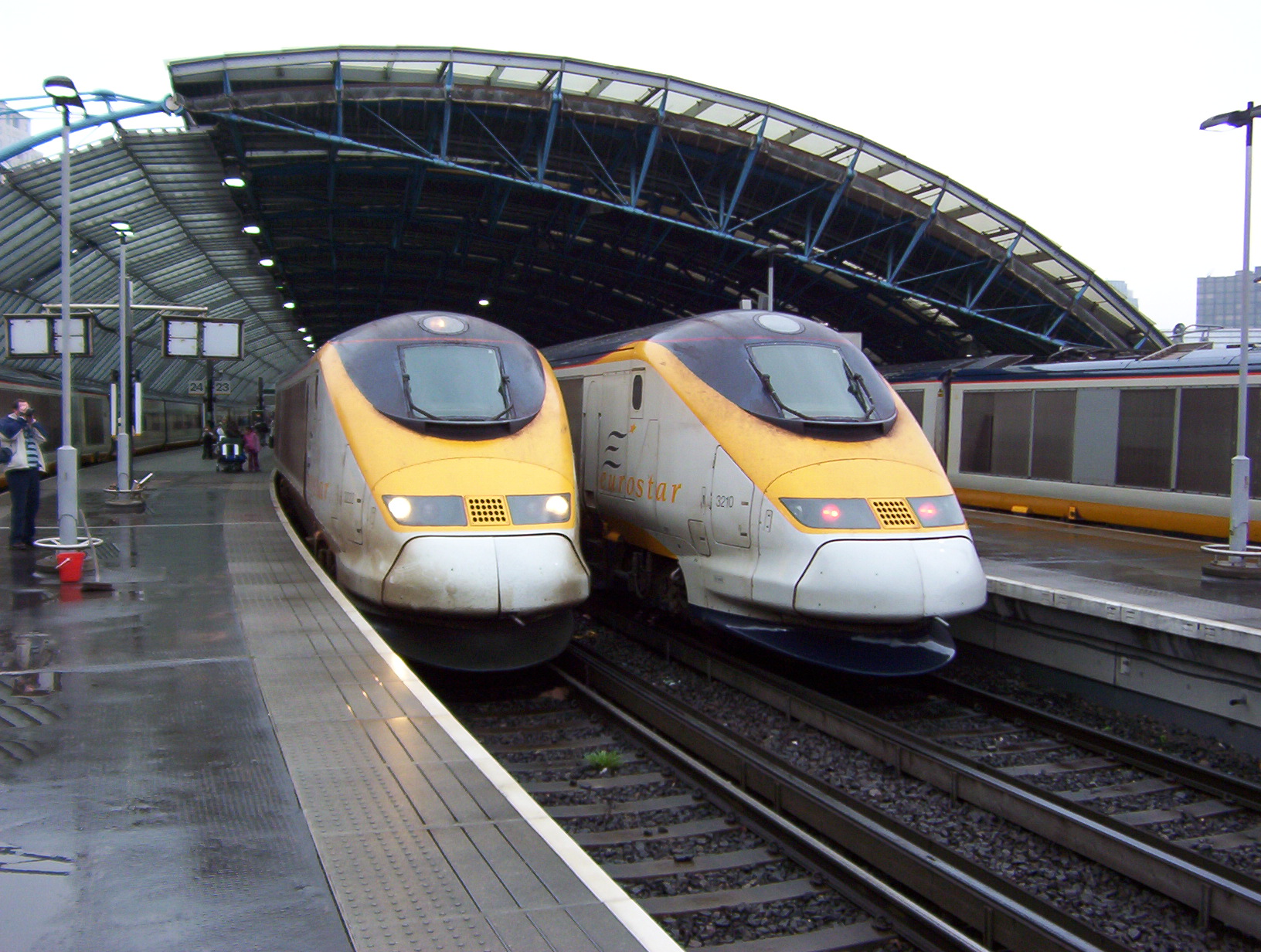
High-speed train service in Western Europe
| Field | Value | |
|---|---|---|
| name | Eurostar | |
| logo | Eurostar logo (2023).svg | |
| image_filename | Croisement Thalys-Eurostar Neige en Savoie (février 2023).JPG | |
| image_caption | Left: Eurostar PBA used for services within continental Europe. | |
| Right: Eurostar *e320* used for cross-channel services. | ||
| nameforarea | station | |
| regions | {{flatlist | |
| fleet | {{flatlist | |
| stations | 28 | |
| parent_company | Eurostar Group | |
| abbr | ES | |
| website | ||
| map_name | System map | |
| map | ||
| gauge | electrification={{Unbulleted list |
the international high-speed passenger railway service connecting Belgium, France, Germany, the Netherlands and the United Kingdom
Right: Eurostar e320 used for cross-channel services.
- Amsterdam
- Brussels
- Cologne
- Lille
- London
- Paris
- Rotterdam
- 9 PBA
- 17 PBKA
- 11 e300
- 17 e320
| Overhead line:
|
|
|
|
Eurostar is an international high-speed rail service in Western Europe, connecting Belgium, France, Germany, the Netherlands, and the United Kingdom through the Channel Tunnel.
The service is operated by the Eurostar Group which was formed from the merger of Eurostar, which operated trains through the Channel Tunnel to the United Kingdom, and Thalys which operated entirely within continental Europe.
Eurostar has transported over 400 million passengers since services began in 1994, including a record 20million passengers in 2025. The operator is exploring future network expansions and aims to double passenger numbers between 2022 and 2030.
History
the history of the Eurostar brand
Early planning and construction (1986-1993)
Main article: Channel Tunnel, Getlink, TransManche Link, LGV Nord
Proposals for a cross-Channel tunnel date back as early as 1802, but concerns over national security delayed development. The modern project was initiated following the 1986 Treaty of Canterbury between France and the UK, with the creation of Eurotunnel to manage and own the tunnel. Tunneling began in 1988.
In addition to the tunnel's shuttle trains carrying cars and lorries between Folkestone and Calais, the tunnel opened up the possibility of through passenger and freight train services between places further afield. British Rail and France's SNCF contracted with Eurotunnel to use half the tunnel's capacity for this purpose. In 1987, Britain, France and Belgium set up an International Project Group to specify a train to provide an international high-speed passenger service through the tunnel. French TGV technology was chosen as the basis for the new trains. An order for 30 trainsets, to be manufactured in France but with some British and Belgian components, was placed in December 1989.
France had been operating high-speed TGV services since 1981, and following the Treaty of Canterbury, began preparations for a new, 333 km high-speed line headed North from Paris, to speed up connections to the Tunnel, as well as to Brussels. The LGV Nord (, ) opened in 1993.
On 20 June 1993, the first Eurostar test train travelled through the tunnel to the UK. Various technical difficulties in running the new trains on British tracks were quickly overcome.
On 6 May 1994, the tunnel was officially opened by British sovereign, Elizabeth II, and the French President, François Mitterrand, at a final cost of £4.65billion (equivalent to £billion in ).
Launch and early operations (1994-2002)
On 8 January 1996, Eurostar launched services from a second railway station in the UK with Ashford International, and on 29 June announced year-round services from London to Disneyland.
In 1997, Eurostar introduced services to the French Alps during the winter. On December 14, the Belgian HSL 1 opened, connecting Brussels to the French LGV Nord at Lille. The line was 88 km long (71 km dedicated high-speed tracks, 17 km modernised lines), and brought down London-Brussels travel times by 45 minutes.
On 20 July 2002 a summer seasonal service from London to Avignon-Centre was launched.
High Speed 1 and St Pancras relocation (2003-2007)

Over the next few years, the gradual opening of the High Speed 1 tracks in the UK made Eurostar increasingly competitive with airlines on speed, and led to improvements in overall service. On 23 September 2003, passenger services began running on the first completed section of High Speed 1 (shortening travel times by 21 minutes), with the full line open on November 14, 2007 (further shortening journeys by 20 minutes). [[File:Eurostar at St Pancras Jan 2008.jpg|thumb|Eurostar trains in the renovated train shed at [[St Pancras railway station|London St Pancras International]]]]Following a high-profile glamorous opening ceremony and a large advertising campaign, on 14 November 2007, Eurostar services in London transferred from Waterloo to the extended and extensively refurbished London St Pancras International. The redevelopment cost £800million notably to cope with the 394 m long Eurostar trains. From St Pancras, the journey to Paris Nord reached its current travel time of 2 hours and 15 minutes.
Network expansion (2008-2019)
On 1 May 2015, the operator launched a year-round service from London to Lyon, Avignon, and Marseille in southern France, replacing an earlier seasonal service to Avignon that had run from 2002 to 2014. The new service brought Lyon within 4.5 hours of London, Avignon within 6 hours and Marseille in 6.5 hours.
On 4 April 2018, Eurostar launched direct services from London to Amsterdam (3h41) and Rotterdam (3h01), marking the first extension of Eurostar services to a new country since the original routes to France and Belgium in 1994. The service initially operated as a one-way journey, with return passengers required to change trains at Brussels until juxtaposed border controls could be established at Dutch stations; the full direct return service commenced on 26 October 2020.
COVID-19 pandemic impact (2020-2022)
The COVID-19 pandmic, and notably international travel restrictions, led to an existential crisis for Eurostar. By January 2021, Eurostar ridership went down to less than 1% of pre-pandemic levels.
During the covid-19 crisis, the company was "seen as French by the British government and as British by the French," meaning that it mostly did not benefit from state support given to airlines or other train companies. Indeed, even though Eurostar continued to be headquartered in London, the British had sold their stake in the company in 2015, leaving France's SNCF as the main shareholder. In the end, Eurostar was able to borrow £250mn from the French government, but was forced to also borrow £500mn from commercial lenders.
By the end of 2022, Eurostar had debts of €964m, but had finally returned to pre-covid ridership levels. In 2022/23, Eurostar returned to profitability. Since the COVID-19 pandemic, Eurostar has ended service to certain stations and routes, with a strategic focus on the most profitable routes.
Merger with Thalys (2019-2023)

In September 2020, the merger between Thalys and Eurostar International was confirmed, a year after Thalys announced its intention to merge with the cross-Channel provider subject to gaining European Commission clearance, to form "Green Speed". SNCF and SNCB already hold a controlling shareholding in Eurostar. In October 2021, it was announced that, following the completion of the merger, the Thalys brand would be discontinued, with all of the new operation's services to be operated under the Eurostar name but with each service's own liveries.
In October 2023, the Eurostar brand replaced Thalys, operating as one network and combining ticket sales in a single system.
New trains and potential expansion
In 2025, Eurostar announced that the purchase of 50 new trains would also allow for the creation of new routes by the early 2030s, including direct services from London to Frankfurt, from London to Geneva, and from Amsterdam/Brussels to Geneva.
Routes and infrastructure
- departing from London St Pancras (the historic Eurostar network):
- Paris-Nord [12 daily non-stop services in each direction]
- Lille-Europe [6 weekday, 8 weekend services in each direction] (with structured connections to Bourg-Saint-Maurice on Saturdays in the winter, as part of Eurostar Snow),
- Brussels-South [8-9 services in each direction],
- Amsterdam-Central via Rotterdam-Central [5 services in each direction]
- [[File:Eurostar PBKA 4322 - 9357 Brussels-South - Amsterdam-Central.jpg|thumb|PBKA stock passing through Schaerbeek station between Brussels-South and Amsterdam-Central]]departing from Paris-Nord (historically Thalys):
- Bruxelles-South,
- Amsterdam-Central via Bruxelles-South, Antwerp-Central, Rotterdam-Central and Schiphol-Airport,
- Cologne via Bruxelles-Midi, Liège-Guillemins and Aachen,
- after Cologne: Düsseldorf, Düsseldorf Airport, Duisbourg, Essen and Dortmund
- departing from Amsterdam-Central and Bruxelles-Midi (historically Thalys):
- Marne-la-Vallée - Chessy via Charles-de-Gaulle 2 Airport - TGV,
- Bourg-Saint-Maurice via Chambéry - Challes-les-Eaux, Albertville, Moûtiers - Salins - Brides-les-Bains, Aime-La Plagne and Landry (as part of Eurostar Snow on Saturdays in the winter)
Key high-speed lines used
| Line | Country | Connecting | Length | Max speed | Opened | Reference | |||||||||
|---|---|---|---|---|---|---|---|---|---|---|---|---|---|---|---|
| **Channel Tunnel** | UK-France | Folkstone -- Coquelles | 50.46 km | 160 km/h (safety) | 1994 | last=Dumitrache | first=Alina | date=24 March 2010 | title=The Channel Tunnel – Traveling Under the Sea | url=http://www.autoevolution.com/news/the-channel-tunnel-traveling-under-the-sea-18461.html | access-date=2 August 2014 | work=AutoEvolution | archive-date=10 August 2014 | archive-url=https://web.archive.org/web/20140810204912/http://www.autoevolution.com/news/the-channel-tunnel-traveling-under-the-sea-18461.html | url-status=live}} |
| **High Speed 1** | UK | Channel Tunnel -- London | {{convert | 108 | km | mi | abbr=on}} | 300 km/h (186 mph) | 2003/2007 | ||||||
| **LGV Nord** | France | Channel Tunnel -- Lille | 111 km | 300 km/h | 1993 | ||||||||||
| Belgian Border -- Lille | 12 km | ||||||||||||||
| Lille -- Gonesse | 198 km | ||||||||||||||
| **HSL 1** | Belgium | French border -- Lembeek | 71 km | 300 km/h | 1997 | ||||||||||
| Lembeek -- Brussels | 17 km | 200 km/h | |||||||||||||
| **HSL 2** | Belgium | Brussels -- Leuven | 34 km | 200 km/h | 2002 | ||||||||||
| Leuven -- Ans | 61 km | 300 km/h | |||||||||||||
| **HSL 3** | Belgium | Brussels -- Antwerp | 47 km | 160 km/h | 2009 | ||||||||||
| Antwerp -- Dutch border | 40 km | 300 km/h | |||||||||||||
| **HSL-Zuid** | Netherlands | Amsterdam -- Belgian border | 125 km | 300 km/h | 2009 | ||||||||||
| **Cologne–Aachen** | Germany | Aachen -- Düren | 31 km | sections at 160 km/h | |||||||||||
| Düren -- Cologne | 39 km | 250 km/h | 2003 |
Connections
Same-station transfers
The main stations of the network all offer a number of same-station transfers to local trains, and to other operators, as of January 2026.
- At London St. Pancras, same-station connections are possible with East Midlands Railway and Thameslink. The construction of a new concourse at the adjacent London King's Cross improved interchange with London St Pancras and provided London North Eastern Railway, Great Northern, Hull Trains and Grand Central services with easier connections to Eurostar.
- At Bruxelles-Midi, transfers are possible with Deutsche Bahn, SNCB, SNCF, NS and European Sleeper.
- At Amsterdam Centraal, connections are possible with Deutsche Bahn, NS, ÖBB, Arriva and European Sleeper.
- Paris Gare du Nord offers a number of SNCF services.
- [[File:Eurostar Class 373 at Lille-Europe.jpg|thumb|Eurostar Class 373 at Lille-Europe, an interchange with other TGV services]]At Lille-Europe, transfers are possible with SNCF routes. Lille-Flandres is also 500 meters away with SNCB services, as well as additional SNCF services.
- At Rotterdam Centraal, transfers are possible to NS, and European Sleeper services.
- At Cologne Central Station, transfers are possible with Deutsche Bahn.
Through-tickets
Eurostar offers a through-ticket to specific destinations by train, that is a single contract for multi leg journeys with certain passenger rights and protections. Through-tickets are available from 68 British towns and cities to destinations in France and Belgium. Standard Eurostar tickets no longer include free onward connections to or from any other station in Belgium: this is now available for a flat-rate supplement, currently £5.50.
In May 2009 Eurostar announced that a formal connection to Switzerland had been established in a partnership between Eurostar and Lyria, which will operate TGV services from Lille to the Swiss Alps for Eurostar connection.
In May 2019, Eurostar ended its agreement with Deutsche Bahn that allowed passengers to travel on a through-ticket by train from the UK via Brussels to Germany and further to Austria and Switzerland. Under the agreement, passengers could travel on a single through-ticket with passenger rights in case of disruption of one train. However, the through-tickets ceased to be sold from 9 November 2019.
Railteam
Eurostar is a member of Railteam, a marketing alliance formed in July 2007 of seven European high-speed rail operators. The alliance plans to allow tickets to be booked from one end of Europe to the other on a single website. In June 2009 London and Continental Railways, and the Eurostar UK operations they held ownership of, became fully nationalised by the UK government.
Air-rail alliances
In September 2024, Eurostar signed a memorandum of understanding to join SkyTeam as its first non-airline partner. This cooperation will enable integrated intermodal transport (air-rail) in the UK, France and the Netherlands.
Eurostar has a codeshare agreement with KLM.
Eurostar has interline agreements with the following airlines:
- EVA Air
- Hahn Air
- KLM
- United Airlines
Controls and security
Main article: Juxtaposed controls
Because the UK is no longer a member of the European Union and was never part of the Schengen Area, and because the Netherlands, Belgium and France are not part of the Common Travel Area, all cross-channel Eurostar passengers must go through border controls. Both the British Government and the Schengen governments concerned (Belgium, Netherlands and France) have legal obligations to check the travel documents of those entering and leaving their respective countries.
To allow passengers to walk off the train without arrival checks in most cases, juxtaposed controls ordinarily take place at the embarkation station.
To comply with UK law, there are full security checks similar to those at airports, consisting of bag X-rays and walk-through metal detectors. The recommended check-in time is 90–120minutes except for business class where it is 45–60minutes; these are much longer than previously because of extra checks in place due to Brexit and the COVID-19 pandemic.
Eurostar passengers travelling within the Schengen area on trains towards London bypass border checks, and enter the pre-allocated cars at the rear of the train, which are reserved for these passengers. This area is then searched at Lille and all passengers removed. This arrangement was set up after numerous people entered the UK without prior authorisation, by buying a ticket from Brussels to Lille or Calais but remaining on the train until London – an issue exacerbated by Belgian police threatening to arrest UK Border Agency staff at Brussels-South if they tried to prevent passengers whom they suspected of attempting to exploit this loophole from boarding Eurostar trains. Travel from Calais or Lille towards Brussels and the Netherlands has no border or security control. On 7 July 2020, a modified agreement was signed in Brussels that includes The Netherlands in the previous agreement. This allows for juxtaposed controls in Amsterdam and Rotterdam like those in Brussels and Paris.[[File:Eurostar Lille 2.jpg|thumb|A Eurostar pulling into [[Gare de Lille-Europe|Lille-Europe]]|297x297px]]When the tripartite agreements were signed, the Belgian Government said that it had serious questions about the compatibility of this agreement with the Schengen Convention and the principle of free movement of people enshrined in various European treaties.
On 30 June 2009, Eurostar raised concerns at the UK House of Commons Home Affairs Select Committee that it was illegal under French law to collect the information required by the UK government under the e-Borders scheme, and the company would be unable to cooperate.
On the northbound Disneyland and ski trains, the security check and French passport check took place at the origin, while the UK passport check took place at the UK arrival stations. These were the only routes where passengers are not cleared by UK border officials before crossing the Channel.
On the northbound Marseille-London train, there was no facility for security or passport checks at the southern French stations, so passengers left the train at Lille-Europe, taking all their belongings with them, and underwent security and border checks there before rejoining the train which waited at the station for just over an hour.
On several occasions, people have tried to stow away illegally on board the train, sometimes in large groups, trying to enter the UK; border monitoring and security is therefore extremely tight. Eurostar claims to have good and well-funded security measures.
Former stations and routes
Eurostar previously served London Waterloo International (1994–2007). There had ben plans to retain some Eurostar services at Waterloo International, but this was ruled out on cost grounds.
Eurostar also previously served:
- Ashford International (1996–2020), Calais-Fréthun (1994–2020), and Ebbsfleet International (2007–2020). Services to these stations was interrupted during the COVID-19 pandemic, and were never resumed
- Lyon Saint-Exupéry, Avignon TGV, and Marseille Saint-Charles (2015-2020). Service to these stations stopped after the cancellation of the direct route to Southern France.
- Paris CDG Airport and Disneyland Paris Marne-la-Vallée (1996-2023). Services to these stations were cancelled as Eurostar focused on its most profitable routes. Eurostar also used to offer direct "Snow trains" from London aimed at skiers, to Bourg-Saint-Maurice, Aime-la-Plagne and Moûtiers in the Alps; these ran weekly, arriving in the alps in the evening and leaving the same evening to arrive in London the following morning. This service was suspended at the time of the COVID-19 pandemic. It resumed for the 2023/24 ski season, but with no direct/through train. Instead, passengers travelling to/from London change to a domestic Eurostar train at Lille-Europe. Direct Eurostar Snow services still exist from Belgium and the Netherlands.
Proposed services
Extensions to cross-Chanel services
Over the years, a number of potential cross-Chanel services have been proposed. In 2012, an interview in the Financial Times revealed that Cologne, Lyon, and Marseille had been considered, alongside a secondary hub in Brussels. In March 2016, in an interview with Bloomberg, Eurostar's Chief Executive had also expressed interest in operating a direct train service between London and Bordeaux. Journey time was said to be around 4.5hours using the new LGV Sud Europe Atlantique.
The 2025 purchase of 50 new trains should allow for the creation of new routes by the early 2030s, including potential services from London to Frankfurt, from London to Geneva, and from Amsterdam/Brussels to Geneva.
Challenges to further cross-Channel services
The e320 trains allow Eurostar the possibility of London to Germany services in the future, but implementing such new services is complex. The UK is neither part of the Schengen Agreement, which allows unrestricted movement across borders of member countries, nor a member of the EU. This means that travellers between the UK and EU must pass through full border identification, visa and customs controls for their departure and arrival countries, while travellers between stations within the Schengen area do not. The logistics of providing space and time for these controls while conforming to the requirements of free travel within the Schengen area makes implementing new services operationally complex. The "Lille loophole" solution requires Eurostar customers travelling from Brussels to Lille to be segregated and guarded from other passengers for their journey. Similarly, when the Amsterdam to London route began, it was direct in only one direction: passengers had to disembark in Brussels to go through the juxtaposed controls. The direct connection was subject to talks between the UK and Dutch governments, and juxtaposed controls buildings were constructed on platforms at Amsterdam Centraal and Rotterdam Centraal, opening on 26 October 2020. These were both closed on 15 June 2024 and are planned to remain closed until 9 February 2025 due to major track works at Amsterdam Centraal. Eurostar stated direct Rotterdam to London services could not be maintained due to the much smaller customs facility at Rotterdam, leaving around 760 of the 902 seats on each train empty.
The difficulties that Eurostar faces in expanding its services between the UK and the EU would also be faced by any potential competitors to Eurostar. Trains must use platforms that are physically isolated, a constraint which other intra-EU operators do not face. In addition, the British authorities are required to make security and passport checks on passengers before they board the train,{{cite web | url=http://www.eurostar.com/UK/uk/leisure/travel_information/before_you_go/travel_documents/passports_visas.jsp
Stratford International
.jpg)
Regional Eurostar and Nightstar
The original proposals for Eurostar included direct services to Paris and Brussels from cities north of London: Manchester Piccadilly via Birmingham New Street on the West Coast Main Line and Leeds and via Edinburgh Waverley, Newcastle and on the East Coast Main Line.
Seven 14-coach "North of London" Eurostar trains for these Regional Eurostar services were built, but these services never came to fruition. Predicted journey times of almost nine hours for Glasgow to Paris at the time of growth of low-cost air travel during the 1990s made the plans commercially unviable against the cheaper and quicker airlines. Other reasons that have been suggested for these services having never been run were both government policies and the disruptive privatisation of British Rail. Three of the Regional Eurostar units were leased by Great North Eastern Railway (GNER) to increase domestic services from London King's Cross to York and later Leeds. The lease expired in December 2005, and most of the North of London sets were transferred to SNCF for TGV services in northern France.
An international Nightstar sleeper train was also planned; this would have travelled the same routes as Regional Eurostar, plus the Great Western Main Line to . These were also deemed commercially unviable, and the scheme was abandoned with no services ever operated. In 2000, the coaches were sold to Via Rail in Canada.
Although the original plan for Regional Eurostar services to destinations north of London was abandoned, the significantly improved journey times available since the opening of High Speed 1 — which is physically connected to both the East Coast Main Line and the North London Line (for the West Coast Main Line) at London St Pancras International – and the increased maximum speeds on the West Coast Main Line since the 2000s may make potential Regional Eurostar services more commercially viable. This would be even more likely if proposals are adopted for a new high-speed line from London to the north of Britain. Simon Montague, Eurostar's Director of Communications, commented that: "...International services to the regions are only likely once High Speed 2 is built." However, as of 2014 the current plans for High Speed 2 do not allow for a direct rail link between that new line and High Speed 1, meaning passengers would still be required to change at London Euston and take some form of transportation to London St Pancras.
Key pieces of infrastructure still belong to LCR via its subsidiary London & Continental Stations and Property, such as the Manchester International Depot, and Eurostar (UK) still owns several track access rights and the rights to paths on both the East Coast Main Line and the West Coast Main Line.
LGV Picardie
Main article: LGV Picardie
LGV Picardie is a proposed high-speed line between Paris and Calais via Amiens. By cutting off the corner of the LGV Nord at Lille, it would enable Eurostar trains to save 20minutes on the journey between Paris and Calais, bringing the London–Paris journey time under 2hours. In 2008, the French Government announced its future investment plans for new LGVs to be built up to 2020; LGV Picardie was not included but was listed as planned in the longer term.
Corporate structure
Main article: Eurostar Group
On 1 September 2010, Eurostar was incorporated as a single corporate entity, Eurostar International Limited (EIL), replacing the joint operation between EUKL, SNCF and SNCB/NMBS. Once all Eurostar assets were transferred to EIL, the holdings in the company were amended to SNCF (55%), LCR (40%), and NMBS/SNCB (5%).
In 2014, the British Government transferred LCR's 40% stake in EIL to HM Treasury to enable its sale. The following year, the shareholding was sold for £760m, leading to the following ownership structure: SNCF (55%), Caisse de dépôt et placement du Québec (CDPQ) (30%), Hermes Infrastructure (10%) and SNCB (5%).
Following the approval of Eurostar's merger with Thalys, EIL became part of a new holding company, Eurostar Group in April 2022. Ownership of Eurostar Group was split between the previous shareholders of EIL and THIF, with SNCF retaining its majority stake.
Logos
File:Eurostar.svg|1994 to 2011 File:Eurostar e320 passant à Aime-la-Plagne (janvier 2023).jpg|2011 to 2023 File:Eurostar logo (2023).svg|Since 2023 Following the merger, the new six-pointed star logo was designed, inspired by the Étoile du Nord.
Performance and market position
In 2024, T&E ranked Eurostar last among 27 European train companies based on a number of service-related indicators. Eurostar landed 26th in terms of prices, tied last for cycling friendliness, and scored below average in terms of reliability, its traveler experience, and its compensation policies. On pricing in particular, the report called on the EU to make international rail travel cheaper by dropping international tolls, and VAT on international trips.
Travel classes
Over the years, Eurostar has changed its travel casses a number of times. As of January 2026, there are three classes: Standard, Plus and Premier. In Plus, passengers benefit from "extra comfy seating," additional work space, and a meal service. Premier passengers benefit from additional ticket flexibility, dedicated priority boarding lanes, premium food, and lounge access.
Fares
Eurostar's fares were significantly higher in its early years; the cheapest fare in 1994 was £99 return. In 2002, Eurostar was planning cheaper fares, an example of which was an offer of £50-day returns from London to Paris or Brussels. By March 2003, the cheapest fare from the UK was £59 return, available all year around. In June 2009 it was announced that one-way single fares would be available at £31 at the cheapest. Competition between Eurostar and airline services was a large factor in ticket prices being reduced from the initial levels. As of January 2026, adult single tickets start from £39, though Eurostar Snap (a last-minute, non-refundable service) may offer cheaper tickets.
Business fares also slightly undercut air fares on similar routes. Eurostar explicitly targets regular business travellers, including with the possibility of chartering a private carriage.
The Eurostar ticketing system is very complex, being distributed through no fewer than 48 individual sales systems. Eurostar is a member of the Amadeus CRS distribution system, making its tickets available alongside those of airlines worldwide.
Reliability and speed
Eurostar's punctuality has fluctuated from year to year. Historically, fewer than 10% of trains on trans-Channel services were late by more than 15 minutes, though the average over 2022-2025 has been around 15%. Eurostar's best punctuality record was 97.35%, between 16 and 22 August 2004. This punctuality has helped Eurostar beat rival transit modes: in the first quarter of 2009 for example, 96% of Eurostar services were punctual, compared with rival air routes' 76%. Continental services have been slightly less punctual. Between 2022 and 2025, they were late by at least 15 minutes 19% of the time.
| Period | Delays of at least 5 minutes | Delays of at least 15 minutes | Delays of at least 30 minutes | Reference | |||||||
|---|---|---|---|---|---|---|---|---|---|---|---|
| April 2024-March 2025 | 30.3% | 15.1% | access-date=23 January 2026 | date=19 November 2025 | language=en | title=Customer Charter | url=https://web.archive.org/web/20251119112713/https://www.eurostar.com/be-en/customer-charter}} | ||||
| April 2023-March 2024 | 27.2% | 13.5% | access-date=23 January 2026 | date=22 November 2024 | language=en | title=Customer Charter | url=https://web.archive.org/web/20241122162524/https://www.eurostar.com/be-en/customer-charter}} | ||||
| April 2022-March 2023 | 30.4% | 17.7% | date=24 October 2023 | language=en | title=Customer Charter | url=https://web.archive.org/web/20231024043000/https://www.eurostar.com/be-en/customer-charter | access-date=23 January 2026}} | ||||
| May 2021-April 2022 | 14.7% | 7.6% | |||||||||
| June 2020-April 2021 | 17.1% | 8.7% | |||||||||
| June 2019-May 2020 | 29.4% | 10.5% | |||||||||
| June 2018-May 2019 | 27.5% | 16.5% | |||||||||
| February 2016-December 2018* | 18.5% | 9.1% | |||||||||
| Novembre 2013-January 2016* | 18% | 8% | |||||||||
| March-May 2016 | 25.82% | 3.04% | last=Russel | first=Géraldine | date=2 June 2016 | title=SNCF, Eurostar, Thalys : le palmarès des retards de trains | url=https://www.lefigaro.fr/economie/le-scan-eco/dessous-chiffres/2016/06/03/29006-20160603ARTFIG00018-sncf-eurostar-thalys-le-palmares-des-retards-de-trains.php | access-date=23 January 2026 | work=Le Figaro | language=fr}} | |
| 2008 | 7.5% | ||||||||||
| 2007 | 8.5% | ||||||||||
| August-October 2006 | 7.3% | ||||||||||
| January-June 1999 | 8% (Q1); 11% (Q2) | ||||||||||
| Note: *The report doesn't specify the time period selected for delay estimations between 2013 and 2018. |
| Période | Delays of at least 5 minutes | Delays of at least 15 minutes | Delays of at least 30 minutes | Delays between 60-119 minutes | Delays of over 2 hours | Référence |
|---|---|---|---|---|---|---|
| April 2024-March 2025 | 23.1% | |||||
| April 2023-March 2024 | 19.4% | 2.2% | 0.5% | |||
| 2022 | 15.4% | |||||
| March-May 2016 | 13.17% | 3.77% |

Passenger numbers
Eurostar has a dominant share of the combined rail–air market on a number of its routes, notably its legacy links. On London-Paris, it now has 80-90% of the market, up from 66% in 2004 and 71% in 2007. On London-Brussels, it now has 80% of the market up from 59% in 2004, and 65% in 2007. On the historic Thalys routes, it has a dominant position on Paris-Amsterdam (80%), and had a dominant position on point-to-point journeys between Paris and Brussels/West Germany (80%) as of 2014. This dominant position may shift as competitors enter the market.
Eurostar's passenger numbers initially failed to meet predictions. In 1996, London and Continental Railways forecast that passenger numbers would reach 21.4million annually by 2004, but only 7.3million was achieved. Eighty-two million passengers used Waterloo International Station from its opening in 1994 to its closure in 2007. 2008 was a record year for Eurostar, with a 10.3% rise in passenger use, which was attributed to the use of High Speed 1 and the move to London St Pancras International. The following year, Eurostar saw an 11.5% fall in passenger numbers during the first three months of 2009, attributed to the 2008 Channel Tunnel fire and the Great Recession.
As a result of the poor economic conditions, Eurostar received state aid in May 2009 to cancel out some of the accumulated debt from the High Speed 1 construction programme. Later that year, during snowy conditions in the run-up to Christmas, thousands of passengers were left stranded as several trains broke down and many more were cancelled. In an independent review commissioned by Eurostar, the company came in for serious criticism about its handling of the incident and lack of plans for such a scenario.
In 2006, the Department for Transport predicted that, by 2037, annual cross-channel passenger numbers would probably reach 16million, considerably less optimistic than London and Continental Railways's original 1996 forecast. In 2007 Eurostar set a target of carrying 10million passengers by 2010. The company cited several factors to support this objective, such as improved journey times, punctuality and station facilities. Passengers in general, it stated, are becoming increasingly aware of the environmental effects of air travel, and Eurostar services emit much less carbon dioxide. and that its remaining carbon emissions are now offset, making its services carbon neutral.
The following chart presents the estimated number of passengers annually transported by the Eurostar service since 1995:
By 2026, cumulative ridership since 1994 surpassed 400million. Eurostar transported 20million passengers in 2025, the highest ever, surpassing the pre-pandemic high in 2019.
Potential competition
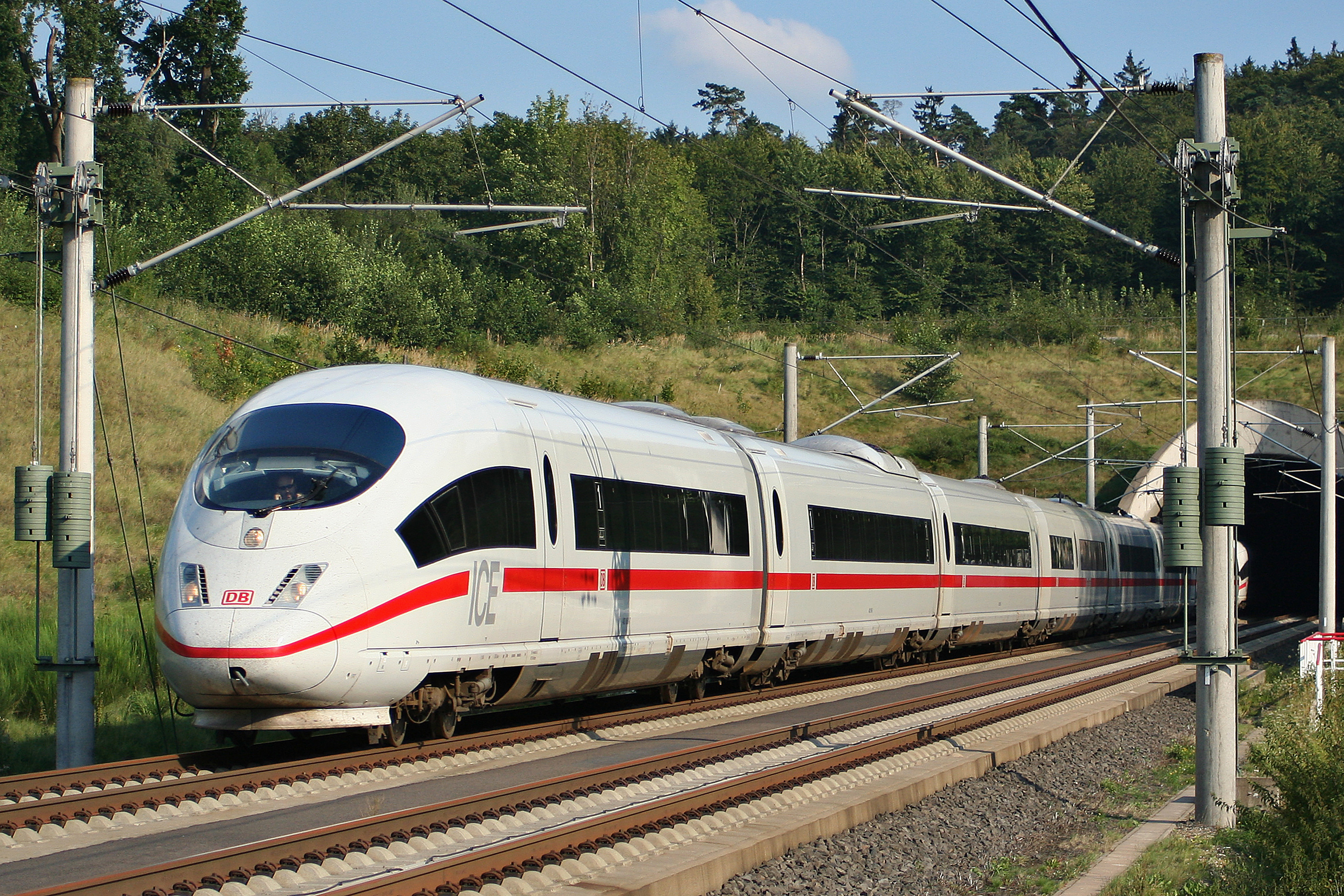
Following the liberalisation of international rail travel by European Union directives in 2010,{{cite web |url=http://www.mordiglia.it/convegno040306/Mordiglia%20_eng.pdf |title=Liberalization of railway transport: European directives on railway transport and Access to infrastructure |publisher=Enrico Mordiglia |access-date=11 May 2009 |url-status=dead |archive-url= https://web.archive.org/web/20100202104945/http://www.mordiglia.it/convegno040306/Mordiglia%20_eng.pdf |archive-date=2 February 2010}} various operators have announced proposals for competition with Eurostar.
Deutsche Bahn (DB) intended to run services between London to Frankfurt and Amsterdam (two of the biggest air travel markets in Europe), with trains 'splitting & joining' in Brussels. In July 2010, DB announced that it intended to make a test run with a high-speed ICE-3MF train through the Channel Tunnel in October 2010 in preparation for possible future operations. The trial ran on 19 October 2010 with a Class 406 ICE train specially liveried with a British "Union flag" decal. The train was then put on display for the press at London St Pancras International. However, this was not the class of train planned for the proposed service, instead proposing to use Class 407 ICE units, specially adapted for stronger Channel Tunnel safety standards.
DB scrapped the plan, mainly due to advance passport check requirements. DB had hoped that immigration checks could be done on board, but British authorities required immigration and security checks to be done at Lille-Europe station, taking at least 30minutes.
In 2021, Renfe, the national operator of Spain announced it was proposing competing London to Paris services. In 2022, Getlink, the owner of the Channel Tunnel had reportedly considered purchasing trains suitable for competing services, leasing them to rival operations, while in 2023, Mobico Group, the owner of National Express has also been reported to be considering cross-Channel services named 'Evolyn'.
From August 2024 to March 2025, the Office of Rail and Road (ORR) solicited final proposals on whether competition should be added through the Channel Tunnel, with Eurostar, Virgin Trains Europe, Evolyn, Gemini, and Trenitalia submitting plans. On 30 October 2025, ORR announced that there was enough maintenance space at Temple Mills Depot to allow a second competitor to run through the Channel Tunnel, and it had approved Virgin Trains Europe to begin operations within the next five years.
Environmental initiatives
Tread Lightly
In 2006, Eurostar's Environment Group was set up, with the aim of making changes in the Eurostar services' daily running to decrease negative environmental impact. In 2007, Eurostar said they would become the world's first carbon-neutral train service through its launch of "Tread Lightly," an environmental programme with the goal of reducing the service's carbon-dioxide emissions by 25% by 2012. In the grand opening ceremony of London St Pancras International, one of the Eurostar trains was given the name 'Tread Lightly', said to symbolise their smaller impact on the environment compared to planes.
The programme included: reducing power consumption on its rolling stock; sourcing more electricity from lower-emission generators; adding new controls on lighting, heating, and air conditioning; reducing paper usage via electronic tickets; recycling water and employee uniforms; sourcing all food on board from Britain, France, or Belgium. Drivers were trained in techniques to achieve maximum energy efficiency, and lighting was minimised; the provider of the bulk of the energy for the Channel Tunnel was switched to nuclear power stations in France. Eurostar also funded three renewable energy projects in developing regions around the world: a windfarm in Tamil Nadu, India; a micro-hydropower project in China; and a plan specifying improvements on fuel consumption of three-wheeler taxis in Indonesia. By 2008, Eurostar's environmental credentials had become highly developed and promoted.
Single-use plastics reduction
In 2019, Eurostar removed all single-use plastics from its trains between London and Paris. Now the trains serve only wooden cutlery, recyclable cans of water, glass wine bottles, paper-based coffee cups, and eco-friendly food packaging. Eurostar partnered with the Woodland Trust, ReforestAction, and Trees for All in 2020, with the goal of planting 20,000 trees each year in woodlands along its routes across the UK, Belgium, and the Netherlands.
Cycles
Its friendliness to cycles remains a missing part of its environmental strategy. In 2023, its cycle booking was described as "farcical," and in 2024 it scored a 0 for cycling accessibility in T&E's report, alongside Ouigo, Italo, Renfe and SJ. As of January 2026, the only trans-Channel services allowing assembled bikes were London-Brussels services -- such bikes had to be dropped off with luggage services, and pay a fee. The forthcoming Avelia Horizon trains should have bicycle racks included.
Effect
By 2015, Eurostar had reduced its carbon emissions by 32% since Tread Lightly launched. By 2019, it had reduced its carbon footprint by over 40% and now emits up to 90% less greenhouse gas emissions than the equivalent flight.
In 2024, it announced new goals to run all trains by renewable energy by 2030.
Records and awards

Records
The Channel Tunnel used by Eurostar services holds the record for having the longest underwater section of any tunnel in the world, and is the third-longest railway tunnel (behind the Seikan Tunnel and the Gotthard Base Tunnel) in the world.
On 30 July 2003, a Eurostar train set a new British speed record of 334.7 km/h on the first section of the "High Speed 1" railway between the Channel Tunnel, and Fawkham Junction in north Kent, two months before official public services began running.
On 16 May 2006, Eurostar set a new record for the longest non-stop high-speed journey, a distance of 1421 km from London to Cannes taking 7hours 25minutes.
On 4 September 2007, a record-breaking train left Paris Nord at 10:44 (09:44BST) and reached London St Pancras International in 2hours 3minutes 39seconds, carrying journalists and railway workers. This record trip was also the first passenger-carrying arrival at the new London St Pancras International station. On 20 September 2007, Eurostar broke another record when it completed the journey from Brussels to London in 1hour 43minutes.
Awards
Eurostar has been hailed as having set new, high standards for international rail travel, especially starting in its second decade. In 2005, Eurostar won the Train Operator of the Year award in the HSBC Rail Awards. Following its ambitious 2006 environmental strategy, it won the 2007 Network Rail Efficiency Award.
Since then, it has been declared the Best Train Company in the joint Guardian/Observer Travel Awards 2008 and earned a spot on the Sunday Times' Best Green Companies List (2009). Other awards include: ICARUS' Environmental Award for Best Rail Provider (2009), Guardian & Observer Travel Award for Best Train Company (2009), Travel Weekly's Golden Globes Award for Best Rail Operator (2010), World Travel Market's Responsible Tourism Award for Best Low Carbon Initiative (2011), TNT Magazine's Gold Backpack Award for Favourite Travel Transport (2012), World Travel Awards Europe's Leading Passenger Rail Operator (2011), National Rail Awards Train of the Year (2017), PETA's Travel Award for Best Travel Experience (2019), Mobile Industry Awards' Distributor of the Year (2020).
Fleet
Fleet details
| Class | Image | Top speed | Carriages | Number in use | Unit numbers | Electric systems | Routes operated | Built | km/h | mph | Pre-merger Eurostar | Ex-Thalys | Post-merger Eurostar | ||||
|---|---|---|---|---|---|---|---|---|---|---|---|---|---|---|---|---|---|
| *Eurostar e300* | [[File:Eurostar d'hiver en stationnement à Albertville (2018) (cropped).JPG | frameless | 125px]] | 300 | 186 | 2 power cars + 18 coaches | 11 | {{indented plainlist | {{indented plainlist | 1992–1996 | |||||||
| *Eurostar e320* | [[File:Rotterdam Lombardijen Eurosta rPBA 4033-4034 trein 9145 London St. Pancras Int (51414943453).jpg | frameless | 125px]] | 320 | 200 | 8 self-propelled coaches & 8 non-powered coaches | 17 | {{indented plainlist | {{indented plainlist | 2011–2018 | |||||||
| PBA | [[File:TGV Thalys Amsterdam-Alpes quittant Landry en Savoie (hiver 2019).JPG | frameless | 125px]] | 320 | 200 | 2 power cars + 8 coaches | 9 | 4532–4540 | {{indented plainlist | 1996 | |||||||
| PBKA | [[File:Horrem Thalys 4304 Paris Nord (52131234467).jpg | frameless | 125px]] | 17 | {{indented plainlist | {{indented plainlist | 1997 |
Current fleet
Eurostar e300
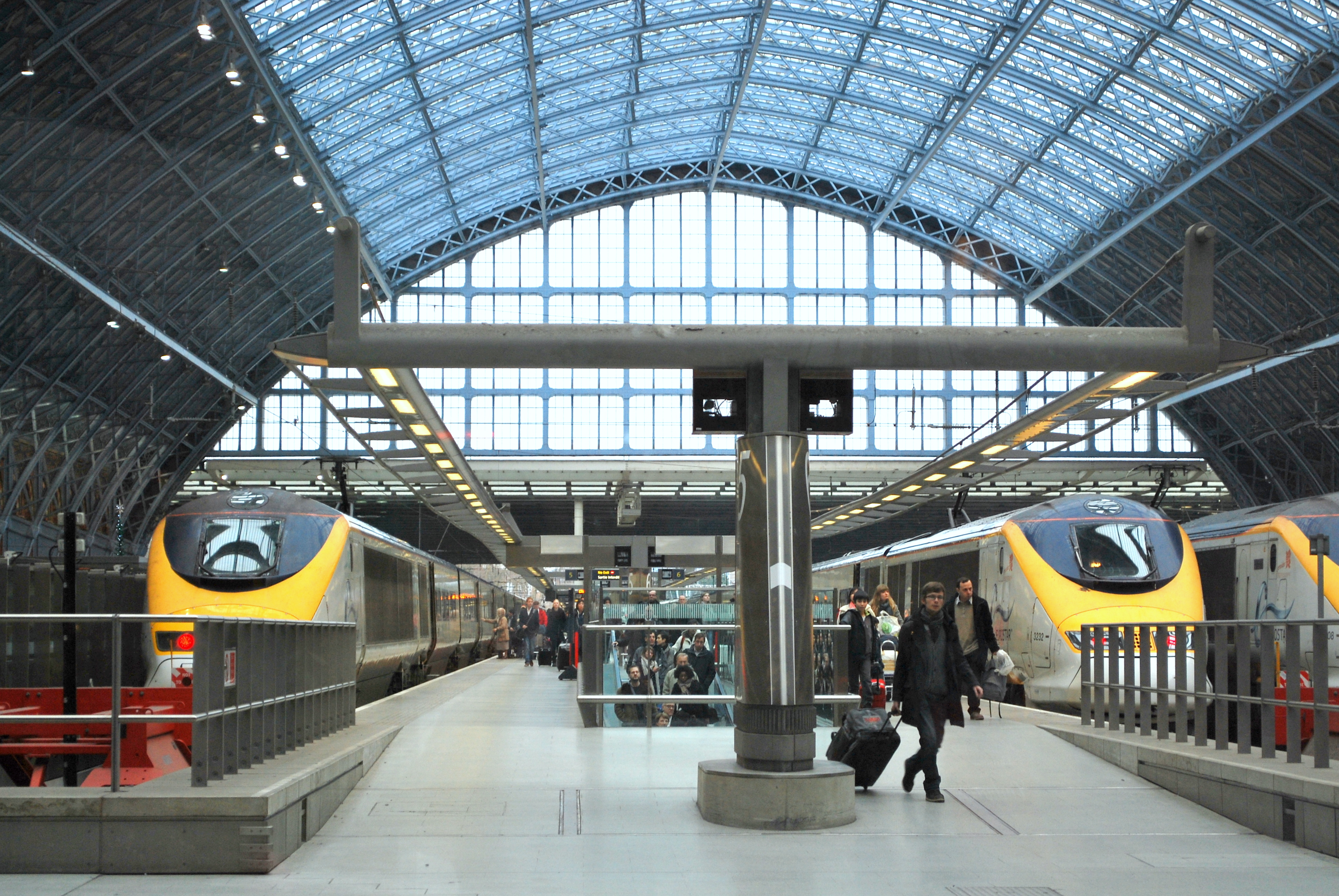
Main article: British Rail Class 373
Built between 1992 and 1996, Eurostar's fleet consisted of 38 EMU trains, designated Class 373 in the United Kingdom and TGV TMST in France. The units have also been branded as the Eurostar e300 by Eurostar since 2015. There are two variants:
- 31 "Inter-Capital" sets consisting of two power cars and eighteen passenger carriages. These trains are 394 m long and can carry 750 passengers: 206 in first class, 544 in standard class.
- Seven shorter "North of London" sets which have two power cars and fourteen passenger carriages and are 320 m long. These sets have a capacity of 558 seats: 114 first class, 444 standard and which were designed to operate the aborted Regional Eurostar services.
Each train has a unique four-digit number starting with "3" (3xxx). This designates the train as a Mark 3 TGV (Mark 1 being SNCF TGV Sud-Est; Mark 2 being SNCF TGV Atlantique). The second digit denotes the country of ownership:
- 30xx UK
- 31xx Belgium
- 32xx France
- 33xx Regional Eurostar
The trains are essentially modified TGV sets, and can operate at up to 300 km/h on high-speed lines, and 160 km/h in the Channel Tunnel. It is possible to exceed the 300km/h speed limit, but only with special permission from the safety authorities in the respective country. Speed limits in the Channel Tunnel are dictated by air-resistance, energy (heat) dissipation and the need to be used with other, slower trains. The trains were designed with Channel Tunnel safety in mind, and consist of two independent "half-sets" each with its own power car. In the event of a serious fire on board while travelling through the tunnel, passengers would be transferred into the undamaged half of the train, which would then be detached and driven out of the tunnel to safety. If the undamaged part were the rear half of the train, this would be driven by the Chef du Train (conductor), who is a fully authorised driver and occupies the rear driving cab while the train travels through the tunnel for this purpose.
As the Class 374 units have entered service the Class 373 fleet has gradually been reduced. Eleven remain in regular service with 17 scrapped and ten in storage.
Fleet updates
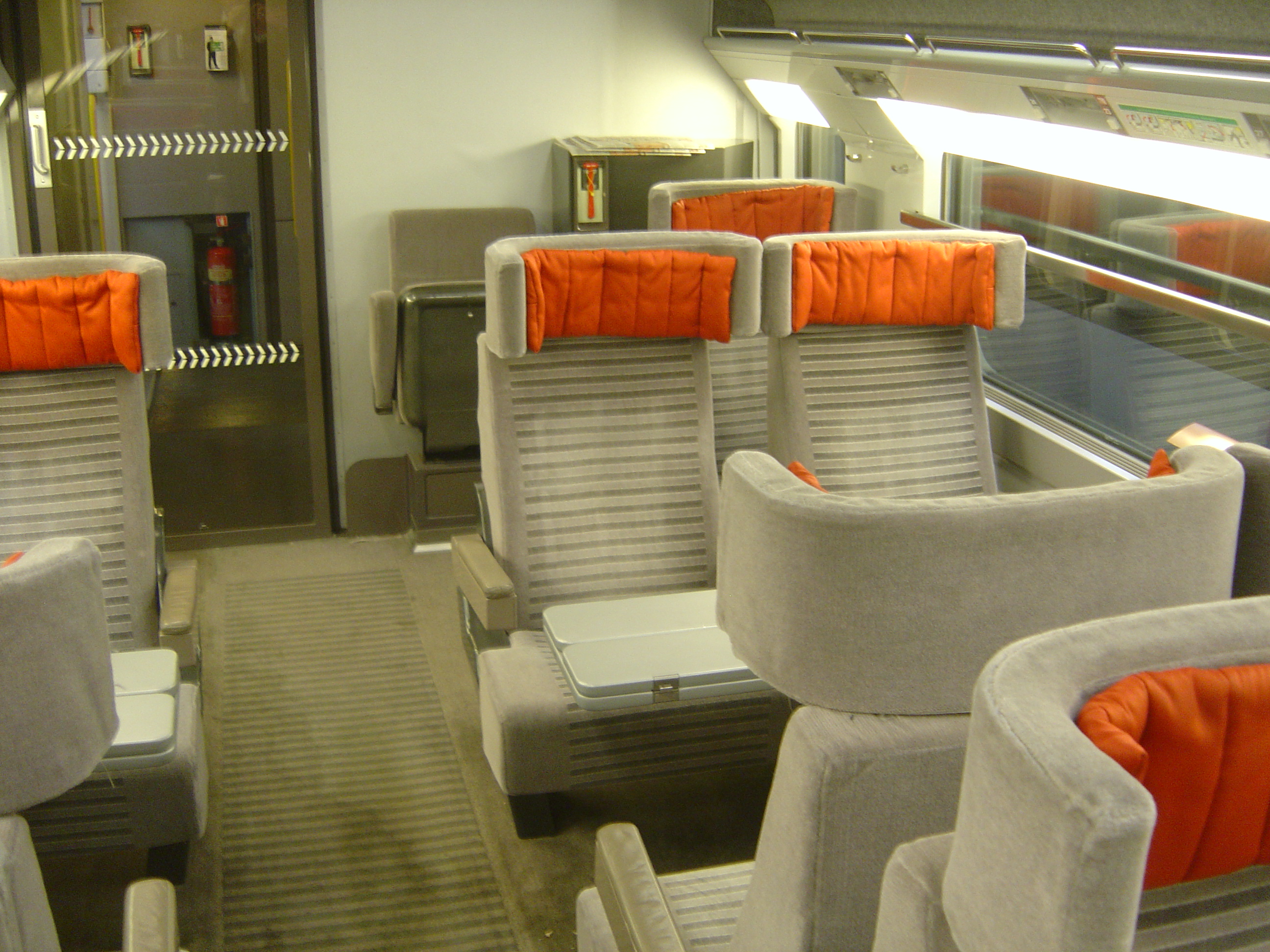
In 2004–2005 the "Inter-Capital" sets still in daily use for international services were refurbished with a new interior designed by Philippe Starck. The original grey-yellow scheme in Standard class and grey-red of First/Premium First were replaced with a grey-brown look in Standard and grey-burnt-orange in First class. Power points were added to seats in First class and coaches 5 and 14 in Standard class. Premium First class was renamed BusinessPremier.
In 2008, Eurostar announced that it would be carrying out a mid-life refurbishment of its Class 373 trains to allow the fleet to remain in service beyond 2020. This will include the 28 units making up the Eurostar fleet, but not the three Class 373/1 units used by SNCF or the seven Class 373/2 "North of London" sets. As part of the refurbishment, the Italian company Pininfarina was contracted to redesign the interiors, and The Yard Creative was selected to design the new buffet cars. On 11 May 2009 Eurostar revealed the new look for its first-class compartments. The first refurbished train was due in service in 2012, and Eurostar planned to complete the entire process by 2014. On 13 November 2014 Eurostar announced the first refurbished trains would not re-enter the fleet until the 3rd or 4th quarter of 2015 due to delays at the completion centre. The last refurbished e300 eventually re-entered service in April 2019.
Eurostar e320
Main article: Eurostar e320
In addition to the announced mid-life update of the existing Class 373 fleet, Eurostar in 2009 began looking to purchase eight new trainsets. Any new trains would need to meet the same safety rules governing passage through the Channel Tunnel as the existing Class 373 fleet. The replacement to the Class 373 trains has been decided jointly between the French Transport Ministry and the UK Department for Transport. The new trains will be equipped to use the new ERTMS in-cab signalling system, due to be fitted to High Speed 1 around 2040.

On 7 October 2010, it was reported that Eurostar had selected Siemens as preferred bidder to supply 10 Siemens Velaro trainsets at a cost of €600million These would be sixteen-car, self-propelled, 400 m trainsets built to meet Channel Tunnel requirements. The top speed of the e320 trainsets is 320 km/h with 902 seats, compared to the e300 fleet which has a top speed of 300 km/h and a seating capacity of 750. Total traction power will be rated at 16 MW. The e320 trainsets would also be quadri-current, adding the ability to run on the system used in Germany, allowing for an expanded route network, including services between London and Cologne.
The selection of Siemens would see it break into the French high-speed market for the first time, as all French high-speed operators use TGV derivatives produced by Alstom. Alstom attempted legal action to prevent Eurostar from acquiring the German-built trains, claiming that the Siemens sets would breach Channel Tunnel safety rules, but the case was thrown out by the High Court in London. On 4 November 2010, Alstom lodged a complaint with the European Commission over the tendering process. Alstom then started legal action claiming that the Eurostar tender process was "ineffective", the High Court rejected the second suit in July 2011. In April 2012, Alstom said it would call off court actions against Siemens.
On 13 November 2014, Eurostar announced the purchase of an additional seven e320s for delivery in the second half of 2016. At the same time, Eurostar announced the first five e320s from the original order of ten would be available by December 2015, with the remaining five entering service by May 2016. Of the five sets ready by December 2015, three of them were planned to be used on London-Paris and London-Brussels routes.
Future fleet additions: Eurostar Celestia
In May 2024, Eurostar announced its intention to order up to 50 new trains. Although it was speculated that the company would select Alstom’s double-decker Avelia Horizon units, no firm order had been placed at that time.
In October 2025, SNCF Voyageurs, acting on behalf of Eurostar, confirmed an order for 30 Avelia Horizon double-decker trainsets with a four-voltage configuration, under its existing framework agreement with Alstom, with options for an additional 20 units. The new fleet will be marketed as Eurostar Celestia, a name chosen by Eurostar staff derived from the Latin caelestis, meaning “heavenly". The 200 m trains will each have 540 seats and are scheduled for delivery by January 2031, with entry into service planned for May 2031.
If introduced on services to London, they would represent the first major fleet of double-decker trains to operate in the UK. Eurostar announced its intention to maintain the entire fleet at Temple Mills Depot in London which would be modified at a cost of €80 million to accommodate these trains, creating around 350 jobs.
Past fleet
| Class | Image | Type | Top speed | Number | ||||
|---|---|---|---|---|---|---|---|---|
| operated | Notes | mph | km/h | |||||
| Class 37 | [[File:37603 and 37604 At Clapham Junction.jpg | 100px]] | Diesel locomotive | 90 | 145 | 12 | Intended to operate sleeper services over non-electrified parts of the railway network in Britain. Eurostar retained three locomotives for the rescue of failed trains, route learning and driver training, but sold them to Direct Rail Services when the new Temple Mills Depot opened in November 2007. | |
| Class 73 | [[File:Class 73s at Dereham in 2008.jpg | 100px]] | Electro-diesel locomotive | 90 | 145 | 2 | Were used primarily to rescue failed trains. Eurostar operated two of these from its North Pole depot until 2007, when they were loaned to a pair of educational initiatives having become redundant following the move to Temple Mills. | |
| Class 92 | [[File:92027 George Eliot at Stafford.jpg | 100px]] | Electric locomotive | 87 | 140 | 7 | Intended to operate the Nightstar sleeper services. Eurostar owned seven units of this class, which never saw service until they were sold in 2007 to Europorte 2.{{cite press release | url=http://www.eurotunnel.com/ukcP3Main/ukcCorporate/ukcMediaCentre/ukcNewsReleases/ukcNews2007/ukcFebruary2007/ukpPr0702DevelopmentForEuroporte2.htm |
| Class 373 *Eurostar e300* | [[File:Eurostar sets 3206 3205 at Ashford international 14961954169.jpg | 100px]] | EMU | 186 | 300 | 38 | 11 in operation, 10 in storage, 17 scrapped, 4 power cars preserved. |
Accidents and incidents
A number of technical incidents have affected Eurostar services over the years, but there has only been one major accident involving a service operated by Eurostar, a derailment in June 2000. Other incidents in the Channel Tunnel – such as the 1996 and 2008 Channel Tunnel fires – have affected Eurostar services but were not directly related to Eurostar's operations. However, the breakdowns in the tunnel, which resulted in cessation of service and inconvenience to thousands of passengers, in the run-up to Christmas 2009, proved a public-relations disaster.
June 2000 derailment
On 5 June 2000, a Eurostar train travelling from Paris to London derailed on the LGV Nord high-speed line while travelling at 290 km/h. Fourteen people were treated for light injuries or shock, with no fatalities or major injuries. The articulated nature of the trainset was credited with maintaining stability during the incident and all of the train stayed upright. The incident was caused by a traction link on the second bogie of the front power car coming loose, leading to components of the transmission system on that bogie impacting the track.
December 2009 snowfall breakdowns
During the December 2009 European snowfall, five Eurostar trains broke down inside the Channel Tunnel, after leaving France, and one in Kent on 18 December. Although the trains had been winterised, the systems did not cope with the conditions. Over 2,000passengers were stuck inside trains inside the tunnel, and over 75,000 had their services disrupted. All Eurostar services were cancelled over 19–21 December 2009. An independent review, published on 12 February 2010, was critical of the contingency plans in place for assisting passengers stranded by the delays, calling them "insufficient."
References
Bibliography
References
- (14 January 2026). "Eurostar surprises its 400 millionth customer as it celebrates growth in 2025".
- "Coming Soon: Thalys to Rebrand as Eurostar". SNCF.
- "The Channel Tunnel". library.thinkquest.org.
- Bertrand, Valentin. (4 November 2019). "L’Eurostar a 25 ans : retour sur un symbole fort de la relation franco-britannique". French Morning London.
- Wilson, Jeremy. (1994). "Eurotunnel{{nbsp}}– The Illustrated Journey". [[HarperCollins]].
- Noulton, John. (February 2001). "The Channel Tunnel". Japan Railway & Transport Review.
- (6 May 1994). "On this day: 6 May 1994: President and Queen open Chunnel (with video clip)". BBC News.
- "Our history". Eurotunnel.
- "Class 373: Trans Manche Super Train".
- "TGVweb - Eurostar".
- (May 2005). "Bilan LOTI de la LGV Nord Rapport". Réseau Ferré de France.
- Wolmar, Christian. (21 October 1994). "Channel train opens with a breakdown". The Independent.
- (20 December 2007). "Official Waterloo 'Goodbye' video, useful statistics and numbers shown".
- (13 November 2007). "Waterloo International: 1994–2007". The Guardian.
- "Rail Chronology: Eurostar services".
- (27 September 2003). "Train smashes London-Paris record". [[BBC]].
- Takagi, Ryo. (March 2005). "High-speed Railways:The last ten years". Japan Railway & Transport Review.
- (9 January 2006). "Eurostar celebrates 10 years at Ashford International". Eurostar.
- (14 November 2014). "Eurostar at 20: how has the service grown?".
- Charles, Paul. (1 June 2005). "Rebuilding Eurostar's brand and reputation". Strategic Communication Management.
- "High Speed 1, United Kingdom". railway-technology.com.
- (7 November 2007). "With the new Eurostar high speed rail link, Alstom participates in the European rail network". [[Alstom]].
- Rudd, Matt. (28 October 2007). "Eurostar to Brussels". The Times.
- (7 November 2007). "The royal pride of reborn St Pancras". Evening Standard.
- Sweney, Mark. (14 July 2007). "Eurostar launches St Pancras ads". The Guardian.
- Higham, Nick. (6 November 2007). "The transformation of St Pancras". BBC News.
- (14 November 2007). "Eurostar arrives in Paris on time". BBC News.
- Millward, David. (3 November 2007). "Eurostar will cross London — in 15 hours". The Daily Telegraph.
- Dyckhoff, Tom. (24 July 2007). "St Pancras regains the Gothic glamour". The Times.
- (1 May 2015). "Eurostar debuts London to Marseille high-speed rail link". [[France 24]].
- "Launch of Eurostar London-Amsterdam direct service - Newsroom Getlink".
- (24 August 2020). "Eurostar to launch direct Amsterdam to London route in October". The Guardian.
- Wood, Zoe. (17 January 2021). "Eurostar warns of 'risk to survival' without government help". [[The Guardian]].
- Rizzo, Cailey. (19 January 2021). "Eurostar Rail Service Facing Financial Woes Due to COVID-19". Dotdash Meredith.
- Taylor, Ian. (5 February 2021). "Eurostar ‘not ours to rescue’ insists UK transport secretary". TrvaelWeekly.
- (20 January 2021). "Pandemic-hit Eurostar seeks financial aid from UK Government". Railway Technology.
- Jasper, Christopher. (17 January 2021). "Eurostar Survival Concern Grows as U.K. Firms Lobby for Rescue".
- (19 January 2021). "Eurostar finances near collapse as Covid cuts cross-channel train traffic". [[Radio France Internationale]].
- Wright, Robert. (5 July 2023). "Eurostar in recovery: is there light at the end of the tunnel?". [[Nikkei, Inc.]].
- Brann, Rich. (5 December 2025). "Eurostar hits record profits of £200 million as high-speed rail competition intensifies". SW Londoner.
- (5 September 2023). "Eurostar: Petition for return of Kent services backed by 30,000".
- (27 September 2019). "Green Speed: A project to combine Eurostar and Thalys has been presented to the boards of their shareholders to meet the demand for sustainable travel in Europe". Eurostar Media Centre.
- Briginshaw, David. (27 September 2019). "Eurostar-Thalys merger proposal revealed". Simmons-Boardman Publishing.
- Posaner, Joshua. (27 September 2019). "Eurostar, Thalys merger floated to create high-speed rail giant". [[Axel Springer SE]].
- Wright, Robert. (5 July 2023). "Eurostar in recovery: is there light at the end of the tunnel?". [[Nikkei, Inc.]].
- McWhriter, Alex. (16 September 2020). "Eurostar and Thalys to merge in 2021". Business Traveller.
- (5 October 2021). "Eurostar brand to remain after Thalys merger". [[DVV Media Group]].
- "Eurostar and Thalys have become one". Eurostar International.
- (10 June 2025). "Eurostar planning direct London to Frankurt and Geneva train services".
- "Routemap".
- "Train timetable info London St Pancras Int'l to Paris Gare du Nord".
- (4 September 2024). "What we know about Eurostar's re-launched ski train services to French Alps".
- Dumitrache, Alina. (24 March 2010). "The Channel Tunnel – Traveling Under the Sea". AutoEvolution.
- (18 March 2008). "Eurotunnel Network Statement 2008". Eurotunnel.
- "The need for a Channel Tunnel Rail Link". [[Department for Transport]].
- "TGVweb - LGV Nord-Europe".
- (8 August 2004). "Le reseau TGV belge -- La branche Ouest".
- (8 August 2004). "La branche Est".
- (2 April 2003). "Ligne 3".
- (10 December 2009). "Le Premier Réseau à Grande Vitesse Complet d'Europe est en Service".
- Delmer, Sylvie. (2012). "L’appropriation locale de la grande vitesse ferroviaire en Europe". Revue d’histoire des chemins de fer.
- (31 December 2007). "Infrabel Rapport Annuel 2007".
- (27 May 2008). "Belgian High Speed Line Network".
- (7 September 2009). "NS Hispeed launches HSL-Zuid services". [[Railway Gazette International]].
- (August 2002). "Ausbaustrecke (ABS) 4. Köln – Düren – Aachen – Paris/Amsterdam: 1. Baustufe Köln – Düren".
- infrastruct. (2008-05-29). "High-speed bypass line Düren".
- "St. Pancras International Train Station Official Website".
- "London King’s Cross - Facilities, Shops and Parking Information".
- "Brussels-Midi railway station {{!}} SNCB International".
- "Stations Information {{!}} NS".
- "Paris Gare du Nord {{!}} Gares & Connexions".
- "Lille Europe {{!}} Gares & Connexions".
- "Lille Flandres".
- "Stations Information {{!}} NS".
- "Köln Hbf".
- "Through fares to the continent with Eurostar". National Rail.
- (18 December 2007). "Through-fares from 68 UK towns and cities to continental Europe now available on eurostar.com". Eurostar.
- Fender, Keith. (December 2011). "Eurostar changes Belgian tickets and connections".
- (28 May 2009). "Eurostar Connecting to Switzerland".
- Mycroft, Dave. (29 May 2009). "New Eurostar Link Up Opens Easier, Cheaper Travel".
- "Take the ski train to the Swiss Alps". Eurostar.
- Calder, Simon. (7 May 2019). "Eurostar ends agreement allowing passengers to travel from London to Germany, Austria and Switzerland". The Independent.
- (5 July 2007). "A high-speed revolution". The Economist.
- (8 June 2009). "UK Government Nationalizes London & Continental Railways". The Wall Street Journal.
- Orban, André. (25 September 2024). "Eurostar joins SkyTeam: Pioneering integrated Air-Rail Travel partnership". Aviation24.be.
- (25 September 2024). "Eurostar set to join SkyTeam as first non-airline partner". Business Traveller.
- "AirRail: Amsterdam Schiphol".
- "Plan & Book- Eurostar - EVA Air | France (English)".
- "Eurostar".
- "Air&Rail: flight with train journey".
- "Eurostar".
- (15 December 2008). "Q&A: Schengen Agreement". BBC News.
- (20 March 2012). "The Channel Tunnel (Security) Order 1994 (especially point 13)". Legislation.gov.uk.
- "Checking in".
- Cox, Simon. (8 December 2011). "UK border staff in arrest threat over 'Lille loophole'". BBC News.
- (7 July 2020). "New Eurostar treaties open up direct travel from Amsterdam to London". HM Government.
- (23 July 1996). "Document législatif du Sénat belge n°1-396/1, Déclarations du Gouvernement belge". Belgian Senate.
- Ford, Richard. (30 June 2009). "New British £750 million electronic border control plan 'breaks EU law'". The Times.
- Williams, Chris. (30 June 2009). "Eurostar tunnels through UK border ring of steel". [[The Register]].
- Dowd, Vincent. (30 May 2015). "Direct train to Europe". BBC News.
- Landesman, Peter. (14 April 2002). "The Light at The End of the Chunnel". The New York Times.
- (3 August 2001). "Police find Eurostar stowaways". BBC News.
- "Safety and security: Border controls". Eurotunnel.
- (6 June 2007). "Eurostar boosts passenger security at Ashford International". Eurostar.
- Webster, Ben. (14 November 2007). "Five Waterloo platforms left in limbo by Eurostar pullout". The Times.
- Topham, Gwyn. (23 June 2023). "Adieu Mickey Mouse: Eurostar’s shrinking ambitions seven years on from the Brexit vote". [[The Guardian]].
- (2023-06-05). "Eurostar runs final direct Disneyland Paris service while Amsterdam route faces suspension {{!}} The Railway Hub".
- "Eurostar Snow Train". Eurostar.
- "Eurostar winter ski tickets".
- "Eurostar's other UK stations". Eurostar.
- "Eurostar Ski Train 2024/25 {{!}} Times, fares, tickets".
- Odell, Mark. (13 May 2012). "Eurostar eyes expansion across Europe". Financial Times.
- (13 June 2012). "Eurostar to add new destinations".
- Topham, Gwyn. (16 March 2016). "Wine line: Eurostar mulls direct trains to Bordeaux from London".
- Silvester, Katie. (February 2008). "Interview with Richard Brown, Chief Executive of Eurostar". Rail Professional.
- Topham, Gwyn. (24 January 2023). "Eurostar trains forced to run with empty seats due to Brexit passport rules". The Guardian.
- (6 February 2024). "Possible restrictions on Eurostar services due to future post-Brexit passport controls".
- (24 August 2020). "Eurostar to launch £40 Amsterdam to London trains". BBC News.
- (4 February 2020). "Eurostar transforms link between London and Amsterdam with services now direct both to and from the Netherlands". Eurostar.
- (14 April 2022). "Amsterdam to London Eurostar services to be suspended for six months".
- (31 March 2010). "Unified Safety Rules Consultation conclusions". Channel Tunnel Intergovernmental Commission.
- Webster, Ben. (21 April 2006). "Ghost train station that cost £210m". The Times.
- (25 May 2010). "Eurostar 'will not stop' at Stratford International". BBC News.
- (29 July 2013). "Boris Johnson urges Eurostar to start using Olympic Park station".
- (n.d.). "Review of regional Eurostar services: summary report". [[Department for Transport]].
- (28 April 1999). "Eurostar extension in doubt". BBC News.
- (December 1998). "Why Has the Market Not Been Created for Channel Tunnel Regional Passenger Rail Services?". Royal Geographical Society.
- (16 January 2002). "High-speed GNER trains scrapped". BBC News.
- (6 February 2002). "White Rose to run to Leeds with extra trains".
- (April 2007). "SNCF prepares to use Eurostar sets".
- Guerra, Michael. (December 2003). "Second chance for Eurostar sleepers". RailFuture.
- Middleton, William D.. (August 2003). "Via Rail's renaissance: "Renaissance" is the name Via Rail Canada has given its new fleet of European-built passenger cars, but it applies equally well to the entire operation". [[Railway Age]].
- Hickling, Michael. (1 November 2007). "Fast track to Europe – old track to Yorkshire". Yorkshire Post.
- (20 June 2007). "Eurostar welcomes greengauge 21's call for high speed 2". Eurostar.
- Montague, Simon. (8 May 2009). "Rail investments that will last for 200 years". Yorkshire Post.
- (11 July 2015). "HS2: Plans revived to connect London terminus of High Speed Two with Channel Tunnel Rail Link".
- (27 January 2006). "Train Access Rights necessary to operate additional passenger services on the East Coast Main Line". Office of the Rail Regulator.
- (19 December 2005). "Consultation on capacity study for East Coast Main Line". Railways Archive.
- (2 June 2008). "Long-term TGV plans". Railway Gazette International.
- (20 August 2009). "Eurostar confirms plans for senior management changes". Breaking Travel News.
- (2014-10-13). "Eurostar rail stake touted for sale by UK government". [[British Broadcasting Corporation]].
- (2015-03-04). "UK government sells Eurostar stake for £757.1m". [[British Broadcasting Corporation]].
- Comptroller and Auditor General. (2015-11-06). "The sale of Eurostar". [[National Audit Office (United Kingdom).
- (4 March 2015). "UK government sells Eurostar stake for £757.1m". BBC News.
- "Behind the scenes". [[Eurostar Group]].
- "Hermes secures Eurostar ownership for pension funds after UK sell-off".
- (2022-05-02). "Eurostar, Thalys merge to bring more high-speed rail routes to Europe".
- (2024). "Mind the gap! Europe’s Rail Operators: a Comparative Ranking".
- (20 December 2024). "Mind the gap! Europe’s Rail Operators: A Comparative Ranking".
- "Eurostar – Classes of Travel – Business Premier". Rail Europe.
- "Eurostar means Business". Eurostar.
- Perrin, Lucy. (20 May 2025). "Eurostar guide: everything you need to know before you travel". [[The Times]].
- Trend, Nick. (29 October 2004). "The savvy traveller: Training makes a difference". The Daily Telegraph.
- Frary, Mark. (12 September 2008). "Scramble for seats as Eurostar remains suspended". The Times.
- Martin, Andrew. (18 November 2007). "St Pancras is a start, but it takes more to stop us flying". The Independent.
- Rodgers, Paul. (17 May 1995). "6.57 office to Paris". The Independent.
- (12 June 2009). "Private train carriages 'become more popular'". laterooms.com.
- Calder, Simon. (20 October 2007). "The cost of the Eurostar train in Spain falls way below the plane". The Independent.
- (5 July 2006). "Eurostar available alongside airlines on the GDS systems". Eurostar.
- "Rail travel you can rely on". Eurostar.
- "Our history". Eurostar.
- Desiderio, Matthieu. (16 April 2008). "Eurotunnel and Eurostar 2008 1Q results: positive!". Transport Expertise.
- (19 November 2025). "Customer Charter".
- (22 November 2024). "Customer Charter".
- (24 October 2023). "Customer Charter".
- (7 October 2022). "Customer Charter".
- (2 November 2021). "Customer Charter".
- (24 June 2021). "Customer Charter".
- "Customer Charter".
- "Customer Charter".
- "Customer Charter".
- "Customer Charter".
- "Customer Charter".
- Russel, Géraldine. (2 June 2016). "SNCF, Eurostar, Thalys : le palmarès des retards de trains". [[Le Figaro]].
- "Rail travel you can depend on".
- "High Speed 1 delivers a record year for Eurostar".
- "Eurostar achieves best ever punctuality performance".
- (6 July 1999). "Eurostar trains beat planes". [[BBC]].
- (8 August 2006). "Eurostar Booms Thanks to Airport Security". Air, Business and Travel News.
- "10 Good Reasons to Travel Eurostar". Eurostar.
- Smith, Mark. "A guide to Eurostar trainsLondon to Paris & Brussels".
- Wright, Robert. (5 July 2023). "Eurostar in recovery: is there light at the end of the tunnel?". Financial Times.
- (14 September 2004). "Eurostar achieves record market share". Eurostar.
- Wright, Robert. (10 January 2008). "Eurostar passenger numbers surge". Financial Times.
- (1 September 2023). "Diverted and induced demand: Evidence from the London-Paris passenger market". Research in Transportation Economics.
- Dickinson, Greg. (16 January 2025). "Eurostar has been a disappointment – a rival is long overdue". The Telegraph.
- Garland, Cecilia. (24 February 2014). "FRENCH RAIL OPERATOR WANTS TO TAKE MARKET SHARE IN AIRLINES". Tourism Review.
- (10 April 2025). "Eurostar competition could slash fares from London to Europe".
- (4 May 2006). "Select Committee on Public Accounts Thirty-Eighth Report". House of Commons.
- Clark, Nick. (15 April 2008). "Eurostar credits move to St Pancras for boosting ticket revenues by 25 per cent". The Independent.
- Lane, Michael. (16 April 2009). "Eurostar suffers 5.8% fall in sales". Travel Trade Gazette.
- (16 April 2009). "Tunnel fire eats into Eurostar's passenger numbers". Kent Online.
- Clark, Nicola. (16 April 2009). "Eurostar hit by recession". Marketing Magazine.
- (13 May 2009). "EU approves British state aid for high-speed Eurostar line". EU Business.
- Sturcke, James. (12 February 2010). "Eurostar 'had no plan' to deal with train breakdown delays". The Guardian.
- "Delivering a Sustainable Railway — White Paper. Part 8: International". Department for Transport.
- "Channel Tunnel Traffic Forecasting". Nottingham University.
- "Eurostar generates ten times less CO2 than flying the same routes". Eurostar.
- (17 April 2007). "Eurostar plans 'greener' trains". BBC News.
- Lane, Michael. (28 April 2009). "Eurostar reports 31% fall in CO2 emissions". Travel Trade Gazette.
- (13 January 2009). "Eurostar travel hits record level". BBC News.
- (20 January 2010). "Eurostar sales up in 2009 despite travel chaos". BBC News.
- (14 January 2011). "Eurostar sales rise on recovery in business travel". BBC News.
- (8 March 2012). "Eurostar sales boosted by visitors from outside EU". BBC News.
- (25 March 2013). "'Strong' 2012 for Eurostar". Rail.co.
- (5 March 2014). "Eurostar passenger figures topped 10 million in 2013". BBC News.
- (18 February 2015). "Eurostar growth continues in 2014". Railwaygazette.com.
- (15 March 2016). "Eurostar passenger numbers steady but profit down". Railwaygazette.com.
- (23 January 2025). "Eurostar Reports Record Growth in 2024 with Ambitious Future Plans for Sustainable Travel". Eurostar.
- (29 June 2007). "EU agrees to liberalise rail by 2010". EurActiv.com.
- (29 July 2010). "Deutsche Bahn to run ICE3 to Britain this year". Railway Gazette International.
- (28 October 2021). "Spain's state-owned train operator Renfe plans to launch high-speed London to Paris service". Evening Standard.
- (27 March 2022). "Eurostar could face rival high speed rail service as Getlink in talks with Spanish rail firm Renfe". Kent Online.
- (2 August 2023). "Channel Tunnel hopefuls mount another challenge to Eurostar". Rail Tech.
- (25 March 2022). "How Getlink wants to clear a hurdle for new operators to run trains through the Channel Tunnel". Rail Tech.
- Edwards, Charlotte. (30 October 2025). "Virgin set to challenge Eurostar on Channel Tunnel route".
- {{Cite letter. link. Stephanie. Tobyn. (30 October 2025)
- "Winners of 2007". [[Network Rail]].
- Kanter, James. (5 May 2009). "French Nuclear Power Cleans Up Eurostar – Green Inc. blog". The New York Times.
- McCarthy, Michael. (15 November 2007). "A green light for Eurostar: The train that takes the eco-strain". The Independent.
- (17 April 2007). "Eurostar Trains To Go Carbon Neutral". ET Energy World.
- (15 November 2007). "High Speed One opens". [[BBC]].
- Grant, John. (2008). "The green marketing manifesto". John Wiley.
- (14 November 2019). "Eurostar announces new environmental commitments for 25th anniversary". Global Railway Review.
- Brandler, Hannah. (26 November 2019). "Eurostar announces eco-friendly initiatives". Business Traveller.
- Smith, Andrea. (18 November 2019). "How Eurostar plans to become more eco-friendly". Lonely Planet.
- Tims, Anna. (17 August 2023). "Eurostar derailed my efforts to book a bike on to one of its trains". The Guardian.
- "Travelling with your bike on Eurostar".
- "Eurostar Orders 50 Double-Decker Trains, Boosting Cross-Border Capacity by 40 %".
- (8 February 2018). "Eurostar to drastically reduce plastic waste under new sustainability targets". ClimateAction.
- O'Donoghue, Deborah. (3 May 2024). "Eurostar trains to be 100% run on renewables by 2030". Travel Tomorrow.
- Gilbert, Jane. (1 December 2006). "'Chunnel' workers link France and Britain". APN New Zealand.
- Minus, Jodie. (26 January 2007). "Eurostar an underground force". The Australian.
- (17 June 2006). "Eurostar sets new Guinness World Record with cast and filmmakers of Columbia Pictures' The Da Vinci Code". Eurostar.
- (30 July 2003). "Eurostar breaks UK high speed record". Eurostar.
- (4 September 2007). "Eurostar sets Paris-London record". BBC News.
- Williams, Michael. (21 September 2007). "Eurostar puts Brussels within the 'two-hour club' after record rail journey". The Independent.
- (March 2005). "Eurostar — A seamless journey to the continent". Japan Railway & Transport Review.
- Davidson, Max. (14 November 2007). "Eurostar: welcome to the new age of trains". The Daily Telegraph.
- "Eurostar Company Awards page". Eurostar.
- (5 April 2005). "Eurostar unveils new rail alliance with European high-speed train operators, Thalys and Deutsche Bahn's ICE". Eurostar.
- (12 October 2008). "Travel Awards 2008 winners". The Guardian.
- Montague, Simon. (4 December 2010). "Climate Change and Business: Eurostar's Environmental Action Plan and its Communication – Lessons Learnt and Guidelines". Elcano Royal Institute.
- (2009). "Eurostar Case Study". Allen & York.
- (20 October 2009). "Travel Awards 2009 Winners". The Guardian.
- Cusing, Karl. (3 September 2009). "Globe Travel Awards:2010 The categories". Travel Weekly.
- Francis, Justin. (2011). "2011 Responsible Tourism Award Winners". Responsible Travel.
- (29 October 2012). "TNT Golden Backpack Awards – the winner revealed". TNT Magazine.
- (2015). "Europe's Leading Passenger Rail Operator 2015". World Travel Awards.
- (22 September 2017). "National Rail Awards 2017: Siemens Eurostar e320 wins Train of the Year award". Rail.
- Camilli, Sascha. (2 December 2019). "Malmaison, Eurostar, Virgin Trains Among Winners of PETA's First-Ever Travel Awards". PETA UK.
- (21 September 2020). "Mobile Industry Awards 2020: Eurostar Global Electronics is Distributor of the Year". Tech Radar Pro.
- "Eurostar seating plan".
- (October 1994). "High speed for Europe". Japan Railway & Transport Review.
- "French Railway Industry: The paths of excellence". DGE/[[UBIFRANCE]].
- Nash, Emily. (5 September 2007). "Eurostar sets new Paris-London record". The Mirror.
- (n.d.). "Channel Tunnel Rail Link (CTRL), United Kingdom". Railway-technology-com.
- Wolmar, Christian. (23 November 2007). "Who is going to use the new high speed line?". Rail.
- Millward, David. (27 November 2008). "Eurostar services could be disrupted by strike in run up to Christmas". The Daily Telegraph.
- (27 May 2003). "Multi-million facelift for Eurostar". BBC News.
- (8 September 2008). "Eurostar invites bidders to undertake major interior refurbishment of fleet". Rail Management.
- (8 September 2008). "Eurostar to tender for refurbishment". RailNews.
- (8 April 2009). "Eurostar refurbishment design contract awarded". [[Railway Gazette International]].
- (14 May 2009). "The Yard creates 'drastically different' Eurostar buffet cars". Design Week.
- (11 May 2009). "Eurostar unveils new first class layout". Opodo Travel News.
- Smithers, Rebecca. (9 April 2009). "Eurostar interiors to get makeover by Italian luxury car designer". The Guardian.
- (6 April 2009). "Eurostar considering larger fleet?". Railway Gazette International.
- (9 October 2007). "2017 start date for Great Western ERTMS upgrade". The National Union of Rail, Maritime & Transport workers (RMT).
- (7 October 2010). "Eurostar unveils £700m train deal". BBC News.
- (1 October 2010). "Eurostar picks Velaro to expand fleet". Railway Gazette International.
- (7 October 2010). "320 km/h train order as Eurostar sets sights on expansion".
- (21 October 2010). "Carbon efficient Eurostar fleet going green". Silicon Republic.
- (31 October 2011). "Siemens weathering economic storm as work begins on new Eurostar". International Railway Journal.
- (2011). "Siemens Mobility References". Siemens.
- Wright, Robert. (1 October 2010). "Row breaks out over Eurostar train order". Financial Times.
- Wright, Robert. (19 October 2010). "Alstom heads for court over Eurostar trains". Financial Times.
- (30 October 2010). "Alstom fails to block Eurostar contract". International Railway Journal.
- (4 November 2010). "Alstom lodges Eurostar complaint in Brussels". Financial Times.
- Wendlandt, Astrid. (11 November 2010). "Alstom says Eurostar tender hearing in Oct 2011". Reuters.
- Milmo, Dan. (15 July 2011). "Siemens keeps €600m Eurostar order after Alstom legal challenge fails". The Guardian.
- Topham, Gwyn. (3 April 2012). "Alstom drops Eurostar legal action after SNCF orders more trains". The Guardian.
- UK, DVV Media. "Eurostar orders seven more e320s".
- Jasper, Christopher. (16 May 2024). "Eurostar to order 50 new trains in race to expand". The Telegraph.
- "Eurostar chooses Alstom for 30 Avelia Horizon very high-speed trains".
- Stubbings, David. (22 October 2025). "Eurostar confirms order for Alstom double-decker trains - first due in service in 2031".
- (22 October 2025). "Introducing "Eurostar Celestia" - new double-decker, sustainable trains".
- (22 October 2025). "Eurostar orders UK's first fleet of double-decker trains".
- (10 December 2004). "Eurostar Depot for Stratford". railwaypeople.com.
- (20 June 2007). "Eurostar loans a class 73 locomotive for South Wales regeneration initiative". Eurostar.
- (26 June 2007). "Eurostar teams up with Railschool in East London to create training opportunities for young people". Eurostar.
- Sturgess, Trevor. (22 December 2009). "Eurostar faces up to bad press after PR disaster". Kent Messenger.
- (5 June 2000). "Eurostar train derails in France". BBC News.
- "TGVweb TGV Accidents article". trainweb.org.
- Gammell, Caroline. (21 December 2009). "Eurostar launches independent review". The Daily Telegraph.
- (21 December 2009). "Eurostar: "améliorer l'info dans le tunnel"". Le Figaro.
- Gabbatt, Adam. (21 December 2009). "Eurostar services suspended for third day as bad weather hits flights". The Guardian.
- (12 February 2010). "Eurostar handling of snow delays criticised". BBC News.
- (12 February 2010). "Eurostar Independent Review".
This article was imported from Wikipedia and is available under the Creative Commons Attribution-ShareAlike 4.0 License. Content has been adapted to SurfDoc format. Original contributors can be found on the article history page.
Ask Mako anything about Eurostar — get instant answers, deeper analysis, and related topics.
Research with MakoFree with your Surf account
Create a free account to save articles, ask Mako questions, and organize your research.
Sign up freeThis content may have been generated or modified by AI. CloudSurf Software LLC is not responsible for the accuracy, completeness, or reliability of AI-generated content. Always verify important information from primary sources.
Report