From Surf Wiki (app.surf) — the open knowledge base
European Parliament constituency
Electoral district for a European Parliament seat

Electoral district for a European Parliament seat
Members of the European Parliament (MEPs) are elected by the population of the member states of the European Union (EU). The European Electoral Act 2002 allows member states the choice to allocate electoral subdivisions or constituencies (; ; ; ) for the European Parliament elections in several different ways.
Most EU countries operate a single national constituency which elects MEPs for the whole country. Belgium and Ireland are each subdivided into constituencies, with electoral results calculated separately in each constituency. Germany, Italy and Poland are each subdivided into electoral districts, with the number of representatives determined at the national level after each election in proportion to the votes cast in each district.
In Germany, political parties are entitled to present lists of candidates either at Länder or national level.
Currently, all constituencies use various forms of proportional representation (PR), except the single-seat German-speaking electoral college in Belgium, which uses first-past-the-post. The parliament as a whole is not PR, because seats are apportioned between member states by degressive proportionality.
TOC
List of constituencies
| Constituency | Member State | Area/Community | Seats | Seats country total | Population, 2012 (thousands) | Area (km2) | At elec­tion | Cur­rent | Cur­rent | Total | Per cur. seat | Total | Per cur. seat | *Total* | 751 | 705 | 705 |
|---|---|---|---|---|---|---|---|---|---|---|---|---|---|---|---|---|---|
| Austria | Austria | *(Full country)* | 18 | 19 | 19 | ||||||||||||
| Dutch-speaking electoral college | Belgium | Flemish Community | 12 | 12 | 21 | ||||||||||||
| French-speaking electoral college | French Community of Belgium | 8 | 8 | ||||||||||||||
| German-speaking electoral college | German-speaking Community of Belgium | 1 | 1 | ||||||||||||||
| Bulgaria | Bulgaria | *(Full country)* | 17 | 17 | 17 | ||||||||||||
| Croatia | Croatia | *(Full country)* | 11 | 12 | 12 | ||||||||||||
| Cyprus | Cyprus | *(Full country)* | 6 | 6 | 6 | ||||||||||||
| Czech Republic | Czech Republic | *(Full country)* | 21 | 21 | 21 | ||||||||||||
| Denmark | Denmark | *(Full country)* | 13 | 14 | 14 | ||||||||||||
| Estonia | Estonia | *(Full country)* | 6 | 7 | 7 | ||||||||||||
| Finland | Finland | *(Full country)* | 13 | 14 | 14 | ||||||||||||
| France | France | *(Full country)* | 74 | 79 | 79 | ||||||||||||
| Germany | Germany | *Full country, parties can opt for separate lists in the 16 Bundesländer* | 96 | 96 | 96 | ||||||||||||
| Greece | Greece | *(Full country)* | 21 | 21 | 21 | ||||||||||||
| Hungary | Hungary | *(Full country)* | 21 | 21 | 21 | ||||||||||||
| Dublin | Ireland | Dublin and counties Dún Laoghaire–Rathdown, Fingal and South Dublin | 3 | 4 | 14 | ||||||||||||
| Midlands–North-West | Counties Cavan, Donegal, Galway, Kildare, Laois, Leitrim, Longford, Louth, Mayo, Meath, Monaghan, Offaly, Roscommon, Sligo and Westmeath; and the city of Galway | 4 | 5 | ||||||||||||||
| South | Counties Carlow, Clare, Cork, Kilkenny, Kerry, Limerick, Tipperary, Waterford, Wexford and Wicklow; and the cities of Cork, Limerick and Waterford | 4 | 5 | ||||||||||||||
| North-West | Italy | Aosta Valley, Liguria, Lombardy, Piedmont | 20 | 20 | 76 | ||||||||||||
| North-East | Emilia-Romagna, Friuli-Venezia Giulia, Trentino-Alto Adige/Südtirol, Veneto | 14 | 15 | ||||||||||||||
| Central | Latium, Marche, Tuscany, Umbria | 14 | 15 | ||||||||||||||
| Southern | Abruzzo, Apulia, Basilicata, Calabria, Campania, Molise | 17 | 18 | ||||||||||||||
| Islands | Sardinia, Sicily | 8 | 8 | ||||||||||||||
| Latvia | Latvia | *(Full country)* | 8 | 8 | 8 | ||||||||||||
| Lithuania | Lithuania | *(Full country)* | 11 | 11 | 11 | ||||||||||||
| Luxembourg | Luxembourg | *(Full country)* | 6 | 6 | 6 | ||||||||||||
| Malta | Malta | *(Full country)* | 6 | 6 | 6 | ||||||||||||
| Netherlands | Netherlands | *(Full country)* | 26 | 29 | 29 | ||||||||||||
| Pomeranian | Poland | Pomeranian Voivodeship | 3 | 3 | 52 | ||||||||||||
| Kuyavian-Pomeranian | Kuyavian-Pomeranian Voivodeship | 2 | 2 | ||||||||||||||
| Podlaskie and Warmian-Masurian | Podlaskie and Warmian-Masurian Voivodeships | 3 | 3 | ||||||||||||||
| Warsaw | Powiats]]: Grodzisk Mazowiecki, Legionowo, Nowy Dwór, Otwock, Piaseczno, Pruszków, Warsaw West and Wołomin | 6 | 6 | ||||||||||||||
| Masovian | Ciechanów]], Gostyń, Mława, Płock, Płońsk, Przasnysz, Sierpc, Sochaczew, Żuromin, Żyrardów, Białobrzegi, Grójec, Kozienice, Lipsko, Przysucha, Radom, Szydłowiec, Zwoleń, Garwolin, Łosice, Maków, Mińsk, Ostrołęka, Ostrów Mazowiecka, Pułtusk, Siedlce, Sokołów, Węgrów, Wyszków and the cities of Płock, Radom, Ostrołęka and Siedlce | 3 | 3 | ||||||||||||||
| Łódź | Łódź Voivodeship | 3 | 3 | ||||||||||||||
| Greater Poland | Greater Poland Voivodeship | 5 | 5 | ||||||||||||||
| Lublin | Lublin Voivodeship | 3 | 3 | ||||||||||||||
| Subcarpathian | Subcarpathian Voivodeship | 3 | 3 | ||||||||||||||
| Lesser Poland and Świętokrzyskie | Lesser Poland and Świętokrzyskie Voivodeships | 5 | 6 | ||||||||||||||
| Silesian | Silesian Voivodeship | 7 | 7 | ||||||||||||||
| Lower Silesian and Opole | Lower Silesian and Opole Voivodeships | 4 | 4 | ||||||||||||||
| Lubusz and West Pomeranian | Lubusz and West Pomeranian Voivodeships | 4 | 4 | ||||||||||||||
| Portugal | Portugal | *(Full country)* | 21 | 21 | 21 | ||||||||||||
| Romania | Romania | *(Full country)* | 32 | 33 | 33 | ||||||||||||
| Slovakia | Slovakia | *(Full country)* | 13 | 14 | 14 | ||||||||||||
| Slovenia | Slovenia | *(Full country)* | 8 | 8 | 8 | ||||||||||||
| Spain | Spain | *(Full country)* | 54 | 59 | 59 | ||||||||||||
| Sweden | Sweden | *(Full country)* | 20 | 21 | 21 |
Former constituencies
Denmark
Main article: Greenland (European Parliament constituency)
Denmark had a separate constituency for Greenland until 1985, when the autonomous territory withdrew from the EEC (later expanded to become the EU).
France

Main article: European Parliament constituencies in France
Between 2004 and 2019, France was divided into 8 constituencies:
- East
- Île-de-France
- Massif-central–Centre
- North-West
- Overseas Territories
- South-East
- South-West
- West
Ireland
Main article: European Parliament constituencies in Ireland
Ireland's constituencies have changed several times:
- 1979 to 2004: Connacht–Ulster, Dublin, Leinster, Munster
- 2004 to 2014: Dublin, East, North-West, South
- 2014 to present: Dublin, Midlands–North-West, South
United Kingdom
Main article: European Parliament constituencies in the United Kingdom
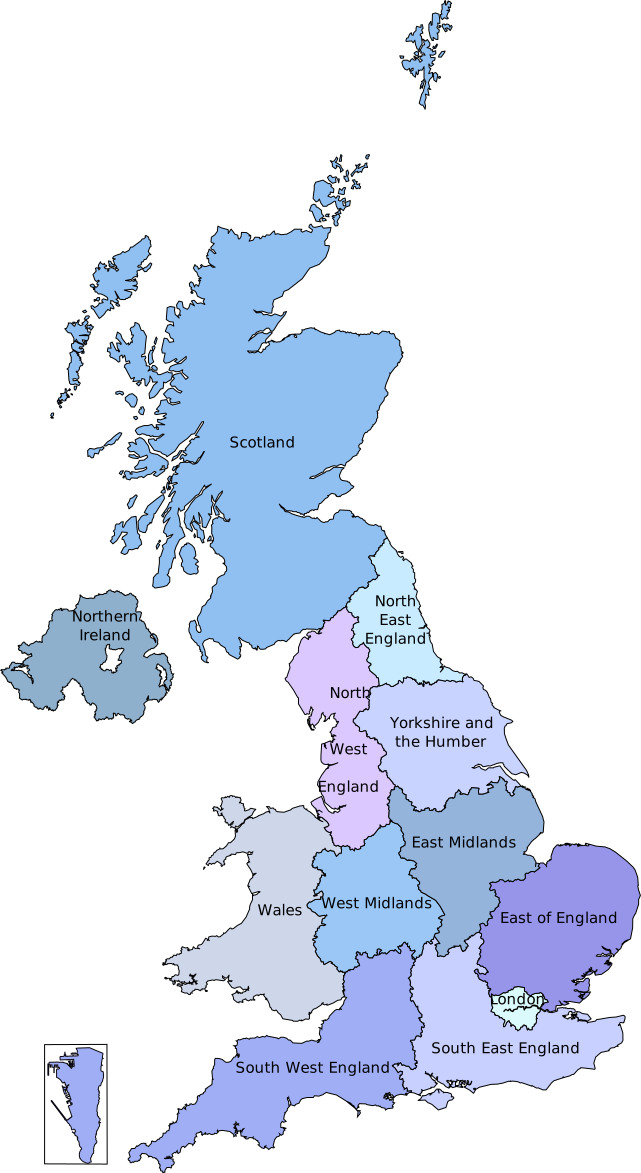
Before the United Kingdom's withdrawal from the EU, there was a 3-member single transferable vote constituency covering Northern Ireland. The constituencies covering England, Scotland, and Wales changed several times:
- Between 1979 and 1994, there were 78 first-past-the-post single-member constituencies.
- Between 1994 and 1999, there were 84 first-past-the-post single-member constituencies.
- Between 1999 and 2020, there were 11 d'Hondt multi-member constituencies, one for each of Scotland, Wales, and the nine regions of England. From 2004, the South West England constituency also covered Gibraltar.
Proposed pan-European constituency
On May 3, 2022, the European Parliament passed (323 votes to 262) a "legislative resolution on the reform of European electoral law". Among the proposals is the creation of a 28-member pan-Union constituency elected by party-list proportional representation on a list separate from elections for regional constituencies. However, in July 2023 the reference to it was removed by the European Council.
References
References
- (2010). "The 2009 European Parliament Elections: From Votes to Seats in 27 Ways". European Electoral Studies.
- Eurostat. (14 March 2014). "Average annual population (1000) by NUTS 2 region".
- Eurostat. (19 May 2014). "Total area and land area by NUTS 2 region".
- https://www.europarl.europa.eu/doceo/document/TA-9-2022-0129_EN.html See Article 15 Union-wide constituency
- Kurmayer, Nikolaus J.. (2022-05-03). "European Parliament agrees position on EU election law overhaul".
- (2023-07-28). "European Parliament set to grow by 15 MEPs in 2024".
This article was imported from Wikipedia and is available under the Creative Commons Attribution-ShareAlike 4.0 License. Content has been adapted to SurfDoc format. Original contributors can be found on the article history page.
Ask Mako anything about European Parliament constituency — get instant answers, deeper analysis, and related topics.
Research with MakoFree with your Surf account
Create a free account to save articles, ask Mako questions, and organize your research.
Sign up freeThis content may have been generated or modified by AI. CloudSurf Software LLC is not responsible for the accuracy, completeness, or reliability of AI-generated content. Always verify important information from primary sources.
Report