From Surf Wiki (app.surf) — the open knowledge base
Eugenics
Effort to improve purported human genetic quality
Effort to improve purported human genetic quality
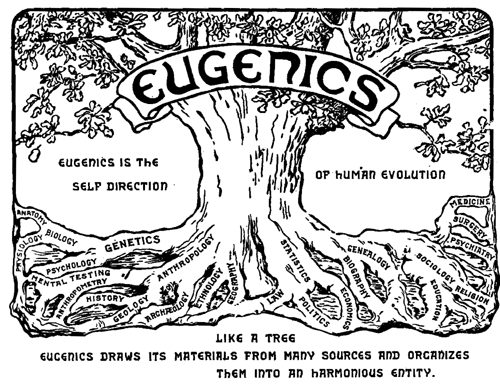
Eugenics is a set of largely discredited beliefs and practices that aim to improve the genetic quality of a human population. Historically, eugenicists have attempted to alter the frequency of various human phenotypes by inhibiting the fertility of those considered inferior, or promoting that of those considered superior.
The contemporary history of eugenics began in the late 19th century, when a popular eugenics movement emerged in the United Kingdom, and then spread to many countries, including the United States, Canada, Australia, and most European countries (e.g., Sweden and Germany).
Historically, the idea of eugenics has been used to argue for a broad array of practices ranging from prenatal care for mothers deemed genetically desirable to the forced sterilisation and murder of those deemed unfit. To population geneticists, the term has included the avoidance of inbreeding without altering allele frequencies; for example, British-Indian scientist J. B. S. Haldane wrote in 1940 that "the motor bus, by breaking up inbred village communities, was a powerful eugenic agent." Debate as to what qualifies as eugenics continues today.
A progressive social movement promoting eugenics had originated in the 19th century, with diverse support, but by the mid 20th century the term was closely associated with scientific racism and authoritarian coercion. With modern medical genetics, genetic testing and counselling have become common, and new or liberal eugenics rejects coercive programmes in favour of individual parental choice.
Common distinctions
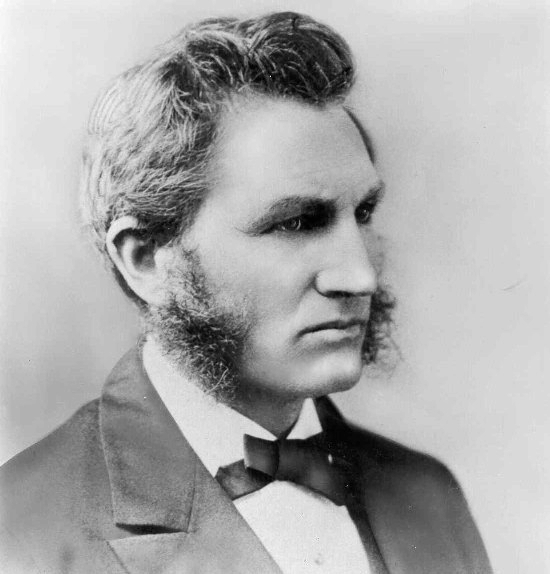
Positive eugenics is aimed at encouraging reproduction among the genetically advantaged, for example, the intelligent, the healthy, and the successful. Possible approaches include financial and political stimuli, targeted demographic analyses, in vitro fertilisation, egg transplants, and cloning. Negative eugenics aimed to eliminate, through sterilisation or segregation, those deemed physically, mentally, or morally undesirable. This includes abortions, sterilisation, and other methods of family planning. Both positive and negative eugenics can be coercive; in Nazi Germany, for example, abortion was illegal for women deemed by the state to be superior.
As opposed to "euthenics"
Historical eugenics
Main article: History of eugenics
Ancient and medieval origins

According to Plutarch, in Sparta every proper citizen's child was inspected by the council of elders, the Gerousia, which determined whether or not the child was fit to live. If the child was deemed unfit, the child was thrown into a chasm. Plutarch is the sole historical source for the Spartan practice of systemic infanticide motivated by eugenics. While infanticide was practiced by Greeks, no contemporary sources support Plutarch's claims of mass infanticide motivated by eugenics. In 2007 the suggestion that infants were dumped near Mount Taygete was called into question due to a lack of physical evidence. Anthropologist Theodoros Pitsios' research found only bodies from adolescents up to the age of approximately 35.
Plato's political philosophy included the belief that human reproduction should be cautiously monitored and controlled by the state through selective breeding.
According to Tacitus ( – ), a Roman of the Imperial Period, the Germanic tribes of his day killed any member of their community they deemed cowardly, un-warlike or "stained with abominable vices", usually by drowning them in swamps. Modern historians see Tacitus' ethnographic writing as unreliable in such details.
Academic origins
The term eugenics and its modern field of study were first formulated by Francis Galton in 1883, directly drawing on the recent work delineating natural selection by his half-cousin Charles Darwin. He published his observations and conclusions chiefly in his influential book Inquiries into Human Faculty and Its Development. Galton himself defined it as "the study of all agencies under human control which can improve or impair the racial quality of future generations". The first to systematically apply Darwinism theory to human relations, Galton believed that various desirable human qualities were also hereditary ones, although Darwin strongly disagreed with this elaboration of his theory.
Eugenics became an academic discipline at many colleges and universities and received funding from various sources. Organisations were formed to win public support for and to sway opinion towards responsible eugenic values in parenthood, including the British Eugenics Education Society of 1907 and the American Eugenics Society of 1921. Both sought support from leading clergymen and modified their message to meet religious ideals. In 1909, the Anglican clergymen William Inge and James Peile both wrote for the Eugenics Education Society. Inge was an invited speaker at the 1921 International Eugenics Conference, which was also endorsed by the Roman Catholic Archbishop of New York Patrick Joseph Hayes.
Three International Eugenics Conferences presented a global venue for eugenicists, with meetings in 1912 in London, and in 1921 and 1932 in New York City. Eugenic policies in the United States were first implemented by state-level legislators in the early 1900s. Eugenic policies also took root in France, Germany, and Great Britain. Later, in the 1920s and 1930s, the eugenic policy of sterilising certain mental patients was implemented in other countries including Belgium, Brazil, Canada, Japan and Sweden.
Frederick Osborn's 1937 journal article "Development of a Eugenic Philosophy" framed eugenics as a social philosophy—a philosophy with implications for social order. That definition is not universally accepted. Osborn advocated for higher rates of sexual reproduction among people with desired traits ("positive eugenics") or reduced rates of sexual reproduction or sterilisation of people with less-desired or undesired traits ("negative eugenics").
In addition to being practiced in a number of countries, eugenics was internationally organised through the International Federation of Eugenics Organisations. Its scientific aspects were carried on through research bodies such as the Kaiser Wilhelm Institute of Anthropology, Human Heredity, and Eugenics, the Cold Spring Harbor Carnegie Institution for Experimental Evolution, and the Eugenics Record Office. Politically, the movement advocated measures such as sterilisation laws. In its moral dimension, eugenics rejected the doctrine that all human beings are born equal and redefined moral worth purely in terms of genetic fitness. Its racist elements included pursuit of a pure "Nordic race" or "Aryan" genetic pool and the eventual elimination of "unfit" races.
Many leading British politicians subscribed to the theories of eugenics. Winston Churchill supported the British Eugenics Society and was an honorary vice president for the organisation. Churchill believed that eugenics could solve "race deterioration" and reduce crime and poverty.
As a social movement, eugenics reached its greatest popularity in the early decades of the 20th century, when it was practiced around the world and promoted by governments, institutions, and influential individuals. Many countries enacted various eugenics policies, including: genetic screenings, birth control, promoting differential birth rates, marriage restrictions, segregation (both racial segregation and sequestering the mentally ill), compulsory sterilisation, forced abortions or forced pregnancies, ultimately culminating in genocide. By 2014, gene selection (rather than "people selection") was made possible through advances in genome editing, leading to what is sometimes called new eugenics, also known as "neo-eugenics", "consumer eugenics", or "liberal eugenics"; which focuses on individual freedom and allegedly pulls away from racism, sexism or a focus on intelligence.
Early opposition
Early critics of the philosophy of eugenics included the American sociologist Lester Frank Ward, the English writer G. K. Chesterton, and Scottish tuberculosis pioneer and author Halliday Sutherland. Ward's 1913 article "Eugenics, Euthenics, and Eudemics", Chesterton's 1917 book Eugenics and Other Evils, and Franz Boas' 1916 article "Eugenics" (published in The Scientific Monthly) were all harshly critical of the rapidly growing movement.
Several biologists were also antagonistic to the eugenics movement, including Lancelot Hogben. Other biologists who were themselves eugenicists, such as J. B. S. Haldane and R. A. Fisher, however, also expressed scepticism in the belief that sterilisation of "defectives" (i.e. a purely negative eugenics) would lead to the disappearance of undesirable genetic traits.
Among institutions, the Catholic Church opposes sterilisation for eugenic purposes. Attempts by the Eugenics Education Society to persuade the British government to legalise voluntary sterilisation were opposed by Catholics and by the Labour Party. The American Eugenics Society initially gained some Catholic supporters, but Catholic support declined following the 1930 papal encyclical Casti connubii. In this, Pope Pius XI explicitly condemned sterilisation laws: "Public magistrates have no direct power over the bodies of their subjects; therefore, where no crime has taken place and there is no cause present for grave punishment, they can never directly harm, or tamper with the integrity of the body, either for the reasons of eugenics or for any other reason."
The eugenicists' political successes in Germany and Scandinavia were not at all matched in such countries as Poland and Czechoslovakia, even though measures had been proposed there, largely because of the Catholic church's moderating influence.
Eugenic feminism
North American eugenics
In Mexico
Nazism and the decline of eugenics
The reputation of eugenics started to decline in the 1930s, a time when Ernst Rüdin used eugenics as a justification for the racial policies of Nazi Germany. Adolf Hitler had praised and incorporated eugenic ideas in Mein Kampf in 1925 and emulated eugenic legislation for the sterilisation of "defectives" that had been pioneered in the United States once he took power. Some common early 20th century eugenics methods involved identifying and classifying individuals and their families. This included racial groups (such as the Roma and Jews in Nazi Germany), the poor, mentally ill, blind, deaf, developmentally disabled, promiscuous women, and homosexuals as "degenerate" or "unfit". This led to segregation, institutionalisation, sterilisation, and mass murder. The Nazi policy of identifying German citizens deemed unfit and then systematically murdering them with poison gas, referred to as the Aktion T4 campaign, paved the way for the Holocaust.
By the end of World War II, many eugenics laws were abandoned, having become associated with Nazi Germany. H. G. Wells, who had called for "the sterilisation of failures" in 1904, stated in his 1940 book The Rights of Man: Or What Are We Fighting For? that among the human rights, which he believed should be available to all people, was "a prohibition on mutilation, sterilisation, torture, and any bodily punishment". After World War II, the practice of "imposing measures intended to prevent births within [a national, ethnical, racial or religious] group" fell within the definition of the new international crime of genocide, set out in the Convention on the Prevention and Punishment of the Crime of Genocide.Article 2 of the Convention defines genocide as any of the following acts committed with the intent to destroy, in whole or in part, a national, ethnic, racial or religious group, as such as:
- Killing members of the group;
- Causing serious bodily or mental harm to members of the group;
- Deliberately inflicting on the group conditions of life calculated to bring about its physical destruction in whole or in part;
- Imposing measures intended to prevent births within the group;
- Forcibly transferring children of the group to another group. See the Convention on the Prevention and Punishment of the Crime of Genocide. The Charter of Fundamental Rights of the European Union also proclaims "the prohibition of eugenic practices, in particular those aiming at selection of persons".
In Singapore
Main article: Population control in Singapore#Demographic transition and the Graduate Mothers Scheme
Lee Kuan Yew, the founding father of Singapore, actively promoted eugenics as late as 1983. In 1984, Singapore began providing financial incentives to highly educated women to encourage them to have more children. For this purpose was introduced the "Graduate Mother Scheme" that incentivised graduate women to get married as much as the rest of their populace. The incentives were extremely unpopular and regarded as eugenic, and were seen as discriminatory towards Singapore's non-Chinese ethnic population. In 1985, the incentives were partly abandoned as ineffective, while the government matchmaking agency, the Social Development Network, remains active.
Modern eugenics
Liberal eugenics, also called new eugenics, aims to make genetic interventions morally acceptable by rejecting coercive state programmes and relying on parental choice. Bioethicist Nicholas Agar, who coined the term, argues that the state should intervene only to forbid interventions that excessively limit a child’s ability to shape their own future. Unlike "authoritarian" or "old" eugenics, liberal eugenics draws on modern scientific knowledge of genomics to enable informed choices aimed at improving well-being. Julien Savulescu further argues that some eugenic practices, like prenatal screening for Down syndrome, are already widely practiced, without being labelled "eugenics", as they are seen as enhancing freedom rather than restricting it.
UC Berkeley sociologist Troy Duster argued that modern genetics is a "back door to eugenics". This view was shared by then-White House Assistant Director for Forensic Sciences, Tania Simoncelli, who stated in a 2003 publication by the Population and Development Programme at Hampshire College that advances in pre-implantation genetic diagnosis (PGD) are moving society to a "new era of eugenics", and that, unlike the Nazi eugenics, modern eugenics is consumer driven and market based, "where children are increasingly regarded as made-to-order consumer products". The United Nations' International Bioethics Committee also noted that while human genetic engineering should not be confused with the 20th century eugenics movements, it nonetheless challenges the idea of human equality and opens up new forms of discrimination and stigmatisation for those who do not want or cannot afford the technology.
In 2025, geneticist Peter Visscher published a paper in Nature, arguing genome editing of human embryos and germ cells may become feasible in the 21st century, and raising ethical considerations in the context of previous eugenics movements. A response argued that human embryo genetic editing is "unsafe and unproven". Nature also published an editorial, stating: "The fear that polygenic gene editing could be used for eugenics looms large among them, and is, in part, why no country currently allows genome editing in a human embryo, even for single variants".
Contested scientific status
One general concern is that the reduced genetic diversity that may be a feature of long-term, species-wide eugenics plans could eventually result in inbreeding depression, increased spread of infectious disease, and decreased resilience to changes in the environment.
Arguments for scientific validity
In his original lecture "Darwinism, Medical Progress and Eugenics", Karl Pearson claimed that everything concerning eugenics fell into the field of medicine. Anthropologist Aleš Hrdlička said in 1918 that "[t]he growing science of eugenics will essentially become applied anthropology." The economist John Maynard Keynes was a lifelong proponent of eugenics and described it as a branch of sociology.
In a 2006 newspaper article, Richard Dawkins said that discussion regarding eugenics was inhibited by the shadow of Nazi misuse, to the extent that some scientists would not admit that breeding humans for certain abilities is at all possible. He believes that it is not physically different from breeding domestic animals for traits such as speed or herding skill. Dawkins felt that enough time had elapsed to at least ask just what the ethical differences were between breeding for ability versus training athletes or forcing children to take music lessons, though he could think of persuasive reasons to draw the distinction.
Objections to scientific validity
Amanda Caleb, Professor of Medical Humanities at Geisinger Commonwealth School of Medicine, says "Eugenic laws and policies are now understood as part of a specious devotion to a pseudoscience that actively dehumanises to support political agendas and not true science or medicine."
The first major challenge to conventional eugenics based on genetic inheritance was made in 1915 by Thomas Hunt Morgan. He demonstrated the event of genetic mutation occurring outside of inheritance involving the discovery of the hatching of a fruit fly (Drosophila melanogaster) with white eyes from a family with red eyes, demonstrating that major genetic changes occurred outside of inheritance. Morgan criticised the view that traits such as intelligence or criminality were hereditary, because these traits were subjective.
Pleiotropy occurs when one gene influences multiple, seemingly unrelated phenotypic traits, an example being phenylketonuria, which is a human disease that affects multiple systems but is caused by one gene defect. Andrzej Pękalski, from the University of Wroclaw, argues that eugenics can cause harmful loss of genetic diversity if a eugenics programme selects a pleiotropic gene that could possibly be associated with a positive trait. Pękalski uses the example of a coercive government eugenics programme that prohibits people with myopia from breeding but has the unintended consequence of also selecting against high intelligence since the two were associated.
While the science of genetics has increasingly provided means by which certain characteristics and conditions can be identified and understood, given the complexity of human genetics, culture, and psychology, at this point there is no agreed objective means of determining which traits might be ultimately desirable or undesirable. Some conditions such as sickle-cell disease and cystic fibrosis respectively confer immunity to malaria and resistance to cholera when a single copy of the recessive allele is contained within the genotype of the individual, so eliminating these genes is undesirable in places where such diseases are common.
Edwin Black, journalist, historian, and author of War Against the Weak, argues that eugenics is often deemed a pseudoscience because what is defined as a genetic improvement of a desired trait is a cultural choice rather than a matter that can be determined through objective scientific inquiry. This aspect of eugenics is often considered to be tainted with scientific racism and pseudoscience.
Contested ethical status
Contemporary ethical opposition
In a book directly addressed at socialist eugenicist J.B.S. Haldane and his once-influential Daedalus, Bertrand Russell had one serious objection of his own: eugenic policies might simply end up being used to reproduce existing power relations "rather than to make men happy."
Environmental ethicist Bill McKibben argued against germinal choice technology and other advanced biotechnological strategies for human enhancement. He writes that it would be morally wrong for humans to tamper with fundamental aspects of themselves (or their children) in an attempt to overcome universal human limitations, such as vulnerability to aging, maximum life span and biological constraints on physical and cognitive ability. Attempts to "improve" themselves through such manipulation would remove limitations that provide a necessary context for the experience of meaningful human choice. He claims that human lives would no longer seem meaningful in a world where such limitations could be overcome with technology. Even the goal of using germinal choice technology for clearly therapeutic purposes should be relinquished, he argues, since it would inevitably produce temptations to tamper with such things as cognitive capacities. He argues that it is possible for societies to benefit from renouncing particular technologies, using Ming China, Tokugawa Japan and the contemporary Amish as examples.
Contemporary ethical advocacy
Bioethicist Stephen Wilkinson has said that some aspects of modern genetics can be classified as eugenics, but that this classification does not inherently make modern genetics immoral.
Historian Nathaniel C. Comfort has claimed that the change from state-led reproductive-genetic decision-making to individual choice has moderated the worst abuses of eugenics by transferring the decision-making process from the state to patients and their families.
In their book published in 2000, From Chance to Choice: Genetics and Justice, bioethicists Allen Buchanan, Dan Brock, Norman Daniels and Daniel Wikler argued that liberal societies have an obligation to encourage as wide an adoption of eugenic enhancement technologies as possible (so long as such policies do not infringe on individuals' reproductive rights or exert undue pressures on prospective parents to use these technologies) in order to maximise public health and minimise the inequalities that may result from both natural genetic endowments and unequal access to genetic enhancements.
In popular culture
The novel Brave New World by the English author Aldous Huxley (1931), is a dystopian social science fiction novel which is set in a futuristic World State, whose citizens are environmentally engineered into an intelligence-based social hierarchy.
Various works by the author Robert A. Heinlein mention the Howard Foundation, a group which attempts to improve human longevity through selective breeding.
Among Frank Herbert's works, the Dune series, starting with the eponymous 1965 novel, describes selective breeding by a powerful sisterhood, the Bene Gesserit, to produce a supernormal male being, the Kwisatz Haderach.
The Star Trek franchise features a race of genetically engineered humans which is known as "Augments", the most notable of them being Khan Noonien Singh. These "supermen" were the cause of the Eugenics Wars, a dark period in Earth's fictional history, before they were deposed and exiled. Spin-offs like Star Trek: Deep Space Nine and Star Trek: Strange New Worlds present the Eugenics Wars as the main reason why genetic enhancement is illegal in the United Federation of Planets.
Naoki Urasawa's manga Monster and its anime adaptation of the same name mention "The Eugenics Experiment" conducted in the premises of 511 Kinderheim, a clandestine East German orphanage where the main antagonist Johan Liebert grew up into a psychopathic serial killer.
The film Gattaca (1997) provides a fictional example of a dystopian society that uses eugenics to decide what people are capable of and their place in the world. The title alludes to the letters G, A, T and C, the four nucleobases of DNA, and depicts the possible consequences of genetic discrimination in the present societal framework. Relegated to the role of a cleaner owing to his genetically projected death at age 32 due to a heart condition (being told: "The only way you'll see the inside of a spaceship is if you were cleaning it"), the protagonist observes enhanced astronauts as they are demonstrating their superhuman athleticism. Although it was not a box office success, it was critically acclaimed and influenced the debate over human genetic engineering in the public consciousness. As to its accuracy, its production company, Sony Pictures, consulted with a gene therapy researcher and prominent critic of eugenics known to have stated that "[w]e should not step over the line that delineates treatment from enhancement", W. French Anderson, to ensure that the portrayal of science was realistic. Disputing their success in this mission, Philim Yam of Scientific American called the film "science bashing" and Nature's Kevin Davies called it a "surprisingly pedestrian affair", while molecular biologist Lee Silver described its extreme determinism as "a straw man".
In his 2018 book Blueprint, the behavioural geneticist Robert Plomin writes that while Gattaca warned of the dangers of genetic information being used by a totalitarian state, genetic testing could also favour better meritocracy in democratic societies which already administer a variety of standardised tests to select people for education and employment. He suggests that polygenic scores might supplement testing in a manner that is essentially free of biases.
References
Notes
References
- Galton, Francis. (2002). "Inquiries into Human Faculty and Its Development".
- English, Daylanne K.. (28 June 2016). "Eugenics – African American Studies".
- Galton, Francis. (1904). "Eugenics: Its Definition, Scope, and Aims". The American Journal of Sociology.
- (2013). "Politics of Eugenics: Productionism, Population, and National Welfare". Routledge.
- (1 January 2001). "Eugenic Ideas, Political Interests and Policy Variance Immigration and Sterilization Policy in Britain and U.S". World Politics.
- McGregor, Russell. (2002). "'Breed out the colour' or the importance of being white". Australian Historical Studies.
- Haldane, J.. (1940). "Lysenko and Genetics". Science and Society.
- Paul, Diane. (1995). "Controlling Human Heredity: 1865 to the Present". Humanities Press.
- [[Paul, Diane B.]] (1984). "[http://tankona.free.fr/dianepaul84.pdf Eugenics and the Left]". ''Journal of the History of Ideas'' 45 (4):567. {{doi. 10.2307/2709374.
- [[Leonard, Thomas C.]] (2016). ''[[Illiberal Reformers: Race, Eugenics, and American Economics in the Progressive Era]]'' Princeton and Oxford: Princeton University Press {{ISBN. 978-0-691-16959-0
- Lucassen, Leo (2010). "A Brave New World: The Left, Social Engineering, and Eugenics in Twentieth-Century Europe." ''International Review of Social History'', 55(2), 265–296. http://www.jstor.org/stable/44583170
- (2022). "Eugenics".
- [[Ward, Lester Frank]] (1913). "[https://www.jstor.org/stable/pdf/2763324.pdf Eugenics, Euthenics, and Eudemics]" (PDF). ''American Journal of Sociology'', 18(6), 737–754.
- Wilkinson, Stephen A. (2010). "On the distinction between positive and negative eugenics". In Matti Häyry (ed.), ''Arguments and analysis in bioethics.'' Amsterdam: Rodopi. pp. 115–128. {{doi. 10.1163/9789042028036_011.
- Glad, John. (2008). "Future Human Evolution: Eugenics in the Twenty-First Century". Hermitage Publishers.
- Pine, Lisa. (1997). "Nazi Family Policy, 1933–1945". Berg.
- (26 September 2019). "A Historical Sociology of Disability: Human Validity and Invalidity from Antiquity to Early Modernity". Routledge.
- ''Making Patriots'' by [[Walter Berns]], 2001, page 12, "and whose infants, if they chanced to be puny or ill-formed, were exposed in a chasm (the Apothetae) and left to die;"
- Plutarch. "Lives of the Noble Greeks and Romans".
- (26 May 2022). "4. Raising a Spartan". The Spartans: A Very Short Introduction.
- (2021). "Disability and Infanticide in Ancient Greece". Hesperia: The Journal of the American School of Classical Studies at Athens.
- (2007-12-10). "Study finds no evidence of discarded Spartan babies". ABC News.
- "Ancient Sparta – Research Program of Keadas Cavern" https://web.archive.org/web/20131002192630/http://www.anthropologie.ch/d/publikationen/archiv/2010/documents/03PITSIOSreprint.pdf
- [[Galton, David J.]] (1998). "Greek theories on eugenics." ''Journal of Medical Ethics'', 24(4), 263–267. doi:10.1136/jme.24.4.263
- The Republic, 457c10-d3
- [[Tacitus]]. [[wikisource:Germania (Church & Brodribb)#XII. Germania.XII]] "Traitors and deserters are hanged on trees; the coward, the unwarlike, the man stained with abominable vices, is plunged into the mire of the morass, with a hurdle put over him."
- Sanders, Karin. (2009). "Bodies in the Bog and the Archaeological Imagination". [[University of Chicago Press]].
- Krebs, Christopher. (2011). "A Most Dangerous Book: Tacitus's Germania from the Roman Empire to the Third Reich". W. W. Norton & Company.
- Simon, Emily T.. (21 February 2008). "Ancient text has long and dangerous reach".
- Galton, Francis. (1883). "Inquiries into Human Faculty and its Development". [[Macmillan Publishers]].
- (2009). "DNA: The Secret of Life". Knopf.
- Galton, Francis. (1874). "On men of science, their nature and their nurture". Proceedings of the Royal Institution of Great Britain.
- (1918). "Glimpses of the Cosmos". G.P. Putnam.
- "Correspondence between Francis Galton and Charles Darwin". Galton.org.
- "The Correspondence of Charles Darwin". University of Cambridge.
- Bowler, Peter J. (2003). "Evolution: The History of an Idea". University of California Press.
- Cited in {{harvnb. Black. 2003
- Hansen, Randall. (2005). "Eugenics: Immigration and Asylum from 1990 to Present". ABC-CLIO.
- Allen, Garland E.. (2004). "Was Nazi eugenics created in the US?". EMBO Reports.
- Baker, G. J.. (2014). "Christianity and Eugenics: The Place of Religion in the British Eugenics Education Society and the American Eugenics Society, {{circa". Social History of Medicine.
- (October 2004). "Globalizing Social Movement Theory: The Case of Eugenics". Theory and Society.
- Hawkins, Mike. (1997). "Social Darwinism in European and American Thought". Cambridge University Press.
- (12 January 1923). "The National Office of Eugenics in Belgium". Science.
- (January 2002). "Historical Roots of the 'Whitening' of Brazil". Latin American Perspectives.
- McLaren, Angus. (1990). ["Our Own Master Race: Eugenics in Canada, 1885–1945"](https://archive.org/details/ourownmasterrace0000mcla}}{{page needed). Oxford University Press.
- Osborn, Frederick. (June 1937). "Development of a Eugenic Philosophy". [[American Sociological Review]].
- Blom, Philipp. (2008). "The Vertigo Years: Change and Culture in the West, 1900–1914". McClelland & Stewart.
- Jones, S. (1995). ''The Language of Genes: Solving the Mysteries of Our Genetic Past, Present and Future'' (New York: Anchor).
- King, D. (1999). ''In the name of liberalism: illiberal social policy in Britain and the United States'' (Oxford: Oxford University Press).
- Ridley, Matt. (1999). "Genome: The Autobiography of a Species in 23 Chapters". HarperCollins.
- (2014). "CRISPR/Cas9 and Targeted Genome Editing: A New Era in Molecular Biology". NEB Expressions.
- Goering, Sara. (2014). "Eugenics". Metaphysics Research Lab, Stanford University.
- Ferrante, Joan. (2010). "Sociology: A Global Perspective". Cengage Learning.
- "Consumption: Its Cause and Cure" – an address by Dr Halliday Sutherland on 4 September 1917, published by the Red Triangle Press.
- Chesterton, G. K.. (1922). "Eugenics and Other Evils". Cassell and Company.
- Turda, Marius. (2010). "The Oxford Handbook of the History of Eugenics". Oxford University Press.
- "Lancelot Hogben, who developed his critique of eugenics and distaste for racism in the period...he spent as Professor of Zoology at the University of Cape Town". Alison Bashford and Philippa Levine, ''The Oxford Handbook of the History of Eugenics''. Oxford; Oxford University Press, 2010 {{ISBN. 0199706530 (p. 200)
- "Whatever their disagreement on the numbers, Haldane, Fisher, and most geneticists could support Jennings's warning: To encourage the expectation that the sterilization of defectives will solve the problem of hereditary defects, close up the asylums for feebleminded and insane, do away with prisons, is only to subject society to deception". Daniel J. Kevles (1985). ''In the Name of Eugenics''. University of California Press. {{ISBN. 0520057635 (p. 166).
- Congar, Yves M.-J.. (1953). "The Catholic Church and the Race Question". UNESCO.
- (2010). "The Oxford Handbook of the History of Eugenics". Oxford University Press.
- Pope Pius XI. "Casti connubii".
- [[Roll-Hansen, Nils]] (1988). "The Progress of Eugenics: Growth of Knowledge and Change in Ideology." ''History of Science'', xxvi, 295-331.
- Heron, D. (9 November 1913). "English expert attacks American eugenic work", ''New York Times'', part V, 1
- Longerich, Peter. (2010). "Holocaust: The Nazi Persecution and Murder of the Jews". [[Oxford University Press]].
- Burleigh, Michael. (2000). "Holocaust: Origins, Implementation, Aftermath". [[Routledge]].
- Snyder, Timothy. (2010). "Bloodlands: Europe Between Hitler and Stalin". [[Basic Books]].
- [[Constitution of Hungary]] (2011), [https://www.constituteproject.org/constitution/Hungary_2011.pdf Section 3, ''Freedom and Responsibility'', Article III (3).]
- Black, Edwin. (2003). "War Against the Weak: Eugenics and America's Campaign to Create a Master Race". Four Walls Eight Windows.
- Turner, Jacky. (2010). "Animal Breeding, Welfare and Society". [[Routledge]].
- Clapham, Andrew. (2007). "Human Rights: A Very Short Introduction". [[Oxford University Press]].
- "Charter of Fundamental Rights of the European Union".
- Chan, Ying-kit. (4 October 2016). "Eugenics in Postcolonial Singapore".
- See Diane K. Mauzy; Robert Stephen Milne, ''Singapore politics under the People's Action Party'' (Routledge, 2002).
- "Singapore: Population Control Policies". [[Library of Congress]].
- Jacobson, Mark. (January 2010). "The Singapore Solution".
- Webb, Sara. (26 April 2006). "Pushing for babies: S'pore fights fertility decline". Singapore Window.
- Agar, Nicholas. (1998). "Liberal Eugenics". Public Affairs Quarterly.
- Hauskeller, Michael. (November 2, 2005). "Liberal Eugenics: In Defence of Human Enhancement".
- (2005-10-09). "The ideas interview: Julian Savulescu". The Guardian.
- Epstein, Charles J.. (1 November 2003). "Is modern genetics the new eugenics?". Genetics in Medicine.
- Simoncelli, Tania. (2003). "Pre-implantation Genetic Diagnosis and Selection: From disease prevention to customized conception". Different Takes.
- (2 October 2015). "Report of the IBC on Updating Its Reflection on the Human Genome and Human Rights". International Bioethics Committee.
- (2025-01-08). "Heritable polygenic editing: the next frontier in genomic medicine?". Nature.
- (2025-01-09). "We need to talk about human genome editing". Nature.
- (2025-01-08). "Human embryo editing against disease is unsafe and unproven — despite rosy predictions". Nature.
- Galton, David. (2002). "Eugenics: The Future of Human Life in the 21st Century". Abacus.
- Lively, Curtis M.. (June 2010). "The Effect of Host Genetic Diversity on Disease Spread". The American Naturalist.
- (June 2012). "Does genetic diversity limit disease spread in natural host populations?". Heredity.
- Salgirli, S. G.. (July 2011). "Eugenics for the doctors: Medicine and social control in 1930s Turkey". Journal of the History of Medicine and Allied Sciences.
- [[Hrdlička, Aleš]] (1918). "A Physical Anthropology, Its Scope and Aims." ''[[American Journal of Physical Anthropology]],'' [https://dn790002.ca.archive.org/0/items/americanjournalo01wistuoft/americanjournalo01wistuoft.pdf Volume 1] (PDF), p. 21
- Freedland, Jonathan. (17 February 2012). "Eugenics: the skeleton that rattles loudest in the left's closet {{!}} Jonathan Freedland". The Guardian.
- Keynes, John Maynard. (1946). "The Galton lecture, 1946: Presentation of the society's gold medal". Eugenics Review.
- Dawkins, Richard. (20 November 2006). "From the Afterword". [[The Herald (Glasgow).
- Caleb, Amanda. (27 January 2023). "The Holocaust: Remembrance, Respect, and Resilience". Pennsylvania State University.
- "Social Origins of Eugenics".
- Carlson, Elof Axel. (2002). "Scientific Origins of Eugenics". Dolan DNA Learning Center, Cold Spring Harbor Laboratory.
- Leonard, Thomas C. (Tim). (Fall 2005). "Retrospectives: Eugenics and Economics in the Progressive Era". Journal of Economic Perspectives.
- Stearns, F. W.. (2010). "One Hundred Years of Pleiotropy: A Retrospective". Genetics.
- Jones, A.. (2000). "Effect of eugenics on the evolution of populations". European Physical Journal B.
- Withrock, Isabelle. (2015). "Genetic diseases conferring resistance to infectious diseases". Genes & Diseases.
- Worrall, Simon. (24 July 2016). "The Gene: Science's Most Dangerous Idea". National Geographic.
- (2006). "Popular Eugenics: National Efficiency and American Mass Culture in The 1930s". [[Ohio University Press]].
- Russell, Bertrand. (1924). "Icarus, or, The future of science". E.P. Dutton & Co..
- McKibben, Bill. (2003). "Enough: Staying Human in an Engineered Age". Times Books.
- (2013). "Eugenics and the Ethics of Selective Reproduction". Keele University.
- Comfort, Nathaniel. (12 November 2012). "The Eugenics Impulse". The Chronicle of Higher Education.
- Comfort, Nathaniel. (25 September 2012). "The Science of Human Perfection: How Genes Became the Heart of American Medicine". Yale University Press.
- (2000). "From Chance to Choice: Genetics and Justice". Cambridge University Press.
- "Brave New World".
- (29 August 2017). "The Science of Sci-Fi: How Science Fiction Predicted the Future of Genetics".
- (27 June 2023). "Star Trek: Strange New Worlds: Augments, Illyrians and the Eugenics Wars".
- Darnovsky, Marcy. (2001). "Health and human rights leaders call for an international ban on species-altering procedures".
- (2002). "Protecting the endangered human: Toward an international treaty prohibiting cloning and inheritable alterations". American Journal of Law & Medicine.
- Orquiola, John. (2020-07-26). "Star Trek: How TOS' Khan Helped Create DS9's Dr. Bashir".
- Stowe, Dusty. (2023-04-23). "Strange New Worlds' Illyrians Return: Revisiting Star Trek's Darkest Hidden History".
- (2013). "Are We Too Close to Making Gattaca a Reality?". San Francisco Chronicle.
- (2003). "Cambridge Wizard Student Guide Gattaca". [[Cambridge University Press]].
- (2000). "The New Eugenics in Cinema: Genetic Determinism and Gene Therapy in GATTACA". Science Fiction Studies.
- Silver, Lee M.. (1997). "Genetics Goes to Hollywood". [[Nature Genetics]].
- [[William French Anderson. Anderson, W. French]] (1990). "Genetics and Human Malleability." ''The Hastings Center Report,'' 20(1), 21–24. {{doi. 10.2307/3562969 p.24
- Zimmer, Carl. (November 10, 2008). "Now: The Rest of the Genome". [[The New York Times]].
- Kirby, David A.. (July 2000). "The New Eugenics in Cinema: Genetic Determinism and Gene Therapy in "GATTACA"". Science Fiction Studies.
- Plomin, Robert. (13 November 2018). "Blueprint: How DNA Makes Us Who We Are". [[MIT Press]].
This article was imported from Wikipedia and is available under the Creative Commons Attribution-ShareAlike 4.0 License. Content has been adapted to SurfDoc format. Original contributors can be found on the article history page.
Ask Mako anything about Eugenics — get instant answers, deeper analysis, and related topics.
Research with MakoFree with your Surf account
Create a free account to save articles, ask Mako questions, and organize your research.
Sign up freeThis content may have been generated or modified by AI. CloudSurf Software LLC is not responsible for the accuracy, completeness, or reliability of AI-generated content. Always verify important information from primary sources.
Report