From Surf Wiki (app.surf) — the open knowledge base
Estonian euro coins
Designs of Estonian currency
Designs of Estonian currency
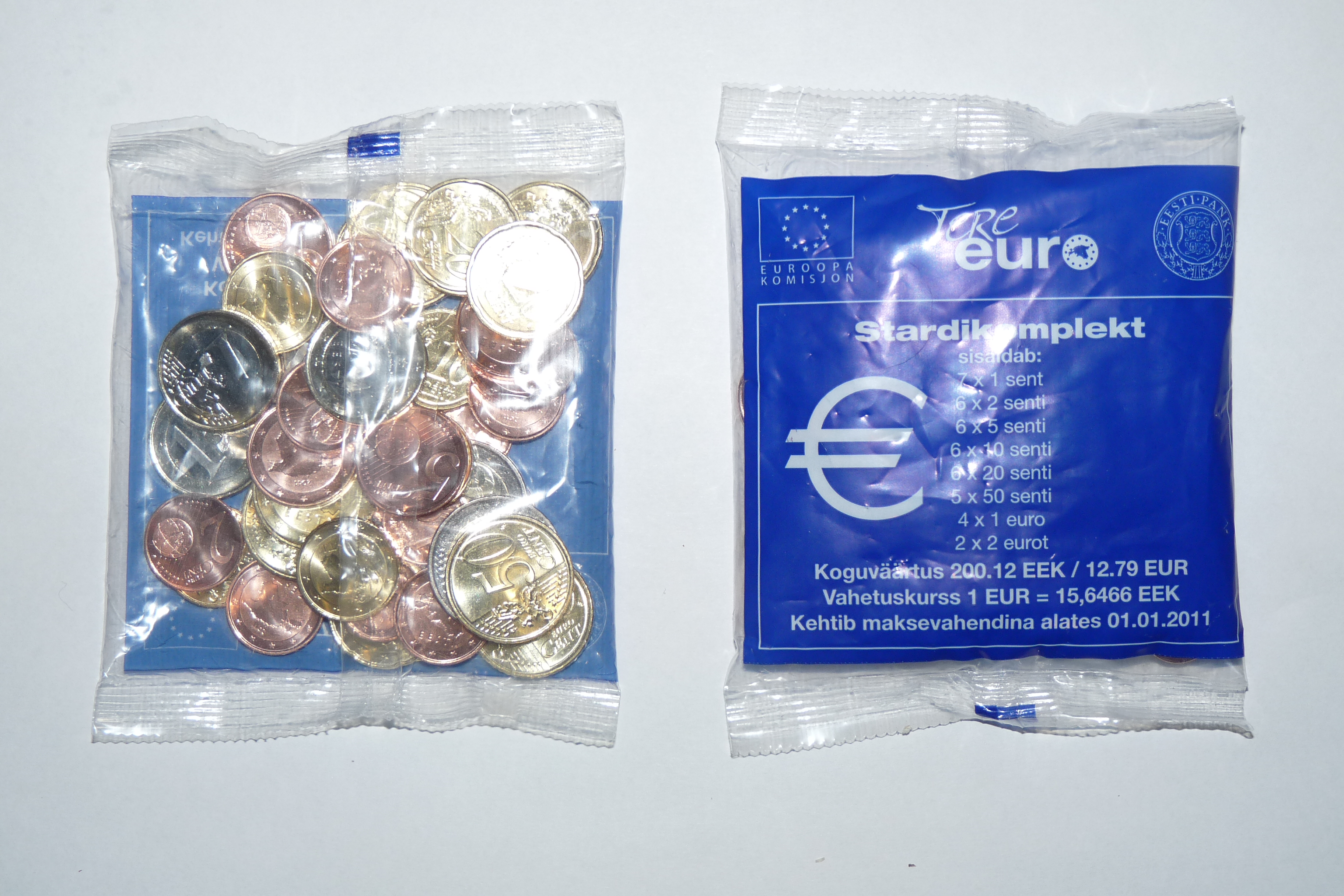
Estonian euro coins feature a single design for all eight coins. This is a design by Lembit Lõhmus and features a silhouette map of Estonia together with the word Eesti (Estonia) and twelve stars, symbolic of the European Union, surrounding the map. This was the winning design in a public vote of ten announced in December 2004.
Estonian euro coins entered circulation on 1 January 2011. Estonia is the fifth of ten states that joined the EU in 2004, and the first ex-Soviet republic to join the eurozone.
History
Of the ten new EU member states, Estonia was the first to unveil its design. The country originally planned to adopt the euro on 1 January 2007; however, it did not formally apply when Slovenia did, and officially changed its target date to 1 January 2008, and later, to 1 January 2011.
On 12 May 2010, the European Commission announced that Estonia had met all criteria to join the eurozone. On 8 June 2010, the EU finance ministers agreed that Estonia would be able to join the euro on 1 January 2011. On 13 July 2010, Estonia received the final approval from the ECOFIN to adopt the euro as from 1 January 2011. On the same date of 13 July 2010, the exchange rate at which the kroon would be exchanged for the euro (€1 = 15.6466 krooni) was also announced. On 20 July 2010, mass production of Estonian euro coins began in the Mint of Finland. 2012 coins were produced by the Royal Dutch Mint, having won the production bid.
Estonian euro design
For images of the common side and a detailed description of the coins, see euro coins. A design competition was first held in 2004 for the design of the Estonian euro coins. 134 designs were submitted to the competition, and the 10 best designs were selected, which were then voted on by telephone by the Estonian people. The design features an outline map of Estonia and its islands: Saaremaa, Hiiumaa, Muhu, Vormsi, Kihnu, the Pakri Islands, Naissaar and Ruhnu; and the lake of Võrtsjärv.
Estonian National Symbols series
| Year | Number | Design |
|---|---|---|
| 2021 | 1 | Wolf, the national mammal of Estonia |
| 2023 | 2 | Barn swallow, the national bird of Estonia |
| 2024 | 3 | Cornflower, the national flower of Estonia |
Circulating mintage quantities
| Face value | €0.01 | €0.02 | €0.05 | €0.10 | €0.20 | €0.50 | €1.00 | €2.00 | [€2.00 CC](2-euro-commemorative-coins) | Total | 2011 | 2012 | 2015 | 2016 | 2017 | 2018 | 2019 | 2020 | 2021 | 2022 | 2023 | ||||||
|---|---|---|---|---|---|---|---|---|---|---|---|---|---|---|---|---|---|---|---|---|---|---|---|---|---|---|---|
| 32,000,000 | 30,000,000 | 30,000,000 | 30,000,000 | 25,000,000 | 20,000,000 | 16,000,000 | 11,000,000 | * | 194,000,000 | ||||||||||||||||||
| 25,000,000 | 25,000,000 | * | * | * | * | * | * | 2,000,000 | 52,000,000 | ||||||||||||||||||
| 14,000,000 | 17,000,000 | * | * | * | * | * | * | 350,000 | 31,350,000 | ||||||||||||||||||
| 20,000 | 20,000 | 20,000 | 20,000 | 20,000 | 20,000 | 20,000 | 20,000 | 500,000 | publisher=Bank of Estonia | url=https://www.eestipank.ee/en/notes-and-coins/euro-coins | title=Euro coins | access-date=2018-04-09 | archive-date=2019-03-25 | archive-url=https://web.archive.org/web/20190325174210/https://www.eestipank.ee/en/notes-and-coins/euro-coins | url-status=dead }} | ||||||||||||
| 29,000,000 | 9,000,000 | 4,550,000 | * | 3,250,000 | * | * | * | 1,500,000 | 47,300,000 | ||||||||||||||||||
| 500,000 | 8,500,000 | 4,500,000 | 500,000 | 4,000,000 | 500,000 | 500,000 | 500,000 | 1,822,800 | 21,317,800 | ||||||||||||||||||
| 10,000,000 | * | * | * | * | * | * | * | * | 10,000,000 | ||||||||||||||||||
| * | 2,000,000 | * | * | 1,500,000 | * | * | 1,750,000 | * | 5,250,000 | ||||||||||||||||||
| * | 8,000,000 | * | * | 2,000,000 | * | * | * | * | 10,000,000 | ||||||||||||||||||
| 10,000,000 | * | 4,200,000 | 2,800,000 | * | * | * | * | * | 17,000,000 | ||||||||||||||||||
| * | * | 5,600,000 | 4,200,000 | 4,890,000 | * | * | 1,000,000 | * | 15,690,000 |
- No coins were minted that year for that denomination ** Data not yet available
*** Small quantities minted for sets only--
Mints
2011: Finland
2012: Netherlands
2015: Lithuania
2016-2018: Finland
Design controversy
Ethnic Setos have protested the design of the coin, claiming that the outline of the map of Estonia does not include the former south eastern region of Estonia that constituted a part of the Seto homeland annexed by Stalin during the occupation of the Baltic states. On the other hand, a Russian lawyer Sergei Seredenko claimed that the outline included Russian-controlled areas. The Russian embassy was prompted to issue a statement that the euro coins do indeed depict the current borders of the country's territory.
References
References
- (25 May 2007). "Alcohol and tobacco tax to rise in Estonia next year". Helsingin Sanomat.
- (12 May 2010). "Estonia ready for euro". European Commission.
- "Estonia to Join Euro 1 January 2011".
- (2011-07-11). "The Estonian euro coin". [[Bank of Estonia]].
- "Production of the Estonian euro coins". Bank of Estonia.
- "Eesti euromünte vermitakse Soomes 194 miljonit tükki". EPL.
- "Eesti Pank laseb käibele 2012. aasta 1- ja 2-sendised mündid". BoE.
- "Mintage quantities of the euro coins and official euro collector folders". BoE.
- (18 December 2015). "New national side of euro coins intended for circulation". [[Official Journal of the European Union]].
- "Euro coins". Bank of Estonia.
- (30 June 2017). "New national side of euro coins intended for circulation". [[Official Journal of the European Union]].
- (1 January 2011). "Setos Protest Truncated Map of Estonia". Estonian Public Broadcasting News.
- Richard Giedroyc. (14 February 2011). "Coin Reflects Estonia Border Dispute". World Coin News.
- (7 January 2011). "Another Side to the Euro Coin Map Dispute". Estonian Public Broadcasting News.
This article was imported from Wikipedia and is available under the Creative Commons Attribution-ShareAlike 4.0 License. Content has been adapted to SurfDoc format. Original contributors can be found on the article history page.
Ask Mako anything about Estonian euro coins — get instant answers, deeper analysis, and related topics.
Research with MakoFree with your Surf account
Create a free account to save articles, ask Mako questions, and organize your research.
Sign up freeThis content may have been generated or modified by AI. CloudSurf Software LLC is not responsible for the accuracy, completeness, or reliability of AI-generated content. Always verify important information from primary sources.
Report