From Surf Wiki (app.surf) — the open knowledge base
Ergoline
Chemical compound

Chemical compound
| Field | Value | |
|---|---|---|
| Watchedfields | changed | |
| verifiedrevid | 446242223 | |
| IUPAC_name | (6a*R*)-4,6,6a,7,8,9,10,10a-Octahydroindolo[4,3-*fg*]quinoline | |
| image | Ergoline Structural Formulae V.1.svg | |
| image_class | skin-invert-image | |
| width | 175px | |
| image2 | Ergoline 3D.png | |
| image_class2 | bg-transparent | |
| width2 | 200px | |
| pregnancy_AU | ||
| pregnancy_US | ||
| legal_AU | ||
| legal_CA | ||
| legal_UK | ||
| legal_US | ||
| routes_of_administration | ||
| excretion | ||
| CAS_number_Ref | ||
| CAS_number | 478-88-6 | |
| UNII_Ref | ||
| UNII | D5RC6H62GW | |
| ATC_prefix | none | |
| PubChem | 6857537 | |
| DrugBank_Ref | ||
| ChemSpiderID_Ref | ||
| ChemSpiderID | 5256873 | |
| ChEBI_Ref | ||
| ChEBI | 38484 | |
| <!--Chemical data--> | C | 14 |
| H | 16 | |
| N | 2 | |
| smiles | [H][C@@]34Cc1c[nH]c2cccc(c12)[C@@]3([H])CCCN4 | |
| StdInChI_Ref | ||
| StdInChI | 1S/C14H16N2/c1-3-11-10-4-2-6-15-13(10)7-9-8-16-12(5-1)14(9)11/h1,3,5,8,10,13,15-16H,2,4,6-7H2/t10-,13-/m1/s1 | |
| StdInChIKey_Ref | ||
| StdInChIKey | RHGUXDUPXYFCTE-ZWNOBZJWSA-N |
| elimination_half-life =
Ergoline is a core structure in many alkaloids and their synthetic derivatives. Ergoline alkaloids were first characterized in ergot. Some of these are implicated in the condition of ergotism, which can take a convulsive form or a gangrenous form. Even so, many ergoline alkaloids have been found to be clinically useful. Annual world production of ergot alkaloids has been estimated at 5,000–8,000 kg of all ergopeptines and 10,000–15,000 kg of lysergic acid, used primarily in the manufacture of semi-synthetic derivatives.
Others, such as lysergic acid diethylamide, better known as LSD, a semi-synthetic derivative, and ergine, a natural derivative found in Argyreia nervosa, Ipomoea tricolor and related species, are known psychedelic substances.
Natural occurrence
Ergoline alkaloids are found in fungi such as Claviceps purpurea, Claviceps paspali,{{Cite book | vauthors = Schultes R |title=The Botany and Chemistry of Hallucinogens |publisher=Charles Thomas |year=1973 |isbn=9780398064167 |location=Springfield, IL |language=En | chapter = 4. Plants of Hallucinogenic Use / The Fungi | page = 37 “Whereas ergine, lysergic acid hydroxyethylamide, and lysergyl L-valine methylester occur in ergot of rye only in trace amounts, ergonovine (synonyms ergometrine, ergobasin), which is the specific oxytocic factor of a ergot, is often found in remarkable quantities. In contrast, ergine and hydroxyethylamide of lysergic acid are the main constituents of certain ergot growing on wild grasses, e.g. Paspalum distichum.” 4. Plants of Hallucinogenic Use / The Fungi, p. 37 “We analyzed ergot of wheat and ergot of barley in our laboratory and they were found to contain basically the same alkaloids as ergot of rye, viz. alkaloids of the ergotamine and ergotoxine group, ergonovine, and sometimes also traces of lysergic acid amide. As I said before, ergonovine and lysergic acid amide, both psychoactive, are soluble in water whereas the other alkaloids are not.” Albert Hofmann, 2. A Challenging Question and my Answer, p. 42 The only ergolines of these seeds that have been trialed as isolates are ergine, ergonovine, and lysergol, with lysergol showing the weakest effect (refs: Ergine / Psychedelic Effects, Ergometrine / Psychedelic Effects).
History
Ergoline alkaloids were first isolated from ergot, a fungus that infects rye and causes ergotism or St. Anthony's fire. Reports of the toxic effects due to ergoline alkaloids date back to the 12th century. Ergot also has a long history of medicinal use, which led to attempts to characterize its activity chemically. First reports of its use date back to 1582, where preparations of ergot were used in small doses by midwives to induce strong uterine contractions. The first use of ergoline alkaloids in modern medicine was described in 1808 by John Stearns, an American physician, who had reported on the uterine contractile actions of a preparation of ergot as a remedy for "quickening birth".
Attempts to characterize the activity of ergoline alkaloids began in 1907, with the isolation of ergotoxine by G. Barger and F. H. Carrin. However, the industrial production of ergot alkaloids didn't begin until 1918, when Arthur Stoll patented the isolation of ergotamine tartrate, which was marketed by Sandoz in 1921. Following the determination of the basic chemical structure of the ergot alkaloids in 1930, an era of intensive exploration of synthetic derivatives began and industrial production of ergoline alkaloids exploded, with Sandoz continuing to be the leading company in their production worldwide, up until 1950 when other competitors arose. The company, now renamed Novartis, still retains its leadership in the product of ergot alkaloids. In 1943, Arthur Stoll and Albert Hofmann reported the first total synthesis of an ergot alkaloid, ergometrine. Though the synthesis found no industrial application, this was a huge leap forward in the industry.
Uses
There are a variety of clinically useful ergoline derivatives for the purpose of vasoconstriction, the treatment of migraines, and treatment of Parkinson's disease. Ergoline alkaloids found their place in pharmacology long before modern medicine as preparations of ergot were often used by midwives in the 12th century to stimulate childbirth. Following Arthur Stoll's isolation of ergometrine, the therapeutic use of ergoline derivatives became well explored.
The induction of uterine contractions via the preparation of ergot was attributed to ergonovine, an ergoline derivative found in ergot, which is a powerful oxytocic. From this, methergine, a synthetic derivative, was elucidated. While used to facilitate child birth, ergoline derivatives can pass into breast milk and should not be used during breastfeeding. They are uterine contractors that can increase the risk of miscarriage during pregnancy.
Another example of medically relevant ergoline alkaloids is ergotamine, an alkaloid also found in ergot. It acts as a vasoconstrictor and has been reported to control migraines. From ergotamine, the anti-migraine drugs dihydroergotamine and methysergide were developed by Albert Hofmann.
Ergoline derivatives, such as hydergine, a mixture of dihydroergotoxine mesylates or ergoline mesylates, have also been used in the treatment of dementia. The use of these alkaloids in the treatment of Parkinson's disease has also been prominent. Drugs such as bromocriptine act as a dopamine receptor agonist, stimulating the nerves that control movement. Newer synthetic ergoline derivatives that have been synthesized for the treatment of Parkinson's disease include pergolide and lisuride, which both act as dopamine agonists as well.
A famous ergoline derivative is the psychedelic drug LSD, a semi-synthetic ergoline alkaloid that was discovered by Albert Hofmann. LSD is considered a Schedule I controlled substance. Ergometrine and ergotamine are included as schedule I precursors in the United Nations Convention Against Illicit Traffic in Narcotic Drugs and Psychotropic Substances.
Mechanism of action
The mechanism of ergoline alkaloids varies for each derivative. A variety of modifications can be made to the ergoline skeleton to produce medically relevant derivatives. Types of potential ergoline-based drugs include dopaminergic, antidopaminergic, serotonergic, and antiserotonergic. Ergoline alkaloids often interfere with multiple receptor sites, leading to negative side effects and adding to the challenge of drug development.
Dopaminergic/antidopaminergic
Ergolines, such as ergotoxin, have been reported to inhibit the deciduoma reaction, which is reversed through injection of progesterone. Thus, it was concluded that ergotoxin, and related ergolines, act via the hypothalamus and pituitary gland to inhibit the secretion of prolactin. Drugs such as bromocriptine interact with the dopaminergic receptor sites as agonists with selectivity for D2 receptors, making them effective in treating Parkinson's disease. While the part of the ergoline alkaloid structure responsible for dopaminergic properties has yet to be identified, some reason that it is due to the pyroleethylamine moiety while others assert that it is due to the indoleethylamine partial structure.
Antidopaminergic ergolines have found use in antiemetics and in the treatment of schizophrenia. These substances are neuroleptic and are either an antagonist of dopamine at the postsynaptic level at the D2 receptor site or an agonist of dopamine at the presynaptic level at the D1 receptor site. The antagonist or agonist behavior of the ergolines are substrate dependent and mixed agonist/antagonist behaviors of ergoline derivatives have been reported.
Serotonergic/antiserotonergic
The primary challenges of developing serotonergic/antiserotonergic ergolines is attributed to serotonin, or 5-HT, acting on various distinct receptor sites. Similarly, ergoline alkaloids have been shown to exhibit both 5-HT agonist and antagonist behaviors for multiple receptors, such as metergoline, a 5-HT1A agonist/5-HT2A antagonist, and mesulergine, a 5-HT2A/2C antagonist. The selectivity and affinity of ergolines for certain 5-HT receptors can be improved by introducing a bulky group on the phenyl ring of the ergoline skeleton, which would prevent the interaction of ergoline derivatives with receptors. This methodology has been used to develop selective 5-HT1A and 5-HT2A ergolines in particular.
Ergoline derivatives
There are three main classes of ergoline derivatives, or substituted ergolines: (1) the water-soluble amides of lysergic acid (i.e., lysergamides); (2) the water-insoluble ergopeptines (i.e., ergopeptides); and (3) the clavine group. Only the lysergamides have been known to have psychedelic effects.
Lysergic acid amides
Main article: Substituted lysergamide
- Ergine (LSA, D-lysergic acid amide, LAA, LA-111)
- IUPAC name: 9,10-didehydro-6-methylergoline-8beta-carboxamide
- CAS number:
- Ergonovine (ergobasine)
- INN: ergometrine
- IUPAC name: (8beta(S))-9,10-didehydro-N-(2-hydroxy-1-methylethyl)-6-methyl-ergoline-8-carboxamide
- CAS number:
- Methergine (ME-277)
- INN: methylergometrine
- IUPAC name: (8beta(S))-9,10-didehydro-N-(1-(hydroxymethyl)propyl)-6-methyl-ergoline-8-carboxamide
- CAS number:
- Methysergide (UML-491)
- INN: methysergide
- IUPAC name: (8beta)-9,10-didehydro-N-(1-(hydroxymethyl)propyl)-1,6-dimethyl-ergoline-8-carboxamide
- CAS number:
- LSD (D-lysergic acid diethylamide, LSD-25)
- INN: lysergide
- IUPAC name: (8beta)-9,10-didehydro-N,N-diethyl-6-methyl-ergoline-8-carboxamide
- CAS number:
- LSH (D-lysergic acid α-hydroxyethylamide)
- IUPAC name: 9,10-didehydro-N-(1-hydroxyethyl)-6-methylergoline-8-carboxamide
- CAS number:
The relationship between these compounds is summarized in the following structural formula and table of substitutions.
| Name | R1 | R2 | R3 |
|---|---|---|---|
| Ergine | H | H | H |
| Ergonovine | H | CH(CH3)CH2OH | H |
| Methergine | H | CH(CH2CH3)CH2OH | H |
| Methysergide | CH3 | CH(CH2CH3)CH2OH | H |
| LSD | H | CH2CH3 | CH2CH3 |
Peptide alkaloids===
Peptide ergot alkaloids or ergopeptines (also known as ergopeptides) are ergoline derivatives that contain a tripeptide structure attached to the basic ergoline ring in the same location as the amide group of the lysergic acid derivatives. This structure consists of proline and two other α-amino acids, linked in an unusual cyclol formation N-C(OH)
- Ergotoxine group (valine as the amino acid attached to the ergoline moiety, at R2 below)
- Ergocristine
- IUPAC name: Ergotaman-3',6',18-trione, 12'-hydroxy-2'-(1-methylethyl)-5'-(phenylmethyl)-, (5'-alpha)-
- CAS number:
- Ergocornine
- IUPAC name: Ergotaman-3',6',18-trione, 12'-hydroxy-2',5'-bis(1-methylethyl)-, (5'-alpha)-
- CAS number:
- alpha-Ergocryptine
- IUPAC name: Ergotaman-3',6',18-trione, 12'-hydroxy-2'-(1-methylethyl)-5'-(2-methylpropyl)-, (5'alpha)-
- CAS number:
- beta-Ergocryptine
- IUPAC name: Ergotaman-3',6',18-trione, 12'-hydroxy-2'-(1-methylethyl)-5'-(1-methylpropyl)-, (5'alpha(S))-
- CAS number:
- Ergocristine
- Ergotamine group (alanine at R2)
- Ergotamine
- IUPAC name: Ergotaman-3',6',18-trione, 12'-hydroxy-2'-methyl-5'-(phenylmethyl)-, (5'-alpha)-
- CAS number:
- Ergovaline
- IUPAC name: Ergotaman-3',6',18-trione, 12'-hydroxy-2'-methyl-5'-(1-methylethyl)-, (5'alpha)-
- CAS number:
- alpha-Ergosine
- IUPAC name: Ergotaman-3',6',18-trione, 12'-hydroxy-2'-methyl-5'-(2-methylpropyl)-, (5'-alpha)-
- CAS number:
- beta-Ergosine
- IUPAC name: Ergotaman-3',6',18-trione, 12'-hydroxy-2'-methyl-5'-(1-methylpropyl)-, (5'-alpha(S))-
- CAS number:
- Ergotamine
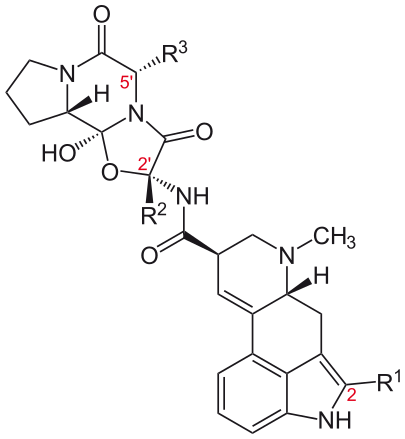
| Name | R1 | R2 | R3 | Amino acid at R2 | Amino acid at R3 |
|---|---|---|---|---|---|
| Ergocristine | CH(CH3)2 | benzyl | Valine | Phenylalanine | |
| Ergocornine | CH(CH3)2 | CH(CH3)2 | Valine | Valine | |
| *alpha*-Ergocryptine | CH(CH3)2 | CH2CH(CH3)2 | Valine | Leucine | |
| *beta*-Ergocryptine | CH(CH3)2 | CH(CH3)CH2CH3 (*S*) | Valine | Isoleucine | |
| Ergotamine | CH3 | benzyl | Alanine | Phenylalanine | |
| Ergovaline | CH3 | CH(CH3)2 | Alanine | Valine | |
| *alpha*-Ergosine | CH3 | CH2CH(CH3)2 | Alanine | Leucine | |
| *beta*-Ergosine | CH3 | CH(CH3)CH2CH3 (*S*) | Alanine | Isoleucine | |
| Bromocriptine (semisynthetic) | Br | CH(CH3)2 | CH2CH(CH3)2 | Valine | Leucine |
Clavines
A variety of modifications to the basic ergoline are seen in nature, for example agroclavine, elymoclavine, lysergol. Those deriving from dimethylergoline are referred to as clavines. Examples of clavines, include festuclavine, fumigaclavine A, fumigaclavine B and fumigaclavine C.
Others
Some synthetic ergoline derivatives do not fall easily into any of the above groups. Some examples are:
- Cabergoline (INN)
- IUPAC name: 1-[(6-Allylergolin-8β-yl)-carbonyl]-1-[3-(dimethylamino)propyl]-3-ethylurea
- CAS number:
- Pergolide (INN)
- IUPAC name: (8β)-8-((methylthio)methyl)-6-propyl-ergoline
- CAS number:
- Lisuride (INN)
- IUPAC name: 3-(9,10-didehydro-6-methylergolin-8α-yl)-1,1-diethylurea
- CAS number:
References
References
- (2006). "Ergot alkaloids--biology and molecular biology". Elsevier.
- (October 2006). "Ergot and its alkaloids". American Journal of Pharmaceutical Education.
- (2013). "Recreational use of D-lysergamide from the seeds of Argyreia nervosa, Ipomoea tricolor, Ipomoea violacea, and Ipomoea purpurea in Poland". Journal of Psychoactive Drugs.
- "Physiology and Genetics". Springer International Publishing.
- (May 2016). "Identification and determination of ergot alkaloids in Morning Glory cultivars". Analytical and Bioanalytical Chemistry.
- (2006). "Sacred Mushrooms of the Goddess: The Secrets of Eleusis". Ronin Publishing, Inc.
- (2006). "Ergot alkaloids – biology and molecular biology".
- (2015). "Hallucinogenic drugs in pre-Columbian Mesoamerican cultures". Neurologia.
- "Psychopharmacological agents". Academic Press.
- (1973). "The Botany and Chemistry of Hallucinogens". Charles Thomas.
- "Separation of four isomers of lysergic acid α-hydroxyethylamide by liquid chromatography and their spectroscopic identification". Journal of Chromatography A.
- "Chemistry of alkaloid formation in ergot". Lloydia.
- "Ergot alkaloids. IV. Contribution to the biosynthesis of lysergic acid amides". Folia Microbiologica.
- (October 2003). "Biochemical outcome of blocking the ergot alkaloid pathway of a grass endophyte". Journal of Agricultural and Food Chemistry.
- (2010). "The Mycota, Industrial Applications". Springer-Verlag.
- (May 2016). "Identification and determination of ergot alkaloids in Morning Glory cultivars". Analytical and Bioanalytical Chemistry.
- (1968). "Die psychische Wirkung der mexikanischen Droge "Ololiuqui" am Menschen". Psychopharmacologia.
- (December 2014). "Biosynthetic pathways of ergot alkaloids". Toxins.
- (October 1998). "Ergot alkaloids. Current status and review of clinical pharmacology and therapeutic use compared with other oxytocics in obstetrics and gynaecology". Drugs.
- (2014). "Health & Drugs - Disease, Prescription & Medication". Lulu.com.
- (1965). "The Alkaloids: Chemistry and Physiology". Elsevier.
- European Commission. Joint Research Centre.. "Report on the 2017 proficiency test of the European Union reference laboratory for mycotoxins determination of ergot alkaloids in rye.".
- {{usurped
- (2007). "Psychedelic medicine : new evidence for hallucinogenic substances as treatments". Praeger Publishers.
- (February 1984). "The history and pharmacology of dopamine agonists". The Canadian Journal of Neurological Sciences. Le Journal Canadien des Sciences Neurologiques.
- (January 2007). "List of Precursors and Chemicals Frequently Used in the Illicit Manufacture of Narcotic Drugs and Psychotropic Substances Under International Control". International Narcotics Control Board.
- (May 1999). "Ergoline derivatives: receptor affinity and selectivity". Farmaco.
- (2006). "Ergot alkaloids – biology and molecular biology".
- (2018). "Chemistry and Structure-Activity Relationships of Psychedelics".
- (2012). "Structure–activity relationships of serotonin 5-HT2A agonists". Wiley Interdisciplinary Reviews: Membrane Transport and Signaling.
- (January 1976). "Biosynthesis of Ergot Alkaloids and Related Compounds". Tetrahedron Report.
- (June 2025). ["Detection of ergopeptine alkaloids in endophyte-infected, toxic Ky-31 tall fescue by mass spectrometry/mass spectrometry"](http://ddr.nal.usda.gov/bitstream/10113/23986/1/IND86034816.pdf }}{{dead link). Journal of Agricultural and Food Chemistry.
- "Solanaceae and convolvulaceae - secondary metabolites: biosynthesis, chemotaxonomy, biological and economic significance: a handbook". Springer-Verlag.
This article was imported from Wikipedia and is available under the Creative Commons Attribution-ShareAlike 4.0 License. Content has been adapted to SurfDoc format. Original contributors can be found on the article history page.
Ask Mako anything about Ergoline — get instant answers, deeper analysis, and related topics.
Research with MakoFree with your Surf account
Create a free account to save articles, ask Mako questions, and organize your research.
Sign up freeThis content may have been generated or modified by AI. CloudSurf Software LLC is not responsible for the accuracy, completeness, or reliability of AI-generated content. Always verify important information from primary sources.
Report