From Surf Wiki (app.surf) — the open knowledge base
Energia (rocket)
Soviet launch vehicle
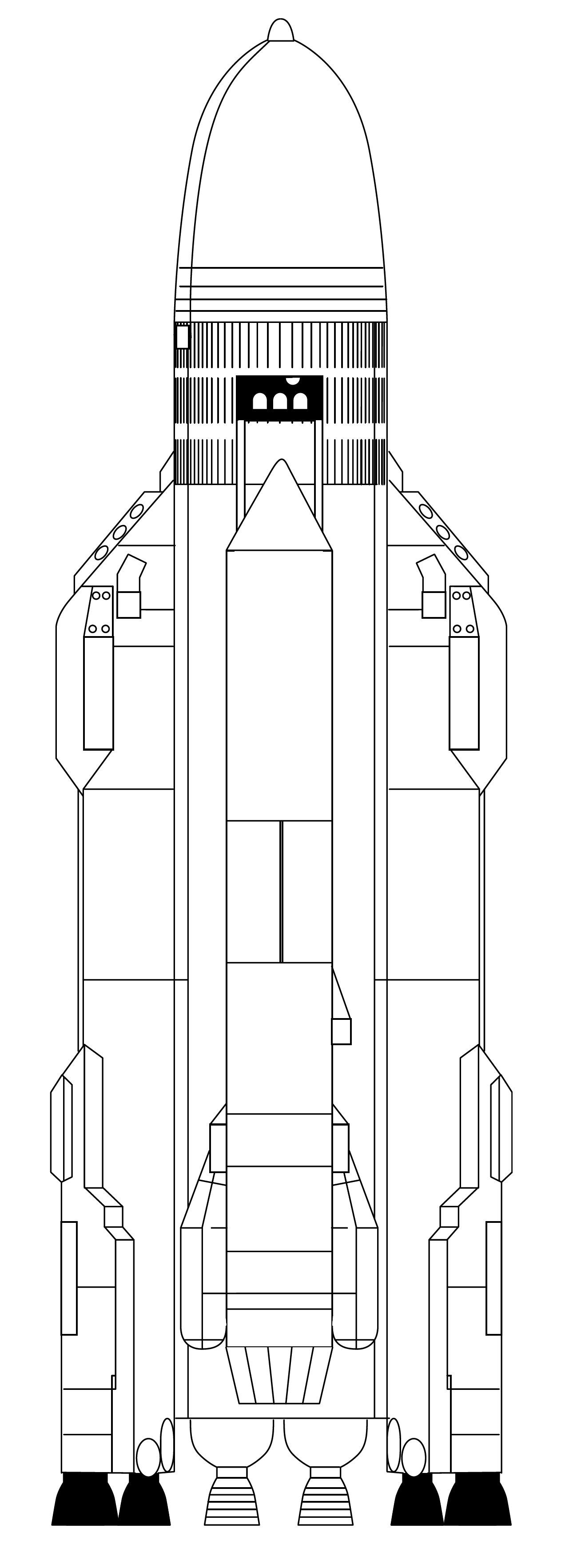
Soviet launch vehicle
| Field | Value | ||||||
|---|---|---|---|---|---|---|---|
| image | File:Energia Render 3.png | ||||||
| upright | 1.3 | ||||||
| caption | Energia perspective free render with multiple angles and human (1.76 m) for scale. | ||||||
| name | Energia | ||||||
| Энергия | |||||||
| function | Human-rated multi-purpose super heavy-lift launch vehicle | ||||||
| manufacturer | NPO "Energia" | ||||||
| country-origin | Soviet Union | ||||||
| cpl | million (1985) | ||||||
| billion (2025)<ref>{{cite web | url | http://www.astronautix.com/e/energia.html | title=Energia | last=Wade | first=Mark | website=Encyclopedia Astronautica | access-date=January 16, 2025 }} |
| mass | 2400000 kg | ||||||
| height | 58.765 m | ||||||
| diameter | 17.65 m | ||||||
| stages | 2 | ||||||
| location | LEO | ||||||
| mass | 100000 kg | ||||||
| location | GSO | ||||||
| mass | 20000 kg | ||||||
| location | TLI | ||||||
| mass | 32000 kg | ||||||
| status | Retired | ||||||
| sites | Baikonur | ||||||
| launches | 2 | ||||||
| success | 2 | ||||||
| fail | 0 | ||||||
| first | 15 May 1987 | ||||||
| last | 15 November 1988 | ||||||
| type | booster | ||||||
| name | Zenit | ||||||
| number | 4 | ||||||
| length | 39.46 m | ||||||
| diameter | 3.92 m | ||||||
| engines | 1 RD-170 | ||||||
| thrust | 29000 kN sea level | ||||||
| 32000 kN vacuum | |||||||
| SI | 309 isp at sea level | ||||||
| 338 isp in vacuum | |||||||
| burntime | 156 s | ||||||
| fuel | RP-1/LOX | ||||||
| type | stage | ||||||
| stageno | Core | ||||||
| length | 58.765 m | ||||||
| diameter | 7.75 m | ||||||
| engines | 4 RD-0120 | ||||||
| thrust | 5800 kN sea level | ||||||
| 7500 kN vacuum | |||||||
| SI | 359 isp at sea level | ||||||
| 454 isp in vacuum | |||||||
| burntime | 480–500 s | ||||||
| fuel | LH2/LOX |
the Soviet launch vehicle
Энергия |country-origin = Soviet Union billion (2025) 32000 kN vacuum 338 isp in vacuum 7500 kN vacuum 454 isp in vacuum Energia (; GRAU 11K25) was a 1980s super-heavy lift launch vehicle. It was designed by NPO Energia of the Soviet Union as part of the Buran program for a variety of payloads including the Buran spacecraft. Control system main developer enterprise was the Khartron NPO "Electropribor". The Energia used four strap-on boosters each powered by a four-chamber RD-170 engine burning kerosene/LOX, and a central core stage with four single-chamber RD-0120 (11D122) engines fueled by liquid hydrogen/LOX.
The launch vehicle had two functionally different operational variants: Energia-Polyus, the initial test configuration, in which the Polyus system was used as a final stage intended to put the payload into orbit, and Energia-Buran, in which the Buran orbiter was the payload and the source of the orbit insertion impulse.
The launch vehicle had the capacity to place about 100 tonnes in Low Earth orbit, up to 20 tonnes to geostationary orbit and up to 32 tonnes by translunar trajectory into lunar orbit.
The launch vehicle made just two flights before being discontinued. Since 2016, there have been attempts to revive the launch vehicle, reusing an updated version of its booster engine in the Soyuz-5 rocket.
Development history
Work on the Energia/Buran system began in 1976 after the decision was made to cancel the unsuccessful N1 rocket. The facilities and infrastructure built for the N1 were reused for Energia (notably the huge horizontal assembly building), just as NASA reused infrastructure designed for the Saturn V in the Space Shuttle program. Energia also replaced the "Vulkan" concept, which was a design based on the Proton and using the same hypergolic propellants, but much larger and more powerful. The "Vulkan" designation was later given to a variation of the Energia which has eight boosters and multiple stages.
The Energia was designed to launch the Soviet "Buran" reusable shuttle, and for that reason was designed to carry its payload mounted on the side of the stack, rather than on the top, as is done with other launch vehicles. Design of the Energia-Buran system assumed that the booster could be used without the Buran orbiter, as a heavy-lift cargo launch vehicle; this configuration was originally given the name "Buran-T". This configuration required the addition of an upper stage to perform the final orbital insertion. The first launch of the Energia was in the configuration of a heavy launch vehicle, with the large Polyus military satellite as a payload, however Polyus failed to correctly perform the orbital insertion.
Due to the termination of the Buran program the Energia program was concluded after only two launches. The legacy of Energia/Buran project manifests itself in the RD-170 family of rocket engines, and the Zenit launcher, with the first stage roughly the same as one of the Energia first-stage boosters.
Block A first stage
The first stage, Block A was four strap-on boosters weighing in at 340 tons with fuel included. The boosters had a burn time of 156 seconds from takeoff. They used one RD-170 engine for each booster, four in total. Each booster was 40 meters (131.2 ft) tall and 3.9 meters (12.7 ft) wide. The stage used kerosene as fuel.
The boosters' thrust was 7,906.100 kN in a vacuum.
Block Ts second stage
The second stage, Block Ts was the core/center stage of the rocket weighing in at about 50 tons with fuel included. The stage had a burn time of 470 seconds from takeoff. They had used 4 one-chamber RD-O120 engines. The stage was 59 meters (193.5 ft) tall and 7.75 meters (24.4 ft) wide. The center used liquid hydrogen as fuel instead of the kerosene used in the boosters.
The core stage had 7,848.124 kN of thrust in a vacuum.
Launch history
First launch (Energia–Polyus)
The Energia was first test-launched on 15 May 1987, with the Polyus spacecraft as the payload. An FGB ("functional cargo block") engine section originally built as a cancelled Mir module was incorporated into the upper stage used to insert the payload into orbit, similarly to Buran and the US Space Shuttle performing the final orbital insertion, since the planned "Buran-T" upper stage had not yet progressed beyond the planning stage. The intended orbit had 280 km (170 mi) altitude and 64.6° inclination.
The Soviets had originally announced that the launch was a successful sub-orbital test of the new Energia booster with a dummy payload, but sometime later it was revealed that in fact the flight had been intended to bring the Polyus into orbit. The two stages of the Energia launcher functioned as designed, but due to a software error in its attitude control system, Polyus's orbital insertion motor failed to inject the payload into orbit. Instead, the Polyus reentered the atmosphere over the Pacific Ocean.
Second launch (Energia–Buran)

The second flight, and the first one where payload successfully reached orbit, was launched on 15 November 1988. This mission launched the uncrewed Soviet Shuttle vehicle Buran. At apogee, the Buran spacecraft made a 66.7 m/s burn to reach a final orbit of 251 km × 263 km.
| Flight number | |||||||||||||||||||||||||
|---|---|---|---|---|---|---|---|---|---|---|---|---|---|---|---|---|---|---|---|---|---|---|---|---|---|
| (COSPAR ID) | Date (UTC) | Launch site | Serial no. | Payload | Orbit at payload separation | Remarks | |||||||||||||||||||
| 1 | 15 May 1987 | ||||||||||||||||||||||||
| 17:30:00 | Baikonur Cosmodrome Site 250 | last=Lukashevich | first=Vadim | title=Manufacturing History of the Energia Launch Vehicle | url=http://www.buran.ru/htm/rocrt3.htm | access-date=25 January 2018 | website=buran.ru | language=ru}} | Polyus | last=Lukashevich | first=Vadim | title=The Polyus Spacecraft | url=http://www.buran.ru/htm/cargo.htm | access-date=25 January 2018 | website=buran.ru | language=ru}} | last1=Day | first1=Dwayne A. | last2=Kennedy | first2=Robert G. III | date=January 2010 | title=Soviet Star Wars: The launch that saved the world from orbiting laser battle stations | url=https://www.airspacemag.com/space/soviet-star-wars-8758185/ | access-date=25 January 2018 | publisher=Air & Space/Smithsonian}} |
| 2 | |||||||||||||||||||||||||
| (1988-100A) | 15 November 1988 | ||||||||||||||||||||||||
| 03:00:01 | Baikonur Cosmodrome Site 110/37 | 1L | Buran | last=Lukashevich | first=Vadim | title=Timeline of the flight of Buran on 15 November 1988 | url=http://www.buran.ru/htm/cikmain.htm | access-date=25 January 2018 | website=buran.ru | language=ru}} | |||||||||||||||
| After burn: 251 x 263 km | First and only flight of Buran. The spacecraft orbited Earth twice before de-orbiting and landed at Baikonur at 06:24 UTC. |
Discontinuation and potential revival
Production of Energia rockets ended with the end of the Buran shuttle project in the late 1980s, and more certainly, with the fall of the Soviet Union in 1991. Since that time, there have been persistent rumors of the renewal of production, but given the political realities, that is highly unlikely.
While the Energia is no longer in production, the Zenit boosters were in use until 2017. The four strap-on liquid-fuel boosters, which burned kerosene and liquid oxygen, were the basis of the Zenit rocket which used the same engines. The engine is the four combustion chamber RD-170. Its derivative, the RD-171, was used on the Zenit rocket. A half-sized derivative of the engine, the two-chamber RD-180, powers Lockheed Martin's Atlas V rocket, while the single-chamber derivative, the RD-191, has been used to launch the Korean Naro-1 (as a reduced-thrust variant named the RD-151) and the Russian Angara rocket. The RD-181, based on the RD-191, is used on the Antares rocket.
In August 2016, Roscosmos announced conceptual plans to develop a super heavy-lift launch vehicle from existing Energia components (particularly the RD-171 engine for side boosters) instead of pushing the less-powerful Angara A5V project. This would allow Russia to launch missions towards establishing a permanent Moon base with simpler logistics, launching just one or two 80–160-ton super-heavy rockets instead of four 40-ton Angara A5Vs implying quick-sequence launches and multiple in-orbit rendezvous. Tests of RD-171MV engine, an updated version of the engine used in Energia, were completed in September 2021 and may potentially be used in the successor Soyuz-5 rocket.
Proposed variants
Three major design variants were conceptualized after the original configuration, each with vastly different payloads.
Energia-M
The Energia-M was an early-1990s design configuration and the smallest of the three. The number of boosters was reduced from four to two, the core stage was shortened and fitted with just one RD-0120 engine. It was designed to replace the Proton rocket, but lost a 1993 competition to the Angara rocket.
A non-functional prototype ("structural test vehicle") of the Energia M still exists in the Dynamic Test Stand facility at Baikonur Cosmodrome.
Energia-2 (GK-175)
Energia-2 was an evolution of the Energia studied in the 1980s. Unlike the Energia-Buran, which was planned to be semi-reusable (like the U.S. Space Shuttle), the GK-175 concept was to have allowed the recovery and reuse of all elements of the vehicle, similarly to the original, fully reusable Orbiter/Booster concept of the U.S. Shuttle. The Energia-2 core as proposed would be capable of re-entering and gliding to a landing.
Vulkan
The final never-built design concept was also the largest. With eight Zenit booster rockets and an Energia-M core as the upper stage, the Vulkan (which shared the name with another Soviet heavy lift rocket that was cancelled years earlier) configuration was initially projected to launch up to 200 metric tonnes into 200 km orbit with inclination 50.7°.
The development of the Vulkan and the refurbishment of Universal Test Stand and Launch Pad at site 250 for its launches was in progress between 1990–1993 and abandoned soon after due to a lack of funds and the collapse of the Soviet Union.{{cite book
Comparison with the Space Shuttle
_2.jpg)
The Energia rocket was created as a response to the Americans building the Space Shuttle and was heavily based off the already designed Space Shuttle. While the Shuttle was made as a cheaper alternative for spaceflight, the Russians were paranoid about its use as a military weapon and responded by designing and building Energia-Buran.
The Space Shuttle could only bring a maximum 30 tonnes to LEO, but the Energia could bring a maximum 100 tonnes to LEO. This makes the Space Shuttle a heavy-lift launch vehicle and the Energia a super-heavy lift launch vehicle.
The Space Shuttle program lasted 30 years, operating from 1981 to 2011. The Energia program began in 1976 and after its only two launches officially ended in 1993 and in total operated for 17 years.
References
References
- Wade, Mark. "Energia".
- [http://www.buran-energia.com/energia/energia-carac.php Energia Characteristics]
- [http://www.energia.ru/english/energia/launchers/vehicle_energia.html Launch vehicle "Energia" Official Site]
- [http://web.mit.edu/slava/space/essays/essay-krivonosov.htm Krivonosov, Khartron: Computers for rocket guidance systems]
- [http://arkos.kharkov.ua/sumbr_e.php Control systems for intercontinental ballistic missiles and launch vehicles] {{webarchive. link. (2010-02-05)
- "Energia".
- (2007). "Energiya-Buran: The Soviet Space Shuttle". Springer Science & Business Media.
- B. Hendrickx, "The Origins and Evolution of the Energiya Rocket Family," ''J. British Interplanetary Soc., Vol. 55,'' pp. 242-278 (2002).
- Wade, Mark. "Energia".
- Vassili Petrovitch, [http://www.buran-energia.com/polious/polious-desc.php Polyus] (accessed 21 September 2010).
- "Polyus".
- Mark Wade, ''Encyclopedia Astronautics'', [https://web.archive.org/web/20011225045427/http://www.astronautix.com/craft/buran.htm Buran]. (accessed 21 September 2010).
- Lukashevich, Vadim. "Manufacturing History of the Energia Launch Vehicle".
- Lukashevich, Vadim. "The Polyus Spacecraft".
- (January 2010). "Soviet Star Wars: The launch that saved the world from orbiting laser battle stations". [[Air & Space/Smithsonian]].
- Lukashevich, Vadim. "Timeline of the flight of Buran on 15 November 1988".
- (12 December 2018). "Russia plans to revive super Soviet Energia missiles".
- (July 9, 2014). "First Angara rocket launched on suborbital test flight".
- (August 22, 2016). "Roscosmos To Develop New Super-heavy Rocket". Russian Space News.
- link. (August 22, 2016)
- (24 July 2018). "Russia's New Rocket Project Might Resurrect a Soviet-Era Colossus". Hearst Digital Media.
- (9 October 2021). "Rocket Report: Next Falcon Heavy launch date set, Soyuz 5 engines clear tests".
- (2015-07-06). "This Immense Russian Rocket Was Abandoned For Decades". Popular Mechanics.
- "Origin of the Angara project".
- Wenz, John. (2015-07-06). "This Immense Russian Rocket Was Abandoned For Decades".
- "Б.И.Губанов. Триумф и трагедия «Энергии» глава 41".
- (2011). "The Space Shuttle – NASA Technical Reports Server (NTRS)".
- (1998). "Триум и трагедия "Энергии"". NIER.
- (February 20, 2019). "Why Did the Soviets 'Copy' the Space Shuttle?".
- Calhoun, JoAnne. (January 1, 1982). "The Space Shuttle - Description, operation, and evolution".
This article was imported from Wikipedia and is available under the Creative Commons Attribution-ShareAlike 4.0 License. Content has been adapted to SurfDoc format. Original contributors can be found on the article history page.
Ask Mako anything about Energia (rocket) — get instant answers, deeper analysis, and related topics.
Research with MakoFree with your Surf account
Create a free account to save articles, ask Mako questions, and organize your research.
Sign up freeThis content may have been generated or modified by AI. CloudSurf Software LLC is not responsible for the accuracy, completeness, or reliability of AI-generated content. Always verify important information from primary sources.
Report