From Surf Wiki (app.surf) — the open knowledge base
Endothelial dysfunction
Impaired function of the inner lining of blood/lymph vessels

Impaired function of the inner lining of blood/lymph vessels
In blood vessel diseases, endothelial dysfunction is an unhealthy state of the cells that line the blood vessels (endothelium). The main cause of endothelial dysfunction is impaired bioavailability of nitric oxide.
In addition to acting as a semipermeable membrane, the endothelium is responsible for maintaining vascular tone and regulating oxidative stress by releasing mediators, such as nitric oxide, prostacyclin and endothelin, and by controlling local angiotensin-II activity.
Dysfunctional endothelium is characterized by constricted blood vessels, increased ability of chemicals to flow through blood vessel walls, blood clots, and inflammation. This pathological state is often associated with elevated levels of biomarkers such as prothrombin time, D-dimer, von Willebrand factor, fibrin degradation products, C-reactive protein (CRP), ferritin, Interleukin 6 (IL-6), and plasma creatinine. The result of this endothelial dysregulation is a cascade of harmful effects, including tightened blood vessels, small blood vessel leakage, blood clots, high levels of inflammation, and a disrupted immune response against viruses. These changes contribute to the progression of blood vessel (vascular) diseases.
In a healthy state, the endothelium exhibits wider blood vessels, tightly-controlled blood vessel permeability, and anti-thrombotic and anti-inflammatory properties. This balance ensures the smooth functioning of the vascular system.
Research
Atherosclerosis
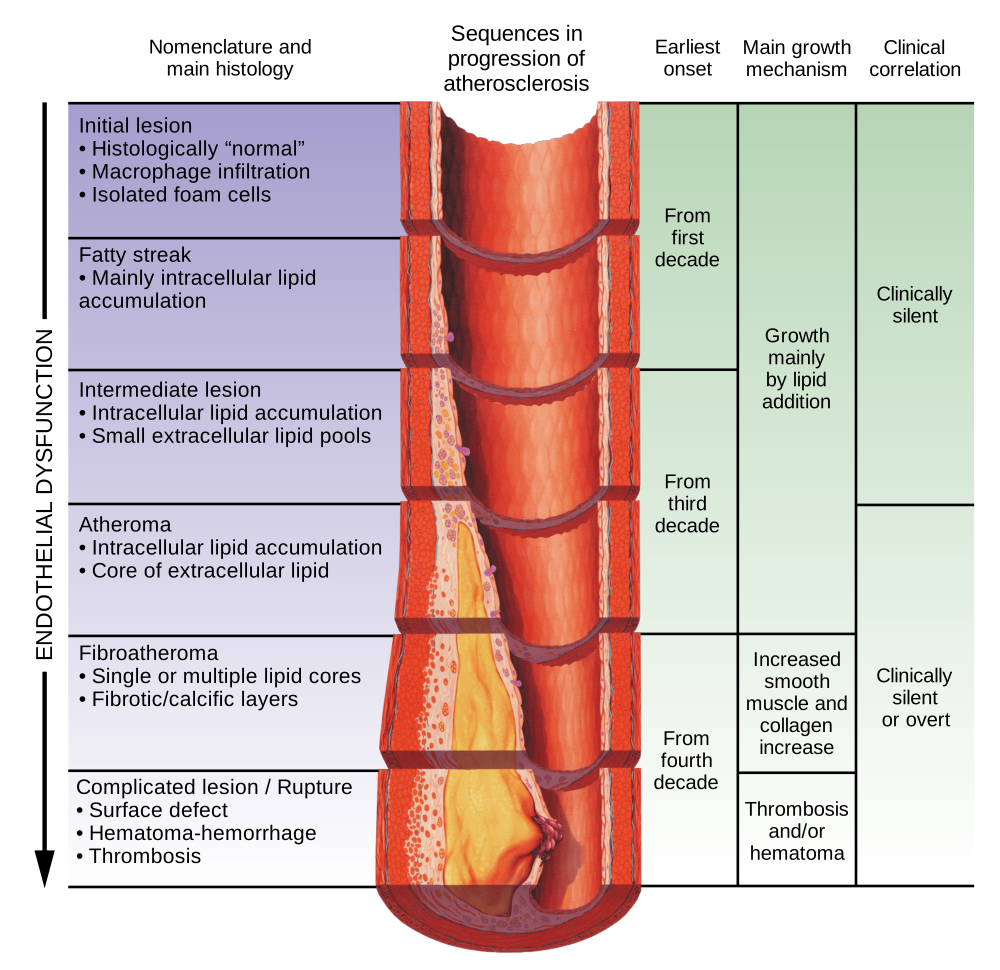
Endothelial dysfunction may be involved in the development of atherosclerosis and may predate vascular pathology. Endothelial dysfunction may also lead to increased adherence of monocytes and macrophages, as well as promoting infiltration of low-density lipoprotein (LDL) in the vessel wall. Oxidized LDL is a hallmark feature of atherosclerosis, by promoting the formation of foam cells, monocyte chemotaxis, and platelet activation, leading to atheromatous plaque instability and ultimately to rupture. Dyslipidemia and hypertension are well known to contribute to endothelial dysfunction, and lowering blood pressure and LDL has been shown to improve endothelial function, particularly when lowered with ACE inhibitors, calcium channel blockers, and statins. Steady laminar flow with high shear stress in blood vessels protects against atherosclerosis, whereas disturbed flow promotes atherosclerosis.
Nitric oxide
Nitric oxide (NO) suppresses platelet aggregation, inflammation, oxidative stress, vascular smooth muscle cell migration and proliferation, and leukocyte adhesion. A feature of endothelial dysfunction is the inability of arteries and arterioles to dilate fully in response to an appropriate stimulus, such as exogenous nitroglycerine, As a co-factor for nitric oxide synthase, tetrahydrobiopterin (BH4) supplementation has shown beneficial results for the treatment of endothelial dysfunction in animal experiments and clinical trials, although the tendency of BH4 to become oxidized to BH2 remains a problem.
Testing and diagnosis
In the coronary circulation, angiography of coronary artery responses to vasoactive agents may be used to test for endothelial function, and venous occlusion plethysmography and ultrasonography are used to assess endothelial function of peripheral vessels in humans.
A non-invasive method to measure endothelial dysfunction is % Flow-Mediated Dilation (FMD) as measured by Brachial Artery Ultrasound Imaging (BAUI). Current measurements of endothelial function via FMD vary due to technical and physiological factors. Furthermore, a negative correlation between percent flow-mediated dilation and baseline artery size is recognised as a fundamental scaling problem, leading to biased estimates of endothelial function. Forearm plethysmography has replaced flow mediated dilation for assessing endothelial dysfunction. von Willebrand factor is a marker of endothelial dysfunction and is consistently elevated in atrial fibrillation.
A non-invasive, FDA-approved device for measuring endothelial function that works by measuring Reactive Hyperemia Index (RHI) is Itamar Medical's EndoPAT. It has shown an 80% sensitivity and 86% specificity to diagnose coronary artery disease when compared against the gold standard, acetylcholine angiogram. This result suggests that this peripheral test reflects the physiology of the coronary endothelium.
Since NO maintains low tone and high compliance of the small arteries at rest, a reduction of age-dependent small artery compliance is a marker for endothelial dysfunction that is associated with both functional and structural changes in the microcirculation. Small artery compliance or stiffness can be assessed simply and at rest and can be distinguished from large artery stiffness by use of pulsewave analysis.
Endothelial dysfunction and stents
Stent implantation has been correlated with impaired endothelial function in several studies. Sirolimus eluting stents were previously used because they showed low rates of in-stent restenosis, but further investigation showed that they often impair endothelial function in humans and worsen conditions.
COVID-19 complication in the lungs
COVID-19 can present with an acute lung injury manifestation that arises from endothelial dysfunction.
Risk reduction
Treatment of high blood pressure and high levels of cholesterol in the blood may improve endothelial function in people taking statins (HMGCoA-reductase inhibitor), and renin angiotensin system inhibitors, such as ACE inhibitors and angiotensin II receptor antagonists. Calcium channel blockers and selective beta 1 antagonists may also improve endothelial dysfunction. Lifestyle modifications such as smoking cessation have also been shown to improve endothelial function and lower the risk of major cardiovascular events.
References
References
- (2019). "Targeting Early Atherosclerosis: A Focus on Oxidative Stress and Inflammation". [[List of Hindawi academic journals#O.
- (2010). "From endothelial dysfunction to atherosclerosis". Autoimmunity Reviews.
- (Aug 2012). "The assessment of endothelial function: from research into clinical practice". Circulation.
- (January 2021). "Endothelium Infection and Dysregulation by SARS-CoV-2: Evidence and Caveats in COVID-19". Viruses.
- (2018). "Assessment of endothelium-independent vasodilation: From methodology to clinical perspectives". Journal of Hypertension.
- (2013). "Functionally defective high-density lipoprotein and paraoxonase: a couple for endothelial dysfunction in atherosclerosis". Cholesterol.
- (December 2021). "Dysfunctional Vascular Endothelium as a Driver of Atherosclerosis: Emerging Insights Into Pathogenesis and Treatment". Frontiers in Pharmacology.
- (2008). "Pathophysiology, diagnosis and prognostic implications of endothelial dysfunction". Annals of Medicine.
- Poredos, P.. (2001). "Endothelial dysfunction in the pathogenesis of atherosclerosis". Clinical and Applied Thrombosis/Hemostasis.
- (2022). "Mechanisms of Oxidized LDL-Mediated Endothelial Dysfunction and Its Consequences for the Development of Atherosclerosis". [[Frontiers in Cardiovascular Medicine]].
- (2019-01-22). "Endothelial stiffening in dyslipidemia". Aging.
- (2017). "Hypertension: From basic research to clinical practice".
- (2012). "Hypertension and endothelial dysfunction: therapeutic approach". Current Vascular Pharmacology.
- (2018). "Endothelial dysfunction, endothelial nitric oxide bioavailability, tetrahydrobiopterin, and 5-methyltetrahydrofolate in cardiovascular disease. Where are we with therapy?". Microvascular Research.
- Peretz, Alon. (2007). "Flow mediated dilation of the brachial artery: an investigation of methods requiring further standardization". BMC Cardiovascular Disorders.
- (Jan 2011). "Assessment of flow-mediated dilation in humans: a methodological and physiological guideline". Am J Physiol Heart Circ Physiol.
- (2018). "Lycopene and Vascular Health". [[Frontiers_Media#List_of_journals.
- (2020). "Endothelial function in patients with atrial fibrillation". [[Annals of Medicine]].
- (Feb 2007). "Assessment of peripheral vascular endothelial function in the ambulatory setting". Vasc. Med..
- (October 2010). "Assessing endothelial vasodilator function with the Endo-PAT 2000". Journal of Visualized Experiments.
- (Dec 2004). "Noninvasive identification of patients with early coronary atherosclerosis by assessment of digital reactive hyperemia". J Am Coll Cardiol.
- (2007). "Role of nitric oxide deficiency and its detection as a risk factor in pre-hypertension". JASH.
- (2011). "Association of small artery elasticity with incident cardiovascular disease in older adults: the multiethnic study of atherosclerosis". Am J Epidemiol.
- (2009). "Comprehensive noninvasive arterial vascular evaluation". Future Cardiology.
- (2017). "Recent advances to accelerate re-endothelialization for vascular stents". Journal of Tissue Engineering.
- (2009-06-16). "Paclitaxel-coated balloon catheter versus paclitaxel-coated stent for the treatment of coronary in-stent restenosis". Circulation.
- (April 2023). "Endothelial dysfunction in COVID-19: an overview of evidence, biomarkers, mechanisms and potential therapies". Acta Pharmacologica Sinica.
- (2007). "Cardiovascular risk reduction by reversing endothelial dysfunction: ARBs, ACE inhibitors, or both? Expectations from the ONTARGET Trial Programme". Vascular Health and Risk Management.
- (Apr 2012). "Endothelial dysfunction and atherosclerosis: focus on novel therapeutic approaches". Recent Pat Cardiovasc Drug Discov.
- (2014). "Smoking and cardiovascular disease: mechanisms of endothelial dysfunction and early atherogenesis". Arteriosclerosis, Thrombosis, and Vascular Biology.
This article was imported from Wikipedia and is available under the Creative Commons Attribution-ShareAlike 4.0 License. Content has been adapted to SurfDoc format. Original contributors can be found on the article history page.
Ask Mako anything about Endothelial dysfunction — get instant answers, deeper analysis, and related topics.
Research with MakoFree with your Surf account
Create a free account to save articles, ask Mako questions, and organize your research.
Sign up freeThis content may have been generated or modified by AI. CloudSurf Software LLC is not responsible for the accuracy, completeness, or reliability of AI-generated content. Always verify important information from primary sources.
Report