From Surf Wiki (app.surf) — the open knowledge base
Emirate
Territory ruled by an emir
Territory ruled by an emir
the political term "emirate"
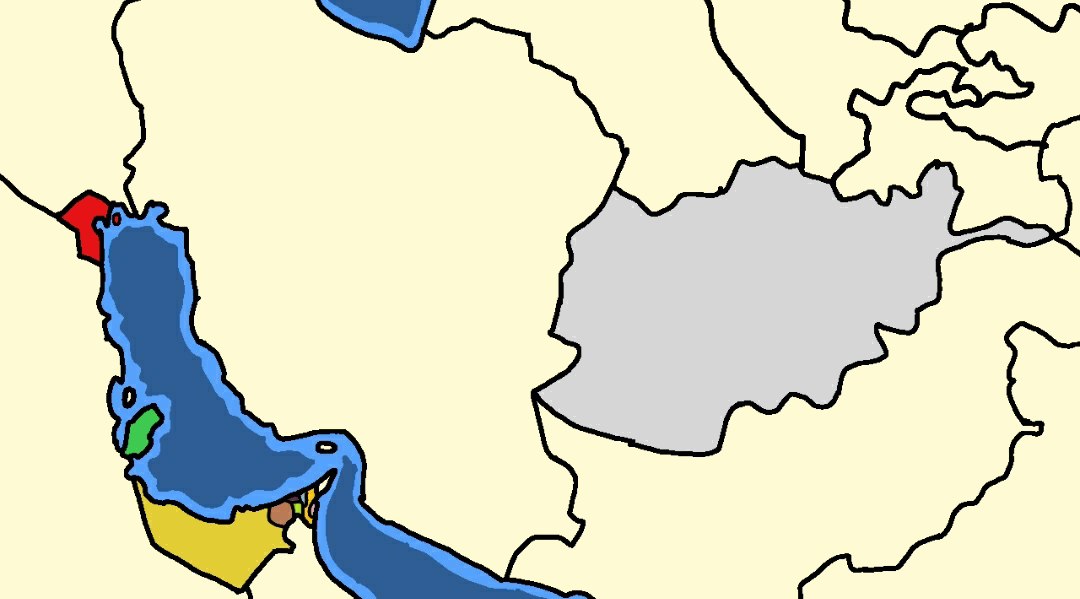
An emirate is a territory ruled by an emir, a title used by monarchs or high officeholders in the Muslim world. From a historical point of view, an emirate is a political-religious unit smaller than a caliphate. It can be considered equivalent to a principality in non-Muslim contexts.
Currently in the world, there are three emirates that are independent states (Afghanistan, Kuwait, and Qatar) and one state that consists of a federation of seven emirates (the United Arab Emirates). A great number of previously independent emirates around the world are now part of larger states.
Etymology
Etymologically, emirate or amirate ( ar, plural: إمارات ar) is the quality, dignity, office, or territorial competence of any emir ( ; prince, commander, governor, etc.). In English, the term is pronounced or in British English and or in American English.
Types
Monarchies
The United Arab Emirates is a federal state that comprises seven federal emirates, each administered by a hereditary emir, these seven forming the electoral college for the federation's president and prime minister.
As most emirates have either disappeared, been integrated in a larger modern state, or changed their rulers' styles, e.g. to malik (Arabic for "king") or sultan, such true emirate-states have become rare.
Provinces
Furthermore, in Arabic the term can be generalized to mean any province of a country that is administered by a member of the ruling class, especially of a member (usually styled emir) of the royal family, as in Saudi Arabian governorates.
List of present emirates
Current emirates with political autonomy are listed below:
- Islamic Emirate of Afghanistan (since 15 August 2021)
- Kuwait (since 19 June 1961)
- Qatar (since 3 September 1971)
- United Arab Emirates (since 2 December 1971)
- Abu Dhabi
- Ajman
- Dubai
- Fujairah
- Ras al-Khaimah
- Sharjah
- Umm al-Quwain
List of former and integrated emirates
These are the emirates that have either ceased to exist, are not recognized and hold no real power, or were integrated into another country and preserved as "traditional states". They are arranged by location and in order of the date of the first leader styled "emir."
Africa
North Africa
- Emirate of Nekor, Rif region of modern Morocco 710–1019
- Emirate of Ifriqiya, Aghlabid Ifriqiya within modern Tunisia, Algeria, Sicily, Morocco, and Libya 800–909
- Emirate of Tunis, Hafsid Ifriqiya within modern Tunisia, Algeria, and Libya 1229–1574
- Zab Emirate, modern Algeria circa 1400 (short-lived)
- Emirate of Trarza, modern southwest Mauritania 1640s–1910s
- Emirate of Cyrenaica, modern eastern Libya 1949–1951 (became the Kingdom of Libya)
File:Hafsid1400.png|Ifriqiya under the Hafsids File:EthniesSénégal.jpg|Trarza (upper left) File:Map of Cyrenaica.png|Cyrenaica in Libya
Sub-Saharan Africa
Ethiopia
- Emirate of Harar, eastern Ethiopia 1647–1887
Ghana
- Zabarma Emirate, northeastern Ghana 1860s–1897
Niger
- Emirate of Say, southwestern Niger 19th century– (integrated)
Nigeria
- Fika Emirate, northeastern Nigeria 15th century– (integrated)
- Gwandu Emirate, northwestern Nigeria 15th century to 2005 (integrated and then deposed)
- Kebbi Emirate, northwestern Nigeria 1516– (integrated)
- Borgu Emirate, west-central Nigeria, formed from Bussa Emirate 1730–1954 and Kaiama Emirate 1912–54, unified 1954– (integrated)
- Gumel Emirate, north-central Nigeria 1749– (integrated)
- Yauri Emirate, northwestern Nigeria 1799– (integrated)
- Gombe Emirate, northeast Nigeria 1804– (integrated)
- Kano Emirate, north-central Nigeria 1805– (integrated)
- Bauchi Emirate, northeast Nigeria 1805– (integrated)
- Daura Emirate, north-central Nigeria off and on 1805– (integrated)
- Katsina Emirate, north-central Nigeria 1806– (integrated)
- Katagum Emirate, north-central Nigeria 1807– (integrated)
- Zaria Emirate, north-central Nigeria 1808– (integrated)
- Potiskum Emirate, northeastern Nigeria 1809– (integrated)
- Adamawa Emirate, eastern Nigeria and formerly into western Cameroon 1809– (integrated where preserved)
- Ilorin Emirate, southwestern Nigeria 1817– (integrated)
- Muri Emirate, east-central Nigeria 1817– (integrated)
- Kazaure Emirate, north-central Nigeria 1819– (integrated)
- Lapai Emirate, central Nigeria 1825– (integrated)
- Suleja Emirate, central Nigeria 1828– (integrated)
- Agaie Emirate, west-central Nigeria 1832– (integrated)
- Bida Emirate, west-central Nigeria 1856– (integrated)
- Kontagora Emirate, north-central Nigeria 1858– (integrated)
- Borno Emirate, northeastern Nigeria 1900– (integrated)
- Dikwa Emirate, northeast Nigeria 1901– (integrated)
- Biu Emirate, northeast Nigeria 1920– (integrated)
Asia
Arabia
- Emirate of Mecca, Western Arabia 967–1916
- Uyunid Emirate, the modern Arabian Peninsula 1076–1253
- Jabrids Emirate, Eastern and center Arabia 1417–1524
- Emirate of Al-Uyaynah central Arabia 1446–1760
- Bani Khalid Emirate, Eastern Arabia 1669–1796
- Emirate of Beihan, modern southern Yemen 1680–1967
- Emirate of Diriyah, mainly in modern Saudi Arabia and the UAE 1727–1818
- Emirate of Nejd, center and eastern Arabia 1818–91
- Emirate of Dhala, modern southern Yemen early 19th century to 1967
- Emirate of Jabal Shammar, northcentral Arabia 1836–1921
- Emirate of Nejd and Hasa, central Arabia 1902–21
- Idrisid Emirate of Asir, Jizan in modern southwestern Saudi Arabia 1906–34
- Emirate of Bahrain, 1971–2002 (before it was under a hakim (ruler); after under a malik (king))
- Emirates of Saudi Arabia, the thirteen provinces of Saudi Arabia
File:FederationOfSouthArabiaMap.jpg|Beihan and Dhala in South Arabia File:First Saudi State Big.png|Diriyah File:Second Saudi State Big.png|Nejd File:Alrasheed hail english.png|Jabal Shammar File:Sa mapa6.png|Asir at its height File:LocationBahrain.svg|Bahrain File:Saudi Arabia - province locator template.png|Saudi Arabian emirate divisions
Central Asia
- Emirate of Bukhara, modern Uzbekistan 1785–1920
- Khotan Emirate, 1933 northwest China, merged into First East Turkestan Republic
File:Bukhara1850.png|Bukhara File:Kashgar Prefecture in China.svg|Khotan in modern China
South Asia
- Emirate of Afghanistan, Afghanistan 1823–1929
- Islamic Emirate of Afghanistan (1996–2001), first period of Taliban rule in Afghanistan (overthrown)
- Islamic Emirate of Kunar, southern Afghanistan 1991–1991
- Emirate of Multan
- Habbarid Emirate
File:LocationAfghanistan.svg|Emirate of Afghanistan
Near East
- Emirate of Mosul (see list of emirs for more), modern Iraq 905–1096, 1127–1222, 1254–1383, 1758–1918
- Emirate of Melitene, modern central Turkey mid-ninth century to 934
- Emirate of Amida, modern Eastern Turkey 983–1085
- Karaman Emirate, south-central Anatolia 1250–1487
- Emirate of Aydin, state composed of Oghuz Turks in modern Turkey from the early 14th century to 1390
- Emirate of Dulkadir, modern Turkey 1337–1522
- Emirate of Erzincan, 14–15th centuries
- Emirate of Ramazan, modern Turkey 1352–1608
- Emirate of Mount Lebanon, modern Lebanon 1516–1842
- Timurid Emirates, Timur's empire and the minor emirates left behind after the fall of the Timurid dynasty in the Middle East, 1526-c.1550
- Soran Emirate, modern northern Iraq 1816–35
- Az Zubayr, town in Basra Governorate, Iraq during 16th century
- Emirate of Transjordan, modern Jordan 1921–46
- Islamic Emirate of Byara, modern Kurdistan Region, Iraq, 2001–2003
File:Anatolia1300.png|Ottoman emirate in 1300, labeled 'Osman' File:Timurid Dynasty 821 - 873 (AH).png|Timurid Emirate under the leadership of Timur File:PalestineAndTransjordan.png|Transjordan
Europe
Caucasus
- The Emirate of Armenia, Caucasus 637–884
- Emirate of Darband, Dagestan 869–1075
- Emirate of Tbilisi, modern Georgia 736–1080, nominally to 1122
- North Caucasian Emirate, Chechnya and Dagestan in the Caucasus 1919–1920
- Caucasus Emirate, Caucasus 2007–2017 (unrecognized)
File:Shaddadid.gif|Darband, Azerbaijan File:81ArabAbbasidPeriod750-885.gif|Armenia
Iberia
- Emirate of Córdoba, modern Spain and Portugal 756–929 (title changed to caliph in 929)
- Emirate of Badajoz, modern Portugal and western Spain 1009–1151
- Emirate of Almería, region of Almería and Cartagena in modern Spain off and on 1013–1091
- Emirate of Jerez, towns of Jerez de la Frontera and Arcos de la Frontera in modern southern Spain 1145–1147
- Emirate of Granada, modern southern Spain 1228–1492
File:Coras del Emirato de Córdoba.png|Córdoba File:Location map Taifa of Badajoz.svg|Badajoz File:Reino de Granada.svg|Granada
Mediterranean region
- Emirate of Crete, Crete, modern Greece, 824 or 827/828 to 961
- Emirate of Bari, city of Bari in southern Italy 847–871
- Emirate of Malta, 870–1091
- Emirate of Sicily, Sicily 965–1072
- Emirate of Qatansáar, city of Catanzaro in southern Italy 903-1050 File:Periferia Kritis.png|Crete within modern Greece File:Italy 1000 AD.svg|Sicily (at bottom)
References
References
- "The definition of emirate".
- (6 August 2020). "What is the difference between an emirate and a caliphate? – Shakuhachi.net".
- Wells, John C.. (2008). "Longman Pronunciation Dictionary". Longman.
This article was imported from Wikipedia and is available under the Creative Commons Attribution-ShareAlike 4.0 License. Content has been adapted to SurfDoc format. Original contributors can be found on the article history page.
Ask Mako anything about Emirate — get instant answers, deeper analysis, and related topics.
Research with MakoFree with your Surf account
Create a free account to save articles, ask Mako questions, and organize your research.
Sign up freeThis content may have been generated or modified by AI. CloudSurf Software LLC is not responsible for the accuracy, completeness, or reliability of AI-generated content. Always verify important information from primary sources.
Report