From Surf Wiki (app.surf) — the open knowledge base
Embryoid body
Three-dimensional aggregate of pluripotent stem cells
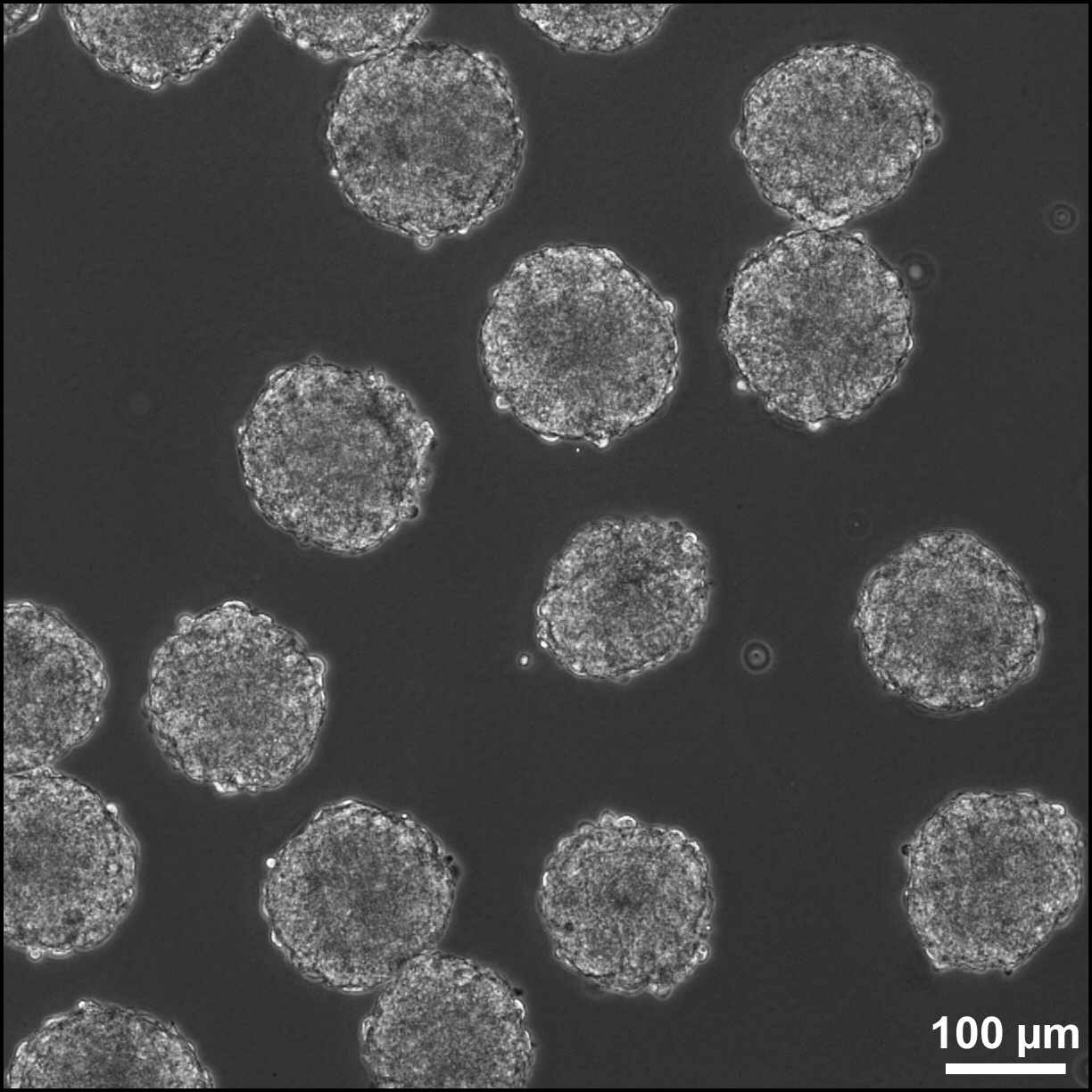
Three-dimensional aggregate of pluripotent stem cells
Embryoid bodies (EBs) are three-dimensional aggregates formed by pluripotent stem cells. These include embryonic stem cells (ESC) and induced pluripotent stem cells (iPSC)
EBs are differentiation of human embryonic stem cells into embryoid bodies comprising the three embryonic germ layers. They mimic the characteristics seen in early-stage embryos. They are often used as a model system to conduct research on various aspects of developmental biology. They can also contribute to research focused on tissue engineering and regenerative medicine.
Background
The pluripotent cell types that comprise embryoid bodies include embryonic stem cells (ESCs) derived from the blastocyst stage of embryos from mouse (mESC),{{Cite journal | doi-access = free | doi-access = free | doi-access = free | doi-access = free | author-link1 = Ian Wilmut | author-link5 = Keith Campbell (biologist) | doi-access = free | author-link2 = Shinya Yamanaka | hdl-access = free | author-link7 = Shinya Yamanaka | hdl-access = free
In contrast to monolayer cultures, however, the spheroid structures that are formed when ESCs aggregate enables the non-adherent culture of EBs in suspension, making EB cultures inherently scalable, which is useful for bioprocessing approaches, whereby large yields of cells can be produced for potential clinical applications.{{Cite journal | doi-access = free | doi-access = free | hdl-access = free
Formation
EBs are formed by the homophilic binding of the Ca2+ dependent adhesion molecule E-cadherin, which is highly expressed on undifferentiated ESCs.{{Cite journal | doi-access = free | doi-access = free | doi-access = free
Formation of EBs can also be more precisely controlled by the inoculation of known cell densities within single drops (10-20 μL) suspended from the lid of a Petri dish, known as hanging drops. While this method enables control of EB size by altering the number of cells per drop, the formation of hanging drops is labor-intensive and not easily amenable to scalable cultures. Additionally, the media can not be easily exchanged within the traditional hanging drop format, necessitating the transfer of hanging drops into bulk suspension cultures after 2–3 days of formation, whereby individual EBs tend to agglomerate. Recently, new technologies have been developed to enable media exchange within a modified hanging drop format.{{Cite journal | doi-access = free | editor1-last = Callaerts | editor1-first = Patrick | article-number = e1565 | doi-access = free | doi-access = free
Differentiation within EBs
Within the context of ESC differentiation protocols, EB formation is often used as a method for initiating spontaneous differentiation toward the three germ lineages. EB differentiation begins with the specification of the exterior cells toward the primitive endoderm phenotype.{{Cite journal | doi-access = free | doi-access = free | doi-access = free
As a result of the three-dimensional EB structure, complex morphogenesis occurs during EB differentiation, including the appearance of both epithelial- and mesenchymal-like cell populations, as well as the appearance of markers associated with the epithelial-mesenchymal transition (EMT).{{Cite journal | hdl-access = free
Parallels with embryonic development
Main article: embryogenesis
Much of the research central to embryonic stem cell differentiation and morphogenesis is derived from studies in developmental biology and mammalian embryogenesis. For example, immediately after the blastocyst stage of development (from which ESCs are derived), the embryo undergoes differentiation, whereby cell specification of the inner cell mass results in the formation of the hypoblast and epiblast.{{Cite journal | doi-access = free | doi-access = free
In addition, advancements of EB culture resulted in the development of embryonic organoids (Gastruloids) which show remarkable parallels to embryonic development such as symmetry-breaking, localised brachyury expression, the formation of the embryonic axes (anteroposterior, dorsoventral and Left-Right) and gastrulation-like movements.
Challenges to directing differentiation
In contrast to the differentiation of ESCs in monolayer cultures, whereby the addition of soluble morphogens and the extracellular microenvironment can be precisely and homogeneously controlled, the three-dimensional structure of EBs poses challenges to directed differentiation.{{Cite journal
References
References
- (2017). "Anteroposterior polarity and elongation in the absence of extraembryonic tissues and spatially localised signalling in ''Gastruloids'' , mammalian embryonic organoids". Development.
- (2016-05-13). "Interactions between Nodal and Wnt signalling Drive Robust Symmetry Breaking and Axial Organisation in Gastruloids (Embryonic Organoids)".
- (2015-11-24). "Generation of Aggregates of Mouse Embryonic Stem Cells that Show Symmetry Breaking, Polarization and Emergent Collective Behaviour ''In Vitro''". Journal of Visualized Experiments.
- (2014-11-15). "Symmetry breaking, germ layer specification and axial organisation in aggregates of mouse embryonic stem cells". Development.
- (2014-11-15). "Wnt/β-catenin and FGF signalling direct the specification and maintenance of a neuromesodermal axial progenitor in ensembles of mouse embryonic stem cells". Development.
- (2025-11-15). "N2B27 media formulations influence gastruloid development". Development.
This article was imported from Wikipedia and is available under the Creative Commons Attribution-ShareAlike 4.0 License. Content has been adapted to SurfDoc format. Original contributors can be found on the article history page.
Ask Mako anything about Embryoid body — get instant answers, deeper analysis, and related topics.
Research with MakoFree with your Surf account
Create a free account to save articles, ask Mako questions, and organize your research.
Sign up freeThis content may have been generated or modified by AI. CloudSurf Software LLC is not responsible for the accuracy, completeness, or reliability of AI-generated content. Always verify important information from primary sources.
Report