From Surf Wiki (app.surf) — the open knowledge base
Downer (animal)
Animal, usually livestock, that cannot stand on its own and therefore is to be killed
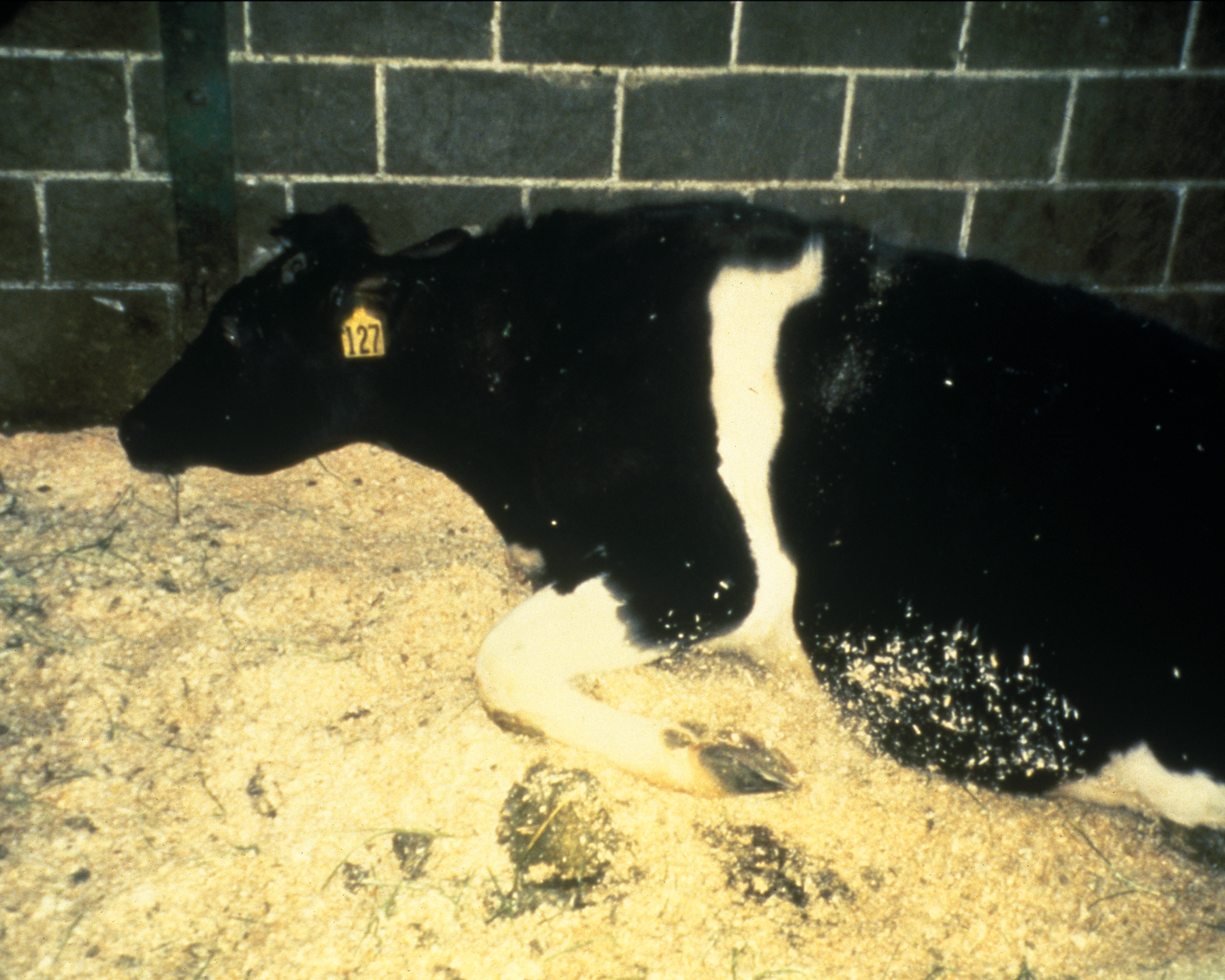
Animal, usually livestock, that cannot stand on its own and therefore is to be killed
A downer is an animal, usually livestock, that cannot stand on its own and therefore is to be killed. A downed animal, one that is unable to stand, is not necessarily a downer.
Causes
The animal's inability to stand may be caused by illness or injury. In nearly all cases it is considered by most farmers to be both humane and cost-effective to kill the animal when it becomes a downer, rather than keeping it alive and unhealthy. Once killed, and depending on how the animal became a downer and how it was killed, the animal may then be incinerated, buried, rendered, or slaughtered. Because of mad cow disease, the slaughter of downer cattle is a topic of great concern.
There are many possible reasons for an animal staying down, including:
- Mastitis
- Metritis
- Hypomagnesaemia
- Postparturient Hypocalcemia
- Ketosis
- Dystocia
- Nerve damage
- Pelvic fracture
- Long bone fracture
- Neurological disease
Use of certain animal feed additives has been linked to downers such as the use of ractopamine in pigs.
Situations in different countries
United States
A longstanding issue is whether these animals are treated humanely or inhumanely by shippers, stockyards, and packers while they are being moved or held for slaughter. Legislation periodically is introduced in Congress to outlaw the sale or transfer of such animals, but livestock producer groups have long contended that their voluntary efforts to end harmful practices have already proven successful. The 2002 farm bill (P.L. 107-171, Sec. 10815) required the USDA to investigate and submit a report on nonambulatory livestock, and to issue and enforce regulations, if deemed necessary, to provide for their humane treatment.
Different jurisdictions have different rules about what can be done with a downer cow. In some jurisdictions the cow may be slaughtered without question. In others, downer cattle may not be slaughtered even if the cause is a physical injury. In the United States, meat inspection is usually an interstate commerce issue, and is regulated by the Federal Meat Inspection Act. Now all livestock auction barns are not allowed to take sick or downer cows because of the rulings that originated with the BSE "mad cow" crisis.
Canada
In Canada, transportation of animals is federally regulated. The Health of Animals Regulations state that an animal has to be fit for the intended journey and that a non-ambulatory animal cannot be transported because transport would cause additional suffering.
The Canadian authority responsible for the welfare of animals that are transported is the Canadian Food Inspection Agency.
Mad cow disease and downers
The downer issue took on another dimension when bovine spongiform encephalopathy (BSE), which often makes infected cattle downers, was found in two North American cows in 2003. Many experts believe that nonambulatory cattle are at higher risk of harboring BSE. As a result, on December 30, 2003, the USDA announced an immediate ban on the slaughter of downer cattle for human food use. At issue is how to monitor the hundreds of thousands of U.S. downer cattle (annual estimate) if they are no longer presented for observation and testing at meat packing plants; also at issue is what to do with their remains, and whether they have any non-food value.
References
- https://web.archive.org/web/20120621001651/http://www.fsis.usda.gov/News_%26_Events/NR_071207_01/index.asp
de:Merzvieh
References
- Paula Crossfield. (January 25, 2012). "Controversial Animal Drug at the Heart of International Trade Dispute". Huffington Post.
- [[American Veterinary Medical Association]] (AVMA). (May 9, 2014). "Use of β-Adrenoreceptor Agonists". AVMA.
- [http://ncseonline.org/nle/crsreports/05jun/97-905.pdf CRS Report for Congress: Agriculture: A Glossary of Terms, Programs, and Laws, 2005 Edition – Order Code 97-905] {{webarchive. link. (August 10, 2011)
- [https://web.archive.org/web/20110605050630/http://laws.justice.gc.ca/en/showdoc/cr/C.R.C.-c.296/bo-ga%3Al_XII//en Health of Animals]
- [http://www.inspection.gc.ca/english/anima/trans/polie.shtml Transportation of Animals Program: Compromised Animals Policy] {{webarchive. link. (February 4, 2009)
- link. (2017-01-20 - [[United States Department of Agriculture). USDA]] (2008-08-27)
- [http://ncseonline.org/nle/crsreports/05jun/97-905.pdf CRS Report for Congress: Agriculture: A Glossary of Terms, Programs, and Laws, 2005 Edition – Order Code 97-905] {{webarchive. link. (August 10, 2011)
This article was imported from Wikipedia and is available under the Creative Commons Attribution-ShareAlike 4.0 License. Content has been adapted to SurfDoc format. Original contributors can be found on the article history page.
Ask Mako anything about Downer (animal) — get instant answers, deeper analysis, and related topics.
Research with MakoFree with your Surf account
Create a free account to save articles, ask Mako questions, and organize your research.
Sign up freeThis content may have been generated or modified by AI. CloudSurf Software LLC is not responsible for the accuracy, completeness, or reliability of AI-generated content. Always verify important information from primary sources.
Report