From Surf Wiki (app.surf) — the open knowledge base
Donji Lapac
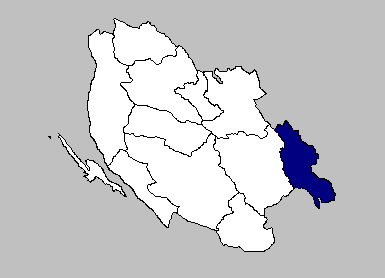
| Field | Value | |
|---|---|---|
| name | Donji Lapac | |
| official_name | Donji Lapac Municipality | |
| *Općina Donji Lapac* | ||
| native_name | sr-Cyrl | |
| settlement_type | Municipality | |
| image_skyline | {{Photomontage | position=center |
| photo1a | Loskun (Željeznički kolodvor).jpg | |
| photo1b | Donji Štrbci, Croatia - panoramio.jpg | |
| photo2a | Donji Lapac – cemetery 1.jpg | |
| photo2b | Donji Lapac – partizanski spomenik 1.jpg | |
| photo2c | Štrbački buk 1.jpg | |
| photo3a | Бировача.JPG | |
| photo3b | Православна црква Доњи Лапац.JPG | |
| size | 270 | |
| spacing | 1 | |
| color | #FFFFFF | |
| border | 1 | |
| image_caption | Donji Lapac Municipality | |
| image_shield | Coat of arms of Donji Lapac municipality.jpg | |
| map_caption | Location of Donji Lapac in Croatia | |
| mapframe | yes | |
| pushpin_map | Croatia | |
| coordinates | ||
| subdivision_type | Country | |
| subdivision_name | Croatia | |
| subdivision_type1 | County | |
| subdivision_name1 | Lika-Senj | |
| leader_title | Mayor | |
| leader_name | Dušan Šijan (SDP) | |
| area_footnotes | ||
| area_total_km2 | 350.7 | |
| area_urban_km2 | 11.3 | |
| population_footnotes | ||
| population_as_of | 2022 | |
| population_total | 1310 | |
| population_density_km2 | auto | |
| population_urban | 677 | |
| population_density_urban_km2 | auto | |
| population_note | ||
| timezone | CET | |
| timezone_DST | CEST | |
| utc_offset | +1 | |
| utc_offset_DST | +2 | |
| website |
Općina Donji Lapac
Donji Lapac (Доњи Лапац) is a settlement and a municipality in Lika, Croatia.
Geography
Donji Lapac is located a region of eastern Lika called Ličko Pounje, by the river Una that flows near the town in the valley between mountain Plješevica and Una on the altitude of 582 m. It is connected with the road that connects Bihać with Gračac.
Climate
Since records began in 1982, the highest temperature recorded at the local weather station was 39.2 C, on 2 August 2017. The coldest temperature was -29.7 C, on 13 January 2003.
History
The area of Donji Lapac has been inhabited since the Iron Age, which many material remains prove. During medieval times the area of Lapac was part of old-Croatian Lapac župa, related to Lapčan family, and in 1449 it became a possession of Frankopan family. Old city Lapac was located on a nearby Obljaj hill (666 m) south from Donji Lapac. When in 1528 Ottomans conquered Lika, Lapac was absorbed. In 1790 The Croatian Corps of the Habsburg Imperial Army under the command of Feldzeugmeister Joseph Nikolaus Baron de Vins liberated Lapac as well as some other parts of Croatia in the regions of Kordun and Lika, including Cetingrad, Furjan, Boričevac and Srb, and they again became parts of the Kingdom of Croatia within the Habsburg Monarchy.
Donji Lapac was founded in 1791, in the year the Austro-Ottoman war ended and Eastern Lika was annexed by Habsburg empire as a frontier post. In the late 19th century and early 20th century, Donji Lapac was a district capital in the Lika-Krbava County of the Kingdom of Croatia-Slavonia. In 1941 Yugoslav partisans liberated the district center.
During the Croatian War of Independence, Donji Lapac was incorporated into the unrecognized breakaway Republic of Serbian Krajina. In August 1995, it was returned to Croatian control following victories by the Croatian army.
Demographics
According to the 2011 census, the town has population of 946 and a municipality of 2,113 people. Before the war the area was almost entirely Serb-populated with only 0.67% Croats (according to the 1991 census). After the war the area of Donji Lapac municipality grew smaller because villages of Donji Srb and Gornji Srb were given to Municipality of Gračac in Zadar County. However, according to the 2011 census Serbs continue to constitute a majority of 80.6%, with 18.8% of Croat population.
| Year of census | total | Serbs | Croats |
|---|---|---|---|
| 1910 | 11,971 | 10,601 (88.55%) | 1,367 (11.41%) |
| 1991 | 4,603 | 4,460 (96.89%) | 31 (0.67%) |
| 2001 | 1,880 | 1,383 (73.56%) | 471 (25.05%) |
| 2011 | 2,113 | 1,704 (80.64%) | 397 (18.79%) |
Some Croats or Serbs declared their ethnicity as Yugoslav.
Population by censuses
Municipality of Donji Lapac
According to the 2011 census, municipality of Donji Lapac had 2,113 inhabitants.
Note: It became independent municipality in 2001 census, from old Comune of Donji Lapac.
1991 census
According to the 1991 census, Municipality of Donji Lapac had 4,603 inhabitants, which were ethnically declared as this:
| Municipality of Donji Lapac |
|---|
| 1991 |
| {{Pie chart |
Austro-Hungarian 1910 census
According to the 1910 census, Municipality of Donji Lapac had 11,971 inhabitants, which were linguistically and religiously declared as this:
| Population by language | Croatian or Serbian | German | Slovene |
|---|---|---|---|
| *Municipality of Donji Lapac* | 11,968 (99.97%) | 2 (0.01%) | 1 (0.00%) |
| Population by religion | Eastern Orthodox | Roman Catholics |
|---|---|---|
| *Municipality of Donji Lapac* | 10,601 (88.55%) | 1,370 (11.44%) |
Donji Lapac (settlement itself)
According to the 2011 census, settlement of Donji Lapac had 946 inhabitants.
Note: From 1857–1880 include data for the settlement of Gajine.
1991 census
According to the 1991 census, settlement of Donji Lapac had 1,791 inhabitants, which were ethnically declared as this:
| Donji Lapac |
|---|
| 1991 |
| {{Pie chart |
Austro-Hungarian 1910 census
According to the 1910 census, settlement of Donji Lapac had 1,140 inhabitants in 2 hamlets, which were linguistically and religiously declared as this:
| Population by language | Croatian or Serbian | German | Slovenian |
|---|---|---|---|
| *Donji Lapac* | 1,042 | 1 | 1 |
| *Lapački Zbjeg* | 96 | - | - |
| **Total** | 1,138 (99.82%) | 1 (0.08%) | 1 (0.08%) |
| Population by religion | Eastern Orthodox | Roman Catholics |
|---|---|---|
| *Donji Lapac* | 936 | 108 |
| *Lapački Zbjeg* | 78 | 18 |
| **Total** | 1,014 (88.94%) | 126 (11.05%) |
Politics
Minority councils and representatives
Directly elected minority councils and representatives are tasked with consulting tasks for the local or regional authorities in which they are advocating for minority rights and interests, integration into public life and participation in the management of local affairs. At the 2023 Croatian national minorities councils and representatives elections Serbs of Croatia fulfilled legal requirements to elect 10 members minority council of the Municipality of Donji Lapac.
Serbian is co-official with Croatian at the municipal level in Donji Lapac. As of 2023, only some of the legal requirements for the fulfillment of bilingual standards have not been carried out. Official buildings, street and traffic signs do have Cyrillic signage, but not seals. Cyrillic is only used on some official documents for public reading. There are public legal and administrative employees proficient in the script. Preserving traditional Serbian place names and assigning street names to Serbian historical figures is legally mandated and carried out.
Economy
Donji Lapac is underdeveloped municipality which is statistically classified as the First Category Area of Special State Concern by the Government of Croatia. Before the war, Donji Lapac had a developed wood and textile industry. Many people worked in the transportation company Likatrans which employed more than 200 people. Today most of the inhabitants are unemployed and jobs are mostly restricted to public services or the renewed wood industry. Additionally many people work in basic agriculture, growing mostly potatoes and plums from which they make the alcohol Slivovitz.
Settlements in municipality of Donji Lapac
- Birovača
- Boričevac
- Brezovac Dobroselski
- Bušević
- Dnopolje
- Dobroselo
- Doljani
- Donji Lapac
- Donji Štrbci
- Gajine
- Gornji Lapac
- Gornji Štrbci
- Kestenovac
- Kruge
- Melinovac
- Mišljenovac
- Nebljusi
- Oraovac
Notable people
- Milan Đukić, Croatian Serb politician
- Veljko Narančić, Yugoslav athlete
- Stevo Krnjajić, Yugoslav actor
Literature
- http://pod2.stat.gov.rs/ObjavljenePublikacije/G1991/pdf/G19914018.pdf Savezni zavod za statistiku i evidenciju FNRJ i SFRJ, popis stanovništva 1948, 1953, 1961, 1971, 1981. i 1991. godine.
- Knjiga: "Narodnosni i vjerski sastav stanovništva Hrvatske, 1880–1991: po naseljima, autor: Jakov Gelo, izdavač: Državni zavod za statistiku Republike Hrvatske, 1998., , ;
References
References
- Government of Croatia. (October 2013). "Peto izvješće Republike Hrvatske o primjeni Europske povelje o regionalnim ili manjinskim jezicima". [[Council of Europe]].
- {{Cite Q. Q119585703
- {{Croatian Census 2021. S
- "Population estimate by sex, by towns/municipalities, 31 December". Croatian Bureau of Statistics.
- DHMZ. (2022-07-19). "Najviše izmjerene temperature zraka u Hrvatskoj za razdoblje od kada postoje mjerenja".
- DHMZ. (2022-01-21). "Najniže izmjerene temperature zraka u Hrvatskoj za razdoblje od kada postoje mjerenja".
- "Biographical Dictionary of all Austrian Generals during the French Revolutionary and Napoleonic Wars 1792–1815 (page D32)". Leopold Kudrna.
- {{Croatian Census 2011. S. 09. 0841
- {{Croatian Census 2011. E. 09
- (13 March 2023). "Manjinski izbori prve nedjelje u svibnju, kreću i edukacije". [[T-portal]].
- (2023). "Informacija o konačnim rezultatima izbora članova vijeća i izbora predstavnika nacionalnih manjina 2023. IX. LIČKO-SENJSKA ŽUPANIJA". Državno izborno povjerenstvo Republike Hrvatske.
- (November 2023). "Izvješće o provođenju Ustavnog zakona o pravima nacionalnih manjina i o utrošku sredstava osiguranih u Državnom proračunu Republike Hrvatske za 2023. godinu za potrebe nacionalnih manjina".
- (June 2004). "AREAS OF SPECIAL STATE CONCERN IN CROATIA- REGIONAL DEVELOPMENT DIFFERENCES AND THE DEMOGRAPHIC AND EDUCATIONAL CHARACTERISTICS". Ekonomski pregled, Vol.55 No.5-6.
This article was imported from Wikipedia and is available under the Creative Commons Attribution-ShareAlike 4.0 License. Content has been adapted to SurfDoc format. Original contributors can be found on the article history page.
Ask Mako anything about Donji Lapac — get instant answers, deeper analysis, and related topics.
Research with MakoFree with your Surf account
Create a free account to save articles, ask Mako questions, and organize your research.
Sign up freeThis content may have been generated or modified by AI. CloudSurf Software LLC is not responsible for the accuracy, completeness, or reliability of AI-generated content. Always verify important information from primary sources.
Report