From Surf Wiki (app.surf) — the open knowledge base
Distance fog
In 3D graphics, obscuring distant objects with fog
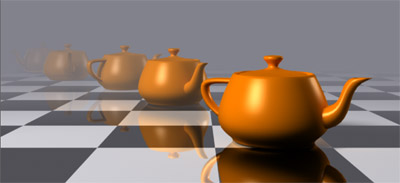
In 3D graphics, obscuring distant objects with fog
Distance fog is a technique used in 3D computer graphics to enhance the perception of distance by shading distant objects differently.
Because many of the shapes in graphical environments are relatively simple, and complex shadows are difficult to render, many graphics engines employ a "fog" gradient so objects further from the camera are progressively more obscured by haze and by aerial perspective. This technique simulates the effect of light scattering, which causes more distant objects to appear lower in contrast, especially in outdoor environments.
Visibility in a natural haze declines exponentially, not linearly, with distance due to scattering. The colour of the light being scattered into the viewing path affects the colour of the haze; blue under blue skies, reddish near sunset, as with alpenglow. These more subtle details are represented in some graphics.
"Fogging" is another use of distance fog in mid-to-late 1990s games, when processing power was not enough to render far viewing distances, and clipping was employed. Clipping could be very distracting since bits and pieces of polygons would flicker in and out of view instantly, and by applying a medium-ranged distance fog, the clipped polygons would appear at a sufficiently far distance that they were obscured by the fog, fading in as the player approached.
References
References
- (March 1996). "The Next Generation 1996 Lexicon A to Z: Depth Shading". [[Imagine Media]].
- (2009). "Encyclopedia of Distances". Springer-Verlag.
This article was imported from Wikipedia and is available under the Creative Commons Attribution-ShareAlike 4.0 License. Content has been adapted to SurfDoc format. Original contributors can be found on the article history page.
Ask Mako anything about Distance fog — get instant answers, deeper analysis, and related topics.
Research with MakoFree with your Surf account
Create a free account to save articles, ask Mako questions, and organize your research.
Sign up freeThis content may have been generated or modified by AI. CloudSurf Software LLC is not responsible for the accuracy, completeness, or reliability of AI-generated content. Always verify important information from primary sources.
Report