From Surf Wiki (app.surf) — the open knowledge base
Democratic Progressive Party
Taiwanese political party
Taiwanese political party
| Field | Value | ||||||||||
|---|---|---|---|---|---|---|---|---|---|---|---|
| name | Democratic Progressive Party | ||||||||||
| native_name | 民主進步黨 | ||||||||||
| native_name_lang | zh-Hant-TW | ||||||||||
| logo | DPP-Taiwan.svg | ||||||||||
| logo_size | 150 | ||||||||||
| colorcode | |||||||||||
| predecessor | *Tangwai* | ||||||||||
| chairperson | Lai Ching-te | ||||||||||
| secretary_general | Hsu Kuo-yung | ||||||||||
| foundation | |||||||||||
| ideology | {{ublist | class = nowrap | |||||||||
| Anti-imperialism<!-- {{cite book | url | https://www.google.com/books/edition/Governing_Taiwan_and_Tibet/wEMkDQAAQBAJ?hl=en&gbpv=1&dq=anti-imperialist+DPP+taiwan&pg=PT154 | author=Baogang He | title=Governing Taiwan and Tibet: Democratic Approaches | quote= In the DPP's anti-China and anti-KMT message, the KMT is represented as equivalent to China, while 'democracy' is linked to Taiwanese nationalism. The DPP used the language of colonialism and imperialism to portray China's claims of sovereignty over Taiwan. | date=July 8, 2015 | publisher=Edinburgh University Press }} -- | ||||
| headquarters | 10F-30, Beiping East Rd. | ||||||||||
| Zhongzheng District, Taipei, Taiwan | |||||||||||
| 10049 | |||||||||||
| international | Liberal International | ||||||||||
| website | |||||||||||
| country | Taiwan | ||||||||||
| abbreviation | DPP | ||||||||||
| flag | Flag of Democratic Progressive Party.svgborder | ||||||||||
| think_tank | |||||||||||
| membership_year | 2023 | ||||||||||
| membership | 238,664 | ||||||||||
| position | Centre to centre-left | ||||||||||
| national | Pan-Green Coalition | ||||||||||
| regional | Council of Asian Liberals and Democrats | ||||||||||
| colors | Green | ||||||||||
| seats1_title | Legislative Yuan | ||||||||||
| seats1 | |||||||||||
| seats2_title | Municipal mayors | ||||||||||
| seats2 | |||||||||||
| seats3_title | Magistrates/mayors | ||||||||||
| seats3 | |||||||||||
| seats4_title | Councilors | ||||||||||
| seats4 | |||||||||||
| seats5_title | Township/city mayors | ||||||||||
| seats5 | |||||||||||
| footnotes | |||||||||||
| {{Cite news | url | https://www.thenewslens.com/feature/2018-2020/109299 | title=台灣選舉只有右派價值的藍綠輪替,而主要的第三勢力都不算是左翼政黨 | work=The News Lens | date=2 December 2018 | language=zh-tw | access-date=14 December 2023 | archive-date=10 January 2019 | archive-url=https://web.archive.org/web/20190110013901/https://www.thenewslens.com/feature/2018-2020/109299 | url-status=live}} | |
| {{Cite news | url | https://buzzorange.com/citiorange/2016/09/10/dpp-not-support-tw-independent/ | title=民進黨早就沒有台獨信仰了──從議員對高雄果菜市場拆遷案的評論中,看見民進黨真面目 | work=公民報橘 | date=10 September 2016 | language=zh-tw | quote=清楚傳遞了民進黨就是一個右派政黨,更是一個沒有台獨信仰的政黨。 | access-date=14 December 2023 | archive-date=14 December 2023 | archive-url=https://web.archive.org/web/20231214155836/https://buzzorange.com/citiorange/2016/09/10/dpp-not-support-tw-independent/ | url-status=live}} |
| {{Cite news | url | https://opinion.cw.com.tw/blog/profile/320/article/2152 | title=臺灣的偏左意識在哪裡? | work=獨立評論 | access-date=3 December 2014 | language=zh-tw | quote=中華民國共和憲政一百多年,也由兩個右派政黨執政了一百多年。台灣民進黨右[...]}} | ||||
| {{Cite news | url | https://www.chinatimes.com/opinion/20171128006138-262105?chdtv | title=邱師儀》民進黨其實是極右政黨 | work=China Times | date=28 November 2017 | language=zh-tw}} | |||||
| {{Cite news | url | https://www.chinatimes.com/realtimenews/20181228000015-260407?chdtv | title=日本記者本田善彥:民進黨種族主義表露無遺 | work=China Times | date=28 December 2018 | language=zh-tw | quote=民進黨一旦執政,吸引文青的美好願景就變成噁心的偽善把戲與類法西斯的極右作風。}} | ||||
| {{Cite news | url | https://www.chinatimes.com/newspapers/20221202000512-260109?chdtv | title=柯文哲的下一步 | work=China Times | date=2 December 2022 | language=zh-tw | quote=台灣兩大政黨其實都比較偏向傳統右派政黨,偏重維護資本家利益重視經濟發展[...] | access-date=14 December 2023 | archive-date=14 December 2023 | archive-url=https://web.archive.org/web/20231214155835/https://www.chinatimes.com/newspapers/20221202000512-260109?chdtv | url-status=live}}}}}} |
| Social liberalism | Progressivism (Taiwanese) | Taiwanese nationalism | Anti-communism | Anti-imperialism Zhongzheng District, Taipei, Taiwan 10049 | | | | | |}}}}
The Democratic Progressive Party (DPP) is a centre-left Taiwanese nationalist political party in Taiwan. As the dominant party in the Pan-Green Coalition, one of the two main political camps in Taiwan, the DPP is currently the ruling party in Taiwan, leading a minority government that controls the presidency and the central government.
Founded in 1986 by Hsu Hsin-liang, Roger Hsieh and Lin Shui-chuan, a year prior to the end of martial law, the DPP is one of two major parties in Taiwan, the other being the Kuomintang (KMT), a Chinese nationalist party previously ruling the country as a one-party state, and its smaller allies in the Pan-Blue Coalition. It has traditionally been associated with a strong advocacy of human rights, emerging against the authoritarian White Terror that was initiated by the KMT, as well as the promotion of Taiwanese nationalism and identity. Lai Ching-te is the current chairperson of the DPP from 2023, who also serves as the incumbent President and is the third member of the DPP to hold the presidency; he succeeded fellow DPP member Tsai Ing-wen in May 2024.
The DPP is a longtime member of Liberal International and a founding member of the Council of Asian Liberals and Democrats. It represented Taiwan in the Unrepresented Nations and Peoples Organization (UNPO). The DPP is widely classified as socially liberal, having been founded as a party for human rights, including factions within the party supporting same-sex marriage and other LGBT rights. On foreign policy, the DPP is more willing to increase military expenditures to prevent military intimidation from the People's Republic of China (PRC) owing to the ambiguous political status of Taiwan. It favors closer ties with democratic nations such as Japan and the United States, as well as the nations of ASEAN as part of its New Southbound Policy.
In its policy on cross-strait relations, the DPP as a ruling party chooses to keep the status quo of Taiwan, instead of approaching de jure independence, despite being a pro-independence group in its party platform. The party considers that Taiwan is already a sovereign country under the name "Republic of China" and not subordinate to the PRC. The DPP is frequently accused by the PRC government of being a primary force in Taiwan to "prevent the Chinese nation from achieving complete reunification" and "halt the process of national rejuvenation" due to the party's outspoken advocacy of the Taiwanese nationalism, Taiwanese self-determination, and its firm opposition to "One China", including the alleged "1992 Consensus" narratives by both the PRC and the KMT.
History
The DPP's roots were in the Tangwai movement, which formed in opposition to the Kuomintang's one-party authoritarian rule under the "party-state" system during martial law. This movement culminated in the formation of the DPP as an alternative, but still illegal, party on 28 September 1986 by eighteen organizing members at Grand Hotel Taipei, with a total of 132 people joining the party in attendance. The new party members contested the 1986 election as "nonpartisan" candidates since competing parties would remain illegal until the following year. These early members of the party, like the tangwai, drew heavily from the ranks of family members and defense lawyers of political prisoners, as well as intellectuals and artists who had spent time abroad. These individuals were strongly committed to political change toward democracy and freedom of speech, press, assembly, and association.
The tangwai were not a unified political unit and consisted of factions which carried over into the early DPP. At its founding the DPP consisted of three factions: the Kang group, a moderate faction led by Kang Ning-hsiang, New Tide faction, consisting of intellectuals and social activists led by Wu Nai-ren and Chiou I-jen, and the Progress Faction led by Lin Cheng-chieh, a waishengren opposed to independence. Moderates would later coalesce around the Formosa faction, founded by those arrested during the Formosa Incident after their release from prison. In the early days of the party, the Formosa faction focused on winning elections by wielding the star power of its leaders, while New Tide would focus on ideological mobilization and developing grassroots support for social movements. As a result, the Formosa faction would become more moderate, often bending to public opinion, while New Tide would become more ideologically cohesive. By 1988 the Formosa Faction would dominate high-level positions within the party.
The party did not at the outset give explicit support to an independent Taiwanese national identity, partially because moderates such as Hsu Hsin-liang were concerned that such a move that could have invited a violent crackdown by the Kuomintang and alienate voters, but also because some members such as Lin Cheng-chieh supported unification. Partially due to their waning influence within the party and partially due to their ideological commitment, between 1988 and 1991 the New Tide Faction would push the independence issue, bolstered by the return of pro-independence activists from overseas who were previously barred from Taiwan. In 1991, in order to head off the New Tide, party chairman Hsu Hsin-liang of the moderate Formosa faction agreed to include language in the party charter which advocated for the drafting of a new constitution as well as declaration of a new Republic of Taiwan via referendum (which resulted in many pro-unification members leaving the party). However, the party would quickly begin to walk back on this language, and eventually in 1999 the party congress passed a resolution that Taiwan was already an independent country, under the official name "Republic of China", and that any constitutional changes should be approved by the people via referendum, while emphasizing the use of the name "Taiwan" in international settings.
Despite its lack of electoral success, the pressure that the DPP created on the ruling KMT via its demands are widely credited in the political reforms of the 1990s, most notably the direct popular election of Republic of China's president and all representatives in the National Assembly and Legislative Yuan, as well as the ability to openly discuss events from the past such as the February 28 Incident and its long aftermath of martial law, and space for a greater variety of political views and advocacy. Once the DPP had representation in the Legislative Yuan, the party used the legislature as a forum to challenge the ruling KMT.
In 1996, DPP Chairman Shih Ming-teh united with the New Party to run for the President of the Legislative Yuan, but lost by one vote. The vote that was missing was legislator Chang Chin-cheng's failure to vote for Shih. As a result, Chang was expelled from the DPP.
Post-democratization, the DPP shifted their focus to anti-corruption issues, in particular regarding KMT connections to organized crime as well as "party assets" illegally acquired from the government during martial law. Meanwhile, factions continued to form within the DPP as a mechanism for coalition-building within the party; notably, future President Chen Shui-bian would form the Justice Alliance faction.
2000–2008: in minority government
The DPP won the presidency with the election of Chen Shui-bian in March 2000 with a plurality, due to Pan-Blue voters splitting their vote between the Kuomintang and independent candidate James Soong, ending 91 years of KMT rule in the Republic of China. Chen softened the party's stance on independence to appeal to moderate voters, appease the United States, and placate China. He also promised not to change the ROC state symbols or declare formal independence as long as the People's Republic of China did not attack Taiwan. Further, he advocated for economic exchange with China as well as the establishment of transportation links.
In 2001, the DPP ran an advertisement promoting the party that featured Adolf Hitler and others in an attempt to encourage young people to engage with politics. The DPP initially responded to criticism from the Israeli and German representative offices in Taiwan by saying the advertisement was meant to highlight "people who dared to express their opinions," and claimed some had deliberately misrepresented the content. The DPP's then chair Frank Hsieh later said the advertisement would be retired to avoid causing misunderstanding among victims of Nazism.
In 2002, the DPP became the first party other than the KMT to reach a plurality in the Legislative Yuan following the 2001 legislative election. However, a majority coalition between the KMT, People First Party, and New Party prevented it from taking control of the chamber. This coalition was at odds with the presidency from the beginning, and led to President Chen's abandonment of the centrist positions that he ran his campaign on.
In 2003, Chen announced a campaign to draft a referendum law as well as a new constitution, a move which appealed to the fundamentalist wing of the DPP. By now, the New Tide faction had begun to favor pragmatic approaches to their pro-independence goals and dominated decision-making positions within the party. By contrast, grassroots support was divided largely between moderate and fundamentalist wings. Though Chen's plans for a referendum on a new constitution were scuttled by the legislature, he did manage to include a largely symbolic referendum on the PRC military threat to coincide with the 2004 presidential election. President Chen Shui-bian would be narrowly re-elected in 2004 after an assassination attempt the day before the election, and in the later legislative election, the pan-blue coalition opposition retained control of the chamber.
President Chen's moves sparked a debate within the party between fundamentalists and moderates who were concerned that voters would abandon their party. The fundamentalists won out, and as a result the DPP would largely follow Chen's lead. The DPP suffered a significant election defeat in nationwide local and county elections in December 2005, while the pan-blue coalition captured 16 of 23 county and city government offices under the leadership of popular Taipei mayor and KMT Party Chairman Ma Ying-jeou. Moderates within the party would blame this loss on the party's fundamentalist turn.
The results led to a shake up of the party leadership. Su Tseng-chang resigned as DPP chairman soon after election results were announced. Su had pledged to step down if the DPP lost either Taipei County or failed to win 10 of the 23 mayor/magistrate positions. Vice President Annette Lu was appointed acting DPP leader. Presidential Office Secretary-General Yu Shyi-kun was elected in a three-way race against legislator Chai Trong-rong and Wong Chin-chu with 54.4% of the vote.
Premier Frank Hsieh, DPP election organizer and former mayor of Kaohsiung twice tendered a verbal resignation immediately following the election, but his resignation was not accepted by President Chen until 17 January 2006 after the DPP chairmanship election had concluded. The former DPP Chairman Su Tseng-chang was appointed to replace Hsieh as premier. Hsieh and his cabinet resigned en masse on 24 January to make way for Su and his new cabinet. President Chen had offered the position of Presidential Office Secretary-General (vacated by Su) to the departing premier, but Hsieh declined and left office criticizing President Chen for his tough line on dealing with China.
In 2005, following the passage of the Anti-Secession Law, the Chen administration issued a statement asserting the position that Taiwan's future should be decided by the people on Taiwan only.
On 30 September 2007, the DPP approved a resolution asserting a separate identity from China and called for the enactment of a new constitution for a "normal nation". It struck an accommodating tone by advocating general use of "Taiwan" as the country's name without calling for abandonment of the name Republic of China.
2008–2016: return to opposition
In the national elections held in early months of 2008, the DPP won less than 25% of the seats (38.2% vote share) in the new Legislative Yuan while its presidential candidate, former Kaohsiung mayor Frank Hsieh, lost to KMT candidate Ma Ying-jeou by a wide margin (41.55% vs. 58.45%). In May, the DPP elected moderate Tsai Ing-wen as their new leader over fundamentalist Koo Kwang-ming. Tsai became the first female leader of the DPP and the first female leader to lead a major party in Taiwan.
The first months since backed to the opposition were dominated by press coverage of the travails of Chen Shui-bian and his wife Wu Shu-jen. On 15 August 2008, Chen resigned from the DPP and apologized: "Today I have to say sorry to all of the DPP members and supporters. I let everyone down, caused you humiliation and failed to meet your expectations. My acts have caused irreparable damage to the party. I love the DPP deeply and am proud of being a DPP member. To express my deepest regrets to all DPP members and supporters, I announce my withdrawal from the DPP immediately. My wife Wu Shu-jen is also withdrawing from the party." DPP Chairperson followed with a public statement on behalf of the party: "In regard to Chen and his wife's decision to withdraw from the party and his desire to shoulder responsibility for his actions as well as to undergo an investigation by the party's anti-corruption committee, we respect his decision and accept it."
The DPP vowed to reflect on public misgivings towards the party. Chairperson Tsai insisted on the need for the party to remember its history, defend the Republic of China's sovereignty and national security, and maintain its confidence.
The party re-emerged as a voice in Taiwan's political debate when Ma's administration reached the end of its first year in office. The DPP marked the anniversary with massive rallies in Taipei and Kaohsiung. Tsai's address to the crowd in Taipei on 17 May proclaimed a "citizens' movement to protect Republic of China" seeking to "protect our democracy and protect Republic of China."
2016–2024: in majority government
On 16 January 2016, Taiwan held a general election for its presidency and for the Legislative Yuan. The DPP gained the presidential seat, with the election of Tsai Ing-wen, who received 56.12% of the votes, while her opponent Eric Chu gained 31.2%. In addition, the DPP gained a majority of the Legislative Yuan, winning 68 seats in the 113-seat legislature, up from 40 in 2012 election, thus giving them the majority for the first time in its history.
President Tsai won reelection in the 2020 Taiwanese presidential election on 11 January 2020, and the Democratic Progressive Party retained its legislative majority, winning 61 seats.
2024–present: return to minority government
The 13 January 2024 presidential election and legislative elections led to the election of Lai Ching-te who won with 40.1% of the votes, while his opponents, Hou Yu-ih of the KMT had 33.5% of the votes, and Ko Wen-je of the Taiwan People's Party with 26.5% of the vote. In addition, this election made the DPP the first party to win three consecutive presidential terms since direct elections were introduced in 1996. The DPP was unable to retain its majority in the Legislative Yuan, losing ten seats.
Ideology and policies
The DPP's political position is center-left, but it is also specified as centrist or left-wing. The DPP is generally described as progressive. It has also been described as liberal, as well as social democratic. The party takes a Taiwanese nationalist position, advocating for strengthening Taiwanese identity; the party opposes the KMT and mainland China's pan-Chinese nationalism, and criticizes China's claims of sovereignty over Taiwan as 'colonialism' or 'imperialism'. The party also defines its own identity as an "anti-communist" in the context of opposition to the PRC and united front.
Programs supported by the party include moderate social welfare policies involving the rights of women, senior citizens, children, young people, labor, minorities, indigenous peoples, farmers, and other disadvantaged sectors of the society. Furthermore, its platform includes a legal and political order based on human rights and democracy; balanced economic and financial administration; fair and open social welfare; educational and cultural reform; and, independent defense and peaceful foreign policy with closer ties to the United States and Japan. The party is socially liberal and has a progressive stance that includes support for gender equality and same-sex marriage under Tsai's leadership, and also has a conservative base that includes support from the Presbyterian Church in Taiwan.
Stance on Taiwanese independence
The primary political axis in Taiwan involves the issue of Taiwan independence versus Chinese unification. Although the differences tend to be portrayed in polarized terms, both major coalitions have developed modified, nuanced and often complex positions. Though opposed in the philosophical origins, the practical differences between such positions can sometimes be subtle.
The current official position of the party is that Taiwan is an independent and sovereign country whose territory consists of Taiwan and its surrounding smaller islands and whose sovereignty derives only from the ROC citizens living in Taiwan (similar philosophy of self-determination), based on the 1999 "Resolution on Taiwan's Future". It considers Taiwan an independent nation under the name of Republic of China, making a formal declaration of independence unnecessary. Though calls for drafting a new constitution and a declaration of a Republic of Taiwan was written into the party charter in 1991, the 1999 resolution has practically superseded the earlier charter. The DPP rejects the so-called "One China principle" defined in 1992 as the basis for official diplomatic relations with the PRC and advocates a Taiwanese national identity which is separate from mainland China.
By contrast, the KMT or pan-blue coalition agrees that the Republic of China is an independent and sovereign country that is not part of the PRC, but argues that a one China principle (with different definitions across the strait) can be used as the basis for talks with China. The KMT also opposes Taiwan independence and argues that efforts to establish a Taiwanese national identity separated from the Chinese national identity are unnecessary and needlessly provocative. Some KMT conservative officials have called efforts from DPP "anti-China" (opposing migrants from mainland China, who DPP officials did not recognize as Taiwanese, but Chinese). At the other end of the political spectrum, the acceptance by the DPP of the symbols of the Republic of China is opposed by the Taiwan Solidarity Union.
The first years of the DPP as the ruling party drew accusations from the opposition as a self-styled Taiwanese nationalist party, the DPP was itself inadequately sensitive to the ethnographic diversity of Taiwan's population. Where the KMT had been guilty of "Chinese chauvinism", the critics charged, the DPP might offer nothing more as a remedy than "Hoklo chauvinism". The DPP argues that its efforts to promote a Taiwanese national identity are merely an effort to normalize a Taiwanese identity repressed during years of authoritarian Kuomintang rule.
Support
Since the democratization of Taiwan in the 1990s, the DPP has had its strongest performance in the Hokkien-speaking counties and cities of Taiwan, compared with the predominantly Hakka and Mandarin-speaking counties, that tend to support the Kuomintang.
The deep-rooted hostility between Taiwanese aborigines and (Taiwanese) Hoklo, and the effective KMT networks within aboriginal communities contribute to aboriginal skepticism against the DPP and the aboriginals' tendency to vote for the KMT. Aboriginals have criticized politicians for abusing the "indigenization" movement for political gains, such as aboriginal opposition to the DPP's "rectification" by recognizing the Truku for political reasons, where the Atayal and Seediq slammed the Truku for their name rectification. In 2008, the majority of mountain townships voted for Ma Ying-jeou. However, the DPP share of the aboriginal vote has been rising.
Corruption
The DPP has been plagued by several corruption scandals which has increased feelings amongst voters that fraud is an acceptable practice within the party.
Former DPP president of Taiwan Chen Shui-bian has also been involved in a raft of corruption scandals that continue to affect the party's reputation. Chen was sentenced to life imprisonment on corruption charges in 2009 that his supporters said were politically motivated. Chen was acquitted of embezzling millions of New Taiwan Dollars from a special presidential fund while he was in power, but was found guilty of money laundering and forging documents, and was given an additional two-year sentence. As Taiwan president Tsai Ing-wen prepared to leave office in 2024, she declined to comment on whether or not she would pardon Chen of his corruption convictions. In the end, there was no presidential pardon delivered to Chen.
In 2024, the former DPP vice premier Cheng Wen-tsan was detained on corruption charges relating to his time as Mayor of Taoyuan, former DPP Tainan City Council speaker Lai Mei-hui received a 2-year suspended sentence for corruption, and prosecutors began an investigation into DPP Legislator Lin I-chin for allegedly fraudulently claiming public funds.
In June 2025, Kaohsiung DPP representative Lin Dai-hua was indicted alongside nine others for embezzling nearly fifteen million New Taiwan Dollars by misappropriating city funds designated as wages for her assistants.
Structure
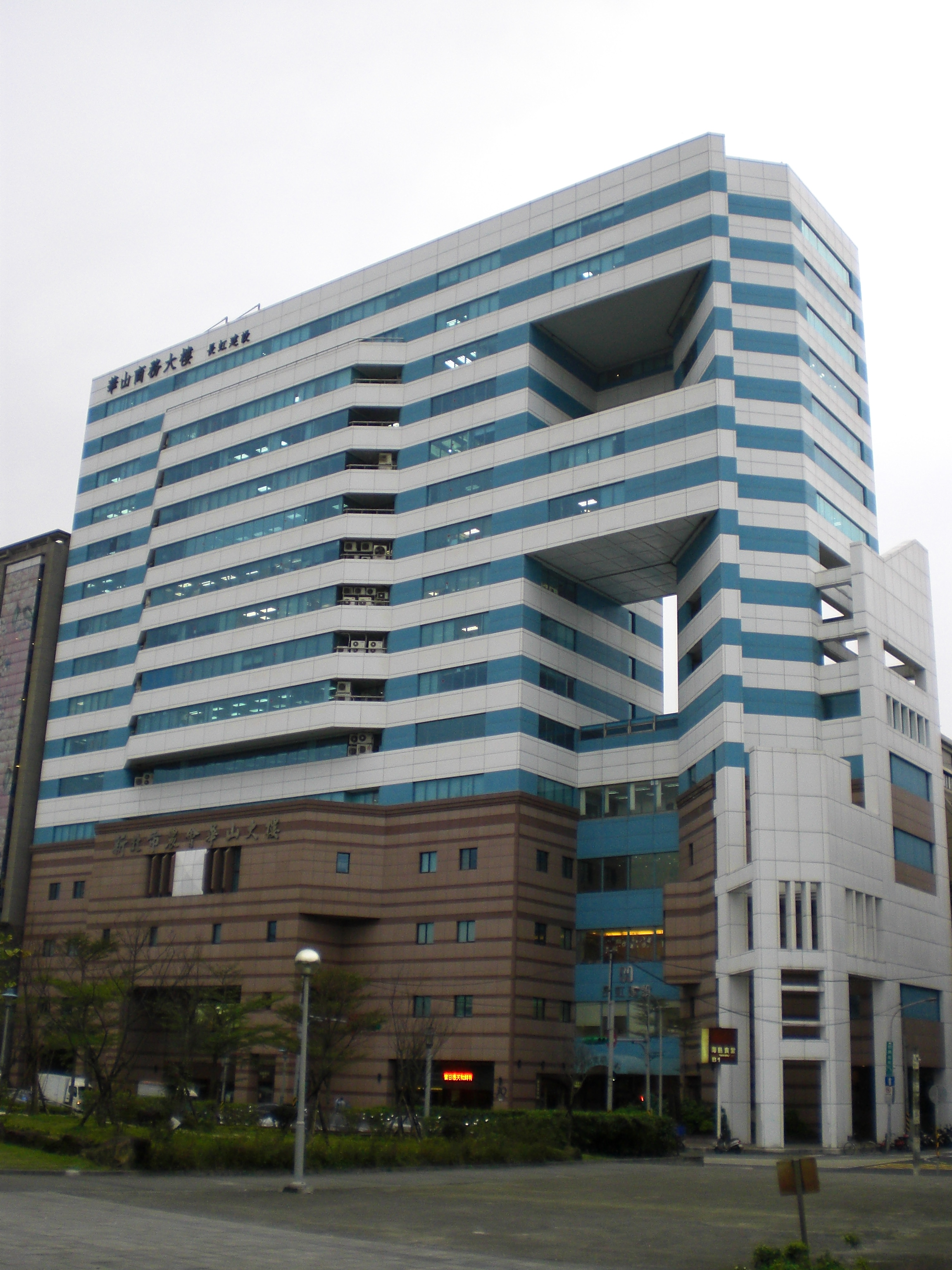
The DPP National Party Congress selects, for two-year terms, the 30 members of the Central Executive Committee and the 11 members of the Central Review Committee. The Central Executive Committee, in turn, chooses the 10 members of the Central Standing Committee. Since 2012, the DPP has had a Department of China Affairs to deal with Cross-Strait relations; the name caused some controversy within the party and in the Taiwan media, with critics suggesting that "Mainland Affairs Committee" or "Cross-Strait Affairs Committee" would show less of a hostile "One Country on Each Side" attitude.
Factions
For many years the DPP officially recognized several factions within its membership, such as the New Tide faction (), the Formosa faction (), the Justice Alliance faction () and Welfare State Alliance faction (). Different factions endorse slightly different policies and are often generationally identifiable, representing individuals who had entered the party at different times. In 2006, the party ended recognition of factions. The factions have since stated that they will comply with the resolution. However, the factions are still referred to by name in national media.
As of 2022, Taiwan News identified at least 7 factions within the party:
- New Tide faction () - William Lai, Chen Chu, Tsai Chi-chang, Chiu Tai-san, Pan Men-an, Lai Pin-yu
- TNCPA () - Lin Chia-lung, Fifi Chen Ting-fei, Lin You-chang
- Green Fellowship Association () - Ho Chih-wei
- Taiwan Forward() - Lin Kun-hai, Hsu Kuo-yung
- Su Faction() - Su Tseng-chang
- Ing Faction ()- Tsai Ing-wen, Chen Ming-wen, Kuan Bi-ling
- Democracy Living Water Connection() - Cho Jung-tai, Luo Wen-jia, Lin Fei-fan
Chair
Main article: Chairman of the Democratic Progressive Party
- Current Chair: Lai Ching-te
Secretary-General
Main article: List of Secretaries-General of the Democratic Progressive Party
- Current Secretary-General: Lin Hsi-yao (since May 2020)
Legislative Yuan leader (caucus leader)
- Shih Ming-teh (1 February 1993 – 1 February 2002)
- Ker Chien-ming (since 1 February 2002)
Election results
Presidential elections
| Election | Candidate | Running mate | Total votes | Share of votes | Outcome | [1996](1996-taiwan-presidential-election) | [2000](2000-taiwan-presidential-election) | [2004](2004-taiwan-presidential-election) | [2008](2008-taiwan-presidential-election) | [2012](2012-taiwan-presidential-election) | [2016](2016-taiwan-presidential-election) | [2020](2020-taiwan-presidential-election) | [2024](2024-taiwanese-presidential-election) | |
|---|---|---|---|---|---|---|---|---|---|---|---|---|---|---|
| Peng Ming-min | Frank Hsieh Chang-ting | 2,274,586 | 21.13% | |||||||||||
| Chen Shui-bian | Annette Lu Hsiu-lien | 4,977,737 | 39.30% | |||||||||||
| 6,446,900 | 50.11% | |||||||||||||
| Frank Hsieh Chang-ting | Su Tseng-chang | 5,445,239 | 41.55% | |||||||||||
| Tsai Ing-wen | Su Jia-chyuan | 6,093,578 | 45.63% | |||||||||||
| Chen Chien-jen ([[File:Black-nill.png | 15x15px]] Ind.) | 6,894,744 | 56.12% | |||||||||||
| Lai Ching‑te | 8,170,231 | 57.13% | ||||||||||||
| Lai Ching-te | Hsiao Bi-khim | 5,586,019 | 40.05% |
Legislative elections
{| class="wikitable"
|+
!Election
!Total seats won
!Total votes
!Share of votes
!Changes
!Party leader
!Status
!President
|-
|
|
|
|
|Huang Hsin-chieh
|
|-
|
|2,944,195
|31.0%
| 30 seats
|Hsu Hsin-liang
|
|-
|
|3,132,156
|33.2%
| 3 seats
|Shih Ming-teh
|
|-
|
|2,966,834
|29.6%
| 16 seats
|Lin Yi-hsiung
|
|-
|
|3,447,740
|36.6%
| 21 seats
|
|-
|
|3,471,429
|37.9%
| 2 seats
|
|-
|
|3,775,352
|38.2%
| 62 seats
|
|-
|
|4,556,526
|34.6%
| 13 seats
|
|-
|
|5,370,953
|44.1%
| 28 seats
|
|-
|
|4,811,241
|33.98%
| 7 seats
|Cho Jung-tai
|
|-
|
|4,981,060
|36.16%
| 10 seats
|Lai Ching-te
|
|Lai Ching-te
|}
Local elections
| Election | Magistrates and mayors | Councilors | Township/city mayors | Township/city council representatives | Village chiefs | Party leader | [1994](1994-taiwanese-municipal-elections) | |||||||||||
|---|---|---|---|---|---|---|---|---|---|---|---|---|---|---|---|---|---|---|
| provincial | [1997–1998](1997-taiwanese-local-elections) | [1998](1998-taiwanese-municipal-elections) | ||||||||||||||||
| municipal | [2001–2002](2001-taiwanese-local-elections) | [2002](2002-taiwanese-municipal-elections) | ||||||||||||||||
| municipal | [2005](2005-taiwanese-local-elections) | [2006](2006-taiwanese-municipal-elections) | ||||||||||||||||
| municipal | [2009](2009-taiwanese-local-elections) | [2010](2010-taiwanese-municipal-elections) | ||||||||||||||||
| municipal | [2014](2014-taiwanese-local-elections) | |||||||||||||||||
| unified | [2018](2018-taiwanese-local-elections) | |||||||||||||||||
| unified | [2022](2022-taiwanese-local-elections) | |||||||||||||||||
| unified | ||||||||||||||||||
| Shih Ming-teh | ||||||||||||||||||
| Hsu Hsin-liang | ||||||||||||||||||
| Lin Yi-hsiung | ||||||||||||||||||
| Chen Shui-bian | ||||||||||||||||||
| Tsai Ing-wen |
National Assembly elections
| Election | Total seats won | Total votes | Share of votes | Changes | Party leader | Status | President | [1991](1991-taiwan-national-assembly-election) | [1996](1996-taiwan-national-assembly-election) | [2005](2005-taiwan-national-assembly-election) |
|---|---|---|---|---|---|---|---|---|---|---|
| 2,036,271 | 23.3% | 66 seats | Huang Shin-chieh | Lee Teng-hui | ||||||
| 3,121,423 | 29.9% | 33 seats | Shih Ming-teh | |||||||
| 1,647,791 | 42.52% | 28 seats | Annette Lu Hsiu-lien | Chen Shui-bian |
Notes
References
References
- "DPP governance, committed to excellence".
- (15 January 2023). "民主進步黨第十七屆黨主席補選結果新聞稿".
- {{URL. http://cald.org/member-parties/democratic-progressive-party-of-taiwan/
- (26 May 2018). "Hurry up: Taiwan's president has upset both business and workers". [[The Economist]].
- (5 June 2014). "解嚴後臺灣政黨的競爭策略:Downs 理論的再檢視".
- (May 2003). "藍與綠 台灣選民的意識型態初探".
- . (1986-09-25). ["EXILES FROM TAIWAN OPPOSITION"](https://www.nytimes.com/1986/09/25/world/exiles-from-taiwan-opposition.html). *The New York Times*.
- "Three prominent Taiwan dissident politicians arrived in Tokyo today...".
- (13 October 2021). ""ROC and PRC not Subordinate to each other" is a Fact and Cross-strait status quo". [[Mainland Affairs Council]].
- "Full Text: The Taiwan Question and China's Reunification in the New Era".
- "Resolution on Taiwan's Future".
- (2022-04-26). "MOFA rebuts China's false claims concerning Taiwan's sovereignty". [[Ministry of Foreign Affairs (Taiwan)]].
- (28 September 2016). "DPP should clarify its cross-strait policy: founding member".
- (30 September 2016). "DPP members say party must discuss core values". Taipei Times.
- (1 May 2001). "From Opposition to Power: Taiwan's Democratic Progressive Party". Lynne Rienner Publishers.
- (1 May 2001). "From Opposition to Power: Taiwan's Democratic Progressive Party". Lynne Rienner Publishers.
- (2005). "Measuring and Explaining Party Change in Taiwan: 1991–2004". Journal of East Asian Studies.
- "DPP Party Convention".
- (22 June 2016). "Taiwan's Democracy Challenged: The Chen Shui-bian Years". Lynne Rienner Publishers.
- Yang, Meng-yu. (July 18, 2001). "DPP suspends controversial party ad". BBC Chinese.
- (29 March 2005). "The Official Position of the Republic of China on China's Passing of the Anti-secession (Anti-Separation) Law". Mainland Affairs Council, ROC Executive Yuan.
- "Taiwan party asserts separate identity from China - USATODAY.com".
- (December 2021). "pacificmagazine.net, Former Republic of China President Resigns From Party Over Corruption Charges}}{{Dead link".
- "中廣 via Yahoo! News, 媒體民調僅剩11趴 民進黨:虛心檢討".
- "央廣 via Yahoo! News, 民進黨支持度剩11%? 蔡英文:覺得信心還在".
- (17 May 2009). "Tsai Ing-wen's Opening Speech at the 517 Rally".
- "Taiwan gets first female President as DPP sweeps election".
- Hsiao, Alison. (17 January 2016). "ELECTIONS: DPP to control Legislative Yuan". Taipei Times.
- (January 13, 2024). "Taiwan Election Live Results". Bloomberg.
- Tan, Clement. (13 January 2024). "China skeptic Lai Ching-te wins Taiwan's presidential election". CNBC.
- (2020). "Introducing East Asia: History, Politics, Economy and Society". [[Routledge]].
- W Jou. (1994). "The Australian Financial Review Asian Business Insight". [[World Scientific]].
- (10 January 2020). "Viewing Taiwan From the Left". [[Jacobin magazine]].
- (15 April 2016). "Encyclopedia of World Political Systems". Routledge.
- (December 29, 2008). "The Next Frontier: National Development, Political Change, and the Death Penalty in Asia". [[Oxford University Press]].
- (September 29, 2000). "Working Women and State Policies in Taiwan: A Study in Political Economy". Palgrave Macmillan UK.
- (2020). "Global Youth Citizenry and Radical Hope: Enacting Community-Engaged Research Through Performative Methodologies". Springer Nature Singapore.
- (12 January 2020). "Democracy prevails in Taiwan". [[Taiwan News]].
- (21 May 2020). "With Tsai's Inauguration Over – The Work Begins". [[Taiwan Times]].
- (20 November 2019). "Why Do Taiwanese Empathize With Hong Kong Protesters?". [[The News Lens]].
- (9 January 2020). "Progressives: Taiwan Would Like Your Attention". [[The Nation]].
- (2018). "Policy Analysis in Taiwan". Policy Press.
- (1999). "Taiwan International Review, Volume 5". Democratic Progressive Party of Taiwan, Mission in the United States.
- (20 May 2020). "Terry Glavin: Taiwan and its courageous leader a rare bright spot in our dreary COVID world". National Post.
- (2012). "Taiwan's Democracy on Trial: Political Change During the Chen Shui-bian Era and Beyond". University Press of America.
- Baogang He. (July 8, 2015). "Governing Taiwan and Tibet: Democratic Approaches". [[Edinburgh University Press]].
- (July 27, 2025). "Taiwan opposition parliamentarians survive major recall election".
- Casey, Michael. (12 June 2016). "Time to Start Worrying about Taiwan".
- (25 December 2010). "DPP denies existence of '1992 consensus'".
- "The Island the Left Neglected".
- (2012). "European perspectives on Taiwan". Springer VS.
- link. (12 April 2023 , p. 220.)
- link. (12 April 2023 , p. 28.)
- (30 November 2014). "DPP vote share in Aboriginal townships".
- "Taiwan president to apologize to Aboriginal people, promises law on autonomy". Nationalia.
- Fu Kun-chi. (23 July 2013). "2024-05-07".
- (2023-12-23). link
- (28 September 2006). "Protesters Fuel a Long-Shot Bid to Oust Taiwan's Leader". [[The New York Times]].
- (2011-08-26). "Taiwan ex-president Chen Shui-bian gets extra jail term". BBC News.
- (2024-05-08). "President mum on possible Chen Shui-bian pardon - Taipei Times".
- (2024-07-12). "Taiwan Detains Former Vice Premier Facing Corruption Inquiry". Bloomberg.com.
- (2024-01-17). "Former Tainan Council speaker gets 2-year suspended sentence for corruption - Focus Taiwan".
- (2024-08-23). "DPP lawmaker, other corruption suspects released - Taipei Times".
- (2025-06-24). "DPP lawmaker, nine others charged with corruption - Taipei Times".
- "Contact".
- (22 November 2012). "China Focus: "China Affairs Committee" negative to Taiwan opposition party: Taiwan media".
- Huang, Jewel. (24 July 2006). "DPP votes to do away with factions". Taipei Times.
- (19 July 2010). "DPP campaign aims to bring people 'Happiness and Pride'". Taiwan News.
- (15 July 2012). "New Tide remains largest faction inside DPP".
- (25 July 2022). "The who and what on the DPP factions vying to shape Taiwan's future".
This article was imported from Wikipedia and is available under the Creative Commons Attribution-ShareAlike 4.0 License. Content has been adapted to SurfDoc format. Original contributors can be found on the article history page.
Ask Mako anything about Democratic Progressive Party — get instant answers, deeper analysis, and related topics.
Research with MakoFree with your Surf account
Create a free account to save articles, ask Mako questions, and organize your research.
Sign up freeThis content may have been generated or modified by AI. CloudSurf Software LLC is not responsible for the accuracy, completeness, or reliability of AI-generated content. Always verify important information from primary sources.
Report