From Surf Wiki (app.surf) — the open knowledge base
Daylight
Natural light during the daytime
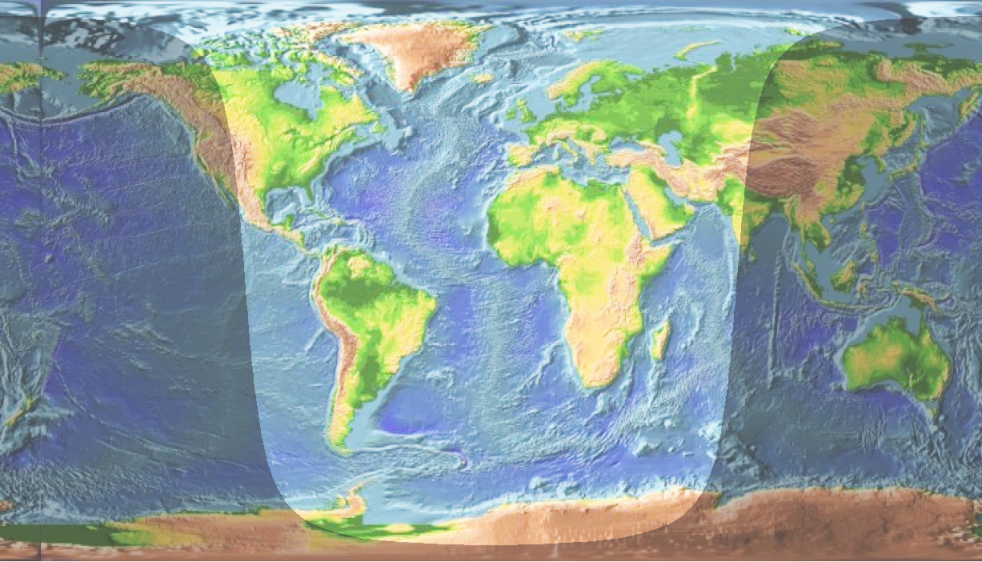
Natural light during the daytime
Daylight is the combination of all direct and indirect sunlight during the daytime. This includes direct sunlight, diffuse sky radiation, and (often) both of these reflected by Earth and terrestrial objects, like landforms and buildings. Sunlight scattered or reflected by astronomical objects is generally not considered daylight. Therefore, daylight excludes moonlight, despite it being reflected indirect sunlight.
Definition
Daylight is present at a particular location, to some degree, whenever the Sun is above the local horizon. This is true for slightly more than 50% of the Earth at any given time, since the Earth's atmosphere refracts some sunlight even when the Sun is below the horizon.
Outdoor illuminance varies from 120,000 lux for direct sunlight at noon, which may cause eye pain, to less than 5 lux for thick storm clouds with the Sun at the horizon (even
Intensity in different conditions
| Illuminance | Example | |||
|---|---|---|---|---|
| 120,000 lux | Brightest sunlight | |||
| 111,000 lux | Bright sunlight | |||
| 109,880 lux | url=https://en.wikipedia.org/w/index.php?title=Air_mass_(solar_energy)&oldid=938950059 | title=Air mass (solar energy) | publisher=Wikipedia | access-date=14 April 2020}} |
| 20,000 lux | Shade illuminated by entire clear blue sky, midday | |||
| 1,000–2,000 lux | Typical overcast day, midday | |||
| 400 lux | Sunrise or sunset on a clear day (ambient illumination) | |||
| Extreme of thickest storm clouds, midday | ||||
| 40 lux | Fully overcast, sunset/sunrise | |||
| Extreme of thickest storm clouds, sunset/rise |
For comparison, nighttime illuminance levels are:
| Illuminance | Example | ||||
|---|---|---|---|---|---|
| Moonlight, clear night sky | |||||
| 0.25 lux | first=Paul | last=Schlyter | url=http://stjarnhimlen.se/comp/radfaq.html#10 | title=Radiometry and photometry in astronomy FAQ | year=2006}} |
| 0.01 lux | A quarter Moon, clear night sky | ||||
| 0.002 lux | Starlight and airglow, clear moonless night sky | ||||
| 0.0002 lux | Starlight, clear moonless night sky, excluding airglow | ||||
| 0.00014 lux | Venus at brightest, clear night sky | ||||
| 0.0001 lux | Starlight, overcast moonless night sky |
For a table of approximate daylight intensity in the Solar System, see sunlight.
References
References
- Cox, Clifford. "Dust Bowl".
- "Volcanic Ash Impacts & Mitigation". [[USGS]].
- "Air mass (solar energy)". Wikipedia.
- Bunning, Erwin. (April 1969). "Interference of moonlight with the photoperiodic measurement of time by plants, and their adaptive reaction". Proceedings of the National Academy of Sciences of the United States of America.
- Schlyter, Paul. (2006). "Radiometry and photometry in astronomy FAQ".
- "Petzl reference system for lighting performance".
This article was imported from Wikipedia and is available under the Creative Commons Attribution-ShareAlike 4.0 License. Content has been adapted to SurfDoc format. Original contributors can be found on the article history page.
Ask Mako anything about Daylight — get instant answers, deeper analysis, and related topics.
Research with MakoFree with your Surf account
Create a free account to save articles, ask Mako questions, and organize your research.
Sign up freeThis content may have been generated or modified by AI. CloudSurf Software LLC is not responsible for the accuracy, completeness, or reliability of AI-generated content. Always verify important information from primary sources.
Report