From Surf Wiki (app.surf) — the open knowledge base
Crop diversity
Variance of plants in agriculture
Variance of plants in agriculture
Crop diversity or crop biodiversity is the variety and variability of crops, plants used in agriculture, including their genetic and phenotypic characteristics. It is a subset of a specific element of agricultural biodiversity. Over the past 50 years, there has been a major decline in two components of crop diversity; genetic diversity within each crop and the number of species commonly grown.
Crop diversity loss threatens global food security, as the world's human population depends on a diminishing number of varieties of a diminishing number of crop species. Crops are increasingly grown in monoculture, meaning that if, as in the historic Great Famine of Ireland, a single disease overcomes a variety's resistance, it may destroy an entire harvest, or as in the case of the 'Gros Michel' banana, may cause the commercial extinction of an entire variety. With the help of seed banks, international organizations are working to preserve crop diversity.
Biodiversity loss
The loss of biodiversity is considered one of today’s most serious environmental concerns by the Food and Agriculture Organization. If current trends persist, as many as half of all plant species could face extinction. Some 6% of wild relatives of cereal crops such as wheat, maize, rice, and sorghum are under threat, as are 18% of legumes (Fabaceae), the wild relatives of beans, peas and lentils, and 13% of species within the botanical family (Solanaceae) that includes potato, tomato, eggplant (aubergine), and peppers (Capsicum).
Within-crop diversity
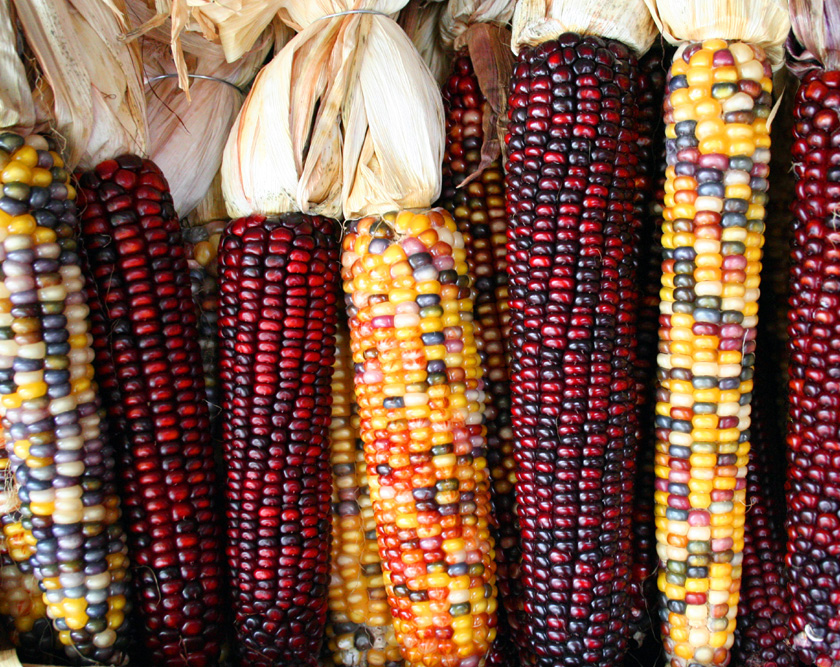
Within-crop diversity, a specific crop can result from various growing conditions, for example a crop growing in nutrient-poor soil is likely to have stunted growth than a crop growing in more fertile soil. The availability of water, soil pH level, and temperature similarly influence crop growth.
In addition, diversity of a harvested plant can be the result of genetic differences: a crop may have genes conferring early maturity or disease resistance. Modern plant breeders develop new crop varieties to meet specific conditions. A new variety might, for example, be higher yielding, more disease resistant or have a longer shelf life than the varieties from which it was bred. The practical use of crop diversity goes back to early agricultural methods of crop rotation and fallow fields, where planting and harvesting one type of crop on a plot of land one year, and planting a different crop on that same plot the next year. This takes advantage of differences in a plant's nutrient needs, but more importantly reduces the buildup of pathogens.
Both farmers and scientists must continually draw on the irreplaceable resource of genetic diversity to ensure productive harvests. While genetic variability provides farmers with plants that have a higher resilience to pests and diseases and allows scientists access to a more diverse genome than can be found in highly selected crops. The breeding of high performing crops steadily reduces genetic diversity as desirable traits are selected, and undesirable traits are removed. Farmers can increase within-crop diversity to some extent by planting mixtures of crop varieties.
Ecological effects
However, modern agriculture seriously reduces biodiversity. Traditional systems maintain diversity within a crop species, such as in the Andes mountains where up to 50 varieties of potato are grown. Strategies to raise genetic diversity can involve planting mixtures of crop varieties.
Genetic diversity of crops can be used to help protect the environment. Crop varieties that are resistant to pests and diseases can reduce the need for application of harmful pesticides.
Economic impact
Agriculture is the economic foundation of most countries, and for developing countries a likely source of economic growth. Growth in agriculture can benefit the rural poor, though it does not always do so. Profits from crops can increase from higher value crops, better marketing, value-adding activities such as processing, or expanded access for the public to markets. Profits can also decrease through reduced demand or increased production. Crop diversity can protect against crop failure, and can also offer higher returns.
Despite efforts to quantify them, the financial values of crop diversity sources remain entirely uncertain.
Disease threats
Along with insect pests, disease is a major cause of crop loss. Wild species have a range of genetic variability that allows some individuals to survive should a disturbance occur. In agriculture, resistance through variability is compromised, since genetically uniform seeds are planted under uniform conditions. Monocultural agriculture thus causes low crop diversity, especially when the seeds are mass-produced or when plants (such as grafted fruit trees and banana plants) are cloned. A single pest or disease could threaten a whole crop due to this uniformity ("genetic erosion"). A well-known historic case was the Great Famine of Ireland of 1845-1847, where a vital crop with low diversity was destroyed by a single fungus. Another example is when a disease caused by a fungus affected the monocultured 1970 US corn crop, causing a loss of over one billion dollars in production.
A danger to agriculture is wheat rust, a pathogenic fungus causing reddish patches, coloured by its spores. A virulent form of the wheat disease, stem rust, strain Ug99, spread from Africa across to the Arabian Peninsula by 2007. In field trials in Kenya, more than 85% of wheat samples, including major cultivars, were susceptible, implying that higher crop diversity was required. The Nobel laureate Norman Borlaug argued for action to ensure global food security.
Reports from Burundi and Angola warn of a threat to food security caused by the African Cassava Mosaic Virus (ACMD). ACMD is responsible for the loss of a million tons of cassava each year. CMD is prevalent in all the main cassava-growing areas in the Great Lakes region of east Africa, causing between 20 and 90 percent crop losses in the Congo. The FAO emergency relief and rehabilitation program is assisting vulnerable returnee populations in the African Great Lakes Region through mass propagation and distribution of CMD resistant or highly tolerant cassava.
A well known occurrence of disease susceptibility in crops lacking diversity concerns the 'Gros Michel', a seedless banana that saw world marketing in the 1940s. As the market demand became high for this particular cultivar, growers and farmers began to use the Gros Michel banana almost exclusively. Genetically, these bananas are clones, and because of this lack of genetic diversity, are all susceptible to a single fungus, Fusarium oxysporum (Panama disease); large areas of the crop were destroyed by the fungus in the 1950s. 'Gros Michel' has been replaced by the current main banana on the market, the 'Cavendish', which in turn is (2015) at risk of total loss to a strain of the same fungus, 'Tropical Race 4'.
Such threats can be countered by strategies such as planting multi-line cultivars and cultivar mixes, in the hope that some of the cultivars will be resistant to any individual outbreak of disease.
Organizations and technologies
The implications of crop diversity are at both local and world levels. Global organizations that aim to support diversity include Bioversity International (formerly known as International Plant Genetic Resources Institute), the International Institute of Tropical Agriculture, the Borlaug Global Rust Initiative, and the International Network for Improvement of Banana and Plantain. Members of the United Nations, at the World Summit on Sustainable Development 2002 at Johannesburg, said that crop diversity is in danger of being lost if measures are not taken.
The Global Crop Diversity Trust is an independent international organisation which exists to ensure the conservation and availability of crop diversity for food security worldwide. It was established through a partnership between the United Nations Food and Agriculture Organization (FAO) and CGIAR acting through Bioversity International. The CGIAR is a consortium of international agriculture research centers (IARC) and others that each conduct research on and preserve germplasm from a particular crop or animal species. The genebanks of CGIAR centers hold some of the world's largest off site collections of plant genetic resources in trust for the world community. Collectively, the CGIAR genebanks contain more than 778,000 accessions of more than 3,000 crop, forage, and agroforestry species. The collection includes farmers' varieties and improved varieties and, in substantial measure, the wild species from which those varieties were created. National germplasm storage centers include the U.S. Department of Agriculture's National Center for Genetic Resources Preservation, India's National Bureau of Animal Genetic Resources, the Taiwan Livestock Research Institute, and the proposed Australian Network of Plant Genetic Resource Centers.
The World Resources Institute (WRI) and the World Conservation Union (IUCN) are non-profit organizations that provide funding and other support to off site and on site conservation efforts. The wise use of crop genetic diversity in plant breeding and genetic modification can also contribute significantly to protecting the biodiversity in crops. Crop varieties can be genetically modified to resist specific pests and diseases. For example, a gene from the soil bacterium Bacillus thuringiensis (Bt) produces a natural insecticide toxin. Genes from Bt can be inserted into crop plants to make them capable of producing an insecticidal toxin and therefore a resistance to certain pests. Bt corn (maize) can however adversely affect non-target insects closely related to the target pest, as with the monarch butterfly.
Notes
References
References
- United Nations. World Summit on Sustainable Development. August 29, 2002
- (2012). "Biodiversity loss and its impact on humanity". Nature.
- Associated Press. "Threat seen to half of Earth's plant species". The Milwaukee Journal Sentinel (Milwaukee, WI). November 1, 2002
- "Crop Wild Relatives Global Portal". Bioversity International.
- (1999). "The ecological role of biodiversity in agroecosystems". Agriculture, Ecosystems and Environment.
- (October 2004). "Crop genetic diversity to reduce pests and diseases on-farm: Participatory diagnosis guidelines Version I. Technical Bulletin No. 12". Bioversity International.
- (2007). "Conservation of crop diversity for sustainable landscape development". Management of Environmental Quality.
- Kropff, M.J. "Project: Enhanced biodiversity and weed suppression in agro-ecosystems". Crop and Weed Ecology Group (WUR), METIS Wageningen University (2001-2005)
- "Agriculture and Poverty Reduction". The World Bank.
- Imbruce, Valerie. (2007). "Bringing Southeast Asia to the Southeast United States: New forms of alternative agriculture in Homestead, Florida". Agriculture and Human Values.
- (2005). "What is Diversity Worth to Farmers?". Bioversity International.
- (2004-11-21). "Plant Genetic Resources for Food and Agriculture: Assessing Global Availability". [[Annual Reviews (publisher).
- Martinez-Castillo, J.. (2008). "Genetic erosion and in situ conservation of Lima bean (''Phaseolus lunatus'' L.) landraces in its Mesoamerican diversity center". Genetic Resources and Crop Evolution.
- Muir, Patricia. "Why does genetic diversity within and among crops matter?".
- (3 April 2008). "Crops". Environmental Literacy Council.
- (17 January 2007). "Dangerous rust puts strain on food security". Centre for Agriculture and Biosciences International.
- ICTVdB Management. "African cassava mosaic virus. In: ICTVdB - The Universal Virus Database", version 4. Büchen-Osmond, C. (Ed), Columbia University, New York, USA 2006
- [[food and Agriculture Organization Corporate Statistical Database. FAOSTAT]]. Video on Agriculture Activities in Developing Nations. www.faostat.fao.org/site/591/default.aspx
- IRIN "CONGO: Disease devastates cassava crop, threatens widespread hunger". Integrated Regional Information Networks, Nairobi, Kenya. November 13, 2008
- "Cassava Diseases in Africa {{!}} a major threat to food security". Food and Agriculture Organization.
- "Panama Disease: An Old Nemesis Rears Its Ugly Head Part 1: The Beginnings of the Banana Export Trades". apsnet.org.
- (21 January 2015). "Banana variety risks wipeout from deadly fungus wilt".
- (May 2007). "Vegetable Production Systems Using Crop Diversification Strategies". University of Tasmania (PhD Thesis).
- "The Crop Trust". The Crop Trust.
- "Key performance indicators of CGIAR genebanks, 2012-2019".
- link. (2014-09-28)
- "India's National Bureau of Animal Genetic Resources".
- "History". Livestock Research Institute, Council of Agriculture, Executive Yuan, Taiwan.
- "Australian Plant Genetic Resource Collections and Global Food Security | Issues Magazine".
- "Bt Corn: Health and the Environment – 0.707". Colorado State University.
This article was imported from Wikipedia and is available under the Creative Commons Attribution-ShareAlike 4.0 License. Content has been adapted to SurfDoc format. Original contributors can be found on the article history page.
Ask Mako anything about Crop diversity — get instant answers, deeper analysis, and related topics.
Research with MakoFree with your Surf account
Create a free account to save articles, ask Mako questions, and organize your research.
Sign up freeThis content may have been generated or modified by AI. CloudSurf Software LLC is not responsible for the accuracy, completeness, or reliability of AI-generated content. Always verify important information from primary sources.
Report