From Surf Wiki (app.surf) — the open knowledge base
Corolla, North Carolina
Unincorporated community in North Carolina, U.S.

Unincorporated community in North Carolina, U.S.


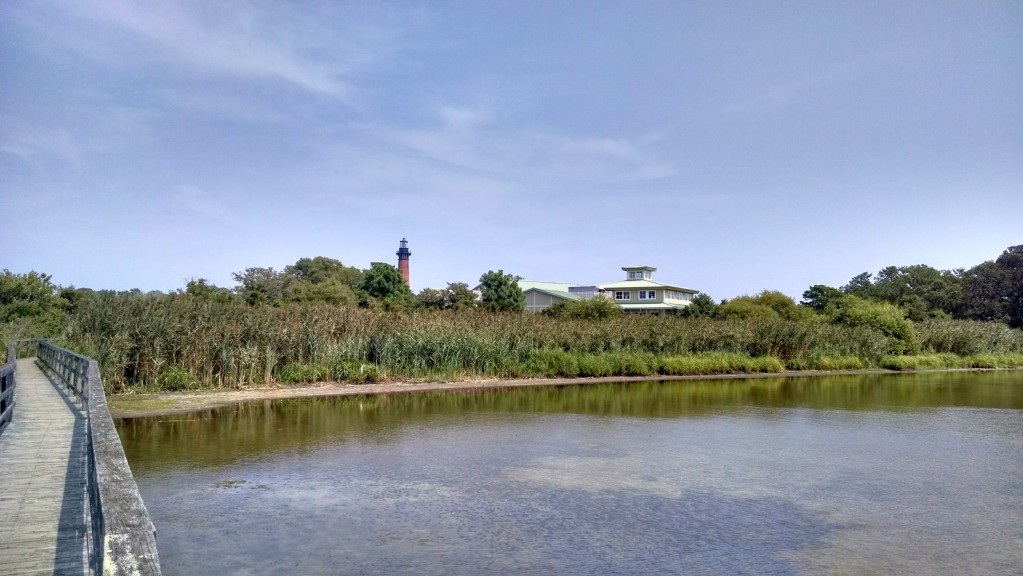
Corolla ( ) is an unincorporated community located in Poplar Branch township, Currituck County, North Carolina, United States, along the northern Outer Banks. According to the census data compiled by the United States Postal Service in 2020, it has a permanent population of approximately 1279 people; during the summer vacation season, the population surges into the thousands. Corolla is home to the Currituck Beach Lighthouse, one of the seven North Carolina coastal lighthouses.
Previously a quiet and little-known location, a development boom in the 1980s sparked growth in the area, and since then, Corolla has become a popular vacation destination. Resting between the Currituck Sound and the Atlantic Ocean, Corolla attracts mainly beach-goers, especially in the summer months. Corolla is home to numerous attractions such as the historic Whalehead Club, Currituck Beach Light, Center for Wildlife Education, and is known for its numerous locations for shopping, dining, and participating in water sports.
Corolla is home to a herd of feral Banker horses, which are direct descendants of Spanish mustangs brought in the 16th century. They are located on a 12,000-acre (49 km) animal sanctuary situated north of the populated areas of Corolla. Over fifty thousand people come to see these wild horses every week in the summer months.
Pronunciation
Named for the collection of petals of a flower, the correct pronunciation has an emphasis on the second syllable, rah (kuh-RAH-luh, /kəˈrɑːlə/); however, many visitors incorrectly pronounce Corolla the same way they pronounce the name of the Toyota Corolla, with the second syllable sounding like row (kuh-ROW-luh, /kəˈroʊlə/).
Corolla Demographics
Corolla is a diverse place, with its native residents describing themselves as belonging to various ethnic groups. The greatest number among them are white, followed by African Americans. Significant ancestries of people in Corolla include English, German, Italian, and Polish. The principal language spoken is English, but Spanish and Italian are other popular languages. Per capita income in Corolla is $48,670. 52.80% of the adult population has a four-year degree or equivalent, while in other parts of the United States the average is 21.84%.
Parks and nature preserves
Corolla is home to the Outer Banks Center for Wildlife Education, located in Currituck Heritage Park. The park has a boardwalk through wetlands. It is listed as an eBird hotspot, with at least 219 species recorded in the park since 2000. Less than a mile north of Corolla is the Currituck Banks North Carolina National Estuarine Research Reserve.
History
The community of Corolla began as a European development on American Indian hunting grounds. Tribes including the Chowanoke and Poteskeet hunted along the barrier island.
The town of Corolla was first called Jones Hill, after an early settler. It was also known as Whalehead or Currituck Beach. Early settlers made a living from fishing and hunting, as well as from salvage from shipwrecks and serving as guides to hunters.
Currituck was derived from an American Indian term, Carotank, meaning land of the wild geese. On the Atlantic migratory flyway, the area at the time had a large wild geese population. Over hunting in the late 19th century caused numbers to severely drop.
The town officially took the name Corolla in 1895 when a post office opened in the community. The name was chosen to refer to the botanic term for the petals of a flower. It wasn't until 1905 however, that a teacher and curriculum were provided to the local school.
Development of Currituck's Northern Outer Banks began in 1967 when investors from Sandbridge, Virginia, put together an investment group to purchase undeveloped land. The first subdivision plotted was Carova with 1,993 lots. The lots were originally priced in the early 1970s at $8,000; as of 2006, some of these lots are worth up to $500,000.
The investors planned for a road to come through from Virginia Beach, Virginia, to allow access to the lots; however, these plans were abandoned in 1973 when the Back Bay National Wildlife Refuge south of Sandbridge was closed to all vehicular traffic, except by permit. Development pushed south through the 1970s, creating well over 1,000 additional lots in several subdivisions. In 1984 the residents of Corolla succeeded in their attempts to gain a public access road from the south. The state began paving the extension of NC-12 toward the north.
In addition to the Currituck Beach Light, the Currituck Shooting Club and Whalehead Club are listed on the National Register of Historic Places.
Beaches of Corolla
There are 15 beaches with public access, of which six have lifeguards and public parking and two include showers:
- Corolla Village Road (shower, bathhouse)
- Shad Street
- Sturgeon Walkway
- Bonito Street
- Sailfish Walkway
- Yaupon Lane (shower, bathhouse)
Climate
According to the Köppen climate classification, Corolla has a Humid subtropical climate (Cfa).
| Jan record high F = 75.1 | Feb record high F = 75.5 | Mar record high F = 84.9 | Apr record high F = 87.4 | May record high F = 93.1 | Jun record high F = 95.4 | Jul record high F = 94.4 | Aug record high F = 95.6 | Sep record high F = 95.1 | Oct record high F = 89.3 | Nov record high F = 81.6 | Dec record high F = 77.4 | year record high F = 95.6 | Jan record low F = -0.2 | Feb record low F = 10.5 | Mar record low F = 21.7 | Apr record low F = 31.3 | May record low F = 43.2 | Jun record low F = 52.9 | Jul record low F = 60.9 | Aug record low F = 57.6 | Sep record low F = 52.3 | Oct record low F = 39.4 | Nov record low F = 27.3 | Dec record low F = 10.2 | year record low F = -0.2 | Jan dew point F = 34.5 | Feb dew point F = 35.2 | Mar dew point F = 39.9 | Apr dew point F = 48.7 | May dew point F = 57.8 | Jun dew point F = 66.4 | Jul dew point F = 71.4 | Aug dew point F = 70.4 | Sep dew point F = 65.8 | Oct dew point F = 55.9 | Nov dew point F = 45.7 | Dec dew point F = 39.1 | year dew point F = 52.7
Ecology
According to the A. W. Kuchler U.S. potential natural vegetation types, Corolla, North Carolina would have a dominant vegetation type of Northern Cordgrass (73) with a dominant vegetation form of Coastal plain (20).
References
References
- "Talk Like a Tar Heel". Wilson Library.
- "Corolla NC Information {{!}} Corolla Outer Banks".
- Corolla Guide& Carova.[http://corollaguide.com/ “Corolla NC outer Banks Vacations], Corolla Guide, Retrieved 13 May 2016.
- OuterBanks.com.[http://www.outerbanks.com/corolla.html “Corolla, NC”], OuterBanks.com & Visitors Guide, Retrieved 13 May 2016.
- marisa. (2021-12-17). "Wild Horses of the Outer Banks: Everything You Need to Know".
- Beil, Laura. (May 8, 2012). "Herd's Fate Lies in Preservation Clash". The New York Times.
- "Beach Patrols to Protect Corolla Wild Horses". North Carolina Public Radio.
- "Official proposes rules on Outer Banks horse-watching tours". Winston-Salem Journal.
- "The 10 Best Corolla Tours". TripAdvisor.
- "History of Corolla, NC and Currituck Outer Banks {{!}} Corolla Classic Vacations".
- "Corolla, NC - 27927 - Real Estate Market Data - NeighborhoodScout".
- (2012). "About the Outer Banks Center for Wildlife Education". N.C. Wildlife Resources Commission.
- (2024). "eBird: An online database of bird distribution and abundance". Audubon and Cornell Lab of Ornithology.
- (2007). "North Carolina Coastal Reserve: Currituck Banks NC Coastal Reserve and National Estuarine Research Reserve". North Carolina Coastal Reserve.
- {{NRISref
- "Corolla NC {{!}} Corollaguide.com".
- "PRISM".
- "NOAA".
- "U.S. Potential Natural Vegetation, Original Kuchler Types, v2.0 (Spatially Adjusted to Correct Geometric Distortions)".
This article was imported from Wikipedia and is available under the Creative Commons Attribution-ShareAlike 4.0 License. Content has been adapted to SurfDoc format. Original contributors can be found on the article history page.
Ask Mako anything about Corolla, North Carolina — get instant answers, deeper analysis, and related topics.
Research with MakoFree with your Surf account
Create a free account to save articles, ask Mako questions, and organize your research.
Sign up freeThis content may have been generated or modified by AI. CloudSurf Software LLC is not responsible for the accuracy, completeness, or reliability of AI-generated content. Always verify important information from primary sources.
Report