From Surf Wiki (app.surf) — the open knowledge base
Concertina wire
Type of barbed wire
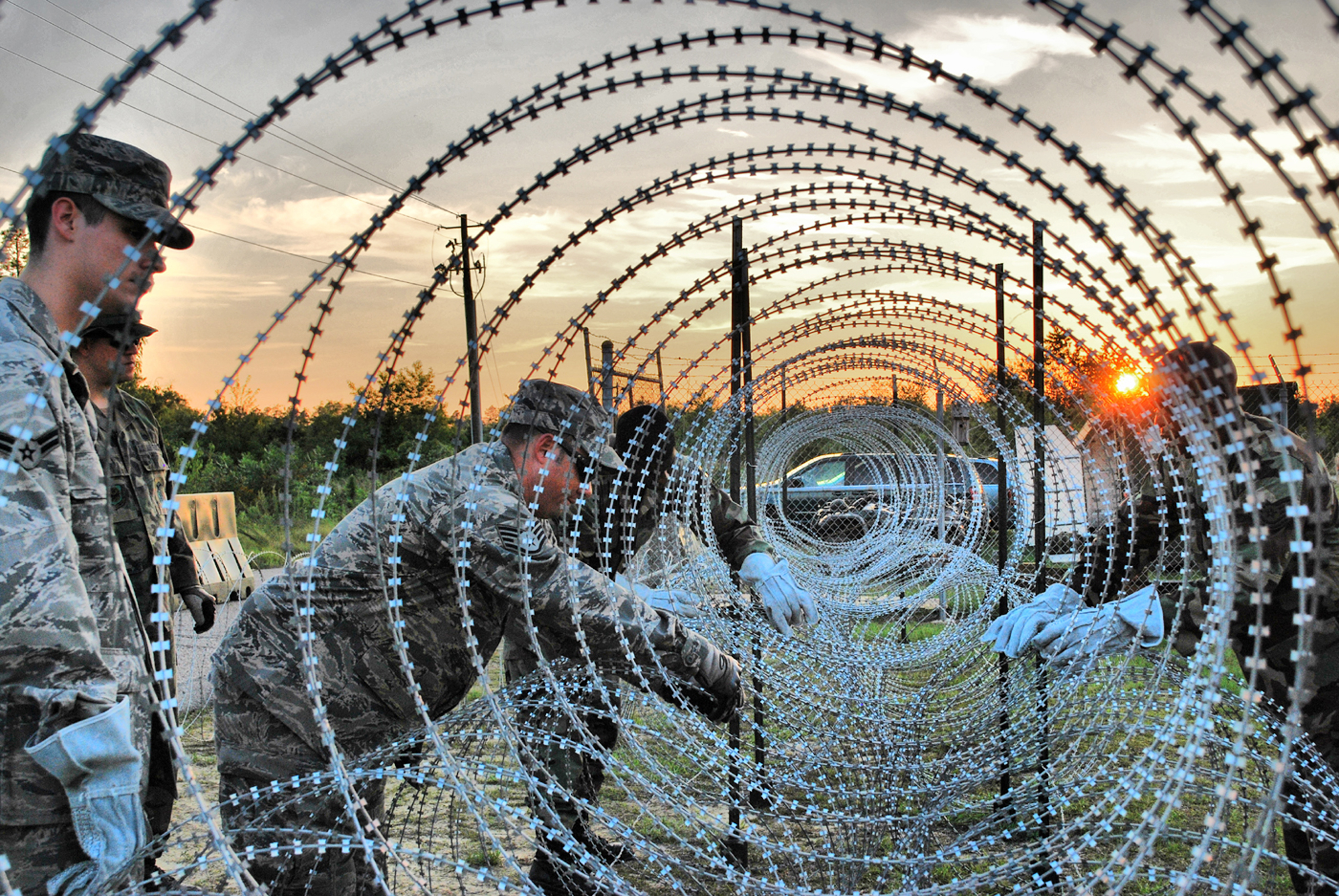
Type of barbed wire
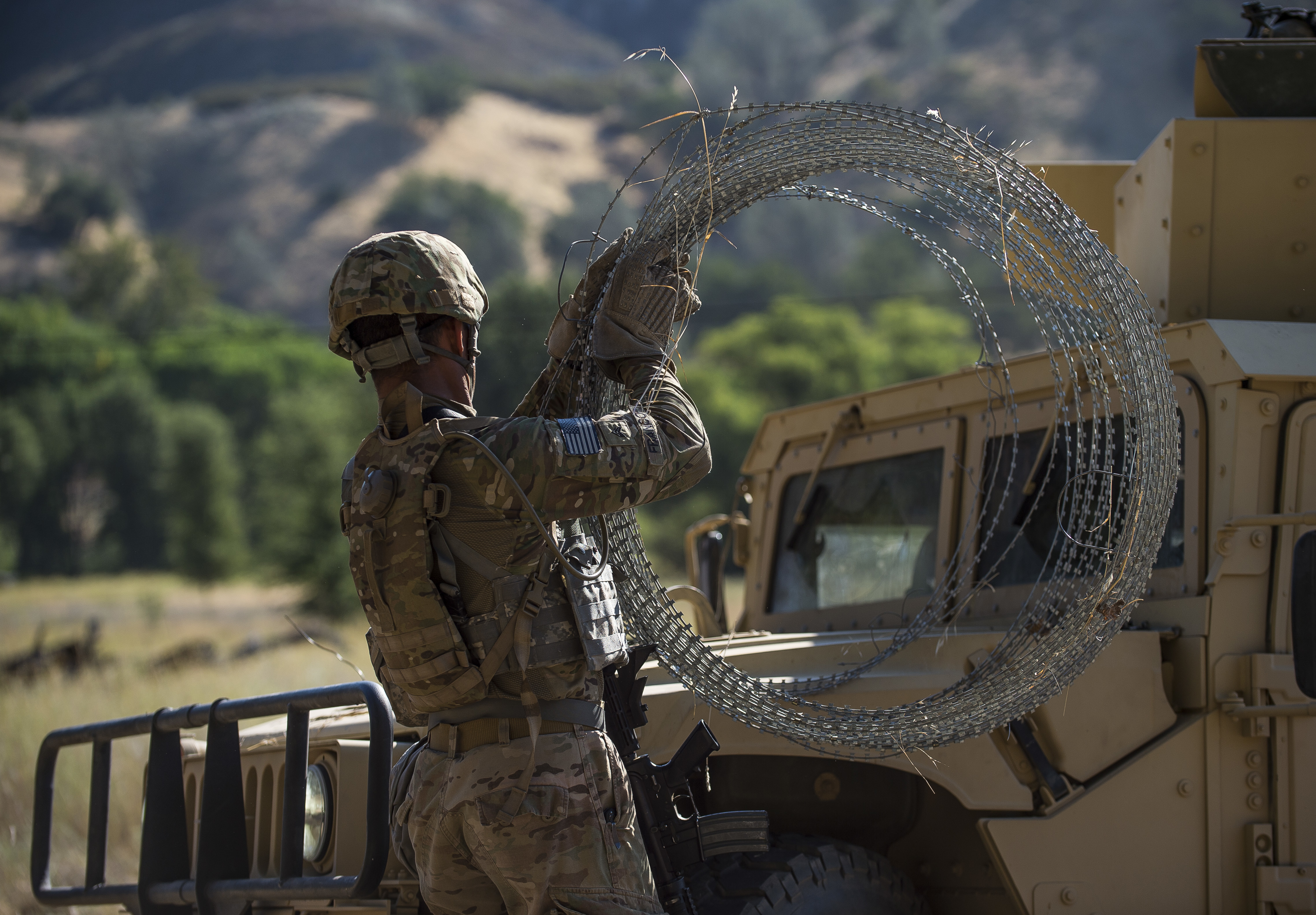
Concertina wire or Dannert wire{{cite web |access-date = 18 September 2010 |archive-url = https://web.archive.org/web/20110718172322/http://thesaurus.english-heritage.org.uk/thesaurus_term.asp?thes_no=365&term_no=123440 |archive-date = 18 July 2011 |url-status = dead During World War I, soldiers manufactured concertina wire themselves, using ordinary barbed wire. Today, it is factory made.
Origins


In World War I, barbed wire obstacles were made by stretching lengths of barbed wire between stakes of wood or iron. At its simplest, such a barrier would resemble a fence as might be used for agricultural purposes.{{Cite book
More elaborate and formidable obstructions could be formed with multiple lines of stakes connected with wire running from side-to-side, back-to-front, and diagonally in many directions. Effective as these obstacles were, their construction took considerable time.
Barbed wire obstacles were vulnerable to being pushed about by artillery shells; in World War I, this frequently resulted in a mass of randomly entangled wires that could be even more daunting than a carefully constructed obstacle. Learning this lesson, World War I soldiers would deploy barbed wire in so-called concertinas that were relatively loose. Barbed wire concertinas could be prepared in the trenches and then deployed in no-man's-land relatively quickly under cover of darkness.
Concertina wire packs flat for ease of transport and can then be deployed as an obstacle much more quickly than ordinary barbed wire, since the flattened coil of wire can easily be stretched out, forming an instant obstacle that will at least slow enemy passage. Several such coils with a few stakes to secure them in place are just as effective as an ordinary barbed wire fence, which must be built by driving stakes and running multiple wires between them.
A platoon of soldiers can deploy a single concertina fence at a rate of about a kilometre ( mile) per hour. Such an obstacle is not very effective by itself (although it will still hinder an enemy advance under the guns of the defenders), and concertinas are normally built up into more elaborate patterns as time permits.
Today, concertina wire is factory made and is available in forms that can be deployed very rapidly from the back of a vehicle or trailer.{{cite web | access-date = 18 September 2010 | archive-url = https://web.archive.org/web/20110716100633/http://www.soacorp.com/products_photos/ant_deployment_wire.htm | archive-date = 16 July 2011 | url-status = dead
Dannert wire
Oil-tempered barbed wire was developed during World War I; it was much harder to cut than ordinary barbed wire. During the 1930s, German Horst Dannert developed concertina wire of this high-grade steel wire. The result was entirely self-supporting; it did not require any vertical posts. An individual Dannert wire concertina could be compressed into a compact coil that could be carried by one man and then stretched out along its axis to make a barrier 50 ft long and each coil could be held in place with just three staples hammered into the ground.{{Cite book
Dannert wire was imported into Britain from Germany before World War II. During the invasion crisis of 1940–1941, the demand for Dannert wire was so great that some was produced with low manganese steel wire which was easier to cut. This material was known as "Yellow Dannert" after the identifying yellow paint on the concertina handles. To compensate for the reduced effectiveness of Yellow Dannert, an extra supply of pickets were issued in lieu of screw pickets.{{cite web | access-date = 19 September 2010 | archive-date = 24 August 2011 | archive-url = https://web.archive.org/web/20110824121014/http://pillboxes-suffolk.webeden.co.uk/#/wire-obstacles/4537170353 | url-status = dead
Triple concertina wire
A barrier known as a triple concertina wire fence consists of two parallel concertinas joined by twists of wire and topped by a third concertina similarly attached. The result is an extremely effective barrier with many of the desirable properties of a random entanglement. A triple concertina fence could be deployed very quickly: it is possible for a party of five men to deploy 50 yd of triple concertina fence in just 15 minutes. Optionally, triple concertina fence could be strengthened with uprights, but this increases the construction time significantly.
"Constantine" wire
Concertina wire is sometimes mistakenly called "constantine" wire. Constantine probably came from a corruption/misunderstanding of concertina and led to confusion with the Roman Emperor Constantine. This, in turn, has led to some people trying to differentiate between concertina wire and constantine wire by assigning the term constantine wire to what is commonly known as razor wire. In contrast to the helical construction of concertina wire, razor wire consists of a single wire with teeth that project periodically along its length.
References
Citations
Works cited
- {{Cite book
- {{Cite book
- {{Cite book
- {{Cite book
References
- [https://patents.google.com/patent/DE599829C/de] 1934 German patent
- Dannert, Horst. Improvements in Barricades. British Patent No 480,082. 1937.
- link. (2 March 2007 . Retrieved 2010-01-07.)
This article was imported from Wikipedia and is available under the Creative Commons Attribution-ShareAlike 4.0 License. Content has been adapted to SurfDoc format. Original contributors can be found on the article history page.
Ask Mako anything about Concertina wire — get instant answers, deeper analysis, and related topics.
Research with MakoFree with your Surf account
Create a free account to save articles, ask Mako questions, and organize your research.
Sign up freeThis content may have been generated or modified by AI. CloudSurf Software LLC is not responsible for the accuracy, completeness, or reliability of AI-generated content. Always verify important information from primary sources.
Report