From Surf Wiki (app.surf) — the open knowledge base
Columbia University
Private university in New York City, New York, US
Private university in New York City, New York, US
| Field | Value |
|---|---|
| name | Columbia University |
| in the City of New York | |
| image | Coat of Arms of Columbia University.svg |
| image_upright | .7 |
| caption | Coat of arms |
| latin_name | Universitas Columbiae |
| motto | la |
| mottoeng | "In Thy light shall we see light" |
| type | Private research university |
| established | |
| founder | George II of Great Britain |
| accreditation | MSCHE |
| academic_affiliations | |
| endowment | $14.8 billion (2024) |
| budget | $6.6 billion (2024) |
| president | Claire Shipman (acting) |
| provost | Angela Olinto |
| faculty | 4,628 |
| students | 36,649 |
| undergrad | 9,761 |
| postgrad | 26,888 |
| city | New York City |
| state | New York |
| country | United States |
| coordinates | |
| campus | Large city |
| campus_size | 299 acre |
| former_names | King's College |
| (1754–1784) | |
| Columbia College | |
| (1784–1896) | |
| colors | |
| sporting_affiliations | |
| sports_nickname | Lions |
| mascot | Roar-ee the Lion |
| logo | Columbia University 1754.svg |
| logo_size | 250 |
| website | |
| free_label | Newspaper |
| free | *Columbia Daily Spectator* |
in the City of New York (1754–1784) Columbia College (1784–1896)
Columbia University in the City of New York, commonly referred to as Columbia University, is a private Ivy League research university in New York City, New York, United States. It was first established in 1754 as King's College by royal charter under George II of Great Britain on the grounds of Trinity Church in Manhattan.
The university was renamed Columbia College in 1784 following the American Revolution, and in 1787 was placed under a private board of trustees headed by former students Alexander Hamilton and John Jay. In 1896, the campus was moved to its current location and renamed Columbia University. It is the oldest institution of higher education in New York and the fifth-oldest in the United States.
Columbia is organized into twenty schools, including three undergraduate schools and sixteen graduate schools. The university's research efforts include the Lamont–Doherty Earth Observatory, the Goddard Institute for Space Studies, and accelerator laboratories with Big Tech firms such as Amazon and IBM. Columbia is a founding member of the Association of American Universities and was the first school in the United States to grant the MD degree. The university also administers and annually awards the Pulitzer Prize.
Columbia scientists and scholars have played a pivotal role in scientific breakthroughs including brain–computer interface; the laser and maser; nuclear magnetic resonance; the first nuclear pile; the first nuclear fission reaction in the Americas; the first evidence for plate tectonics and continental drift; and much of the initial research and planning for the Manhattan Project during World War II.
, its alumni, faculty, and staff have included 7 of the Founding Fathers of the United States of America; 4 U.S. presidents; 34 foreign heads of state or government; 2 secretaries-general of the United Nations; 10 justices of the United States Supreme Court; 103 Nobel laureates; 125 National Academy of Sciences members; 53 living billionaires; 23 Olympic medalists; 33 Academy Award winners; and 125 Pulitzer Prize recipients.
History
Main article: History of Columbia University
18th century
Discussions regarding the founding of a college in the Province of New York began as early as 1704.
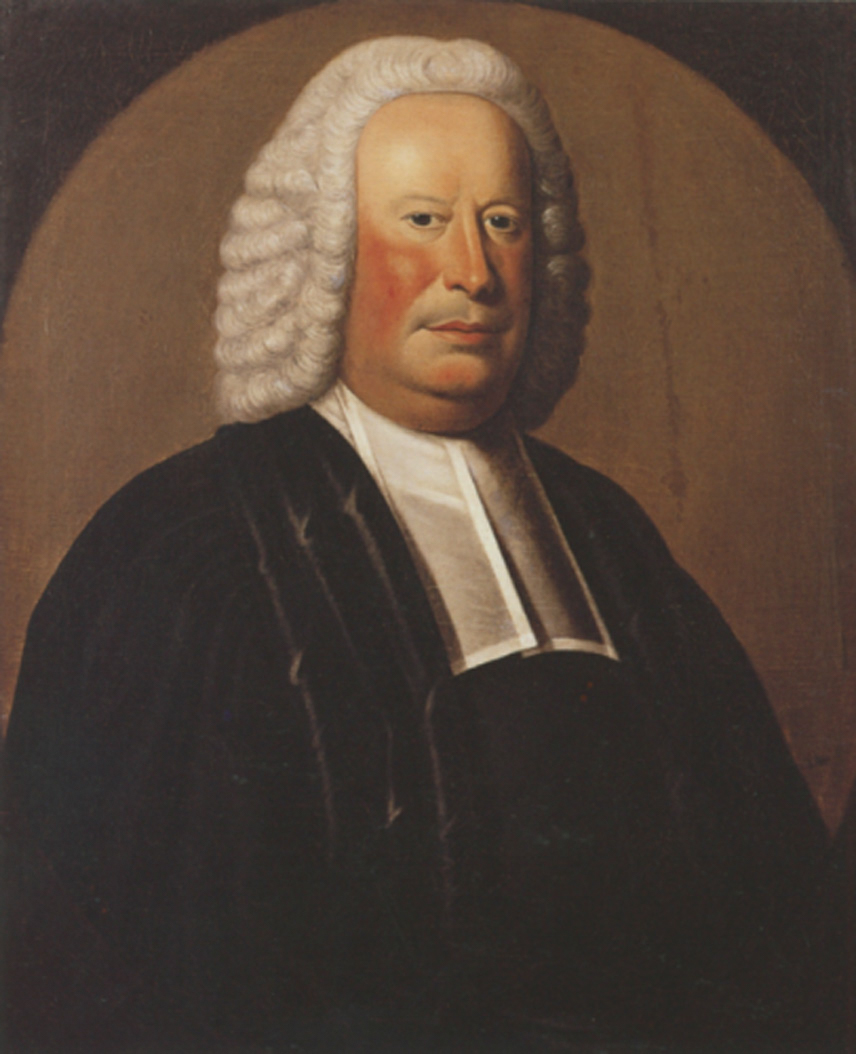
Classes were initially held in July 1754 and were presided over by the college's first president, Samuel Johnson who was an Anglican Priest. The college was officially founded on October 31, 1754, as King's College by royal charter of George II, making it the oldest institution of higher learning in the State of New York and the fifth oldest in the United States.
In 1763, Johnson was succeeded in the presidency by Myles Cooper, a graduate of The Queen's College, Oxford, and an ardent Tory. In the charged political climate of the American Revolution, his chief opponent in discussions at the college was an undergraduate of the class of 1777, Alexander Hamilton. The Irish anatomist, Samuel Clossy, was appointed professor of natural philosophy in October 1765 and later the college's first professor of anatomy in 1767.
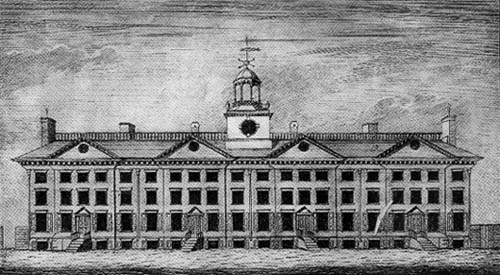
The American Revolutionary War broke out in 1776, and was catastrophic for the operation of King's College, which suspended instruction for eight years beginning in 1776 with the arrival of the Continental Army. The suspension continued through the military occupation of New York City by British troops until their departure in 1783. The college's library was looted and its sole building requisitioned for use as a military hospital first by American and then British forces.
The legislature agreed to assist the college, and on May 1, 1784, it passed "an Act for granting certain privileges to the College heretofore called King's College". The Act created a board of regents to oversee the resuscitation of King's College, and, in an effort to demonstrate its support for the new Republic, the legislature stipulated that "the College within the City of New York heretofore called King's College be forever hereafter called and known by the name of Columbia College", a reference to Columbia, an alternative name for America which in turn comes from the name of Christopher Columbus. The Regents finally became aware of the college's defective constitution in February 1787 and appointed a revision committee, which was headed by John Jay and Alexander Hamilton. In April of that same year, a new charter was adopted for the college granted the power to a separate board of 24 trustees.
For a period in the 1790s, with New York City as the federal and state capital and the country under successive Federalist governments, a revived Columbia thrived under the auspices of Federalists such as Hamilton and Jay. President George Washington and Vice President John Adams, in addition to both houses of Congress attended the college's commencement on May 6, 1789, as a tribute of honor to the many alumni of the school who had been involved in the American Revolution.[[File:Columbia_law_madison.gif|thumb|The library and law school buildings, both constructed in a [[Gothic and Revival architecture|Gothic and Revival]] style, on the [[Madison Avenue]] campus]]
19th century
.jpg)
In November 1813, the college agreed to incorporate its medical school with The College of Physicians and Surgeons, a new school created by the Regents of New York, forming Columbia University College of Physicians and Surgeons. In 1857, the college moved from the King's College campus at Park Place to a primarily Gothic Revival campus on 49th Street and Madison Avenue, where it remained for the next forty years.
During the last half of the 19th century, under the presidency of Frederick A. P. Barnard, for whom Barnard College is named, the institution rapidly assumed the shape of a modern university. Barnard College was created in 1889 as a response to the university's refusal to accept women.
In 1896, university president Seth Low moved the campus from 49th Street to its present location, a more spacious campus in the developing neighborhood of Morningside Heights. Under the leadership of Low's successor, Nicholas Murray Butler, who served for over four decades, Columbia rapidly became the nation's major institution for research, setting the multiversity model that later universities would adopt. Prior to becoming the president of Columbia University, Butler founded Teachers College, as a school to prepare home economists and manual art teachers for the children of the poor, with philanthropist Grace Hoadley Dodge. Teachers College is currently affiliated as the university's Graduate School of Education.
20th century
On March 8, 1917, as a result of America's entrance into World War 1, Columbia president Nicholas Murray Butler formed the Columbia Reserve Officers Training Corps. All students over the age of 18 who passed a physical exam were entered into this program. Within 4 months, over 1,400 students were enrolled within the program. They were one of 12 universities designated by the War department to create a naval section for the Student Army Training Corps. As part of this new program, the US Army charged Columbia to create a "War Issues" course. In 1919, a similar course was created for Columbia students, a "peace issues" course that evolved into "Introduction to Contemporary Civilization in the West", part of the university's core curriculum for undergraduate students.
In the 1940s, faculty members, including John R. Dunning, Isidor Isaac Rabi, Enrico Fermi, and Polykarp Kusch, began what became the Manhattan Project, creating the first nuclear fission reactor in the Americas and researching gaseous diffusion.
In 1928, Seth Low Junior College was established by Columbia University in order to mitigate the number of Jewish applicants to Columbia College. The college was closed in 1936 due to the adverse effects of the Great Depression and its students were subsequently taught at Morningside Heights, although they did not belong to any college but to the university at large. There was an evening school called University Extension, which taught night classes, for a fee, to anyone willing to attend.
In 1947, the program was reorganized as an undergraduate college and designated the School of General Studies in response to the return of GIs after World War II. In 1995, the School of General Studies was again reorganized as a full-fledged liberal arts college for non-traditional students (those who have had an academic break of one year or more, or are pursuing dual-degrees) and was fully integrated into Columbia's traditional undergraduate curriculum. The same year, the Division of Special Programs, later called the School of Continuing Education and now the School of Professional Studies, was established to reprise the former role of University Extension. While the School of Professional Studies only offered non-degree programs for lifelong learners and high school students in its earliest stages, it now offers degree programs in a diverse range of professional and inter-disciplinary fields.
In the aftermath of World War II, the discipline of international relations became a major scholarly focus of the university, and in response, the School of International and Public Affairs was founded in 1946, drawing upon the resources of the faculties of political science, economics, and history. The Columbia University Bicentennial was celebrated in 1954.
During the 1960s, student activism reached a climax with protests in the spring of 1968, when hundreds of students occupied buildings on campus. The incident forced the resignation of Columbia's president, Grayson Kirk, and the establishment of the University Senate.
Though several schools in the university had admitted women for years, Columbia College first admitted women in the fall of 1983, after a decade of failed negotiations with Barnard College, the all-female institution affiliated with the university, to merge the two schools. Barnard College still remains affiliated with Columbia, and all Barnard graduates are issued diplomas signed by the presidents of Columbia University and Barnard College.
During the late 20th century, the university underwent significant academic, structural, and administrative changes as it developed into a major research university. For much of the 19th century, the university consisted of decentralized and separate faculties specializing in Political Science, Philosophy, and Pure Science. In 1979, these faculties were merged into the Graduate School of Arts and Sciences. In 1991, the faculties of Columbia College, the School of General Studies, the Graduate School of Arts and Sciences, the School of the Arts, and the School of Professional Studies were merged into the Faculty of Arts and Sciences, leading to the academic integration and centralized governance of these schools.
21st century
Lee C. Bollinger became Columbia's 19th president in June 2002, succeeding George Rupp. He was appointed in October 2001 after arriving from the presidency of the University of Michigan. His initiatives included the Manhattanville campus expansion into West Harlem, addressing space needs. Bollinger launched the World Leaders Forum and aimed to increase international student numbers. He made a number of appointments to leadership roles including Jeffrey Sachs (Earth Institute), Alan Brinkley (Provost), Nicholas Lemann (Journalism), David Hirsh (Research), and Nicholas Dirks (Arts & Sciences).
Bollinger was the defendant in the Supreme Court's 2003 affirmative action cases (Gratz and Grutter), resulting in a split decision. He consistently defended free speech principles during campus controversies involving faculty and students.
The university publicly launched a record $4 billion capital campaign in September 2006. Financial aid was improved, eliminating loans for undergraduates from families earning under $50,000, supported by a major gift from trustee Gerry Lenfest.
Globalization efforts continued with the World Leaders Forum and the creation of the Committee on Global Thought, chaired by Joseph Stiglitz. Columbia faculty received multiple Nobel Prizes: Richard Axel and Linda Buck (Medicine, 2004), Edmund Phelps (Economics, 2006), and Orhan Pamuk (Literature, 2006). Václav Havel joined the faculty.
Controversy erupted over a planned 2006 invitation to Iranian President Ahmadinejad, which was ultimately canceled due to logistical and security issues. Later that year, a campus event featuring Minuteman Project speakers was disrupted by protesters. Bollinger strongly condemned the disruption, reaffirming free speech principles while stating protesters do not have the right to silence speakers. Several students faced disciplinary action, and non-affiliated individuals involved were banned from campus.
The 2008 financial crisis impacted Columbia's endowment, but less than peers as only 13% of the operating budget reliant on the endowment (compared to higher percentages at peers like Harvard). The endowment recovered, hitting $8.2B in Oct 2013. Despite the downturn, Columbia pressed on with Manhattanville construction, receiving final state approval in June 2009. Major gifts fueled progress, including $400M from John Kluge upon his death, $50M from the Vagelos family for the Medical Center, $100M from Henry Kravis for the Business School, $30M from Gerry Lenfest for an Arts center, and $200M from Mortimer Zuckerman for the Mind, Brain, Behavior Institute.
Following the repeal of "Don't Ask, Don't Tell," the University Senate voted 51–17 to invite ROTC back after a 40-year absence, and Bollinger announced an agreement with the Navy. Columbia expanded its Global Centers network (Amman, Beijing, Mumbai, Paris, Nairobi, Istanbul, Santiago), aiming to increase global engagement and international student enrollment (11% in CC in 2011, targeted higher).
From 2014 to 2021, Columbia University pursued significant physical expansion, notably opening major facilities on the Manhattanville campus (ZMBBI, Lenfest Center, The Forum). Key strategic initiatives launched included the Knight First Amendment Institute, Columbia World Projects, and the new Columbia Climate School (2020). A $5 billion university capital campaign was launched (with a $1.5B A&S target), major gifts like $50M for A&S's Uris Hall renovation were secured, and the endowment grew significantly ($14.35B by mid-2021). The COVID-19 pandemic starting March 2020 prompted remote operations, hiring/salary freezes, budget cuts, substantial borrowing (~$700M cited), and unpopular retirement contribution cuts, intensifying financial pressures.
In February 2022, Columbia's mathematics professor Michael Thaddeus published a website and argued that data submitted by Columbia for U.S. News college rankings was "inaccurate, dubious or highly misleading". In July 2022, U.S. News & World Report removed Columbia from its college rankings citing failed verification. In September 2022, Columbia acknowledged the submission of incorrect data to U.S. News college rankings. In June 2023, Columbia announced its non-participation in the rankings. In July 2025, Columbia offered to pay US$9 million to settle a class-action lawsuit by its students in Manhattan federal court over the alleged submission of false data to boost its U.S. News college rankings.

Beginning in fall 2023, protests at Columbia University against the Gaza war and what the student protesters described as Columbia's complicity in the Gaza genocide,:: Participants
including the Gaza Solidarity Encampment (April 17–30, 2024), resulted in police action, student disciplinary measures, and the resignation of two university presidents: Minouche Shafik and Katrina Armstrong. The federal government then launched an investigation into antisemitism and withdrew funding, prompting the university to adopt stricter campus policies. In July 2025, Columbia finalized a $220 million settlement to resume federal funding, agreeing to adopt the IHRA definition of antisemitism, provide applicant data, and other policy changes while admitting no wrongdoing.
On 25th January 2026, the university announced that it had chosen Jennifer Mnookin, the chancellor of the University of Wisconsin-Madison, as the next president of Columbia. Mnookin is expected to begin her tenure on July 1st, 2026.
Campus
Morningside Heights

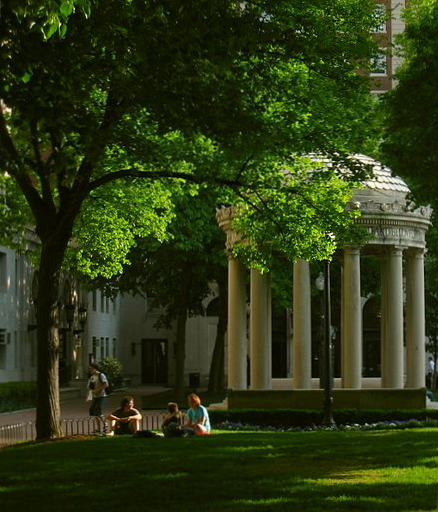
The majority of Columbia's graduate and undergraduate studies are conducted in the Upper Manhattan neighborhood of Morningside Heights on Seth Low's late-19th century vision of a university campus where all disciplines could be taught at one location. The campus was designed along Beaux-Arts planning principles by the architects McKim, Mead & White. Columbia's main campus occupies more than six city blocks, or 32 acres, in Morningside Heights, New York City, a neighborhood that contains a number of academic institutions. The university owns over 7,800 apartments in Morningside Heights, housing faculty, graduate students, and staff. Almost two dozen undergraduate dormitories (purpose-built or converted) are located on campus or in Morningside Heights. Columbia University has an extensive tunnel system, more than a century old, with the oldest portions predating the present campus. Some of these remain accessible to the public, while others have been cordoned off.

Butler Library is the largest in the Columbia University Libraries system and one of the largest buildings on the campus. It was completed in 1934 and renamed to Butler Library in 1946. , Columbia's library system includes over 15.0 million volumes, making it the eighth largest library system and fifth largest collegiate library system in the United States.
Several buildings on the Morningside Heights campus are listed on the National Register of Historic Places. Low Memorial Library, a National Historic Landmark and the centerpiece of the campus, is listed for its architectural significance. Philosophy Hall is listed as the site of the invention of FM radio. Also listed is Pupin Hall, another National Historic Landmark, which houses the physics and astronomy departments. Here the first experiments on the fission of uranium were conducted by Enrico Fermi. The uranium atom was split there ten days after the world's first atom-splitting in Copenhagen, Denmark. Other buildings listed include Casa Italiana, the Delta Psi, Alpha Chapter building of St. Anthony Hall, Earl Hall, and the buildings of the affiliated Union Theological Seminary.

A statue by sculptor Daniel Chester French called Alma Mater is centered on the front steps of Low Memorial Library. The statue represents a personification of the traditional image of the university as an alma mater, or "nourishing mother", draped in an academic gown and seated on a throne. She wears a laurel wreath on her head and holds in her right hand a scepter capped by a King's Crown, a traditional symbol of the university. A book, representing learning, rests on her lap. The arms of her throne end in lamps, representing "Sapientia et Doctrina", or "Wisdom and Learning"; on the back of the throne is embossed an image of the seal of the university. The small hidden owl on the sculpture is also the subject of many Columbia legends, the main legend being that the first student in the freshmen class to find the hidden owl on the statue will be valedictorian, and that any subsequent Columbia male who finds it will marry a Barnard student, given that Barnard is a women's college.
"The Steps", alternatively known as "Low Steps" or the "Urban Beach", are a popular meeting area for Columbia students. The term refers to the long series of granite steps leading from the lower part of campus (South Field) to its upper terrace.
Other campuses

In April 2007, the university purchased more than two-thirds of a 17 acre site for a new campus in Manhattanville, an industrial neighborhood to the north of the Morningside Heights campus. Stretching from 125th Street to 133rd Street, Columbia Manhattanville houses buildings for Columbia's Business School, School of International and Public Affairs, Columbia School of the Arts, and the Jerome L. Greene Center for Mind, Brain, and Behavior, where research will occur on neurodegenerative diseases such as Parkinson's and Alzheimer's. The $7 billion expansion plan included demolishing all buildings, except three that are historically significant (the Studebaker Building, Prentis Hall, and the Nash Building), eliminating the existing light industry and storage warehouses, and relocating tenants in 132 apartments. Replacing these buildings created 6.8 e6sqft of space for the university. Community activist groups in West Harlem fought the expansion for reasons ranging from property protection and fair exchange for land, to residents' rights. Subsequent public hearings drew neighborhood opposition. , the State of New York's Empire State Development Corporation approved use of eminent domain, which, through declaration of Manhattanville's "blighted" status, gives governmental bodies the right to appropriate private property for public use. On May 20, 2009, the New York State Public Authorities Control Board approved the Manhanttanville expansion plan.
NewYork-Presbyterian Hospital is affiliated with the medical schools of both Columbia University and Cornell University. According to U.S. News & World Reports "2020–21 Best Hospitals Honor Roll and Medical Specialties Rankings", it is ranked fourth overall and second among university hospitals. Columbia's medical school has a strategic partnership with New York State Psychiatric Institute, and is affiliated with 19 other hospitals in the U.S. and four hospitals in other countries. Health-related schools are located at the Columbia University Medical Center, a 20 acre campus located in the neighborhood of Washington Heights, fifty blocks uptown. Other teaching hospitals affiliated with Columbia through the NewYork-Presbyterian network include the Payne Whitney Clinic in Manhattan, and the Payne Whitney Westchester, a psychiatric institute located in White Plains, New York. On the northern tip of Manhattan island (in the neighborhood of Inwood), Columbia owns the 26 acre Baker Field, which includes the Lawrence A. Wien Stadium as well as facilities for field sports, outdoor track, and tennis. There is a third campus on the west bank of the Hudson River, the 157 acre Lamont–Doherty Earth Observatory and Earth Institute in Palisades, New York. A fourth is the 60 acre Nevis Laboratories in Irvington, New York, for the study of particle and motion physics. A satellite site in Paris holds classes at Reid Hall.
Sustainability
In 2006, the university established the Office of Environmental Stewardship to initiate, coordinate and implement programs to reduce the university's environmental footprint. The U.S. Green Building Council selected the university's Manhattanville plan for the Leadership in Energy and Environmental Design (LEED) Neighborhood Design pilot program.
Columbia has been rated "B+" by the 2011 College Sustainability Report Card for its environmental and sustainability initiatives.[[File:116th_Street_Columbia_University_Station.JPG|thumb|Access to Columbia is enhanced by the [[116th Street–Columbia University (IRT Broadway–Seventh Avenue Line)|116th Street–Columbia University]] subway station () on the [[IRT Broadway–Seventh Avenue Line]].]] According to the A. W. Kuchler U.S. potential natural vegetation types, Columbia University would have a dominant vegetation type of Appalachian Oak (104) with a dominant vegetation form of Eastern Hardwood Forest (25).
Transportation
Columbia Transportation is the bus service of the university, operated by Academy Bus Lines. The buses are open to all Columbia faculty, students, Dodge Fitness Center members, and anyone else who holds a Columbia ID card. In addition, all TSC students can ride the buses.
In the New York City Subway, the train serves the university at 116th Street-Columbia University. The buses stop on Broadway while the stops on Amsterdam Avenue.
The main campus is primarily boxed off by the streets of Amsterdam Avenue, Broadway, 114th street, and 120th street, with some buildings, including Barnard College, located just outside the area. The nearest major highway is the Henry Hudson Parkway (NY 9A) to the west of the campus. It is located 3.4 mi south of the George Washington Bridge.
Academics
Undergraduate admissions and financial aid
|access-date=March 18, 2022 |archive-date=March 19, 2022 |archive-url=https://web.archive.org/web/20220319072358/https://undergrad.admissions.columbia.edu/class-2025-profile |url-status=live |access-date=March 18, 2022 |archive-url=https://web.archive.org/web/20170604152232/http://undergrad.admissions.columbia.edu/classprofile/2020 |archive-date=June 4, 2017 |url-status=dead}} Columbia University received 60,551 applications for the class of 2025 (entering 2021) and a total of around 2,218 were admitted to the two schools for an overall acceptance rate of 3.66%. Columbia is a racially diverse school, with approximately 52% of all students identifying themselves as persons of color. Additionally, 50% of all undergraduates received grants from Columbia. The average grant size awarded to these students is $46,516. In 2015–2016, annual undergraduate tuition at Columbia was $50,526 with a total cost of attendance of $65,860 (including room and board). The college is need-blind for domestic applicants.
On April 11, 2007, Columbia University announced a $400 million donation from media billionaire alumnus John Kluge to be used exclusively for undergraduate financial aid. The donation is among the largest single gifts to higher education. However, this does not apply to international students, transfer students, visiting students, or students in the School of General Studies. In the fall of 2010, admission to Columbia's undergraduate colleges Columbia College and the Fu Foundation School of Engineering and Applied Science (also known as SEAS or Columbia Engineering) began accepting the Common Application. The policy change made Columbia one of the last major academic institutions and the last Ivy League university to switch to the Common Application.
Scholarships are also given to undergraduate students by the admissions committee. Designations include John W. Kluge Scholars, John Jay Scholars, C. Prescott Davis Scholars, Global Scholars, Egleston Scholars, and Science Research Fellows. Named scholars are selected by the admission committee from first-year applicants. According to Columbia, the first four designated scholars "distinguish themselves for their remarkable academic and personal achievements, dynamism, intellectual curiosity, the originality and independence of their thinking, and the diversity that stems from their different cultures and their varied educational experiences".
In 1919, Columbia established a student application process characterized by The New York Times as "the first modern college application". The application required a photograph of the applicant, the maiden name of the applicant's mother, and the applicant's religious background.
Organization
| Columbia Graduate/Professional Schools |
|---|
| **College/school** |
| Vagelos College of Physicians and Surgeons |
| College of Dental Medicine |
| Columbia Law School |
| Fu Foundation School of Engineering and Applied Science |
| Columbia Graduate School of Arts and Sciences |
| Graduate School of Architecture, Planning and Preservation |
| Teachers College, Columbia University (affiliate) |
| Columbia University School of Nursing |
| Columbia University School of Social Work |
| Graduate School of Journalism |
| Columbia Business School |
| Mailman School of Public Health |
| Union Theological Seminary (affiliate) |
| School of International and Public Affairs |
| School of the Arts |
| School of Professional Studies |
| Columbia Climate School |
| Columbia Undergraduate Schools |
|---|
| **College/school** |
| Columbia College |
| Fu Foundation School of Engineering and Applied Science |
| Barnard College (affiliate) |
| Columbia University School of General Studies |
Columbia University is an independent, privately supported, nonsectarian and not-for-profit institution of higher education. Its official corporate name is Trustees of Columbia University in the City of New York.
In 1754, the university's first charter was granted by King George II; however, its modern charter was first enacted in 1787 and last amended in 1810 by the New York State Legislature. Columbia has four official undergraduate colleges: Columbia College, the liberal arts college offering the Bachelor of Arts degree; the Fu Foundation School of Engineering and Applied Science (also known as SEAS or Columbia Engineering), the engineering and applied science school offering the Bachelor of Science degree; the School of General Studies, the liberal arts college offering the Bachelor of Arts degree to non-traditional students undertaking full- or part-time study; and Barnard College. Barnard College is a women's liberal arts college and an academic affiliate in which students receive a Bachelor of Arts degree from Columbia University. Their degrees are signed by the presidents of Columbia University and Barnard College. Barnard students are also eligible to cross-register classes that are available through the Barnard Catalogue and alumnae can join the Columbia Alumni Association.
Joint degree programs are available through Union Theological Seminary, the Jewish Theological Seminary of America, and the Juilliard School. Teachers College and Barnard College are official faculties of the university; both colleges' presidents are deans under the university governance structure. The Columbia University Senate includes faculty and student representatives from Teachers College and Barnard College who serve two-year terms; all senators are accorded full voting privileges regarding matters impacting the entire university. Teachers College is an affiliated, financially independent graduate school with their own board of trustees. Pursuant to an affiliation agreement, Columbia is given the authority to confer "degrees and diplomas" to the graduates of Teachers College. The degrees are signed by presidents of Teachers College and Columbia University in a manner analogous to the university's other graduate schools. Columbia's General Studies school also has joint undergraduate programs available through University College London, Sciences Po, City University of Hong Kong, Trinity College Dublin, and the Juilliard School.
The university also has several Columbia Global Centers, in Amman, Beijing, Istanbul, Mumbai, Nairobi, Paris, Rio de Janeiro, Santiago, and Tunis.
International partnerships
Columbia students can study abroad for a semester or a year at partner institutions such as Sciences Po, École des hautes études en sciences sociales (EHESS), École normale supérieure (ENS), Panthéon-Sorbonne University, King's College London, London School of Economics, University College London and the University of Warwick. Select students can study at either the University of Oxford or the University of Cambridge for a year if approved by both Columbia and either Oxford or Cambridge. Columbia also has a dual MA program with the Aga Khan University in London.
Rankings
| Program | Ranking | Biological Sciences | Biostatistics | Business | Chemistry | Computer Science | Earth Sciences | Economics | Engineering | English | Fine Arts | Health Care Management | History | Law | Mathematics | Nursing–Anesthesia | Nursing–Midwifery | Occupational Therapy | Physical Therapy | Physics | Political Science | Psychology | Public Affairs | Public Health | Social Work | Sociology | Statistics |
|---|---|---|---|---|---|---|---|---|---|---|---|---|---|---|---|---|---|---|---|---|---|---|---|---|---|---|---|
| 11 | |||||||||||||||||||||||||||
| 7 | |||||||||||||||||||||||||||
| 9 | |||||||||||||||||||||||||||
| 11 | |||||||||||||||||||||||||||
| 13 | |||||||||||||||||||||||||||
| 4 | |||||||||||||||||||||||||||
| 9 | |||||||||||||||||||||||||||
| 18 | |||||||||||||||||||||||||||
| 8 | |||||||||||||||||||||||||||
| 10 | |||||||||||||||||||||||||||
| 14 | |||||||||||||||||||||||||||
| 6 | |||||||||||||||||||||||||||
| 10 | |||||||||||||||||||||||||||
| 11 | |||||||||||||||||||||||||||
| 41 | |||||||||||||||||||||||||||
| 15 | |||||||||||||||||||||||||||
| 9 | |||||||||||||||||||||||||||
| 22 | |||||||||||||||||||||||||||
| 9 | |||||||||||||||||||||||||||
| 8 | |||||||||||||||||||||||||||
| 14 | |||||||||||||||||||||||||||
| 21 | |||||||||||||||||||||||||||
| 6 | |||||||||||||||||||||||||||
| 4 | |||||||||||||||||||||||||||
| 11 | |||||||||||||||||||||||||||
| 5 |
| Program | Ranking | Arts & Humanities | Artificial Intelligence | Biology & Biochemistry | Biotechnology & Applied Microbiology | Cardiac & Cardiovascular Systems | Cell Biology | Chemistry | Clinical Medicine | Computer Science | Ecology | Economics & Business | Education & Educational Research | Electrical & Electronic Engineering | Engineering | Endocrinology & Metabolism | Energy & Fuels | Environment/Ecology | Food Science & Technology | Gastroenterology & Hepatology | Geosciences | Immunology | Infectious Diseases | Materials Science | Mathematics | Meteorology & Atmospheric Sciences | Microbiology | Molecular Biology & Genetics | Nanoscience & Nanotechnology | Neuroscience & Behavior | Oncology | Optics | Pharmacology & Toxicology | Physics | Plant & Animal Science | Psychiatry/Psychology | Public, Environmental & Occupational Health | Radiology, Nuclear Medicine & Medical Imaging | Social Sciences & Public Health | Space Science | Surgery |
|---|---|---|---|---|---|---|---|---|---|---|---|---|---|---|---|---|---|---|---|---|---|---|---|---|---|---|---|---|---|---|---|---|---|---|---|---|---|---|---|---|---|
| 17 | |||||||||||||||||||||||||||||||||||||||||
| 112 | |||||||||||||||||||||||||||||||||||||||||
| 18 | |||||||||||||||||||||||||||||||||||||||||
| 67 | |||||||||||||||||||||||||||||||||||||||||
| 5 | |||||||||||||||||||||||||||||||||||||||||
| 13 | |||||||||||||||||||||||||||||||||||||||||
| 58 | |||||||||||||||||||||||||||||||||||||||||
| 12 | |||||||||||||||||||||||||||||||||||||||||
| 68 | |||||||||||||||||||||||||||||||||||||||||
| 78 | |||||||||||||||||||||||||||||||||||||||||
| 6 | |||||||||||||||||||||||||||||||||||||||||
| 45 | |||||||||||||||||||||||||||||||||||||||||
| 189 | |||||||||||||||||||||||||||||||||||||||||
| 168 | |||||||||||||||||||||||||||||||||||||||||
| 41 | |||||||||||||||||||||||||||||||||||||||||
| 258 | |||||||||||||||||||||||||||||||||||||||||
| 47 | |||||||||||||||||||||||||||||||||||||||||
| 243 | |||||||||||||||||||||||||||||||||||||||||
| 31 | |||||||||||||||||||||||||||||||||||||||||
| 6 | |||||||||||||||||||||||||||||||||||||||||
| 34 | |||||||||||||||||||||||||||||||||||||||||
| 67 | |||||||||||||||||||||||||||||||||||||||||
| 86 | |||||||||||||||||||||||||||||||||||||||||
| 13 | |||||||||||||||||||||||||||||||||||||||||
| 1 | |||||||||||||||||||||||||||||||||||||||||
| 41 | |||||||||||||||||||||||||||||||||||||||||
| 14 | |||||||||||||||||||||||||||||||||||||||||
| 91 | |||||||||||||||||||||||||||||||||||||||||
| 7 | |||||||||||||||||||||||||||||||||||||||||
| 32 | |||||||||||||||||||||||||||||||||||||||||
| 25 | |||||||||||||||||||||||||||||||||||||||||
| 101 | |||||||||||||||||||||||||||||||||||||||||
| 10 | |||||||||||||||||||||||||||||||||||||||||
| 303 | |||||||||||||||||||||||||||||||||||||||||
| 8 | |||||||||||||||||||||||||||||||||||||||||
| 9 | |||||||||||||||||||||||||||||||||||||||||
| 37 | |||||||||||||||||||||||||||||||||||||||||
| 8 | |||||||||||||||||||||||||||||||||||||||||
| 34 | |||||||||||||||||||||||||||||||||||||||||
| 26 |
Columbia University is ranked 12th in the United States and seventh globally for 2023–2024 by U.S. News & World Report. QS University Rankings listed Columbia as fifth in the United States. Ranked 15th among U.S. colleges for 2020 by The Wall Street Journal and Times Higher Education, in recent years it has been ranked as high as second. Individual colleges and schools were also nationally ranked by U.S. News & World Report for its 2021 edition. Columbia Law School was ranked fourth, the Mailman School of Public Health fourth, the School of Social Work tied for third, Columbia Business School eighth, the College of Physicians and Surgeons tied for sixth for research (and tied for 31st for primary care), the School of Nursing tied for 11th in the master's program and tied for first in the doctorate nursing program, and the Fu Foundation School of Engineering and Applied Science (graduate) was ranked tied for 14th.
In 2021, Columbia was ranked seventh in the world (sixth in the United States) by Academic Ranking of World Universities, sixth in the world by U.S. News & World Report, 19th in the world by QS World University Rankings, and 11th globally by Times Higher Education World University Rankings. It was ranked in the first tier of American research universities, along with Harvard, MIT, and Stanford, in the 2019 report from the Center for Measuring University Performance. Columbia's Graduate School of Architecture, Planning and Preservation was ranked the second most admired graduate program by Architectural Record in 2020.
In 2011, the Mines ParisTech: Professional Ranking of World Universities ranked Columbia third best university for forming CEOs in the US and 12th worldwide.
In 2025, Columbia was ranked 250 out of 257 top colleges in "Free Speech Rankings" by the Foundation for Individual Rights and Expression and "College Pulse", after ranking 214 of 248 in 2024 and at the bottom of 203 in 2022/2023. In 2024 and 2025, Columbia received a D on the "Campus Antisemitism Report Card" of the Anti-Defamation League, which the advocacy organization first launched in spring 2024, in the lead-up to and in the context of campus conflict over the 2024 Columbia University pro-Palestinian campus occupations.
Research

Columbia is classified among "R1: Doctoral Universities – Very high research activity". Columbia was the first North American site where the uranium atom was split. The College of Physicians and Surgeons played a central role in developing the modern understanding of neuroscience with the publication of Principles of Neural Science, described by historian of science Katja Huenther as the "neuroscience 'bible' ". The book was written by a team of Columbia researchers that included Nobel Prize winner Eric Kandel, James H. Schwartz, and Thomas Jessell. Columbia was the birthplace of FM radio and the laser. The first brain-computer interface capable of translating brain signals into speech was developed by neuroengineers at Columbia. The MPEG-2 algorithm of transmitting high quality audio and video over limited bandwidth was developed by Dimitris Anastassiou, a Columbia professor of electrical engineering. Biologist Martin Chalfie was the first to introduce the use of Green Fluorescent Protein (GFP) in labeling cells in intact organisms. Other inventions and products related to Columbia include Sequential Lateral Solidification (SLS) technology for making LCDs, System Management Arts (SMARTS), Session Initiation Protocol (SIP) (which is used for audio, video, chat, instant messaging and whiteboarding), pharmacopeia, Macromodel (software for computational chemistry), a new and better recipe for glass concrete, Blue LEDs, and Beamprop (used in photonics).
Columbia scientists have been credited with about 175 new inventions in the health sciences each year. More than 30 pharmaceutical products based on discoveries and inventions made at Columbia reached the market. These include Remicade (for arthritis), Reopro (for blood clot complications), Xalatan (for glaucoma), Benefix, Latanoprost (a glaucoma treatment), shoulder prosthesis, homocysteine (testing for cardiovascular disease), and Zolinza (for cancer therapy). Columbia Technology Ventures (formerly Science and Technology Ventures), , manages some 600 patents and more than 250 active license agreements. Patent-related deals earned Columbia more than $230 million in the 2006 fiscal year, according to the university, more than any university in the world. Columbia owns many unique research facilities, such as the Columbia Institute for Tele-Information dedicated to telecommunications and the Goddard Institute for Space Studies, which is an astronomical observatory affiliated with NASA.
Military and veteran enrollment
Columbia is a long-standing participant of the United States Department of Veterans Affairs Yellow Ribbon Program, allowing eligible veterans to pursue a Columbia undergraduate degree regardless of socioeconomic status for over 70 years. As a part of the Eisenhower Leader Development Program (ELDP) in partnership with the United States Military Academy at West Point, Columbia is the only school in the Ivy League to offer a graduate degree program in organizational psychology to aid military officers in tactical decision making and strategic management.
Awards
Several prestigious awards are administered by Columbia University, most notably the Pulitzer Prize and the Bancroft Prize in history. Other prizes, which are awarded by the Graduate School of Journalism, include the Alfred I. duPont–Columbia University Award, the National Magazine Awards, the Maria Moors Cabot Prizes, the John Chancellor Award, and the Lukas Prizes, which include the J. Anthony Lukas Book Prize and Mark Lynton History Prize. The university also administers the Louisa Gross Horwitz Prize, which is considered an important precursor to the Nobel Prize, 55 of its 117 recipients having gone on to win either a Nobel Prize in Physiology or Medicine or Nobel Prize in Chemistry as of October 2024; the W. Alden Spencer Award; the Vetlesen Prize, which is known as the Nobel Prize of geology; the Japan-U.S. Friendship Commission Prize for the Translation of Japanese Literature, the oldest such award;{{Cite web|title=Donald Keene Center of Japanese Culture|url=http://www.keenecenter.org/translation_JPUS%20prize.html|access-date=April 24, 2024|website=Donald Keene Center of Japanese Culture |archive-date=May 9, 2021|archive-url=https://web.archive.org/web/20210509070238/http://www.keenecenter.org/translation_prize.html|url-status=live}} the Edwin Howard Armstrong award; the Calderone Prize in public health; and the Ditson Conductor's Award.
Student life
| Race and ethnicity | Total | Economic diversity | |||
|---|---|---|---|---|---|
| White | {{bartable | 33 | % | 2 | background:gray}} |
| Foreign national | {{bartable | 18 | % | 2 | background:orange}} |
| Asian | {{bartable | 17 | % | 2 | background:purple}} |
| Hispanic | {{bartable | 15 | % | 2 | background:green}} |
| Other | {{bartable | 10 | % | 2 | background:brown}} |
| Black | {{bartable | 7 | % | 2 | background:mediumblue}} |
| Low-income | {{bartable | 19 | % | 2 | background:red}} |
| Affluent | {{bartable | 81 | % | 2 | background:black}} |
In 2020, Columbia University's student population was 31,455 (8,842 students in undergraduate programs and 22,613 in postgraduate programs), with 45% of the student population identifying themselves as a minority. Twenty-six percent of students at Columbia have family incomes below $60,000. 16% of students at Columbia receive Federal Pell Grants, which mostly go to students whose family incomes are below $40,000. Seventeen percent of students are the first member of their family to attend a four-year college.
On-campus housing is guaranteed for all four years as an undergraduate. Columbia College and the Fu Foundation School of Engineering and Applied Science (also known as SEAS or Columbia Engineering) share housing in the on-campus residence halls. First-year students usually live in one of the large residence halls situated around South Lawn: Carman Hall, Furnald Hall, Hartley Hall, John Jay Hall, or Wallach Hall (originally Livingston Hall). Upperclassmen participate in a room selection process, wherein students can pick to live in a mix of either corridor- or apartment-style housing with their friends. The Columbia University School of General Studies, Barnard College and graduate schools have their own apartment-style housing in the surrounding neighborhood.
Columbia University is home to many fraternities, sororities, and co-educational Greek organizations. Approximately 10–15% of undergraduate students are associated with Greek life. Many Barnard women also join Columbia sororities. There has been a Greek presence on campus since the establishment in 1836 of the Delta chapter of Alpha Delta Phi.
Publications
The Columbia Daily Spectator is the nation's second-oldest continuously operating daily student newspaper. The Blue and White is a monthly literary magazine established in 1890 that discusses campus life and local politics. Bwog, originally an offshoot of The Blue and White but now fully independent, is an online campus news and entertainment source. The Morningside Post is a student-run multimedia news publication.
Political publications include The Current, a journal of politics, culture and Jewish Affairs; the Columbia Political Review, the multi-partisan political magazine of the Columbia Political Union; and AdHoc, which denotes itself as the "progressive" campus magazine and deals largely with local political issues and arts events.
Columbia Magazine is the alumni magazine of Columbia, serving all 340,000+ of the university's alumni. Arts and literary publications include The Columbia Review, the nation's oldest college literary magazine; Surgam, the literary magazine of The Philolexian Society; Quarto, Columbia University's official undergraduate literary magazine; 4x4, a student-run alternative to Quarto; Columbia, a nationally regarded literary journal; the Columbia Journal of Literary Criticism; and The Mobius Strip, an online arts and literary magazine. Inside New York is an annual guidebook to New York City, written, edited, and published by Columbia undergraduates. Through a distribution agreement with Columbia University Press, the book is sold at major retailers and independent bookstores.
Columbia is home to numerous undergraduate academic publications. The Columbia Undergraduate Science Journal prints original science research in its two annual publications. The Journal of Politics & Society is a journal of undergraduate research in the social sciences; Publius is an undergraduate journal of politics established in 2008 and published biannually; the Columbia East Asia Review allows undergraduates throughout the world to publish original work on China, Japan, Korea, Tibet, and Vietnam and is supported by the Weatherhead East Asian Institute; The Birch is an undergraduate journal of Eastern European and Eurasian culture that is the first national student-run journal of its kind; the Columbia Economics Review is the undergraduate economic journal on research and policy supported by the Columbia Economics Department; and the Columbia Science Review is a science magazine that prints general interest articles and faculty profiles.
Humor publications on Columbia's campus include The Fed, a triweekly satire and investigative newspaper, and the Jester of Columbia. Other publications include The Columbian, the undergraduate colleges' annually published yearbook; the Gadfly, a biannual journal of popular philosophy produced by undergraduates; and Rhapsody in Blue, an undergraduate urban studies magazine. Professional journals published by academic departments at Columbia University include Current Musicology and The Journal of Philosophy. During the spring semester, graduate students in the Journalism School publish The Bronx Beat, a bi-weekly newspaper covering the South Bronx.
Founded in 1961 under the auspices of Columbia University's Graduate School of Journalism, the Columbia Journalism Review (CJR) examines day-to-day press performance as well as the forces that affect that performance. The magazine is published six times a year.
Former publications include the Columbia University Forum, a review of literature and cultural affairs distributed for free to alumni.
Broadcasting
Columbia is home to two pioneers in undergraduate campus radio broadcasting, WKCR-FM and CTV. Many undergraduates are also involved with Barnard's radio station, WBAR. WKCR, the student run radio station that broadcasts to the Tri-state area, claims to be the oldest FM radio station in the world, owing to the university's affiliation with Edwin Howard Armstrong. The station has its studios on the second floor of Alfred Lerner Hall on the Morningside campus with its main transmitter tower at 4 Times Square in Midtown Manhattan. Columbia Television (CTV) is the nation's second oldest student television station and the home of CTV News, a weekly live news program produced by undergraduate students.
Debate and Model UN
The Philolexian Society is a literary and debating club founded in 1802, making it the oldest student group at Columbia, as well as the third oldest collegiate literary society in the country. The society annually administers the Joyce Kilmer Memorial Bad Poetry Contest. The Columbia Parliamentary Debate Team competes in tournaments around the country as part of the American Parliamentary Debate Association, and hosts both high school and college tournaments on Columbia's campus, as well as public debates on issues affecting the university.
The Columbia International Relations Council and Association (CIRCA), oversees Columbia's Model United Nations activities. CIRCA hosts college and high school Model UN conferences, hosts speakers influential in international politics to speak on campus, and trains students from underprivileged schools in New York in Model UN.
Technology and entrepreneurship
Columbia is a top supplier of young engineering entrepreneurs for New York City. Over the past 20 years, graduates of Columbia established over 100 technology companies.
The Columbia University Organization of Rising Entrepreneurs (CORE) was founded in 1999. The student-run group aims to foster entrepreneurship on campus. Each year CORE hosts dozens of events, including talks, #StartupColumbia, a conference and venture competition for $250,000, and Ignite@CU, a weekend for undergrads interested in design, engineering, and entrepreneurship. Notable speakers include Peter Thiel, Jack Dorsey, Alexis Ohanian, Drew Houston, and Mark Cuban. As of 2006, CORE had awarded graduate and undergraduate students over $100,000 in seed capital.
CampusNetwork, an on-campus social networking site called Campus Network that preceded Facebook, was created and popularized by Columbia engineering student Adam Goldberg in 2003. Mark Zuckerberg later asked Goldberg to join him in Palo Alto to work on Facebook, but Goldberg declined the offer. The Fu Foundation School of Engineering and Applied Science offers a minor in Technical Entrepreneurship through its Center for Technology, Innovation, and Community Engagement. SEAS' entrepreneurship activities focus on community building initiatives in New York and worldwide, made possible through partners such as Microsoft Corporation.
On June 14, 2010, Mayor Michael R. Bloomberg launched the NYC Media Lab to promote innovations in New York's media industry. Situated at the New York University Tandon School of Engineering, the lab is a consortium of Columbia University, New York University, and New York City Economic Development Corporation acting to connect companies with universities in new technology research. The Lab is modeled after similar ones at MIT and Stanford, and was established with a $250,000 grant from the New York City Economic Development Corporation.
World Leaders Forum
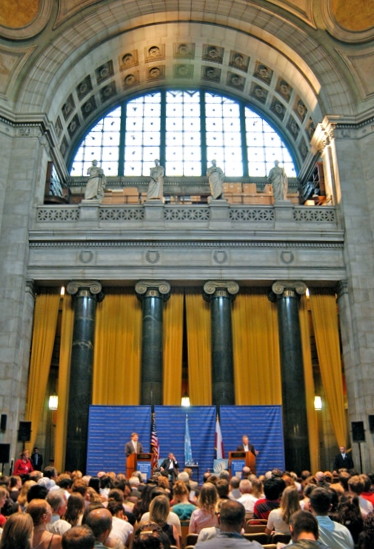
Established in 2003 by university president Lee C. Bollinger, the World Leaders Forum at Columbia University provides the opportunity for students and faculty to listen to world leaders in government, religion, industry, finance, and academia.
Past forum speakers include former president of the United States Bill Clinton, former prime minister of India Atal Bihari Vajpayee, former president of Ghana John Agyekum Kufuor, president of Afghanistan Hamid Karzai, prime minister of Russia Vladimir Putin, president of the Republic of Mozambique Joaquim Alberto Chissano, president of the Republic of Bolivia Carlos Diego Mesa Gisbert, president of the Republic of Romania Ion Iliescu, president of the Republic of Latvia Vaira Vīķe-Freiberga, the first female president of Finland Tarja Halonen, President Yudhoyono of Indonesia, President Pervez Musharraf of the Islamic Republic of Pakistan, Iraq President Jalal Talabani, the 14th Dalai Lama, president of the Islamic Republic of Iran Mahmoud Ahmadinejad, financier George Soros, Mayor of New York City Michael R. Bloomberg, President Václav Klaus of the Czech Republic, President Cristina Fernández de Kirchner of Argentina, former Secretary-General of the United Nations Kofi Annan, and Al Gore.
Other
The Columbia University Orchestra was founded by composer Edward MacDowell in 1896, and is the oldest continually operating university orchestra in the United States. Undergraduate student composers at Columbia may choose to become involved with Columbia New Music, which sponsors concerts of music written by undergraduate students from all of Columbia's schools. The Notes and Keys, the oldest a cappella group at Columbia, was founded in 1909. There are a number of performing arts groups at Columbia dedicated to producing student theater, including the Columbia Players, King's Crown Shakespeare Troupe (KCST), Columbia Musical Theater Society (CMTS), NOMADS (New and Original Material Authored and Directed by Students), LateNite Theatre, Columbia University Performing Arts League (CUPAL), Black Theatre Ensemble (BTE), sketch comedy group Chowdah, and improvisational troupes Alfred and Fruit Paunch.
The Columbia Queer Alliance is the central Columbia student organization that represents the bisexual, lesbian, gay, transgender, and questioning student population. It is the oldest gay student organization in the world, founded as the Student Homophile League in 1967 by students including lifelong activist Stephen Donaldson.
Columbia University campus military groups include the U.S. Military Veterans of Columbia University and Advocates for Columbia ROTC. In the 2005–06 academic year, the Columbia Military Society, Columbia's student group for ROTC cadets and Marine officer candidates, was renamed the Hamilton Society for "students who aspire to serve their nation through the military in the tradition of Alexander Hamilton".
Columbia has several secret societies, including St. Anthony Hall, which was founded at the university in 1847, and two senior societies, the Nacoms and Sachems.
Athletics
Main article: Columbia Lions
A member institution of the National Collegiate Athletic Association (NCAA) in Division I FCS, Columbia fields varsity teams in 29 sports and is a member of the Ivy League. The football Lions play home games at the 17,000-seat Robert K. Kraft Field at Lawrence A. Wien Stadium. The Baker Athletics Complex also includes facilities for baseball, softball, soccer, lacrosse, field hockey, tennis, track, and rowing, as well as the new Campbell Sports Center, which opened in January 2013. The basketball, fencing, swimming & diving, volleyball, and wrestling programs are based at the Dodge Physical Fitness Center on the main campus.
Former students include Baseball Hall of Famers Lou Gehrig and Eddie Collins, football Hall of Famer Sid Luckman, Marcellus Wiley, and world champion women's weightlifter Karyn Marshall. On May 17, 1939, fledgling NBC broadcast a doubleheader between the Columbia Lions and the Princeton Tigers at Columbia's Baker Field, making it the first televised regular athletic event in history.
Columbia University participated in multiple firsts within collegiate athletics. The football program is best known for its record of futility set during the 1980s: between 1983 and 1988, the team lost 44 games in a row, which is still the record for the NCAA Football Championship Subdivision. The streak was broken on October 8, 1988, with a 16–13 victory over arch-rival Princeton University. That was the Lions' first victory at Wien Stadium, which had been opened during the losing streak and was already four years old. A new tradition has developed with the Liberty Cup. The Liberty Cup is awarded annually to the winner of the football game between Fordham and Columbia Universities, two of the only three NCAA Division I football teams in New York City.
Traditions
Main article: Columbia University traditions
The Varsity Show
Main article: Varsity Show
The Varsity Show is one of the oldest traditions at Columbia. Founded in 1893 as a fundraiser for the university's fledgling athletic teams, the Varsity Show now draws together the entire Columbia undergraduate community for a series of performances every April. Dedicated to producing a unique full-length musical that skewers and satirizes many dubious aspects of life at Columbia, the Varsity Show is written and performed exclusively by university undergraduates. Various renowned playwrights, composers, authors, directors, and actors have contributed to the Varsity Show, either as writers or performers, while students at Columbia, including Richard Rodgers, Oscar Hammerstein II, Lorenz Hart, Herman J. Mankiewicz, I. A. L. Diamond, Herman Wouk, Greta Gerwig, and Kate McKinnon.
Notable past shows include Fly With Me (1920), The Streets of New York (1948), The Sky's the Limit (1954), and Angels at Columbia (1994). In particular, Streets of New York, after having been revived three times, opened off-Broadway in 1963 and was awarded a 1964 Drama Desk Award. The Mischief Maker (1903), written by Edgar Allan Woolf and Cassius Freeborn, premiered at Madison Square Garden in 1906 as Mam'zelle Champagne.
Tree Lighting and Yule Log ceremonies
The campus Tree Lighting ceremony was inaugurated in 1998. It celebrates the illumination of the medium-sized trees lining College Walk in front of Kent Hall and Hamilton Hall on the east end and Dodge Hall and Pulitzer Hall on the west, just before finals week in early December. The lights remain on until February 28. Students meet at the sundial for free hot chocolate, performances by a cappella groups, and speeches by the university president and a guest.
Immediately following the College Walk festivities is one of Columbia's older holiday traditions, the lighting of the Yule Log. The Christmas ceremony dates to a period prior to the American Revolutionary War, but lapsed before being revived by President Nicholas Murray Butler in 1910. A troop of students dressed as Continental Army soldiers carry the eponymous log from the sundial to the lounge of John Jay Hall, where it is lit amid the singing of seasonal carols. The Christmas ceremony is accompanied by a reading of A Visit From St. Nicholas by Clement Clarke Moore and Yes, Virginia, There is a Santa Claus by Francis Pharcellus Church.
Notable people
Main article: List of Columbia University people
Alumni
The university has graduated many notable alumni, including five Founding Fathers of the United States, an author of the United States Constitution and a member of the Committee of Five. Three United States presidents have attended Columbia, as well as ten Justices of the Supreme Court of the United States, including three Chief Justices. , 125 Pulitzer Prize winners and 39 Oscar winners have attended Columbia. , there were 101 National Academy members who were alumni.
In a 2016 ranking of universities worldwide with respect to living graduates who are billionaires, Columbia ranked second, after Harvard.
Former U.S. Presidents Theodore Roosevelt and Franklin Delano Roosevelt attended the law school. Other political figures educated at Columbia include former U.S. President Barack Obama, Associate Justice of the U.S. Supreme Court Ruth Bader Ginsburg, former U.S. Secretary of State Madeleine Albright, former chairman of the U.S. Federal Reserve Bank Alan Greenspan, U.S. Attorney General Eric Holder, and U.S. Solicitor General Donald Verrilli Jr. The university has also educated 29 foreign heads of state, including president of Georgia Mikheil Saakashvili, president of East Timor José Ramos-Horta, president of Estonia Toomas Hendrik Ilves and other historical figures such as Wellington Koo, Radovan Karadžić, Gaston Eyskens, and T. V. Soong. One of the founding fathers of modern India and the prime architect of the Constitution of India, B. R. Ambedkar, was an alumnus.
Alumni of Columbia have occupied top positions in Wall Street and the rest of the business world. Notable members of the Astor family attended Columbia, while other business graduates include investor Warren Buffett, former CEO of PBS and NBC Lawrence K. Grossman, chairman of Walmart S. Robson Walton, Bain Capital Co-Managing Partner, Jonathan Lavine, Thomson Reuters CEO Tom Glocer, New York Stock Exchange president Lynn Martin, and AllianceBernstein Chairman and CEO Lewis A. Sanders. CEO's of top Fortune 500 companies include James P. Gorman of Morgan Stanley, Robert J. Stevens of Lockheed Martin, Philippe Dauman of Viacom, Robert Bakish of Paramount Global, Ursula Burns of Xerox, Devin Wenig of EBay, Vikram Pandit of Citigroup, Ralph Izzo of Public Service Enterprise Group, Gail Koziara Boudreaux of Anthem, and Frank Blake of The Home Depot. Notable labor organizer and women's educator Louise Leonard McLaren received her degree of Master of Arts from Columbia.
In science and technology, Columbia alumni include: founder of IBM Herman Hollerith; inventor of FM radio Edwin Armstrong; Francis Mechner; integral in development of the nuclear submarine Hyman Rickover; founder of Google China Kai-Fu Lee; scientists Stephen Jay Gould, Robert Millikan, Helium–neon laser inventor Ali Javan and Mihajlo Pupin; chief-engineer of the New York City Subway, William Barclay Parsons; philosophers Irwin Edman and Robert Nozick; economist Milton Friedman; psychologist Harriet Babcock; archaeologist Josephine Platner Shear; and sociologists Lewis A. Coser and Rose Laub Coser.
Many Columbia alumni have gone on to renowned careers in the arts, including composers Richard Rodgers, Oscar Hammerstein II, Lorenz Hart, and Art Garfunkel; and painter Georgia O'Keeffe. Five United States Poet Laureates received their degrees from Columbia. Columbia alumni have made an indelible mark in the field of American poetry and literature, with such people as Jack Kerouac and Allen Ginsberg, pioneers of the Beat Generation; and Langston Hughes and Zora Neale Hurston, seminal figures in the Harlem Renaissance, all having attended the university. Other notable writers who attended Columbia include authors Isaac Asimov, J.D. Salinger, Upton Sinclair, Ursula K. Le Guin, Danielle Valore Evans, and Hunter S. Thompson. In architecture, William Lee Stoddart, a prolific architect of U.S. East Coast hotels, is an alumnus.
University alumni have also been very prominent in the film industry, with 33 alumni and former students winning a combined 43 Academy Awards (). Some notable Columbia alumni that have gone on to work in film include directors Sidney Lumet (12 Angry Men) and Kathryn Bigelow (The Hurt Locker), screenwriters Howard Koch (Casablanca) and Joseph L. Mankiewicz (All About Eve), and actors James Cagney, Ed Harris and Timothée Chalamet. File:Alexander Hamilton portrait by John Trumbull 1806.jpg|Alexander Hamilton: Founding Father of the United States; author of The Federalist Papers; first United States Secretary of the Treasury — King's College File:John Jay (Gilbert Stuart portrait).jpg|John Jay: Founding Father of the United States; author of The Federalist Papers; first Chief Justice of the United States; second Governor of New York — King's College File:Robert R Livingston, attributed to Gilbert Stuart (1755-1828).jpg|Robert R. Livingston: Founding Father of the United States; drafter of the Declaration of Independence; first United States Secretary of Foreign Affairs — King's College File:Gouverneur Morris.jpg|Gouverneur Morris: Founding Father of the United States; author of the United States Constitution; United States Senator from New York — King's College File:DeWitt Clinton by Rembrandt Peale.jpg|DeWitt Clinton: United States Senator from New York; sixth Governor of New York; responsible for construction of Erie Canal — Columbia College File:President Barack Obama.jpg|Barack Obama: 44th President of the United States; United States Senator from Illinois; Nobel laureate — Columbia College File:FDR in 1933.jpg|Franklin D. Roosevelt: 32nd President of the United States; 44th Governor of New York — Columbia Law School File:President Theodore Roosevelt, 1904.jpg|Theodore Roosevelt: 26th President of the United States; 25th Vice President of the United States; 33rd Governor of New York; Nobel laureate – Columbia Law School File:Wellington Koo 1945.jpg|Wellington Koo: acting President of the Republic of China; judge of the International Court of Justice — Columbia College, Graduate School of Arts and Sciences File:Dr. Bhimrao Ambedkar.jpg|B. R. Ambedkar: architect of the Constitution of India; 1st Minister of Law and Justice — Graduate School of Arts and Sciences File:Ruth Bader Ginsburg official SCOTUS portrait.jpg|Ruth Bader Ginsburg: Associate Justice of the Supreme Court of the United States — Columbia Law School File:Associate Justice Neil Gorsuch Official Portrait.jpg|Neil Gorsuch: Associate Justice of the Supreme Court of the United States — Columbia College File:Charles Evans Hughes cph.3b15401.jpg|Charles Evans Hughes: 11th Chief Justice of the United States; 44th United States Secretary of State; 35th Governor of New York — Columbia Law School File:Chief Justice Harlan Fiske Stone photograph circa 1927-1932 (cropped).jpg|Harlan Fiske Stone: 12th Chief Justice of the United States; 52nd United States Attorney General — Columbia Law School File:Hamilton Fish Brady Edited.jpg|Hamilton Fish: 26th United States Secretary of State; United States Senator from New York; 16th Governor of New York — Columbia College File:Portrait of Milton Friedman.jpg|Milton Friedman: Nobel laureate, leading member of the Chicago school of economics — Graduate School of Arts and Sciences File:Simon Kuznets 1971b.jpg|Simon Kuznets: Nobel laureate; invented concept of GDP; Milton Friedman's doctoral advisor — School of General Studies, Graduate School of Arts and Sciences File:Alan Greenspan color photo portrait.jpg|Alan Greenspan: 13th Chair of the Federal Reserve — Graduate School of Arts and Sciences File:Warren Buffett KU Visit.jpg|Warren Buffett: CEO of Berkshire Hathaway; one of the world's wealthiest people — Columbia Business School File:LangstonHughes crop.jpg|Langston Hughes: Harlem Renaissance poet, novelist, and playwright — School of Engineering and Applied Science File:Zora Neale Hurston.jpg|Zora Neale Hurston: Harlem Renaissance author, anthropologist, and filmmaker — Barnard College, Graduate School of Arts and Sciences File:J. D. Salinger (Catcher in the Rye portrait).jpg|J. D. Salinger: novelist, The Catcher in the Rye — School of General Studies File:Amelia Earhart 1935.jpg|Amelia Earhart: first female aviator to fly solo across the Atlantic Ocean — School of General Studies File:Jake Gyllenhaal (22373266462) (cropped 2).jpg|Jake Gyllenhaal: actor and film producer — Columbia College
Faculty
As of 2021, Columbia employs 4,381 faculty, including 70 members of the National Academy of Sciences, 178 members of the American Academy of Arts and Sciences, and 65 members of the National Academy of Medicine. In total, the Columbia faculty has included 52 Nobel laureates, 12 National Medal of Science recipients, and 32 National Academy of Engineering members.
Columbia University faculty played particularly important roles during World War II and the creation of the New Deal under President Franklin D. Roosevelt, who attended Columbia Law School. The three core members of Roosevelt's Brain Trust: Adolf A. Berle, Raymond Moley, and Rexford Tugwell, were law professors at Columbia. The Statistical Research Group, which used statistics to analyze military problems during World War II, was composed of Columbia researchers and faculty including George Stigler and Milton Friedman. Columbia faculty and researchers, including Enrico Fermi, Leo Szilard, Eugene T. Booth, John R. Dunning, George B. Pegram, Walter Zinn, Chien-Shiung Wu, Francis G. Slack, Harold Urey, Herbert L. Anderson, and Isidor Isaac Rabi, also played a significant role during the early phases of the Manhattan Project.
Following the rise of Nazi Germany, the exiled Institute for Social Research at Goethe University Frankfurt would affiliate itself with Columbia from 1934 to 1950. It was during this period that thinkers including Theodor W. Adorno, Max Horkheimer, and Herbert Marcuse wrote and published some of the most seminal works of the Frankfurt School, including Reason and Revolution, Dialectic of Enlightenment, and Eclipse of Reason. Professors Edward Said, author of Orientalism, and Gayatri Chakravorty Spivak are generally considered as founders of the field of postcolonialism; other professors that have significantly contributed to the field include Hamid Dabashi and Joseph Massad. The works of professors Kimberlé Crenshaw, Patricia J. Williams, and Kendall Thomas were foundational to the field of critical race theory.
Columbia and its affiliated faculty have also made significant contributions to the study of religion. The affiliated Union Theological Seminary is a center of liberal Christianity in the United States, having served as the birthplace of Black theology through the efforts of faculty including James H. Cone and Cornel West, and Womanist theology, through the works of Katie Cannon, Emilie Townes, and Delores S. Williams. Likewise, the Jewish Theological Seminary of America was the birthplace of Conservative Judaism movement in the United States, which was founded and led by faculty members including Solomon Schechter, Alexander Kohut, and Louis Ginzberg in the early 20th century, and is a major center for Jewish studies in general.
Other schools of thought in the humanities Columbia professors made significant contributions toward include the Dunning School, founded by William Archibald Dunning; the anthropological schools of historical particularism and cultural relativism, founded by Franz Boas; and functional psychology, whose founders and proponents include John Dewey, James McKeen Cattell, Edward L. Thorndike, and Robert S. Woodworth.
Notable figures that have served as the president of Columbia University include 34th President of the United States Dwight D. Eisenhower, 4th Vice President of the United States George Clinton, Founding Father and U.S. Senator from Connecticut William Samuel Johnson, Nobel Peace Prize laureate Nicholas Murray Butler, and First Amendment scholar Lee Bollinger.
Notable Columbia University faculty include Zbigniew Brzezinski, Sonia Sotomayor, Kimberlé Crenshaw, Lee Bollinger, Franz Boas, Margaret Mead, Edward Sapir, John Dewey, Charles A. Beard, Max Horkheimer, Herbert Marcuse, Edward Said, Gayatri Chakravorty Spivak, Orhan Pamuk, Edwin Howard Armstrong, Enrico Fermi, Chien-Shiung Wu, Tsung-Dao Lee, Jack Steinberger, Joachim Frank, Joseph Stiglitz, Jeffrey Sachs, Robert Mundell, Thomas Hunt Morgan, Eric Kandel, Richard Axel, Andrei Okounkov, and Minky Worden.
Notes
References
Sources
References
- (1907). "Record of the Celebration of the Quatercentenary of the University of Aberdeen". University of Aberdeen.
- "About the Chapel".
- (September 27, 2024). "IMC CEO Statement on FY24 Endowment Returns". Columbia Finance.
- "Financial Overview".
- (January 28, 2022). "Full-time Faculty Distribution by School/Division, Fall 2013-2022". Columbia University Office of Planning and Institutional Research.
- (November 3, 2022). "Enrollment by School and Degree Level, Fall 2022". Columbia University Office of Planning and Institutional Research.
- McCaughey, Robert A.. (2003). "Stand, Columbia: A History of Columbia University in the City of New York, 1754–2004". Columbia University Press.
- (September 21, 2020). "Columbia Engineering and Amazon Announce Creation of New York AI Research Center".
- (July 17, 2018). "Columbia University and IBM Establish New Center to Accelerate Innovation in Blockchain and Data Transparency".
- (2011). "A Brief History of Columbia". Columbia University.
- Nykolaiszyn, J. M.. (June 1, 2009). "Curating Oral Histories: From Interview to Archive". Oral History Review.
- Taylor, Nick. (2000). "Laser : the inventor, the Nobel laureate, and the thirty-year patent war". Simon & Schuster.
- "Isidor Isaac Rabi".
- N. D. Opdyke, et al., "Paleomagnetic study of Antarctic deep-sea cores", Science 154(1966): 349–357.
- Heirtzler, J. R., et al., "Marine magnetic anomalies, geomagnetic field reversals, and motions of the ocean floor and continents", ''Journal of Geophysical Research'', 73(1968): 2119–2136.
- Pitman, W. and M. Talwani, "Sea-floor spreading in the North Atlantic", ''GSA Bulletin'', 83(1972): 619–646.
- Chernow, Ron. (2004). "Alexander Hamilton". Penguin Books.
- (2002). "A Brief Biography of John Jay". Columbia University.
- Dangerfield, George. (1960). "Chancellor Robert R. Livingston of New York, 1746–1813". Harcourt, Brace and Co.
- "Egbert Benson".
- Wright, Robert K Jr.. (1987). "Soldier-Statesmen of the Constitution". [[United States Army Center of Military History]].
- "From Alexander Hamilton to George Clinton, [26 November 1784–17 July 1787]". Founders Online.
- Muhammad Fadhel al-Jamali. "Experiences In Arab Affairs". Harvard University.
- "Riasat al-Wuzara' — Dawlat al-Duktur Qasim al-Riymawi".
- Daniel Peterson. (November 29, 2007). "An Interview with Giuliano Amato". The Florentine.
- Amstutz, Bruce. (1994). "Afghanistan: The First Five Years of Soviet Occupation". Diane Publishing.
- (October 13, 2009). "Namibia PM is Nahas Angula ... Educated in the US". Newsday.
- "The Biography of Marek Belka". United Nations.
- Reilly, Thomas. (1997). "Science and Football III". Taylor & Francis.
- (November 1, 2001). "Charlemagne: Wlodzimierz Cimoszewicz". The Economist.
- "Honorary Degree Recipients". Columbia University.
- (January 5, 1988). "Gaston Eyskens Dies at Age 82; Led Six Governments in Belgium". The New York Times.
- (August 15, 2021). "Ashraf Ghani: departing Afghan president who failed to make peace with Taliban". [[Thomson Reuters]].
- Alyssa Smith. (October 7, 2010). "State Building Challenges in Timor Leste". Columbia Communique.
- Herb Jackson. "From Estonia to Leonia". Estonian Office of the President.
- "Columbia 250: Wellington Koo". Columbia University.
- Kerry Brown. (December 12, 2010). "Lee Huan obituary". The Guardian.
- "Benjamin Mkapa".
- "Historical Note on Afghanistan". United Nations.
- (January 1, 1945). "Education: Prince with a Purpose".
- "Santiago Peña Palacios".
- (January 25, 2004). "Profile: Mikhail Saakashvili". BBC News Online.
- "Juan Bautista Sacasa".
- "Biography of Salim Ahmed Salim". United Nations.
- "U.S. Students yesterday, world leaders tomorrow". U.S. Department of Education.
- "T. V. Soong (Song Ziwen) – A Prominent Businessman and Politician in Republic of China". Cultural China.
- Boorman, Howard. (1970). "Biographical dictionary of Republican China". Columbia University Press.
- (July 18, 1982). "Charles Swart Dies; South African Was First State President". The New York Times.
- Reilly, Taylor. (1997). "Science and Football III". Taylor and Francis.
- Gerth, Karl. (2004). "China made: Consumer Culture and the creation of the nation". Harvard University.
- "Fernando Henrique Cardoso". Fulbright Association.
- (May 15, 2009). "Kofi Annan named a Columbia University fellow".
- (2012). "Blue Velvet".
- "Lucas Papademos".
- (January 15, 2004). "Robinson to take up new Columbia University professorship next week". The Irish Times.
- (August 4, 2016). "Boutros Boutros-Ghali".
- "Member Profile Search – Columbia University".
- Kathleen Elkins. "More billionaires went to Harvard than to Stanford, MIT and Yale combined". CNBC.
- "The Columbia University Athletes Who Have Medaled at the Olympics Over the Years".
- McCaughey, Robert. (2003). "Stand, Columbia : A History of Columbia University in the City of New York". Columbia University Press.
- Keppel, Fredrick Paul. (1914). "Columbia". Oxford University Press.
- Matthews, Brander. (1904). "A History of Columbia University: 1754–1904". Macmillan Company.
- Butler, Nicholas Murray. (1912). "An Official Guide to Columbia University". Columbia University Press.
- (1905). "Ecclesiastical Records of the State of New York". J. B. Lyon Company.
- Pine, John B.. (1919). "King's College and the Early Days of Columbia College". Fenimore Art Museum.
- (1964). "Samuel Clossy, A.B., M.D., F.R.C.P. of Ireland: First Professor of Anatomy, King's College (Columbia), New York". Bulletin of the History of Medicine.
- Schecter, Barnet. (2002). "The Battle for New York: The City at the Heart of the American Revolution". Walker & Company.
- McCullough, David. (2005). "1776". Simon & Schuster.
- Moore, Nathanal Fischer (1846). ''A Historical Sketch of Columbia''. New York, New York: Columbia University Press.
- McCaughey, Robert. (December 10, 2003). "Leading American University Producers of PhDs, 1861–1900". Columbia University Press.
- Hewitt, Abram S. (1965). "Selected writings, with Introduction by Nicholas Murray Butler". Kennikat Press.
- "In 1917, Columbia's Clampdown Remade the Antiwar Movement".
- (2025-10-16). "Ask Alma's Owl: Over Here, Columbia Mobilized for World War I".
- Broad, William J.. (October 30, 2007). "Why They Called It the Manhattan Project". [[The New York Times]].
- (April 3, 1928). "Seth Low College Added to Columbia". Columbia Spectator.
- Asimov, I. (1979) ''In Memory Yet Green'', Avon Books, pp. 156–157, 159–160, 240
- Hirt, Leeza. (Fall 2016). "Columbia for Jews? The Untold Story of Seth Low Junior College". The Current.
- "History".
- "What makes GS different from Columbia's traditional undergraduate colleges?".
- "University Senate".
- "Our History".
- "Looking Out on a City and a World".
- (August 19, 1953). "Columbia Removing 116th St. Pavement". The New York Times.
- Kurlansky, Mark. (2005). "1968: The Year That Rocked The World". Random House.
- Bradley, Stefan. (2009). "Harlem vs. Columbia University: Black Student Power in the Late 1960s". University of Illinois.
- Fiske, Edward B.. (January 23, 1982). "Columbia plans to take women beginning in '83". The New York Times.
- [http://www.columbiaspectator.com/2009/03/31/reception-honors-anniversary-cc-coeducation Reception honors anniversary of CC coeducation. Columbia Daily Spectator] {{Webarchive. link. (January 15, 2021 . Columbiaspectator.com. Retrieved on September 7, 2013.)
- "Our Partnership with Columbia University".
- "GSAS at a Glance – Columbia University – Graduate School of Arts and Sciences".
- "Columbia Daily Spectator 29 May 2002 — Columbia Spectator".
- "Columbia Daily Spectator 5 March 2001 — Columbia Spectator".
- "Columbia Daily Spectator 8 October 2001 — Columbia Spectator".
- "Presidents of the University of Michigan".
- "Lee C. Bollinger's Inaugural Address".
- "Columbia Daily Spectator 31 March 2003".
- "Columbia Daily Spectator 8 April 2002".
- "Office of the President Lee C. Bollinger: David Hirsh Appointed Executive Vice President for Research".
- "Office of the President Lee C. Bollinger: Nick Dirks Appointed Vice President for Arts and Sciences".
- "Gerry Lenfest Pledges $30 Million to Fund New Arts Center on Manhattanville Campus".
- "President Mahmoud Ahmadinejad of the Islamic Republic of Iran".
- "Economic Crisis Might Affect Columbia; Bollinger Says Endowment Will Remain Stable".
- "Kravis Donates $100 Million for Facilities in Manhattanville; Gift Is Largest Ever to Columbia Business School".
- "Columbia to Naval ROTC: Welcome Back".
- "Announcing the Columbia Climate School".
- Hartocollis, Anemona. (2022-03-17). "U.S. News Ranked Columbia No. 2, but a Math Professor Has His Doubts". The New York Times.
- (2022-03-16). "Columbia Is Ranked No. 2 by 'U.S News.' A Professor Says Its Spot Is Based on False Data.".
- "Columbia and U.S. News".
- Hartocollis, Anemona. (2022-07-08). "Columbia Loses Its No. 2 Spot in the U.S. News Rankings". The New York Times.
- Moshtaghian, Artemis. (2022-09-12). "Columbia University acknowledges submitting inaccurate data for consideration in college rankings".
- Mueller, Julia. (June 7, 2023). "Columbia University no longer submitting data to US News college ranking".
- (2025-07-02). "Columbia to pay $9 million to settle lawsuit over US News college ranking".
- Otterman, Sharon. (2025-07-01). "Columbia Will Pay $9 Million to Settle Lawsuit Over U.S. News Ranking". The New York Times.
- Falcone, Sam. (2024-05-23). "Resistance and Repression at Columbia: Students in Struggle for Palestine". Spectre.
- M., Dasha. (2024-07-02). "Palestine is the Vanguard for Our Liberation: Insights from the Students’ Intifada at Columbia University". Middle East Critique.
- "Here's what to know about Claire Shipman, Columbia's new acting president".
- (July 3, 2025). "Columbia University disciplines at least 70 students who took part in campus protests". NBC News.
- Aaron, Katersky. "Columbia University to pay $200M in settlement with Trump administration".
- https://www.nytimes.com/2026/01/25/nyregion/columbia-president-wisconsin-mnookin.html?smid=url-share
- https://secretary.columbia.edu/content/columbia-university-names-jennifer-mnookin-president-designate
- "Unearthing the Underground".
- "Butler Library: Self-Guided Tour". Columbia University.
- (2020). "ARL Statistics 2018–2019". [[Association of Research Libraries]].
- "National Historic Landmark Nomination: Philosophy Hall}}, National Park Service and {{NHLS url".
- Carolyn Pitts. (1987). "National Register of Historic Places Inventory-Nomination: Low Memorial Library, Columbia". National Park Service.
- (1983). "National Register of Historic Places Inventory-Nomination: Pupin Physics Laboratories, Columbia University—Accompanying photos". National Park Service.
- {{cite nycland
- (1996). "New York SP Delta Psi, Alpha Chapter". Department of the Interior. National Park Service. (3/2/1934–).
- "Earl Hall at Columbia University Listed on National Register of Historic Places".
- (1980). "New York SP Union Theological Seminary". Department of the Interior. National Park Service..
- Durante, Dianne L.. (February 2007). "Outdoor Monuments of Manhattan: A Historical Guide". NYU Press.
- Smithsonian American Art Museum's Inventories of American Painting and Sculpture. "Alma Mater (sculpture)". The Smithsonian Institution.
- Meredith Foster. (February 11, 2011). "The Myth of the College Sweetheart". Columbia Spectator.
- (May 19, 1999). "What Is the Mace? A Guide to Columbia's Icons". Columbia University Record.
- Richard P. Dober. "The Steps at Low Library". Dober, Lidsky, Craig and Associates, Inc..
- "Manhattanville Columbia".
- "Manhattanville in West Harlem".
- Williams, Timothy. (November 20, 2006). "In West Harlem Land Dispute, It's Columbia vs. Residents". The New York Times.
- Williams, Timothy. (September 21, 2008). "2 Gas Stations, and a Family's Resolve, Confront Columbia Expansion Plan". The New York Times.
- (December 18, 2008). "M'ville Expansion Clears Last Major Hurdle, State Approves Eminent Domain". Columbia Spectator.
- (May 20, 2009). "Columbia Manhattanville Project". Press Release.
- Harder, Ben. (July 28, 2020). "2020–21 Best Hospitals Honor Roll and Medical Specialties Rankings".
- "NYP: Weschster". NewYork-Presbyterian Hospital.
- "Manhattanville in West Harlem". Columbia University.
- "Projects: Green Buildings". Columbia Environmental Stewardship.
- (September 30, 2007). "Columbia Greenmarket". GrowNYC.
- "Columbia University Green Report Card". The College Sustainability Report Card.
- "U.S. Potential Natural Vegetation, Original Kuchler Types, v2.0 (Spatially Adjusted to Correct Geometric Distortions)".
- "Columbia Transportation".
- "Columbia acceptance rate drops to record low 3.7 percent after 51 percent spike in applications".
- "Financial Aid Statistics". Columbia University.
- "Columbia University Tuition And Costs".
- "How Aid Works – Columbia Financial Aid and Educational Financing".
- Lewin, Tamar. (April 11, 2007). "Columbia to Receive $400 Million for Student Aid". The New York Times.
- (March 11, 2008). "Columbia University to Offer Financial Aid to More Students". The New York Times.
- Steinberg, Jacques. (March 23, 2010). "Columbia, Michigan and Connecticut Among 25 Colleges to Add Common Application". The New York Times.
- "The Named Scholars".
- Gross, Jessica. (November 10, 2013). "Who Made That College Application?". [[The New York Times Magazine]].
- "Structure: Faculty Handbook".
- [https://projects.propublica.org/nonprofits/organizations/135598093 "Columbia University In The City Of New York"] {{Webarchive. link. (February 28, 2024 ''ProPublica''. Retrieved February 28, 2024.)
- "List of Schools".
- "Schools of Columbia University". Columbia University.
- "Frequently Asked Questions – Barnard College".
- "CHARTERS AND STATUTES : Columbia University in the City of New York".
- "Cross-Registration: Columbia and Barnard College – Office of the University Registrar".
- "JTS Joint Program".
- "Columbia-Juilliard Program".
- "Crossing Boundaries from Past to Future: Pianist Conrad Tao on Crossover".
- "Charters and Statutes".
- (2017). "Election packet".
- "Elections".
- (2017). "Charters and Statutes".
- "Fact Sheet – Barnard College".
- "Joint LLB/Juris Doctor (JD) with Columbia University, New York". University College London.
- "Dual BA Program Between Columbia University and Sciences Po".
- "Joint Bachelor's Degree Program between City University of Hong Kong and Columbia University".
- "Dual BA Program: Trinity College Dublin".
- "Columbia-Juilliard Exchange".
- "Columbia University Global Centers". Columbia University.
- Redden, Elizabeth. (April 4, 2018). "Columbia, Trinity College Dublin start new dual B.A. program".
- "Oxford/Cambridge Scholars Program: Academic Year | Undergraduate Global Engagement".
- "Columbia University – U.S. News Best Grad School Rankings".
- "Columbia University – U.S. News Best Global University Rankings".
- "Free Speech Rankings".
- "2024 College Free Speech Rankings".
- "2022-2023 College Free Speech Rankings".
- "Columbia University".
- Watson, Michelle. (March 4, 2025). "Columbia University: Federal government threatens to pull more than $50 million in contracts over 'harassment of Jewish students'".
- Towfighi, John. (March 3, 2025). "US colleges are making substantial progress on campus antisemitism, but work remains, ADL says".
- Lapin, Andrew. (April 12, 2024). "The ADL's new 'report card' for campus antisemitism gets an F from Hillel and some Jewish students".
- Bernstein, Noah. "Live updates: Shafik testifies before Congress on Columbia's handling of antisemitism on campus".
- (October 9, 1998). "Havemeyer Hall".
- "Columbia University in the City of New York". Center for Postsecondary Education.
- Guenther, Katja. (2015). "Localization and Its Discontents: A Genealogy of Psychoanalysis and the Neuro Disciplines". University of Chicago Press.
- "Columbia To Go". Columbia University.
- Paez, Danny. (January 29, 2019). "Incredible New Brain-Computer Interface Can Translate Thoughts Into Speech".
- (January 29, 2019). "Artificial intelligence translates thoughts directly into speech in scientific first". [[The Independent]].
- "Columbia Researchers Developed Technology That Can Translate Brain Activity Into Words".
- Herper, Matthew. (July 26, 2001). "Biotech's Glowing Breakthrough". Forbes.
- "New Inventions / New Discoveries". Columbia University Science and Technology Ventures.
- "Science and Technology Ventures – Success Stories". Columbia University Science and Technology Ventures.
- Reedy, Katie. (November 28, 2006). "Patents Bring in the Cash to Columbia". Columbia Spectator.
- "U.S. Military Veterans".
- "About – Teachers College, Columbia University".
- Topping, Seymour. (2008). "History of The Pulitzer Prizes". Columbia University.
- "The Bancroft Prizes".
- "Prizes".
- (June 14, 2018). "The Louisa Gross Horwitz Prize".
- (August 1, 2018). "40th Annual W. Alden Spencer Lecture and Award".
- "The Vetlesen Prize". Lamont–Doherty Earth Observatory.
- "Edwin Howard Armstrong Memorial Award. Columbia University Electrical Engineering Department.".
- "Columbia Calling for Nominees: The Frank A. Calderone Prize in Public Health — Deadline June 30".
- (May 16, 1940). "Columbia Receives Trust to Aid Music". [[The New York Times]].
- "College Scorecard: Columbia University". [[United States Department of Education]].
- (January 12, 2021). "Headcount Enrollment by School, Race/Ethnicity, and Citizenship, Fall 2020". Columbia University.
- "Facts and Figures".
- "Quick Fact: First Generation".
- "Housing and Dining". Columbia University Office of Student Affairs.
- [http://www.studentaffairs.columbia.edu/admissions/faq/campus.php#4 Office of Undergraduate Admissions site about Campus Life] {{Webarchive. link. (April 19, 2012 . Retrieved September 12, 2007.)
- "The Alpha Delta Phi Society: About Us".
- "Fraternity and Sorority Life at Columbia". Columbia University.
- "Columbia Daily Spectator".
- "Blue & White".
- "Bwog".
- "The Current: a journal of contemporary politics, culture, and Jewish affairs at Columbia University".
- "Columbia Political Review".
- "AdHoc".
- "The Columbia Review".
- (October 8, 2014). "About".
- "About Quarto".
- "4x4 About".
- "Columbia Journal of Literary Criticism".
- "The Mobius Strip".
- "Inside New York".
- "Columbia Undergraduate Science Journal".
- "Journal of Politics & Society".
- "Publius: About".
- "East Asia Review: About Us". East Asia Review.
- "The Birch".
- "History and Vision". Columbia Science Review.
- "The Fed".
- "Jester of Columbia".
- "The Columbian". Columbia University.
- "The Gadfly: About". The Gadlfy.
- "The Rhapsody". Columbia University.
- "Current Musicology".
- "The Journal of Philosophy".
- "About Us: Mission Statement".
- (1968). "Pure and Simple Pleasure". The American Scholar.
- (June 30, 1968). "Rev. of The Columbia University Forum Anthology". [[The New York Times]].
- (2009). ""The Original FM": The Columbia University Radio Club". Columbia University.
- "CTV News".
- "CTV".
- (February 1, 2010). "History". Philolexian Society.
- Jaynes, Gregory. (December 5, 1987). "No, Not a Curse But a Jersey Prize For Worst Verse". The New York Times.
- "Columbia Parliamentary Debate Team".
- "CIRCA – About".
- Kathleen, Mary. (June 7, 2010). "Mecca on the Hudson?". The Deal.
- Jon Swartz. (September 17, 2013). "Square's Jack Dorsey goes recruiting in NYC". USA Today.
- Cormier, Amanda. (October 7, 2010). "Columbia's Web 3.0". The Eye.
- "Engaged Entrepreneurship". Columbia University.
- Kuchment, Anna. (June 28, 2010). "Columbia Joins NYC Media Lab". The Record.
- "About".
- "Participants". Columbia University World Leaders Forum.
- "Columbia University Orchestra".
- (February 26, 1909). "Notes and Keys Launched". [[Columbia Daily Spectator]].
- "CUPAL: Member Organizations". Columbia University of Performing Arts.
- "About Us". Columbia Queer Alliance.
- (2002). "Queer Man on Campus: A History of Non-heterosexual College Men, 1945–2000". Psychology Press.
- "Columbia University Hamilton Society: About".
- Sedgwick, John. (October 9, 2015). "Inside the Legal Intrigue at Columbia's Elite, Secret Campus Society".
- (April 29, 1984). "Quiet Columbia Groups 'Tap' Seniors". The New York Times.
- "Athletics". Columbia University.
- Carft, Julie. (July 29, 1989). "Image is Heavy Burden – Weightlifter Karyn Marshall Feels Pressure to Project 'Femininity, Intelligence'". [[Los Angeles Times]].
- Lidz, Franz. (March 21, 1988). "A Lift For Wall Street".
- [http://www.college.columbia.edu/cct/spr99/34a.html Baker Field: Birthplace of Sports Television] {{webarchive. link. (October 7, 2008. Columbia University.)
- "20th-Century Greats". Columbia University.
- (2004). "Columbia Athletics Highlight". Columbia University.
- [http://www.wikicu.com/Losing_streak Losing streak] {{Webarchive. link. (January 15, 2021 . Wikicu.com. Retrieved on September 7, 2013.)
- (September 17, 2015). "Football Hosts Columbia in Liberty Cup Game on Saturday".
- Vinciguerra, Thomas J.. "Sing a Song of Morningside".
- Dietz, Dan. (July 15, 2022). "The Complete Book of 1900s Broadway Musicals". Rowman & Littlefield.
- Jason Hollander. "Holiday Season Ushered In With Tree-Lighting Ceremony". Columbia University News.
- "The Presidents of the United States – Biographical Sketches". US National Park Service.
- "Columbia Arts Alumni". Columbia University.
- "Members By Parent Institution". National Academy of Engineering.
- (November 29, 2016). "The Universities Churning Out The Most Billionaires". Forbes.
- Marie Thibault. "In Pictures: Billionaire University". Forbes.
- "Columbia News Announcement". Columbia.edu.
- (March 7, 2006). "Tribute: The Legacy of Ruth Bader Ginsburg and WRP Staff". American Civil Liberties Union.
- Albright, Madeleine. (2003). "Madam Secretary: A Memoir". Miramax.
- Martin, Justin. (October 15, 2009). "Greenspan: The Man behind Money". Basic Books.
- (December 17, 2004). "Interview with Eric H. Holder, Jr.". The History Makers.
- "Alumnus, Author of Indian Constitution Honored".
- "Bhimrao Ambedkar".
- (August 24, 1890). "Letters To The Editor; The Interesting Career Of John Jacob Astor Ii. A Man Of Broad And Generous Sympathies Who Appreciated The Responsibilities Of Wealth". The New York Times.
- Reynolds, Cuyler. (1914). "Genealogical and family history of southern New York and the Hudson River Valley". Lewis Historical Pub. Co..
- (March 1, 2011). "World's Billionaires: Warren Buffett". [[Forbes]].
- Murray, Michael. (1999). "Encyclopedia of Television News". Greenwood Publishing.
- Serwer, Andy. (November 15, 2004). "The Waltons: Inside America's Richest Family".
- (December 15, 2017). "Bain to Manage Harvard Endowment's $3.4 Billion of Real Estate".
- "Columbia College awards highest honor to Jonathan S. Lavine, CC '88 – Columbia Daily Spectator".
- (July 22, 2010). "Tom Glocer – Thomson Reuters".
- Lee, Edmund. (December 2, 2011). "Thomson Reuters CEO Glocer Steps Down as Smith Takes Over".
- Kramer, Farrell. (December 6, 2021). "New NYSE President Lynn Martin Brings Tech Background to the Big Board".
- (March 9, 2009). "Executive outflow may hit AllianceBernstein".
- The Age (2009). [http://www.theage.com.au/business/melbourneraised-gorman-new-chief-of-morgan-stanley-20090911-fkw8.html Melbourne-raised Gorman new chief of Morgan Stanley] {{Webarchive. link. (January 15, 2021 . Retrieved September 13, 2009.)
- "Robert J. Stevens". Lockheed Martin.
- "Business Profile: Philippe P. Dauman". Bloomberg Business.
- "At CES, Viacom CEO Bob Bakish Highlights Transformation and Opportunities".
- "ViacomCBS: 2021 Fortune 500".
- (May 22, 2009). "Xerox's next CEO: Ursula Burns".
- (May 11, 2019). "Secrets of their success: Fortune 500 CEOs discuss Union, influences and dealing with setbacks".
- "Office of the Secretary of The University". Columbia University.
- "New Jersey Companies, Education & Workforce Profile".
- "Ralph Izzo, chairman of the board, President & CEO".
- (August 9, 2019). "Here Are The 31 Powerful CEOs On The Fortune 500 With MBA Degrees".
- Wacker, Menachem. (June 26, 2012). "Where the Fortune 500 CEOs Went to Law School".
- (1993). "Notable American women: the modern period; a biographical dictionary". Belknap Press of Harvard Univ. Press.
- "Herman Hollerith". IBM.
- Tsividis, Yannis. (Spring 2002). "Edwin Armstrong: Pioneer of the Airwaves". Columbia Magazine.
- Allen, Thomas. (2007). "Rickover: Father of the Nuclear Navy". Brassey's.
- Richmond Ezer Escolar. (June 11, 2008). "Google Conquers China: An Interview with Kai-Fu Lee". Columbia Business School Chazen Web Journal.
- Green, Michelle (1986). [http://www.stephenjaygould.org/library/green_sjgould.html "Stephen Jay Gould: driven by a hunger to learn and to write".] {{Webarchive. link. (October 3, 2018 ''People'' '''25''' (June 2): 109–114.)
- David Goodstein. "In the Case of Robert Andrews Millikan". American Scientist.
- "Michael Pupin". Columbia University: Department of Physics.
- "William Barclay Parsons". Columbia University.
- "Irwin Edman". Columbia University.
- "Columbia University 250: Milton Friedman".
- (2000). "The biographical dictionary of women in science : pioneering lives from ancient times to the mid-20th century.". Routledge.
- "Local Express 10 December 1936 — Princeton Periodicals".
- Saxon, Wolfgang. (August 24, 1994). "Rose L. Coser, 78; Taught Sociology At Stony Brook". The New York Times.
- Vromen, Suzanne. "Rose Laub Coser".
- Rodgers, Richard. ''Musical Stages: An Autobiography'' (2002 Reissue), pp. 12, 20–21, 44. Cambridge, MA: Da Capo Press. {{ISBN. 0-306-81134-0
- Hischak, Thomas. (2007). "The Rodgers and Hammerstein Encyclopedia". Greenwood Publishing.
- [https://www.pbs.org/wnet/broadway/stars/hart_l.html Hughson Mooney, "Lorenz Hart"] {{webarchive. link. (September 1, 2012, PBS, Excerpted from the ''DICTIONARY OF AMERICAN BIOGRAPHY, SUPPLEMENT 3'': 1941–1945. American Council of Learned Societies, 1973. Reprinted by permission of the American Council of Learned Societies, retrieved April 18, 2011)
- Herman, Jan (February 6, 1977). [http://www.artgarfunkel.com/articles/gannett.html "TV Makes You Famous; Rock 'n Roll Makes You Rich"] {{Webarchive. link. (January 6, 2021 . ''[[Gannett News Service]]''.)
- "Georgia O'Keeffe".
- ''Literature Resource Center'': [http://go.galegroup.com/ps/i.do?id=GALE%7CH1410002462&v=2.1&u=iuclassb&it=r&p=LitRC&sw=w&asid=468444b0b09aacc2b7192350d1606bb6 "The Beat Generation"]. Retrieved November 13, 2013.
- "Columbia University 250: Langston Hughes". Columbia University.
- "Zora Neale Hurston".
- "Columbia University 250: Isaac Asimov". Columbia University.
- Alexander, Paul. (1999). "Salinger: A Biography". Renaissance.
- ''Encyclopædia Britannica'': [https://www.britannica.com/EBchecked/topic/545642/Upton-Sinclair "Upton Sinclair"]. Retrieved April 15, 2011.
- "Ursula K. Le Guin — Biography".
- "Award winning writer Danielle Evans featured in Southeastern's 'Common Read' program". Southeastern Louisiana University.
- Thompson, Hunter. (1998). "The Proud Highway: Saga of a Desperate Southern Gentleman". [[Ballantine Books]].
- Barnes, Brooks. (October 3, 1940). "William L. Stoddart, A Hotel Architect (Obituary)". The New York Times.
- (April 9, 2011). "Film Obituaries; Sidney Lumet". The Daily Telegraph.
- (February 22, 2010). "School of the Arts Alumna Kathryn Bigelow Wins Major British Film Award". Columbia University.
- Gussow, Mel. (August 18, 1995). "Howard Koch, a Screenwriter For 'Casablanca,' Dies at 93". The New York Times.
- Flint, Peter. (February 6, 1993). "Joseph L. Mankiewicz, Literate Skeptic of the Cinema, Dies at 83.". The New York Times.
- Flint, Peter. (March 31, 1986). "JAMES CAGNEY IS DEAD AT 86; MASTER OF PUGNACIOUS GRACE". The New York Times.
- Sandra Brennan. (2012). "Ed Harris: Full Biography". [[The New York Times]].
- "Search Results - Columbia University".
- "Member Directory - Columbia University".
- "Directory".
- "The President's National Medal of Science: Recipient Search Results".
- "Members Directory".
- "Brain Trust".
- (June 3, 2009). "CHAPTER 35 – The Statistical Research Group of World War II – The Flaw of Averages: Why We Underestimate Risk in the Face of Uncertainty [Book]". John Wiley & Sons.
- "Columbia University".
- "Frankfurt School".
- Corradetti, Claudio. "Frankfurt School and Critical Theory".
- Robert Young, ''White Mythologies: Writing History and the West'', New York & London: Routledge, 1990.
- Paulson, Steve. (July 29, 2016). "Critical Intimacy: An Interview with Gayatri Chakravorty Spivak".
- (September 28, 2018). "Hamid Dabashi".
- (September 28, 2018). "Joseph Massad".
- (July 1, 2021). "What Is Critical Race Theory, and Why Is Everyone Talking About It?".
- (April 28, 2018). "In Memoriam: Dr. James Hal Cone".
- "Cornel West".
- (September 15, 2018). "In Memoriam: The Rev. Dr. Katie Geneva Cannon".
- "Emilie Townes named dean of Vanderbilt Divinity School".
- "Faculty Emeriti/ae".
- (February 1, 2012). "The Conservative Movement in Judaism: Dilemmas and Opportunities". SUNY Press.
- ""How Radical Change Occurs: An Interview With Historian Eric Foner" by Mike Konczal, February 3, 2015".
- (October 18, 2013). "The Dunning School: Historians, Race, and the Meaning of Reconstruction". [[University Press of Kentucky]].
- Tax, Sol. (December 18, 2021). "Franz Boas".
- Leahey, Thomas Hardy (2004). ''A History of Psychology: Main Currents in psychological thought''. Upper Saddle River, New Jersey: Pearson Prentice Hall. {{ISBN. 0-13-111447-6.
- "Columbia University President Profiles".
This article was imported from Wikipedia and is available under the Creative Commons Attribution-ShareAlike 4.0 License. Content has been adapted to SurfDoc format. Original contributors can be found on the article history page.
Ask Mako anything about Columbia University — get instant answers, deeper analysis, and related topics.
Research with MakoFree with your Surf account
Create a free account to save articles, ask Mako questions, and organize your research.
Sign up freeThis content may have been generated or modified by AI. CloudSurf Software LLC is not responsible for the accuracy, completeness, or reliability of AI-generated content. Always verify important information from primary sources.
Report