From Surf Wiki (app.surf) — the open knowledge base
Coffeehouse
Establishment that serves coffee
Establishment that serves coffee

A coffeehouse, coffee shop, or café, is an establishment that serves various types of coffee drinks like espresso, latte, americano and cappuccino, as well as other beverages. An espresso bar specializes in serving espresso and espresso-based drinks. Some coffeehouses may serve iced coffee among other cold drinks, as well as non-caffeinated drinks. A coffeehouse may also serve food, such as light snacks, sandwiches, muffins, cakes, breads, pastries or doughnuts. Many doughnut shops in Canada and the U.S. serve coffee to accompany doughnuts, so these can also be classified as coffee shops, although doughnut shops tend to be more casual and serve cheaper fare (suiting take-out and drive-through, popular in those countries). In continental Europe, some cafés even serve alcoholic drinks, and in West Asia may offer a flavored tobacco smoked through a hookah, called shisha in most varieties of Arabic or nargile in Levantine Arabic, Greek, and Turkish.
While café may mean a coffeehouse, it tends to have a different meaning in Britain: a diner or "greasy spoon"; it is also used for a teahouse or other casual eating and drinking place. A coffeehouse may resemble a bar or restaurant, but differs from a cafeteria (a canteen, a restaurant without table service). Coffeehouse operation ranges from management of an independent venue by its owner to franchises of a large multinational corporation.
From a cultural standpoint, a coffeehouse largely serves as a center of social interaction: it provides patrons with a place to meet, talk, read, write, entertain one another, or pass the time, whether individually or in small groups. A coffeehouse can serve as an informal social club for its regular members. From as early as the 1950s Beatnik era and the 1960s folk music scene, coffeehouses have hosted singer–songwriter performances, typically in the evening. The digital age saw the rise of the Internet café along similar principles.
Etymology

Café () is the French word for both coffee and coffeehouse; it was adopted (as ) by English-speaking countries in the late 19th century. The Italian spelling, caffè, is also sometimes used in English. In Southern England, especially around London in the 1950s, the French pronunciation was often facetiously altered to and spelt caff.
The English word coffee and French word café both derive from the Italian caffè – first attested as caveé in Venice in 1570 – and in turn derived from Arabic qahwa (قهوة). The Arabic term qahwa originally meant a type of wine, but after the wine ban by Islam, the name was transferred to coffee, thought to have a similar rousing effect. European knowledge of coffee (the plant, its seeds, and the drink made from the seeds) came through European contact with Turkey, likely via Venetian-Ottoman trade relations.
The English word café to describe a place that serves coffee and snacks (rather than the drink itself), is derived from the French café. The first café in France is believed to have opened in 1660. The first café in Europe is believed to have been opened in Belgrade, Ottoman Serbia in 1522 as a Kafana (Serbian coffeehouse).
The translingual word root /kafe/ appears in many European languages with various naturalized spellings, including Portuguese and French (café); German (Kaffeehaus or Café); Swedish (kafé or fik); Finnish (kahvila); Spanish (cafetería); Italian (caffè or caffetteria); Polish (kawa); Serbian (кафа / kafa); Ukrainian (кава (kava)); Turkish (kahvehane).
Early history
Ottoman Empire and the Arab world
Main article: Ottoman coffeehouse, Coffeehouses in Arabic culture
The first coffeehouses appeared in Damascus. These coffeehouses have also appeared in Mecca, in the Arabian Peninsula in the 15th century, then spread to the Ottoman Empire's capital of Instanbul, when two Arab merchants, Hakem of Aleppo and Shems of Damascus, opened the first coffeehouse in the Tahtakale district in the 16th century and to Baghdad.
Coffeehouses became popular meeting places where people gathered to drink coffee, have conversations, play board games such as chess and backgammon, listen to stories and music, and discuss news and politics. They became known as "schools of wisdom" for the type of clientele they attracted, and their free and frank discourse.
Coffeehouses in Mecca became a concern of imams, who viewed them as places for political gatherings and drinking, leading to bans between 1512 and 1524. However, these bans could not be maintained, as coffee became ingrained in daily ritual and culture among Arabs and neighboring peoples. The Ottoman chronicler İbrahim Peçevi reports in his writings (1642–49) about the opening of the first coffeehouse (kiva han) in Constantinople:
Iran
The 17th-century French traveler and writer Jean Chardin gave a lively description of the Persian coffeehouse (qahveh khaneh in Persian):
Mughal Empire
Consumption of Turkish coffee is attested to in the Mughal court, and appears in Mughal art from the 16th century, as is the existence of qahwakhanas (coffeehouses) in Shahjahanabad (Old Delhi).
Modern history
Europe
In the 17th century, coffee appeared for the first time in Europe outside the Ottoman Empire, and coffeehouses were established, soon becoming increasingly popular. The first coffeehouse is said to have appeared in 1632 in Livorno, Italy, founded by a Jewish merchant, or in 1640, in Venice. In the 19th and 20th centuries in Europe, coffeehouses were very often meeting-points for writers and artists.
Austria
Main article: Viennese coffee house culture

The traditional tale of the origins of the Viennese café begins with the mysterious sacks of green beans left behind when the Turks were defeated in the Battle of Vienna in 1683. All the sacks of coffee were granted to the victorious Polish king Jan III Sobieski, who in turn gave them to one of his officers, Jerzy Franciszek Kulczycki (also known as Georg Kolschitzky), a Ukrainian Cossack and Polish diplomat of Ruthenian descent. Kulczycki, according to the tale, then began the first coffeehouse in Vienna with the hoard, also being the first to serve coffee with milk.
However, it is now widely accepted that the first Viennese coffeehouse was actually opened by an Armenian merchant named Johannes Diodato (also known as Johannes Theodat) in 1685. Fifteen years later, four other Armenians owned coffeehouses. The culture of drinking coffee was itself widespread in the country in the second half of the 18th century.
Over time, a Viennese coffeehouse culture developed. Writers, artists, musicians, intellectuals, bon vivants and their financiers met, and new coffee varieties were served. People played cards or chess, worked, read, thought, composed, discussed, argued, observed and just chatted. Much information was also obtained, because local and foreign newspapers were freely available to all customers. This form of coffeehouse culture spread throughout the Habsburg Empire in the 19th century.
Scientific theories, political plans and artistic projects were worked out and discussed in Viennese coffeehouses all over Central Europe. James Joyce enjoyed his coffee in a Viennese coffeehouse on the Adriatic Sea in Trieste, then and now the main port for coffee and coffee processing in Italy and Central Europe. From there, the Viennese Kapuziner coffee developed into today's cappuccino. This special multicultural atmosphere of the Habsburg coffeehouses was largely destroyed by the later Nazism and Communism and today can only be found in a few places that have long been in the slipstream of history, such as Vienna or Trieste.
England
Main article: English coffeehouses in the 17th and 18th centuries
The first coffeehouse in England was opened on the High Street (on the site of the later Grand Café) in Oxford in 1650 or 1651 by "Jacob the Jew". A second, competing coffeehouse was opened across the street (on the site of the later Queen's Lane Coffee House) in 1654, by "Cirques Jobson, the Jew". In London, the earliest coffeehouse was established by Pasqua Rosée (described as Greek, Armenian, or Turkish) in 1652. Anthony Wood observed of the coffeehouses of Oxford in 1674 "The decay of study, and consequently of learning, are coffy houses, to which most scholars retire and spend much of the day in hearing and speaking of news, in speaking vilely of their superiors." Pasqua Rosée was the servant of a trader in goods from the Ottoman Empire named Daniel Edwards, who imported the coffee and assisted Rosée in setting up the establishment there.
From 1670 to 1685, London coffeehouses began to increase in number, and also in political importance due to their popularity as places of debate. For the first several years, London's coffeehouses were the preserve of "a well-educated and commercial elite", but from the 1660s their popularity increased. By 1675, there were more than 3,000 coffeehouses in England; and in London alone there were perhaps 550 at their 18th-century peak. Many men found a coffeehouse a convenient place for doing business, holding consultations there and having mail for them sent there, as well as keeping up with news. The coffeehouses were great social levelers, open to all men and indifferent to social status, and as a result associated with equality and republicanism. Entry gave access to books or print news. The rich intellectual atmosphere of early London coffeehouses was available to anyone who could pay the sometimes one penny entry fee, giving them the name "penny universities".
Though Charles II tried to suppress coffeehouses as places where the "Idle and disaffected persons" met, and where "divers False, Malitious and Scandalous Reports are devised and spread abroad, to the Defamation of His Majesties Government", the public still flocked to them. For several decades following the Restoration, the wits gathered around John Dryden at Will's Coffee House, in Bow Street (although Jonathan Swift was unimpressed). As coffeehouses were believed to be areas where anti-government gossip could easily spread, Queen Mary II and the London City magistrates tried to prosecute people who frequented coffeehouses as they were liable to "spread false and seditious reports". William III's privy council also suppressed Jacobite sympathizers in the 1680s and 1690s in coffeehouses as places that they believed harbored plotters against the regime.
By the early 18th century, different coffeehouses attracted different clienteles, divided by occupation or opinion, such as Tories and Whigs, wits and stockjobbers, merchants and lawyers, booksellers and authors, men of fashion or the "cits" of the City. According to one French visitor, Abbé Prévost, "You read [in coffeehouses] for two-pence all the papers for or against the administration", and they were "the seats of English liberty".
Coffeehouses not only boosted the popularity of print news culture, they also helped the growth of various financial markets including insurance and stocks. Lloyd's Coffee House was where underwriters of ship insurance met to do business, leading to the establishment of Lloyd's of London insurance market and other related businesses. In 1773 the stockbrokers who had been meeting at New Jonathan's Coffee-house renamed it "The Stock Exchange".
By the 1750s, the English consumption of tea had overtaken that of coffee. As tea could be easily prepared at home, newspapers were cheap, and there was a greater variety of places for leisure and entertainment, there was no obvious demand for publicly available teahouses. Later in the century, coffeehouses tended, via pricing and memberships, to cater for only a richer clientele, and "the death of coffee-house culture was assured".
In Victorian England, the temperance movement set up coffeehouses (also known as coffee taverns) for the working classes, as a place of relaxation free of alcohol, an alternative to the public house.
Finland
Finland's first coffeehouse, Kaffehus, was founded in Turku in 1778. The oldest coffeehouse still operating in Helsinki, Café Ekberg, was founded in 1852.
France
When Soliman Aga (sent to Versailles in 1669 by Sultan Mehmed IV) returned home, a member of his retinue, Pascal, remained and sold coffee from a stall at the market of Saint-Germain-des-Prés. He soon thereafter opened a coffeehouse in Paris, on the Quai de l'École near the Pont Neuf, and others from the Near East rivaled him. But the fad for Turquerie soon ended.
"[I]t was not until the establishment of the Café de Procope in 1689 that coffee found a truly Parisian expression". Owned by the Sicilian Procopio Cutò (François Procope), this was a popular meeting place of the French Enlightenment; the Encyclopédie (1751–1772) of Diderot and D'Alembert is said to have had its start in conversations there between the two.
The issue of slavery had a profound effect on the pre-Revolutionary thinkers who gathered at the Café Procope in Paris, including Montesquieu, Rousseau, and Diderot. The ethics of the slave trade were discussed whilst its very fruits were consumed, a dark liquid produced by dark skins in the depths of dark despair. Diderot wrote that the trade "is a business which violates religion, morality, natural law, and all human rights", whilst Rousseau railed against the supposed right to enslave as "absurd and meaningless".
In its decor too, Café Procope had a lasting influence. Procopio had installed wall mirrors, marble-topped tables, and more that he had had removed from a bath-house that he had bought, thereby establishing what has become a convention for many other European cafés.
Hungary
The first known cafés in Pest date back to 1714 when a house intended to serve as a café (Balázs Kávéfőző) was purchased. Minutes of the Pest City Council from 1729 mention complaints by the Balázs café and Franz Reschfellner café against the Italian-originated café of Francesco Bellieno for selling underpriced coffee.
Ireland
In the 18th century, Dublin coffeehouses functioned as early reading centers and the emergence of circulation and subscription libraries that provided greater access to printed material for the public. The connection of the coffeehouse with virtually every aspect of the print trade was evidenced by the incorporation of printing, publishing, selling, and viewing of newspapers, pamphlets and books on the premises, most notably for Dick's Coffee House, owned by Richard Pue; thus contributing to a culture of reading and increased literacy. These coffeehouses were social magnets where different strata of society joined to discuss topics covered by the newspapers and pamphlets. Most coffeehouses of the 18th century would eventually be equipped with their own printing presses or incorporate a bookshop.
Italy
The first café in Venice opened in 1683 under the Procuratie Nuove of Piazza San Marco. The concept was popular:
On [Piazza San Marco] alone in the eighteenth century there were, under the Procuratie Vecchie, the following cafés: the *Re di Francia*, the *Abbondanza*, *Pitt l'eroe*, the *Regina d'Ungheria*, the *Orfeo*, the *Redentore*, the *Coraggio*, the *Speranza*, the *Arco Celeste* and *Quadri* opened in 1775 by Giorgio Quadri of Corfù, who was the first to serve genuine Turkish coffee. Under the Procuratie Nuove were the *Angelo Custode*, the *Duca di Toscana*, the *Buon genio*, the *Doge*, the *Imperatore*, the *Imperatrice della Russia*, the *Tamerlano*, the *Fontana di Diana*, the *Dame Venete*, the *Aurora*, the *Piante d'oro*, the *Arabo*, the *Piastrelle*, the *Pace*, the *Venezia trionfante*, and *Florian*, opened in 1720 by Floriano Francesconi.
During the 18th century, the oldest extant coffeehouses in Italy were established. Venice aside, these included Antico Caffè Greco (circa 1760) in Rome, Caffè Pedrocchi in Padua, Caffè dell'Ussero in Pisa, and Caffè Fiorio in Turin.
Portugal
The history of coffee in Portugal is usually said to have begun during the reign of king John V, when Portuguese agent Francisco de Melo Palheta supposedly managed to steal coffee beans from the Dutch East India Company and introduce it to Brazil. From Brazil, coffee was taken to Cape Verde and São Tomé and Príncipe, which were also Portuguese colonies at the time. Despite this story, coffee already existed in Angola, having been introduced by Portuguese missionaries. During the 18th century, the first public cafés appeared, inspired by French gatherings from the 17th century, becoming spaces for cultural and artistic entertainment.
Several cafés emerged in Lisbon such as: Martinho da Arcada (the oldest café still operating, having opened in 1782), Café Tavares, and Botequim Parras. Of these, several became famous for harboring poets and artists, such as Manuel du Bocage with his visits to Café Nicola, opened in 1796 by the Italian Nicola Breteiro; and Fernando Pessoa with his visits to A Brasileira, opened in 1905 by Adriano Teles. The most famous was the Café Marrare, opened by the Neapolitan Antonio Marrare, in 1820, and frequently visited by Júlio Castilho, Raimundo de Bulhão Pato, Almeida Garrett, Alexandre Herculano and other members of the Portuguese government and the intelligentsia. It began its saying: Lisboa era Chiado, o Chiado era o Marrare e o Marrare ditava a lei (English: 'Lisbon was the Chiado, the Chiado was the Marrare and the Marrare dictated the law').
Other coffeehouses soon opened across the country, such as Café Vianna, opened in Braga, in 1858, by Manoel José da Costa Vianna, and visited by important Portuguese writers such as Camilo Castelo Branco and Eça de Queirós. During the 1930s, a surge in coffeehouses happened in Porto with the opening of several that still exist, such as Café Guarany, opened in 1933, and A Regaleira, opened in 1934.
Romania
In 1667, Kara Hamie, a former Ottoman Janissary from Constantinople, opened the first coffee shop in the center of Bucharest (then the capital of the Principality of Wallachia). On its site today stands the main building of the National Bank of Romania.
Switzerland
In 1761 the , a shop for exported goods, was opened in St. Gallen.
Gender

Women did work as waitresses at coffeehouses and also owned and managed coffeehouses. Well-known women in the coffeehouse business were Moll King in England and Maja-Lisa Borgman in Sweden.
The Americas
Argentina
Coffeehouses are part of the culture of Buenos Aires and the customs of its inhabitants. They are traditional meeting places for porteños and have inspired innumerable artistic creations. Some notable coffeehouses include Confitería del Molino, Café Tortoni, , and Café La Biela.
United States
The first coffeehouse in America opened in Boston, in 1676. However, Americans did not start choosing coffee over tea until the Boston Tea Party and the Revolutionary War. After the Revolutionary War, Americans briefly went back to drinking tea until after the War of 1812 when they began importing high-quality coffee from Latin America and expensive inferior-quality tea from American shippers instead of Great Britain. Whether they were drinking coffee or tea, coffeehouses, like those in Great Britain, were places where business was done. In the 1780s, Merchant's Coffee House on Wall Street in New York City was home to the organization of the Bank of New York and the New York Chamber of Commerce.
Coffeehouses in the United States arose from the espresso- and pastry-centered Italian coffeehouses of the Italian American immigrant communities in the major U.S. cities, notably New York City's Little Italy and Greenwich Village, Boston's North End, and San Francisco's North Beach. From the late 1950s onward, coffeehouses also hosted entertainment, most commonly folk performers during the American folk music revival. Both Greenwich Village and North Beach became major haunts of the Beats, who were highly identified with these coffeehouses. As the youth culture of the 1960s evolved, non-Italians consciously copied these coffeehouses. The political nature of much of 1960s folk music made the music a natural tie-in with coffeehouses with their association with political action. A number of well-known performers like Joan Baez and Bob Dylan began their careers performing in coffeehouses. Blues singer Lightnin' Hopkins bemoaned his woman's overindulgence in coffeehouse socializing in his 1969 song "Coffeehouse Blues".
In 1966, Alfred Peet began applying the dark roast style to high quality beans and opened up a small shop in Berkeley, California to educate customers on the virtues of good coffee. Starting in 1967 with the opening of the Last Exit on Brooklyn coffeehouse, Seattle became known for its thriving countercultural coffeehouse scene; the Starbucks chain later standardized and mainstreamed this espresso bar model, now prevalent throughout the country.
From the 1960s through the mid-1980s, churches and individuals in the United States used the coffeehouse concept for outreach. They were often storefronts and had names like The Lost Coin (Greenwich Village), The Gathering Place (Riverside, CA), Catacomb Chapel (New York City), and Jesus for You (Buffalo, NY). Christian music (often guitar-based) was performed, coffee and food provided, and Bible studies convened as people of varying backgrounds gathered in a casual setting that was purposefully different from traditional churches.
Contemporary history
A café may have an outdoor section (on a terrace, pavement or sidewalk) with seats, tables and parasols. This is especially common in Europe. Cafés offer a more open public space than many of the traditional pubs they have replaced, which were more male-dominated with a focus on alcohol.
One of the original uses of the café, as a place for information exchange and communication, was reintroduced in the 1990s with the Internet café or hotspot. The spread of modern-style cafés to urban and rural areas went hand-in-hand with the rising use of mobile computers. Computers and Internet access and contemporary decor help to create a youthful, modern place, compared to the traditional pubs or old-fashioned diners that they replaced.
Africa
Egypt
Coffeehouses in Egypt are colloquially called ʿahwah , the dialectal pronunciation of قَهْوة qahwah (literally "coffee") These were named after what was then the most popular drink that they served, though also commonly served in ʿahwah are tea (shāy) and herbal teas, especially the highly popular hibiscus blend (Egyptian Arabic: karkadeh or ennab).
The first ʿahwah opened around the 1850s but for a long time were patronized mostly by older people, with youths frequenting but not always ordering. However:
By the 1920s, there were many coffee shops throughout Egypt. They could be classified into three major kinds: the Alexandrian *bursa*, the Cairo club, and the rural *gharza* (inn). ... [All three] gradually became significant centres where Egyptians sipped the spirit of integration and unity.
Ethiopia
In Addis Ababa, the capital of Ethiopia, independent coffeehouses that struggled before 1991 have become popular with young professionals who do not have time for traditional coffee roasting at home.{{Efn|For a depiction of home preparation, see {{cite web | first=Carey | last=Nash |access-date = 12 January 2026 |url-status = deviated |archive-url = https://web.archive.org/web/20141008074931/http://careynash.com/2014/09/28/ethiopian-coffee-ceremony/ |archive-date = 8 October 2014 | access-date = 21 October 2014 | archive-url=https://web.archive.org/web/20141019001552/http://www.bbc.com/news/business-29541768 | archive-date = 19 October 2014 | url-status = live
Asia
India
In India, coffee culture has expanded in the past twenty years. Chains like Indian Coffee House, Café Coffee Day, and Barista Lavazza have become very popular. Cafés are considered good places to conduct office meetings and for friends to meet.
China
In China, an abundance of recently started domestic coffeehouse chains accommodate businesspeople for conspicuous consumption, with coffee prices sometimes even higher than in the West.
Malaysia and Singapore
In Malaysia and Singapore, traditional breakfast and coffee shops are called kopi tiam. The word is a compound of the Malay word for coffee (as borrowed and altered from English) and the Hokkien dialect word for shop (店; POJ: tiàm). Menus typically offer a variety of simple dishes based on egg, toast, and coconut jam, plus coffee, tea, and Milo, a popular malted chocolate drink.
Indonesia
In Indonesia, traditional coffeehouses are called kedai kopi, rumah kopi, or warung kopi which is often abbreviated as warkop. Kopi tubruk (resembling Turkish coffee) is a common drink in small warkop. To accompany this, traditional kue is also served. The first coffeehouse in Indonesia was founded in 1878 in Jakarta and named Warung Tinggi Tek Sun Ho.
Philippines
In the Philippines, coffee shop chains like Starbucks have become the prevalent hangouts for upper- and middle-class professionals in such districts as the Makati CBD. However, carinderias (small eateries) continue to serve coffee alongside breakfast and snack dishes. Events called kapihan (fora) are often held inside bakeshops or restaurants that also serve coffee for breakfast or merienda. A number of places often called "cafés" serve not just coffee and pastries but full meals, often international cuisine adapted to Filipino tastes.
Thailand
In Thailand, the term "café" not only is a coffeehouse as understood elsewhere, but in the past was considered a bar serving alcoholic drinks during a comedy show on stage. This type of business flourished in the 1990s, before the 1997 financial crisis.
The first real coffeehouse in Thailand opened in 1917 at the Si Kak Phraya Si in the area of Rattanakosin Island, by Madam Cole, an American woman then living in Thailand. Later, Chao Phraya Ram Rakop (เจ้าพระยารามราฆพ), a Thai aristocrat, opened a coffeehouse named "Café de Norasingha" (คาเฟ่นรสิงห์) at Sanam Suea Pa (สนามเสือป่า), next to the Royal Plaza. Café de Norasingha has been renovated and moved within Phayathai Palace. In the southern region, a traditional coffeehouse or kopi tiam is popular with locals, like many countries in the Malay Peninsula.
File:Caffeena café storefront at NOMO, Bacoor, Cavite — 25 Feb 2022.jpg|A coffee shop in Bacoor, Philippines File:Rumah Loer - Palembang, SS (9 August 2021).jpg|Rumah Loer, a contemporary-style coffee shop () in Palembang, Indonesia File:2019 02 Rustic Barista Specialty Coffee Korat 01.jpg|A shop specializing in drip coffee in Nakhon Ratchasima, Thailand
Australia
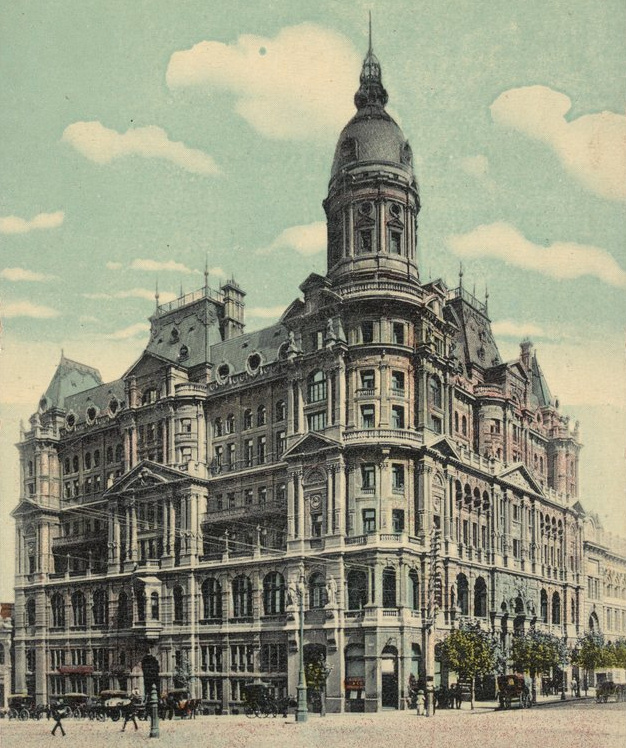
In the 19th century, coffeehouses such as the Federal Coffee Palace in the center of Melbourne were part of the temperance movement.
In modern Australia, coffee shops are commonly called cafés. Since the post-World War II influx of Italian and Greek immigrants introduced the first espresso machines to Australia in the 1950s, there was initially a slow rise in café culture, particularly in Melbourne, until a nationwide boom in locally-owned cafés began in the 1990s. Alongside the rise in the number of cafés has been a rise in demand for locally (or on-site) roasted specialty coffee, particularly in Sydney and Melbourne. A local favorite is the "flat white".
Europe
In most European countries, such as Spain, Austria, Denmark, Germany, Norway, Sweden, Portugal, and others, the term café means a restaurant primarily serving coffee, as well as pastries such as cakes, tarts, pies, and buns. Many cafés also serve light meals such as sandwiches. European cafés often have tables on the pavement (sidewalk) as well as indoors. Some, particularly in Southern Europe, also serve alcoholic drinks (e.g., wine). In the Netherlands and Belgium, a café is the equivalent of a bar, and also sells alcoholic drinks. In the Netherlands a koffiehuis serves coffee, while a "coffee shop" (the English term) sells "soft" drugs (cannabis and hashish) and is generally not allowed to sell alcoholic drinks. In France, most cafés serve as lunch restaurants in the day, and bars in the evening. They generally do not have pastries except in the mornings, when a croissant or pain au chocolat can be bought with breakfast coffee.
In Italy, cafés are similar to those found in France and known as bar. They typically serve a variety of espresso coffee, cakes and alcoholic drinks. Bars in city centers usually have different prices for consumption at the bar and consumption at a table.
Ireland
Today, the word café – also spelled cafe, but always pronounced as two syllables – is used for most coffeehouses. It has also come to be used for a type of diner that offers cooked meals (again, without alcoholic beverages) which can be standalone or operating within shopping centres or department stores.
United Kingdom
The patrons of the early English coffeehouses were far removed from those of modern Britain. Haunts for teenagers in particular, Italian-run espresso bars and their formica-topped tables were a feature of 1950s Soho that provided a backdrop as well as a title for Cliff Richard's 1960 film Expresso Bongo. The first of these was the Moka in Frith Street, opened by Gina Lollobrigida in 1953. The late 50s Soho cafes in the film have "[an] exotic Gaggia coffee machine ... [and] Coke, Pepsi, weak frothy coffee and a Suncrush orange fountain"; they spread to other urban centers during the 1960s, providing affordable, warm places for young people to congregate and an ambience far removed from the global coffee bar standard set in the final decades of the century by chains such as Starbucks and Pret a Manger.
Espresso bar
The espresso bar is a type of coffeehouse that specializes in coffee drinks made from espresso. Originating in Italy, it has spread throughout the world in various forms. International chains include Starbucks Coffee, based in Seattle, U.S., and Costa Coffee, based in Loudwater, U.K. (the first and second largest coffeehouse chains respectively), although the espresso bar exists in some form throughout much of the world.
The espresso bar typically has a long counter with a high-yield espresso machine (usually bean to cup machines, automatic or semiautomatic pump-type machine, although occasionally a manually operated lever-and-piston system) and a display case containing pastries and occasionally savory items such as sandwiches. In the traditional Italian bar, customers either order at the bar and consume their drinks standing or, if they wish to sit down and be served, are usually charged a higher price. In some bars there is an additional charge for drinks served at an outside table. In other countries, especially the United States, seating areas for customers to relax and work are provided free of charge. Some espresso bars also sell coffee paraphernalia, candy, and even music. North American espresso bars were also at the forefront of the proliferation of public Wi-Fi access points to provide Internet services to people working on laptop computers.
The offerings at the typical espresso bar are generally quite Italianate in inspiration; biscotti, cannoli and pizzelle are common traditional accompaniments to a caffè latte or cappuccino. Some espresso bars even offer alcoholic drinks such as grappa and sambuca. Nevertheless, typical pastries are not always strictly Italianate and common additions include scones, muffins, croissants, and even doughnuts. There is usually a large selection of teas as well, and the North American espresso bar culture is responsible for the popularization of the Indian spiced tea drink masala chai. Iced drinks are also popular in some countries, including both iced tea and iced coffee as well as blended drinks such as Starbucks' Frappucino.
A worker in an espresso bar is called a barista. This is a skilled position that requires familiarity with the drinks being made (often very elaborate, especially in North American-style espresso bars) and a reasonable facility with some equipment, as well as the usual customer service skills.
Gallery
File:028 Cafe sign free photo - Cafe neon - Creative Commons Attribution.jpg|"Café" neon sign in Breda, Netherlands File:Café Mélange, Wien.jpg|Café Mélange, Vienna File:Kahvila Kampelan terassia.JPG|Café Kampela, Helsinki File:The Grey Owl Coffee shop in Norman Oklahoma on the morning of 10 Dec 2023.jpg|The Grey Owl Coffee shop in Norman, Oklahoma File:In café omgebouwde kerk in Utrecht.jpg|A café in a former church, Utrecht File:Roadside cafe on the summer terrace. Buryatia, Russia.jpg|Roadside café with a summer terrace, Buryatia, Russia File:Malaysia-kopitiam.jpg|Interior of a kopitiam, Malaysia
Notes
References
References
- Castella, Krystina. (2010). "A World of Cake". Storey.
- Liberman, Sherri. (2011). "American Food by the Decades". ABC-Clio.
- Davies, Russell M.. (2005). "Egg, Bacon, Chips and Beans: 50 Great Cafes and the Stuff that Makes Them Great". HarperCollins Entertainment.
- Haine, W. Scott. (11 September 1998). "The World of the Paris Café: Sociability among the French Working Class, 1789–1914". Johns Hopkins University Press.
- Haine, W. Scott. (12 June 2006). "Alcohol: A Social and Cultural History". Berg.
- Maddox, Adrian. "Classic Cafes: London's vintage Formica caffs!". classiccafes.co.uk.
- "Coffeehouse". Merriam-Webster.
- Groce, Nancy. (2014-04-17). "Coffeehouses: Folk music, culture, and counterculture". The Library of Congress.
- "Blue Mountain Café vs Blue Mountain Coffee". Jamaican Blue Mountain Coffee.
- "Café definition and meaning".
- ''[[Oxford English Dictionary]]'', 2nd ed (1989), entry number 50031127 (''café'').
- ''Oxford English Dictionary'', 2nd ed (1989), entry number 00333259 (''caffè, n'')
- ''Oxford English Dictionary'', 2nd ed (1989), entry number 50031130 (''caff'')
- Davies, Russell M.. (2005). "Egg, Bacon, Chips and Beans: 50 Great Cafes and the Stuff that Makes Them Great". HarperCollins Entertainment.
- "Online Etymology Dictionary".
- "Coffee definition and meaning".
- "''Café'', subst. masc.".
- "Koffie – (product van de koffieboom (geslacht ''Coffea''; volks- of oude naam voor ''wilde cichorei'')". etymologiebank.nl.
- (5 May 2013). "'Kafana', the first coffeehouse in Europe".
- Ayvazoğlu, Beşir. (2013). "Turkish Coffee Culture". Republic of Türkiye Ministry of Culture and Tourism (TEDA).
- (8 September 2016). "Coffeehouse (Qahva-khāna)".
- (2024). "17–18. Yüzyıl Avrupa Resim Sanatında Türk İmgesi Olarak Kahve". Selçuk Türkiyat.
- Karhan, Jale. (2021). "Toplumsal ve kültürel bir içecek: "Türk kahvesi"". International Journal of Social Sciences and Education Research.
- "Coffee | Origin, Types, Uses, History, & Facts".
- (10 August 2018). "صحيفة التاخي – المســــرح في المقاهي والملاهي البغدادية".
- (2014). "Changing the values of the past to future".
- Lewis, Bernard. (1989). "Istanbul and the Civilization of the Ottoman Empire". University of Oklahoma Press.
- Seidel, Kathleen. (1999). "Serving the Guest: A Sufi Cookbook". Superluminal.
- Gupta, Hriday. (2024-02-07). "History of Coffee in India".
- Biswas, Nilosree. (5 June 2023). "Invigorating the spirits: In search of India's lost coffee culture".
- Marks, Gil. (2010). "Encyclopedia of Jewish Food". Houghton Mifflin Harcourt.
- Blake, Hugo. (2017). "Gran Bretagna e Italia tra Mediterraneo e Atlantico: Livorno – 'un porto inglese' {{=}} Italy and Britain between Mediterranean and Atlantic worlds: Leghorn – 'an English port'". All'Insegna del Giglio.
- Horowitz, Elliott. (Spring 1989). "Coffee, coffeehouses, and the nocturnal rituals of early modern Jewry". G. Scarabellin.
- (2002). "The World of Caffeine: The Science and Culture of the World's Most Popular Drug". Routledge.
- (2002). "The World of Caffeine: The Science and Culture of the World's Most Popular Drug". Routledge.
- Torberg, Friedrich. (1982). "Kaffeehaus war überall. Briefwechsel mit Käuzen und Originalen". Langen Müller.
- Siebeck, Wolfram. (1996). "Die Kaffeehäuser von Wien. Eine Melange aus Mythos und Schmäh". Edition Wien.
- Luther, Helmut. (16 February 2015). "Warum Kaffeetrinken in Triest anspruchsvoll ist". Die Welt.
- Rabinovici, Doron. (23 January 2017). "Kaffeehaus als Menschenrecht". Jüdische Allgemeine.
- "Kaffeehauskultur".
- Riha, Fritz. (1967). "Das alte Wiener Caféhaus". Festungsverlag.
- Prinz, Deborah R.. (2013). "On the Chocolate Trail: A Delicious Adventure Connecting Jews, Religions, History, Travel, Rituals and Recipes to the Magic of Cacao". Jewish Lights Publishing.
- (1992). "The Chronology of British History". Century.
- "Oxford Exclusion".
- (2004a). "The Coffee-House: A Cultural History". Weidenfeld & Nicolson.
- (2019). "Uncommon Grounds: The History of Coffee and How It Transformed Our World". Basic Books.
- (2004). "Coffee: A Dark History". Fourth Estate.
- (2001). "The World of Caffeine: The Science and Culture of the World's Most Popular Drug". Routledge.
- (2010). "London Pubs". Amberley Publishing.
- (2006). "Pasqua Rosee".
- Macaulay, Rose. (1934). "The Minor Pleasures of Life". Victor Gollancz.
- (2002). "The World of Caffeine: The Science and Culture of the World's Most Popular Drug". Routledge.
- Wild, Antony. (2004). "Coffee: A Dark History". Fourth Estate.
- Colby, Charles W.. (1920). "Selections from the Sources of English History, B.C. 55 – A.D. 1832". Longmans, Green.
- (21 June 2018). "Newspapers, gossip and coffeehouse culture". British Library.
- Ferreira, Jennifer. (2017). "Café nation? Exploring the growth of the UK café industry". Area.
- Inwood, Stephen. (21 June 2018). "Newspapers, gossip and coffeehouse culture". British Library.
- Charles II. (1675). "By the King. A proclamation for the suppression of coffee-houses".
- Cowan, Brian. (1 October 2008). "The Social Life of Coffee: The Emergence of the British Coffeehouse". Yale University Press.
- Prévost, Abbé. (1770). "Adventures of a Man of Quality". F. Newbery.
- Wheatley, Henry B.. (1891). "London, Past and Present: Its History, Associations, and Traditions". John Murray.
- Beatty-Kingston, W.. (1892). "Intemperance: Its Causes and Its Remedies". George Routledge & Sons.
- (27 December 1881). "Opening a coffee tavern at Bourn. Mr Lawrance, QC, M.P., on temperance ". The Lincolnshire, Boston, and Spalding Free Press.
- (8 June 2021). "Suomen historian merkkipaaluja: Ensimmäisenä Turussa". City of Turku.
- (22 February 2024). "Ekberg – Helsingin Historiallinen Herkkukeidas". Parasta Stadissa.
- (2004). "Coffee: A Dark History". Fourth Estate.
- Fitch, Noël Riley. (2006). "Grand Literary Cafés of Europe". New Holland.
- (2004). "Coffee: A Dark History". Fourth Estate.
- "Az első pesti kávéház háborúja".
- Molmenti, Pompeo. (1908). "Venice: Its Individual Growth from the Earliest Beginnings to the Fall of the Republic". A. C. McClurg.
- Molmenti, Pompeo. (1908). "Venice: Its Individual Growth from the Earliest Beginnings to the Fall of the Republic". A. C. McClurg.
- Moyer-Nocchi, Karima. (2019). "The Eternal Table: A Cultural History of Food in Rome". Bloomsbury.
- Frățilă, Andra. (30 March 2000). "Cafenele din Vechiul București (secolele XIX–XX)".
- (1983). "222 Jahre Lebensmittel Gross- und Detailhandel "hinterm Turm" in St.Gallen 1761 bis 1983". Leuthold.
- "Object type: drawing {{!}} Museum number: 1931,0613.2".
- "Where did coffee come from?".
- "Emilie du Chatelet".
- (1747). "The Life and Character of Moll King, Late Mistress of King's Coffee-House in Covent-Garden".
- Du Rietz, Anita. (January 2026). "Kvinnors entreprenörskap: under 400 år". Dialogos.
- "America's first coffeehouse".
- Wolf, Burt. (2002). "What We Eat: The True Story of Why We Put Sugar in our Coffee and Ketchup on our Fries". Tehabi Books.
- (2025). "Coffee Nation: How One Commodity Transformed the Early United States". University of Pennsylvania Press.
- Rotondi, Jessica Pearce. (30 June 2025). "How coffee fueled revolutions – and revolutionary ideas".
- (1975). "The Electric Muse: The Story of Folk into Rock". Methuen.
- Dickson, Kenneth. (28 October 2019). "Starbucks Coffee Company: Past, present, and future".
- (13 June 2024). "Starbucks Introduces Value Meals with New 'Pairings Menu'". USA Today.
- Purdy, Chase. (21 July 2022). "That joke about a Starbucks on every corner? It's actually true and hurting the company's sales".
- "Julius Briner Message Board". Investorshub.advfn.com.
- Stewart, Desmond. (1965). "Cairo". A. S. Barnes.
- Alpion, Gëzim. (18 May 2011). "Encounters with Civilizations: From Alexander the Great to Mother Teresa". Transaction Publishers.
- (18 February 2013). "Middle-class India embraces coffee culture".
- Asriyati. "Inilah Kedai Kopi Pertama di Indonesia".
- (17 January 2024). "What is Filipino café food, anyway?".
- (30 June 2015). "40 ปี "ตำนานคาเฟ่" เมืองหลวง จากศูนย์รวมบันเทิงถึงยุคเสื่อม นักร้องต้องขายตัวแลกพวงมาลัย". [[Manager Daily]].
- บุนนาค, โรม. (6 February 2018). "เมื่อ "เครื่องดื่มปีศาจ" มาสยาม! ร.๓ ทรงปลูกเป็นสวนหลวงในหัวแหวนกรุงรัตนโกสินทร์!!". Manager Daily.
- (30 October 2017). "เที่ยวร้านกาแฟนรสิงห์ ร้านกาแฟแห่งแรกของสยาม ณ พระราชวังพญาไท". today.line.me.
- (2005). "ประชาธิปัตย์ปราศรัย". politikpress.
- Hutchinson , Debra. (31 May 2014). "Temperance and Melbourne's grand coffee palaces".
- (2023-06-11). "The deep, rich and problematic history of coffee in Australia and worldwide". ABC News.
- Marsden, Harriet. (2018-04-16). "How the flat white conquered the coffee scene".
- (2016). "Italy – Culture Smart! The Essential Guide to Customs & Culture". Kuperard.
- Perry, Lyn. (2008). "Adventures in the Mediatheque: Personal Selections of Films". BFI Southbank / University of the Third Age.
- Maddox, Adrian. "The coming of the cafes".
- Seibel, Anna Maria. (1980). "Die Einführung des Kaffees in Wien. Georg Franz Koltschitzky. Johannes Diodato. Isaac de Luca". Verein für Geschichte der Stadt Wien / Kommissionsverlag Jugend und Volk.
- (February 2014). "'A Fund of entertaining and useful Information': Coffee houses, early public libraries, and the print trade in eighteenth-century Dublin". Taylor & Francis.
This article was imported from Wikipedia and is available under the Creative Commons Attribution-ShareAlike 4.0 License. Content has been adapted to SurfDoc format. Original contributors can be found on the article history page.
Ask Mako anything about Coffeehouse — get instant answers, deeper analysis, and related topics.
Research with MakoFree with your Surf account
Create a free account to save articles, ask Mako questions, and organize your research.
Sign up freeThis content may have been generated or modified by AI. CloudSurf Software LLC is not responsible for the accuracy, completeness, or reliability of AI-generated content. Always verify important information from primary sources.
Report