From Surf Wiki (app.surf) — the open knowledge base
Coffee bag
Container used for shipping and storing coffee
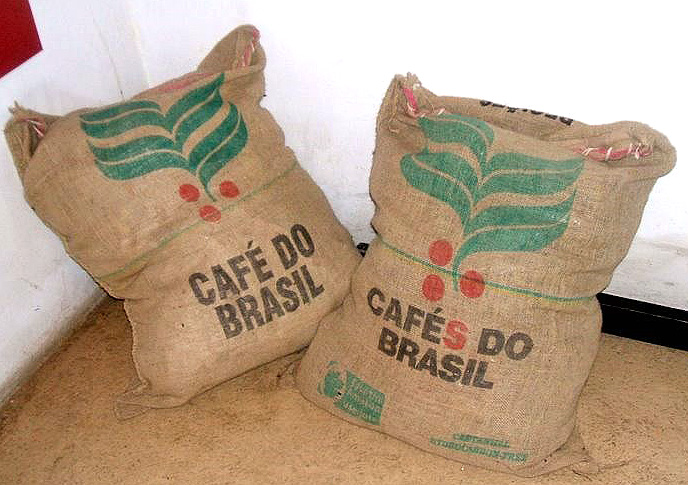
Container used for shipping and storing coffee
A coffee bag is a container for shipping and storing coffee. Coffee beans are usually transported in large jute sacks, while coffee sold to consumers may be packaged as beans or ground coffee in a small, sealed plastic bag.
Bulk coffee
Large bulk bags, burlap bags or gunny sacks are traditionally used for storage and transport of coffee beans. Often, it is made of jute and has a content of 60 kilograms (130 pounds); this type of bag originated in Brazil and became a worldwide standard. It also became a measurement unit to this day, for example FAO's statistics on coffee production are expressed in 60-kg bags.
Jute fibers are treated with mineral oil, or historically whale oil, to improve spinnability, which raised questions about coffee contamination from these hydrocarbons, but further studies showed it to be infinitesimal. Bags with synthetic fibers (woven or non-woven) are commonly used now.
Once used, these decorative bags can be recycled or upcycled for many uses, including in clothing.
The 60 kg sack is starting to be replaced by huge polypropylene or polyethylene bags, such as the flexible intermediate bulk container. These are increasingly used for coffee exports - especially from Brazil. Intermodal shipping containers are common for international shipping.
Consumer packaging

Smaller bags are used by consumers for coffee beans or ground coffee. Multi-layer graphics bags have largely replaced steel cans (tins) for consumer ground coffee. There is a tendency for pressure from carbon dioxide to build up in these barrier bags. Special pressure relief valves have been developed to relieve the pressure without letting the atmosphere into the bags.{{cite patent
Examples
File:Counter Culture Coffee Bag.jpg|Multilayer plastic bag with a pressure-relief valve File:CXLT Coffee.jpg|Coffee beans in a plastic bag purchased at local grocery store File:Coffee grinder - store.jpg| Coffee grinder at grocery store with a paper bag for ground coffee
References
- Yam, K.L., "Encyclopedia of Packaging Technology", John Wiley & Sons, 2009,
References
- (2014). "The World Atlas of Coffee: From Beans to Brewing -- Coffees Explored, Explained and Enjoyed".
- Marcelo Raffaelli. (15 January 1995). "Rise and Demise of Commodity Agreements : An Investigation into the Breakdown of International Commodity Agreements". Woodhead.
- "Annex 1: World Coffe Production Statistics".
- Mustafizur Rahman. (2000). "The Contamination of Jute Products". The Journal of the Textile Institute.
- "Cappuccino vs. Latte vs. Macchiato vs. Mocha vs. Flat White".
- Reese Ewing. (20 December 2015). "Brazil ditches standard jute coffee bags, leading move toward bulk". Reuters.
- Cowell, J. A.. (2018). "One-way Degassing Valve Behavior & Function in The Acceptability of Stored Coffee". The University of Guelph.
- Demetrakakes, P. (2017). "The Future of K-Cups and Other Coffee Packaging".
This article was imported from Wikipedia and is available under the Creative Commons Attribution-ShareAlike 4.0 License. Content has been adapted to SurfDoc format. Original contributors can be found on the article history page.
Ask Mako anything about Coffee bag — get instant answers, deeper analysis, and related topics.
Research with MakoFree with your Surf account
Create a free account to save articles, ask Mako questions, and organize your research.
Sign up freeThis content may have been generated or modified by AI. CloudSurf Software LLC is not responsible for the accuracy, completeness, or reliability of AI-generated content. Always verify important information from primary sources.
Report