From Surf Wiki (app.surf) — the open knowledge base
Club América
Association football club in Mexico City
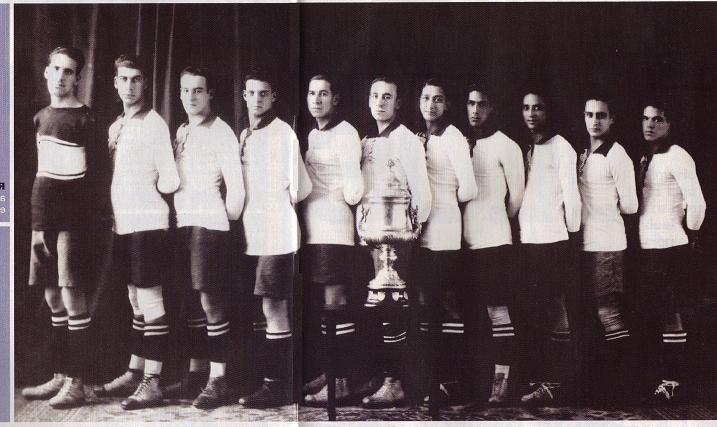
Association football club in Mexico City
| Field | Value |
|---|---|
| clubname | América |
| image | File: Club América crest.svg |
| upright | 0.85 |
| fullname | Club de Fútbol América S.A. de C.V. |
| founded | |
| nickname | Águilas (Eagles) |
| Azulcremas (Bluecreams) | |
| Millonetas (Millionaires) | |
| short name | AME |
| ground | Estadio Ciudad de los Deportes |
| (temporary) | |
| capacity | 34,253 |
| owner | Ollamani |
| (51%) | |
| General Atlantic | |
| (49%) | |
| chrtitle | Chairman |
| chairman | Emilio Azcárraga Jean |
| mgrtitle | Manager |
| manager | André Jardine |
| league | Liga MX |
| season | Apertura 2025 |
| position | Regular phase: 4th |
| Final phase: Quarter-finals | |
| current | 2025–26 Club América season |
| pattern_la1 | _clubamerica2526h |
| pattern_b1 | _clubamerica2526h |
| pattern_ra1 | _clubamerica2526h |
| pattern_sh1 | _clubamerica2526h |
| pattern_so1 | _clubamerica2526hl |
| leftarm1 | FFff00 |
| body1 | FFFf00 |
| rightarm1 | FFFf00 |
| shorts1 | ffff00 |
| socks1 | FFFf00 |
| pattern_la2 | _clubamerica2526a |
| pattern_b2 | _clubamerica2526a |
| pattern_ra2 | _clubamerica2526a |
| pattern_sh2 | _clubamerica2526a |
| pattern_so2 | _clubamerica2526al |
| leftarm2 | 001f4d |
| body2 | 001f4d |
| rightarm2 | 001f4d |
| shorts2 | 001f4d |
| socks2 | 001f4d |
| pattern_la3 | _clubamerica2526t |
| pattern_b3 | _clubamerica2526t |
| pattern_ra3 | _clubamerica2526t |
| pattern_sh3 | _clubamerica2526t |
| pattern_so3 | _clubamerica2526tl |
| leftarm3 | cfcfcd |
| body3 | cfcfcd |
| rightarm3 | cfcfcd |
| shorts3 | cfcfcd |
| socks3 | cfcfcd |
| website |
the Mexican football club
Azulcremas (Bluecreams) Millonetas (Millionaires) (temporary) (51%) General Atlantic (49%) Final phase: Quarter-finals Club de Fútbol América S.A. de C.V., commonly known as Club América, is a professional football club based in Mexico City. Nicknamed Las Águilas (The Eagles), it competes in Liga MX, the top tier of Mexican football. The club was founded in 1916, and since 1959 has been owned by mass media company Televisa. The team plays its home games at Estadio Azteca, the largest stadium in Latin America and one of the largest in the world.
América is one of the founding members of the Primera División. The club has a long-standing rivalry with Guadalajara, as both are the most successful and most supported teams in the country and are among the seven clubs to have never been relegated. Matches between them are known as El Súper Clásico, considered to be the biggest rivalry in Mexico, and one of the biggest in the world. América also plays derbies against Cruz Azul and Club Universidad Nacional. Together the clubs make up the "Big Four" of Mexican football. In 2024, it became the first football club to be floated on the Mexican Stock Exchange (Bolsa Mexicana de Valores). According to Sportico, Club América is valued at US$770 million as of May 2025, making it one of the most valuable clubs in North America.
Club América has won more titles than any other team in Mexican football. Domestically, the club has won a record sixteen league titles, a record six Copa México titles, and a joint-record seven Campeón de Campeones cups. In international competitions, América has won ten FIFA recognized club trophies, the most for a club from CONCACAF, with a joint-record seven CONCACAF Champions Cup/Champions League titles, one CONCACAF Giants Cup, and two Copa Interamericanas. The club also holds numerous distinctions, including topping the all-time league table in victories, points, and goals scored, most appearances in the liguilla (playoffs) stage, the most playoff final appearances (22) and second-most runner-up finishes, after Cruz Azul. It is one of five clubs to win back-to-back league titles since the introduction of the short tournament format, the only team to achieve a three-peat under the format, and the only one to reach four finals in a row. In 2021, América was named by the International Federation of Football History & Statistics as the best North American club of the first decade (2001–2011) of the 21st century.
History
Founding
By 1916 football was already a popular sport in Mexico, particularly amongst college students in Mexico City. College students from Colegio Mascarones and Colegio Marista de la Perpetua formed two football teams with the names Récord and Colón. On 12 October 1916, the two squads decided to consolidate to make a more competitive squad. Many names were considered for this new squad, and team player Pedro "Cheto" Quintanilla suggested the name "América", since they had formed the team on Columbus Day (Día del descubrimiento de América). The players agreed and soon designed a crest which had the map of the Americas centered with a 'C' for "Club" on the left and an 'A' for "América" on the right. In deciding the team's colors, Rafael Garza Gutiérrez got a pair of his father's navy blue trousers and a yellow shirt and it was decided amongst the group that those would be the club's kit and colors.
In 1916, Club América had to prove itself to the Mexican Football League, then known as the Primera Fuerza. At the time, América was the only club in Mexico City with Mexican-born players. Necaxa, Atlante, Real Club España, Germania, and Asturias were already members of the Liga Mayor de la Ciudad. América's acceptance into the league rested on three games they had to win. América won two games, tied the third and were accepted.
In 1918, the team changed its name to Club Centro Unión, though it would revert to using the name América only two years later.
América won their first Primera Fuerza title in the 1924–25 season, being crowned champions after defeating Asturias 1–0 in the deciding match. América would win the Primera Fuerza three more times, all of them back-to-back. In 1926, América became the first Mexican club to play outside of Mexico. Aside from broadening their horizons, Club América, along with Atlante petitioned to reduce the number of foreign players in the league. Shortly after the Mexican Football Federation was formed in 1928, Rafael Garza Gutiérrez was designated as the head coach of the Mexico national team. Most of the national team that participated in the 1928 Summer Olympics and 1930 World Cup consisted of players from Club América.
1940–1969
Until 1942, Mexico had several leagues, although the league in Mexico City was considered the most developed. In 1942–43, the first National League was established and it was known as the Liga Mayor (Major League). Club América had declined from its then-prime of the 1920s and 1930s: aging players, diminishing financial resources, and resulting lack of interest made the team a bottom-feeder at the start of the beginning stage of the professional era7.
It was also during this time that the rivalry with Guadalajara was born; especially during the 1945–1946 season when Guadalajara beat América by 6–4 and 4–2 scorelines. The 1951–1952 season saw América finish in 11th place out of 12, with a 3-point-advantage over Veracruz, who were relegated. In 1954 América defeated rivals Guadalajara on penalties after a 0–0 draw in the Copa México final, thus winning their first league cup.
In 1956, the club was sold to soft drink manufacturer Jarritos. The new owner was trying to build upon the club's National Cup titles in 1954 and 1955 against Guadalajara. During the 1954–55 season América won their first Campeón de Campeones championship, defeating Zacatepec 3–2. The owner failed to build upon previous success and on 22 July 1959, Emilio Azcárraga Milmo, owner of Telesistema Mexicano, bought América from Isaac Bessudo. Following the acquisition, Azcárraga told his players, "I do not know much about football, but I do know a lot about business, and this, gentlemen, will be a business."
The 1959–1960 season saw América reach second place in the league, behind Guadalajara. On 21 April 1964, at the Estadio Olímpico Universitario, the team, now coached by Alejandro Scopelli, defeated Monterrey 6–5 in the final match of the Copa México. During the match Alfonso Portugal scored five of América's six; José González scored the other goal to win the championship.
On 7 May 1965, América regained the Mexican "Copa" championship after a 4–0 victory over Morelia at the Estadio Olímpico Universitario. The goals were scored by Javier Fragoso and Vavá, each scoring twice.
1970s
After Mexico hosted the 1970 FIFA World Cup, the league tournament format was changed in response to the championship's disputed winners, hence the Liguilla (play-offs) format was started. The first play-off final was in 1971 between Toluca and América, leaders of Groups 1 and 2, respectively. After a 0–0 draw in Toluca, América obtained their second league title after winning the second-leg 2–0 at the Estadio Azteca. The following season saw América eliminated from the playoffs by Cruz Azul. América would defeat Cruz Azul in the 1973 Copa México final. A few years followed in which América did not qualify for the playoffs. They finished in first place during the 1975–1976 season, and defeated Tecos UAG and Union de Curtidores in the quarter-finals and semi-finals to reach the final against Universidad de Guadalajara. América won the championship after beating UDG in the Jalisco Stadium 3–0 and 1–0 at the Estadio Azteca. They also won the Campeón de Campeones title by beating Tigres UANL 2–0.
In 1978, América participated in their first Copa Interamericana, playing against Argentine club Boca Juniors, winners of the 1977 Copa Libertadores. After losing the first-leg and winning the second, América would win the championship in a playoff match by a score of 2–1 after extra-time, with a last second free-kick goal by midfielder Carlos Reinoso. América became the first team from Mexico and from the CONCACAF region to win the competition. América also became the first confederation side to earn the "double" in a single year as it won the delayed 1977 CONCACAF Champions' Cup.
1980s
The 1980s are generally considered América's "golden decade". During this period, América won the league title five times, including three consecutive titles; the 1983–84 season, the 1984–85 season, the Prode-85 tournament, the 1987–88 and 1988–89 seasons. They also won the Mexican Super Cup twice, in 1987–88 and 1988–89, as well as the 1987 CONCACAF Champions' Cup.
The 1983–1984 season saw América reach the top of the table and reach the finals, where they would face arch-rivals Guadalajara, who the previous season had eliminated América in the semi-finals. Following a 2–2 draw at the Estadio Jalisco, América defeated Guadalajara in the Azteca Stadium 3–1, and a 5–3 aggregate score. To date, it is the only match between these two teams in the league finals, though they would face each other in other phases of the playoffs. The series has since been dubbed the "Final del Siglo" ("Final of the Century"). The following season América once again reached the finals, this time against city-rivals Pumas UNAM. After two draws in both the Azteca Stadium and the Mexico '68 Stadium, the last game was played in the Estadio Corregidora in Querétaro, where Daniel Brailovsky secured the championship for América by scoring two goals with the final score of 3–1.
Due to Mexico hosting the 1986 World Cup and stadium and infrastructure preparations, the tournament was split in two short tournaments: Prode-85 and Mexico-86. América clinched the top of their group in the Prode-85 and defeated Universidad de Guadalajara and Atlante (which was rescheduled following the earthquake suffered in Mexico City) to reach the final, where they faced Jaibos Tampico Madero. The game in Tampico was a 4–1 victory for Tampico, but at the Azteca Stadium, América beat Tampico Madero 4–0 to win the championship.
For the 1987–88 season, América met UNAM in the final, in a replay of the 1985 final. They defeated UNAM by an aggregate score of 4–2. The following season, América once again reached the league final and faced Cruz Azul, which was the first time the two clubs met in the final since 1972. The first-leg finished in a 3–2 victory for América. A 2–2 draw in the second-leg meant América won the championship by a 5–4 aggregate score.
As winners of the 1987 CONCACAF Champions' Cup, América was set to face Peñarol, winners of the 1987 Copa Libertadores, in the 1988 edition of the Copa Interamericana. Each respective confederation had agreed to the terms of the match, however just hours before it was to be played, disagreements arose between the confederations and the tournament's organizers. The match was eventually played on 21 April, with América winning 5–4 on penalties after a 2–2 draw; because the game was not officially endorsed, it was dubbed the Copa Confraternidad. América was subsequently fined and handed a two-year suspension from CONCACAF and thus could not participate in the 1989 Champions' Cup, for which they had qualified as winners of the 1988–89 Mexican league season.
1990s
During the 1990s, América only managed to win the CONCACAF Champions' Cup in 1990 and 1992, and the 1990 Copa Interamericana. During the 1990–1991 season, América dominated its group and reached the playoffs to eliminate Universidad de Guadalajara in the quarter-final round and Guadalajara in the semi-final round, only to reach the final and lose to UNAM.
In 1994, club president Emilio Diez Barroso announced the hiring of Dutch manager Leo Beenhakker. The club also announced the signing of two African players, Cameroon international François Omam-Biyik and Zambia national team captain Kalusha Bwalya. Other Mexican players such as Joaquín del Olmo, Raúl Gutiérrez, among others were signed as well. América finished the season with 51 points, and scoring 88 goals. With only a few matches remaining in the regular season, Beenhakker was abruptly fired as manager. It was rumored that conflict between the coach and Diez Barosso regarding Beenhacker's defending of playing Del Olmo was the reason for his sacking. América reached the semi-finals, losing to Cruz Azul. This América team is considered one of the best in the club's history, despite not winning any silverware.
In 1998 América, along with Guadalajara, became the first Mexican club to participate in the Copa Libertadores tournament. They were inserted in a group where both teams confronted clubs from Venezuela. América finished in second position of the qualifying stage and advanced to the group stages. América was put in Group 3 along with Guadalajara and Brazilian clubs Grêmio and Vasco da Gama. América qualified to the next round finishing in third place, being eliminated by Argentine club River Plate.
2000s
In August 2001, América won the CONCACAF Giants Cup after defeating MLS club D.C. United 2–0. The following year, América would reach the league final against Necaxa, winning by a 3–2 aggregate score. After losing in the first-leg 0–2, América won the second by the same scoreline, forcing extra-time to be played. A golden goal from a Hugo Norberto Castillo header in the 107th minute gave América the victory, and the club its first league championship in 13 years.
The club once again reached the league final during the Clausura 2005 tournament, finishing third in the standings and defeating Santos Laguna and Cruz Azul in the quarterfinals and semi-finals to face Tecos UAG. After a 1–1 draw in the first-leg, América was victorious in the second, winning the match 6–3 at the Estadio Azteca – 7–4 on aggregate – to win the club's tenth league title.
On 19 April 2006, América defeated fellow-Mexican side Toluca to win the CONCACAF Champions' Cup, thus qualifying for the FIFA Club World Cup that same year. At the tournament, América won its first match against Jeonbuk Hyundai Motors of South Korea. América went on to lose the next match against Spanish side FC Barcelona. It ended its participation in the tournament, losing the match for third place to Al Ahly of Egypt.
2007
After the Club World Cup, América qualified for the playoffs of the Clausura 2007 defeating Atlas and Guadalajara in the quarter and semi-finals. They played the final against Pachuca, finishing runners-up.
For the Apertura 2007, after starting off the season on a poor run, Luis Fernando Tena was sacked, and was replaced by Daniel Brailovsky. After finishing third in their group and sixth in the general standings, América played Morelia for the last spot in the playoffs, being beaten 3–0 in the first-leg, and winning 1–0 in the second-leg. With this, América was eliminated from the competition.
América also participated in the Copa Sudamericana, reaching the finals to play against Arsenal de Sarandí of Argentina. They would lose the first-leg at the Estadio Azteca by a 2–3 score, and win 2–1 in Argentina. The aggregate result was 4–4, but due to the away goals rule, Arsenal won the championship.
América finished 2007 ranked tenth in the IFFHS's Club World Rankings, becoming the first Mexican club to reach the top ten.
2008
América started off 2008 winning the InterLiga tournament, defeating Cruz Azul 5–3 on penalties in the final following a 3–3 draw after 120 minutes, thus assuring qualification to the Copa Libertadores tournament that same year.
The Clausura tournament saw América end in next-to-last place in the general standings. This had not been seen since the mid-1950s. In the first five months of 2008, América was showered with twelve defeats, two draws and three victories, which resulted in the third-straight tournament without qualifying for the playoffs. The manager at the time was Rubén Omar Romano, who was one of the least successful coaches in the club's history. Coincidentally, after being replaced by Juan Antonio Luna, América got their third victory of the Clausura against Monterrey. Despite their poor domestic form, América fared well in the Copa Libertadores, defeating Brazilian side Flamengo 3–0 in the round-of-16 at the Estádio do Maracanã, overturning a 2–4 first-leg deficit, and advancing to the quarter-finals. They defeated Santos FC to reach the semi-finals, being eliminated by eventual champions LDU Quito after drawing 1–1 on aggregate.
2010s
For the Apertura 2010, América brought back former manager Manuel Lapuente, who led the club to the league title in 2002. The return of striker Vicente Matías Vuoso and the signing of Uruguayan Vicente Sánchez gave América one of the most dangerous front lines in all of the league. They finished the tournament in first place of Group 2, fourth in the general standings, with 27 points. With this, they would advance to the playoffs, and automatically qualify for the first time since 2008 for the 2011 Copa Libertadores. They would be eliminated in the semi-finals by Santos Laguna by a 4–5 aggregate score.
América had a bad start to the Clausura 2011 tournament; a 0–2–1 record in the first three games the tournament led to the sacking of Lapuente. Carlos Reinoso was named his successor, who had already managed the club two times before. His first game was against Atlas, which América won 2–0. América ended the Clausura with an 8–1–5 record, and would be eliminated in the quarter-finals by Morelia. On 18 September 2011, Reinoso was sacked as manager, with Alfredo Tena taking over as interim manager. América would finish the Apertura in 17th place, the second worse finish in the club's history. On 8 November, Michel Bauer stepped down as president. That same day, former América player Ricardo Peláez was named Sporting President, while Yon De Luisa would be named Operations President. Miguel Herrera was presented as the club's new manager, the fourth in a year. In his first year at the helm, Herrera led the team to consecutive semi-finals.
On 26 May 2013, América won their eleventh league title by defeating Cruz Azul in the Clausura final 4–2 on penalties after a dramatic comeback from a 0–1 first-leg loss to win 2–1 in the second-leg, and tie 2–2 on aggregate, with goalkeeper Moisés Muñoz scoring the second goal in injury-time. With this, América tied Guadalajara for most league titles. For the Apertura 2013, América finished the regular phase of the tournament at the top of the standings with 37 points and would again appear in the league final, though failing to achieve a repeat, being defeated by León by an aggregate score of 1–5. On 17 December 2013, Antonio Mohamed was announced as América's new manager for the Clausura 2014 tournament, replacing Miguel Herrera after two years in charge. América would finish fifth in the standings, and was eliminated in the quarter-finals by Santos Laguna due to the away-goals rule after drawing 6–6 on aggregate.
América finished the Apertura 2014 tournament at the top of the general standings with 31 points, and defeated UNAM and Monterrey in the quarter-finals and semi-finals, respectively. Prior to the league final, the club was marred in media speculation regarding the future of Antonio Mohamed (he ultimately admitted he would leave the club after the final) and the separation of Paul Aguilar from the team prior to the first-leg of the semi-finals. On 14 December, América won a record-twelfth league title after defeating Tigres UANL 3–1 on aggregate in the final, coming back from a 0–1 first-leg loss to win 3–0 in the second-leg at the Estadio Azteca. Three days after winning the final, América announced Gustavo Matosas as Mohamed's successor, signing a two-year contract.
In April 2015, the club won its sixth CONCACAF Champions League title after defeating Montreal Impact in the finals by a 5–3 aggregate score. Despite inconsistent displays throughout the Clausura tournament, América managed to finish second in the standings, though was eliminated by Pachuca in the quarter-finals. Three days later, with various media reports suggesting Gustavo Matosas would be sacked due to differences with the board regarding transfer strategy, it was confirmed in a press conference which was attended by both Matosas and club president Ricardo Pelaéz that he would indeed leave after only six months in charge. On 26 May, Ignacio Ambríz was presented as the new manager, signing a two-year contract. América lost its FIFA Club World Cup quarter-final match to Chinese team Guangzhou Evergrande, and defeated African club TP Mazembe to claim fifth place in the competition.
In April 2016, América successfully defended the CONCACAF Champions League title after defeating Tigres UANL 4–1 on aggregate in the finals, and winning a record seventh continental title. América culminated the year with a fourth place finish at the Club World Cup and finishing runners-up in the Apertura championship match against Tigres UANL.
América won its record thirteenth league title following a 2–0 aggregate victory over Cruz Azul in the 2018 Apertura final. In April 2019, América defeated Ascenso MX side FC Juárez in the final of the Clausura edition of the Copa MX, winning a record sixth title. In winning the cup, América became the outright record holders of the Liga MX, Copa MX, and CONCACAF Champions League. The team followed this up by winning the 2019 Campeón de Campeones against Tigres UANL and reaching the 2019 Apertura finals, losing 4–2 on penalties to Monterrey.
2020–present
América began the new decade by finishing third in the Apertura general standings before being eliminated by Guadalajara in the quarter-finals. They finished the following Clausura in second place, only to be eliminated once again in the quarter-final stage, this time against Pachuca. América led the table during the 2021 Apertura and faced elimination in the same phase again, losing 3–1 on aggregate to UNAM. From the 2022 Clausura onwards, América managed to qualify consecutively to the semi-finals, only to face eliminations against Pachuca, Toluca (2022 Apertura), and Guadalajara (2023 Clausura), respectively.
Under new manager André Jardine, América ended the regular phase of the 2023 Apertura first in the standings, with the best attacking and defensive records. They defeated Tigres UANL 4–1 on aggregate in the finals to win a record-extending 14th title and end the club's five-year league drought. América successfully defended the title after defeating Cruz Azul in the 2024 Clausura finals, winning back-to-back Liga MX titles for the first time in the club's history since the introduction of the playoff format, and becoming the fourth club to do so under the format. They also became the first team to achieve this feat after having topped the standings of both Apertura and Clausura championships. In December, América defeated Monterrey 3–2 on aggregate in the Apertura finals to win their 16th league title, and become the first side to win three Liga MX titles in a row in the short-tournament era. The following Clausura saw América make an unprecedented fourth consecutive appearance in the finals, though they lost to Toluca 2–0 on aggregate. After this defeat Club América would also fail to qualify for 2025 FIFA Club World Cup, losing to LAFC 2-1 in the playoffs. Later they would lose again to Toluca 1-3 in the 2025 Campeón de Campeones.
On 23 December 2025, Ollamani (formed after Televisa spun off their sports and gambling operations, including América, in 2024) announced that they would enter a partnership with General Atlantic that would see the club run under a new entity known as Grupo Águilas. Ollamani would have a 51% stake in Grupo Águilas and continue to run América and Estadio Banorte, while General Atlantic would own the remaining 49% stake. The new entity would also have a partnership with the Kraft Analytics Group, who share the same ownership as the NFL club New England Patriots. The deal gives Ollamani Group, Club América's owner, a 51% controlling share, with Emilio Azcárraga Jean leading the new entity to boost growth, modernize the stadium for the 2026 World Cup, and expand the club's global brand, marking a major shift in Mexican football investment.
Crest and colors
Crest
When Club América was founded in 1916, the crest consisted of the letter 'C', standing for "Club", overlapped by an 'A', which stood for "América". After a brief period in which the team's name was changed to Club Unión, it was reverted to Club América in the mid-1920s, and the crest was modified, with a map of the Americas behind the 'CA', and encased in a football, all in the team's colors – which were cream and blue. Since then, the design of the crest has seen minimal change; at the beginning of the 21st century, the vertical line at the crest's center was removed. During the early 1980s, the crest was surrounded by an image of an eagle (due to the club's nickname), and was even enclosed in a triangle. The most recent modification of the crest was in 2010, with the yellow and blue more vibrant and a darker outline and border.
Colors
Club founder Rafael Garza Gutiérrez chose what would be América's first uniform. He took some of his father's navy blue trousers and a yellow-cream shirt and it was decided amongst the other players that those would be the club's colors. The club's kit design would go largely unchanged, and it would not be until the 1980s that the team colors changed, with the cream color replaced with a more vibrant yellow and blue, along with the introduction of the inverted triangle design on the shirt in 1982. A third, alternate white and blue shirt was introduced towards the end of the decade, but it was not worn frequently.
During the Apertura 2011 tournament – what was the club's 95th anniversary – a commemorative jersey was unveiled paying homage to the original uniform, as well as an altered crest. The uniform was used during the Súper Clásico match against Guadalajara.
In May 2016, as part of the club's centenary, a dark red away kit was revealed honouring Italian club Torino, who functioned as the club's first opponent at the Estadio Azteca in the 1966 inaugural match.
Kit suppliers and shirt sponsors
| Period | Kit supplier | Main shirt sponsor(s) | |
|---|---|---|---|
| 1984–1988 | GER Adidas | None | |
| 1988–1990 | MEX Bancomer | ||
| 1990–1993 | USA Coca-Cola | ||
| 1993–1994 | BRI Umbro | ||
| 1994–2000 | GER Adidas | ||
| 2000–2005 | USA Nike | ||
| 2005–2015 | MEX Bimbo | ||
| USA Coca-Cola | |||
| 2015–2017 | CHN Huawei | ||
| USA Coca-Cola | |||
| 2017–2018 | CHN Huawei | ||
| USA The Home Depot | |||
| 2018–2023 | USA AT&T | ||
| USA The Home Depot | |||
| 2023–2025 | MEX Caliente | ||
| 2025–Present | GER Adidas |
Nicknames
Throughout Club América's history, it has been given a number of nicknames. During the club's early years it was given the nickname Estudiantes (Students), because it had been established as a result of a merger of students from the colleges of Mascarones and La Perpetua. They were also given the nicknames Cremas (Creams) and Azul-cremas (Blue-creams) in reference to the kit colors. During the 1960s, following businessman Emilio Azcárraga Milmo's purchase of Club América, it was given its infamous Millonetas (Millionaires) nickname. In an effort to change the fortunes of the club which for years had been struggling financially and was suffering a five-year trophy-less drought, Azcárraga Milmo prioritized high-profile signings of foreign players and executives, notably hiring Guillermo Cañedo de la Bárcena, the successful president of Zacatepec. The Águilas (Eagles) nickname was the result of a rebranding and media campaign undertaken by Televisa in 1981. Along with a new kit and color scheme, the Águilas nickname was introduced at a press conference held by the club at the Estadio Azteca.
Grounds
Main article: Estadio Azteca
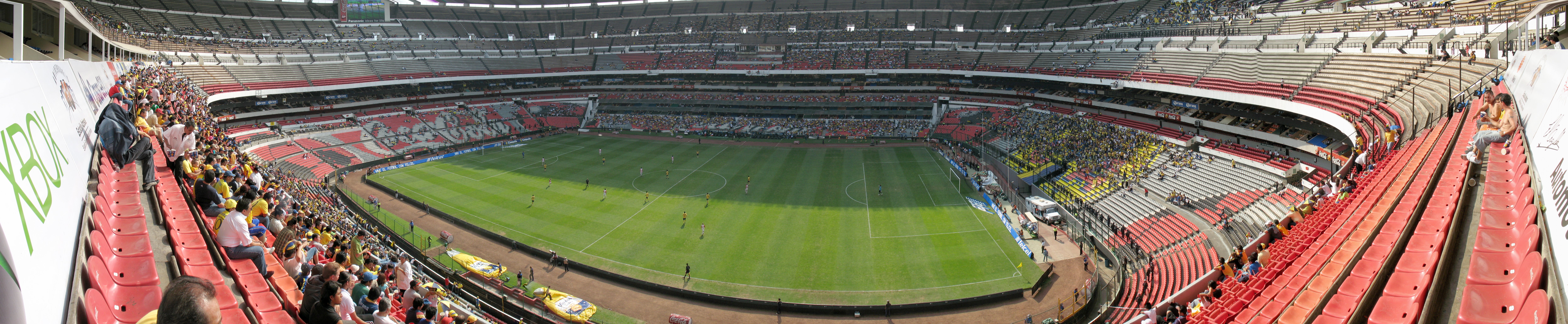
América plays its home games at the Estadio Azteca in Mexico City. The stadium was designed by Mexican architect Pedro Ramírez Vázquez, and was inaugurated on 29 May 1966 with a match between América and Torino, which was tied 2–2. The first goal was scored was by Brazilian Arlindo Dos Santos and the second by José Alves. Gustavo Díaz Ordaz, President of Mexico, made the initial kick and Sir Stanley Rous, FIFA President, was the witness.
The club has shared the stadium as a home ground with the Mexico national football team since its inauguration. Other club sides have also used the stadium as their home at different times, namely Necaxa (1966–70 and 1982–2003), Atlante (1966–82, 1996–2001 and 2004–2007), Universidad Nacional (1967–1969), Atlético Español (1970–1982) and Cruz Azul (1971–1996 and 2018-2023).
As well as acting as a home ground the stadium has also hosted the 1968 Summer Olympics, 1970 FIFA World Cup, 1975 Pan American Games, 1983 FIFA World Youth Championship, 1986 FIFA World Cup, 1999 FIFA Confederations Cup, 2011 FIFA U-17 World Cup Final, Copa Interamericana, Copa Libertadores de América, music concerts, political events and the visit of Pope John Paul II in 1999.
Rivalries
''El Super Clásico''
Main article: El Súper Clásico (Mexico)
''Clásico Capitalino''
Main article: Clásico Capitalino
The rivalry between Club América and Club Universidad Nacional is known as the "Clásico Capitalino", due to the fact that both teams are based in Mexico City—the country's capital. The first match between the two clubs took place on 1 July 1962, where América hosted UNAM, who had recently been promoted from the second division. In Mexico the match is often perceived as the representation of a struggle between two antagonistic powers and institutions: Club América is regarded as the club representing the establishment and the wealthy. The fact that the club is owned by the mass media company Televisa has further intensified this image. Club Universidad, representing the Universidad Nacional Autónoma de México, identifies itself as the club of the intellectuals and middle-class. The rivalry is particularly fierce from UNAM's side: according to surveys the majority of their supporters consider América as their main rival. However, America's fans see it as an important match but deem the match against Chivas as more important.
''Clásico Joven''
Main article: Clásico Joven
Club América's other capital-based rival is Cruz Azul, with matches between the two known as the "Clásico Joven" ("Juvenile Classic" or "Young Classic" in Spanish). In a similar perspective between América and UNAM's rivalry, the rivalry between América and Cruz Azul is also seen as based on social class differences: América representing the wealthy and powerful while Cruz Azul is said to represent the working class, hence fans of Cruz Azul and the team itself being dubiously referred to by the nickname of "Los Albañiles" (bricklayers in Spanish), a reference to Cruz Azul's eponymous parent company, which is one of Mexico's major companies specializing in concrete and construction.
Support

Club América has consistently ranked, along with rivals Guadalajara, as Mexico's most supported team. In December 2013, the newspaper Reforma had América as the country's most popular club with 25 percent in a nationwide survey, and the most popular in Mexico City. In a February 2015 poll conducted by the firm Consulta Mitofsky, América was named the most popular club with 31.1 percent of the population being supporters, more than rivals Guadalajara (17.9) and Cruz Azul (12.7) combined. In 2016 and 2017 America was the country's most supported team, and in 2018 fell to second behind Guadalajara. In 2019 América regained the top spot with 32 percent, doubling the amount of Guadalajara supporters for the first time. As of June 2025, América is Mexico's most supported team with 21 percent, and the most hated with 46.2 percent. Its extensive fan base also makes Club América among the most followed teams on social media, ranking third in all of Latin America behind only Brazilian sides Flamengo and Corinthians. Additionally, it generates the most social media interactions in Mexico, and among the most in Latin America.
América is also among the most popular teams in the United States. According to a 2020 survey by Gilt Edge Soccer Marketing, América is the ninth most popular team in the U.S., the only non-European in the top ten, and the only one from Latin America. Also, a 2014 study conducted by EuroAmericas Sports Marketing ranked América as the most popular Mexican club in Asia.
Conversely, América is the most hated team in Mexico, ranking first in that metric in every annual survey. Ever since the club was bought by media mogul Emilio Azcárraga Milmo from Issac Bessudo in 1959, the club has had the unique distinction of being both one of the most popular clubs and the most hated. An emphasis on heavy spending on Mexican and foreign players and managers in subsequent seasons, as well as success in domestic and international competitions, created an increasing sense of enmity from rival fans. The fact that Azcárraga Milmo was also the owner of telecommunications company Telesistema Mexicano furthered the notion that América was the club of the "establishment" and the "wealthy", while others were considered teams representing the "working class". Being reputed as the most hated club in the country has been embraced by the club and its fans, with the phrase "Ódiame Más" ("Hate me more" in English) being known as one of the team's unofficial slogans.
Three Club América supporters' groups (barra bravas in Spanish) exist: La Monumental, Disturbio, and Ritual del Kaos. La Monumental was established in April 1999 as the first barra brava officially recognized by the club, however internal conflicts led some members to leave the group and establish Ritual del Kaos that same year. The group is not officially recognized by Club América. Disturbio was created in October 2000 as an affiliate group of La Monumental. Both groups occupy a section of the lower north zone of the Estadio Azteca during home games, while Ritual occupies a section in the upper north zone.
Sponsorship
Additional club sponsors and partners:
- USA Carl's Jr.
- USA Coca-Cola
- MEX Corona
- JAP eFootball
- CHN Geely Auto
- MEX Gonher
- MEX GNP Seguros
- MEX Grupo Bimbo
- CAN Immunotec
- USA Powerade
- AUT Red Bull
- MEX Restonic
- SWI Sika AG
- MEX Viva
Personnel
Management
| Position | Staff |
|---|---|
| Chairman | Emilio Azcárraga Jean |
| Honorary counsel | Bernardo Gómez Martínez |
| Sporting president | Santiago Baños |
| Sporting director | Vacant |
| Operations president | Héctor González Iñárritu |
| Committee of football president | Joaquín Balcarcel |
| Coordinator of strategic planning | Miguel Ángel Garza |
| Academy director | Raúl Herrera |
| Academy operations coordinator | Carlos Valenzuela |
| Director of communications and marketing | Diego Solano Urrusquieta |
| Director of public relations | Karina Mora |
Source: Club América
Coaching staff
| Position | Staff |
|---|---|
| Manager | BR André Jardine |
| Assistant managers | BR Paulo Victor Gomes |
| BRA Phelipe Leal | |
| MEX Raúl Lara | |
| Goalkeeper coach | MEX Luis Gurrola |
| Fitness coaches | BRA Kako Perez |
| MEX Francisco Martínez | |
| BRA Marcos Seixas | |
| Physiotherapists | ARG Fernando Gilardi |
| MEX Octavio Luna | |
| MEX Francisco Faustino | |
| Team doctors | MEX Alfonso Díaz |
| MEX José Guadalupe Vázquez | |
| ARG Christian Motta |
Source: Club América
Players
First-team squad
Other players under contract
Out on loan
Reserve teams
Main article: Club América Reserves and Academy
;América Coyoacán : Reserve team that plays in the Liga TDP, the fourth level of the Mexican league system.
Notable players
Historic players
As part of Club América's centenary celebrations in 2016, a public vote was taken via the club's website in which the following players were chosen as 'Historic Players'. Players whose names appear italicized played for the club at the time the votes were taken.
;Goalkeepers
- MEX Guillermo Ochoa
- MEX Moisés Muñoz
- MEX Adolfo Ríos
- ARG Héctor Zelada
;Defenders
- MEX Alfredo Tena
- MEX Mario Trejo
- MEX Armando Manzo
- MEX Juan Hernández
- MEX José Antonio Castro
- URU Cesilio de los Santos
- MEX Vinicio Bravo
- MEX Duilio Davino
- MEX Miguel Layún
;Midfielders
- ISR Daniel Brailovsky
- CHI Carlos Reinoso
- BRA Antônio Carlos Santos
- MEX Pável Pardo
- MEX Germán Villa
- ARG Eduardo Bacas
- MEX Gonzalo Farfán
- MEX Alfredo Sánchez
- MEX Cristóbal Ortega
- ZAM Kalusha Bwalya
- PAR Osvaldo Martínez
- ARG Rubens Sambueza
;Forwards
- MEX Cuauhtémoc Blanco
- PAR Salvador Cabañas
- ECU Christian Benítez
- MEX Luís Roberto Alves
- MEX Raúl Jiménez
- ARG Claudio López
- MEX Enrique Borja
- CMR François Omam-Biyik
- CHI Iván Zamorano
- BRA José Alves
- CHI Osvaldo Castro
- MEX Roberto Rodríguez
- MEX Eduardo González Pálmer
Player records
Top scorers
;Primera División
- MEX Eduardo González Pálmer (1958–59; 25)
- BRA José Alves (1965–66; 20)
- MEX Enrique Borja (1970–71; 20)
- MEX Enrique Borja (1971–72; 26)
- MEX Enrique Borja (1972–73; 24)
- CHL Osvaldo Castro (1973–74; 26)
- ARG Norberto Outes (1982–83; 22)
- MEX Cuauhtémoc Blanco (Invierno 1998; 16)
- BRA Kléber (Apertura 2005; 11)
- MEX Ángel Reyna (Clausura 2011; 13)
- ECU Christian Benítez (Clausura 2012; 14)
- ECU Christian Benítez (Apertura 2012; 11)
- ECU Christian Benítez (Clausura 2013; 12)
- MEX Henry Martín (Clausura 2023; 14) ;International
- MEX Hugo Sánchez (1992 CONCACAF Champions' Cup; 5)
- MEX Aarón Padilla (2006 CONCACAF Champions' Cup; 4)
- PAR Salvador Cabañas (2007 Copa Libertadores; 10)
- PAR Salvador Cabañas (2008 Copa Libertadores; 8)
- ARG Darío Benedetto / MEX Oribe Peralta (2014–15 CONCACAF Champions League; 7)
All-time records
''All current players are in '''bold'''''
| Rank | Name | Years | Goals |
|---|---|---|---|
| 1 | MEX Luís Roberto Alves | 1986–1996 | |
| 1997–1998 | 188 | ||
| 2 | MEX Cuauhtémoc Blanco | 1994–1997 | |
| 1998–2000 | |||
| 2002–2004 | |||
| 2005–2007 | |||
| 2016 | 153 | ||
| 3 | MEX Octavio Vial | 1937–1945 | 152 |
| 4 | MEX *Henry Martín* | 2018–Present | 116 |
| 5 | BRA José Alves | 1961–1969 | 109 |
| 6 | MEX Enrique Borja | 1969–1977 | 104 |
| 7 | MEX Eduardo González Pálmer | 1951–1962 | 101 |
| 8 | CHI Carlos Reinoso | 1970–1979 | 99 |
| 9 | PAR Salvador Cabañas | 2006–2010 | 98 |
| 10 | MEX Carlos Hermosillo | 1983–1989 | |
| 2000 | 94 |
| Rank | Name | Years | Apps |
|---|---|---|---|
| 1 | MEX Cristóbal Ortega | 1974–1992 | 711 |
| 2 | MEX Alfredo Tena | 1974–1992 | 594 |
| 3 | MEX Germán Villa | 1991–1998 | |
| 1999 | |||
| 2000–2008 | 527 | ||
| 4 | MEX Luís Roberto Alves | 1986–1996 | |
| 1997–1998 | 490 | ||
| 5 | MEX Guillermo Ochoa | 2004–2011 | |
| 2019–2021 | 433 | ||
| MEX Gonzalo Farfán | 1984–1994 | ||
| 7 | MEX Pável Pardo | 1999–2006 | |
| 2009–2011 | 407 | ||
| 8 | MEX Duilio Davino | 1997–2007 | 402 |
| 9 | MEX Adrián Chávez | 1986–1996 | 401 |
| 10 | MEX Cuauhtémoc Blanco | 1994–1997 | |
| 1998–2000 | |||
| 2002–2004 | |||
| 2005–2007 | |||
| 2016 | 397 |
Managers
Notable managers
The following managers have won at least one trophy while in charge of América:
| Manager | Period | Trophies | |
|---|---|---|---|
| MEX Rafael Garza Gutiérrez | 1917–1919 | ||
| 1920–1926 | |||
| 1929–1931 | |||
| 1933–1935 | |||
| 1935–1936, | |||
| 1937–1942, | |||
| 1946–1949 | 2 Primera Fuerza | ||
| ENG Percy Clifford | 1926–1929 | 2 Primera Fuerza | |
| MEX Octavio Vial | 1949–50 | ||
| 1952–1955 | 2 Copa México | ||
| 1 Campeón de Campeones | |||
| ARG Alejandro Scopelli | 1964–1965 | 2 Copa México | |
| URU Roberto Scarone | 1965–1966 | 1 Primera División | |
| MEX José Antonio Roca | 1970–1975 | ||
| 1979–1981 | 1 Primera División | ||
| 1 Copa México | |||
| MEX Raúl Cárdenas | 1975–1978 | 1 Primera División | |
| 1 Campeón de Campeones | |||
| 1 CONCACAF Champions' Cup | |||
| 1 Copa Interamericana | |||
| CHI Carlos Reinoso | 1981–1984 | ||
| 1998 | |||
| 2011 | 1 Primera División | ||
| ARG Miguel Ángel López | 1984–1987 | ||
| 1992–1993 | 2 Primera División | ||
| 1 CONCACAF Champions' Cup | |||
| ARG Vicente Cayetano Rodríguez | 1987 | 1 CONCACAF Champions' Cup | |
| BRA Jorge Vieira | 1987–1990 | 2 Primera División | |
| 2 Campéon de Campeónes | |||
| URU Carlos Miloc | 1991 | 1 CONCACAF Champions' Cup | |
| 1 Copa Interamericana | |||
| ARG Alfio Basile | 2000–2001 | 1 CONCACAF Giants Cup | |
| MEX Manuel Lapuente | 2001–2003 | ||
| 2006 | |||
| 2010–2011 | 1 Primera División | ||
| 1 CONCACAF Champions' Cup | |||
| MEX Mario Carrillo | 2004–2005 | 1 Primera División | |
| 1 Campeón de Campeones | |||
| MEX Miguel Herrera | 2012–2013 | ||
| 2017–2020 | 2 Liga MX | ||
| 1 Copa MX | |||
| 1 Campeón de Campeones | |||
| ARG Antonio Mohamed | 2014 | 1 Liga MX | |
| URU Gustavo Matosas | 2015 | 1 CONCACAF Champions League | |
| MEX Ignacio Ambríz | 2015–2016 | 1 CONCACAF Champions League | |
| BRA André Jardine | 2023–present | 3 Liga MX | |
| 1 Campeón de Campeones | |||
| 1 Supercopa de la Liga MX | |||
| 1 Campeones Cup |
Presidents
Since the club was established in 1916, América has had 27 club presidents, with the first being Florencio Domínguez, who served from 1916 to 1920. Guillermo Cañedo de la Bácerna is the club's longest-serving president who served from 1961 to 1981. Filiberto Zapata had the shortest term in the club's history – serving less than year – in 1940. The current sporting president is Santiago Baños.
In 1951, actor and comedian Cantinflas was named Honorary President of the club.
| Name | Tenure | ||
|---|---|---|---|
| Mexico Florencio Domínguez | 1916–20 | ||
| Mexico Guillermo Gómez | 1920–30 | ||
| Mexico Juan de Dios Bojórquez | 1930–32 | ||
| Mexico Eric Herrera | 1933 | ||
| Mexico Louis Martinez | 1933–34 | ||
| [[File:Flag of Mexico (1934–1968, 2).svg | border | 23px]] Ernesto Sota | 1934–37 |
| [[File:Flag of Mexico (1934–1968, 2).svg | border | 23px]] Germán Núñez | 1937–38 |
| [[File:Flag of Mexico (1934–1968, 2).svg | border | 23px]] Salvador González | 1938–39 |
| [[File:Flag of Mexico (1934–1968, 2).svg | border | 23px]] Francisco Bautista | 1939–40 |
| [[File:Flag of Mexico (1934–1968, 2).svg | border | 23px]] Filiberto Zapata | 1940 |
| [[File:Flag of Mexico (1934–1968, 2).svg | border | 23px]] César Martíno | 1940–45 |
| [[File:Flag of Mexico (1934–1968, 2).svg | border | 23px]] Francisco Bautista | 1945–48 |
| [[File:Flag of Mexico (1934–1968, 2).svg | border | 23px]] Antonio Hidalgo | 1948–49 |
| [[File:Flag of Mexico (1934–1968, 2).svg | border | 23px]] Miguel Ramírez | 1950–54 |
| [[File:Flag of Mexico (1934–1968, 2).svg | border | 23px]] Julián Rodríguez | 1954–56 |
| [[File:Flag of Mexico (1934–1968, 2).svg | border | 23px]] Pedro Valdez | 1956–59 |
| [[File:Flag of Mexico (1934–1968, 2).svg | border | 23px]] Darío Pastrana | 1959–61 |
| [[File:Flag of Mexico (1934–1968, 2).svg | border | 23px]] Guillermo Cañedo de la Bárcena | 1961–81 |
| Mexico Emilio Díez Barroso | 1981–96 | ||
| Mexico Pablo Cañedo | 1996–97 | ||
| Mexico Alejandro Orvañános | 1997–98 | ||
| Mexico Raúl Quintana | 1998-99 | ||
| Mexico Javier Pérez Teuffer | 1999–2004 | ||
| Mexico Guillermo Cañedo White | 2004–08 | ||
| Mexico Michel Bauer | 2008–11 | ||
| Mexico Ricardo Peláez | 2011–17 | ||
| Mexico Santiago Baños | 2017–Present |
Honours
Club América is the most decorated side in Mexican football. The club has won 16 league titles, 6 Copa México championships, 7 Campeón de Campeones cups, and 1 Supercopa de la Liga MX. They hold the record for most league and cup titles, and their record Campeón de Campeones wins are tied with Guadalajara. In international competitions América has won 10 titles, the most for a club from the CONCACAF region. The club has won 8 continental championships, including a joint-record 7 CONCACAF Champions Cup/Champions League titles (shared with Cruz Azul), and 1 CONCACAF Giants Cup. Additionally, the club has won 1 Campeones Cup, a regional competition held between Liga MX and MLS clubs. In intercontinental competitions, América has won 2 Copa Interamericanas, a record amongst CONCACAF clubs. From 2019 to 2025, América held the distinction of being the outright record winner of its domestic league, cup competition, and confederation.
Domestic
| Type | Competition | Titles | Winning years | Runners-up | Primera División/Liga MX | Copa México/Copa MX | Campeón de Campeones | Supercopa MX | Supercopa de la Liga MX |
|---|---|---|---|---|---|---|---|---|---|
| [[File:Flag of Mexico.svg | 20px]] | ||||||||
| Top division | 16 | 1965–66, 1970–71, 1975–76, 1983–84, 1984–85, Prode 1985, 1987–88, 1988–89, Verano 2002, Clausura 2005, Clausura 2013, Apertura 2014, Apertura 2018, Apertura 2023, Clausura 2024, Apertura 2024 | 1959–60, 1961–62, 1963–64, 1966–67, 1971–72, 1990–91, Clausura 2007, Apertura 2013, Apertura 2016, Apertura 2019, Clausura 2025 | ||||||
| 6 | 1953–54, 1954–55, 1963–64, 1964–65, 1973–74, Clausura 2019 | 1944–45, 1975–76, 1990–91 | |||||||
| 7 | 1955, 1976, 1988, 1989, 2005, 2019, 2024 | 1954, 1964, 1965, 1966, 1971, 1974, 2015, 2025 | |||||||
| 0 | — | 2017 | |||||||
| 1 | 2024 | — |
International
| Type | Competition | Titles | Winning years | Runners-up | Copa Interamericana | CONCACAF Champions Cup/Champions League | CONCACAF Giants Cup | CONMEBOL Sudamericana |
|---|---|---|---|---|---|---|---|---|
| **Intercontinental CONCACAF | ||||||||
| CONMEBOL** | 2 | 1978, 1990 | — | |||||
| [[File:Concacaf logo.svg | 20px]] | |||||||
| Continental CONCACAF | 7 | 1977, 1987, 1990, 1992, 2006, 2014–15, 2015–16 | 2021 | |||||
| 1 | 2001 | — | ||||||
| Continental CONMEBOL | 0 | — | 2007 |
Subregional
;Notes
- shared record
Amateur
- Campeonato de Primera Fuerza/Liga Mayor: 1924–25, 1925–26, 1926–27, 1927–28
- Copa Tower: 1919–20
- Copa México: 1937–38
Friendly
- Copa Sport: 1918
- Copa Amistad: 1918, 1927
- Copa Militarización: 1919
- Copa Unión: 1920
- Copa Presidente Álvaro Obregón: 1923
- Copa Covadonga: 1925
- Copa Presidente Plutarco Elías Calles: 1925
- Copa Providencia: 1925
- Copa Vencedores: 1927
- Copa Patria: 1928
- Copa Presidencial Adolfo López Mateos: 1963
- Copa Presidente Gustavo Díaz Ordaz: 1964–65
- Copa Independencia: 1966–67, 1974–75
- Copa Revolución Mexicana: 1980–81
- Torneo Cuadrangular Internacional de la Ciudad de México: 1981
- Trofeo Águila Azteca: 1982
- Los Angeles Nations Cup: 1983
- Torneo Triangular de la Ciudad de México: 1987
- Copa Confraternidad: 1988
- Copa Camel: 1990
- Copa Pachuca: 1995, 1997
- Los Angeles International Quadrangular: 1999
- Serie Mundial de Fútbol: 2006
- Copa Insurgentes: 2010
- DirecTV EuroAmerican Cup: 2014
References
References
- (20 September 2019). "La historia de las Águilas del América". Club América – Sitio Oficial.
- "Los "apodos" del América en sus 96 años". Pulso.
- (20 April 2022). "El Ame se enracha". Plano Informativo.
- "Ollamani tendrá 51% del club América tras alianza con General Atlantic; Emilio Azcárraga será el presidente ejecutivo de Grupo Águilas". Forbes.
- "Grupo Televisa, S.A.B.". Euromoney Institutional Investor company.
- (29 March 2011). "El Azteca, cuna de campeones (The Azteca, home of champions)". [[FIFA]].
- (24 November 2009). "The 10 Largest Football Stadiums in the World". Soccerlens.
- (4 October 2011). "Top Ten Biggest Soccer Stadiums in the World". Sportige.
- "Coventric!". Rec.Sport.Soccer Statistics Foundation.
- "Mexico's Clásico de Clásicos". FIFA.com.
- "FourFourTwo's 50 Biggest Derbies in the World: 20-11".
- Mewis, Joe. (13 April 2018). "The top 50 football derbies on the world 20-11: Italian and Brazilian rivalries plus 'the Mother of all Battles'". Mirror.
- "Top 10 club rivalries in world soccer".
- (20 February 2024). "Club America, Azteca stadium listed on stock market". Sports Business Journal.
- (7 May 2025). "World's 50 Most Valuable Soccer Clubs 2025 Ranking". Sportico.
- (13 December 2021). "En México, ¿qué equipo ha ganado más títulos nacionales e internacionales?". Goal.com.
- "América: 100 years of Mexico's bad guys". FIFA.com.
- Gorozpe, Carlos. "América es el equipo de la Concacaf con más títulos internacionales". Diario Récord.
- Dávalos, Juan Antonio. "América, club mexicano con más títulos internacionales". El Universal.
- (2 June 2020). "Overall All-Time Table 1922-2020". Rec.Sport.Soccer Statistics Foundation.
- (26 November 2019). "América, el equipo con más Liguillas en la historia".
- (12 December 2023). "América, el amo de las finales en el futbol mexicano". Milenio.
- (12 December 2021). "¿Cuáles son los equipos con más finales disputadas de Liga MX y cómo les fue?". Goal.com.
- (27 May 2024). "'LA 15' — Club América win Clausura 2024 to become back-to-back Liga MX champions for first time ever".
- (15 December 2024). "Club America seal historic three-peat after sealing second leg Liga MX Final victory over Monterrey". Goal.com.
- (19 May 2025). "¡América sigue haciendo historia! Primer club que llega a 4 Finales seguidas de Liga MX". Fox Sports.
- "IFFHS Rankings - CONCACAF Club of the First Decade (2001-2010)". International Federation of Football History & Statistics.
- "Primer uniforme del Club América.". Club América – Sitio Oficial.
- [https://us.bolavip.com/soccer/how-were-club-americaaccepted-into-theprimera-fuerza-20210226-0015.html How were Club America accepted into the Primera Fuerza?] https://us.bolavip.com {{Webarchive. link. (3 January 2021)
- (8 March 2018). "¿Por qué el América dice tener 16 títulos del fútbol mexicano?".
- (March 2020). "El primer campeonato de Liga". Club América – Sitio Oficial.
- "América Campeón de Liga 1927–28". Club América –Sitio Oficial.
- [http://www.esmas.com/clubamerica/nuestroclub/historiaold/315615.html "Inicia la aventura (1917–1942)."] {{webarchive. link. (4 January 2005 www.esmas.com. Redaccion. {{in lang). es
- "1931–1940". Club America – Sitio Oficial.
- (12 May 2020). "América Campeón de Copa 1953–54". Club América – Sitio Oficial.
- "Copa México 1954–1955: América vs Chivas". Club América – Sitio Oficial.
- "América campeón de campeones 1954–1955". Club América – Sitio Oficial.
- [http://www.esmas.com/clubamerica/nuestroclub/historiaold/315616.html "Epoca profesional (1943–1969)."] {{webarchive. link. (5 December 2004 www.esmas.com. Redaccion. {{in lang). es
- "Centenario Club América: El Tigre los salvó – Capítulo 4".
- "América Campeón de Copa temporada 1963–1964". Club America – Sitio Oficial.
- "América derrotó a Morelia en la final de la Copa México 1964–1965". Club América – Sitio Oficial.
- "Partidos memorables América vs Toluca". Club América – Sitio Oficial.
- "América Campeón de Copa 73–74". Club América – Sitio Oficia.
- "América campeón de Liga 1975–76". Club América – Sitio Oficial.
- (15 August 2020). "América Campeón de Campeones 1975-1976". Club América – Sitio Oficial.
- "América Campeón de la Copa Interamericana 1978". Club América – Sitio Oficial.
- "CONCACAF Retro: Club America wins first two international titles in 1978".
- Calderón, Carlos. "El América de los ochenta". Medio Tiempo.
- "El primer bicampeonato americanista en la era profesional". Club América – Sitio Oficial.
- "El segundo bicampeonato americanista en la era profesional". Club América – Sitio Oficial.
- "América campeón de campeones 87–88". Club América – Sitio Oficial.
- Martínez, Enrique. (23 September 2015). "La Final del Siglo fue para el América". Diario Récord.
- "El clásico más importante: Final del siglo América 3–1 Chivas 1983–1984". Club América – Sitio Oficial.
- "Las tres finales en que América y Chivas se han visto las caras". Diario AS.
- "Club América vs Pumas – Gran Final 1985 América Campeón". Club América – Sitio Oficial.
- (19 September 2015). "A 30 años del temblor del 85 y lo que pasó en el deporte en México". ESPN Deportes.
- (6 October 2016). "Nace el tricampeón; torneo Prode 85". Excélsior.
- "América campeón de Liga 87–88". Club America – Sitio Oficial.
- "América cerró su época gloriosa de los 80s derrotando a Cruz Azul en la final de 1989". [[Univision]].
- Lugo, Erick Francisco. "Copa Confraternidad 1988".
- "América campeón del torneo de la CONCACAF 1990–1991". Club América – Sitio Oficial.
- "América Campeón de CONCACAF 1992–93". Club América – Sitio Oficial.
- "Copa Interamericana – Historial". Universo Fútbol.
- (16 March 2010). "Leo Beenhakker reveló por qué salió del América". Medio Tiempo.
- "Leo Beenhakker no consiguió hacer realidad el sueño de sacar campeón al América". Térra Networks.
- "México y la Libertadores, 15 años de historia". Publisport.
- "Club America Wins Giants Cup". [[Los Angeles Times]].
- "América campeón Verano 2002". Club América – Sitio Oficial.
- "América Campeón del Clausura 2005". Club América – Sitio Oficial.
- "América Campeón de CONCACAF 2006". Club América – Sitio Oficial.
- "2006 FIFA Club World Cup – Overview". FIFA.
- "Pachuca, campeón del futbol mexicano". El Universal.
- link. (1 February 2014 . Orizabaenred.com.mx. Retrieved October 7, 2007.)
- ""Ruso" Brailovsky es nuevo técnico del América de México". nacion.com.
- [http://www.elsiglodetorreon.com.mx/noticia/312118.monarcas-va-contra-santos.html: "Morelia elimina a un grande"] {{Webarchive. link. (1 February 2014 . ''[[El Siglo de Torreón]]''. Retrieved 19 November 2007.)
- "Arsenal, campeón de la Sudamericana". Página/12.
- (10 April 2020). "Club World Rankings 2007". International Football Federation of History and Statistics.
- "América, décimo mejor club del 2007: IFFHS". Caracol.
- "América, décimo en la clasificación mundial de la IFFHS.". orizabaenred.com.mx.
- "América gana la Interliga y va a la Libertadores". Adnmundo.
- Dávalos, Juan Antonio. "Los 10 datos para el olvido de Romano con América". El Universal.
- "Juan Antonio Luna es el nuevo técnico del América". El Universal.
- "América dio un maracanazo; 3–0 al Flamengo y avanzó". La Jornada.
- (25 May 2010). "Manuel Lapuente es el nuevo técnico del América de México". FutbolRed.
- "Matías Vuoso regresa al América". El Economista.
- "America Bring Vicente Sanchez Back To Mexico". Goal.com.
- Cañada, Iván. "Santos elimina al América y está en la Final". Récord.
- (25 January 2011). "Club America Fire Manager Manuel Lapuente". SBNation.
- "America sack Lapuente, bring Reinoso". Goal.
- "Carlos Reinoso debuta y gana: América vence 2–0 a Atlas". Publimetro.
- McCauley, Kevin. (9 May 2011). "Monarcas Morelia Vs. Club America, 2011 Liguilla: 3–2 Full Time, Super Eagles Out". SBNation.
- [http://televisadeportes.esmas.com/futbol/futbolmexico/equipos/america/335134/queda-reinoso-fuera-del-america: "Queda Reinoso fuera del América"] {{Webarchive. link. (16 January 2014 . ''Televisa Deportes''. Retrieved 18 September 2011.)
- "Michel Bauer quedó fuera del América". La Jornada.
- [https://www.camisetasclubes.com/shop/-ezp-30.html "Ricardo Peláez, nuevo Presidente Deportivo del América"] {{Webarchive. link. (6 February 2023 . Diario Récord. Retrieved 11 November 2012.)
- [https://espndeportes.espn.com/news/story?id=1418139&s=mex&type=story: "Miguel Herrera es el técnico del América"] . ''ESPN Deportes''. Retrieved 16 November 2011.
- "¡América Campeón de la Liga MX!". Club América – Sitio Oficial.
- Vertelney, Seth. "America win Liga MX Clausura title". Goal.
- Terán, Juan Manuel. (27 May 2013). "¡América, Campeón del Clausura 2013!". Medio Tiempo.
- Mulroy, Peter J.. (26 May 2013). "America Vs. Cruz Azul: Second Leg of 2013 Mexican Clausura Championship Ends With Shootout As America Outlasts Cruz In Epic Finale; Recap". Latin Times.
- "América es campeón del Torneo Clausura 2013 de LigaMX". Noticiero Televisa.
- Marshall, Tom. "America title a reminder that Chivas have much to do". [[ESPN FC]].
- McCarthy, Kyle. "Club Leon win sixth Primera title". Fox Sports.
- "Mohamed presentado como nuevo técnico americanista". Club América – Sitio Oficial.
- Ruiz, Alberto. (3 May 2014). "Santos completó el milagro y va a Semis". Medio Tiempo.
- (14 December 2014). "El camino del campeón: América". La Afición.
- "America coach Mohamed separates Aguilar from squad". Goal.
- "Cronica: América Campeón". Club América – Sitio Oficial.
- "América vence 3–1 a Tigres y obtiene el décimosegundo título". ESPN Deportes.
- "América conquista la liga de México tras derrotar a Tigres". [[Diario AS]].
- (15 December 2014). "Club America captures Liga MX crown with conquest of Tigres". NBC Sports.
- "Gustavo Matosas es el nuevo D.T. Águila". Club América – Sitio Oficial.
- Logotheti, Paul. (29 April 2015). "Club America beats Montreal Impact, claims CONCACAF Champions League title". USA Today.
- "América eliminado por el Pachuca". El Diario.
- Cañada, Iván. (18 May 2015). "Relación entre Gustavo Matosas y América pende de un hilo". ESPN Deportes.
- (19 May 2015). "Matosas, fuera del América". Medio Tiempo.
- "Ignacio Ambriz presentado como nuevo técnico del Club América". Club América – Sitio Oficial.
- "Club América claim fifth place". FIFA.com.
- (28 April 2016). "Cronica: América 2-1 Tigres". Club América – Sitio Oficial.
- (18 December 2016). "América es cuarto lugar en el Mundial de Clubes". Grupo Milenio.
- "En agónico partido, Tigres vence a América en penales". ESPN Deportes.
- Tolmich, Ryan. "Club America top Cruz Azul to claim Liga MX Apertura crown".
- "América es campeón de Copa MX tras vencer a FC Juárez". Milenio.
- (11 April 2019). "América se convierte en máximo ganador de copa; ya lo era de liga y Concacaf". ESPN Deportes.
- Almeida, Salvador. (29 December 2019). "Rayados, campeón del Apertura 2019". El Economista.
- (4 December 2023). "¿Cómo le ha ido al América en sus últimas cinco semifinales de la Liga MX?".
- (13 November 2023). "¡América lidera! Los clubes con mejor defensiva y ofensiva tras fase regular de Liga MX".
- (17 December 2023). "América se corona en el Apertura 2023 y consigue su estrella 14". ESPN Deportes.
- Rodríguez, Carlos. (27 May 2024). "América vence 1-0 a Cruz Azul y se proclama bicampeón del fútbol mexicano". AP News.
- (16 December 2024). "América es trícampeon del futbol mexicano". MedioTiempo.
- (17 December 2024). "América hace historia: Primer tricampeonato en torneos cortos de la Liga MX". La Verdad Noticias.
- (19 May 2025). "¡América sigue haciendo historia! Primer club que llega a 4 Finales seguidas de Liga MX". Fox Deportes.
- (25 May 2025). "Toluca es campeón del Clausura 2025 al vencer al América". ESPN Deportes.
- Rojas, Otto. (20 February 2024). "Editorial Televisa se fortalece con la creación de Ollamani". TVyNovelas.
- (24 December 2025). "América vende 49 por ciento del club a General Atlantic". ESPN Deportes.
- Rest, Jonathan. (2025-12-31). "Club América next Liga MX club bought by US funds".
- "El primer escudo del Club América". Club América – Sitio Oficial.
- "La evolución del escudo del América". Publimetro.
- "El segundo y más emblemático escudo del Club América". Club América – Sitio Oficial.
- "El actual escudo del Club América". Club América – Sitio Oficial.
- (11 June 2013). "Uniformes de América con V". Club América – Sitio Oficial.
- "América lanza uniforme conmemorativo".
- (26 May 2016). "El nuevo jersey Club América 2016". Club América – Sitio Oficial.
- "Stunning Club America 2016 Centenary Kits Revealed".
- (21 February 2025). "Club América and Adidas announce multi-year agreement". Adidas.
- "Los 'apodos' del América en sus 96 años".
- "Historia". Club América.
- (2007-01-01). "Football in the Americas : fútbol, futebol, soccer". Institute for the Study of the Americas.
- (20 September 2020). "La historia de las Águilas del América". Club América.
- "El Azteca". Club América – Sitio Oficial.
- "Pide Juan Pablo II "superar" deficiencias en el progreso social".
- (2007). "Encuesta completa sobre el equipo más popular de México". Grupo Reforma.
- "FIFA Classic Rivalries: CF América VS Pumas UNAM – Mexico City's grudge game". FIFA.com.
- Eduardo Hernández Castro. (2003). "Para Pumas la vida; para América, no lo es todo". El Economista.
- Archibold, Randal C.. (25 October 2013). "Mexican Writer Mines the Soccer Field for Metaphors". [[The New York Times]].
- "América el equipo más popular de México". Club América –Sitio Oficial.
- "Son favoritos América y Léon". Encuestas Grupo Reforma.
- "América, el equipo más popular de México". Diario Récord.
- "América, con casi el doble de afición que Chivas".
- "Afición al fútbol soccer en México 2019".
- (11 June 2019). "América dobla a Chivas como el equipo más popular de México".
- (12 June 2025). "América: el más querido y el más odiado en la Liga MX, según Consulta Mitofsky". Récord.
- (12 January 2023). "América y Chivas están entre los 10 clubes con más seguidores en redes".
- (8 April 2021). "América, club mexicano con más interacciones en redes; River, el de mayor crecimiento". Forbes México.
- Koeshartanto, Mike. "Most popular soccer teams in the U.S.". Gilt Edge Soccer.
- Price, Daniel. (20 November 2014). "Club America, Corinthians and Boca Juniors Are The Most Popular Teams in Asia". Caughtoffside.
- García, Miguel Ángel.[http://www.laciudaddeportiva.com/odiame-cuando-quieras: "Ódiame cuando quieras"] {{Webarchive. link. (16 January 2014. La Ciudad Deportiva. Retrieved May 28, 2013.)
- French, Scott. "Fandom taken to a different level at Club America". [[ESPN]].
- "¿Cuántas barras tiene el América? De La Monumental al Ritual del Kaoz". Marca.
- "Guía de medios". Club América – Sitio Oficial.
- Campos, Alan. (16 July 2013). "Los grandes del patrocinio". Merca2.0.
- "Club América suma a Carl's Jr. como nuevo patrocinador". Club América.
- (22 November 2024). "Geely Auto México se suma al Club América como nuevo patrocinador". Club América.
- (7 February 2020). "América y Pumas anuncian nuevo patrocinador para la Copa por México". Medio Tiempo.
- (11 July 2025). "Bimbo regresa al Club América". Club América.
- (8 September 2023). "Winning with Science: Immunotec's Unique Partnership with Club America". Immunotec.
- "¡Nuevas alas! Red Bull se suma como nuevo patrocinador del Club América". MedioTiempo.
- (14 September 2024). "Sika Mexicana se une a Club América como nuevo patrocinador". Club América.
- (8 January 2021). "Viva Aerobus nuevo patrocinador del Club América". Club América.
- "Varonil". Club América – Sitió Oficial.
- "Squad".
- (2016-07-15). "Homenaje a porteros históricos de América * Club América - Sitio Official". Club América - Sitio Oficial.
- (2016-07-31). "Homenaje a los defensas históricos del América * Club América - Sitio Oficial". Club América - Sitio Oficial.
- (2016-09-18). "Homenaje a mediocampistas históricos Azulcremas * Club América - Sitio Oficial". Club América - Sitio Oficial.
- (2016-10-05). "Estos son los delanteros históricos elegidos por nuestra afición * Club América - Sitio Oficial". Club América - Sitio Oficial.
- "Máximos Goleadores en la Historia". Realidadamericanista.com.
- (17 January 2022). "Ellos son los máximos goleadores en la historia del Club América".
- (2003). "Águilas del América: cronología de un equipo campeón". AM Editores S.A. de C.V..
- "Presidentes del América".
- Rodríguez Canales, Edith. (19 April 2008). "Quince años sin "Cantinflas"". Esto.
- "¿Cuántos títulos tiene América en su historia?". Goal.com.
- "Campeonatos del América". Club América – Sitio Oficial.
- "Chivas vs. América: ¿qué equipo tiene más títulos?". Goal.com.
- "América cinco veces campeón de CONCACAF". Club América – Sitio Oficial.
- "La sala de trofeos americanista". Club América – Sitio Oficial.
- (11 April 2019). "América manda en Concacaf, pero ¿quiénes mandan en el resto del mundo?". ESPN Deportes.
This article was imported from Wikipedia and is available under the Creative Commons Attribution-ShareAlike 4.0 License. Content has been adapted to SurfDoc format. Original contributors can be found on the article history page.
Ask Mako anything about Club América — get instant answers, deeper analysis, and related topics.
Research with MakoFree with your Surf account
Create a free account to save articles, ask Mako questions, and organize your research.
Sign up freeThis content may have been generated or modified by AI. CloudSurf Software LLC is not responsible for the accuracy, completeness, or reliability of AI-generated content. Always verify important information from primary sources.
Report