From Surf Wiki (app.surf) — the open knowledge base
Citrus myrtifolia
Species of tree
Species of tree
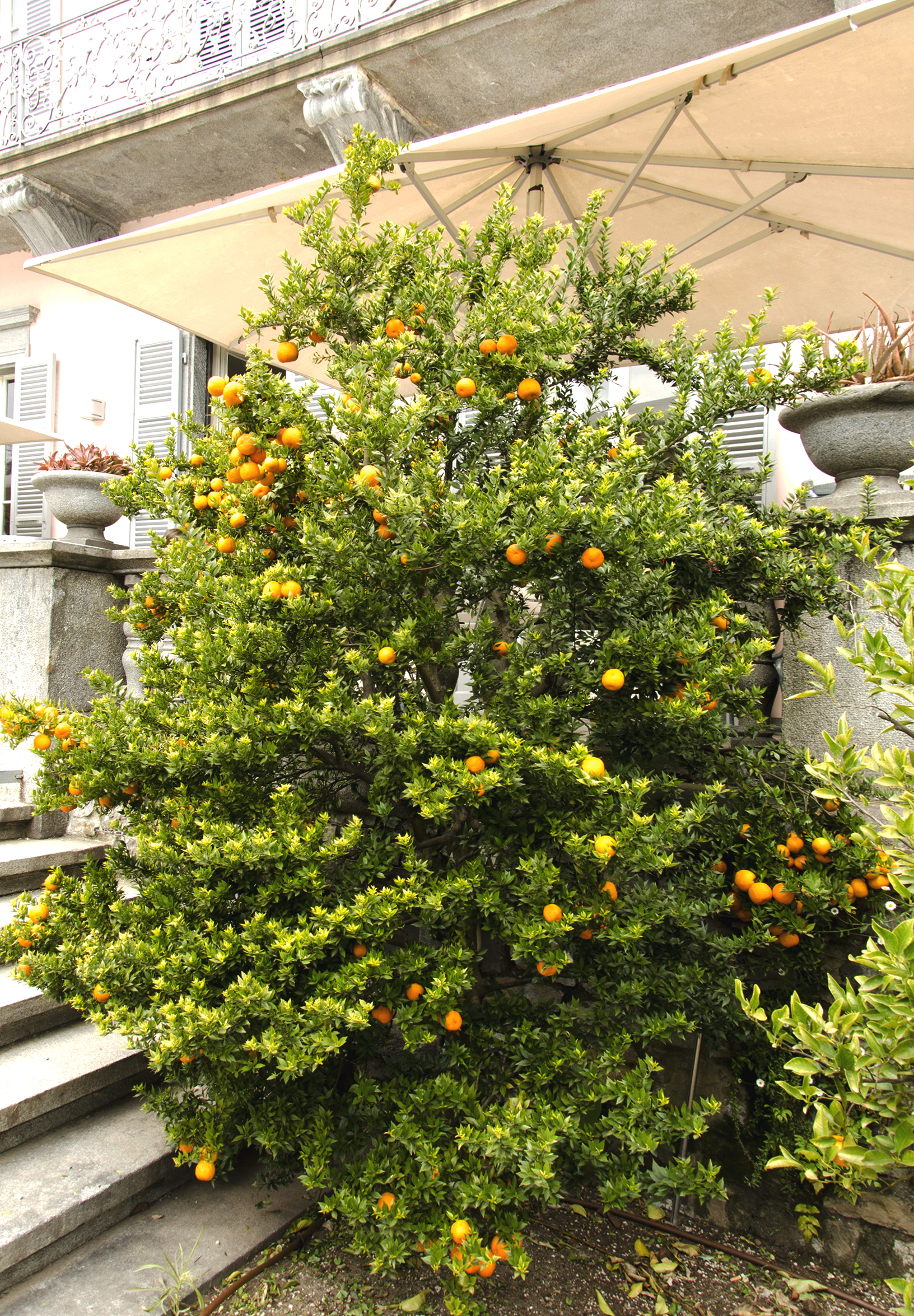
|}} NOTOC Citrus myrtifolia (chinotto), the myrtle-leaved orange tree, is a species of Citrus with foliage similar to that of the common myrtle. It is a compact tree with small leaves and no thorns which grows to a height of 3 m and can be found in Malta, Libya, the south of France, and Italy (primarily in Liguria, typically Savona, and also in Tuscany, Sicily, and Calabria).
The fruit of the tree resembles small oranges. It has a bitter flavor and is commonly called by its Italian name, chinotto (). It is an essential flavoring agent of most Italian amari, of the popular Campari apéritif, and of several brands of carbonated soft drinks that are generically called "chinotto".
Citrus myrtifolia is sometimes planted in gardens. Due to its compactness, it can also be planted in a pot or other container.
Usage
The plant produces small bitter fruits which can be used to make jams, candied fruits, and syrups. Such processing reduces the bitter taste. Chinotto juice can be used to produce a drink, and is a component of some digestifs.
Synonyms

- Citrus aurantium var. myrtifolia Ker-Gawl. in Bot. Reg. vol. 4, t. 346, in textu. 1818.
- Citrus pumila Marc. in Izv. Sochin. Obl. Sukhum. Stants. vol. 2. 1921.
References
- Chandler, W. H., S. N. Hooper & M. J. Harvey - Evergreen Orchards. Kimpton London 1958: 535 pp.
- Facciola, S. - Cornucopia. A Source Book of Edible Plants. Kampong Publ. Vista 1990: 677 pp.
- Hodgson, R. W. (1965): "Taxonomy and nomenclature in the Citrus" (pp 317–331) - In: S. Krishnamurthi (ed.) - Advances in Agriculture Sciences and Their Applications. Agric. Coll. Res. Inst. Coimbatore.
- Mortensen, E. & E. T. Bullard - Handbook of Tropical and Subtropical Horticulture. (3rd ed. 1966). Department of State Agency for International Development Washington 1964: 260 pp.
- Morton, J. F. (ed.) - Fruits of Warm Climates. Creative Resource System, Winterville, N.C. 1987: 505 pp.
- Swingle, W. T. (1946): "The botany of Citrus and its wild relatives of the orange subfamily (family Rutaceae, subfamily Aurantioideae)" (pp 129–474) - In: H. J. Webber & L. D. Batchelor (eds.) - The Citrus Industry. Vol. 1. History, botany and breeding Univ. of California Press Berkeley: 1028 pp.
- Tanaka, T. - Species problem in Citrus. A critical study of wild and cultivated units of Citrus, based upon field studies in their native homes. Japanese Society for the Promotion of Science Ueno 1954: 152 pp.
- Webber, H. J. (1946): "Cultivated varieties of Citrus" (pp 475–668) - In: H. J. Webber & L. D. Batchelor (eds.) - The Citrus Industry; 1. History, botany and breeding Univ. of California Press Berkeley: 1028 pp.
References
- (14 December 2022). "Citrus × myrtifolia: Systematics, Etymology, Habitat, Cultivation".
This article was imported from Wikipedia and is available under the Creative Commons Attribution-ShareAlike 4.0 License. Content has been adapted to SurfDoc format. Original contributors can be found on the article history page.
Ask Mako anything about Citrus myrtifolia — get instant answers, deeper analysis, and related topics.
Research with MakoFree with your Surf account
Create a free account to save articles, ask Mako questions, and organize your research.
Sign up freeThis content may have been generated or modified by AI. CloudSurf Software LLC is not responsible for the accuracy, completeness, or reliability of AI-generated content. Always verify important information from primary sources.
Report