From Surf Wiki (app.surf) — the open knowledge base
Chipewyan
Indigenous people of northwestern Canada

Indigenous people of northwestern Canada
| Field | Value |
|---|---|
| group | Dënesųłı̨ne |
| image | Chipewyan-in-a-canoe.jpg |
| population | 30,910 (2016 census) |
| total_ref | |
| popplace | Canada |
| region1 | Saskatchewan |
| pop1 | 12,875 |
| region2 | Northwest Territories |
| pop2 | 7,820 |
| region3 | Alberta |
| pop3 | 6,350 |
| region4 | Manitoba |
| pop4 | 1,905 |
| region5 | British Columbia |
| pop5 | 1,225 |
| langs | English, Denesuline |
| rels | Christianity, Animism |
| related | Dene, Yellowknives, Tłı̨chǫ, Slavey, Sahtu |
| image_caption | A Chipewyan woman and child set out to hunt muskrat in Garson Lake, Saskatchewan. |
The Chipewyan ( , also called the Dënesųłı̨né ), are a Dene group of Indigenous Canadian people belonging to the Athabaskan language family, whose ancestors are identified with the Taltheilei Shale archaeological tradition.{{cite web | access-date =26 March 2013}} They are part of the Northern Athabascan group of peoples, and hail from what is now Western Canada.
Terminology
The name Dënesųłı̨né, also written Denésoliné or Dënë Sųłınë́, means "the original/real people". The term Chipewyan (ᒌᐯᐘᔮᐣ) is an exonym from the Cree language meaning 'pointed hides', referring to the design of their parkas.
The French-speaking missionaries to the northwest of the Red River Colony referred to the Chipewyan people as Montagnais in their documents written in French. Montagnais simply means 'mountain people' or 'highlanders' in French and has been applied to many unrelated nations across North America over time. For example, the missionaries also referred to the Neenolino Innu of northern Quebec as Montagnais.
Ethnography
Historically, the Denesuline were allied to some degree with the southerly Cree peoples. They warred against Inuit and other Dene peoples to the north of Chipewyan lands.
An important historic Denesuline is Thanadelthur ("Marten Jumping"), a young woman who early in the 18th century helped her people to establish peace with the Cree, and to get involved in the fur trade.
The Sayisi Dene of northern Manitoba are a Chipewyan band notable for hunting migratory caribou. They were historically located at Little Duck Lake and known as the "Duck Lake Dene".
In 1956, the government forcibly relocated them to the port of Churchill on the shore of Hudson Bay and a small village north of Churchill called North Knife River. There they joined other Dene and became members of the "Fort Churchill Chipewyan Band".
In the 1970s, the "Duck Lake Dene" opted for self-reliance, and a return to caribou hunting. They relocated to Tadoule Lake, legally becoming recognized as "Sayisi Dene First Nation (Tadoule Lake, Manitoba)" in the 1990s.
Culture
Main article: Chipewyan language
The Chipewyan used to be largely nomadic, organized into small bands and temporarily lived in tepees. They wore one-piece pants and moccasin outfits. However, their nomadic lifestyle began to erode in 1717 when they encountered English settlers. The Chipewyan subsequently became important in the subarctic trade by exchanging furs and hides for metal tools, guns and cloth.
Modern Chipewyan are either fluidly sedentary or semi-nomadic in lifestyle. Many still practice their traditional lifestyle for subsistence including fishing or caribou hunting although this process is modernized with the use of modern nets, tools, transportation and more.
Language
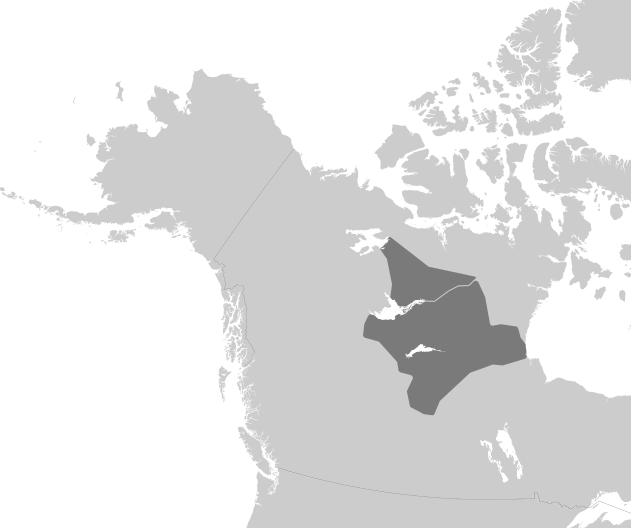
Denesuline (Chipewyan) speak the Denesuline language, of the Athabaskan linguistic group. Denesuline is spoken by Indigenous peoples in Canada whose name for themselves is a cognate of the word dene ("people"): Denésoliné (or Dënesųłiné). Speakers of the language speak different dialects but understand each other. There is a 'k', t dialect that most people speak. For example, people in Fond du lac, Gąnı kuę́ speak the 'k' and say yaki ku while others who use the 't' say yati tu.
The name Chipewyan is, like many people of the Canadian Prairies, of Algonquian origin. It is derived from the Plains Cree name for them, Cīpwayān (ᒌᐘᔮᐣ), "pointed skin", from cīpwāw (ᒌᐚᐤ), "to be pointed"; and wayān (ᐘᔮᐣ), "skin" or "hide" - a reference to the cut and style of Chipewyan parkas.
Most Chipewyan people now use Dene and Denesuline to describe themselves and their language. The Saskatchewan communities of Fond-du-Lac, Black Lake and Wollaston Lake are a few.
Despite the superficial similarity of the names, the Chipewyan are not related to the Chippewa (Ojibwe) people.
In 2015, Shénë Gahdële-Valpy (Shene Catholique-Valpy at the time), a Chipewyan woman in the Northwest Territories, challenged the territorial government over its refusal to permit her to use the letter in her daughter's name, Sahą́ı̨́ʔą (Sahaiʔa without diacritics). The territory argued that territorial and federal identity documents were unable to accommodate the letter. Sahaiʔa's mother finally registered her name with a hyphen in place of the , while continuing to challenge the policy. Shortly afterwards, another woman named Andrea Heron also challenged the territory on the same grounds, for refusing to accept the letter in her daughter's Slavey name, Sakaeʔah (actually a cognate of Sahaiʔa). Náʔël, the sister of Sahą́ı̨́ʔą, faces the same issues.
Demographics
Chipewyan peoples live in the region spanning the western Canadian Shield to the Northwest Territories, including northern parts of the provinces of Manitoba, Alberta and Saskatchewan. There are also many burial and archaeological sites in Nunavut which are part of the Dënesųłı̨ne group.
The following list of First Nations band governments had in August 2016 a total registered membership of 25,519, with 11,315 in Saskatchewan, 6,952 in Alberta, 3,038 in Manitoba and 4,214 in the Northwest Territories. All had Denesuline populations; however, several had a combination of Cree and Denesuline members (see the Barren Lands First Nation in Manitoba and the Fort McMurray First Nation in Alberta).
There are also many Dene (Dënesųlı̨ne)-speaking Métis communities located throughout the region. The Saskatchewan village of La Loche, for example, had 2,300 residents who in the 2011 census identified as speaking Dene (Denesuline) as their native language.{{cite web | access-date =29 June 2013}} About 1,800 of the residents were Métis and about 600 were members of the Clearwater River Dene Nation.{{cite web | access-date =11 May 2014}}
Commemorations
The relocation of the Sayisi Dene is commemorated by the Dene Memorial in Churchill, Manitoba.
Historical Chipewyan regional groups
|Canada Saskatchewan|relief=yes The Chipewyan moved in small groups or bands, consisting of several extended families, alternating between winter and summer camps. The groups participated in hunting, trapping, fishing and gathering in Canada's boreal forest and around the many lakes of their territory. Later, with the emerging North American fur trade, they organized into several major regional groups in the vicinity of the European trading posts to control, as middleman, the carrying trade in furs and the hunting of fur-bearing animals. The new social groupings also enabled the Chipewyan to dominate their Dene neighbours and to better defend themselves against their rifle-armed Cree enemies, who were advancing to the Peace River and Lake Athabasca.
- Kaí-theli-ke-hot!ínne (K'aı́tëlı́ hót'ı̨ne) ('willow flat-country up they-dwell') lived on the western shore of Lake Athabasca at Fort Chipewyan. Their tribal area extended northward to Fort Smith on the Slave River and south to Fort McMurray on the Athabasca River
- Kés-ye-hot!ínne (K'ësyëhót'ı̨ne) ('aspen house they-dwell' or 'poplar house they-dwell') lived on the upper reaches of the Churchill River, along the Lac Île-à-la-Crosse, Methye Portage, Cold Lake, Heart Lake and Onion Lake. The tribal name is probably a description of adjacent Chipewyan groups for this major regional group and takes literally reference to the Lac Ile à la Crosse established European trading forts which were built with Poplar or Aspen wood.
- Hoteladi Hótthę̈nádé dëne ('northern people') lived north of the Kés-ye-hot!ínne between Cree Lake, west of Reindeer Lake on the south and on the east shore of Lake Athabasca in the north.
- Hâthél-hot!inne (Hátthëlót'ı̨ne) ('lowland they-dwell') lived in the Reindeer Lake (ɂëtthën tué) region which drains south into the Churchill River.
- Etthen eldili dene (Etthén heldélį Dené, Ethen-eldeli - 'Caribou-Eaters') lived in the taiga east of Lake Athabasca far east to Hudson Bay, at Reindeer Lake, Hatchet Lake, Wollaston Lake and Lac Brochet
- Kkrest'ayle kke ottine ('dwellers among the quaking aspens' or 'trembling aspen people') lived in the boreal forests between Great Slave Lake in the south and Great Bear Lake in the north.
- Sayisi Dene (Saı́yısı́ dëne) (or Saw-eessaw-dinneh - 'people of the east') traded at Fort Chipewyan. Their hunting and tribal areas extended between Lake Athabasca and Great Slave Lake, and along the Churchill River.
- Gáne-kúnan-hot!ínne (Gąnı̨ kuę hót'ı̨ne) ('jack-pine home they-dwell') lived in the taiga east of Lake Athabasca and were particularly centred along the eastern Fond-du-Lac area.
- Des-nèdhè-kkè-nadè (Dësnëdhé k'e náradé dëne) (Desnedekenade, Desnedhé hoį́é nadé hot'įnę́ - 'people along the great river') were also known as Athabasca Chipewyan. They lived between Great Slave Lake and Lake Athabasca along the Slave River near Fort Resolution (Denı́nu Kų́ę́ — 'moose Island').
- Thilanottine (Tthı́lą́ne hót'ı̨ne) (Tu tthílá hot'įnę́ — 'those who dwell at the head of the lakes' or 'people of the end of the head') lived along the lakes of the Upper Churchill River area, along the Churchill River and Athabasca River, from Great Slave Lake and Lake Athabasca in the north to Cold Lake and Lac La Biche in the southwest.
- Tandzán-hot!ínne (Tálzą́hót'ı̨ne) ('dwellers at the dirty lake', also known as Dení-nu-eke-tówe - 'moose island up lake-on') lived on the northern shore of Great Slave Lake and along the Yellowknife River, and before their expulsion by the Tłı̨chǫ along the Coppermine River. They were often regarded as a Chipewyan group, but form as "Yellowknives" historically an independent First Nation and called themselves T'atsaot'ine (T'átsąnót'ı̨ne).
Governance
The Dënesųłı̨ne people are part of many band governments spanning Alberta, Saskatchewan, Manitoba and the Northwest Territories.
Alberta
| Tribal council | First Nations | Headquarters | Reserves | Area | Population | Notes and references |
|---|---|---|---|---|---|---|
| Athabasca Tribal Council | Athabasca Chipewyan First Nation | |||||
| (*K'ai Taile Dené*) | Fort Chipewyan | |||||
| (*K'aı́tël koę*) | Chipewyan 201 | |||||
| Chipewyan 201A | ||||||
| Chipewyan 201B | ||||||
| Chipewyan 201C | ||||||
| Chipewyan 201D | ||||||
| Chipewyan 201E | ||||||
| Chipewyan 201F | ||||||
| Chipewyan 201G | 34767.7 ha | 1,533 | Tribal council, name and HQ, reserves and area, population (February 2025) | |||
| Athabasca Tribal Council | Fort McKay First Nation | Fort McKay | Fort McKay 174 | |||
| Fort McKay 174C | ||||||
| Fort McKay 174D | ||||||
| Namur Lake 174B | ||||||
| Namur River 174A | 14886 ha | 1,042 | Tribal council, name and HQ, reserves and area, population (February 2025) | |||
| Athabasca Tribal Council | Chipewyan Prairie First Nation | |||||
| (*Tł'ógh tëlı́ dënesųłı̨ne*) | Chard | Cowper Lake 194A | ||||
| Janvier 194 | ||||||
| Winefred Lake 194B | 3079.7 ha | 1,018 | Tribal council, name and HQ, reserves and area, population (February 2025) | |||
| Athabasca Tribal Council | Fort McMurray First Nation | |||||
| (*Tthı̨dłı̨ kuę́*) | Fort McMurray | Clearwater 175 | ||||
| Gregoire Lake 176 | ||||||
| Gregoire Lake 176A | ||||||
| Gregoire Lake 176B | 3231.7 ha | 1,153 | Tribal council, name and HQ, reserves and area, population (February 2025) | |||
| Athabasca Tribal Council | Mikisew Cree First Nation | |||||
| (*ᒥᑭᓯᐤ*) | Fort Chipewyan | |||||
| (*K'aı́tël koę*) | Allison Bay 219 | |||||
| Charles Lake 225 | ||||||
| Collin Lake 223 | ||||||
| Cornwall Lake 224 | ||||||
| Devil's Gate 220 | ||||||
| Dog Head 218 | ||||||
| Old Fort 217 | ||||||
| Peace Point 222 | ||||||
| Sandy Point 221 | 5116.1 ha | 3,281 | Despite the name, the population of this band is mixed with a "little over fifty percent" having Chipewyan ancestry in 2020 according to a former chief, whose own mother was Dene. Name and HQ, reserves and area, population (February 2025) | |||
| Tribal Chiefs Ventures Incorporated | Cold Lake First Nations | |||||
| (*Łué chógh tué*) | Cold Lake | Cold Lake 149 | ||||
| Cold Lake 149A | ||||||
| Cold Lake 149B | ||||||
| Cold Lake 149C | ||||||
| Blue Quills | 20853.4 ha | 3,347 | Tribal council, name and HQ, reserves and area, population (February 2025) | |||
| Akaitcho Territory Government | ||||||
| (*Ɂákéchógh nęnę*) | Smith's Landing First Nation | |||||
| (*Tthëbátthı́ dënesųłı̨ne*) | Fort Smith | |||||
| (*Tthebacha*) | Ɂejëre Kelnı Kuę́ 196I | |||||
| Hokédhe Kué 196E | ||||||
| Kı Kué 196D | ||||||
| Łı̨ Dezé 196C | ||||||
| Tthebacha Náre 196A | ||||||
| Tthebatthıe 196 | ||||||
| Tsu Nedhé 196H | ||||||
| Tsu Kué 196G | ||||||
| Tthejëre Ghaı̨lı̨ 196B | 20853.4 ha | 3,347 | url=https://www.ece.gov.nt.ca/en/content/official-nwt-community-names | title=Official NWT Community Names | access-date=19 March 2025}} Tribal council, name and HQ, reserves and area, population (February 2025) |
Manitoba
| Tribal council | First Nations | Headquarters | Reserves | Area | Population | Notes and references |
|---|---|---|---|---|---|---|
| Keewatin Tribal Council | Barren Lands First Nation | |||||
| (*Brochet Kuę́*) | Brochet | Brochet 197 | ||||
| Barren Lands Indian Reserve | 4372 ha | 1,286 | They have a Cree and Dene population. Tribal council, name and HQ, reserves and area, population (February 2025) | |||
| Keewatin Tribal Council | Northlands Denesuline First Nation | |||||
| (*ᓂ ᗂᘚ ᑌᓀ*, *Nįh hots’į Dene*) | Lac Brochet | |||||
| (*ᑕᐤᕊ ᕤᐧᐁ*, *Dahlu T’ua*) | Kasmere Lake B | |||||
| Kesinltintúwe | ||||||
| Lac Brochet 197A | ||||||
| Luawaychotuwé | ||||||
| Luwechotuwe Parcel B | ||||||
| Luwechotuwe Parcel C | ||||||
| Netelituwe Site C | ||||||
| Nitelitúwe Site E | ||||||
| Nįtxeli Tuwé 1 | ||||||
| Nįtxeli Tuwé 2 | ||||||
| Nįtxeli Tuwé 4 | ||||||
| Putahow Lake Site A | ||||||
| Putahow Lake Site B | ||||||
| Putahow Lake Site C | ||||||
| Putahow Lake Site D | ||||||
| Putahow Lake Site F | ||||||
| Sheth Chok | ||||||
| Tajabanilin | ||||||
| Tatuwe Chok Indian Reserve | ||||||
| Thai Da Re | ||||||
| Thaí Tuwé 2 Indian Reserve | ||||||
| Thaíchonįlįni Indian Reserve | ||||||
| Thaídaré Indian Reserve | ||||||
| Thi Dare Indian Reserve | ||||||
| Thlewiaza River | ||||||
| Thuycholeeni | ||||||
| Thuycholeeni Azé | ||||||
| Thuycholeeni Lake A | ||||||
| Thuycholeeni Lake B | ||||||
| Thuycholeeni Lake C | ||||||
| Tlock Desi Chiye | ||||||
| Tthekalé Nu | ||||||
| Tu Txanįlįni Indian Reserve | ||||||
| Tł’odįzeché Indian Reserve | ||||||
| Yathie Nitaniah | ||||||
| Łuécho Tuwé 1 Indian Reserve | 24695 ha | 1,216 | Tribal council, name and HQ, reserves and area, population (February 2025) | |||
| Keewatin Tribal Council | Sayisi Dene First Nation | Tadoule Lake | Churchill 1 | 212.1 ha | 920 | Formerly known as Fort Churchill Indian Band. Tribal council, name and HQ, reserves and area, population (February 2025) |
Northwest Territories
| Tribal council | First Nations | Headquarters | Reserves / community | Area | Population | Notes and references |
|---|---|---|---|---|---|---|
| Akaitcho Territory Government | ||||||
| (*Ɂákéchógh nęnę*) | Deninu Kųę́ First Nation | |||||
| (*Deneh-noo-kweh*) | Fort Resolution | |||||
| (*Denı́nu Kų́ę́*) | Fort Resolution Settlement | 0 | 1,096 | HQ | headquarters}}, reserves and area, population (February 2025) | |
| Akaitcho Territory Government | ||||||
| (*Ɂákéchógh nęnę*) | Łutsël K'é Dene First Nation | Łutselk'e | ||||
| (*Łútsę̀lk'é*) | Snowdrift Settlement | 0 | 868 | HQ | headquarters}}, reserves and area, population (February 2025) | |
| Akaitcho Territory Government | ||||||
| (*Ɂákéchógh nęnę*) | Salt River First Nation#195 | Fort Smith | ||||
| (*Tthebacha*) | Fitzgerald No. 196 | |||||
| Fort Smith Settlement | ||||||
| Salt Plains 195 | ||||||
| Salt River No. 195 | 44113 ha | 1,066 | Tthebatthıe 196, formerly Fitzgerald No. 196, is located in Alberta. Tribal council, name and HQ, reserves and area, population (February 2025) | |||
| Akaitcho Territory Government | ||||||
| (*Ɂákéchógh nęnę*) | Yellowknives Dene First Nation | Yellowknife | ||||
| (*Sǫ̀mbak'è*) | Dettah Settlement | |||||
| Ndilo Settlement | ||||||
| Yellowknife Settlement | 0 | 1,720 | HQ | headquarters}}, reserves and area, population (February 2025) |
Saskatchewan
| Tribal council | First Nations | Headquarters | Reserves | Area | Population | Notes and references |
|---|---|---|---|---|---|---|
| MLTC Program Services Inc. | Buffalo River Dene Nation | |||||
| (*Ɂëjëre dësché*) | Dillon | Peter Pond Lake Indian Reserve No. 193 | 8259.7 ha | 1,775 | The reserve is about 84 km northwest of Île-à-la-Crosse (*Kuę́ *). Tribal council, name and HQ, reserves and area, population (February 2025) | |
| MLTC Program Services Inc. | Clearwater River Dene Nation | |||||
| (*Tı̨tëlase tué*) | Clearwater River | Clearwater River Dene Band 221 | ||||
| Clearwater River Dene Band 222 | ||||||
| Clearwater River Dene Band 223 | ||||||
| La Loche Indian Settlement | 9511.1 ha | 3,246 | Tribal council, name and HQ, reserves and area, population (February 2025) | |||
| MLTC Program Services Inc. | English River First Nation | Patuanak | Cree Lake 192G | |||
| Dipper Rapids 192C | ||||||
| Elak Dase 192A | ||||||
| Barkwell Bay 192I | ||||||
| Beauval Forks 192O | ||||||
| Cable Bay 192M | ||||||
| Cable Bay 192N | ||||||
| Flatstone Lake 192L | ||||||
| Haultain Lake 192K | ||||||
| Leaf Rapids 192P | ||||||
| Mawdsley Lake 192R | ||||||
| Slush Lake 192Q | ||||||
| English River 192H | ||||||
| Grasswoods 192J | ||||||
| Île-à-la-Crosse 192E | ||||||
| Knee Lake 192B | ||||||
| La Plonge 192 | ||||||
| Primeau Lake 192F | ||||||
| Wapachewunak 192D | 25270.5 ha | 1,897 | The name originates from the English River where the "poplar house people" (*Kés-ye-hot'ı̨në*) inhabited the area for periods during the year. Most families, who now reside in Patuanak (*Bëghą́nı̨ch'ërë*) and La Plonge 192 by Beauval had traditionally lived down river. Tribal council, name and HQ, reserves and area, population (February 2025) | |||
| MLTC Program Services Inc. | Birch Narrows Dene Nation | |||||
| (*K'ı́t'ádhı̨ká* ) | Turnor Lake | Turnor Lake 194 | ||||
| Churchill Lake 193A | ||||||
| Turnor Lake 193B | 2902.4 ha | 997 | Tribal council, name and HQ, reserves and area, population (February 2025) | |||
| PADC Management Company | Black Lake Denesuline First Nation | |||||
| (*Tázën tué*) | Black Lake | Chicken 224 | ||||
| Chicken 225 | ||||||
| Chicken 226 | 32219.7 ha | 2,352 | Tribal council, name and HQ, reserves and area, population (February 2025) | |||
| PADC Management Company | Hatchet Lake Denesuline First Nation | |||||
| (*Tthëłtué*) | Wollaston Lake | Lac la Hache 220 | 11020 ha | 2,054 | Tribal council, name and HQ, reserves and area, population (February 2025) | |
| PADC Management Company | Fond du Lac Denesuline First Nation | Fond du Lac | Fond du Lac 227 | |||
| Fond du Lac 228 | ||||||
| Fond du Lac 229 | ||||||
| Fond du Lac 231 | ||||||
| Fond du Lac 232 | ||||||
| Fond du Lac 233 | 36812.1 ha | 2,287 | Tribal council, name and HQ, reserves and area, population (February 2025) |
Notable Chipewyan
- Matonabbee (Matąnebı́)
- Matooskie
- Thanadelthur (Thánadëltth'ér)
- Louis Riel, who was a grandson of a Chipewyan
- Jimmy Herman, actor from Cold Lake First Nation
- Alex Janvier, artist from Cold Lake First Nation
References
References
- (25 October 2017). "Aboriginal Ancestry Responses (73), Single and Multiple Aboriginal Responses (4), Residence on or off reserve (3), Residence inside or outside Inuit Nunangat (7), Age (8A) and Sex (3) for the Population in Private Households of Canada, Provinces and Territories, 2016 Census - 25% Sample Data". [[Government of Canada]], [[Statistics Canada]].
- "Archeological Traditions". canoesaskatchewan.
- "Denesuline (Dene)". Encyclopedia of Saskatchewan.
- Cook, Eung-Do. (2004). "A Grammar of Dëne Sųłiné (Chipewyan)". Algonquian and Iroquoian Linguistics.
- Laurie Bauer, 2007, ''The Linguistics Student's Handbook'', Edinburgh
- (27 September 2021). "Chipewyan".
- Petitot, Émile Fortuné Stanislas Joseph. (1876). "Dictionnaire de la langue Dènè-Dindjié, dialectes montagnais ou chippewayan, peaux de lièvre et loucheux, renfermant en outre un grand nombre de termes propres à sept autres dialectes de la même langue; précédé d'une monographie des Dènè-Dindjié, d'une grammaire et de tableaux synoptiques des conjugaisons (see preface)". E. Leroux.
- Steckley 1999
- "The Sayisi Dene (Manitoba)". Indian and Northern Affairs Canada.
- (March 2000). "Night Spirits: The Story of the Relocation of the Sayisi Dene".
- (2004). "Human: The Definitive Visual Guide". [[DK (publisher).
- Campbell, Lyle (1997). ''American Indian Languages: The Historical Linguistics of Native America''. Oxford: Oxford University Press, pg. 395
- "Prince Albert Grand Council (Fond-du-Lac)".
- "Prince Albert Grand Council (Black Lake)".
- "Prince Albert Grand Council (Wollaston Lake)".
- (12 March 2015). "What's in a name? A Chipewyan's battle over her native tongue". Maclean's.
- (2015-03-09). "2nd N.W.T. mother demands traditional name for daughter". CBC News.
- Morritt-Jacobs, Charlotte. (2022-01-08). "A Dene mother is fighting for her family's traditional names".
- (2022-10-01). "The fight to reclaim traditional Indigenous names". CBC News.
- (27 February 2014). "Dene Memorial".
- [http://www.worldwisdom.com/public/viewpdf/default.aspx?article-title=The_Chipewyan.pdf The Chipewyan]
- [http://www.sicc.sk.ca/heritage/ethnography/dene/territory/prereserve.html Dene] {{webarchive. link. (22 June 2004)
- {{FNINAC. FNMain. 463. Athabasca Chipewyan. 26 March 2025
- {{FNINAC. FNReserves. 463. Athabasca Chipewyan. 26 March 2025
- {{FNINAC. FNRegPopulation. 463. Athabasca Chipewyan. 26 March 2025
- {{FNINAC. FNMain. 467. Fort McKay. 26 March 2025
- {{FNINAC. FNReserves. 467. Fort McKay. 26 March 2025
- {{FNINAC. FNRegPopulation. 467. Fort McKay. 26 March 2025
- {{FNINAC. FNMain. 470. Chipewyan Prairie. 26 March 2025
- {{FNINAC. FNReserves. 470. Chipewyan Prairie. 26 March 2025
- {{FNINAC. FNRegPopulation. 470. Chipewyan Prairie. 26 March 2025
- {{FNINAC. FNMain. 468. Fort McMurray #468. 26 March 2025
- {{FNINAC. FNReserves. 468. Fort McMurray #468. 26 March 2025
- {{FNINAC. FNRegPopulation. 468. Fort McMurray #468. 26 March 2025
- (12 December 2022). "#840 The Taking of Wood Buffalo". [[Canadaland]].
- {{FNINAC. FNMain. 461. Mikisew Cree. 26 March 2025
- {{FNINAC. FNReserves. 461. Mikisew Cree. 26 March 2025
- {{FNINAC. FNRegPopulation. 461. Mikisew Cree. 26 March 2025
- {{FNINAC. FNMain. 464. Cold Lake. 26 March 2025
- {{FNINAC. FNReserves. 464. Cold Lake. 26 March 2025
- {{FNINAC. FNRegPopulation. 464. Cold Lake. 26 March 2025
- "Official NWT Community Names".
- {{FNINAC. FNMain. 477. Smith's Landing. 27 March 2025
- {{FNINAC. FNReserves. 477. Smith's Landing. 27 March 2025
- {{FNINAC. FNRegPopulation. 477. Smith's Landing. 27 March 2025
- {{FNINAC. FNMain. 308. Barren Lands. 27 March 2025
- {{FNINAC. FNReserves. 308. Barren Lands. 27 March 2025
- {{FNINAC. FNRegPopulation. 308. Barren Lands. 27 March 2025
- {{FNINAC. FNMain. 317. Northlands Denesuline. 27 March 2025
- {{FNINAC. FNReserves. 317. Northlands Denesuline. 27 March 2025
- {{FNINAC. FNRegPopulation. 317. Northlands Denesuline. 27 March 2025
- {{FNINAC. FNMain. 303. Sayisi Dene. 27 March 2025
- {{FNINAC. FNReserves. 303. Sayisi Dene. 27 March 2025
- {{FNINAC. FNRegPopulation. 303. Sayisi Dene. 27 March 2025
- {{FNINAC. FNReserves. 762. Deninu Kue. 27 March 2025
- {{FNINAC. FNRegPopulation. 762. Deninu Kue. 27 March 2025
- {{FNINAC. FNReserves. 764. Lutsel K'e Dene. 27 March 2025
- {{FNINAC. FNRegPopulation. 764. Lutsel K'e Dene. 27 March 2025
- {{FNINAC. FNReserves. 759. Salt River. 27 March 2025
- {{FNINAC. FNRegPopulation. 759. Salt River. 27 March 2025
- {{FNINAC. FNReserves. 763. Yellowknives Dene. 27 March 2025
- {{FNINAC. FNRegPopulation. 763. Yellowknives Dene. 27 March 2025
- {{FNINAC. FNMain. 398. Buffalo River. 27 March 2025
- {{FNINAC. FNReserves. 398. Buffalo River. 27 March 2025
- {{FNINAC. FNRegPopulation. 398. Buffalo River. 27 March 2025
- {{FNINAC. FNMain. 401. Clearwater River. 27 March 2025
- {{FNINAC. FNReserves. 401. Clearwater River. 27 March 2025
- {{FNINAC. FNRegPopulation. 401. Clearwater River. 27 March 2025
- {{FNINAC. FNMain. 400. English River. 27 March 2025
- {{FNINAC. FNReserves. 400. English River. 27 March 2025
- {{FNINAC. FNRegPopulation. 400. English River. 27 March 2025
- {{FNINAC. FNMain. 403. Birch Narrows. 27 March 2025
- {{FNINAC. FNReserves. 403. Birch Narrows. 27 March 2025
- {{FNINAC. FNRegPopulation. 403. Birch Narrows. 27 March 2025
- {{FNINAC. FNMain. 359. Black Lake. 28 March 2025
- {{FNINAC. FNReserves. 359. Black Lake. 28 March 2025
- {{FNINAC. FNRegPopulation. 359. Black Lake. 28 March 2025
- {{FNINAC. FNMain. 352. Hatchet Lake. 28 March 2025
- {{FNINAC. FNReserves. 352. Hatchet Lake. 28 March 2025
- {{FNINAC. FNRegPopulation. 352. Hatchet Lake. 28 March 2025
- {{FNINAC. FNMain. 351. Fond du Lac. 28 March 2025
- {{FNINAC. FNReserves. 351. Fond du Lac. 28 March 2025
- {{FNINAC. FNRegPopulation. 351. Fond du Lac. 28 March 2025
This article was imported from Wikipedia and is available under the Creative Commons Attribution-ShareAlike 4.0 License. Content has been adapted to SurfDoc format. Original contributors can be found on the article history page.
Ask Mako anything about Chipewyan — get instant answers, deeper analysis, and related topics.
Research with MakoFree with your Surf account
Create a free account to save articles, ask Mako questions, and organize your research.
Sign up freeThis content may have been generated or modified by AI. CloudSurf Software LLC is not responsible for the accuracy, completeness, or reliability of AI-generated content. Always verify important information from primary sources.
Report