From Surf Wiki (app.surf) — the open knowledge base
Chignon (hairstyle)
Women's hairstyle
Women's hairstyle
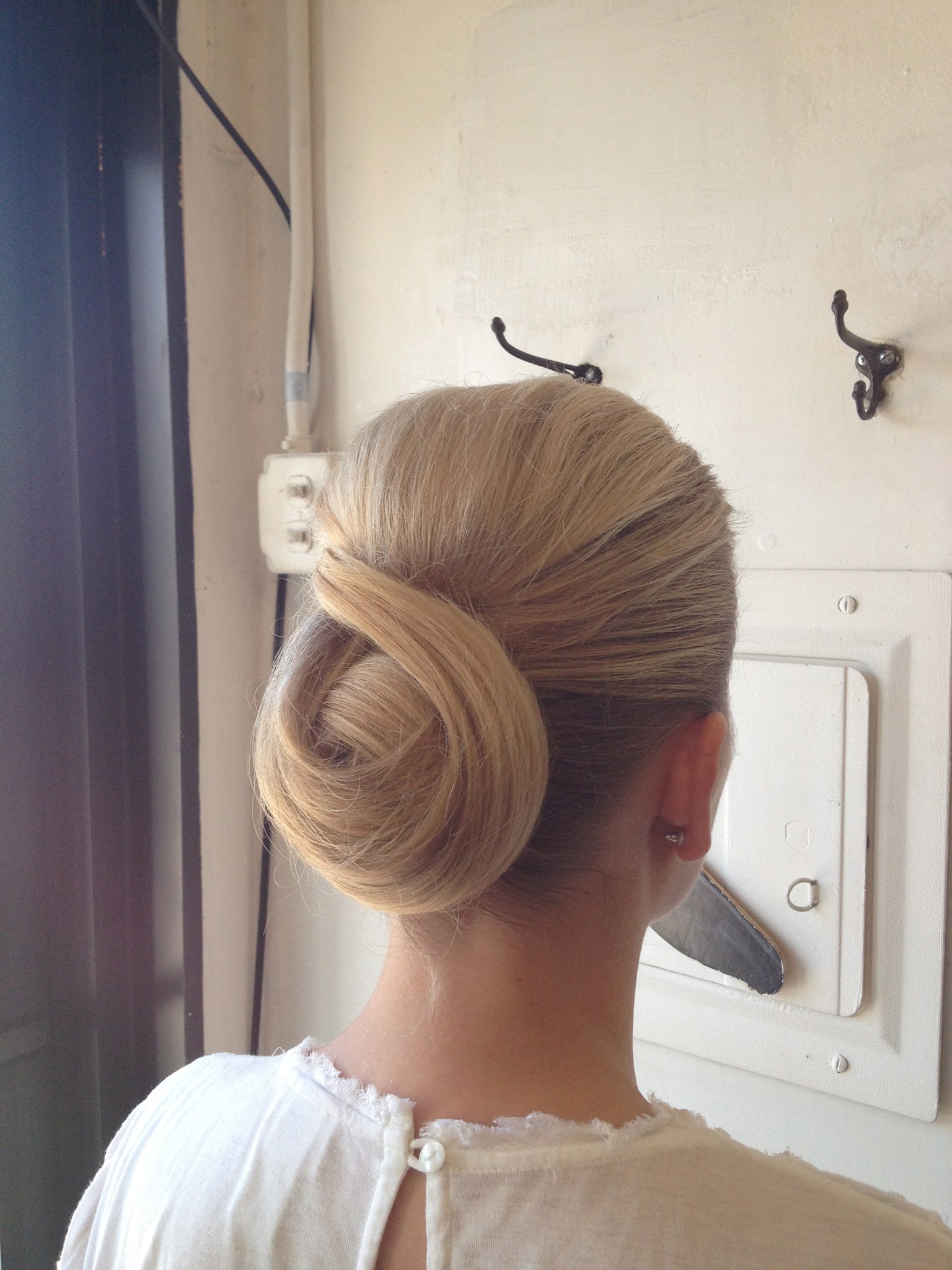
A chignon (, , ), from the French chignon meaning a bun, is a hairstyle characterized by wrapped hair on the back of the head. In the United States and the United Kingdom, it is often used as an abbreviation of the French phrase chignon du cou, signifying a low bun worn at the nape of the neck.
Chignons are generally achieved by pinning the hair into a knot at the nape of the neck or at the back of the head, but there are many variations of the style. They are usually secured with accessories such as barrettes or hairpins. Chignons are frequently worn for special occasions, like weddings and formal dances, but the basic chignon is also worn for everyday casual wear.
History
The chignon can be traced back to ancient Greece, where Athenian women commonly wore the style with gold or ivory handcrafted hairpins. Athenian men wore the same style, but they fastened their chignons with a clasp of "golden grasshoppers", according to The History of the Peloponnesian War, by Thucydides. The chignon was specific to Athens, as other city states, such as Cyprus and Sparta, had their own styles of hairdressing. The chignon was also popular in ancient China, where married women wore the low, knotted hairstyle.
Male writers of the Victorian era, like Anthony Trollope, were fond of poking fun at the perceived absurdity of the fashion, which was much in vogue in England in the 1860s. In the 1890s, the dancer Cléo de Mérode popularized the hairstyle in France.
References
Bibliography
- "History of Hair". 2004. UKHairdressers. Accessed 29 April 2007.
References
- Lacey, Miriam. (21 December 2011). "What's the Difference Between a Bun and a Chignon? Plenty, Actually".
- Rud, Melanie. (10 April 2022). "The Chignon Is Making a Major Comeback, Here's How to Wear It".
- Ngo, Hope. (3 February 2023). "The Difference Between A Bun And A Chignon Explained".
- (27 September 1954). "Perched Hats on Buns: Diminutive caps cling to long, coiled-up hair".
- Minden, E.G.. (2007). "The Ballet Companion: A Dancer's Guide to the Technique, Traditions, and Joys of Ballet".
- Trollope, Anthony. (1869). "He Knew He Was Right".
- (1916). "The Pennsylvania Gazette ...: Weekly Magazine of the University of Pennsylvania".
- (1903). "The American Telephone Journal".
- (1915). "Of Human Bondage".
This article was imported from Wikipedia and is available under the Creative Commons Attribution-ShareAlike 4.0 License. Content has been adapted to SurfDoc format. Original contributors can be found on the article history page.
Ask Mako anything about Chignon (hairstyle) — get instant answers, deeper analysis, and related topics.
Research with MakoFree with your Surf account
Create a free account to save articles, ask Mako questions, and organize your research.
Sign up freeThis content may have been generated or modified by AI. CloudSurf Software LLC is not responsible for the accuracy, completeness, or reliability of AI-generated content. Always verify important information from primary sources.
Report