From Surf Wiki (app.surf) — the open knowledge base
Chicago Water Tower
| Field | Value |
|---|---|
| name | Chicago Avenue Water Tower and Pumping Station |
| nrhp_type | cp |
| nocat | yes |
| image | The Chicago Water Tower.jpg |
| caption | The Chicago Water Tower |
| coordinates | |
| locmapin | United States Chicago Near North Side |
| location | 806 North Michigan Avenue |
| Chicago, Illinois | |
| United States | |
| built | |
| added | April 23, 1975 |
| refnum | 75000644 |
Chicago, Illinois United States
The Chicago Water Tower is a is 182.5 ft tall former water tower in Chicago, Illinois. Inside was a 138 ft high standpipe, which housed a large water pump. In addition to being used for firefighting, the pressure in the pipe could be regulated to control water surges in the area.
The tower became particularly well known when it survived the Great Chicago Fire of 1871 while adjacent buildings burned to the ground. Located at 806 Michigan Avenue, it is the centerpiece of a small park, the Jane M. Byrne Plaza. It lies along the Magnificent Mile shopping district in the city's Near North Side community area, and serves as an art gallery for the Chicago Office of Tourism.
The tower is a contributing property and landmark in the Old Chicago Water Tower District, and is listed on the National Register of Historic Places. The large urban, mixed-use development Water Tower Place was named after it.
History
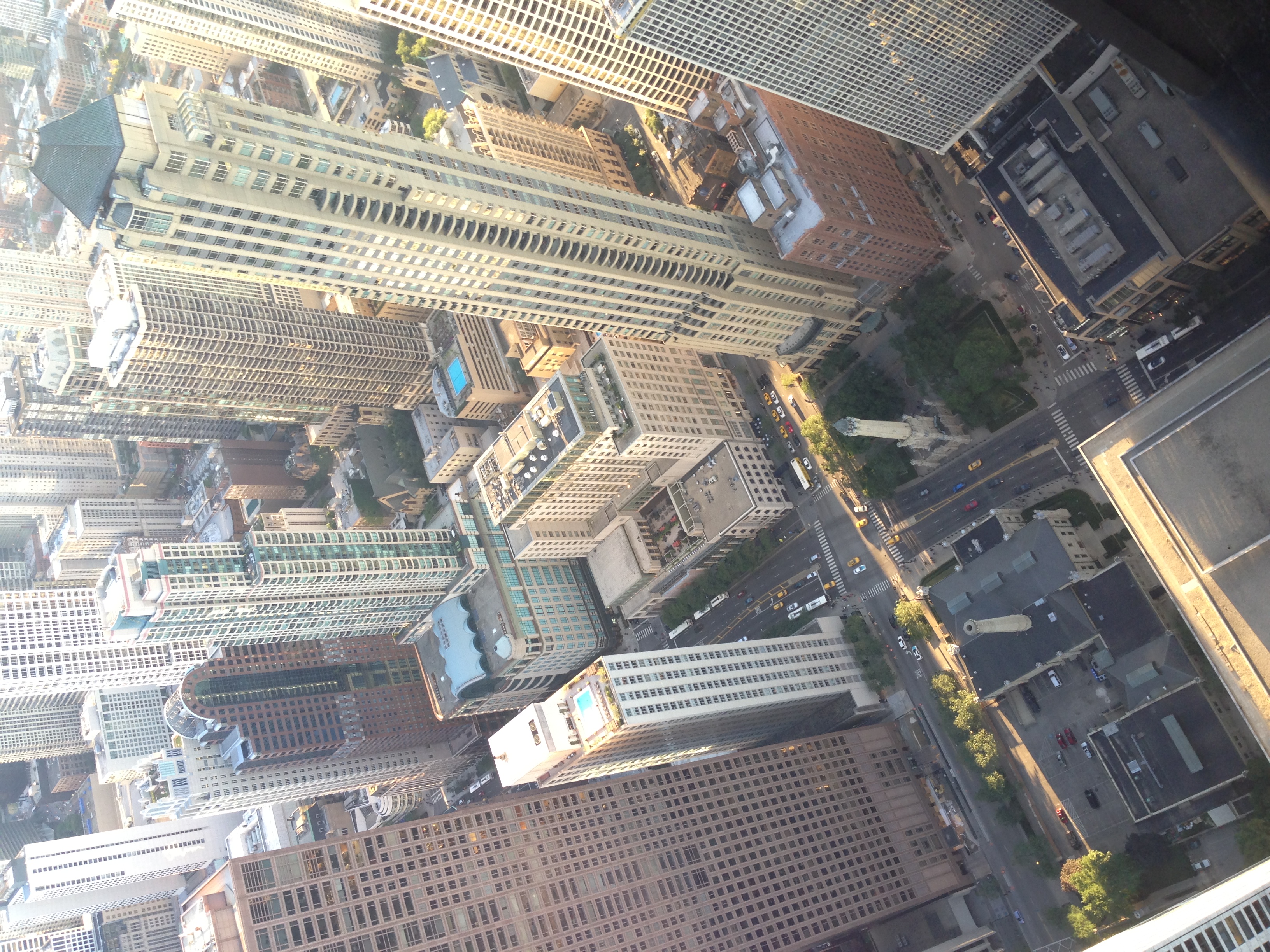
The tower was designed in 1869 by architect William W. Boyington, who also built the Soldiers' Home, Chicago's last surviving building with a direct association to the Civil War. Together with the adjacent Chicago Avenue Pumping Station, it drew water from water cribs in Lake Michigan.
Constructed from yellowing Lemont limestone, it is the second-oldest water tower in the United States, after the Louisville Water Tower in Louisville, Kentucky.
The tower gained prominence after the Great Chicago Fire of 1871 as the only public building in the burned zone to survive, and remains one of the few surviving structures still standing.
Ironically, the pumping station stopped working during the fire. The roof, not made of limestone, caught fire and the pumps stopped working, stopped supplying water to fight the fire.
After the fire, the water tower temporarily stored books donated by Queen Victoria and others to replace the burnt up ones.
In the years since the fire, the tower has become a symbol of old Chicago and of the city's recovery from the fire. In 1918, when Pine Street was widened, the plans were altered in order to give the Water Tower a featured location in the city.
The tower has undergone two renovations. The first took place during a three-year period, 1913–1916. At that time many of the limestone blocks were replaced. The second renovation occurred in 1978. This renovation consisted mostly of interior changes with only minor changes made to the exterior of the building. In 2014, the small park the tower is sited in was named for former Chicago mayor Jane Byrne. The tower hosts a small art gallery known as the City Gallery in the Historic Water Tower, which features the work of local photographers, artists and filmmakers.
The structure has not been universally admired. Oscar Wilde said it looked like "a castellated monstrosity with pepper boxes stuck all over it," although he did admire the arrangement and movement of the pumping machinery inside. The Water Tower's octagonal buttresses, crenelated towers, and parapet wall inspired the design of some White Castle restaurant buildings.{{cite book |last=Gardner|first=Denis P. |year=2004 |title=Minnesota Treasures: Stories Behind the State's Historic Places |publisher=Minnesota Historical Society |location=St. Paul, Minnesota |isbn=978-0-87351-471-2

References
References
- {{NRISref. 2006a
- (5 March 2015). "Throwback Thursday: Chicago Water Tower Edition". Chicago Architecture.
- Wolfe, Gerald. (1996). "Chicago In and Around the Loop - Walking Tours of Architecture and History". McGraw-Hill.
- (1996-04-16). "Soldiers' Home".
- "Southwest Suburbs: Joliet". WTTW.
- Andreas, A.T.. (1885). "History of Chicago". A.T. Andreas Co..
- (2012). "The Couch Tomb {{mdash}} Hidden truths: Visualizing the City Cemetery". Hidden Truths: The Chicago Cemetery & Lincoln Park.
- (2022). "The Great Chicago Fire". WTTW.
- Shallat, Todd A.. (1978). "Water and the rise of public ownership on the Fresno plain, 1850 to 1978". City of Fresno Public Works Department.
- "The Historic Water Tower: Chicago's Gem". Illinois History Documents.
- "Remembering Jane Byrne".
- Siegel, Arthur. (1969). "Chicago's Famous Buildings". University of Chicago Press.
- "Oscar Wilde and The Chicago Water Tower".
- "Ask Geoffrey: White Castle Inspired by Chicago Water Tower?".
- Lukas, J. Anthony. (1971-07-04). "As American as a McDonald's Hamburger On the Fourth of July". The New York Times.
- (February 9, 2005). "Freddy & Kendra Win Amazing Race". [[WLTX]].
- Ray, Lincee. (June 1, 2007). "The Amazing Race finale recap: 'We're Going to Victory Lane'".
This article was imported from Wikipedia and is available under the Creative Commons Attribution-ShareAlike 4.0 License. Content has been adapted to SurfDoc format. Original contributors can be found on the article history page.
Ask Mako anything about Chicago Water Tower — get instant answers, deeper analysis, and related topics.
Research with MakoFree with your Surf account
Create a free account to save articles, ask Mako questions, and organize your research.
Sign up freeThis content may have been generated or modified by AI. CloudSurf Software LLC is not responsible for the accuracy, completeness, or reliability of AI-generated content. Always verify important information from primary sources.
Report