From Surf Wiki (app.surf) — the open knowledge base
Cassava
Staple crop

Staple crop
- Janipha aipi (Pohl) J.Presl
- Janipha manihot (L.) Kunth
- Jatropha aipi (Pohl) Göpp.
- Jatropha diffusa (Pohl) Steud.
- Jatropha digitiformis (Pohl) Steud.
- Jatropha dulcis J.F.Gmel.
- Jatropha flabellifolia (Pohl) Steud.
- Jatropha loureiroi (Pohl) Steud.
- Jatropha manihot L.
- Jatropha mitis Rottb.
- Jatropha paniculata Ruiz & Pav. ex Pax
- Jatropha silvestris Vell.
- Jatropha stipulata Vell.
- Mandioca aipi (Pohl) Link
- Mandioca dulcis (J.F.Gmel.) D.Parodi
- Mandioca utilissima (Pohl) Link
- Manihot aipi Pohl
- Manihot aypi Spruce
- Manihot cannabina Sweet
- Manihot diffusa Pohl
- Manihot digitiformis Pohl
- Manihot dulcis (J.F.Gmel.) Baill.
- Manihot edule A.Rich.
- Manihot edulis A.Rich.
- Manihot flabellifolia Pohl
- Manihot flexuosa Pax & K.Hoffm.
- Manihot loureiroi Pohl
- Manihot melanobasis Müll. Arg.
- Manihot sprucei Pax
- Manihot utilissima Pohl
Manihot esculenta, commonly called cassava, manioc, or yuca (among numerous regional names), is a woody shrub of the spurge family, Euphorbiaceae, native to South America, from Brazil, Paraguay and parts of the Andes. Although a perennial plant, cassava is extensively cultivated in tropical and subtropical regions as an annual crop for its edible starchy tuberous root. Cassava is predominantly consumed in boiled form, but substantial quantities are processed to extract cassava starch, called tapioca, which is used for food, animal feed, and industrial purposes. The Brazilian farofa, and the related garri of West Africa, is an edible coarse flour obtained by grating cassava roots, pressing moisture off the obtained grated pulp, and finally drying and roasting it.
Cassava is the third-largest source of carbohydrates in food in the tropics, after rice and maize, making it an important staple; more than 500 million people depend on it. It offers the advantage of being exceptionally drought-tolerant, and able to grow productively on poor soil. The largest producer is Nigeria, while Thailand is the largest exporter of cassava starch.
Cassava is grown in sweet and bitter varieties; both contain toxins, but the bitter varieties have them in much larger amounts. Cassava has to be prepared carefully for consumption, as improperly prepared material can contain sufficient cyanide to cause poisoning. The more toxic varieties of cassava have been used in some places as famine food during times of food insecurity. Farmers may however choose bitter cultivars to minimise crop losses.
Etymology
The generic name Manihot and the common name "manioc" both derive from the Guarani (Tupi) name mandioca or manioca for the plant. The specific name esculenta is Latin for 'edible'. The common name "cassava" is a 16th century word from the French or Portuguese cassave, in turn from Taíno caçabi. The common name "yuca" or "yucca" is most likely also from Taíno, via Spanish yuca or juca.
Description
Cassava is a perennial species that is usually harvested within one year after planting. The harvested part is the storage root, which is long and tapered, with an easily detached rough brown rind. The white or yellowish flesh is firm and even in texture. Commercial cultivars can be 5 to wide at the top, and some 15 to long, with a woody vascular bundle running down the middle. The tuberous roots are largely starch, with small amounts of calcium (16 milligrams per 100 grams), phosphorus (27 mg/100 g), and vitamin C (20.6 mg/100 g). Content of total pro-vitamin A carotenoids has been increased through conventional breeding from a maximum of 10.3 to 24.3 υg/g FW basis Cassava roots contain little protein, whereas the leaves are rich in it, except for being low in methionine, an essential amino acid.
Cassava is monoecious, with separate male and female flower on the same plant, arranged in inflorescences. These develop at the apex of the growing stem; buds can sprout to form new branches below the inflorescence, enabling continued vegetative growth. Farmers prefer a non-branching (erect) plant because it is easier to collect, transport, and store. However, the erect form complicates plant breeding as flowers are scarce or absent; breeders make use of photoperiod extension, pruning, and plant growth regulators to encourage flowering.
File:Cassava cultivation in Kerala (cropped).jpg|Cassava plant File:Manihot esculenta dsc07325.jpg|Unprocessed tuberous roots File:Manihot esculenta - cross section 2.jpg|Tuberous root in cross-section File:Cassava1 (3945716612).jpg |Leaf File:Cassava2 (3945624614).jpg |Leaf detail File:Manihot esculenta cassava flower vijayanrajapuram.jpg|Flower buds File:Manihot esculenta MHNT.BOT.2004.0.508.jpg |Seeds and opened fruit
Genome
The complete and haplotype-resolved African cassava (TME204) genome has been reconstructed and made available using the Hi-C technology. The genome shows abundant novel gene loci with enriched functionality related to chromatin organization, meristem development, and cell responses. Differentially expressed transcripts of different haplotype origins were enriched for different functionality during tissue development. In each tissue, 20–30% of transcripts showed allele-specific expression differences with
Although smallholders are otherwise economically inefficient producers, they are vital to productivity at particular times. Small cassava farmers are no exception. Genetic diversity is vital when productivity has declined due to pests and diseases, and smallholders tend to retain less productive but more diverse gene pools.
The molecular genetics of starchy root development in cassava have been analyzed and compared to other root and tuber crops, including possible (unproven) roles for Flowering Locus T (FT) orthologs.
History
Wild populations of M. esculenta subspecies flabellifolia, shown to be the progenitor of domesticated cassava, are centered in west-central Brazil, where it was likely first domesticated no more than 10,000 years ago. Forms of the modern domesticated species can also be found growing in the wild in the south of Brazil. By 4600 BC, cassava pollen appears in the Gulf of Mexico lowlands, at the San Andrés archaeological site. The oldest direct evidence of cassava cultivation comes from a 1,400-year-old Maya site, Joya de Cerén, in El Salvador. It became a staple food of the native populations of northern South America, southern Mesoamerica, and the Taino people in the Caribbean islands, who grew it using a high-yielding form of shifting agriculture by the time of European contact in 1492. Cassava was a staple food of pre-Columbian peoples in the Americas and is often portrayed in indigenous art. The Moche people often depicted cassava in their ceramics.
Spaniards in their early occupation of Caribbean islands did not want to eat cassava or maize, which they considered insubstantial, dangerous, and not nutritious. They much preferred foods from Spain, specifically wheat bread, olive oil, red wine, and meat, and considered maize and cassava damaging to Europeans. The cultivation and consumption of cassava were nonetheless continued in both Portuguese and Spanish America. Mass production of cassava bread became the first Cuban industry established by the Spanish. Ships departing to Europe from Cuban ports such as Havana, Santiago, Bayamo, and Baracoa carried goods to Spain, but sailors needed to be provisioned for the voyage. The Spanish also needed to replenish their boats with dried meat, water, fruit, and large amounts of cassava bread. Sailors complained that it caused them digestive problems.
Portuguese traders introduced cassava to Africa from Brazil in the 16th century. Around the same period, it was introduced to Asia through Columbian Exchange by Portuguese and Spanish traders, who planted it in their colonies in Goa, Malacca, Eastern Indonesia, Timor and the Philippines. Cassava has also become an important crop in Asia. While it is a valued food staple in parts of eastern Indonesia, it is primarily cultivated for starch extraction and bio-fuel production in Thailand, Cambodia and Vietnam. Cassava is sometimes described as the "bread of the tropics" but should not be confused with the tropical and equatorial bread tree (Encephalartos), the breadfruit (Artocarpus altilis) or the African breadfruit (Treculia africana). This description definitely holds in Africa and parts of South America; in Asian countries such as Vietnam fresh cassava barely features in human diets. Cassava was introduced to East Africa around 1850 by Arab and European settlers, who promoted its cultivation as a reliable crop to mitigate the effects of drought and famine.
There is a legend that cassava was introduced in 1880–1885 to the South Indian state of Kerala by the King of Travancore, Vishakham Thirunal Maharaja, after a great famine hit the kingdom, as a substitute for rice. However, cassava was cultivated in the state before that time. Cassava is called kappa or maricheeni in Malayalam, and tapioca in Indian English usage.
File:Taíno women preparing cassava bread.png|Taíno women preparing cassava bread in 1565: grating tuberous roots into paste, shaping the bread, and cooking it on a fire-heated burén File:Albert_Eckhout_-_Mandioca.jpg|17th-century painting by Albert Eckhout in Dutch Brazil
Cultivation
Optimal conditions for cassava cultivation are mean annual temperatures between 20 and 29 C, annual precipitation between 1000 and 2500 mm, and an annual growth period of no less than 240 days. Cassava is propagated by cutting the stem into sections of approximately 15 cm, these being planted prior to the wet season. Cassava growth is favorable under temperatures ranging from 25 to 29 C, but it can tolerate temperatures as low as 12 C and as high as 40 C. These conditions are found, among other places, in the northern part of the Gulf Coastal Plain in Mexico. In this part of Mexico the following soil types have been shown to be good for cassava cultivation: phaeozem, regosol, arenosol, andosol and luvisol.
File:Cassava stakes1 (4627297822).jpg|Stakes File:Cassava grafting7 (4425027331).jpg|Grafting
Harvesting
Before harvest, the leafy stems are removed. The harvest is gathered by pulling up the base of the stem and cutting off the tuberous roots.
Handling and storage
Cassava deteriorates after harvest, when the tuberous roots are first cut. The healing mechanism produces coumaric acid, which oxidizes and blackens the roots, making them inedible after a few days. This deterioration is related to the accumulation of reactive oxygen species initiated by cyanide release during mechanical harvesting. Cassava shelf life may be increased up to three weeks by overexpressing a cyanide-insensitive alternative oxidase, which suppressed ROS by 10-fold. Post-harvest deterioration is a major obstacle to the export of cassava. Fresh cassava can be preserved like potato, using thiabendazole or bleach as a fungicide, then wrapping in plastic, freezing, or applying a wax coating.
While alternative methods for controlling post-harvest deterioration have been proposed, such as preventing reactive oxygen species effects by using plastic bags during storage and transport, coating the roots with wax, or freezing roots, such strategies have proved to be economically or technically impractical, leading to breeding of cassava varieties with improved durability after harvest, achieved by different mechanisms. One approach used gamma rays to try to silence a gene involved in triggering deterioration; another strategy selected for plentiful carotenoids, antioxidants which may help to reduce oxidization after harvest.
File:NP Cassava Processing 7 (5867707684).jpg|Starch processing File:NP Cassava Starch Processing (5867152719).jpg|Starch flour File:Vietnam cassava processing3 lo (4070319057).jpg|Starch wet-processing File:Secando casabe.JPG|Spreading Casabe burrero (cassava bread) to dry, Venezuela File:Vietnam cassava processing24lo (4070342389).jpg|Starch being prepared for packaging File:Vietnam cassava cellophane noodles.jpg|Starch noodles packaged for shipping File:Frozen cassava leaves.jpg|Frozen leaves in a Los Angeles market File:Cassava buds (4733912948).jpg|Picked buds
Pests and diseases
.jpg)
Cassava is subject to pests from multiple taxonomic groups, including nematodes, and insects, as well as diseases caused by viruses, bacteria, and fungi. All cause reductions in yield, and some cause serious losses of crops.
Viruses
Several viruses cause enough damage to cassava crops to be of economic importance. The African cassava mosaic virus causes the leaves of the cassava plant to wither, limiting the growth of the root. An outbreak of the virus in Africa in the 1920s led to a major famine. The virus is spread by the whitefly and by the transplanting of diseased plants into new fields. Sometime in the late-1980s, a mutation occurred in Uganda that made the virus even more harmful, causing the complete loss of leaves. This mutated virus spread at a rate of 50 mi per year, and as of 2005 was found throughout Uganda, Rwanda, Burundi, the Democratic Republic of the Congo and the Republic of the Congo. Viruses are a severe production limitation in the tropics. They are the primary reason for the complete lack of yield increases in the 25 years . Cassava brown streak virus disease is a major threat to cultivation worldwide. Cassava mosaic virus (CMV) is widespread in Africa, causing cassava mosaic disease (CMD). Bredeson et al. 2016 find the M. esculenta cultivars most widely used on that continent have M. carthaginensis subsp. glaziovii genes of which some appear to be CMD resistance genes. Although the ongoing CMD pandemic affects both East and Central Africa, Legg et al. found that these two areas have two distinct subpopulations of the vector, Bemisia tabaci whiteflies. Genetically engineered cassava offers opportunities for the improvement of virus resistance, including CMV and CBSD resistance.
Bacteria
Among the most serious bacterial pests is Xanthomonas axonopodis pv. manihotis, which causes bacterial blight of cassava. This disease originated in South America and has followed cassava around the world. Bacterial blight has been responsible for near catastrophic losses and famine in past decades, and its mitigation requires active management practices. Several other bacteria attack cassava, including the related Xanthomonas campestris pv. cassavae, which causes bacterial angular leaf spot.
Fungi and oomycetes
Rust of cassava Several fungi and oomycetes bring about significant crop losses, one of the most serious being cassava root rot; the pathogens involved are species of Phytophthora, the genus which causes potato blight. Cassava root rot can result in losses of as much as 80 percent of the crop. A major pest is a rust caused by Uromyces manihotis. Superelongation disease, caused by Elsinoë brasiliensis, can cause losses of over 80 percent of young cassava in Latin America and the Caribbean when temperature and rainfall are high.
Nematodes
Nematode pests of cassava are thought to cause harms ranging from negligible to seriously damaging, making the choice of management methods difficult. A wide range of plant parasitic nematodes have been reported associated with cassava worldwide. These include Pratylenchus brachyurus, Rotylenchulus reniformis, Helicotylenchus spp., Scutellonema spp. and Meloidogyne spp., of which Meloidogyne incognita and Meloidogyne javanica are the most widely reported and economically important. Meloidogyne spp. feeding produces physically damaging galls with eggs inside them. Galls later merge as the females grow and enlarge, and they interfere with water and nutrient supply. Cassava roots become tough with age and restrict the movement of the juveniles and the egg release. It is therefore possible that extensive galling can be observed even at low densities following infection. Other pests and diseases can gain entry through the physical damage caused by gall formation, leading to rots. They have not been shown to cause direct damage to the enlarged tuberous roots, but plant height can be reduced if the root system is reduced. Nematicides reduce the numbers of galls per feeder root, along with fewer rots in the tuberous roots. The organophosphorus nematicide fenamiphos does not reduce crop growth or harvest yield. Nematicide use in cassava does not increase harvested yield significantly, but lower infestation at harvest and lower subsequent storage loss provide a higher effective yield. The use of tolerant and resistant cultivars is the most practical management method in most locales.
Insects
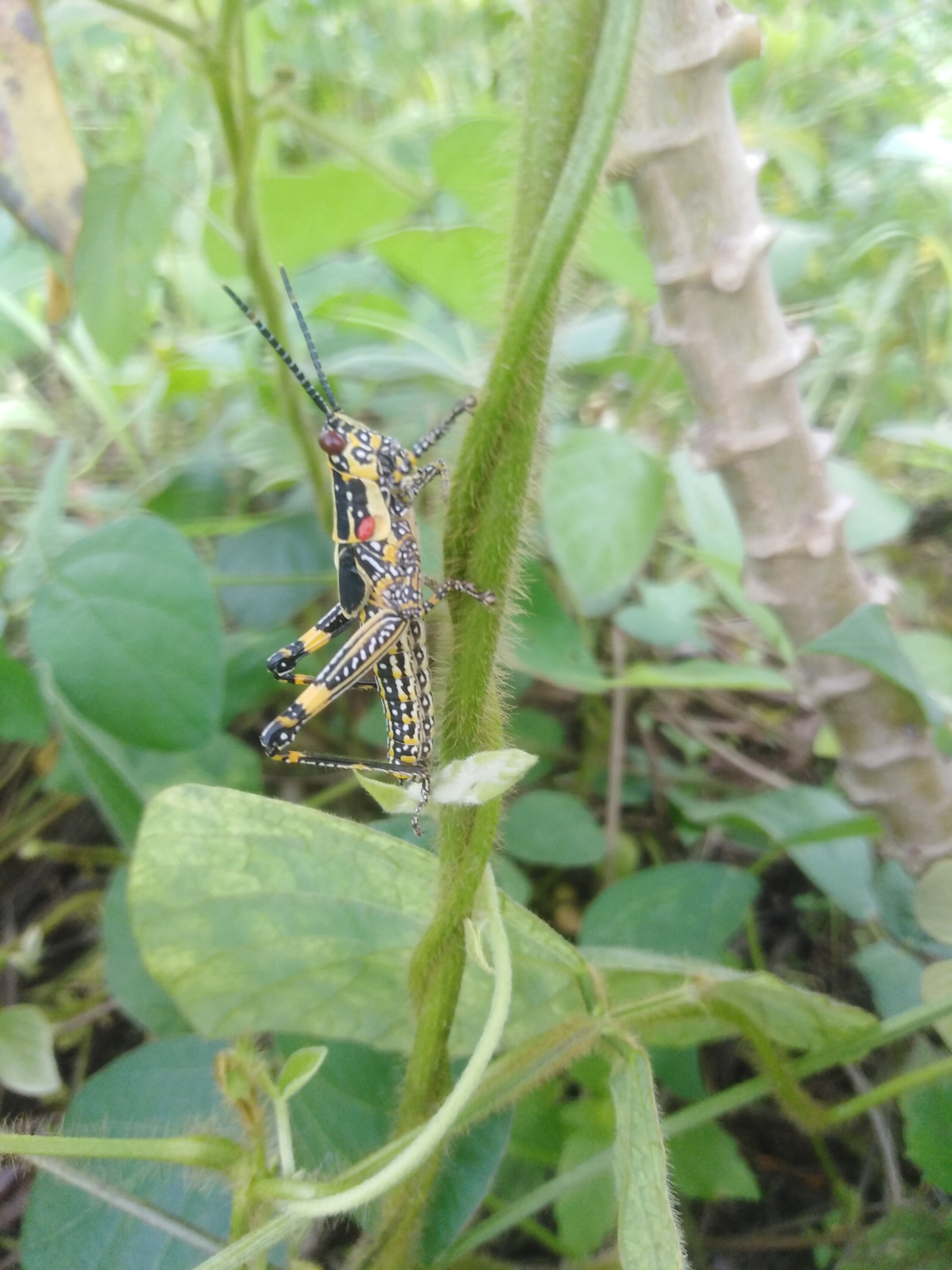
Insects such as stem borers and other beetles, moths including Chilomima clarkei, scale insects, fruit flies, shootflies, burrower bugs, grasshoppers, leafhoppers, gall midges, leafcutter ants, and termites contribute to losses of cassava in the field, while others contribute to serious losses, between 19% and 30%, of dried cassava in storage. In Africa, a previous issue was the cassava mealybug (Phenacoccus manihoti) and cassava green mite (Mononychellus tanajoa). These pests can cause up to 80 percent crop loss, which is extremely detrimental to the production of subsistence farmers. These pests were rampant in the 1970s and 1980s but were brought under control following the establishment of the Biological Control Centre for Africa of the International Institute of Tropical Agriculture (IITA) under the leadership of Hans Rudolf Herren. The Centre investigated biological control for cassava pests; two South American natural enemies Anagyrus lopezi (a parasitoid wasp) and Typhlodromalus aripo (a predatory mite) were found to effectively control the cassava mealybug and the cassava green mite, respectively.
Production
| Cassava production – 2022 | Country | millions of tonnes |
|---|---|---|
| 60.8 | ||
| 48.8 | ||
| 34.1 | ||
| 25.6 | ||
| 17.7 | ||
| 17.6 | ||
| **World** | **330** | |
| Source: FAOSTAT of the United Nations |
In 2022, world production of cassava root was 330 million tonnes, led by Nigeria with 18% of the total (table). Other major growers were Democratic Republic of the Congo and Thailand.
Cassava is the third-largest source of carbohydrates in food in the tropics, after rice and maize. making it an important staple; more than 500 million people depend on it. It offers the advantage of being exceptionally drought-tolerant, and able to grow productively on poor soil. Cassava grows well within 30° of the equator, where it can be produced at up to 2000 m above sea level, and with 50 to of rain per year. These environmental tolerances suit it to conditions across much of South America and Africa.
Cassava yields a large amount of food energy per unit area of land per day – 250,000 kcal/ha, as compared with 156,000 kcal/ha for rice, 110,000 kcal/ha for wheat and 200,000 kcal/ha for maize.
Cassava, yams (Dioscorea spp.), and sweet potatoes (Ipomoea batatas) are important sources of food in the tropics. The cassava plant gives the third-highest yield of carbohydrates per cultivated area among crop plants, after sugarcane and sugar beets. Cassava plays a particularly important role in agriculture in developing countries, especially in sub-Saharan Africa, because it does well on poor soils and with low rainfall, and because it is a perennial that can be harvested as required. Its wide harvesting window allows it to act as a famine reserve and is invaluable in managing labor schedules. It offers flexibility to resource-poor farmers because it serves as either a subsistence or a cash crop. Worldwide, 800 million people depend on cassava as their primary food staple.
Toxicity
Cassava roots, peels and leaves are dangerous to eat raw because they contain linamarin and lotaustralin, which are toxic cyanogenic glycosides. These are decomposed by the cassava enzyme linamarase, releasing poisonous hydrogen cyanide. Cassava varieties are often categorized as either bitter (high in cyanogenic glycosides) or sweet (low in those bitter compounds). Sweet cultivars can contain as little as 20 milligrams of cyanide per kilogram of fresh roots, whereas bitter cultivars may contain as much as 1000 milligrams per kilogram. Cassavas grown during drought are especially high in these toxins. A dose of 25 mg of pure cassava cyanogenic glucoside, which contains 2.5 mg of cyanide, is sufficient to kill a rat. Excess cyanide residue from improper preparation causes goiters and acute cyanide poisoning, and is linked to ataxia (a neurological disorder affecting the ability to walk, also known as konzo). It has also been linked to tropical fibrocalcific pancreatitis in humans, leading to chronic pancreatitis.
Symptoms of acute cyanide intoxication appear four or more hours after ingesting raw or poorly processed cassava: vertigo, vomiting, goiter, ataxia, partial paralysis, collapse, and death. It can be treated easily with an injection of thiosulfate (which makes sulfur available for the patient's body to detoxify by converting the poisonous cyanide into thiocyanate).
Chronic, low-level exposure to cyanide may contribute to both goiter and tropical ataxic neuropathy, also called konzo, which can be fatal. The risk is highest in famines, when as many as 3 percent of the population may be affected.
Like many other root and tuber crops, both bitter and sweet varieties of cassava contain antinutritional factors and toxins; the bitter varieties contain much larger amounts. The more toxic varieties of cassava have been used in some places as famine food during times of food insecurity. For example, during the shortages in Venezuela in the late 2010s, dozens of deaths were reported due to Venezuelans resorting to eating bitter cassava in order to curb starvation. Cases of cassava poisoning were also documented during the famine accompanying the Great Leap Forward (1958–1962) in China. Farmers may select bitter cultivars to reduce crop losses.
Societies that traditionally eat cassava generally understand that processing (soaking, cooking, fermentation, etc.) is necessary to avoid getting sick. Brief soaking (four hours) of cassava is not sufficient, but soaking for 18–24 hours can remove up to half the level of cyanide. Drying may not be sufficient, either.
In many West African regions, especially Nigeria, bitter cassava roots are traditionally detoxified in a lengthy process. The roots are peeled and grated. The moist pulp is soaked (or "retted") in water for 48 to 72 hours to initiate spontaneous fermentation. During this period endogenous linamarase acts on linamarin and lotaustralin; the resulting hydrogen cyanide dissolves or volatilises, reducing the cyanogenic potential by 85 – 99 %. After soaking, the mash is pressed to expel liquid and boiled, roasted, or toasted to make foods such as gari, fufu, and lafun, further lowering residual cyanide to within the WHO safe limit of 10 mg HCN kg⁻¹.
For some smaller-rooted, sweet varieties, cooking is sufficient to eliminate all toxicity. The cyanide is carried away in the processing water and the amounts produced in domestic consumption are too small to have environmental impact. The larger-rooted, bitter varieties used for production of flour or starch must be processed to remove the cyanogenic glucosides. The large roots are peeled and then ground into flour, which is then soaked in water, squeezed dry several times, and toasted. The starch grains that flow with the water during the soaking process are also used in cooking. The flour is used throughout South America and the Caribbean. Industrial production of cassava flour, even at the cottage level, may generate enough cyanide and cyanogenic glycosides in the effluents to have a severe environmental impact.
Uses
Food and drink
Main article: Cassava-based dishes
There are many ways of cooking cassava. It has to be prepared correctly to remove its toxicity. The root of the sweet variety is mild to the taste, like potatoes; In Brazil, farofa, a dry meal made from cooked powdered cassava, is roasted in butter, eaten as a side dish, or sprinkled on other food.Jewish households sometimes use it in cholent. It can be made into a flour that is used in breads, cakes and cookies. In Taiwanese culture, later spread to the United States, cassava "juices" are dried to a fine powder and used to make tapioca, a popular starch used to make bubbles (tapioca pearl), a chewy topping in bubble tea.
Alcoholic beverages made from cassava include cauim (Brazil), kasiri (Venezuela, Guyana, Suriname), parakari or kari (Venezuela, Guyana, Surinam), and nihamanchi (South America),
File:Cassava heavy cake.jpg|Heavy cake File:Cassava bread.jpg|Bread File:Cambodia16 lo (4039995158).jpg|Noodles, Cambodia
Preparation of bitter cassava
An ancestral method used by the indigenous people of the Caribbean to detoxify cassava is by peeling, grinding, and mashing; filtering the mash through a basket tube (sebucan or tipiti) to remove the hydrogen cyanide; and drying and sieving the mash for flour. The poisonous filtrate water was boiled to release the hydrogen cyanide, and used as a base for stews.
A safe processing method known as the "wetting method" is to mix the cassava flour with water into a thick paste, spread it in a thin layer over a basket and then let it stand for five hours at 30 °C in the shade. In that time, about 83% of the cyanogenic glycosides are broken down by linamarase; the resulting hydrogen cyanide escapes to the atmosphere, making the flour safe for consumption the same evening.
The traditional method used in West Africa is to peel the roots and put them into water for three days to ferment. The roots are then dried or cooked. In Nigeria and several other west African countries, including Ghana, Cameroon, Benin, Togo, Ivory Coast, and Burkina Faso, they are usually grated and lightly fried in palm oil to preserve them. The result is a foodstuff called garri. Fermentation is also used in other places such as Indonesia, such as Tapai. The fermentation process also reduces the level of antinutrients, making the cassava a more nutritious food. The reliance on cassava as a food source and the resulting exposure to the goitrogenic effects of thiocyanate has been responsible for the endemic goiters seen in the Akoko area of southwestern Nigeria.
File:PeeledCassava.jpg|Tuberous root, peeled and soaking to reduce toxicity File:Tipiti.jpg|Filling a sebucan or tipiti filter
Bioengineering has been applied to grow cassava with lower cyanogenic glycosides combined with fortification of vitamin A, iron and protein to improve the nutrition of people in sub-Saharan Africa.
In Guyana the traditional cassareep is made from bitter cassava juice. The juice is boiled until it is reduced by half in volume, to the consistency of molasses and flavored with spices—including cloves, cinnamon, salt, sugar, and cayenne pepper. Traditionally, cassareep was boiled in a soft pot, the actual "pepper pot", which would absorb the flavors and also impart them (even if dry) to foods such as rice and chicken cooked in it. The poisonous but volatile hydrogen cyanide is evaporated by heating. Nevertheless, improperly cooked cassava has been blamed for a number of deaths. Amerindians from Guyana reportedly made an antidote by steeping chili peppers in rum. The natives of Guyana traditionally brought the product to town in bottles, and it is available on the US market in bottled form.
Nutrition
Raw cassava is 60% water, 38% carbohydrates, 1% protein, and has negligible fat (table). In a 100 g reference serving, raw cassava provides 160 kcal of food energy and 23% of the Daily Value (DV) of vitamin C, but otherwise has no micronutrients in significant content (i.e., above 10% of the relevant DV).
Biofuel
Cassava has been studied as a feedstock to produce ethanol as a biofuel, including to improve the efficiency of conversion from cassava flour, and to convert crop residues such as stems and leaves as well as the more easily processed roots. China has created facilities to produce substantial amounts of ethanol fuel from cassava roots. The small-granule mutation facilitates starch hydrolysis and has been linked to biofuel production.
Animal feed
Cassava roots and hay are used worldwide as animal feed. Young cassava hay is harvested at three to four month, when it reaches about 30 to above ground; it is dried in the sun until its dry matter content approaches 85 percent. The hay contains 20–27 percent protein and 1.5–4 percent tannin. It is valued as a source of roughage for ruminants such as cattle.
File:Cassava being grated.jpg|Grating of tuberous roots File:Close-up of grated cassava.jpg|A close-up of the product File:Cassava drying on a road.jpg|Drying on road to be used for pig and chicken feed
Laundry starch
Cassava is used in laundry products, especially as starch to stiffen shirts and other garments.
Folklore
Maní, a Tupí myth of origins, is the name of an indigenous girl with very fair complexion. The Amazonian legend of Maní is related to the cult of Manioc, the native staple that sprang from her grave. Sometime later a crack opened on the earth and the people of the tribe found a fruit that resembled the white skin tone of the dead child's body. They picked up the fruit from the ground, peeled and cooked it, and for their surprise it tasted delicious. It even renewed their strength. They also prepared a drink which could easily put one to sleep. So, from this day on, they began using the root as their staple food and called it "mandioca", which in Tupy language means "house (oca, in Tupi–Guarani) of Mandi= Maní".
In Java, a myth relates that food derives from the body of Dewi Teknowati, who killed herself rather than accept the advances of the god Batara Guru. She was buried, and her lower leg grew into a cassava plant. In Trinidad, folk stories tell of a saapina or snake-woman; the word is related to sabada, meaning to pound, for what is traditionally a woman's work of pounding cassava.
The identity of the Macushi people of Guyana is closely bound up with the growth and processing of cassava in their slash-and-burn subsistence lifestyle. A story tells that the great spirit Makunaima climbed a tree, cutting off pieces with his axe; when they landed on the ground, each piece became a type of animal. The opossum brought the people to the tree, where they found all the types of food, including bitter cassava. A bird told the people how to prepare the cassava safely.
References
References
- (2022). "''Manihot esculenta'' Crantz, Rei Herb. 1: 167 (1766)". Board of Trustees of the Royal Botanic Gardens, Kew.
- {{GRIN
- "manioc (n.)". [[Online Etymology Dictionary]].
- "''Manihot esculenta'' Crantz". Singapore National Parks.
- "cassava (n.)". [[Online Etymology Dictionary]].
- "yucca (n.)". [[Online Etymology Dictionary]].
- (May 2016). "Basic Report: 11134, Cassava, raw". Agricultural Research Service, US Department of Agriculture.
- Ceballos, Hernan. (November 1, 2013). "Rapid Cycling Recurrent Selection for Increased Carotenoids Content in Cassava Roots". Crop Science.
- (2015). "Potential of cassava leaves in human nutrition: a review". [[Trends in Food Science & Technology]].
- Ravindran, Velmerugu. (1992). "Preparation of cassava leaf products and their use as animal feeds". FAO Animal Production and Health Paper.
- Pineda, Marcela. (2020). "Induction of Earlier Flowering in Cassava through Extended Photoperiod". [[MDPI (publisher).
- Pineda, Marcela. (2020). "Effect of Pruning Young Branches on Fruit and Seed Set in Cassava". Frontiers in Plant Sciences.
- Hyde, Peter. (2024). "Development of Methods for Improving Flowering and Seed Set of Diverse Germplasm in Cassava Breeding". [[MDPI(publisher).
- Damasceno Santos, Alexandra. (2023). "Flowering induction in cassava using photoperiod extension premature pruning and plant growth regulators". [[PLOS One]].
- (2022). "The haplotype-resolved chromosome pairs of a heterozygous diploid African cassava cultivar reveal novel pan-genome and allele-specific transcriptome features". [[GigaScience]].
- (2020). "Pacific Island food security: situation, challenges and opportunities". Asia Pacific Press.
- (2021). "Tuber and Tuberous Root Development". [[Annual Reviews (publisher).
- (1999). "Evidence on the origin of cassava: phylogeography of ''Manihot esculenta''". [[Proceedings of the National Academy of Sciences of the United States of America]].
- (2001). "Origin and Environmental Setting of Ancient Agriculture in the Lowlands of Mesoamerica". [[Science (journal).
- Carroll, Rory. (23 August 2007). "CU team discovers Mayan crop system". [[The Guardian]].
- "Taino: History & Culture".
- Berrin, Katherine & Larco Museum. ''The Spirit of Ancient Peru:Treasures from the [[Larco Museum. Museo Arqueológico Rafael Larco Herrera]].'' New York: [[Thames & Hudson]], 1997.
- Earle, Rebecca (2012) ''The Body of the Conquistador: Food, Race, and the Colonial Experience in Spanish America, 1492–1700''. New York: Cambridge University Press. pp. 54–57, 151. {{ISBN. 978-1107693296.
- Long, Janet. (2003). "Conquest and food: consequences of the encounter of two worlds; page 75". UNAM.
- Watkins, Thayer. (2006). "The Economic History of Havana, Cuba: A City So Beautiful and Important It Was Once Worth More Than All of Florida". San José State University, Department of Economics.
- Super, John C.. (1984). "Spanish Diet in the Atlantic Crossing". [[Terrae Incognitae]].
- Nweke, Felix I.. (2005). "A review of cassava in Africa with country case studies on Nigeria, Ghana, the United Republic of Tanzania, Uganda and Benin". The Food and Agriculture Organization of the United Nations.
- Hershey, Clair. (April 2000). "A review of cassava in Asia with country case studies on Thailand and Viet Nam". Food and Agriculture Organization of the United Nations.
- (2009). "Amazon Peasant Societies in a Changing Environment".
- (September 2019). "Cassava consumption and the occurrence of cyanide in cassava in Vietnam, Indonesia and Philippines". Public Health Nutrition.
- (1997). "Historical dictionary of Tanzania". Scarecrow Press.
- Nagarajan, Saraswathy. (June 27, 2019). "How tapioca came to Travancore". The Hindu.
- (1813). "Materia medica of Hindoostan, and artisan's and agriculturalist's nomenclature". Government Press.
- (1 February 2018). "Kappa for all seasons - many avatars of the magic starch root...".
- (2022). "Zonificación edafoclimática de la yuca (Manihot esculenta Crantz) para la producción sostenible de bioproductos". Norte Grande Geography Journal.
- Howeler, Reinhardt H.. (2007). "Production techniques for sustainable cassava production in Asia". Centro Internacional de Agricultura Tropical, Bangkok.
- (2010). "Soils, Plant Growth and Crop Production Volume II". [[EOLSS]] Publishers.
- (2012). "Extending cassava root shelf life via reduction of reactive oxygen species production". [[Plant Physiology (journal).
- "Storage and processing of roots and tubers in the tropics". [[U.N. Food and Agriculture Organization]].
- (2016). "Variation in cassava germplasm for tolerance to post-harvest physiological deterioration". [[Genetics and Molecular Research]].
- (2010). "Tolerance to Postharvest Physiological Deterioration in Cassava Roots". [[Crop Science (journal).
- "Cassava (manioc)".
- (31 May 2010). "Virus ravages cassava plants in Africa". [[The New York Times]].
- (31 August 2005). "Hungry African nations balk at biotech cassava". [[St. Louis Post-Dispatch]].
- Lebot, Vincent. (2020). "Tropical Root and Tuber Crops: Cassava, Sweet Potato, Yams And Aroids". CABI ([[Centre for Agriculture and Bioscience International]]).
- (2015). "Advances in Virus Research". Academic Press.
- (2014). "Spatio-temporal patterns of genetic change amongst populations of cassava Bemisia tabaci whiteflies driving virus pandemics in East and Central Africa". Virus Research.
- (2017). "Cassava Mosaic and Brown Streak Diseases: Current Perspectives and Beyond". [[Annual Reviews (publisher).
- Lozano, J. Carlos. (September 1986). "Cassava bacterial blight: a manageable disease". [[American Phytopathological Society]].
- (2021). "Cassava diseases caused by Xanthomonas phaseoli pv. manihotis and Xanthomonas cassavae". Molecular Plant Pathology.
- (June 2025). ["The Cassava Handbook"](https://www.academia.edu/download/98098352/The_Cassava_Handbook_2011.pdf#page=266 }}{{Dead link).
- (2019). "''Uromyces manihotis'' (rust of cassava)". [[Centre for Agriculture and Bioscience International.
- (1 January 2015). "Early detection of Super-elongation disease in Manihot esculenta Crantz (cassava) using molecular markers for gibberellic acid biosynthesis". European Journal of Plant Pathology.
- (2023). "Characterization of the Cassava Mycobiome in Symptomatic Leaf Tissues Displaying Cassava Superelongation Disease". Journal of Fungi.
- (2000). "Reaction of cassava cultivars to root-knot nematode (''Meloidogyne'' spp.) in pot experiments and farmer-managed field trials in Uganda". International Journal of Nematology.
- (2000). "Effects of ''Meloidogyne incognita'' on growth and storage-root formation of cassava (''Manihot esculenta'')". Journal of Nematology.
- (1983). "Nematodes of Cassava, ''Manihot esculenta'' Crantz". Nematropica.
- Gapasin, R. M.. (1980). "Reaction of golden yellow cassava to ''Meloidogyne'' spp. Inoculation". Annals of Tropical Research.
- Coyne, D. L.. (1994). "Nematode pests of cassava". African Crop Science Journal.
- Caveness, F. E.. (1982). "Root-knot nematodes as parasites of cassava". IITA Research Briefs.
- (2006). "Response of cassava to nematicide application and plant-parasitic nematode infection in East Africa, with emphasis on root-knot nematode". International Journal of Pest Management.
- (2018-08-25). "Plant-Parasitic Nematodes and Food Security in Sub-Saharan Africa". [[Annual Reviews (publisher).
- Uchechukwumgemezu, Chidinma. (2020-12-21). "Nigeria to introduce new cassava varieties".
- (2015). "Correlation of Chemical Compositions of Cassava Varieties to Their Resistance to ''Prostephanus truncatus'' Horn (Coleoptera: Bostrichidae)". [[Journal of Insect Science (Entomological Society of America).
- "1995: Herren". The World Food Prize Foundation.
- "1995: Herren". The World Food Prize Foundation.
- (2024). "Cassava production in 2022, Crops/World Regions/Production Quantity/Year from pick lists". UN [[Food and Agriculture Organization Corporate Statistical Database]] (FAOSTAT).
- "Cassava". [[Food and Agriculture Organization]] of the United Nations (FAO).
- (1990). "African Cassava Mosaic Virus: Etiology, Epidemiology, and Control". [[American Phytopathological Society]] (APS).
- Afedraru, Lominda. (2019-01-31). "Uganda to launch innovative gene-edited cassava research".
- (1995). "Dimensions of Need: An atlas of food and agriculture". United Nations [[Food and Agriculture Organization]] (FAO).
- Cock, James H.. (September 1980). "Cassava". The Crop Productivity Symposium, IRRI, los Banos, Philippines.
- El-Sharkawy, Mabrouk A.. (1 August 1993). "Drought-tolerant Cassava for Africa, Asia, and Latin America". [[BioScience]].
- "Nutrition per Hectare for Staple Crops".
- (2002). "Both Sides Now". [[Current Anthropology]].
- (2013). "Save and Grow: Cassava". [[Food and Agriculture Organization]].
- (1996). "Linamarin: the Toxic Compound of Cassava". Journal of Venomous Animals and Toxins.
- (1991). "The toxic effects of cassava (''Manihot esculenta'' Crantz) diets on humans: a review". Veterinary and Human Toxicology.
- (1998). "Cyanogenesis in Cassava, The Role of Hydroxynitrile Lyase in Root Cyanide Production". [[Plant Physiol.]].
- (2004). "Opinion of the Scientific Panel on Food Additives, Flavourings, Processing Aids and Materials in Contact with Food (AFC) on hydrocyanic acid in flavourings and other food ingredients with flavouring properties". [[EFSA Journal]].
- Bhatia E. (2002). "Tropical calcific pancreatitis: strong association with SPINK1 trypsin inhibitor mutations". [[Gastroenterology (journal).
- (September 4, 2019). "How do people learn to cook a poisonous plant safely?". BBC News.
- (29 January 2017). "CASSAVA POISONING – VENEZUELA". [[ProMED-mail]].
- (5 February 2016). "Cassava poisoning was integral to Episode 177 of Series 17 of the BBC drama 'Doctors'". BBC.
- (2010-07-01). "Toxic effects of prolonged administration of leaves of cassava (''Manihot esculenta'' Crantz) to goats". Experimental and Toxicologic Pathology.
- (2021-12-01). "Effect of cyanide-degrading bacteria inoculation on performance, rumen fermentation characteristics of sheep fed bitter cassava (''Manihot esculenta'' Crantz) leaf meal". Annals of Agricultural Sciences.
- Wagner, Holly. "Cassava's cyanide-producing abilities can cause neuropathy". cidpusa.org.
- (September–October 2007). "Transgenic approaches for cyanogen reduction in cassava". [[J AOAC Int]].
- (1990). "Roots, tubers, plantains and bananas in human nutrition". [[Food and Agriculture Organization]] of the United Nations (FAO).
- (6 March 2017). "La yuca amarga alimenta la muerte en Venezuela". [[El País]].
- (22 February 2018). "Estragos de la crisis: Ocho niños han muerto en Aragua por consumir yuca amarga". [[La Patilla]].
- Zhou Xun. (2012). "The Great Famine in China, 1958-1962: A Documentary History". Yale University Press.
- (2002). "Bitter cassava and women: an intriguing response to food security".
- (2024). "Cyanide in Cassava: A Review". Journal of Food Research.
- (2023). "When knowledge is not enough: barriers to recommended cassava processing". BMC Public Health.
- (2008). "Processing techniques to reduce toxicity and antinutrients of cassava". Comprehensive Review of Food Science and Food Safety.
- (2017). "Cyanides reduction and pasting properties of cassava flours fermented 72 h". Food Science and Nutrition.
- (June 2025). "Roots, Tubers, Plantains and Bananas in Human Nutrition". FAO.
- (1995). "Cyanide detoxification in cassava for food and feed uses". [[Critical Reviews in Food Science and Nutrition]].
- Opie, Frederick Douglass. (2008). "Hog and Hominy: Soul Food from Africa to America". [[Columbia University Press]].
- (2021-02-09). "Cassava: Benefits, toxicity, and how to prepare".
- Zeldes, Leah A.. (February 3, 2010). "Eat this! Hearty Brazilian feijoada, just in time for Carnival!". Chicago's Restaurant & Entertainment Guide.
- "Manioc Root - Cargo Handbook - the world's largest cargo transport guidelines website".
- Sweenie, Jennifer. (2023-04-18). "What Is Tapioca And How Do You Cook It?".
- (September 2007). "Yeast diversity in rice-cassava fermentations produced by the indigenous Tapirapé people of Brazil". FEMS Yeast Research.
- van Vark, Manon. (28 August 1999). "Tribal cures for modern ailments, Surinam". BBC News.
- Henkel, Terry W.. (2005-03-01). "Parakari, an indigenous fermented beverage using amylolytic Rhizopus in Guyana". Mycologia.
- Howell, Edward. (1995). "Enzyme Nutrition: The Food Enzyme Concept". Avery Publishing Group.
- (2008). "Talking Taino: Caribbean Natural History from a Native Perspective (Caribbean Archaeology and Ethnohistory)". Fire Ant Books.
- (2006). "Simple wetting method to reduce cyanogen content of cassava flour". [[Journal of Food Composition and Analysis]].
- (2007). "Biochemical Changes in Micro-Fungi Fermented Cassava Flour Produced from Low- and Medium-Cyanide Variety of Cassava Tubers". Nutrition and Health.
- (1998). "Parameters of thyroid function in the endemic goitre of Akungba and Oke-Agbe villages of Akoko area of southwestern Nigeria". African Journal of Medicine and Medical Sciences.
- (2015). "Lower serum levels of selenium, copper, and zinc are related to neuromotor impairments in children with konzo". Journal of the Neurological Sciences.
- (2011). "The BioCassava Plus Program: Biofortification of Cassava for Sub-Saharan Africa". [[Annual Review of Plant Biology]].
- (2018). "BioCassava Plus". Donald Danforth Plant Science Center.
- (1991). "The toxic effects of cassava (manihot esculenta grantz) diets on humans: a review.". Vet. Hum. Toxicol..
- Jackson, J. R.. (1872). "New Edibles". Food Journal.
- Nicholls, Henry Alfred Alford. (1906). "A text-book of tropical agriculture". Macmillan.
- Harris, Dunstan A.. (2003). "Island Cooking: Recipes from the Caribbean". Ten Speed Press.
- Wood, John George. (1886). "Man and his handiwork". Society for promoting Christian knowledge.
- (1901). "Meehans' monthly: a magazine of horticulture, botany and kindred subjects, Volumes 11-12". Thomas Meehan & Sons.
- (1998). "Cyanogenesis in Cassava: The Role of Hydroxynitrile Lyase in Root Cyanide Production". Plant Physiology.
- Dalton, Henry G.. (2005). "The History of British Guiana: Comprising a General Description of the Colony (1855)". Adamant Media Corporation (reprint).
- Herbst, Sharon Tyler. (2001). "The new food lover's companion: comprehensive definitions of nearly 6,000 food, drink, and culinary terms". Barron's Educational Series.
- Tewe, Olumide O.. (2004). "The Global Cassava Development Strategy". [[U.N. Food and Agriculture Organization]].
- (11 February 2021). "Production of Biofuel from Cassava". Journal of Environmental Science and Natural Resources.
- (2018). "Evaluation of the potential of cassava-based residues for biofuels production". Reviews in Environmental Science and Bio/Technology.
- "China Biofuel Industry Faces Uncertain Future". USDA Foreign Agriculture Service.
- Ceballos, Hernan. (26 July 2008). "Induction and Identification of a Small-Granule, High-Amylose Mutant in Cassava (Manihot esculenta Crantz)". [[J. Agric. Food Chem.]].
- Moreno Alzate, Jhon Larry. (2024). "Physicochemical characterization of special cassava starches and their application for bio-ethanol production through no-cook technology at very high gravity". [[Industrial Crops & Products]].
- (October 2012). "Effect of cassava hay and rice bran oil supplementation on rumen fermentation, milk yield and milk composition in lactating dairy cows". [[Asian-Australasian Journal of Animal Sciences]].
- "Tapioca or Cassava".
- 1-56308-930-0
- 1-4236-0315-X
- 1-150-14877-2
- Merrian Webster Dictionary. "''Definition of Manioc''". mw4.m-w.com.
- (2016). "The Folklore about Food Sustainability according Javanese Culture". Journal of Education and Social Science.
- (2011). "Where Asian Indian folklore meets Arawak and Kalinago folklore, 'Sound' Symmetry and Asymmetry can make you jump!". Lokoratna Journal of Folklore.
- (2013). "Cassava and the Makushi: a shared history of resiliency and transformation". Food and Identity in the Caribbean.
This article was imported from Wikipedia and is available under the Creative Commons Attribution-ShareAlike 4.0 License. Content has been adapted to SurfDoc format. Original contributors can be found on the article history page.
Ask Mako anything about Cassava — get instant answers, deeper analysis, and related topics.
Research with MakoFree with your Surf account
Create a free account to save articles, ask Mako questions, and organize your research.
Sign up freeThis content may have been generated or modified by AI. CloudSurf Software LLC is not responsible for the accuracy, completeness, or reliability of AI-generated content. Always verify important information from primary sources.
Report