From Surf Wiki (app.surf) — the open knowledge base
Cascabel (artillery)
Subassembly of a muzzle-loading cannon

Subassembly of a muzzle-loading cannon
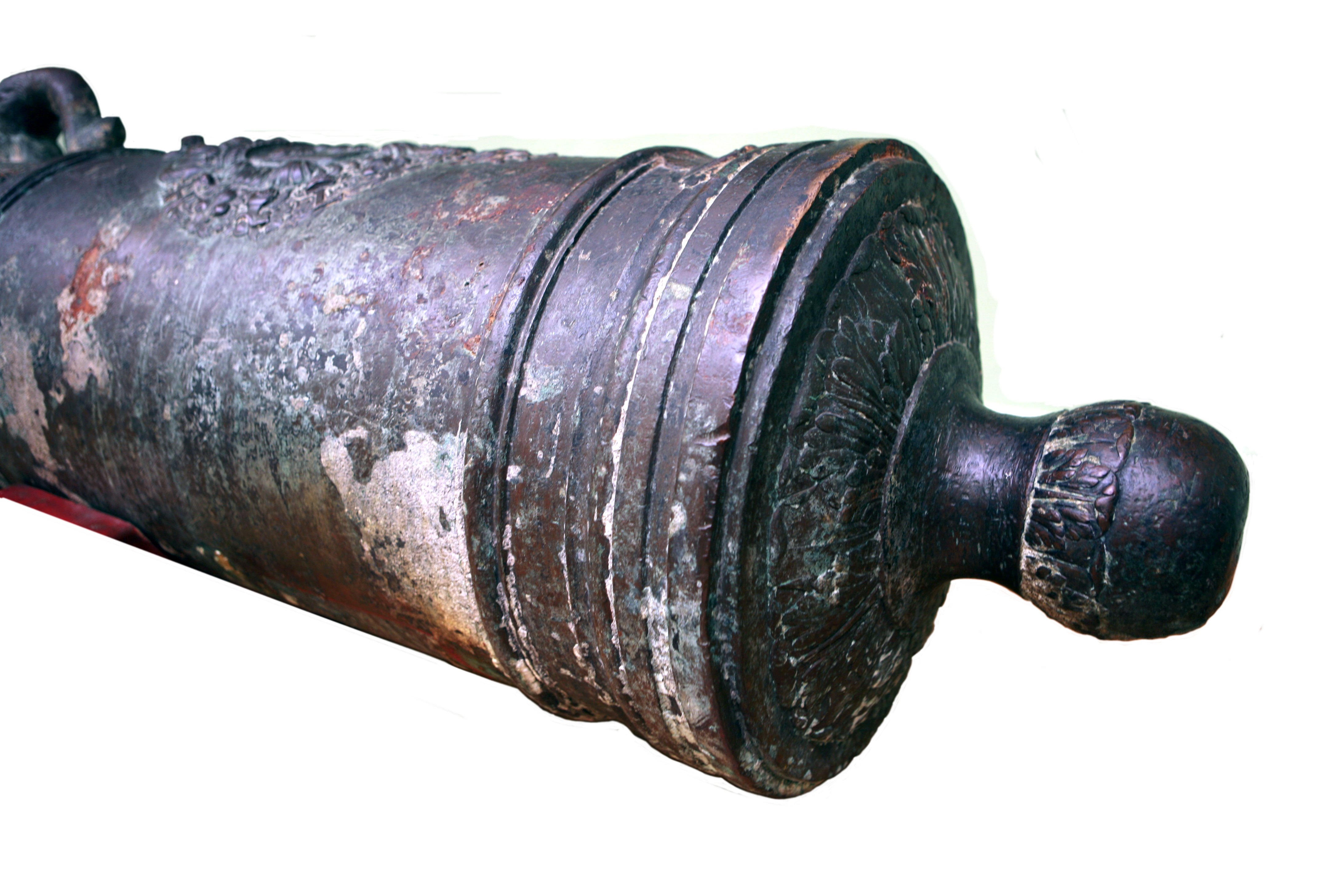
A cascabel is a subassembly of a muzzle-loading cannon, a knob to which to attach arresting ropes to deal with the recoil of firing the cannon.
Description
A cannon's cascabel comprises the knob (A) and the neck (B), with some models also having a filet (C). By some definitions the cascabel additionally includes the base of the breech (D). Cascabels varied in design and appearance, and were a common feature of cannons from the 17th century until the advent of the breech loading cannon in the late 19th century. Many naval guns had a heavy metal loop on the cascabel, the pomellion, through which a wide rope was passed.
Bronze cascabels from captured guns have been used to make Victoria Cross medals. It was long thought that Russian guns captured during the Siege of Sevastopol were used, but this has been shown not to be so.
References
References
- "The Development of Artillery".
- Tom White. (3 May 2020). "Show your mettle: Victoria Cross not made of captured Russian guns after all". TheObserver.
This article was imported from Wikipedia and is available under the Creative Commons Attribution-ShareAlike 4.0 License. Content has been adapted to SurfDoc format. Original contributors can be found on the article history page.
Ask Mako anything about Cascabel (artillery) — get instant answers, deeper analysis, and related topics.
Research with MakoFree with your Surf account
Create a free account to save articles, ask Mako questions, and organize your research.
Sign up freeThis content may have been generated or modified by AI. CloudSurf Software LLC is not responsible for the accuracy, completeness, or reliability of AI-generated content. Always verify important information from primary sources.
Report