From Surf Wiki (app.surf) — the open knowledge base
Casa de Campo
Largest public park in Madrid, Spain
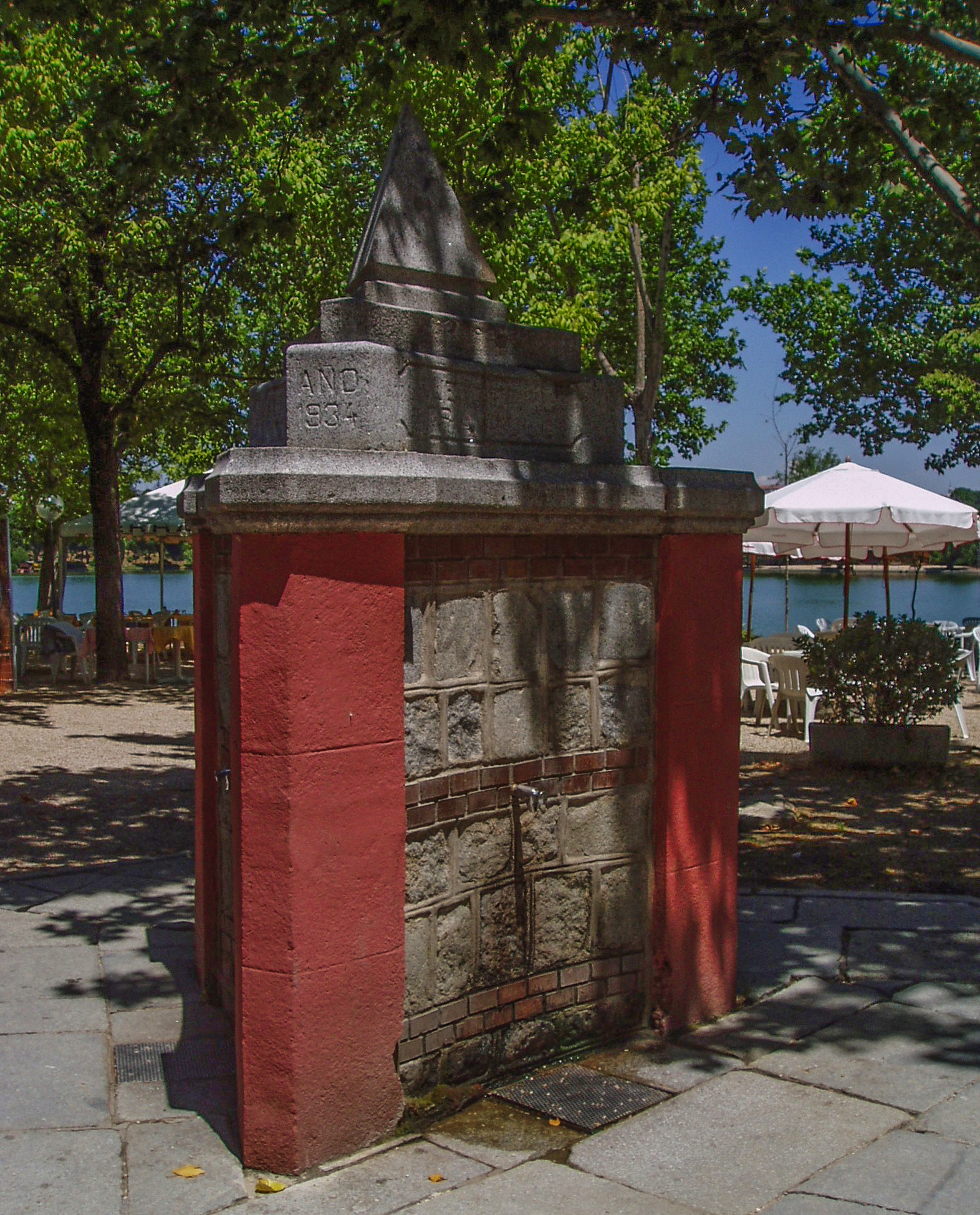
Largest public park in Madrid, Spain
| Field | Value |
|---|---|
| name | Casa de Campo |
| image | Casa de Campo Lago y vista.jpg |
| image_caption | Lake in Casa de Campo |
| type | Public park |
| location | Madrid, Spain |
| coordinates | |
| area | 17.23 km2 |
| created | 1 May 1931 |
| embed | yes |
| designation2 | Spain |
| designation2_type | Non-movable |
| designation2_criteria | Historic Garden |
| designation2_date | 3 June 1931 |
| designation2_number | RI-52-0000004 |
the park
the Spanish urban park
The Casa de Campo (, for Spanish: Country House) is the largest public park in Madrid. It is situated west of central Madrid, Spain. It gets its name 'Country House' because it was once a royal hunting estate, located just west of the Royal Palace of Madrid. It was created in the early 16th century for use by the royal family and nobility, and was opened to the public in 1931 when it became a public park. Today, it is a popular green space and weekend destination for Madrid residents.
Its area is 1722.6 ha, about five times the size of New York City's Central Park or twice the size of Paris' Bois de Boulogne. The Casa de Campo is linked to the Parque del Oeste by the Teleférico de Madrid, a gondola lift.
The complex was declared in 2010 an Asset of Cultural Interest by the Community of Madrid. For its part, the regulations of the General Urban Planning Plan of the Madrid City Council, of 1997, classify it as a historic park.
Overview
An amusement park, the Parque de Atracciones de Madrid, and the Madrid Zoo are located inside the park. The park also contains an artificial lake for recreation.
From 1936 to 1939, during the Spanish Civil War, the front lines of the Siege of Madrid ran through the Casa de Campo, where the Republicans had halted a nationalist offensive in November 1936.
In the 90s and 2000s, the park was a center of prostitution.
Flora and fauna
The natural vegetation of Casa de Campo is mainly holm oak forest, accompanied by mediterranean bushes. However, throughout its history it has undergone constant transformation, even being used as farmland in some periods and repopulated in others with different non-native tree species, mainly stone pines or cypress trees, but also others such as poplars, chestnut trees, plane trees, ash trees, oaks or willows. In 2002, 686,294 specimens (trees or shrubs) were registered in the woodland inventory of the park.
In 2000, 18 trees or groups of them were classified as Singular Trees. They are marked with wooden signs that describe their special characteristics. A 2021 winter storm, Filomena, destroyed at least a tenth of the trees throughout Madrid, and damaged an unknown amount of the park.
Access
The park can be accessed via the Teleferico, a gondola with a pick up point inside the Parque del Oeste on the west end of Madrid. The drop-off point houses a restaurant with an overlook of Madrid, playgrounds (both inside and outside), and access to Casa de Campo's many trails. The park is connected to Madrid's public transit system, including stations on lines 5 and 10 of the Madrid Metro.
References
References
- "Casa de Campo".
- "TPH 2S Rosales – Casa de Campo". remontees-mecaniques.net.
- Pedro Blasco, La Comunidad declara a la Casa de Campo Bien de Interés Cultural, El Mundo, Madrid, 15 July 2010
- (25 February 2006). ""Europe's brothel" Spain seeks solutions to prostitution". Khaleej Times.
- (14 March 2001). "African Women Being Sold Into European ''Sex Slavery''". Digitaljournal.com.
- Tremlett, Giles. (28 February 2001). "African women tricked into sex slavery in Spain". The Guardian.
- Boulware, Jack. (5 July 2000). "Hookers at the playground". Salon.com.
- (28 June 2000). "Madrid Prostitutes Cleared To Dress Down". Pqasb.pqarchiver.com.
- (2021-01-12). "Filomena provoca una catástrofe natural en la Casa de Campo de Madrid".
This article was imported from Wikipedia and is available under the Creative Commons Attribution-ShareAlike 4.0 License. Content has been adapted to SurfDoc format. Original contributors can be found on the article history page.
Ask Mako anything about Casa de Campo — get instant answers, deeper analysis, and related topics.
Research with MakoFree with your Surf account
Create a free account to save articles, ask Mako questions, and organize your research.
Sign up freeThis content may have been generated or modified by AI. CloudSurf Software LLC is not responsible for the accuracy, completeness, or reliability of AI-generated content. Always verify important information from primary sources.
Report