From Surf Wiki (app.surf) — the open knowledge base
Carles, Iloilo
Municipality in Iloilo, Philippines
Municipality in Iloilo, Philippines
| Field | Value | |
|---|---|---|
| name | ||
| image_skyline | {{Photomontage | |
| photo1a | Gigantes Island.jpg | |
| photo2a | Sicogon and Clam Islands.jpg | |
| photo2b | Islas de Gigantes Rock Formations - 2 hour boat ride.jpg | |
| photo3a | Bantigue Island Sandbar.jpg | |
| size | 260 | |
| spacing | 2 | |
| color | transparent | |
| border | 0 | |
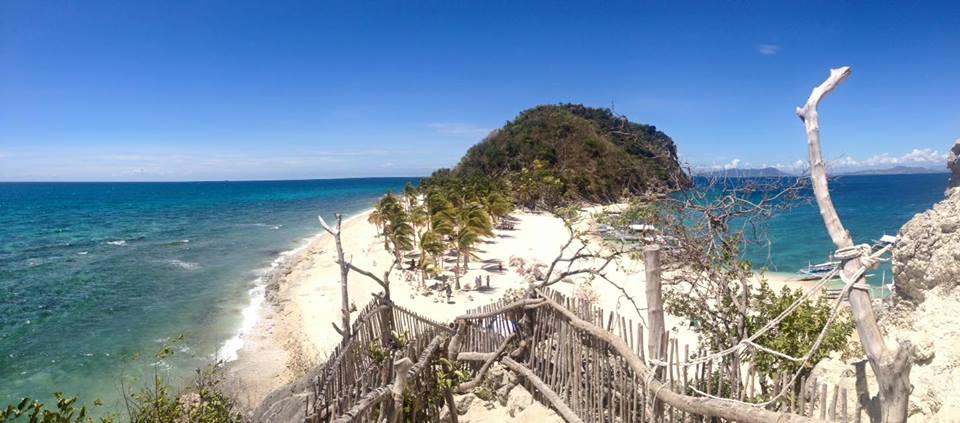
| image_caption | (from top: left to right) Cabugao Gamay Island, Tumaguin Islet, Islas de Gigantes limestone cliff and Bantigue Sandbar. | |
| image_flag | Flag_of_Carles,_Iloilo.png | |
| flag_size | 120x80px | |
| image_seal | Municipality of Carles Official Seal (2024).png | |
| seal_size | 100x80px | |
| image_map | ||
| map_caption | ||
| mapframe | yes | |
| pushpin_map | Philippines | |
| pushpin_label_position | left | |
| pushpin_map_caption | Location within the | |
| coordinates | ||
| settlement_type | ||
| subdivision_type | Country | |
| subdivision_name | Philippines | |
| subdivision_type1 | Region | |
| subdivision_name1 | ||
| subdivision_type2 | Province | |
| subdivision_name2 | ||
| official_name | ||
| etymology | ||
| named_for | Jose Maria Dominguez Carles | |
| native_name | Banwa sang Carles | |
| other_name | Badiang | |
| nickname | Alaska of the Philippines | |
| motto | *Carles da Best!* | |
| subdivision_type3 | District | |
| subdivision_name3 | ||
| established_title | Founded | |
| established_date | July 1, 1862 | |
| parts_type | Barangays | |
| parts_style | para | |
| p1 | (see Barangays) | |
| leader_title | Mayor | |
| leader_name | Arnold T. Betita II (Lakas) | |
| leader_title1 | Vice Mayor | |
| leader_name1 | Earl Patrick A. Betita (Lakas) | |
| leader_title2 | Representative | |
| leader_name2 | Binky April M. Tupas (Lakas) | |
| leader_title3 | Municipal Council | |
| leader_name3 | {{PH Town Council | |
| 1 | ||
| 2 | Merle B. Tupas | |
| 3 | Regie Ann D. Ibañez | |
| 4 | Jose F. Miane | |
| 5 | Jaspher Martino C. Elvas | |
| 6 | Cherry B. Villanueva | |
| 7 | Marlou D. Lopez | |
| 8 | Leonard H. Abenir | |
| 9 | Raul I. Betita | |
| 10 | Rowena Grace G. Bensurto (ABC President) | |
| 11 | Recca Mae B. Lim (SKMF President) | |
| leader_title4 | Electorate | |
| leader_name4 | voters (electorate_point_in_time}} | ) |
| government_type | ||
| government_footnotes | ||
| elevation_m | ||
| elevation_max_m | 108 | |
| elevation_min_m | -1 | |
| elevation_footnotes | ||
| area_footnotes | ||
| area_total_km2 | ||
| population_footnotes | ||
| population_total | ||
| population_as_of | ||
| population_density_km2 | auto | |
| population_blank1_title | Households | |
| population_blank1 | ||
| timezone | PST | |
| utc_offset | +8 | |
| postal_code_type | ZIP code | |
| postal_code | ||
| postal2_code_type | ||
| postal2_code | ||
| area_code_type | ||
| area_code | ||
| website | ||
| demographics_type1 | Economy | |
| demographics1_title1 | ||
| demographics1_info1 | ||
| demographics1_title2 | Poverty incidence | |
| demographics1_info2 | % () | |
| demographics1_title3 | Revenue | |
| demographics1_info3 | ||
| demographics1_title4 | Revenue rank | |
| demographics1_title5 | Assets | |
| demographics1_info5 | ||
| demographics1_title6 | Assets rank | |
| demographics1_title7 | IRA | |
| demographics1_title8 | IRA rank | |
| demographics1_title9 | Expenditure | |
| demographics1_info9 | ||
| demographics1_title10 | Liabilities | |
| demographics1_info10 | ||
| demographics_type2 | Service provider | |
| demographics2_title1 | Electricity | |
| demographics2_info1 | ||
| demographics2_title2 | Water | |
| demographics2_title3 | Telecommunications | |
| demographics2_title4 | Cable TV | |
| blank_name_sec1 | ||
| blank_info_sec1 | ||
| blank1_name_sec1 | Native languages | |
| blank1_info_sec1 | ||
| blank2_name_sec1 | Crime index | |
| blank1_name_sec2 | Major religions | |
| blank2_name_sec2 | Feast date | |
| blank3_name_sec2 | Catholic diocese | |
| blank4_name_sec2 | Patron saint |
Carles, officially the Municipality of Carles (, ), is a municipality in the province of Iloilo, Philippines. According to the , it has a population of people.
Located on Panay Island, it is known for its rich fishing grounds. It is also known for popular tourist attractions such as the Islas de Gigantes, Sicogon Island and Cabugao Gamay Island.
History
Settlers first arrived circa 1846 and cleared an area at Punta Bulakawe, north of the current poblacion. Following an influx of settlers from Aklan and Antique, the settlement fell under Pueblo de Pilar, Capiz. About 10 years later, the settlement was transferred to the lowland and renamed to Badiang.
In 1860, the first attempt was made to convert the barrio into a municipality but the provincial government of Capiz refused. Because of this refusal, the town leaders petitioned the governor of Iloilo, Governor Jose Maria Carles y Dominguez, who approved the petition. On July 1, 1862, the new pueblo was inaugurated and renamed to Carles, in honor to the governor. First Gobernadorcillo was Alenjandro Buaya.
On January 1, 1904, the Municipio de Carles was demoted from a status of a barrio to the status of a Barrio Balasan. This incident disheartened some Carleseños who migrated to other towns and provinces. But among those who stayed on were the strong willed ones who struggled hard to make Carles an independent municipality. Headed by Casimiro Andrada, the Carles Separation Movement succeeded in getting the approval of the Carleseños petition for separation from Balasan on January 1, 1920. Federico A. Ramos was appointed as the first Municipal President of Carles. It was during the incumbency of Municipal President Enrico Ilanga that the title of the municipal head was changed to Municipal Mayor.
Typhoon Haiyan
Carles was heavily damaged by Typhoon Haiyan. Buildings were destroyed and more than 1,200 people were displaced by the storm.
Geography
Carles is the northernmost municipality in the province and is 142 km from the provincial capital, Iloilo City, 71 km from Roxas City, and 141 km from Kalibo.
Climate
| access-date = 3 May 2020 }}
Barangays
Carles is politically subdivided into 33 Barangays. Each barangay consists of puroks and some have sitios.
- Abong
- Alipata (Sicogon Island)
- Asluman (Gigantes Norte)
- Bancal
- Barangcalan
- Barosbos
- Punta Batuanan
- Binuluangan
- Bito-on
- Bolo
- Buaya (Sicogon Island)
- Buenavista
- Isla De Cana
- Cabilao Grande
- Cabilao Pequeño
- Cabuguana
- Cawayan
- Dayhagan
- Gabi (Gigantes Sur)
- Granada (Gigantes Norte)
- Guinticgan
- Lantangan (Gigantes Sur)
- Manlot (Manlot Island)
- Nalumsan
- Pantalan
- Poblacion
- Punta (Bolocawe)
- San Fernando (Sicogon Island)
- Tabugon
- Talingting
- Tarong
- Tinigban
- Tupaz
Islands
Eighteen of Carles's barangays are spread out over fourteen islands and minor islets. The islands under Carles's political jurisdiction include:
- Balbagon Island
- Binuluangan Island
- Calagna-an Island
- Cabugao Gamay Island
- Gigantes Norte
- Gigantes Sur
- Himamylan Island
- Linadlaran Island
- Manigonigo Island
- Manlot Island
- Nabunot Island
- Sicogon Island
- Talunan-an Island
- Tomaquin Island
Demographics
In the 2024 census, the population of Carles was 74,177 people, with a density of {{sigfig|74177/104.05|2}} PD/km2.
Economy
Carles is the 14th wealthiest town in Iloilo (based on income) in 2009, with an income total of P70,475,987 (2009) The agricultural produce of the town includes fish, prawn, crab, rice, corn, sugar, cattle and poultry. Other industries include bakeries, shell craft and wood furniture.
Maritime resources
Carles is a significant center for commercial fishing, so much so that it carries the name 'Alaska of the Philippines' - reference to the area's marine resources. The reason for this is that Carles's water territory lies in the Visayan Sea triangle where the islands of Gigantes are located. As part of the Coral Triangle, these islands contain some of the most biologically diverse marine resources, and one of the most productive fishing grounds in the country. The imaginary triangle extends from the provinces of Iloilo, Negros, Cebu, Samar, and Masbate. This triangle is a part of the "Sulu-Sulawesi Triangle" of the Sulu Sea and neighboring Indonesia where a large concentration of marine organisms coupled with climate conditions support a massive marine ecosystem. Various commercial species are harvested along Carles' waters, including mackerel, barracuda, sardines, shad, pompano, grouper, squid, cuttlefish, shrimp, prawns, shells, seaweed and others.
Infrastructure
'Bancal Fish Port' is the main fish-landing port in the municipality and is where fish catches from Iloilo, other Panay provinces, Masbate and Romblon are unloaded daily.
Tourism
Gigantes Group of Islands
One tourist destination in Western Visayas is the Islas de Gigantes or Higantes Group of Islands located in the second class municipality of Carles in northern Iloilo. The Gigantes group of islands in Carles, Iloilo are endowed with limestone forests, caves, and white-sand beaches. It is classified as a high urgent conservation priority under the Philippine Biodiversity Conservation Priority-Setting Program (PBCPP). It is home to a variety of species, two of them endemic: the Gekkonid Lizard (Gekko gigante) and the Island Forest Frog (Platymantis insulatus).
Sicogon Island
Sicogón is an island in northern Iloilo, which is part of the municipality of Carles. It is named after cogon, a type of grass found in abundance on the island. According to the 2010 census, it has a population of 5,238.
Sicogon was a popular tourist destination during the 1970s, known for its clear waters and white sand beach lined with coconut trees. However, due to the situation caused by martial law, development stalled and Sicogon's popularity faded in favor of Boracay Island.
Municipal Tourism Center
Located at Bancal Port is a tourist assistance, boat reservation, registration and payment center. The tourism center also regulates the rates and accredits the boats for the Gigantes tours. Souvenir items can also be found in the center.
Gallery
File:Old Spanish Lighthouse.jpg|Old Spanish lighthouse in Naburot Island File:Northern Islands.jpg|One of Carles' islets visited by tourists in the summer season File:Cabugaw Island During Summer.jpg|A typical resort in the islands of Carles File:Sandbar in Carles.jpg|Bantigue Island's sandbar during low tide. File:Ruin Gates Near the New North Gigantes Medium Lighthouse.jpg|Gate ruin of the town's lighthouse File:Tangke.jpg|Hidden lagoon locally known as 'Tanque/Tangke' File:Solina Beach Resort.jpg|Infinity pool in one of Barangay Guinticgan's resorts File:North-South Gigante.JPG|North and South Gigante Islands seen from the Visayan Sea File:Isla de Gigantes beach.jpg|Antonia Beach
Transport
Iloilo International Airport serves the city of Iloilo as well as the province of Iloilo. It receives flights from Manila, Cebu, Clark, Cagayan de Oro, Davao City, Dumaguete, General Santos, Legazpi, Tacloban, Tagbilaran, Puerto Princesa, Zamboanga, Singapore and Hong Kong and is served by three airlines; Philippines AirAsia, Cebu Pacific, and Philippine Airlines.
Roxas Airport is closer to Carles with domestic flights from Cebu and Manila.
Sicogon Airport is the first and only airport in Carles and Northern Iloilo with domestic flights from and to Manila, serving the general area of Sicogon Island.
Jeepneys and tricycles are the common public land transport with route Carles-Balasan and vice versa. The route Carles- Iloilo City and vice versa, and Carles- Roxas City and vice versa is served by Ceres Liner while Carles - Metro Manila and vice versa is served by Dimple Star Bus.
Pumboats are used for traversing the water between the Islands of Carles and it's mainland with Estancia. Bancal port serves as the gateway to the Gigantes Islands.
References
References
- {{DILG detail
- "Municipality of Carles: Brief History".
- "Municipality of Carles".
- "Provincial board declares Iloilo under state of calamity".
- "The Carles of Today".
- Detourista, Marcos. (2011-01-18). "Iloilo Financial Profile 2009 - Income Ranking of Iloilo Towns - Explore Iloilo".
- "Foundation for the Philippine Environment".
- "BFAR & NFP Highlights of Accomplishments in 2011".
- "DA Invests P29.4M to Transform Northern Iloilo Fish Port into Major Hub".
- (7 November 2015). "Gigantes, a call for small islands resiliency".
- "Total Population by Province, City, Municipality and Barangay: As of May 1, 2010".
- "Sicogon Island". Exploreiloilo.com.
- JM Hotels. (2012-06-26). "ILOILO, Heart of the Philippines - Sicogon Island". Iloilo.gov.ph.
- (5 September 2015). "Isla de Gigantes: Iloilo's Tourism Giant".
- Detourista, Marcos. "How To Get To & Around Gigantes Islands".
- (3 June 2023). "How to get to Dimple Star Transport Corporation in las Piñas by Bus?".
This article was imported from Wikipedia and is available under the Creative Commons Attribution-ShareAlike 4.0 License. Content has been adapted to SurfDoc format. Original contributors can be found on the article history page.
Ask Mako anything about Carles, Iloilo — get instant answers, deeper analysis, and related topics.
Research with MakoFree with your Surf account
Create a free account to save articles, ask Mako questions, and organize your research.
Sign up freeThis content may have been generated or modified by AI. CloudSurf Software LLC is not responsible for the accuracy, completeness, or reliability of AI-generated content. Always verify important information from primary sources.
Report