From Surf Wiki (app.surf) — the open knowledge base
Cappadocian Greeks
Ethnic Greek subgroup
Ethnic Greek subgroup
| Field | Value |
|---|---|
| group | Cappadocian Greeks |
| native_name | Έλληνες Καππαδόκες |
| Kapadokyalı Rumlar | |
| image | Cappadocian Greeks.JPG |
| image_upright | 1.35 |
| caption | Cappadocian Greeks in traditional clothing, Greece |
| population | ~50,000 |
| region1 | Greece |
| pop1 | 44,432 (More than 50,000 including descendants) – around 50,000 (1920s estimate) |
| popplace | Greece (especially northern Greece) |
| rels | Greek Orthodoxy |
| langs | Cappadocian Greek |
| related | Pontic Greeks, Karamanlides |
Kapadokyalı Rumlar The Cappadocian Greeks (; ), or simply Cappadocians, are an ethnic Greek community native to the geographical region of Cappadocia in central-eastern Anatolia; roughly the Nevşehir and Kayseri provinces and their surroundings in modern-day Turkey. There had been a continuous Greek presence in Cappadocia since antiquity, and by at least the 5th century AD the Greek language had become the lingua franca of the region.
In the 11th century Seljuq Turks arriving from Central Asia conquered the region, beginning its gradual shift in language and religion. In 1923, following the mass killing of Christian Ottomans across Anatolia, the surviving Cappadocian communities were forced to leave their native homeland and resettle in Greece by the terms of the Greek–Turkish population exchange. Today their descendants can be found throughout Greece and the Greek diaspora worldwide.
History
Early migrations
The area known as Cappadocia today was known to the Ancient Persians as Katpatuka, a name which the Greeks altered into Καππαδοκία (Cappadocia). The word is essentially of unknown etymology, but some have argued that it means "the land of beautiful horses".
Before Greeks and Greek culture arrived in Asia Minor, the area was controlled by another Indo-European people, the Hittites. Mycenaean Greeks set up trading posts along the west coast around 1300 BC and soon started colonizing the coasts, spreading Hellenic culture and language. In the Hellenistic era, following the conquest of Anatolia by Alexander the Great, Greek settlers began arriving in the mountainous regions of Cappadocia at this time. This Greek population movement of the 3rd and 2nd centuries BC solidified a Greek presence in Cappadocia. As a result, Greek became the lingua franca of the region's natives. It would become the sole spoken language of the region's inhabitants within three centuries and would remain so for the next one thousand years.
After the death of Alexander the Great, Eumenes of Cardia, one of the Diadochi of Alexander the Great, was appointed satrap of Cappadocia, where he set up Greek settlements and distributed cities to his associates. Eumenes left behind administrators, judges and selected garrison commanders in Cappadocia. In the following centuries the Seleucid Greek Kings founded many Greek settlements in the interior of Asia Minor, and this region would become popular for the recruitment of soldiers. Unlike other regions of Asia Minor where Greeks would settle in cities, most of the Greek settlements in Cappadocia and other interior Anatolian regions were villages. The Hellenistic Kings would make new Greek settlements in Cappadocia and other surrounding regions in order to secure their hold on this volatile region; under their rule Greek settlements would increase in the Anatolian interior. In the centuries following Alexander the Great's death, Ariarathes, the son of a Persian satrap who formerly controlled Cappadocia, gained control of Cappadocia and left it to a line of his successors, who mostly bore the name of the founder of the dynasty. These kings began to intermarry with neighboring Greek Hellenistic kingdoms, such as the Seleucids. During their reign Greek towns were beginning to appear in the southern regions of Cappadocia. Ariarathes V of Cappadocia who reigned from 163 to 130 BC is considered to have been the greatest of the Kings of Cappadocia. He was predominantly Greek by descent; his father Ariarathes IV of Cappadocia was half Greek Macedonian and Persian, and his mother was Antiochis, the daughter of the Seleucid Greek King Antiochus III of the Seleucid dynasty. By the 1st century BC, regions of Cappadocia had been ravaged by Armenian King Tigranes the Great, who had relocated a great number of Cilician and Cappadocian Greeks to Mesopotamia (geographically in modern Iraq, eastern Syria and south-eastern Turkey.)
Roman period
Archelaus, who was a Roman client prince, was the last to rule as a king of Cappadocia. He was a Cappadocian Greek nobleman, possibly of Macedonian descent, and was the first king of Cappadocia of wholly non-Persian blood. He ruled over Cappadocia for many years before being deposed by Tiberius, who took possession of Cappadocia for Rome. The region of Cappadocia produced some notable Greek individuals in antiquity, such as Apollonius of Tyana (1st century AD) who was a Greek Neo-Pythagorean philosopher who became well known in the Roman Empire and Aretaeus of Cappadocia (81–138 AD) who was a native Greek, born in Cappadocia and is considered to have been one of the foremost surgeons in antiquity. He was the first to distinguish between diabetes mellitus and diabetes insipidus, and the first to provide a detailed description of an asthma attack.
By late antiquity the Cappadocian Greeks had largely converted to Christianity. They were so thoroughly devout to Christianity that by the 1st century AD, the region of Cappadocia served as a stronghold for Christian Monasticism and was of significance importance in the history of early Christianity. In the early centuries of the Common Era Cappadocia produced three prominent Greek patristic figures, known as the three hierarchs. They were Basil the Great (c. 330–79), Bishop of Caesarea in Cappadocia. Gregory of Nazianzus (c. 330–c. 389) (later known as Saint Gregory the Theologian) and Gregory of Nyssa (died c. 394). These Cappadocian Greek fathers of the fourth century revered the ancient Greek cultural pursuit of virtue, even studying Homer and Hesiod and "stood squarely in the tradition of Greek culture".
Eastern Roman (Byzantine) period
By the fifth century the last of the Indo-European native languages of Anatolia ceased to be spoken, replaced by Koine Greek. At the same time the Greek communities of central Anatolia were becoming actively involved in affairs of the Eastern Roman Empire and some Greek Cappadocians such as Maurice Tiberius (r. 582–602) and Heraclius would even serve as Emperors.
The region became a key Byzantine military district after the advent of Islam and the subsequent Muslim conquest of Syria led to the establishment of a militarized frontier zone (cf kleisoura and thughur) on the border of Cappadocia. This lasted from the mid-7th to the 10th century during the Arab–Byzantine wars, immortalized in Digenis Akritas, the Medieval Greek heroic epic set in this frontier region. During this period Cappadocia became crucial to the empire and produced numerous Byzantine generals, notably the Phokas clan, warlords (see Karbeas of Tephrike), and intrigue, most importantly the Paulician heresy. Because they were living in such a volatile region, the Cappadocian Greeks created elaborate underground cities in the volcanic formations of eastern Cappadocia and would take refuge in them during times of danger. The Cappadocian Greeks hid in these rock-cut underground towns from many raiders over the next millennium, from 9th century Arab invaders to 11th century Turkish conquerors to 15th century Mongols. As late as the 20th century the local Cappadocian Greeks were still using the underground cities as refuges (Greek: καταφύγια) from periodic waves of Ottoman persecution. The most famous of these ancient underground cities are at the Cappadocian Greek villages of Anaku-Inegi (Ανακού) and Malakopi-Melagob (Μαλακοπή). The Greeks were removed from these villages in 1923, and they are now known as Derinkuyu and Kaymakli. These underground cities have chambers extending to depths of over 80 meters.
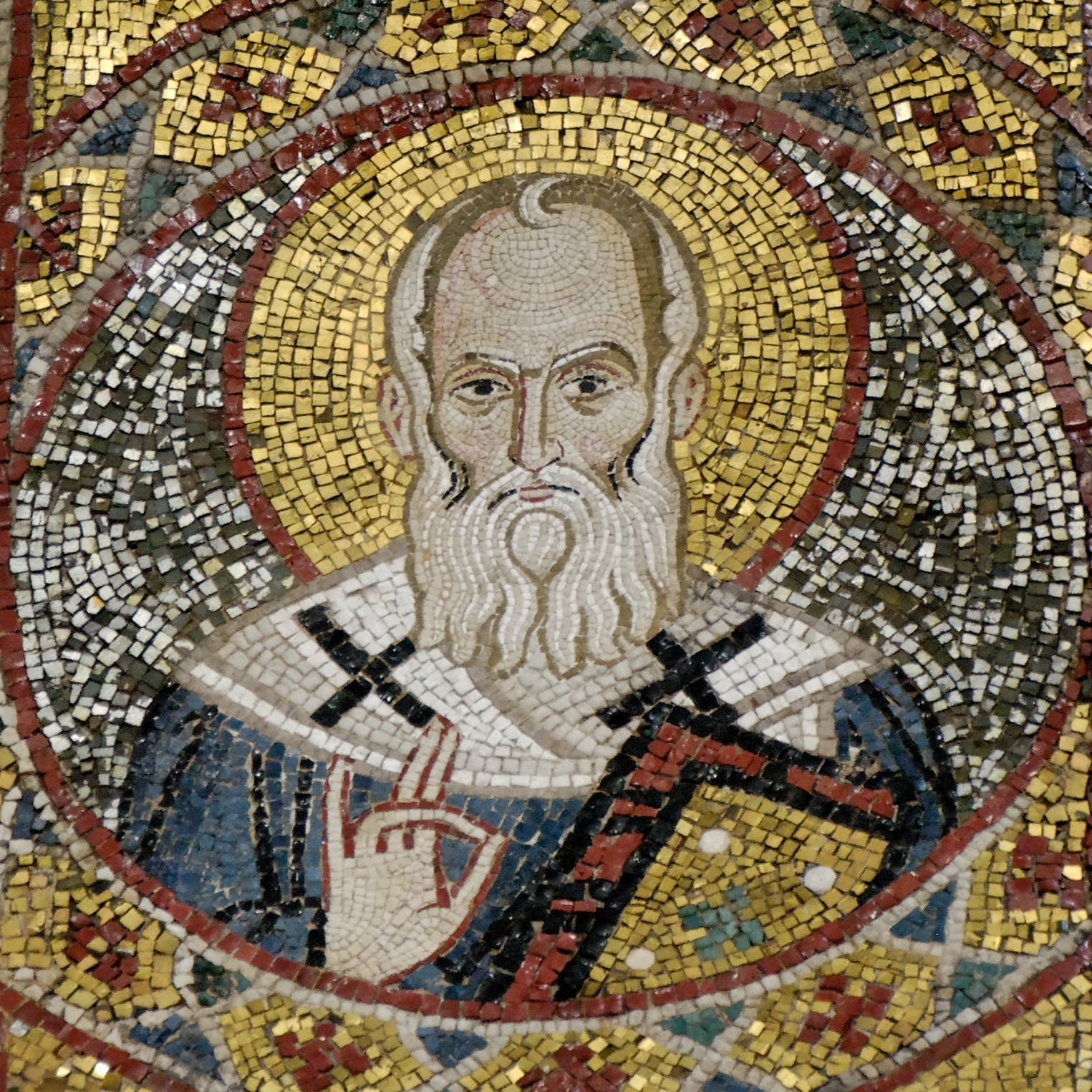
In the Middle Ages Cappadocia had hundreds of settlements and Byzantine rock-cut churches were carved out of the volcanic formations of eastern Cappadocia and decorated with painted icons, Greek writing and decorations. Over 700 of these Churches have been discovered and date from the period between the 6th century to the 13th century, many of these monasteries and churches continued to be used until the population exchange between Greece and Turkey 1920s. The Greek inhabitants of these districts of Cappadocia were called Troglodytes. In the 10th century Leo the Deacon recorded a journey to Cappadocia by Nikephoros Phokas, in his writings he mentions that its inhabitants were called Troglodytes, as they “went underground in holes, clefts and labyrinths, as it were in dens and burrows”. The Byzantines re-established control of Cappadocia between the 7th and 11th centuries, during this period churches were carved into cliffs and rock faces in the Göreme and Soğanlı region. In the Middle Ages the Cappadocian Greeks would bury their religious figures in and around monasteries. In recent years mummified bodies have been found in abandoned Greek monasteries of Cappadocia, and many, including bodies of mummified babies, are on display in the Nigde Archaeological Museum. A well-preserved mummified corpse of a young Christian woman is popular with tourists; the blonde haired mummy is believed to be a nun and dates from the Byzantine era, from the 6th to the 11th century. It was discovered in a sixth-century Greek chapel in the Ihlara Valley of Cappadocia. During the tenth century the Byzantine Empire had pushed east into formerly Arab-ruled lands, including most of Armenia, and had resettled thousands of Armenians into various regions of Cappadocia. This population shift intensified ethnic tensions between the Cappadocian Greeks and the Armenian newcomers in Cappadocia, and left Armenia largely devoid of native defenders.
Turkish Cappadocia

By the 12th century all of Anatolia was overrun by Turkmen tribes from Central Asia, these invading nomads had cleared many regions of Anatolia of indigenous Greeks. The Anatolian Greek population rapidly diminished under Turkish rule owing to mass conversions to Islam, slaughter or exile to Greek territories in Europe. Before the Turkish migration into Anatolia, Greeks as well as smaller numbers of Armenians, Syrians, and Georgians were all Christians, but by the 15th century more than 90% of Anatolia was Muslim, according to some researchers largely because of Christian conversions to Islam. Many Byzantine Greek leaders were also tempted to convert to Islam in order to join the Ottoman Turkish aristocracy, although in the beginning of the 20th century, the proportion of Christians in Anatolian population was more than 20%. During the centuries of Turkish rule in Asia Minor many Greeks and other peoples of Anatolia such as Armenians and Kurds adopted the Turkish language, converted to Islam, and came to be identified as Turks. Despite the turmoil in Anatolia, by the 13th century the Greeks of Cappadocia, Lycaonia and Pamphylia remained numerous, even under the pressure of the Turkmen nomads, possibly constituting majorities in some urban centers. During this chaotic period there is evidence that some native Cappadocian Greeks had joined the invading Turkish nomads. Some even managing to rise to levels of prominence in the Seljuq Sultanate of Rum, such as Basil Giagoupes (Bασίλειος Γιαγούπης), a wealthy Cappadocian Greek feudatory lord of a strongly Greek district who held the court title of general (amir arzi) in the army of the Seljuq sultan of Konya, Mesud II. He dedicated a church in the Peristrema (Belisırma) valley where his portrait, which was painted from life still survives to this day. 13th century Cappadocian Greek artists were renowned for their naturalistic paintings and were employed throughout the Seljuk Empire. Cappadocian Greeks were also employed as architects, such as Kalo Yianni, who was commissioned to build the Gök Medrese (Sivas) in 1271.
.JPG)
Over the course of the 15th century the Ottoman Turks conquered Cappadocia from the Seljuk Turks, the Cappadocian countryside remained largely Greek populated, with a smaller Armenian population even after the Ottoman conquest. During the reign of Ottoman Sultan Murad III (1574 to 1595) the region of Cappadocia became largely Turkified in culture and language through a gradual process of acculturation, as a result many Greeks of Anatolia had accepted the Turkish vernacular and some of whom later became known as Karamanlides. This name derives from the city called Karaman by the Turks in honor of the Turkish chieftain Karamanoglu, though the Greeks continued to call the region Laranda, its ancient Greek name. These Turcophone Greeks lived primarily in the region of Karamania although there were also significant communities in Constantinople and in the region of the Black Sea. Cappadocian Greeks living in remote less accessible villages of Cappadocia remained Greek-speaking and Christian, as they were isolated and consequently less affected by the rapid conversion of the bordering districts to Islam and Turkish speech. The Greek Cappadocians retained the original Greek names of many regions of Cappadocia which were renamed Turkish names during the Ottoman era, such as the town known as ‘Hagios Prokopios’ in the Middle Ages, and renamed ‘Urgup’ by the Turks was still called ‘Prokopion’ by the local Greeks of the early 20th century.

Although the Karamanlides abandoned Greek when they learned Turkish, they remained Greek Orthodox Christians and continued to write using the Greek alphabet. They printed manuscript works in the Turkish language using the Greek alphabet, which became known as ‘Karamanlidika’. This was not a phenomenon that was limited to the Cappadocian Greeks, as many of the Armenians living in Cappadocia were also linguistically Turkified, although they remained Armenian Apostolic (Orthodox) Christians, they spoke and wrote in the Turkish language although still using the Armenian alphabet. Some Jewish inhabitants of the Ottoman Empire were also Turkified and although they retained their religion, they also wrote in the Turkish language but using Hebrew script. The Cappadocian Greeks, Armenians and Jewish minorities of the Ottoman Empire had created Graeco-Turkish, Armeno-Turkish, and Judeo-Turkish literatures by developing their own written traditions. Despite the fact that they had lost all knowledge of their own languages after they had been Turkified, the majority of Karamanlides and many Turkophone Armenians eventually revived their original native tongues. While most Cappadocian Greeks had remained Orthodox Christians a significant number of the Karamanlides even converted to Islam during this period. As with other Greek communities, these converts to Islam were considered "Turks", as being a Muslim was synonymous with being Turkish to the Greeks of the Ottoman Empire. Greek writers would erroneously describe Greek converts to Islam as tourkeuoun (τουρκεύουν) . European visitors to the sultans' realms would also subjectively label any Muslim a "Turk" regardless of his or her mother tongue. The Greeks believed that by converting to Islam and losing his or her original Christian religion, the individual was also stepping out of the Greek national community. This way of thinking was even popular years after the dissolution of the Ottoman Empire.
Many shifts of population took place in central Anatolia during the period of Ottoman rule. Subsequent to the 1571 Ottoman conquest of Cyprus, the Ottoman Sultan Selim I decided to transfer Greeks from Cappadocia, particularly from the Kayseri region, to Cyprus. During this period the architect Sinan, who was born of Greek parentage and a native of Cappadocia wrote a letter to the Sultan asking for his family to be spared from this population transfer. During the Ottoman era, Cappadocian Greeks would migrate to Constantinople and other large cities to do business. By the 19th century, many were wealthy, educated and westernized. Wealthy Cappadocian Greek businessmen built large stone mansions in regions of Cappadocia such as Karvali (modern Güzelyurt) many of which can still be seen today. The Cappadocian Greeks wrote the earliest published novels in the Ottoman Empire in the 19th century, using the Greek Alphabet and Turkish language. Cappadocian Greeks from different regions would specialize in a particular profession, such as the caviar trade. Demetrius Charles Boulger later describes their work character, "Each village is connected with some particular guild in Constantinople; one supplies bakals or small storekeepers, another sellers of wine and spirits, another dryers of fish, another makers of caviare, another porters, and so forth."’
Modern

In the early 20th century, Greek settlements were still both numerous and widespread throughout most of today’s Turkey. The provinces of Cappadocia and Lycaonia had a large number of Greek settlements and sizeable populations in urban centres such as Kayseri, Nigde, and Konya. According to 1897 estimations, the sanjak of Konya had a total Greek population of 68.101 (6.6%) and according to Ottoman population statistics of 1914, the sanjak of Niğde had a total Greek population of 58.312 (20%) and the sanjak of Kayseri had a total of 26.590 (10,1%). The Cappadocian Greeks of the 19th and 20th centuries were renowned for the richness of their folktales and preservation of their ancient Greek tongue.
The underground cities continued to be used as refuges (Cappadocian Greek: καταφύγια) from the Turkish Muslim rulers. As late as the 20th century the locals were still using the underground cities to escape periodic waves of Ottoman persecution. Dawkins, a Cambridge linguist who conducted research on the Cappodocian Greek natives in the area from 1909–1911, recorded that in 1909,
Scholars passing through Cappadocia during the 19th century described the Cappadocian Greeks and their habits. In 1838 British scholar Robert Ainsworth wrote that "The Cappadocian Greeks are, generally speaking, pleasing and unreserved in their manners, and their conversation indicated a very high degree of intelligence and civilization, where there are so few books, and so little education, and consequently, little learning." Sir Charles William Wilson, British consul-general in Anatolia from 1879 to 1882, described their character:
Persecution and population exchange
By the early 1900s the region of Cappadocia was still inhabited by Christian Cappadocian Greeks as well as Muslim Turks and also communities of Armenians and Kurds. By the beginning of the First World War, the Greeks of Anatolia were besieged by the Young Turks. Thousands of Greeks were massacred, approximately 750,000 Anatolian Greeks were massacred in an act of Genocide and 750,000 exiled. The Greeks were targeted prior to and alongside the Armenians and Assyrians. Ionian and Cappadocian Greek deaths alone totaled 397,000, while Pontian Greek deaths numbered 353,000 people. Turkish official Rafet Bey was active in the Genocide of the Greeks of the Anatolian interior, in November 1916 he stated "We must finish off the Greeks as we did with the Armenians ... today I sent squads to the interior to kill every Greek on sight ..." During the Greco-Turkish War (1919–1922) countless numbers of Greeks were deported by the Turks to the Mesopotamian desert where many perished. On January 31, 1917, Chancellor Theobald von Bethmann-Hollweg of Germany reported that:
:
In 1924, after living in Cappadocia for thousands of years, the remaining Cappadocian Greeks were expelled to Greece as part of the population exchange between Greece and Turkey defined by the Treaty of Lausanne, the descendants of the Cappadocian Greeks who had converted to Islam were not included in the population exchange and remained in Cappadocia, some still speaking the Cappadocian Greek language. Many Cappadocian towns were greatly affected by the expulsion of the Greeks including Mustafapaşa (Sinasos), Ürgüp, Güzelyurt and Nevşehir as the Greeks constituted a significant percentage of the towns population. The Cappadocian Greeks were taken to the coastal town of Mersin in order to be shipped to Greece. Many would lose all of their belongings due to corrupt officials and looters. The Cappadocian Greeks who were migrating from Cappadocia were replaced by Muslims migrating from mainland Greece, mainly from Thrace; some of these Muslims were Greeks (see Greek Muslims), although most were of Slavic, Turkish and Gypsy origin. Many of the Cappadocian Greek churches were converted to mosques after the Greeks left in the population exchange of the 1920s. These include the Church of St Gregory known today as "Buyuk Kilise Camii (Big Church Mosque)".
Following the population exchange there was still a substantial community of Cappadocian Greeks living in Turkey, in Constantinople, they had settled there during the Ottoman era and formed enclaves of their native communities, the majority of whom also migrated to Greece following the Anti-Greek Istanbul Pogrom riots of 1955. On their arrival in mainland Greece, many Cappadocian Greeks settled in villages similar to their original Cappadocian villages; the new settlements were named after towns and villages left behind in Cappadocia, with the addition of the word “Nea” (New). For example, Cappadocian Greeks from Sinasos (present Mustafapaşa near Ürgüp) who settled in the northern part of the island of Euboea in Greece named their new settlement Nea Sinasos "New Sinasos". Other examples include Nea Karvali in northern Greece, and Neo Prokopi in central Greece. The regions of Greece with significant settlements of Cappadocian Greeks include the cities of Karditsa, Volos, Kilkis, Larisa, Chalkidiki, Kavala, Alexandroupoli and Thessaloniki. Today the descendants of the Cappadocian Greeks can be found throughout Greece, as well as in countries around the world particularly in Western Europe, North America and Australia as part of the Greek diaspora.
The modern region of Cappadocia is famous for the churches carved into cliffs and rock faces in the Göreme and Soğanlı valleys. The region is popular with tourists, many of whom visit the abandoned underground cities, houses and Greek churches carved and decorated by Cappadocian Greeks centuries ago. The formerly Greek town of Güzelyurt (Karvali) has become popular with tourists who visit the abandoned stone mansions built centuries ago by wealthy Cappadocian Greek businessmen. Today, more than 700 Greek Orthodox churches and over thirty rock-carved chapels, many with preserved painted icons, Greek writing and frescos, some from the pre-iconoclastic period that date back as far as the 6th century, can still be seen. As of 1985 these Greek cave churches were designated a UNESCO World Heritage Site.
Language
Main article: Cappadocian Greek
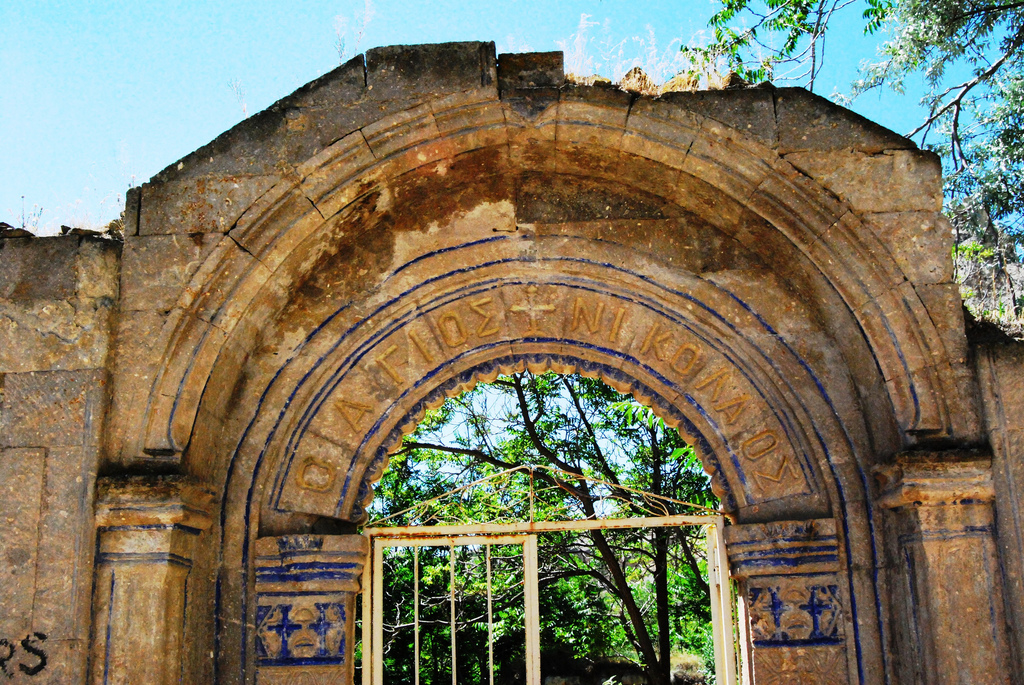
The Cappadocian Greeks traditionally spoke a dialect of the Greek language known as Cappadocian Greek. Cappadocian Greek diverged from the other Byzantine Greek dialects early, beginning with the Turkish conquests of central Asia Minor in the 11th and 12th centuries, and so developed several radical features, such as the loss of the gender for nouns. However, having been isolated from the crusader conquests (Fourth Crusade) and the later Venetian influence of the Greek coast, it retained the Ancient Greek terms for many words that were replaced with Romance language ones in Demotic Greek. After centuries of Ottoman rule the Turkish language began to emerge as the dominant language of Cappadocia. Many Greeks began to speak Turkish as a second language and became bilingual, this was the case with the “Kouvoukliotes” who were always Greek speakers and spoke Turkish with a strong Greek accent, and there were Cappadocian Greeks who only spoke the Turkish language and had given up the use of Greek centuries earlier, known as the Karamanlides. At the beginning of the 20th century, the Cappadocian Greek language still had a strong presence at Gülşehir (formerly Arabison/Arapsu) north-west of Nevşehir, and in the large region southward as far down as Niğde and Bor. Greek was also still spoken at Silli north-west of Konya, in Pharasa (today Çamlıca village in Yahyalı district) and other villages in isolated communities in the interior of central Turkey prior to the Genocide of 1915 and subsequent population transfers. Many Cappadocian Greeks completely abandoned Greek when they learned Turkish, although in the western regions of Cappadocia many Greeks still retained their native language. John Robert Sitlington Sterrett travelled through Cappadocia in 1884 and noted: "Melegobi is a large and flourishing village, inhabited almost exclusively by Greek-speaking Greeks. The Greeks are numerous all through the western part of Cappadocia, and generally cling to their language with great tenacity, a fact worthy of notice, inasmuch as the Greeks in other parts of Asia Minor speak only Turkish. Instances of Greek-speaking towns are Niğde, Gelvere, Melegobi (Μελοκοπια), and Ortaköy in Soğanlı Deresi." During the 19th-century British scholar John Pinkerton was informed by the Turkish-speaking Greeks that past Turkish rulers of Anatolia had caused them to lose the knowledge of the Greek language, Pinkerton reported that:
:
In the 1920s when the Cappadocian Greeks arrived in Greece, the Cappadocian Greek spoken by them was hardly intelligible with the Demotic Greek used in mainland Greece, as it had been cut off from the rest of the Greek-speaking world for centuries. The Cappadocian Greeks were more linguistically Turkified than the Greeks in Pontus and the western coastal regions of Turkey. Once in Greece though, they started using the modern Greek language, causing their ancestral Greek dialect, the Cappadocian Greek language, to go to the brink of extinction. The Cappadocian Greek language was believed by some scholars to have been extinct for many years. The language was then declared alive in 2005, when descendants of Cappadocian Greeks were discovered still speaking the language fluently in central and northern Greece. Today it is still spoken by mainly elderly Cappadocian Greeks in various regions of Greece including in Karditsa, Volos, Kilkis, Larisa, Thessaloniki, Chalkidiki, Kavala, and Alexandroupoli. Some Cappadocian Greeks who converted to Islam, allowing them to avoid the population exchanges of 1923, still speak the language in their traditional homeland in Turkey.
Culture

The Cappadocian Greeks have been isolated from the rest of the Greek-speaking world for centuries and this has made their culture, way of life, and customs somewhat distinctive. Their culture has been strongly influenced by the topography of its different regions. In the middle of the 18th century, after the Hatt-i humayun, the Greek feeling was stimulated, more schools were founded in the area and Greek was taught above. In commercial cities like Kayseri and Malakopea upper-level education and arts flourished under the protection of a cosmopolitan middle class. The economy of Cappadocia was largely based upon agriculture and mining and the rural centers which lay upon the valleys and plains. The Cappadocian Greeks have distinctive traditional songs and dances which are still performed in Greece.
Literature
Early
The Persian poet Rumi (1207–1273), whose name means "Roman", referring to his residence amongst the "Roman" Greek speakers of Cappadocia, wrote a few poems in Cappadocian Greek. These verses are one of the earliest literary attestations of the spoken Cappadocian vernacular.
Contemporary
The Cappadocian Greek-American immigrant and renowned Hollywood director Elia Kazan wrote a book "America, America" about his uncle, who grew up in Cappadocia in an environment of increasing persecution. Sent on foot by his father as a teenager, with the entire family savings, to Istanbul, Elia's uncle was supposed to establish a new life and, eventually, to bring the rest of the family to the city. In the end Elia's uncle traveled much further, to America, later fulfilling his filial duty and bringing his family over as well. Kazan made his book into an Academy Award-winning movie America, America in 1963.
Cuisine
The Cappadocian Greeks continued a number of Anatolian culinary traditions passed down since Byzantine times. These include the preparing of wind-cured meats known as pastirma, a delicacy called in Byzantine times "paston", along with the use of the ubiquitous Central Anatolian spinach-like herb madimak to make dishes such as a variant of spanikopita.
Settlements

Settlements traditionally inhabited by Greek-speaking Cappadocian population in the past:
Nevşehir region
- Arapsun
- Sinasos
- Cemil
- Eneği
- Sylata
- Dila
- Malakopi
- Suvermez
- Potamia
Niğde region
- Trohos
- Akso
- Misti
- Çarıklı
- Semendire
- Uluağaç
- Delmason
- Aravani
- Fertek
- Kurdonos
- Bereketli Maden
- Karacaviran
- Kavuklu
- Ovacık
- Elmilik
- Buğamaden
Farasa-Develi region
- Farasa
- Afsar
- Kiska
- Hoşça
- Çukuryurt
Notable Cappadocian Greeks
- Ariarathes V of Cappadocia (r. 163–130 BC) king of Cappadocia, predominantly Greek by descent.
- Archelaus (Pontic army officer) (2nd century BC) a Greek from Cappadocia who was a leading military general of the King Mithridates VI of Pontus.
- Neoptolemus (Pontic army officer) (died by 63 BC) was a distinguished general of King Mithridates VI of Pontus.
- Archelaus of Cappadocia (flourished 1st century BC & 1st century – died 17 AD) a descendant of Archelaus (Pontic army officer) who was the last king of Cappadocia
- Aretaeus of Cappadocia (81–138 AD) a native Cappadocian Greek, who was one of the leading surgeons of antiquity.
- Apollonius of Tyana (1st century AD) from Tyana, Cappadocia (modern day Bor in southern Turkey), a Neo-Pythagorean philosopher who became a mythical hero during the Roman Empire. He was born into a wealthy Cappadocian Greek family.
- Saint George (3rd–4th century AD) Soldier of the Roman army and Christian martyr
- Ulfilas (ca. 311 – 383) a Goth who originally came from a Cappadocian Greek family, translated the Holy Gospel into the Gothic vernacular.
- Saint Sarkis the Warrior (flourished 4th century, died 362–363) also known as Saint Sarkis the Greek is an Armenian Orthodox Saint who served as a Centurion in the Roman Empire.
- Saint Basil (c. 329 – 379), of Cappadocia was Greek.
- Gregory of Nazianzus (c. 330–c. 389 AD), Greek prelate and theologian Born of Greek parents in Cappadocia.
- Gregory of Nyssa (), one of the most prominent Cappadocian Greek patristic figures
- Maurice Tiberius, Byzantine Emperor from Cappadocia. He was the first ethnically Greek Byzantine (Eastern Roman) Emperor (c. 582–602 AD)
- Sabbas the Sanctified (439–532 AD) a Cappadocian Greek monk, priest and saint.
- Modestus of Jerusalem (6th century) a Greek Orthodox Patriarch of Jerusalem from Sebasteia
- Heraclius, Byzantine Emperor from Cappadocia, possibly of mixed Greek-Armenian descent (610–641 AD).
- Constantine Maleinos (10th century) a Byzantine general, uncle of the emperor Nikephoros II Phokas.
- Nikephoros II Phokas (c. 912 - 969), Byzantine emperor who belonged to the Phokades, a Byzantine aristocratic clan from Cappadocia with distinguished generals.
- John I Tzimiskes (c. 925 - 976), Byzantine emperor, of mixed Greek-Armenian descent from Cappadocia, a member of the Kourkouas family, and son of the sister of Nikephoros II Phokas that was member of the Phokas family.
- Basil Giakoupes (13th century AD) Greek feudatory lord who held the court title of general (amir) in the Seljuk Sultanate of Rum.
- Sinan – (1489–1588) Grand Architect of the Ottoman court, born in Ağırnas in Cappadocia.
- Patriarch Paisius II of Constantinople Ecumenical Patriarch of Constantinople for four times in the 18th century.
- Konstantinos Adosidis – (1818–1895) Ottoman-appointed Prince of Samos from 1873 to 1874, and again from 1879 to 1885.
- Theodoros Kasapis – Greek newspaper editor and educator (1835–1905)
- Patriarch Germanus V of Constantinople (1835–1920)
- Arsenios the Cappadocian – (1840–1922), a Greek Orthodox priest and saint from Çamlıca.
- Pavlos Karolidis – Greek historian (1849–1930)
- Avraam Vaporidis – (1855–1911) a distinguished Greek author, scholar and historian born in Fertek, Niğde province in Central Anatolia.
- Georgios Kourtoglou – (b. 1856, Nigde), a Greek political, legal and social activist who was deputy of Niğde in the late Ottoman Empire.
- Nikolaos Tsourouktsoglou – (1861–1922) a lawyer and journalist who was city councillor and a member of the Board of Governors of Smyrna in the late Ottoman Empire. His family was originally from Kayseri in Cappadocia.
- Sofoklis Avraam Choudaverdoglou-Theodotos – (1872–1956) an eminent Greek scholar, historian, stenographer and a member of the Ottoman Parliament. His family originate from the city of Tyana (modern Kemerhisar) Cappadocia.
- Ioannis Pesmazoglou – (1857–1906) a Greek banker, economist and politician whose family originate from Enderlik, Cappadocia.
- Leonidas Kestekides – (1876–1954) a chocolate manufacturer from Nigde, Cappadocia and founder of the internationally famous Leonidas company in Belgium.
- Prodromos Bodosakis-Athanasiadis - (1890–1979) was one of the most important figures in 20th century Greek industrial history, he was born in the region of Bor, Cappadocia.
- Petros Petridis – (1892–1977), a prominent Greek composer and conductor, born in Nigde (Cappodocia).
- Aristotle Onassis – (1906–1975) Greek business magnate, whose distant ancestry was from Talas, Kayseri
- Elia Kazan – (1909–2003) Greek-American film director whose family originated from Kayseri in Cappadocia.
- Saint Paisios of Mount Athos (1924–1994) born Arsenios Eznepidis, a well-known Athonite monk from Farasa, Cappadocia.
Video
The Cappadocian Greek-American immigrant and renowned Hollywood director Elia Kazan made an Academy Award-winning movie America, America about his uncle, who grew up in Cappadocia and then was sent on foot as a teenager, with the entire family savings, to escape persecution and establish a new life in Istanbul, and eventually, to bring the rest of the family there.
Notes
References
References
- Blanchard, Raoul. "The Exchange of Populations Between Greece and Turkey." ''Geographical Review'', 15.3 (1925): 449–56.
- Özkan, Akdoğan. (2009). "Kardeş bayramlar ve özel günler". İnkılâp.
- Balta, Evangelia. (2003). "Ottoman studies and archives in Greece". The Isis Press.
- Bichakjian, Bernard H.. (2002). "Language in a Darwinian perspective". Peter Lang.
- (2002). "Bilingualism in Ancient Society: Language Contact and the Written Word". Oxford University Press.
- Bevan, Edwyn Robert. (1966). "The house of Seleucus, Volume 1". Barnes & Noble.
- (2002). "Bilingualism in Ancient Society: Language Contact and the Written Text". Oxford University Press.
- (2005). "Pont-Euxin Et Polis: Polis Hellenis Et Polis Barbaron : Actes Du Xe Symposium de Vani, 23-26 Septembre 2002 : Hommage À Otar Lordkipanidzé Et Pierre Lévêque". Presses Univ. Franche-Comté.
- (16 May 2019). "Καππαδοκία: Εμπειρία ζωής, ΚΕΙΜΕΝΟ: ΜΑΡΙΝΑ ΠΑΠΑΤΣΩΝΗ {{!}} Kathimerini".
- Avi-Yonah, Michael. (1978). "Hellenism and the East: contacts and interrelations from Alexander to the Roman conquest". University Microfilms International.
- Cohen, Getzel M.. (1995). "The Hellenistic Settlements in Europe, the Islands, and Asia Minor". University of California Press.
- Dueck, Daniela. (2000). "Strabo of Amasia: A Greek Man of Letters in Augustan Rome". Psychology Press.
- Ashmore, Harry S.. (1961). "Encyclopædia Britannica: a new survey of universal knowledge, Volume 11". Encyclopædia Britannica.
- Newell, Edward Theodore. (1968). "Royal Greek portrait coins". Whitman Pub. Co.
- (1991). "A History of Zoroastrianism: Zoroastrianism Under Macedonian and Roman Rule". BRILL.
- Gera, Dov. (1998). "Judaea and Mediterranean Politics, 219 to 161 B.C.E.". BRILL.
- (2000). "A Different Light: The Big Book of Hanukkah". Devora Publishing.
- Glubb, John Bagot. (1967). "Syria, Lebanon, Jordan". Thames & Hudson.
- Plutarch. (1871). "Plutarch's Lives, Volume 2". Harper.
- (2007). "Brill's chronologies of the ancient world New Pauly names, dates and dynasties". Brill.
- Plutarch. (2007). "Plutarch's Lives, Volume 2 (of 4)". Echo Library.
- (1991). "A History of Zoroastrianism: Zoroastrianism Under Macedonian and Roman Rule". BRILL.
- Haughton, Brian. (2009). "Hidden History: Lost Civilizations, Secret Knowledge, and Ancient Mysteries". ReadHowYouWant.
- Toledo-Pereyra, Luis H.. (2006). "Origins of the knife: early encounters with the history of surgery". Landes Bioscience.
- Talbott, John Harold. (1970). "A biographical history of medicine: excerpts and essays on the men and their work". Grune & Stratton.
- [[Poretsky, Leonid]]. (2002). "Principles of Diabetes Mellitus". Springer.
- Cantani, Arnaldo. (2008). "Pediatric Allergy, Asthma And Immunology". Springer.
- (2011). "The Europeans: A Geography of People, Culture, and Environment". Guilford Press.
- Bury, John Bagnell. (1967). "The Cambridge medieval history, Volume 9, Part 2". University Press.
- Prokhorov, Aleksandr Mikhaĭlovich. (1982). "Great Soviet encyclopedia, Volume 7". Macmillan.
- Clendenin Daniel B.. (2003). "Eastern Orthodox Christianity: A Western Perspective". Baker Academic.
- Woodill, Joseph. (2002). "The Fellowship of Life: Virtue Ethics and Orthodox Christianity". Georgetown University Press.
- Stark, Freya. (2012). "Rome on the Euphrates: The Story of a Frontier". Tauris Parke Paperbacks.
- Corradini, Richard. (2006). "Texts and identities in the early Middle Ages". Verl. der Österr. Akad. der Wiss.
- Kinross, Baron Patrick Balfour. (1970). "Within the Taurus: a journey in Asiatic Turkey". J. Murray.
- Dawkins, R.M.. (1916). "Modern Greek in Asia Minor. A study of dialect of Silly, Cappadocia and Pharasa.". Cambridge University Press.
- Ousterhout, Robert G.. (2005). "A Byzantine Settlement in Cappadocia". Dumbarton Oaks.
- Rodley, Lyn. (2010). "Cave Monasteries of Byzantine Cappadocia". Cambridge University Press.
- Bainbridge, James. (2009). "Turkey". Lonely Planet.
- Önder, Mehmet. (1983). "The museums of Turkey and examples of the masterpieces in the museums". Türkiye İş Bankasi.
- Shwartz, Susan. (2001). "Shards of Empire". E-reads/E-rights.
- Hovannisian, Richard G.. (2004). "The Armenian People From Ancient to Modern Times, Volume I: The Dynastic Periods: From Antiquity to the Fourteenth Century". Palgrave Macmillan.
- Zlatar, Zdenko. (2007). "The Poetics of Slavdom: The Mythopoeic Foundations of Yugoslavia, Volume 2". Peter Lang.
- Richard C. Frucht. (2005). "Eastern Europe: An Introduction to the People, Lands, and Culture". ABC-CLIO.
- Suzek, Senem. (2008). "The decoration of cave churches in Cappadocia under Selçuk rule". Thesis (M.A.)--University of Notre Dame.
- Barve, Shashikant V.. (1995). "Introduction to classical Arabic: a contribution to Islamic and oriental studies". S.V. Barve.
- Lapidus, Ira Marvin. (2002). "A History of Islamic Societies". Cambridge University Press.
- Pentzopoulos, Dimitri. (2002). "The Balkan exchange of minorities and its impact on Greece". C. Hurst & Co. Publishers.
- (1999). "Turkey". Clio Press.
- (2011). "Identities and Allegiances in the Eastern Mediterranean After 1204". Ashgate Publishing, Ltd.
- (1963). "Nouvelles églises rupestres de Cappadoce". C. Klincksieck.
- (2016). "Islam and Christianity in Medieval Anatolia". Routledge.
- Darke, Diana. (2011). "Eastern Turkey". Bradt Travel Guides.
- Hanioğlu, M. Şükrü. (2010). "A Brief History of the Late Ottoman Empire". Princeton University Press.
- (1903). "The Encyclopædia Britannica: A-ZYM". Werner.
- (1956). "Bulletin of the John Rylands Library, Volume 38". Manchester University Press.
- Rodley, Lyn. (2010). "Cave Monasteries of Byzantine Cappadocia". Cambridge University Press.
- (1988). "The Turkish legacy: an exhibition of books and manuscripts to mark the fiftieth anniversary of the death of the founder of the Turkish Republic, Mustafa Kemal Atatürk". Bodleian Library.
- (2010). "The Urban mind : cultural and environmental dynamics". Uppsala, Sweden : African and Comparative Archaeology, Department of Archaeology and Ancient History, Uppsala University.
- Gökalp, Ziya. (1959). "Turkish nationalism and Western civilization: selected essays". Columbia University Press.
- Panzac, Daniel. (1995). "Histoire économique et sociale de l'Empire ottoman et de la Turquie (1326–1960): actes du sixième congrès international tenu à Aix-en-Provence du 1er au 4 juillet 1992". Peeters Publishers.
- (2011). "Migration In, From, and to Southeastern Europe". LIT Verlag Münster.
- Masters, Bruce Alan. (2004). "Christians And Jews In The Ottoman Arab World: The Roots Of Sectarianism". Cambridge University Press.
- Rodley, Lyn. (2010). "Cave Monasteries of Byzantine Cappadocia". Cambridge University Press.
- Petersen, Andrew. (2002). "Dictionary of Islamic Architecture". Routledge.
- Goodwin, Godfrey. (1971). "A history of Ottoman architecture". Johns Hopkins Press.
- Rogers, J. M.. (2006). "Sinan". I.B.Tauris.
- (July 17, 2012). "Güzelyurt becomes a touristic hub". AKSARAY – Anatolia News Agency.
- Saffron, Inga. (2002). "Caviar: the strange history and uncertain future of the world's most coveted delicacy". Broadway Books.
- C[harles] W[illiam] Wilson (1887). The Greeks in Asia.. "The Asiatic Quarterly Review, Volume III, January–April, pp. 32–56". Swan Sonnenshein & Company.
- Hirschon, Renée. (1998). "Heirs of the Greek Catastrophe: The Social Life of Asia Minor Refugees in Piraeus". Berghahn Books.
- [[Kemal Karpat]] (1985), [https://kupdf.net/downloadFile/59e4a7b908bbc56144e653d7 Ottoman Population, 1830–1914, Demographic and Social Characteristics], [[The University of Wisconsin Press]], p. 160-161, 188–189
- Vermeule, C. C.. (2001). "ART AND ARCHAEOLOGY OF ANTIQUITY, Volumes 2–3". Pindar Press.
- Schiffer, Reinhold. (1999). "Oriental Panorama: British Travellers in 19th Century Turkey". Rodopi.
- C[harles] W[illiam] Wilson (1887). The Greeks in Asia.. "The Asiatic Quarterly Review, Volume III, January–April, pages 50,51".
- Taylor, Frederick. (2012). "Exorcising Hitler: The Occupation and Denazification of Germany". Bloomsbury Publishing.
- Jones, Adam. (2010). "Genocide: A Comprehensive Introduction". Taylor & Francis.
- Midlarsky, Manus I.. (2005). "The Killing Trap: Genocide in the Twentieth Century". Cambridge University Press.
- Baum, Wilhelm. (2006). "The Christian minorities in Turkey". Kitab.
- Magnarella, Paul J.. (1998). "Anatolia's loom: studies in Turkish culture, society, politics and law". Isis Press.
- Oberheu, Susanne. Wadenpohl, Michael. (2010). "Cappadocia". BoD.
- Darke, Diana. (2011). "Eastern Turkey". Bradt Travel Guides.
- Augustinos, Gerasimos. (1992). "The Greeks of Asia Minor: confession, community, and ethnicity in the nineteenth century". Kent State University Press.
- Hirschon, Renée. (2003). "Crossing the Aegean: An Appraisal of the 1923 Compulsory Population Exchange Between Greece and Turkey". Berghahn Books.
- Ammon, Ulrich. (2012). "Morphologies in Contact". Akademie Verlag.
- Oberheu, Susanne. Wadenpohl, Michael. (2010). "Cappadocia". BoD.
- Dawkins, R.M. 1916. Modern Greek in Asia Minor. [https://archive.org/details/moderngreekinas00hallgoog A study of dialect of Silly, Cappadocia and Pharasa.] Cambridge: Cambridge University Press.
- Dawkins, R.M. 1916. Modern Greek in Asia Minor. A study of dialect of Silly, Cappadocia and Pharasa. Cambridge: Cambridge University Press.
- Armenian General Benevolent Union. (1988). "Ararat, Volume 29". Armenian General Benevolent Union of America.
- Nagel Publishers. (1968). "Turkey". Nagel.
- Horrocks, Geoffrey C.. (2010). "Greek: A History of the Language and Its Speakers". John Wiley & Sons.
- Moseley, Christopher. (2007). "Encyclopedia Of The World's Endangered Languages". Psychology Press.
- Sterrett, John Robert Sitlington; American School of Classical Studies at Athens. (1885). "Preliminary report of an archæological journey made in Asia Minor during the summer of 1884". Cupples, Upham, and Co.
- (2004). "Sowing the word: the cultural impact of the British and Foreign Bible Society, 1804–2004". Sheffield Phoenix Press.
- Horrocks, Geoffrey C.. (2010). "Greek: A History of the Language and Its Speakers". John Wiley & Sons.
- Δέδες, Δ. 1993. Ποιήματα του Μαυλανά Ρουμή. Τα Ιστορικά 10.18–19: 3–22.
- Meyer, G. 1895. Die griechischen Verse in Rabâbnâma. Byzantinische Zeitschrift 4: 401–411.
- "Untitled Document".
- "Archived copy".
- Andrew Dalby, ''Siren Feasts'', p. 109, 201
- Ash, John. (2006). "A Byzantine journey". Tauris Parke Paperbacks.
- Davidson, Alan. (2014). "The Oxford Companion to Food". Oxford University Press.
- Underwood, Irina Petrosian; David. (2006). "Armenian food : fact, fiction & folklore". Yerkir Pub..
- (2013). "The Oxford Encyclopedia of Food and Drink in America". Oxford University Press. ed..
- Anagnostakis, Ilias. (2013). "Flavours and Delights. Tastes and Pleasures of Ancient and Byzantine Cuisine". Armos.
- de Tapia, Aude Aylin. (31 Jul 2023). "Orthodox Christians and Muslims in Cappadocia : local interactions in an Ottoman countryside (1839–1923)". Brill.
- Hazel, John. (2001). "Who's Who in the Roman World". Routledge.
- Fried, Johannes. (2015). "The Middle Ages". Harvard University Press.
- Berndt, Dr Guido M. (2014). "Arianism: Roman Heresy and Barbarian Creed". Ashgate Publishing, Ltd..
- (2012). "Western Civilization: Ideas, Politics, and Society". Cengage Learning.
- Company, Houghton Mifflin. (2003). "The Houghton Mifflin Dictionary of Biography". Houghton Mifflin Harcourt.
- ΚΥΡΙΑΚΑΝΤΩΝΑΚΗΣ, ΙΩΑΝΝΗΣ. "Η ελληνική λογιοσύνη της Κωνσταντινούπολης". Κέντρο Μικρασιατικών Σπουδών.
- Güneş, İhsan. (1997). "Türk parlamento tarihi: Meşrutiyete geçiş süreci I. ve II. Meşrutiyet, Volume 2". Türkiye Büyük Millet Meclisi Vakfı.
- Ένωσις Σμυρναίων. "Καθαίρεσαν από τις οδοσημάνσεις το όνομα του εθνομάρτυρα Νικολάου Τσουρουκτσόγλου και δεν το αποκατέστησαν μέχρι σήμερα". The Organization of the Association of Smyrneans.
- Henōsis Smyrnaiōn., Henōsis Smyrnaiōn. (1964). "Mikrasiatika chronika, Volumes 11–12". Tmematos Mikrasiatikon Meleton tēs Henōseos Smyrnaiōn.
- Werkgroep Coupure, Werkgroep Coupure. (2009). "De Coupure in Gent. Scheiding en verbinding". Academia Press.
- Boinodiris, Stavros. (2010). "Andros Odyssey: Liberation: (1900–1940)". iUniverse.
- Rōmanou, Kaitē. (2009). "Serbian and Greek Art Music: A Patch to Western Music History". Intellect Books.
- Harlaftis, Gelina. (2023). "Onassis Business History, 1924–1975".
- Young, Jeff. (2001). "Kazan: the master director discusses his films : interviews with Elia Kazan". Newmarket Press.
This article was imported from Wikipedia and is available under the Creative Commons Attribution-ShareAlike 4.0 License. Content has been adapted to SurfDoc format. Original contributors can be found on the article history page.
Ask Mako anything about Cappadocian Greeks — get instant answers, deeper analysis, and related topics.
Research with MakoFree with your Surf account
Create a free account to save articles, ask Mako questions, and organize your research.
Sign up freeThis content may have been generated or modified by AI. CloudSurf Software LLC is not responsible for the accuracy, completeness, or reliability of AI-generated content. Always verify important information from primary sources.
Report