From Surf Wiki (app.surf) — the open knowledge base
Busek
American spacecraft propulsion company
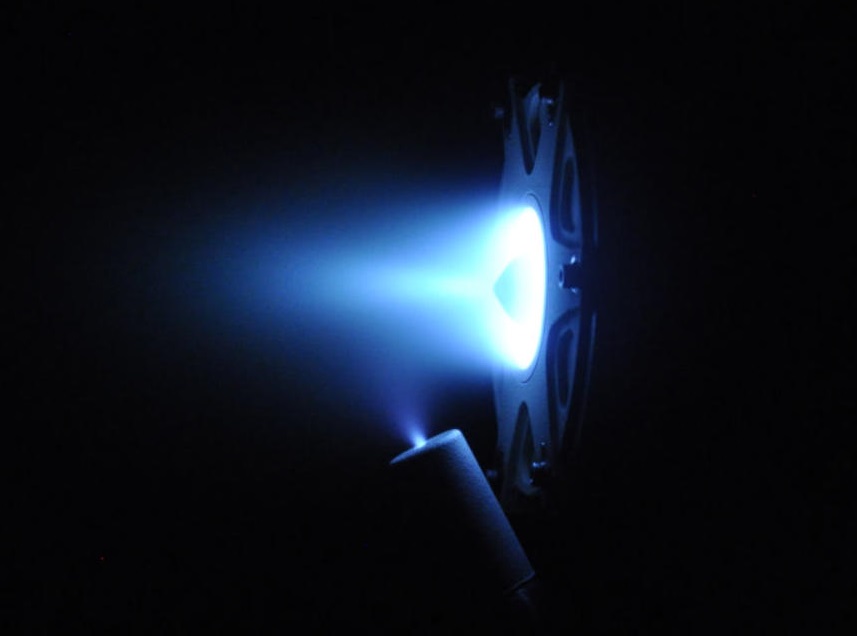
American spacecraft propulsion company
| Field | Value |
|---|---|
| name | Busek Company Incorporated |
| logo | LogoBlue 96dpi.jpg |
| image | Busek_Co_Maxar_PPE_in_lunar_orbit.jpg |
| image_size | 300 |
| image_caption | Concept art of the Lunar Gateways' Power and Propulsion Element with Busek Hall effect thrusters (outer pair on each side) |
| type | Aerospace |
| foundation | 1985 |
| founder | Vlad Hruby |
| defunct | |
| location_city | Natick, Massachusetts |
| location_country | United States |
| products | Spacecraft propulsion |
| homepage |
Busek Company Incorporated is an American spacecraft propulsion company that builds thrusters, electronics, and various systems for spacecraft.
History
Busek was founded in 1985 by Vlad Hruby in Natick, Massachusetts. Busek started as a laboratory outside of Boston, Massachusetts.
Flight missions
TacSat-2
The first US Hall thruster flown in space, Busek's BHT-200, was launched aboard the Air Force Research Laboratory's (AFRL) TacSat-2 satellite. The Busek thruster was part of the Microsatellite Propulsion Integration (MPI) Experiment and was integrated on TacSat-2 under the direction of the DoD Space Test Program. TacSat-2 launched on December 16, 2006 from the NASA Wallops Flight Facility.
LISA Pathfinder
The first electrospray thruster that made it to space was manufactured by Busek and launched aboard the European Space Agency's LISA Pathfinder satellite on December 3, 2015. The micro-newton colloid-style electric thruster was developed under contract with NASA's Jet Propulsion Laboratory (NASA ST-7 Program) and part of NASA's Disturbance Reduction System (DRS), which serves a critical role in the LISA Pathfinder science mission.
AEHF
Aerojet, under license with Busek,{{cite web |access-date= 2012-10-23 |archive-url= https://web.archive.org/web/20120903015020/http://www.afsbirsttr.com/Publications/Documents/satprop.pdf |archive-date= 2012-09-03 |url-status= dead
OneWeb
In 2023, Busek announced the successful on-orbit commissioning of its BHT-350 Hall-effect thrusters on 80 OneWeb satellites, launched in December 2022 and January 2023 on SpaceX Falcon 9 rockets. The new OneWeb communications satellites use the thrusters for orbit-raising, station-keeping, collision avoidance and de-orbiting at the conclusion of each satellite’s mission.{{cite web https://spacenews.com/busek-ramps-up-production-for-oneweb-constellation/
Contracts
NASA
Busek will be providing Hall thrusters for NASA's Artemis Program. As part of the Power and Propulsion Element, Busek's 6 kW Hall thrusters will work in combination with NASA's Advanced Electric Propulsion System to provide orbit-raising and station-keeping capabilities for the Lunar Gateway. The Lunar Gateway's polar near-rectilinear halo orbit (NRHO) will require periodic orbit adjustment, and electric propulsion will use solar energy for this task.
Research and development
Propulsion

Busek has demonstrated experimental xenon Hall thrusters at power levels exceeding 20kW.{{cite web
Other publicized Busek technologies include RF ion engines and a resistojet rocket.{{cite web
, Busek was working on a DARPA-funded program called DARPA Phoenix, which aimed to recycle some parts of on-orbit spacecraft.
In September 2013, NASA awarded an 18‑month Phase I contract to Busek to develop an experimental concept called a High Aspect Ratio Porous Surface (HARPS) microthruster system for use in tiny CubeSat spacecraft.
In March 2021, Busek and Maxar Technologies completed an end-to-end hot fire test campaign validating the 6-kilowatt solar electric propulsion (SEP) subsystem for the Power and Propulsion Element (PPE) of NASA’s Gateway in lunar orbit.
Orbital Debris Remover (ORDER)
In order to deal with space debris, Busek proposed in 2014 a remotely controlled vehicle to rendezvous with this debris, capture it, and attach a smaller deorbit satellite to the debris. The remotely controlled vehicle would then drag the debris/smallsat-combination, using a tether, to the desired location. The larger satellite would then tow the debris/smallsat combination to either deorbit or move it to a higher graveyard orbit by means of electric propulsion. The larger satellite, named the Orbital Debris Remover, or ORDER, would carry over 40 SUL (Satellite on an Umbilical Line) deorbit satellites and sufficient propellant for a large number of orbital maneuvers required to effect a 40-satellite debris removal mission over many years. Busek projected the cost for such a space tug to be .
References
References
- (2014-08-25). "Spotlight {{!}} Busek Co. Inc.".
- (2008). "Fundamentals of Electric Propulsion: Ion and Hall Thrusters". Wiley.
- (29 July 2019). "Colloid Microthrusters Demonstrated on LISA Pathfinder {{!}} Science Mission Directorate".
- (2006). "Colloid Microthrust Propulsion for the Space Technology 7 (ST7) and LISA Missions". AIP.
- (15 September 2019). "The Application of Advanced Electric Propulsion on the NASA Power and Propulsion Element".
- (2012-07-01). "Performance Evaluation of an Iodine-Vapor Hall Thruster". Journal of Propulsion and Power.
- Marshall Space Flight Center. (November 2008). "Hall-Effect Thruster Utilizing Bismuth as Propellant". NASA Tech Briefs, 32, 11.
- Bergin, C.. (January 9, 2012). "Enabling the future: NASA Call for exploration revolution via NIAC concepts". NASA Spaceflight.com.
- "Light Metal Propellant Hall Thrusters". IEPC paper 09-138, Proceedings of the 31st International Electric Propulsion Conference, University of Michigan, Ann Arbor, 2009..
- (2018). "Space Propulsion Technology for Small Spacecraft". Proceedings of the IEEE.
- (1 April 2015). "MSU's 'Deep Space Probe' selected by NASA for Lunar Mission". Morehead State University.
- (2022-12-19). "Game Changing Development".
- [https://ntrs.nasa.gov/archive/nasa/casi.ntrs.nasa.gov/20150002945.pdf Small Satellite Propulsion]. (PDF), p. 12. ''AstroRecon 2015''. January 8–10, 2015. Arizona State University, Tempe, Arizona.
- (2021-03-18). "Maxar and Busek Thruster System for NASA Lunar Gateway Passes Critical Milestone".
This article was imported from Wikipedia and is available under the Creative Commons Attribution-ShareAlike 4.0 License. Content has been adapted to SurfDoc format. Original contributors can be found on the article history page.
Ask Mako anything about Busek — get instant answers, deeper analysis, and related topics.
Research with MakoFree with your Surf account
Create a free account to save articles, ask Mako questions, and organize your research.
Sign up freeThis content may have been generated or modified by AI. CloudSurf Software LLC is not responsible for the accuracy, completeness, or reliability of AI-generated content. Always verify important information from primary sources.
Report