From Surf Wiki (app.surf) — the open knowledge base
British cuisine
Culinary traditions of the United Kingdom

Culinary traditions of the United Kingdom
British cuisine consists of the cooking traditions and practices associated with the United Kingdom, including the regional cuisines of England, Scotland, Wales, and Northern Ireland. British cuisine has its roots in the cooking traditions of the indigenous Celts; however, its diverse culinary offerings have been significantly influenced and shaped by subsequent waves of settlement and conquest, notably those of the Romans, Anglo-Saxons, Vikings, and the Normans; waves of migration, notably immigrants from India, Bangladesh, Pakistan, Jamaica and the wider Caribbean, China, Italy, South Africa, and Eastern Europe, primarily Poland; and exposure to increasingly globalised trade and connections to the Anglosphere, particularly the United States, Canada, Australia, and New Zealand.
Highlights and staples of British cuisine include the roast dinner, the full breakfast, shepherd's pie, toad in the hole, fried chicken and fish and chips; and a variety of both savoury and sweet pies, cakes, tarts, and pastries. Foods influenced by immigrant populations and the British appreciation for spice have led to the invention of new curries. Other traditional desserts include trifle, scones, apple pie, sticky toffee pudding, and Victoria sponge cake. British cuisine also includes a large variety of cheeses, beers, and ciders.
Around the United Kingdom vibrant culinary scenes exist influenced by global cuisine. The modern phenomenon of television celebrity chefs began in the United Kingdom with Philip Harben. Since then, well-known British chefs have wielded considerable influence on modern British and global cuisine, including Marco Pierre White, Gordon Ramsay, Jamie Oliver, Heston Blumenthal, Rick Stein, Nigella Lawson, Hugh Fearnley-Whittingstall, and Fanny Cradock.
History
Celtic origins and Roman conquest
British cuisine has its roots in the cooking practices of the indigenous Celts. Celtic agriculture and animal breeding practices produced a wide variety of foodstuffs, such as grain, fruit, vegetables, and cattle. Archaeological evidence of cheese production can be seen as early as 3,800 BC, while bread from cereal grains was being produced as early as 3,700 BC. Ancient Celts fermented apples to produce cider, as recorded by Julius Caesar during his attempted invasions of Britain in 55-54 BC.
Strabo records that Celtic Britons cultivated millet, herbs, and root vegetables, and practised apiculture to produce honey. Trade with Celtic Gauls in what is now modern-day France and the Low Countries, as well as with the Roman Republic following its conquest of Gaul, introduced grains such as wheat, oats, and rye. Barley was grown to produce porridge and malt for beer, while flax was grown for its oil. Broad beans, wild spinach, herbs, and primitive parsnips were the primary sources of vegetables and greens in Celtic Britain.
According to Julius Caesar, Celtic Britons domesticated cattle, which were symbols of status and wealth, sheep and goats for their meat and milk; and, to a lesser extent, pigs for ham. Caesar notes that Celts also domesticated geese, chickens, and hares, but it is unclear whether they were kept for food or for religious rituals due to the association with Celtic deities. Trade with Romans also led to the import of wine.
In 43 AD, the Roman Empire invaded and began its conquest of Britain, eventually encompassing all of modern-day England, Wales, and parts of southern Scotland. The Roman conquest brought a culinary renaissance to the island, importing many foodstuffs which were hitherto unknown to Celtic Britons, including fruits such as figs, medlars, grapes, pears, cherries, plums, damsons, mulberries, dates, olives, vegetable marrows, and cucumbers; vegetables such as carrots, celery, asparagus, endives, turnips, cabbages, leeks, radishes, onions, shallots, and artichokes; nuts, seeds, and pulses such as sweet chestnuts, lentils, peas, pine nuts, almonds, walnuts, and sesame; and herbs and spices such as garlic, basil, parsley, borage, chervil, thyme, common sage, sweet marjoram, summer savory, black pepper, ginger, cinnamon, rosemary, mint, coriander, chives, dill, and fennel. Produced foods such as sausages were also imported, along with new animals, including rabbits, pheasants, peacocks, guinea fowl, and possibly fallow deer.
Roman colonists were able to grow wine in vineyards as far north as Northamptonshire and Lincolnshire, and the longevity of Roman occupation is credited as creating the wine industry in Britain. The importance of seafood to the Roman diet led to its increasing popularity in Britain, particularly shellfish such as oysters. The quality of oysters from Colchester in particular became prized in Rome as a delicacy. After the end of Roman rule in Britain and the subsequent collapse of the Western Roman Empire, the use of more exotic food items lessened. After the Roman period, British cuisine predominately consisted of vegetables, cereals, and meats such as mutton.
The Middle Ages
Shortly after the end of Roman rule in Britain, the Germanic Anglo-Saxons began conquering and colonising the island. The Anglo-Saxons introduced bacon to Britain during this period; rural families had their own recipes for curing and smoking bacon, while urban residents would purchase bacon from butchers who developed their own curing methods. Residents in London had access to a particularly diverse range of bacon products from across Britain. Anglo-Saxons helped to entrench stews, broths, and soups into British cuisine, along with an early form of the crumpet. Bread and butter became common fare, and the English in particular gained a reputation for their liberal use of melted butter as a sauce with meat and vegetables. Ale was a popular drink of choice among the nobility and peasantry alike, and mead production increased around Christian monasteries. Danish and other Scandinavian invaders during the Viking Age introduced techniques for smoking and drying fish.
After the Norman Conquest in 1066, the Normans reintroduced many spices and continental influences that had been lost after the departure of the Romans. Many of the modern English words for foodstuffs, such as beef, pork, mutton, gravy, jelly, mustard, onion, herb, and spice are derived from Old French words introduced by the Normans. Though eating habits and cooking methods remained largely unchanged, pig farming intensified under the Norman dynasty. The Crusades and trade with Arab Muslim empires introduced foods such as oranges and sugarcane to Britain.
It was during the late 14th century that the first cookery books began to emerge, notably the English book the Forme of Cury, containing recipes from the court of Richard II. The recipes it describes are diverse and sophisticated, with a wide variety of ingredients such as capon, pheasant, almonds, cinnamon, ginger, cloves, dates, pine nuts, saffron, mace, nutmeg and sugar. It also describes foods such as gingerbread, and sweet and sour sauces. Elaborate stews such as dillegrout became commonly served at the coronations of English monarchs. It was during the Middle Ages that many staples of British cuisine began to develop, such as the apple pie, an early cheesecake (called sambocade), custard, mince pies, pasties, and various forms of meat pies.
Tudor and Stuart era
The dawn of the Tudor dynasty following the Wars of the Roses coincided with the European discovery of the New World, the initiation of the Columbian exchange, and globalisation of trade, which opened up Britain to a range of new foodstuffs not seen since the Roman conquest. Foods from the New World included grains such as maize; fruits such as avocados, chili peppers chocolate, cranberries, guavas, papayas, pineapples, squashes, and tomatoes; vegetables such as potatoes, cassavas, and sweet potatoes; legumes such as peanuts and haricot beans, spices such as vanilla; and animals, most notably turkeys. The growth of the global spice trade, now dominated by rapidly expanding European empires, led to the re-proliferation of black pepper, nutmeg, cloves, mace, and cinnamon in British cookery.
The late 15th century saw the development of well-known alcoholic beverage Scotch whisky. It was during the early 16th century that cookery books printed using the printing press became more widely available, notably The Boke of Cokery printed at the turn of the century in 1500 by Richard Pynson, and The Good Huswifes Jewell towards the end of the century in 1585 by Thomas Dawson. Under the Tudor dynasty in England and Wales, and the Stuart dynasty in Scotland, British cuisine became more refined and grew more sophisticated. Recipes began to emphasise a balance of sweet and sour flavours, butter became a key ingredient in sauces, reflecting a trend seen in France that continued in subsequent centuries, and herbs such as thyme, used only sparingly in the medieval period, began to replace spices as flavourings.
Throughout the Tudor period, fruits such as apples, gooseberries, grapes, oranges, and plums were commonly eaten. The main source of carbohydrates in British diets remained bread, and its composition reflected one's socio-economic class: the peasantry ate bread made from rye or coarse wheat, the emerging middle class of prosperous tenants ate a yeoman's bread made of wholemeal, while the most expensive bread was made of white wheat flour. Meat consumption grew rapidly throughout the 16th century as the price of meat fell, and poorer families who would have rarely enjoyed meat a century before now had wider access to it. Commoners living by rivers or along the coast ate seafood that was plentiful to the waters surrounding Britain, such as haddock, sole, cod, oysters, whitebait, and cockles, while the wealthier classes ate sturgeon, seals, crab, lobster, salmon, trout, and shrimp. Commoners ate whatever meat they could hunt, such as rabbit, blackbirds, chicken, ducks, and pigeons.
The nobility consumed fresh meat in such vast quantities that it constituted approximately 75% of their diet. For example, the quantities of meat procured for the court of Elizabeth I in just one year included 8,200 sheep, 2,330 deer, 1,870 pigs, 1,240 oxen, 760 calves, and 53 wild boar. Pies became an important staple as both food and for court theatrics; the nursery rhyme "Sing a Song of Sixpence", with its lyrics "Four and Twenty blackbirds / Baked in a pie. // When the pie is opened, the birds began to sing", refers to the conceit of placing live birds under a pie crust just before serving at a banquet. Nobles ate costlier or more unusual varieties of meat, such as swans, lamb and mutton, veal, beef, heron, pheasant, partridge, quail, peafowl, geese, boar, and venison. Royal banquets during the court of Henry VIII included unusual meats such as conger eel and porpoise.
Desserts and sweet foods grew rapidly as European demand for sugar ballooned during the 16th century. Sweets in British cuisine at this time included pastry-based foods such as tarts, sweet flans, and custards. The 16th century saw the emergence of sweet foods such as the fruit fool, most commonly made with gooseberries, sugar, and clotted cream; syllabubs, a dessert made with milk or cream, sugar, and wine, and trifle, at the time a thick cream flavoured with sugar, ginger, and rosewater. Trifle has remained a staple of British cuisine and is a popular sweet dish today. Scones and shortbread developed in Scotland at this time; though shortbread had been known since the 12th century, it was refined into its modern form during the reign of Mary, Queen of Scots. As trade with Southeast Asia increased, widespread eating of rice became more common, though it was usually in the form of a dessert, giving rise to rice pudding in Britain.
During the Stuart dynasty into the 17th century, trade with Africa, India, and China increased, largely through private interests, namely the East India Company. Fruits such as bananas became more commonplace, however it was the introduction of tea that would have a much more profound effect on British culinary habits. Tea remained quite expensive until the 18th century, and it was only consumed by wealthier middle class individuals and those in the nobility before that time. Coffee, a drink derived from the beans of a plant native to Yemen, was introduced to Europe through Italy, and became highly successful in the mid-to-late 17th century. Coffee houses sprang up across Britain; one, Oxford's Queen's Lane Coffee House, established in 1654, is still open today as the oldest continually-serving coffee house in Europe. Owing to the growing appreciation of sweet foods in Britain, the sponge cake, which would later become a defining food of the Victorian era and afternoon tea, had its start in the early 17th century, which mixed flour, sugar, and eggs, seasoned with anise and coriander seeds. The alcoholic beverage rum, produced from molasses throughout the Caribbean and North America, came to be associated with the British Royal Navy at this time, when they captured the valuable sugar-producing island of Jamaica in 1655.
Georgian era
In 1707, the kingdoms of England (which included Wales) and Scotland united to form a new country, the Kingdom of Great Britain. For the vast majority of the 18th century, the new British nation was ruled by the House of Hanover under the Georgian dynasty. During this time, the British deepened their influence in India, displacing the Dutch and French as the preeminent European power in southeast Asia. Increasing British domination of global trade, cheapening of ingredients hitherto affordable only to wealthier individuals, and a burgeoning middle class led to many innovations in British cuisine, influenced by foods the British encountered in India.
Elizabeth Raffald brought out a cookbook The Experienced English Housekeeper that that an early recipes for macaroni cheese. It also contained the first recipe for a Bride cake. . It showed the eras liking for potted meats and preserves.
The 18th century saw a revolution in English cookery books, notably The Compleat Housewife in 1727 by Eliza Smith and The Art of Cookery Made Plain and Easy twenty years later by writer Hannah Glasse, which became a best seller for a century. Glasse's book not only heavily influenced British cuisine, but also early American cuisine, with copies owned by Benjamin Franklin, Thomas Jefferson, and George Washington. The book contains the earliest written recipe for what looks like fried chicken as well as the first known recipe in English for curry, which called for chicken to be fried in butter, ground turmeric, ginger, and pepper, then stewed with cream and lemon juice added before serving, resembling the modern dish butter chicken. Dishes that would become staples of British cuisine well into the 21st century were first mentioned in Glasse's book, such as Yorkshire pudding, burgers (called "Hamburgh sausage"), the addition of jelly into trifle, and piccalilli.
Pies and other hearty snack-type foods continued to develop in variety and popularity, favoured by hunters as an easy, portable lunch. Glasse describes a "Cheshire pork pie", a pie filled with layers of pork loin and apples, sweetened with sugar and filled with white wine. The sandwich, now a global staple with countless varieties though originally referring to roast beef between two slices of toasted bread, and named for John Montagu, 4th Earl of Sandwich, gained widespread popularity in the 18th century. Montagu reputedly ordered the food during late-night sessions in gambling houses, as it could be eaten without the need for cutlery, allowing him to continue his gambling uninterrupted.What's Cooking America, Sandwiches, History of Sandwiches. 2 February 2007. With the Industrial Revolution rapidly developing during the 18th century in Britain and the growth of a new, industrial urban-based working class, the demand for fast, portable, and inexpensive meals grew considerably, leading to the ubiquitous adoption of the sandwich. Similar foods previously reserved for the upper class also started gaining popularity with the working class in other parts of the country, such as the Cornish pasty, favoured by miners in Cornish tin mines, working to fuel Britain's growing industry. Tavern-style foods which became culinary classics developed during this time, notably Welsh rarebit, consisting of toasted bread topped with a sauce made of cheese, ale, and mustard.
Roast beef became an entrenched staple of British culinary identity in the 18th century, so much so that a French nickname for the British (more specifically the English) is "les Rosbifs" (the roast beefs). It was during the late 18th century that roast beef gained its association with the Sunday roast dinner, a cornerstone of British cuisine. Families would place a cut of meat into the oven with root vegetables such as potatoes, turnips, and parsnips before attending the Sunday church service. Upon their return, the meal would be cooked, and the juices from the roast was then used to make a gravy to pour on top of the dinner. Though roast beef is most strongly associated with the traditional Sunday roast dinner, other meats are more commonly used today, such as chicken, lamb, pork, and sometimes duck, goose, gammon, turkey, or other game birds. With the Industrial Revolution increasingly mechanising food production and advancing food science, the world's first commercial bacon processing plant was opened in Wiltshire by John Harris in the 1770s. Today, Wiltshire cured bacon is prized in Britain for its quality. Amateur plant breeder Thomas Edward Knight of Downton, near Salisbury, England, developed the world's first sweet-tasting pea.
Poorer households attempting to extend the longevity of their meat stores made them into savoury batter puddings, giving rise to the classic dish Toad in the hole. Originally the dish used beef and pigeon, however it is most commonly associated today with sausages, served with vegetables and onion gravy. Scouse, essentially a beef and root vegetable stew, developed along similar lines of thrift. The name, derived from lobscouse, is the origin of the term "Scouser", a nickname for people from Liverpool, due to the association of the dish with that city, particularly sailors. Sailors engaged in trade in Asia returned with knowledge of savoury sauces used as condiments. Eliza Smith subsequently published the first recipe for ketchup, a mushroom variety which used anchovies and horseradish. British ketchup consequently used mushrooms rather than tomatoes as the primary ingredient, and was prepared extensively by British colonists in the Thirteen Colonies. Chutney, a type of preserved relish developed in India, gained huge popularity in Britain, particularly with the working class who desired ever more exotic flavours in their diet.
The British penchant for sweet foods continued throughout the Georgian era. The staple of bread and butter pudding, a baked custard-based dish made with bread, butter, currants, cream, eggs, and nutmeg, was first described in 1728 by Eliza Smith. Adapting earlier recipes of Portuguese quince paste, the Scots invented the modern form of marmalade; an easily spreadable fruit preserve made from bitter orange. Eccles cakes, a small flaky pastry filled with currants, emerged in the late 18th century, which still retains some popularity today particularly in Manchester and Lancashire. Suet pudding, a boiled, steamed, or baked pudding of wheat flour, suet, dried fruits, and spices developed during this time, and become popular fare.
The British conquest of India led to the acquisition of the large Indian tea industry, resulting in tea becoming cheaper to import than coffee. The ease of tea production compared to coffee led to tea becoming a British staple, spreading through all classes, becoming a prominent feature of modern British culture and identity. Gin, an alcoholic beverage introduced into Britain in the latter half of the 17th century, exploded in popularity throughout the first half of the 18th century, and became extremely popular with the lower classes. Its popularity and heavy consumption was such that the British Parliament passed five major Acts to control the consumption of the drink.
Victorian era
Victoria ascended the throne in 1837 and ruled until 1901. The longevity of her reign helped entrench many culinary traditions and trends. For example, she developed a love of Indian chutneys and curry, and ordered curry twice a week on average. The trend became popular among the aristocracy and, in turn, spread throughout society.
Emerging social changes also influenced the growth and development of British cuisine. Writers such as American-born Elizabeth Robins Pennell helped to re-cast cooking not as a duty, but as a valuable creative pursuit by framing cooking as a "high art practised by geniuses", encouraging upper and middle class Victorian women to express their own culinary creativity for the first time. This tied into the growth of the middle class in Victorian Britain as wealth poured in from all over the Empire, and industrialisation spread into food production which cheapened ingredients, allowing more people to purchase goods previously reserved only for the very wealthy. Middle-class women, in lieu of being able to afford servants and private cooks, began to make more elaborate dishes to impress guests at dinner parties.
Britain's rapid industrialisation and urbanisation in the 19th century impacted people of all socio-economic classes. Wealthy aristocrats began to have their evening meal later in the day, but still took lunch at midday. Consequently, shortly after Victoria's ascension to the throne, one of her ladies-in-waiting, Anna Maria Russell, began to ask for tea, bread, and cake to be delivered to her room. The habit soon spread among the aristocracy, birthing a new tradition of afternoon tea. Industrialisation helped reduce costs of ingredients thanks to mass-production, and pared-down versions of lavish meals characteristic of the upper class began to reach the middle and working class, such as the cooked full breakfast, usually composed of fried sausage or bacon, cooked eggs, assorted sides and toast, which grew in popularity during the Victorian era.
Throughout the 19th century, Iberian Jewish immigrants in London introduced their method of coating fish in flour, and later a mix of flour and water, before frying in oil. Fish, which was plentiful, affordable, and widely eaten on Fridays, led to the opening of the first fish and chip shop by Eastern European Jewish immigrant Joseph Malin. Combining fried fish with chips, often served with mushy peas and tartare sauce as fish and chips, proved to be an incredibly popular and affordable takeaway food among the working class. The popularity of the dish has led to it being termed one of Britain's national dishes.
The British staple of stewed meats further developed into more distinct dishes in the Victorian era. Lancashire hotpot, a dish served in the north-west of England around Liverpool and Manchester, consisting of a mutton or lamb stew topped with sliced potatoes and baked in a heavy pot, developed as a distinct regional dish. Like the Sunday roast, Lancashire hotpot could be left to cook slowly while the family worked, making it a popular choice for the growing working class. While a slowly steamed suet pudding of stewed beef had been common in British cuisine since the 18th century, it was not until the mid-19th century that cooks began to add kidneys, forming the steak and kidney pudding. Initially more of a regional dish, its ease of preparation and popularity led to it becoming recognised as a traditional British dish.
The continuing need for inexpensive and portable foods for the predominately industrial and urban working class, which had boosted the popularity of foods such as the Cornish pasty and the sandwich, led to the popularising of the sausage roll, consisting of seasoned sausage meat wrapped in puff pastry and baked golden-brown. While meats wrapped in dough were known in Ancient Greece and Rome, it was not until the 19th century that the sausage roll became widely available. Sausage rolls remain an indelible aspect of British culture and a widely popular snack food; the British bakery chain Greggs sells approximately 140 million of them every year.
It was during this time that mass-produced condiments became available thanks to industrialised food production. Worcestershire sauce, a fermented sauce made primarily of anchovies, vinegar, tamarind, and spices which had its roots in Ancient Roman garum and mushroom ketchup, was developed by chemists John Wheeley Lea and William Henry Perrins in the early 19th century. Today, Lea & Perrins remains the world's largest brand of Worcestershire sauce. In the early 19th century, Royal chefs produced brown sauce, typically made of tomatoes and molasses. A.1. Sauce was first developed in Royal kitchens, however it fell out of favour in the British domestic market, though it has enjoyed enduring popularity in American cuisine as a steak sauce. HP Sauce, named after the Houses of Parliament, made from tomatoes, molasses, vinegar, and spices was introduced in the late 19th century and became so popular it is now regarded as an iconic sauce of British cuisine.
The British love of sweet foods spurred increasing innovation in the field of desserts. The world's first documented recipe for the ice cream cone was published by English writer Agnes Marshall, consisting of baked almonds. Marshall is consequently considered the inventor of the ice cream cone. Battenberg cake, made by baking yellow and pink almond sponge cakes before being cut and arranged into a chequered pattern, held together by jam and covered with marzipan, originated in the late 19th century, purportedly named for the marriage of Princess Victoria, Queen Victoria's granddaughter, to Prince Louis of Battenberg in 1884. The first printed recipe for Eton mess was published in 1893, a traditional dessert consisting of a mixture of strawberries, sweet meringue, and whipped cream. Madeira wine, popular in England in the mid-19th century, directly influenced the development of Madeira cake, a light sponge or butter cake traditionally flavoured with lemon, as an accompaniment to eat with the wine. Jam roly-poly, a simple dessert made of flat-rolled suet pudding spread with jam and rolled-up, similar to a Swiss roll, then steamed or baked and served with custard first emerged in the early 19th century. Its affordability, ease of production, and popularity led to it becoming a modern British classic.
Throughout the mid 19th century, innovations in food preservation and production allowed the mass-production of chocolate as a food, as opposed to primarily a drink. British Quakers, who were opposed to alcohol as a cause of moral sin, began to champion chocolate as an ethical alternative. Quakers came to establish three household chocolate brands which became worldwide names: Fry's, Rowntree's, and notably, Cadbury's, the latter of which would become the world's second-largest confectionary brand.
As gin regained popularity fears of a return to the Gin Craze led to the Beerhouse Act, which aimed to promote beer as a safer alternative and encourage the creation of controlled venues for workers in rapidly expanding industrial centres. The Act spurred a proliferation of public houses and increased beer consumption. As the 19th century progressed, many establishments underwent lavish refurbishment to compete with gin palaces, and to distinguish themselves from one another, further solidifying alcohol consumption as an integral part of British culture.
20th century
The haute cuisine of the late Victorian era and early 20th century was heavily influenced by French cuisine, with groundbreaking chefs such as Escoffier recruited by the Savoy Hotel in London. However, British cuisine for much of the 20th century was severely impacted by the effects of rationing during the First and Second World Wars. The latter half of the First World War saw voluntary rationing, which limited the average citizen to a daily 1,680 calorie-ration of butter or margarine, sugar, tea, jam, bacon, and other meat. Unlike elsewhere in Europe, bread was not rationed. During the war, average energy intake decreased by only 3%, but protein intake by 6%. Rationing after the First World War was not lifted in full until 1921, over three years after the war's end.
Rationing during the Second World War was much more significant, widespread, and tightly controlled by the state. Rationing continued for nearly a full decade after the war, and restrictions were made stricter in 1947 than during the war itself. As a result, many children of the Silent and Boomer generations were raised without access to many previously common ingredients. For example, in 1942, many young children when questioned about bananas did not believe they were a real fruit. Bread was not rationed until after the war ended, but was replaced by a "national loaf" of wholemeal which was found to be mushy and grey. Fish was not rationed, but hundreds of fishing trawlers were requisitioned for military use by the Royal Navy and fish supplies dropped by nearly a third of pre-war levels, resulting in increased prices at fishmongers. Owing to its popularity and morale-boosting comfort food qualities, fish and chips was one of the few dishes not subject to rationing. Though not rationed, most alcoholic drinks except beer were scarce, and there was a ban on importing sugar for brewing. Many pubs in 1945 ran out of pint glasses, as glass itself was in short supply and many patrons wishing to celebrate the end of the war at their local would recall a lengthy wait to be served; owing to wait on patrons finishing drinks so as their glass could be washed and reused.
Restaurants were initially exempt from rationing, but this policy was subsequently reversed after public outrage that "luxury" foods were being enjoyed by wealthier classes while the rest of the population were subject to tightly controlled rationing. The Government subsequently introduced new restrictions on restaurants; capping prices, limiting the serving time of meals, and limiting the ingredients that could be used. A standard weekly ration by the war's end consisted of 4oz (113g) of bacon,1 shilling 2d of Meat, 8oz of sugar, 2oz of loose tea, 2oz of cheese, 2lb of marmalade (or 1lb of either preserves or sugar), 2oz of butter, 4oz of margarine, and 2oz of lard. Additionally, 12oz of sweets were allowed on a monthly basis.
There was an allowance for vegetarians, who, in exchange for surrendering their meat coupons, could receive double rations of cheese instead.
After the war ended, rationing was kept in place, partially to help feed people in European areas whose economies had been virtually destroyed by the fighting, but also because resources were unavailable to expand food production and imports. Frequent strikes, critically by dock workers, only exacerbated the dire situation. The most common form of rationing fraud, was people using ration books of those who had died as a means to acquire extra food. In the years following the war, the bacon ration was cut by a quarter, and poor harvests resulted in the introduction of potato rationing, Due to the austerity measures that were kept in place or expanded (with the exception of the new National Health Service) by the postwar Labour government, the Conservatives rallied support from disgruntled housewives that led them to victory at the 1951 general election. The Conservative government formally abolished rationing entirely in 1954, although the effects of rationing severely impacted the food production industry for decades to come. For example, cheese production virtually ground to a halt, and some varieties of British cheese came close to disappearing altogether; with the cheese industry not fully recovering until the 1990s.
Wartime rationing and subsequent food scarcity at a time when British culinary traditions were strong, likely contributed to a sharp decline of the international reputation of British cuisine. The Good Food Guide in the 1960s described the food of the previous decade as "intolerable" due to food shortages of even simple ingredients such as butter, cream, and meat.
Rationing helped to spur innovation in recipes as food shortages compelled creativity. The natural sweetness of carrots, a vegetable whose consumption was promoted by the Government, were favoured as an alternative to sugar. Carrot cake, though it had its origins in a 16th-century recipe, exploded in popularity across Britain. Crumble, a sweet dish of baked fruit filling topped with a streusel grew in popularity during and after the war, due to the topping being easier and less expensive to produce compared to pastry. The Ploughman's lunch, initially a simple rustic meal of bread, cheese, beer, and pickled onions emerged in the 1950s, though it didn't achieve widespread popularity until the 1970s where it was favoured due to its simplicity, ease of preparation, and high profit margin due to it not containing meat; though modern variations of the meal include pork pies. The Bakewell tart, a variant of the Bakewell pudding, made of a shortcrust pastry shell beneath layers of jam, frangipane, and topped with flaked almonds developed in the 20th century. The sticky toffee pudding, now a widely-popular dessert of a muffin-like sponge cake covered in a toffee sauce made from cream and dark sugars, served with custard or vanilla ice cream, developed in the north-west of England, where it is seem as a regional culinary symbol.
Anglo-Indian cuisine
Main article: Anglo-Indian cuisine
Throughout the 1970s onwards, huge waves of migration to Britain came from India, Pakistan, and Bangladesh. Many of these immigrants were recruited to fulfill the labour shortages that resulted from the Second World War. British Indians became a distinct ethnic identity in Britain who began to incorporate their own culinary traditions to a new market. In 1951, there were only 30,000 persons of Indian descent and 10,000 of Pakistani descent living in Britain. By the turn of the millennium in 2001, there were 1,053,411 persons of Indian descent, 747,000 of Pakistani descent, and 283,063 of Bangladeshi descent living in Britain, representing a significant portion of Britain's foreign-born or foreign descent population. Hungry for more exotic flavours that had disappeared during wartime rationing and keen to feed a diversifying clientele, Indian restaurants that had previously only catered to Indians began adapting classic Indian recipes for the British palette, and "going for an Indian" became a popular dining and takeaway option for a population recovering from the impact of war.
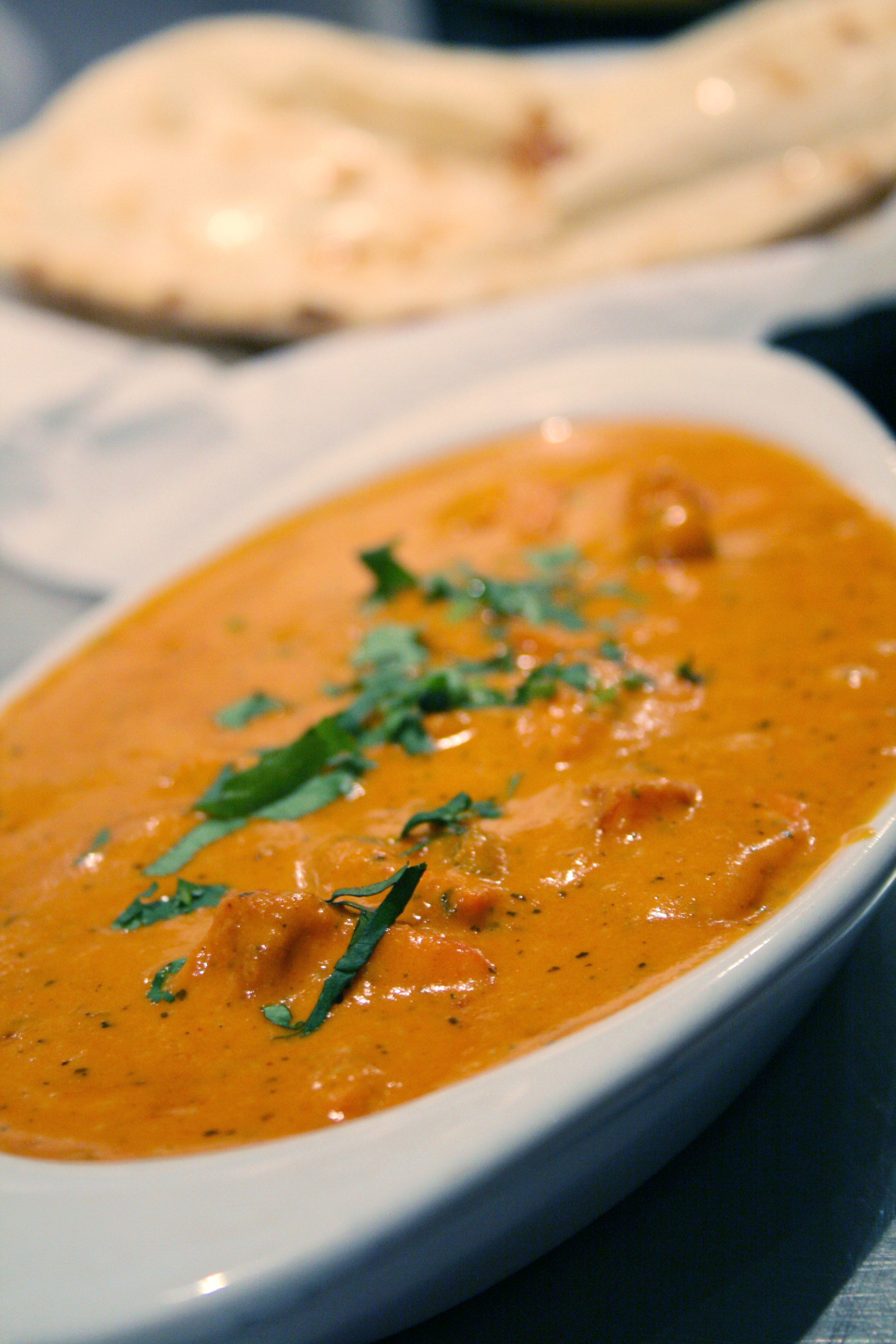
British Indian dishes are largely based on the Madras curry sauce, the name referring to the region of India where spices were obtained as opposed to an actual dish, and dishes are varied by modifying the base sauce. Vindaloo, for example, was adapted in British cuisine from a Portuguese dish as a spicier version of the standard "medium" restaurant curry sauce, with the addition of vinegar, potatoes, and chilli peppers, and is often the spiciest dish on British Indian menus. A poll by YouGov in 2016 found that the most popular Indian dish in Britain was the korma (selected by 18% of respondents), followed by chicken tikka masala, jalfrezi, madras, rogan josh, biryani, balti, bhuna, dupiaza, and vindaloo. Indian cuisine is now the most popular foreign cuisine in Britain.
British Chinese cuisine
Main article: British Chinese cuisine
Like Indian food, hunger for more exotic flavours spurred the development of a distinct version of Chinese cuisine that had been adapted for British tastes. British rule over Hong Kong and the New Territories became an integral part of international shipping routes, and many European companies enlisted Southern Chinese men as sailors, who in turn resettled in Britain. As with Indian immigrants, Britain recruited large numbers of Chinese peoples in the 1950s and 1960s to fill the labour void that had been created as a result of the war. Consequently, the number of Chinese food establishments doubled, with a large portion of these catering to non-Chinese clientele. These restaurants were largely operated by Hong Kongers who had resettled in Britain.
Many fish and chip shops, particularly in Liverpool, were operated by Chinese immigrants, which resulted in curry sauce and chips, staple foods in British chip shops, being incorporated into Anglicised Chinese food in a departure from authentic Chinese cuisine. British Chinese restaurants have developed original recipes, such as crispy duck pancakes as a variation on peking duck; jar jow, a stir-fried dish of sliced char siu, bamboo shoots, onions, and green peppers seasoned with chilli powder and tomato paste; and salt and pepper chips, made of chips stir-fried with five-spice powder, peppers, and onions. However, American-style Chinese dishes such as chop suey and Americanised chow mein have become more popular, as well as increasingly authentic Chinese dishes.
British Chinese cuisine is considered a major component of British cuisine owing to its widespread popularity; in 2017, over 80% of Londoners reported having been to a Chinese takeaway. By the end of the century, virtually every city, town, and village in Britain had at least one Chinese takeaway or restaurant.
Foreign influence and modern British cuisine
Writers such as Elizabeth David, who from 1950 produced evocative books beginning with A Book of Mediterranean Food featuring ingredients which were then virtually impossible to find in Britain, helped increase Britain's appetite for foreign cuisine. David helped to inspire Italian cuisine to become the most popular Mediterranean cuisine in Britain. While Italian restaurants had operated in Britain before the Second World War, they served generalised haute cuisine. It was only after the war that cheaper Italian coffee bars appeared, trading on their Italian identity and selling cheap and rustic Italian dishes such as minestrone soup, spaghetti, and pizza. From the early 1960s, trattoria restaurants offered more elaborate dishes such as lasagne verdi al forno, which is baked lasagne coloured with spinach. Pizza Express, now a multinational pizza restaurant chain, was founded in 1965 in London by Peter Boizot. The popularity of Italian food in Britain has led to an increasing demand for more authentic Italian cuisine, as with Indian and Chinese food. Other Mediterranean influences include Greek moussaka, feta, and taramasalata, Turkish doner and shish kebabs, and Levantine hummus. French cuisine in Britain is predominately expressed as an haute cuisine restricted to expensive restaurants, although some inexpensive French bistros operate in Britain. From the 1980s onwards, Thai and Vietnamese cuisine began to gain popularity in Britain.
From the 1970s, as foreign holidays, increasing numbers of foreign-style restaurants, and increasing accessibility to a wider range of fresh ingredients widened the popularity of foreign cuisine, there was an increased push to recognise a distinct British cuisine. The English Tourist Board campaigned for restaurants to include more traditional and regional British dishes on their menus. In the 1980s and particularly the 1990s, this developed into a style of cooking known as "Modern British" as an effort to construct a national cuisine for the tourist industry, reinterpreting classic British dishes and fusing them with foreign influence.
Some British dishes became more associated with a distinctly British haute cuisine such as beef Wellington, a dish of flash-seared beef tenderloin coated in English mustard, and a duxelles of mushrooms, onions, herbs, and black pepper, sometimes bound with prosciutto or pâté, and wrapped in either shortcrust or puff pastry, brushed with egg wash and baked.
Celebrity chefs
The modern phenomenon of television "celebrity chefs" began in Britain with Philip Harben and Fanny Cradock, who appeared on television shows throughout the 1950s to the 1970s. Toward the end of the century in the 1980s and 1990s, with greater public access to radio and television, the phenomenon reached new heights when gaining a Michelin star increased the profile and reputation of chefs. Marco Pierre White became the youngest chef in the world, as well as the first British chef, to achieve three Michelin stars, a record he held for 8 years, and has been dubbed as the first true celebrity chef. White's popularity made him a household name, and one of his cookbooks, White Heat, has been described as "possibly the most influential recipe book of the last 20 years".
One of White's protégés, Gordon Ramsay, achieved considerable success in London which led to the commissioning of Boiling Point, following Ramsay's eponymous solo restaurant. Ramsay's aggressive and fiery persona contributed to his success with a wide variety of other television shows, and he consequently became one of the most influential chefs in the world. Ramsay's restaurants have earned a total of 17 Michelin stars, the third highest for a single chef in the world.
Dedicated food-related television channels and programming such as the Good Food Channel and Ready Steady Cook led to chefs such as Rick Stein, Jamie Oliver, Ainsley Harriott, Gary Rhodes, Delia Smith, Nigella Lawson, Nigel Slater, Keith Floyd, and Simon Hopkinson becoming household names.
21st century
British cuisine has continued to evolve throughout the 21st century. Some of Britain's more classic dishes have fallen out of favour with the modern British public. A 2021 survey by Mortar Research found more than 28% of Britons had never eaten toad in the hole, and many traditional dishes and ingredients were believed to be imaginary by the following margins: 20% for toad in the hole, 18% for spotted dick, 13% for Eton mess, 11% for bangers and mash and Scotch eggs, and 10% for black pudding. However, other classic foods remained popular, with 90% having eaten a Cornish pasty at some point in their lives. Snack foods such as sausage rolls also remain popular, with the bakery chain Greggs selling 140 million per year.
Eating habits and recipes have been affected by rising vegetarianism and veganism; a 2021 YouGov survey found 8% of Britons were now eating a plant-based diet, and more than a third said they were interested in becoming vegan. In 2023, government reports found that meat and fish consumption were at their lowest levels since record-keeping began in 1974.
Debora Robertson, writing in The Daily Telegraph, argues that all aspects of British cuisine has undergone a culinary revolution, shedding the spectres of wartime rationing and post-war food scarcity, and its standards now rivals that of France. This has been reflected in the number of Michelin starred restaurants in Britain: the 2024 Michelin Guide awarded 9 restaurants in Britain with the coveted three stars, with six of them in London alone, more than any other city in the world except for Paris and Tokyo. In 2010, The Waterside Inn in Bray became the first restaurant outside of France to retain three Michelin stars for a quarter of a century. The Fat Duck, a three-Michelin-star restaurant, also in Bray, was named the world's best restaurant in 2005. As of the 2024 guide, there are 185 restaurants in Britain with at least one Michelin star; 165 in England, 11 in Scotland, 6 in Wales, and 3 in Northern Ireland, only 75 fewer than the entirety of the United States.
The late 1990s and particularly the early 21st century saw a major shift in British pubs. While many pubs had a long tradition of serving food, owing to their historic heritage as traveller's inns, most pubs were solely drinking establishments and little emphasis was placed on food, other than simple meals such as sandwiches, and bar snacks, usually pork scratchings, pickled eggs, crisps, and peanuts. These foods with their strong emphasis on salt, which dries out the mouth, were specifically intended to increase beer sales. By the turn of the century with the widespread introduction of microwave ovens and frozen food, the quality of food pubs served declined but variety increased, with most pubs serving steak and ale pie, shepherd's pie, fish and chips, bangers and mash, Sunday roast, ploughman's lunch, chicken tikka masala, and pasties, as well as foods typically indicative of other cultures, such as burgers, chicken wings, lasagne and chilli con carne.
In 1991 the term gastropub, a portmanteau of "gastronomy" and "pub", was coined when David Eyre and Mike Belben took over The Eagle pub in London. Gastropubs are defined as pubs that serve high-quality food comparable with a restaurant, with a near equal emphasis on eating and drinking. Gastropubs caused a significant shift in British dining and pub culture, with the term being added to Merriam Webster's Collegiate Dictionary in 2012, and the gastropub concept being exported overseas where it found significant popularity in the United States and Canada. The renewed emphasis on food quality in gastropubs has led many to be awarded Michelin stars: the gastropub The Hand & Flowers in Marlow became the first pub to ever be awarded two Michelin stars.
The popularity and growth of gastropubs has been such that, in 2011, The Good Food Guide suggested that there was no longer any need to distinguish traditional pubs from gastropubs in any meaningful way, and the term had become irrelevant. Gastropubs have attracted criticism, however, from those arguing that they have gentrified traditional pubs, causing them to lose their quaint character.
In recent years, there has been a growing movement to revive traditional British bread-making. Chef Michel Roux Jr highlighted the decline of artisanal baking in Britain, and the need to return to traditional methods. Roux has emphasised the importance of making bread with simple, natural ingredients and the benefits of supporting local, independent bakeries. He hopes that public awareness and consumer choices will help preserve this aspect of Britain's culinary heritage.
Popular dishes
According to a 2025 survey by YouGov, the most popular British food is roast chicken, closely followed by chips and English breakfast.
Curries are a large part of British cuisine, with cooks in the United Kingdom creating curries distinct to the country. Chicken tikka masala, which comprises 15 per cent of orders in British Indian restaurants, was called "a true British national dish" by Foreign Secretary Robin Cook in 2001. Generally, British curries are thicker and sweeter than their Indian counterparts. Curry sauces in Britain are interchangeable between meats, while in India different meats have non-interchangeable sauces. A key ingredient to a British curry is curry powder, a "British concoction" of spices.
National cuisines
English
Main article: English cuisine
English cuisine has distinctive attributes of its own, but also shares much with wider British cuisine, partly through the importation of ingredients and ideas from North America, China, and India during the time of the British Empire and as a result of post-war immigration. Some traditional meals, such as sausages, bread and cheese, roasted and stewed meats, meat and game pies, broths and freshwater and saltwater fish have ancient origins. The 14th-century English cookery book, the Forme of Cury, contains recipes for these, and dates from the royal court of Richard II.
Northern Irish
Main article: Northern Irish cuisine
Northern Ireland's culinary heritage has its roots in the staple diet of generations of farming families—bread and potatoes. Historically, limited availability of ingredients and low levels of immigration resulted in restricted variety and relative isolation from wider international culinary influences. The 21st century has seen significant changes in local cuisine, characterised by an increase in the variety, quantity and quality of gastropubs and restaurants. There are currently three Michelin-starred restaurants in Northern Ireland, all of which specialise in traditional dishes made using local ingredients.
Scottish
Main article: Scottish cuisine
Scottish cuisine has closer links to Scandinavia and France than English cuisine has. Traditional Scottish dishes include bannocks, brose, cullen skink, Dundee cake, haggis, marmalade, porridge, and Scotch broth. The cuisines of the northern islands of Orkney and Shetland are distinctively different from that of mainland Scotland. The nation is known for its whiskies.
Welsh
Main article: Welsh cuisine
Welsh cuisine in the Middle Ages was limited in range; Gerald of Wales, chaplain to Henry II, wrote after an 1188 tour that "The whole population lives almost entirely on oats and the produce of their herds, milk, cheese and butter. You must not expect a variety of dishes from a Welsh kitchen, and there are no highly-seasoned titbits to whet your appetite."
In modern times, the cuisine includes recipes for Welsh lamb, and dishes such as cawl, Welsh rarebit, laverbread, Welsh cakes, bara brith and Glamorgan sausage.
File:Tea and scones 2.jpg|English tea with scones File:Ben W Bell Soda Bread Farl 05 June 2007.jpg|Northern Irish soda bread farl File:Haggis neeps and tatties.jpg|Scottish haggis, neeps and tatties File:Cawl Cymreig.jpg|Welsh cawl
Notes
References
Sources
References
- Walker, Tim. (22 June 2012). "Some like it hot: How Britain got the taste for spice".
- (24 May 2015). "Let's eat together". The Guardian.
- "The History of Cheese Making".
- ""Bread in Antiquity", Bakers' Federation website". Bakersfederation.org.uk.
- "History of Cider {{!}} WSU Cider {{!}} Washington State University".
- "Farming in Celtic Britain".
- (2 March 2015). "Food and Diet in Roman Britain".
- "Romans: Food and Health".
- "Roman Food in Britain".
- (30 October 2006). "The secret life of the sausage: A great British institution". The Independent.
- "[https://web.archive.org/web/20061211130559/http://www.britarch.ac.uk/ba/ba86/news.shtml archive Unearthing the ancestral rabbit]", ''British Archaeology'', Issue 86, January/February 2006
- (16 November 1999). "Veni, vidi, viticulture - remains of Roman vineyards found in UK". [[The Independent]].
- (7 July 2022). "Moveable Feast; British cuisine has admittedly had its indifferent times but these are history.". The Times [London, England].
- "Medieval cuisine what did people eat in the middle ages".
- "History Of Bacon". English Breakfast Society.
- (November 1995). "A Second Handbook of Anglo-Saxon Food and Drink: Production and Distribution.". The Economic History Review.
- "McGee, Harold (2004). On Food and Cooking: The Science and Lore of the Kitchen. New York City: Scribner. ISBN 978-0-684-80001-1. LCCN 2004058999. OCLC 56590708.".
- (18 December 2022). "Traditional English Food".
- Spencer, Colin. (January 2018). "British Food: An Extraordinary Thousand Years of History". [[Columbia University Press]]}}{{pages needed.
- "The Normans at Our Table".
- "How Did the Norman Conquest Change English Cuisine?".
- (18 November 2004). ""Food History Timeline", BBC/Open University".
- Lee, J.R. "Philippine Sugar and Environment", Trade Environment Database (TED) Case Studies, 1997 [http://www.american.edu/TED/philsug.htm]
- Clarkson, Janet. (2010). "Soup : a global history". Reaktion.
- ''[[The Forme of Cury]]'', section Servicium de Pissibus (''i.e.'' fasting recipes), [https://www.gutenberg.org/cache/epub/8102/pg8102-images.html#:~:text=XXIII.%20FOR%20TO%20MAKE%20TARTYS%20IN%20APPLIS. item XXIII]
- Wilson, C.. (2002). "Cheesecakes, Junkets, and Syllabubs". Gastronomica.
- Pegge, Samuel. (2014-12-11). "The Forme of Cury, a Roll of Ancient English Cookery". Cambridge University Press.
- "Curye on Inglysch: English culinary manuscripts of the fourteenth century (including the forme of cury) ".
- (1964 ). "Two Fifteenth-Century Cookery Books ".
- {{Harvnb. Timbs. 1866
- {{Harvnb. John. 2005
- Nuttall, P Austin. (1840). "A classical and archæological dictionary of the manners, customs, laws, institutions, arts, etc. of the celebrated nations of antiquity, and of the middle ages". Whittaker and Company.
- Earle, Rebecca. (2012). "The Body of the Conquistador: Food, Race, and the Colonial Experience in Spanish America, 1492–1700". [[Cambridge University Press]].
- {{harvnb. Crosby. 2001
- Collingham, Lizzie. (2006). "Curry: A Tale of Cooks and Conquerors". [[Oxford University Press]].
- (2018). "Origins of Plants". University of Houston.
- Paul Gepts. (December 1998). "Origin and evolution of common bean: past events and recent trends". [[HortScience]].
- The Herb Society of Nashville. "The Life of Spice". The Herb Society of Nashville.
- "Exchequer Rolls of Scotland 1494–95".
- (2015). "Cooking and Dining in Tudor and Early Stuart England". Prospect Books.
- Hanson, Marilee. (2015). "Tudor England Food And Drink".
- (2013). "Remaking English Society: Social Relations and Social Change in Early Modern England". Boydell & Brewer.
- (14 January 2013). "Tudor Food and Drink: Facts and Information {{!}} Primary Facts".
- "The Medieval Menu".
- (17 January 2025). "Tudor Food and Eating".
- Cocker, Mark. (2005). "[[Birds Britannica]]". [[Chatto & Windus]].
- ''Oxford English Dictionary'', second edition, 1989.
- Garmey, Jane. Great British Cooking: A Well Kept Secret. New York: Random House, 1981
- Gray, Annie. (17 September 2019). "The official Downton Abbey cookbook". Simon and Schuster.
- (17 January 2025). "A Brief History of the Scone".
- "History of Shortbread". English Tea Store.
- "A Timeline of Food in Britain". English Heritage.
- [http://www.bermuda-online.org/flowers.htm Forbes, K.A. "Bermuda's Flora"] {{webarchive. link. (3 April 2007)
- "Tea".
- ""Coffee in Europe", The Roast & Post Coffee Company". Realcoffee.co.uk.
- (January 19, 2022). "Oxford's Oldest Coffee Houses".
- Humble, Nicola. "Cake: A Global History".
- Rountree, Susan Hight. (2003). "From a Colonial Garden: Ideas, Decorations, Recipes". Colonial Williamsburg.
- Miller, Adrian. (2013). "Soul food The surprising story of an American cuisine one plate at a time". The University of North Carolina press.
- (14 April 2013). "Indian Curry Through Foreign Eyes #1: Hannah Glasse". Silk Road Gourmet.
- (22 September 2017). "Yorkshire pudding wrap: Reinventing the humble delicacy".
- (2004). "Hamburgers - History and Legends of Hamburgers".
- (21 December 2009). "No such thing as a mere trifle". [[The Guardian]].
- H. Glasse, ''Art of Cookery'', 6th Ed. 1758, ([https://archive.org/details/bub_gb_xJdAAAAAIAAJ/page/n412 page 377])
- (2020). "Recreating Hannah Glasse's Cheshire Pork Pie".
- (12 May 2012). "Sandwich celebrates 250th anniversary of the sandwich". [[BBC News Online]].
- ''Encyclopedia of Food and Culture'', Solomon H. Katz, editor (Charles Scribner's Sons: New York) 2003
- Harris, J Henry. (2009). "Cornish Saints & Sinners". Wildside Press LLC.
- Devlin, Kate. (25 July 2008). "The History of the Cornish Pasty". The Daily Telegraph.
- [[Jane Grigson. Grigson, Jane]] (1993) ''English Food''. Penguin Books, p. 226
- [[Hannah Glasse. Glasse, Hannah]], ''The Art of Cookery made Plain and Easy, ...by a Lady'' (London: L. Wangford, c. 1775), p. 190. [https://archive.org/stream/artcookerymadep02glasgoog#page/n232/mode/2up]
- (3 April 2003). "Why do the French call the British 'the roast beefs'?". BBC News.
- Hill, Amelia. (19 August 2007). "How Friday saved the Sunday roast". The Guardian.
- [http://www.ivillage.co.uk/food/tools/recipefinder/display_recipe/0,,4102,00.html Classic Roast Dinner] {{webarchive. link. (12 February 2010)
- (26 February 2000). "The Cure for Bacon Lovers". Independent Print Limited.
- "Pea Facts".
- Lavelle, Emma. (20 June 2017). "How Toad-in-the-Hole Got Its Name".
- Emily Ansara Baines. (3 October 2014). "The Unofficial Downton Abbey Cookbook: From Lady Mary's Crab Canapes to Daisy's Mousse Au Chocolat--More Than 150 Recipes from Upstairs and Downstairs". F+W Media, Inc..
- (24 July 2013). "Potted histories: toad in the hole". Telegraph.
- Mandelkern, India. (11 October 2012). "The Secret History of Toad-in-a-Hole". Homo Gastronomicus.
- Cloake, Felicity. (2019-10-30). "How to cook the perfect scouse – recipe".
- Mitchell, Christine M.. (2010). "Book Review: The Handy Homemaker, Eighteenth-Century Style".
- Cooke, Mordecai Cubitt. (1891). "British Edible Fungi". Kegan Paul, Trench, Trübner & Company Limited.
- Naversen, Ron. (2015). "Masquerade: Essays on Tradition and Innovation Worldwide". McFarland.
- Branston, Thomas F.. (1857). "The Hand-Book of Practical Receipts of Every-Day Use". Lindsay & Blakiston.
- Smith, Andrew F.. (1996). "Pure Ketchup: A History of America's National Condiment, with Recipes". University of South Carolina Press.
- (2018-08-12). "History of Chutney".
- ''[[The compleat housewife]]: or, accomplished gentlewoman's companion: being a collection of upwards of five hundred of the most approved receipts ... With copper plates ... To which is added, a collection of near two hundred family receipts of medicines: ...'' By [[Eliza Smith (writer). E---- S----]]. Second Edition, 1728, p81
- Diana Henry (2012). "Salt Sugar Smoke: How to preserve fruit, vegetables, meat and fish". Hachette UK,
- "The history behind (and recipe for) Eccles Cakes". Salford City Council.
- Lehmann, Gilly. (2003). "The British Housewife". Prospect Books.
- (1714). "A Collection of above Three Hundred Receipts in Cookery, Physick and Surgery; For the Use of all Good Wives, Tender Mothers, and Careful Nurses". Richard Wilkin.
- Woodruff D. Smith, "Complications of the Commonplace: Tea, Sugar, and Imperialism". ''Journal of Interdisciplinary History'' (Autumn 1992), 259–277.
- (23 September 2016). "A very British beverage: Why us Brits just love a cuppa".
- [https://books.google.com/books?id=Iqs_AAAAYAAJ&q=compound+waters&pg=RA1-PA91 The Complete English Tradesman, Vol. 2, Page 91 Daniel Defoe, 1727]
- (2002). "Gin: The Much-Lamented Death of Madam Geneva: The Eighteenth-Century Gin Craze". Review.
- Gander, Kashmira. (26 August 2015). "Queen Elizabeth II to become Britain's longest reigning monarch, surpassing Queen Victoria". The Daily Telegraph.
- Thomas, Louis. (4 August 2021). "Variety is the Spice of Life: Challenging The Great Myth of Spices in British Cuisine". Eate Collective.
- Floyd, Janet.. (2003). "The Recipe Reader: Narratives - Contexts - Traditions". Ashgate.
- Floyd, Janet.. (2010). "The recipe reader : narratives, contexts, traditions". University of Nebraska Press.
- "The recipe reader : narratives, contexts, traditions".
- (14 August 2020). "The tea-rific history of Victorian afternoon tea {{!}} British Museum".
- O’Connor, K. (2009). Cuisine, nationality and the making of a national meal: The English breakfast. In Nations and their histories: Constructions and representations (pp. 157-171). London: Palgrave Macmillan UK.
- (1996). "The Book of Jewish Food: An Odyssey from Samarkand to New York". Knopf.
- Marks, Gil. (1999). "The world of Jewish cooking: more than 500 traditional recipes from Alsace to Yemen". Simon & Schuster.
- Rayner, Jay. (3 November 2005). "Enduring Love". The Guardian.
- (30 November 2015). "Did fish and chips come from the north of England?". BBC Radio 4.
- (1996). "New Ethnicities and Urban Culture". Routledge.
- "To Viscount Sandon, MP", ''The Liverpool Telegraph'', 9 November 1836, p. 6
- Shipperbottom, p. 1224
- Davidson, p. 754
- . (11 August 1839). ["What is doing in London?"](https://www.britishnewspaperarchive.co.uk/viewer/bl/0001319/18390811/007/0001). *Bell's New Weekly Messenger*.
- Grigson, p. 243
- . (20 September 1809). ["Bury, Sept 20, 1809"](https://www.britishnewspaperarchive.co.uk/viewer/bl/0000156/18090920/007/0002). *Bury and Norwich Post*.
- Wallop, Harry. (22 March 2012). "Budget 2012: Greggs sausage rolls to be hit". The Daily Telegraph.
- (11 January 2023). "The Murky, Salty Mystery of Worcestershire Sauce".
- Keogh, Brian (1997) ''The Secret Sauce: a History of Lea & Perrins'' {{ISBN. 978-0-9532169-1-8
- "Heinz Acquires Leading Sauce Brands, Including Lea & Perrins(R), From Groupe Danone for US$820 Million; Transaction Accelerates Growth in Global Condiments and Sauces".
- Morris, Evan. (2004). "From Altoids to Zima: the surprising stories behind 125 brand names". Simon and Schuster.
- (2014-05-15). "After 50 Years, A.1. Steak Sauce Ends Exclusive Relationship With Beef, Drops 'Steak' From Name And Friends Other Foods".
- [[BBC News]] 9 May 2006 [https://news.bbc.co.uk/2/hi/uk_news/england/west_midlands/4754351.stm ''Great British' sauce heads abroad'']. Retrieved 12 March 2008.
- Stradley, Linda. "History of Ice Cream Cone". What's Cooking America.
- Weiss, Laura B.. (2012). "Ice Cream: A Global History". Reaktion Books.
- Cook, Sarah. (March 2011). "Battenberg Cake". BBC.
- (2010-11-13). "Minor British Institutions: Battenberg cake".
- Arthur Henry Beavan. (1896). "Marlborough House and Its Occupants: Present and Past". F. V. White.
- (2015). "The Oxford Companion to Sugar and Sweets". Oxford University Press.
- (2010). "English Madeira Cake". cookitsimply.
- (2008). "The Pastry Chef's Companion: A Comprehensive Resource Guide for the Baking and Pastry Professional". John Wiley and Sons.
- Debora Robertson. (17 October 2015). "What it's like to be a recipe tester: Culinary secrets, celebrity chefs' foibles, and what happens if you make a mistake". The Independent.
- Enfield, Lizzie. (2013-03-25). "The joys of jam roly-poly, a very British pudding". The Guardian.
- "A quick history of chocolate and Quakerism". Quakers in Britain.
- (1 March 2008). "A Brief History of Chocolate".
- "History". Nestlé.
- [http://www.confectionerynews.com/Markets/Top-10-confectionery-brands-globally "Top 10 confectionery brands globally"] {{Webarchive. link. (12 June 2017 . ''Confectionery News''.)
- "Beer Houses". AMLWCH History.
- Ashburner, F.[http://www.oxforddnb.com/view/article/50441 "Escoffier, Georges Auguste (1846–1935)"], ''Oxford Dictionary of National Biography'', Oxford University Press, 2004; online edition, May 2006, accessed 17 September 2009
- (2020). "Diet for a large planet". University of Chicago Press.
- Beckett, ''The Home Front 1914–1918'' pp. 380–382
- Reagan, Geoffrey. ''Military Anecdotes'' (1992) pp. 19 & 20. Guinness Publishing {{ISBN. 0-85112-519-0
- Calder, Angus. (1992). "The people's war: Britain 1939–45". Pimlico.
- . (1946). "Fisheries in War Time: Report on the Sea Fisheries of England and Wales by the Ministry of Agriculture and Fisheries for the Years 1939–1944 Inclusive". *H.M. Stationery Office*.
- Alexander, James. (18 December 2009). "The unlikely origin of fish and chips". [[BBC]].
- morningadvertiser.co.uk. (12 February 2019). "How the pub survived the World Wars".
- (14 May 1942). "British food control". [[Trove]].
- (June 1942). "Keesing's Contemporary Archives".
- Patten, Marguerite. (2005). "Feeding the Nation". [[Hamlyn (publishers).
- Nicol, Patricia. (2010). "Sucking Eggs". Vintage Books.
- ''[[The Daily Telegraph]]'' 23 May 1945, reprinted on p. 34 of ''Daily Telegraph'' Saturday 23 May 2015
- [[Ina Zweiniger-Bargielowska]], "Rationing, austerity and the Conservative party recovery after 1945", ''Historical Journal'' (1994) 37#1 pp. 173–197
- (1954-07-04). "1954: Housewives celebrate end of rationing". BBC.
- "Government Cheddar Cheese". CooksInfo.com.
- Warde, Alan. (June 2009). "Imagining British Cuisine". Food, Culture & Society.
- A. W.. (1591). "A Book of Cookrye: Very Necessary for All Such as Delight Therin". Edward Allde.
- Olver, Lynne. "Cake History Notes". [[The Food Timeline]].
- Capucine. (2019-09-11). "#Toutsavoir : la fabuleuse histoire du Carrot Cake".
- Fearnley-Whittingstall, Hugh. (18 October 2008). "Simply the best". The Guardian.
- (January 2006). "ploughman (draft revision)". Oxford University Press.
- Lippert, "The choice is cheese", ''Hotelier and Caterer'', v.22 (1989), 71
- "The Bakewell Pudding".
- (16 July 2021). "The contentious origins of England's famous pudding". BBC.
- Peach, Ceri. (2005). "Muslim Britain: Communities under Pressure". [[Zed Books]].
- (2005). "Muslim Britain: Communities under pressure". Zed Books.
- Buettner, Elizabeth. ""Going for an Indian": South Asian Restaurants and the Limits of Multiculturalism in Britain". southalabama.edu.
- (4 June 2009). "The real... Coronation Chicken".
- The Sunday Times. (1 July 2007). "Coronation Chicken".
- (2012). "Multicultural Handbook of Food, Nutrition and Dietetics". [[John Wiley & Sons]].
- Irwin, Heather. (September 2019). "A Butter Chicken Vs. Tikka Masala Showdown at Cumin in Santa Rosa". Sonoma Magazine.
- (25 February 2002). "Robin Cook's chicken tikka masala speech". The Guardian.
- (19 June 2012). "What makes the Birmingham Balti unique?". BBC.
- (17 July 2003). "Baltistan's mystery food". [[The Hindu]].
- "Every restaurant has a large pan of this sauce always at hand, with the recipe varying only slightly from Chef to Chef. It forms the base of all Restaurant curries from the very mild to the very hot and spicy." Khris Dillon ''The Curry Secret'' {{ISBN. 0-7160-0809-2
- Pat Chapman. (2004). "The New Curry Bible". Metro Publishing Ltd.
- (29 November 2016). "Poppadominant: korma revealed to be Britain's favourite curry".
- "Italian Food: Facts, Figures, History & Market Research".
- "Caterersearch: Market snapshot – Ethnic food".
- 刘小卓. (13 August 2018). "Britain's love affair with Chinese food - World".
- Sulan Masing, Anna. (18 May 2023). "Why has British Chinese food shocked the US?".
- "Chinese restaurants".
- Murphy, Catherine. (11 May 2019). "Why it's a Liverpool thing to go to a chippy and order Chinese".
- "Savour the success from aromatic". Cherry Valley. link
- Dunlop, Fuchsia. (19 March 2021). "How the British-Chinese takeaway took off".
- Bona, Marta. (23 January 2020). "The Chinese Chippy Delicacy the Rest of the World Is Missing Out On".
- (9 January 2020). "Meet the people shaking up Chinese cuisine in the UK".
- (9 July 2014). "Chinese Food in Britain Has Come a Long Way Since the 80s".
- Sukhadwala, Sejal. (12 April 2017). "How Long Have Londoners Been Eating Chinese Food For?".
- (9 October 2023). "A Closer Look at the UK Takeaway Trends".
- Chris Blackhurst. (26 January 1997). "Mr Pizza and all that jazz; Profile: Peter Boizot – Life and Style". The Independent.
- (20 November 2020). "Britain's love affair with Italian cuisine explained".
- Salter, Katy. (7 August 2013). "The British love affair with hummus". [[The Guardian]].
- (9 March 2003). "Haute Cuisine". The Observer.
- "A Brief Guide To Modern British Cuisine".
- "Epic beef wellington recipe".
- (10 December 2018). "Beef Wellington".
- "Beef wellington".
- Zendle, Miriam. (10 May 2006). "First celebrity chef story adapted for screen". Digital Spy.
- (31 July 2006). "I made Ramsay weep, says top chef White". The Scotsman.
- "Massimiliano Alajmo's Michelin Star Restaurants".
- "Big interview: Leeds's own enfant terrible of British cooking Marco Pierre White". The Yorkshire Post.
- Johnson, Richard. (5 August 2007). "White Heat". The Times.
- Rayner, Jay. (10 July 2005). "The Man with the Dough". Guardian Newspapers Limited.
- (20 July 2001). "Gordon Ramsay: Chef terrible". BBC News.
- (2015). "British Culture: An Introduction". Routledge.
- (10 November 2016). "Television chefs stir appetite for culinary change".
- (23 January 2025). "Which Chefs Have Earned the Most Michelin Stars?".
- "Celebrity Chefs". UKTV Good Food Channel.
- Pile, Stephen. (16 October 2006). "How TV concocted a recipe for success". The Daily Telegraph.
- (29 September 2021). "Are we losing our love of classic British dishes?". BBC Food.
- Wallop, Harry. (22 March 2012). "Budget 2012: Greggs sausage rolls to be hit". The Daily Telegraph.
- Tapper, James. (25 December 2021). "No meat please, we're British: now a third of us approve of vegan diet". The Observer.
- (24 October 2023). "UK meat consumption at lowest level since records began, data reveals". The Guardian.
- Robertson, Debora. (3 September 2022). "Sorry, France, but British cuisine has taken the shine off your Michelin stars; French exchange The home of gastronomy is no longer all it's cracked up to be, says Debora Robertson, while the UK has undergone something of a culinary revolution.". [[The Daily Telegraph]].
- "MICHELIN Restaurants – the MICHELIN Guide".
- Kapur, Sonia. (20 May 2010). "Waterside Inn celebrates 25yrs of three-star quality". Maidenhead Advertiser.
- "2005 Award Winners". The World's 50 Best Restaurants.
- "Nostalgia: Latest Nostalgia pieces from Gazette Live". Rememberwhen.gazettelive.co.uk.
- Barry, Tina. (29 April 2005). "Better Pub Grub". The Brooklyn Paper.
- (27 June 2005). "Pub grub gets out of pickle". The Mirror.
- (Spring 2007). "American gastropub: what's in a name?". The Free Library.
- Canavan, Hillary Dixler. (2014-12-05). "Gastropubs, From London Trend to American Phenomenon".
- "A Sample of New Dictionary Words for 2012".
- Farley, David. (24 May 2009). "New York Develops a Taste for Gastropubs". [[The Washington Post]].
- "Spinnakers craft beer brewpub, Victoria, turns 30 | Brewed Awakening | the Province".
- Davies, Caroline. (6 October 2011). "Hand & Flowers becomes first pub to win two Michelin stars". The Guardian.
- (4 September 2011). "The Good Food Guide".
- Norrington-Davies, Tom. (24 November 2005). "Is the gastropub making a meal of it?". [[The Daily Telegraph]].
- "BBC - BBC Food blog: Great British Food Revival: The lost art of bread-making".
- "The most popular dishes".
- "Britain's favourite dish - let's go for a curry".
- Anand, Anjum. (21 April 2010). "Sweet and murky: the British curry".
- (16 March 2016). "The Indian curry is merely a figment of the British colonial imagination".
- [[Clarissa Dickson Wright. Dickson Wright, Clarissa]] (2011) ''A History of English Food''. London: Random House. {{ISBN. 978-1-905-21185-2. Pages 46, 52-53, 363-365
- "Downtown Radio website". Downtown Radio.
- "Michelin-rated restaurants". discovernorthernireland.com.
- (1929). "The Scots Kitchen". Blackie & Son.
This article was imported from Wikipedia and is available under the Creative Commons Attribution-ShareAlike 4.0 License. Content has been adapted to SurfDoc format. Original contributors can be found on the article history page.
Ask Mako anything about British cuisine — get instant answers, deeper analysis, and related topics.
Research with MakoFree with your Surf account
Create a free account to save articles, ask Mako questions, and organize your research.
Sign up freeThis content may have been generated or modified by AI. CloudSurf Software LLC is not responsible for the accuracy, completeness, or reliability of AI-generated content. Always verify important information from primary sources.
Report