From Surf Wiki (app.surf) — the open knowledge base
Bristol Taurus
1930s British piston aircraft engine
1930s British piston aircraft engine
| Field | Value |
|---|---|
| name | Taurus |
| image | bristol.taurus.arp.750pix.jpg |
| caption | Preserved Bristol Taurus |
| engine_type | Piston aircraft engine |
| manufacturer | Bristol Aeroplane Company |
| first_run | November 1936 |
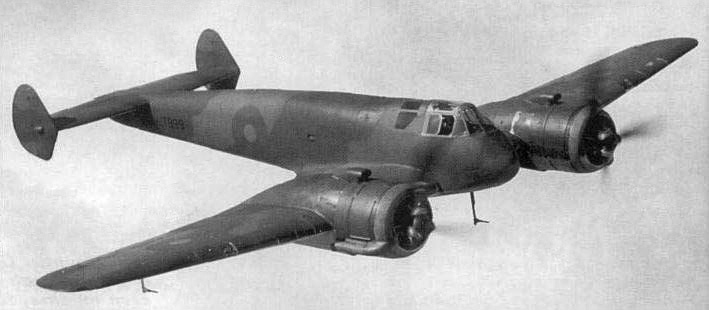
| major_applications | Fairey Albacore |
| Bristol Beaufort | |
| developed_from | Bristol Aquila |
Bristol Beaufort
The Taurus is a British 14-cylinder two-row radial aircraft engine, produced by the Bristol Engine Company starting in 1936. The Taurus was developed by adding cylinders to the existing single-row Aquila design and transforming it into a twin-row radial engine, creating a powerplant that produced just over 1,000 hp with very low weight.
Design and development
Bristol had originally intended to use the Aquila and Perseus as two of its major product lines in the 1930s, but the rapid increase in size and speed of aircraft in the 1930s demanded much larger engines. The mechanicals from both of these designs were then put into two-row configurations to develop much larger engines, the Aquila becoming the Taurus, and the Perseus becoming the Hercules.
The Taurus used sleeve valves, resulting in an uncluttered exterior and little mechanical noise. It offered high power with a relatively low weight, starting from 1015 hp in the earliest versions. It was also compact, with a diameter of 46 in which made it attractive for fighters. Unfortunately, the engine was also described as "notoriously troublesome", with protracted development and a slow growth in rated power. After several years of development, power had only increased from 1015 hp to 1130 hp. As the most important applications of this engine was in aircraft that flew at low altitude, development efforts focused on low-altitude performance.
The first Taurus engines were delivered just before World War II, and was used primarily in the Fairey Albacore and Bristol's Beaufort. In April 1940, a suggestion was made to replace the Taurus engines of the latter with the Pratt & Whitney R-1830 Twin Wasp, which had a slightly larger 48 in diameter, but this change was postponed to the autumn of 1941 while attempts were made to cure the Taurus's reliability problems, and later had to be temporarily reversed because of shortages of Twin Wasps. The Twin Wasp was, however, strongly preferred, especially for overseas postings, because of its better reliability. The reliability problems were mostly cured in later models of the Taurus engine by a change in the cylinder manufacturing process, although the engine reputation never recovered, and in the Albacore the Taurus engine was used until the end of that aircraft's production in 1943.
There were no other operational applications of the Taurus engine, because its initial reliability problems discouraged development of Taurus-powered aircraft, and because later-war combat aircraft demanded more powerful engines. Production ended in favour of the Hercules engine.
Variants
- Taurus II (1940) – 1140 bhp maximum power with 4.25 psi boost at 3,225 rpm for take off or one minute using 87 octane fuel. Medium supercharged.
- Taurus III – 935 hp maximum continuous power, medium supercharged, compression ratio 7.2:1.
- Taurus VI – 985 hp maximum continuous power, medium supercharged, compression ratio 7.2:1.
- Taurus XII (1940) – 985 hp maximum continuous power, medium supercharged, compression ratio 7.2:1.
- Taurus XVI (1940) – 985 hp maximum continuous power, medium supercharged, compression ratio 7.2:1.
- Taurus XX – trials engine only, one built.
Applications
Note:
- Bristol Type 148
- Bristol Beaufort
- Fairey Albacore
- Fairey Battle testbed only
- Gloster F.9/37
Specifications (Taurus II)
| and start a new, fully-formatted line with --
- 1,140 hp at 3,225 rpm for takeoff
- 1,050 hp at 3,225 rpm at 5,000 ft |power/weight=0.81 hp/lb (1.33 kW/kg)
References
Notes
Bibliography
- Gunston, Bill (2006). World Encyclopedia of Aero Engines: From the Pioneers to the Present Day. 5th edition, Stroud, UK: Sutton.
- .
- White, Graham (1995). Allied Aircraft Piston Engines of World War II: History and Development of Frontline Aircraft Piston Engines Produced by Great Britain and the United States During World War II. Warrendale, Pennsylvania: SAE International.
References
- Lumsden 2003, p.115.
- List from Lumsden, the Taurus may not be the main powerplant for these aircraft types
- Lumsden 2003, p.118.
This article was imported from Wikipedia and is available under the Creative Commons Attribution-ShareAlike 4.0 License. Content has been adapted to SurfDoc format. Original contributors can be found on the article history page.
Ask Mako anything about Bristol Taurus — get instant answers, deeper analysis, and related topics.
Research with MakoFree with your Surf account
Create a free account to save articles, ask Mako questions, and organize your research.
Sign up freeThis content may have been generated or modified by AI. CloudSurf Software LLC is not responsible for the accuracy, completeness, or reliability of AI-generated content. Always verify important information from primary sources.
Report