From Surf Wiki (app.surf) — the open knowledge base
Brahma Kumaris
Spiritual organization (1936)
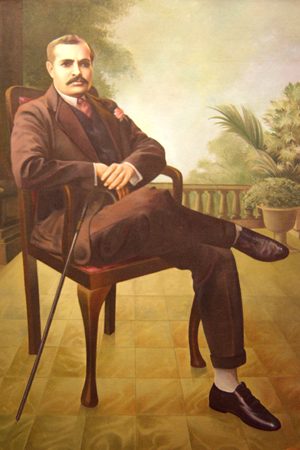
Spiritual organization (1936)
| Field | Value |
|---|---|
| name | Brahma Kumaris |
| image | Bk-logo.png |
| formation | |
| type | Spiritual organisation |
| status | Foundation |
| purpose | Educational, Philanthropic, Spiritual, Meditation |
| headquarters | Mount Abu, Rajasthan, India |
| location | 8500+ centres |
| coords | |
| founder | Lekhraj Kripalani |
| key_people | BK Shivani, |
| area_served | Worldwide |
| website |
Dadi Janki, Dadi Prakashmani and Dadi Hriday Mohini The Brahma Kumaris (; "Daughters of Brahma") is a spiritual movement that originated in Hyderabad, Sindh, British India (modern Pakistan) during the 1930s. Founded by Lekhraj Kripalani, the organisation teaches the importance of moving beyond labels associated with the human body, including race, nationality, religion, and gender, through meditation that emphasizes the concept of identity as souls rather than bodies. It aims to establish a global culture centered around what they refer to as "soul-consciousness".{{cite book
In 2019, the organisation had more than eight thousand centres across 110 countries and more than one million members. Women continue to hold primary leadership positions within the organisation.{{cite web | access-date = 27 July 2007
Early history
The Brahma Kumaris organisation was founded in Hyderabad, Sindh, in northwest India (present-day Pakistan). They were initially known as Om Mandali, as the members would together chant Om before engaging in a spiritual discourse in traditional satsangs (meetings). These original discourses were closely connected to the Bhagavad Gita.
Founder Lekhraj Khubchand Kirpilani (also known as Om Baba) was in the jewelry business. In 1935, after witnessing a series of transcendental experiences and visions, he gave up his business to lay the foundation of Om Mandali. He believed that there was a greater power working through him and that many of those who attended the discourses were themselves having spiritual experiences. The majority of those who came were women and children from the Bhaibund caste,{{cite journal
Three years after the organization came into existence, it became clear that Om Mandali was giving special importance to the role of women and was not adhering to the caste system. The group had named a 22-year-old woman, Radhe Pokardas Rajwani (then known as "Om Radhe"), as its president, and her management committee was made up of eight other women.{{cite book | url-access = registration
The picketing led to criminal proceedings against both groups. On 16 August 1938 the local District Magistrate ordered that Om Mandali be prevented from meeting. This ban was reversed on 21 November 1938 after an appeal to the Court of the Judicial Commissioner of Sindh.{{cite book
On 31 March 1939, the government appointed a tribunal to enquire into the activities of Om Mandali. When the tribunal released its findings, Om Radhe responded by compiling a book entitled Is this Justice? criticising the tribunal, which they alleged did not have a constitutional basis and made its findings without obtaining evidence from Om Mandali.{{cite book
Expansion
In May 1950, Om Mandali moved to Mount Abu in Rajasthan, India. In 1952, a more structured form of teaching was offered to the public through a seven-lesson course.{{cite book
Brahma Kumaris began an international expansion programme from the mid-1950s. Since the 1970s, it has spread to London and then throughout the West. The most visible manifestations of the organisation are its spiritual museums, located in most major Indian cities.
In 1980, the Brahma Kumaris became registered as a nongovernmental organisation with the United Nations Department of Global Communications. In 1983, the Brahma Kumaris achieved consultative status with the Economic and Social Council at the United Nations.{{cite book
The leadership and membership of the BK movement remains primarily female: in the UK, only one-third of the forty-two centres are run by men, and women comprise eighty percent of the membership. , centres are mostly in followers' own homes with a tendency toward middle- or upper-class membership. Estimates for its worldwide membership range from thirty-five thousand in 1993 to four hundred thousand in 1998{{cite web | access-date = 20 August 2007 | archive-url = https://web.archive.org/web/20120306091316/http://www.adherents.com/Na/Na_83.html#584 | archive-date = 6 March 2012 | url-status = usurped
Beliefs
The movement has distinguished itself from its Hindu roots and sees itself as a vehicle for spiritual teaching rather than as a religion.
Self
The Brahma Kumaris view humans as composed of two parts: an external visible body, which includes aspects like status and possessions, and a subtle energy known as the soul. The character structure of the soul is expressed through a person's external actions. However, regardless of the outward appearance, whether actions are carried out with love, peace, happiness, or humility, reflects the essence of one's soul. The Brahma Kumaris teach that the soul is an infinitesimal point of spiritual light residing in the forehead of the body it occupies, and that all souls originally existed with God in a "Soul World", a world of infinite light, peace and silence.
The Brahma Kumaris teach that souls enter bodies to take birth in order to experience life and give expression to their personality. Unlike other Eastern traditions, the Brahma Kumaris do not believe that the human soul can transmigrate into other species.
Supreme Soul

The Brahma Kumaris use the term "Supreme Soul" to refer to God. They see God as incorporeal and eternal, regarding him as a point of living light like a human soul but lacking a physical body, as he does not enter the cycle of birth, death, and rebirth. God is seen as the perfect and constant embodiment of all virtues, powers, and values, the unconditionally loving father of all souls, without respect to religion, gender, or culture.{{cite journal
Karma
The Brahma Kumaris believe that every action performed by a soul will create a return accordingly, and that the destiny of the soul's next body depends on how it acts and behaves in this life. Through meditation, by transforming thinking patterns and eventually actions, the Brahma Kumaris believe that people can purify their "karmic account" and lead a better life in the present and next birth.
Cycle of time
In contrast to linear theories of human history that hypothesize an ancient point of origin for the universe and a final destruction, the BKs do not posit a start, end or age for the universe, believing such concepts to be an erroneous application of the human life cycle to the universe. BKs believe the universe to follow an eternal, naturally occurring 5,000-year cycle, composed of four ages (yugas): the Golden Age (Satya Yuga), the Silver Age (Treta Yuga), the Copper Age (Dvapara Yuga), the Iron Age (Kali Yuga) and each represents 1250 years of the cycle. They also believe that at the end of the Iron Age there will be "Destruction." They believe Destruction will kill everyone on Earth and cleanse the Earth. Then only can the cycle repeat again.{{cite book
The first half of the cycle (the Golden and Silver ages) is considered to be the age of "soul conscious living". The Brahma Kumaris see this as a time of "heaven on earth" or as a version of the Garden of Eden when human beings are fully virtuous, complete, self-realised beings who lived in complete harmony with the natural environment. The primary enlightenment was the innate understanding of the self as a soul.
The Brahma Kumaris believe that modern civilization will be destroyed by global nuclear conflict, coupled with natural calamities and that these cataclysmic events form part of a natural and cathartic cyclic process.
When the organisation began, emphasis was placed on the physical destruction of the world as seen in the cataclysmic visions of Dada Lekhraj.{{cite book
Practices
Meditation
The Brahma Kumaris teaches a form of meditation{{cite book For this reason meditation is usually taught and practiced with open eyes.
Good wishes and pure feelings
Flowing on from the BK belief that everyone is a spiritual being, is the practice of Shubbhawna (pure feelings) and Shubkamna (good wishes).{{cite book
Study (''{{lang|hi-Latn|murli}}'')

Brahma Kumaris' students study the murli. The Hindi word murli literally translates to "flute". It is an oral study, read to the class early each morning in most BK centres on the world. The murlis are derived from mediumship and spirit possession.{{cite thesis |chapter-url=https://www.academia.edu/1113749 Possession in the Brahma Kumaris is supported by solid cultural logic that sits in a receptacle of history and tradition. (p281)
There are two types of murli:{{cite book
- Sakar Murlis refer to the original orations that BKs believe to be the Supreme Soul speaking through Brahma Baba.
- Avyakt Murlis are spoken by BapDada. BKs believe BapDada is God and the soul of their deceased founder. BapDada(God) is believed to speak to the BKs through a senior BK medium, Dadi Gulzar.
Avyakt murlis are still being spoken at the BKs headquarters in India. Students must complete the Brahma Kumaris foundation course and start by attending morning Murli class before visiting the headquarters.
The Brahma Kumaris believe God's purpose is to be the spiritual re-awakening of humanity and the removal of all sorrow, evil and negativity. They do not regard God as the creator of matter, as they consider matter to be eternal.{{cite journal
Pratibha Patil, the UPA-Left candidate and former President of India said on camera during the 2007 Indian presidential election, that she spoke to "Baba" (a term the BKs use for God){{cite web | access-date = 22 July 2007 | archive-date = 29 May 2008 | archive-url = https://web.archive.org/web/20080529140717/http://www.ibnlive.com/videos/43632/pratibha-patil-speaks-to-a-ghost.html | url-status = dead | archive-url = https://web.archive.org/web/20110303050850/http://articles.timesofindia.indiatimes.com/2007-06-27/india/27965196_1_pratibha-patil-upa-left-presidential-nominee-upa-left-candidate | url-status = live | archive-date = 3 March 2011 | access-date = 22 July 2007
In his book "Ignited Minds," Abdul Kalam recounts an exceptional spiritual encounter he had on February 3, 2002, during his visit to the Brahma Kumari Spiritual Academy located in Mount Abu. During the visit, he witnessed an extraordinary event where one of the disciples, Dhadhi Gurzar, became the medium for the deity of the Brahma Kumaris, Shiva Baba. Dr. Kalam observed her personality undergo a transformation, with her face becoming radiant and her voice deepening as she spoke about the four treasures: Knowledge, Yoga, Virtue, and Service.
Lifestyle
Brahma Kumaris recommend a specific lifestyle{{cite book |url-access = registration
- Complete celibacy,{{cite book | editor-first = Bryan |editor-last=Wilson
- Sattvic lacto-vegetarian diet{{cite book
- Abstention from alcohol, tobacco, and nonprescription drugs.
- Daily early-morning meditation (Amrit Vela) from 4:00 to 4:45 a.m.
- Daily morning class at approximately 6:30 a.m.{{cite book |last = Whaling |editor-first = Christopher |editor-last = Partridge |editor2-first = Gorden |editor2-last = Melton |url-access = registration
- Frequent wear of white attire to symbolise purity.{{cite book
- Preference for the company of other BK followers.
Activities
Education
Traditionally, the Brahma Kumaris conducted an introduction to meditation consisting of seven two-hour-long sessions. The sessions include their open-eyed meditation technique and their philosophy. The organisation also offers courses in "positive thinking", "self management leadership" and "living values".{{cite journal
With the support of Vicente Fox, the Brahma Kumaris introduced their meditation practice and philosophy to the government of Mexico through the "Self Management Leadership" (SML). The SML course is closely related to the Brahma Kumaris philosophy and is the backbone of Brahma Kumaris management philosophy. 90 trained facilitators ran programs through which 25,000 people at the top level of government have passed.

Renewable energy
The Brahma Kumaris have launched several environment initiatives. Their work in solar energy and sustainable energy has included the 2007 development of the world's largest solar cooker,{{cite news | access-date = 22 July 2007
Sustainable Yogic Agriculture
Sustainable Yogic Agriculture (SYA) is a program started in Northern India in 2009. The program has been a collaboration between Sardarkrushinagar Dantiwada Agricultural University in Gujarat India and the Brahma Kumaris Rural Development wing. The program has now been publicly backed by the Indian Government. A key member of Narendra Modi's Cabinet, Agriculture Minister Radha Mohan Singh announced the governments support for the program. With the government’s support the program has been redesigned into Akhil Bharatiya Krushak Sashakatikaran Abhijan (ABKSA), and was launched in December 2015. ABKSA extends the initial scope of the SYA program to include teaching meditation and self empowerment to the farmers themselves. This is possibly a response to the problem of farmer suicides in India. ABKSA now comprises three main elements: :1. A self empowerment program for Indian farmers; :2. Ongoing research on whether the use of meditation can improve crop yields; :3. Education on a blend of traditional and organic farming techniques. One basic premise of the Brahma Kumaris environmental initiative is that thoughts and consciousness can affect the natural environment.{{cite journal|url=https://www.researchgate.net/publication/239672409

In 2012, experiments were being conducted in partnership with leading agricultural universities in India to establish if the practice of Brahma Kumaris meditation in conjunction with implementing more traditional organic farming methods could be shown to have a measurable and positive effect on crop development. An article published in the Journal of Asian Agri-History reviews two separate studies on SYA. One study was conducted by G.B. Pant University of Agriculture and Technology (GBPUAT), Pantnagar, Uttarakhand and the other by Sardarkrushinagar Dantiwada Agricultural University (SDUAT) of Gujarat. The review reports that the Brahma Kumaris meditation techniques used enhanced seed growth, seed germination rates and increased the level of microbes present in the soil.{{cite journal| url=https://www.researchgate.net/publication/283764704
Healthcare
In 1991, the Brahma Kumaris, Ashok Mehta, and the brothers Gulab and Khubchand Watumull opened the J Watumull Global Hospital in the Sirohi district of Rajasthan, offering medical facilities to the local population.
UN consultative status
In 1998 the Brahma Kumaris gained consultative status with the United Nations Department of Economic and Social Affairs.
Criticism
When the organization began in the 1930s in Sindh, it sparked controversy by empowering women to assert their right to celibacy, especially in marriage, challenging the male-dominated society of the Indian subcontinent. Feminist commentator Prem Chowdry criticized this practice as a form of patriarchal control.{{cite journal|jstor=4404549
Adherents have been criticised by nonmembers for hiding or downplaying their prophesied physical destruction of the world{{cite book |last = Beit-Hallahmi
The Journal for the Scientific Study of Religion reported that the Brahma Kumaris require a payment from families wishing to dedicate their daughters to the organization, intended to cover living expenses during the trial period, as a way to prevent families from "dumping" their daughters.
John Wallis wrote a book examining the status of tradition in the contemporary world, which used the religion as a case study, focusing on recruitment methods, the issue of celibacy, and reinterpretation of religious history. He reported the rewriting of the revelatory messages (Murlis) by the Brahma Kumari.{{cite journal
References
;Citations
;Bibliography
References
- [https://censamm.org/resources/profiles/brahma-kumaris Summary of movement]. censamm.org
- [http://www.brahmakumaris.org/about-us/faqs What Does Brahma Kumaris Mean?] brahmakumaris.org
- [[Monier Monier-Williams. Monier-Williams, Monier]] (1899) ''Sanskrit Dictionary''. Clarendon Press, Oxford. [http://www.ibiblio.org/sripedia/ebooks/mw/0300/mw__0325.html p. 292]
- (2002). "Religions of the world: a comprehensive encyclopedia of beliefs and practices". ABC-CLIO.
- Jones, Constance. (2007). "Encyclopedia of Hinduism". Facts On File.
- "Our History – The Brahma Kumaris".
- Chryssides, George D.; Wilkins, Margaret and Wilkins, Margaret Z. (2006) ''A Reader in New Religious Movements: Readings in the Study of New Religious Movements''. Continuum. {{ISBN. 0-8264-6168-9
- Esposito, John L.; Fasching, Darrell J. and Lewis, Todd (2002) ''Religion and globalization: world religions in historical perspective''. Oxford University Press. p. 340. {{ISBN. 9780195176957
- 'Why are Women More Religious Than Men?' Trzebiatowska, Marta. Bruce, Steve. Oxford University Press, 2012. {{ISBN. 0-19-960810-5,
- [[#Howell2006. Howell (2006)]], pp. 71–72
- [[#Howell2006. Howell (2006)]], p. 72: "Since the [Brahma Kumaris] spread to Western societies it has increasingly accommodated people with little interest in its [[theodicy]] but attracted to the practical applications of BK [[spiritual practice]]s. The community service programmes of the 1980s and 1990s stimulated creative renderings of BK meditation as a tool for psychological healing and eclectic spiritual exploration. The casual participants whom the BKs have attracted in this way probably made up the vast majority of the 450,000 people on the BK's records at the turn of the 20th to 21st century".
- [[#Howell2006. Howell (2006)]], p. 71
- Ramsay, Tamasin. (Sep 2010). "Custodians of Purity An Ethnography of the Brahma Kumaris". Monash University.
- "World Drama Cycle » Brahma Kumaris".
- [https://www.hinduismtoday.com/magazine/may-1995/1995-05-brahma-kumaris-conquering-a-callous-world-with-purity/?itemid=3415 Brahma Kumaris: Conquering A Callous World with Purity], Hinduism Today, May 1995.
- ''Encyclopedia of Hinduism.'' Constance A. Jones and James D. Ryan. ABC-CLEO, LLC 2010, {{ISBN. 9780816054589
- Ramsay, Tamasin. Spirit possession and purity: A case study of a Brahma Kumaris ascetic. Paper presented at the conference on Medical Anthropology at the Intersections: Celebrating 50 Years of Interdisciplinarity, Yale University, New Haven, USA, 24–27 September 2009.
- Jha, Ravi S (28 June 2007) [https://web.archive.org/web/20070930200917/http://www.khaleejtimes.com/DisplayArticleNew.asp?xfile=data%2Fsubcontinent%2F2007%2FJune%2Fsubcontinent_June1110.xml§ion=subcontinent&col= Patil kicks up another row]. ''Khaleej Times''
- Kalyani, Shankar [https://web.archive.org/web/20080412150647/http://www.dailypioneer.com/columnist1.asp?main_variable=Columnist&file_name=shankar%2Fshankar227.txt&writer=shankar Battle for the palace]. ''The Pioneer''
- "APJ Abdul Kalam Ignited Minds Penguin".
- Clarke, Peter. (2006). "Encyclopedia of New Religious Movements". Routledge.
- "Brahma Kumaris – FAQs – Teachings and way of life – Are there any special lifestyle disciplines in the Brahma Kumaris way of life?". Brahma Kumaris official website.
- Hodgkinson, Liz (2002) ''Peace & Purity: the story of the Brahma Kumaris''. Health Communications. p. 96. {{ISBN. 9781558749627
- Musselwhite, Richard. (September 2009). "Possessing knowledge: organizational boundaries among the Brahma Kumaris". University of North Carolina.
- "Home".
- Bhaat, Sheela (15 September 2015) [http://indianexpress.com/article/india/india-others/yogic-farming-to-empower-seeds-increase-soil-fertility-agriculture-minister/ Yogic farming to empower seeds, increase soil fertility: Agriculture Minister]. ''The Indian Express''
- [http://www.thestatesman.com/news/odisha/campaign-to-train-farmers/108962.html Campaign to train farmers]. ''The Statesman'', 7 December 2015
- Agrawal, Priti (19 July 2011) [http://timesofindia.indiatimes.com/life-style/Shashwat-yogic-farming/articleshow/7443126.cms? Shashwat yogic farming]. ''Times of India''
- "J Watumull Global Hospital & Research Centre – About Us".
- Walliss, John. (2007). "The Brahma Kumaris as a 'reflexive Tradition'". Motilal Banarsidass.
- (30 September 2014). "Quadrennial reports for the period 2010–2013 submitted by non-governmental organizations in consultative status with the Economic and Social Council through the Secretary-General pursuant to Economic and Social Council resolution 1996/31".
- "United Nations Department of Economic and Social Affairs – NGO Branch – Brahma Kumaris World Spiritual University". United Nations.
- Soni, Dilip. (2 September 2020). "A case file against BK Bharat". Jaisalmer News.
- Walliss, John (2002). ''The Brahma Kumaris As a Reflexive Tradition: Responding to Late Modernity''.
- [http://pbks.info/index.html Adhyatmik Ishwariya Vishwa Vidyalaya [God Fatherly Spiritual University]]. Pbks.info. Retrieved 28 July 2013.
This article was imported from Wikipedia and is available under the Creative Commons Attribution-ShareAlike 4.0 License. Content has been adapted to SurfDoc format. Original contributors can be found on the article history page.
Ask Mako anything about Brahma Kumaris — get instant answers, deeper analysis, and related topics.
Research with MakoFree with your Surf account
Create a free account to save articles, ask Mako questions, and organize your research.
Sign up freeThis content may have been generated or modified by AI. CloudSurf Software LLC is not responsible for the accuracy, completeness, or reliability of AI-generated content. Always verify important information from primary sources.
Report