From Surf Wiki (app.surf) — the open knowledge base
Bow (watercraft)
Forward part of the hull of a ship
.jpg)
Forward part of the hull of a ship
The bow () is the forward part of the hull of a ship or boat, the point that is farthest forward when the vessel is underway in the usual direction. The aft end of the boat is the stern.
Prow may be used as a synonym for bow, or it may refer specifically to the foremost part of the bow above the waterline.
Function
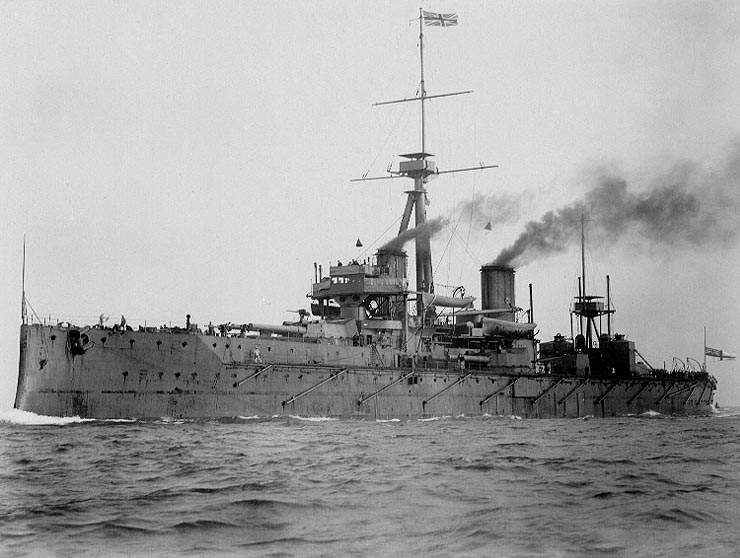

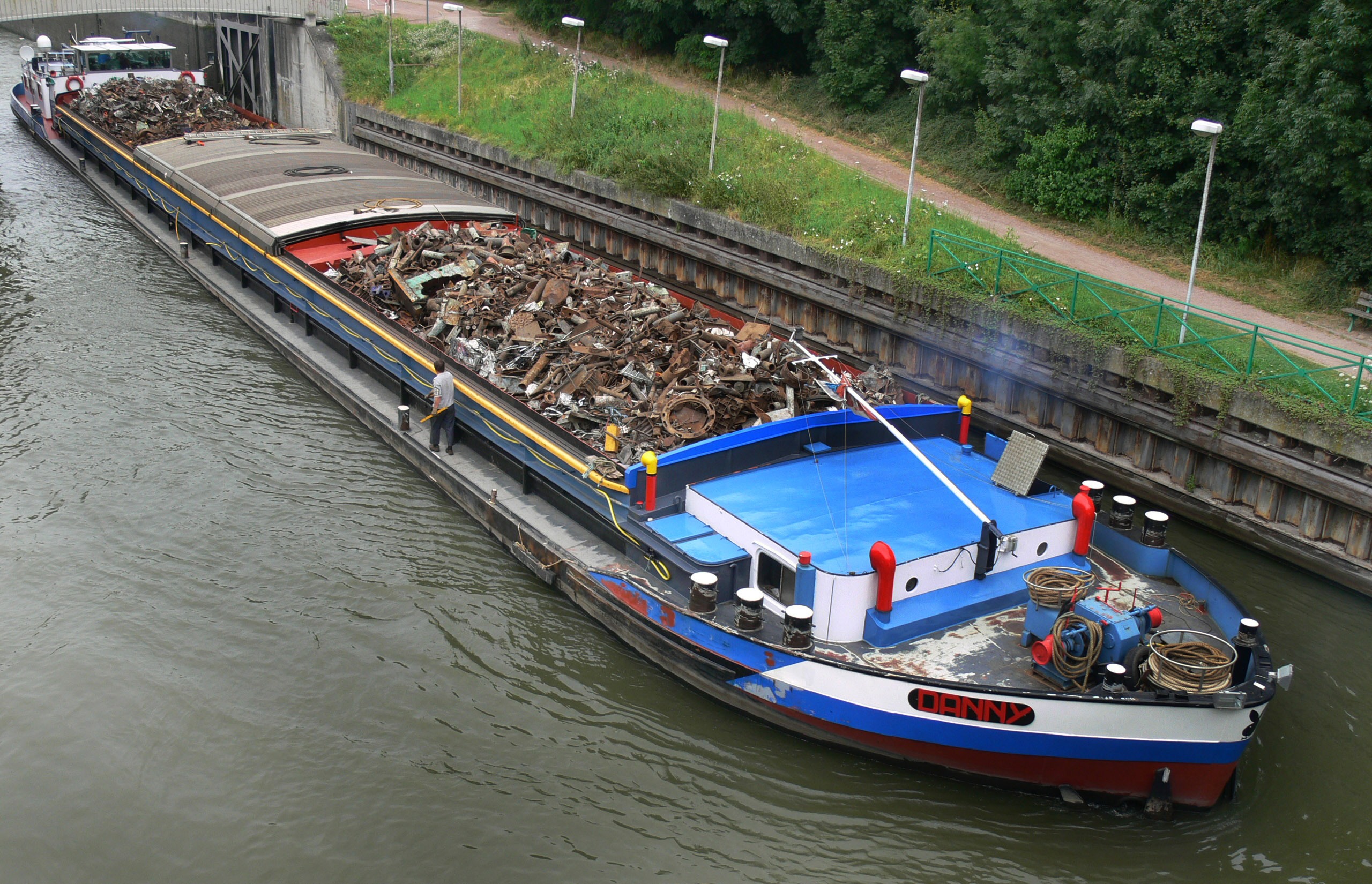
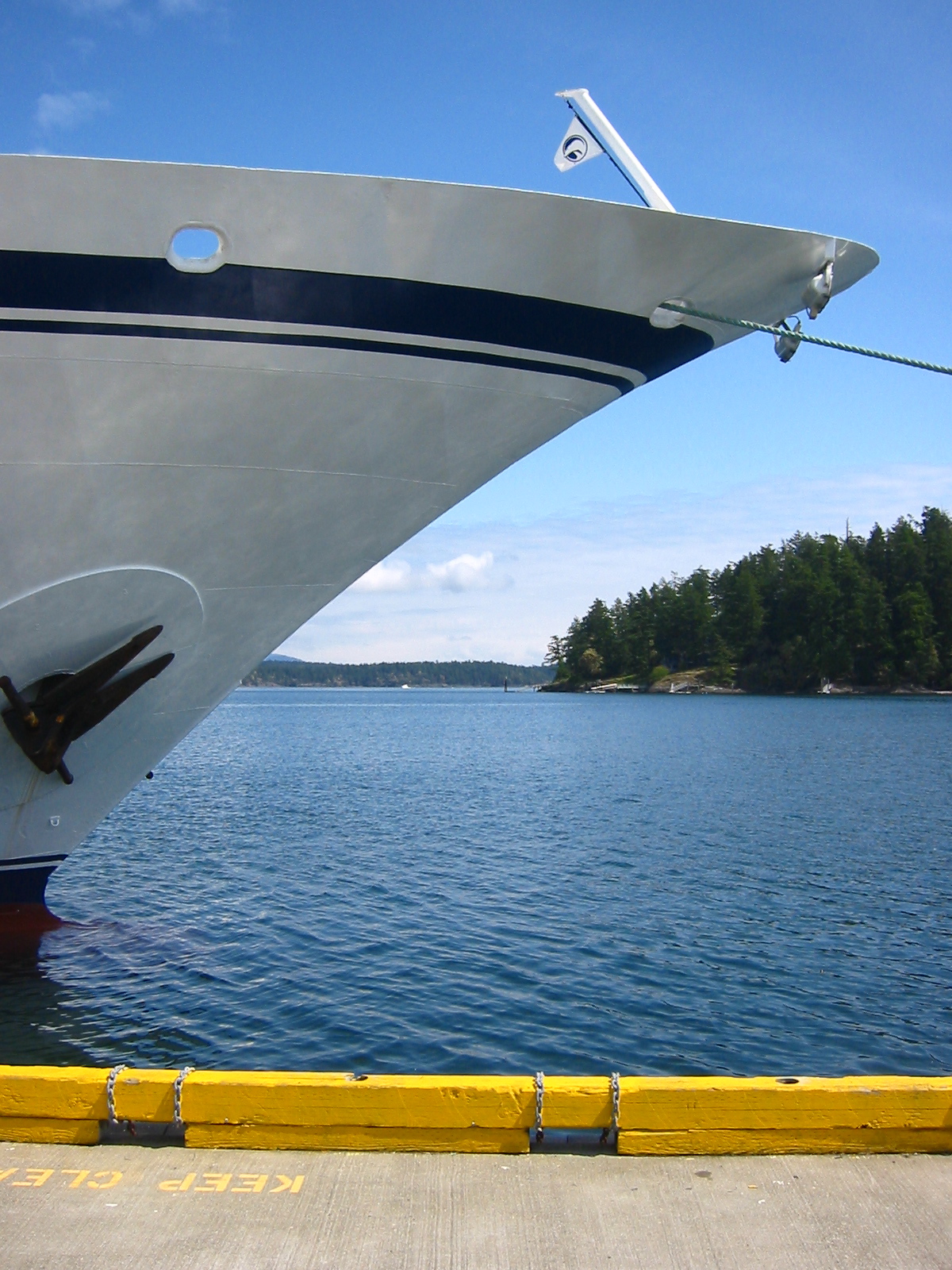
A ship's bow should be designed to enable the hull to pass efficiently through the water. Bow shapes vary according to the speed of the boat, the seas or waterways being navigated, and the vessel's function. Where sea conditions are likely to promote pitching, it is useful if the bow provides reserve buoyancy; a flared bow (a raked stem with flared topsides) is ideal to reduce the amount of water shipped over the bow.
Ideally, the bow's shape should both reduce water resistance and block water from regularly washing over the top of it. Large commercial barges on inland waterways rarely meet big waves and may have remarkably little freeboard at the bow, whereas fast military vessels operating offshore must be able to cope with heavy seas. On slower ships like tankers and barges, a fuller bow shape is used to maximise the volume of the ship for a given length. The bow may be reinforced to serve as an ice-breaker.
The forward part of the bow is called the "stem" or "forestem". Traditionally, the stem was a timber (or metal) post into which side planks (or plates) were joined. Some boats such as the Dutch barge "aak" or the clinker-built Viking longships have no straight stem, having instead a curved prow.
Types
Some types of bows are:
|File:Bow-straight bow.svg|Straight-stem bow |File:Bow-plumb bow.svg|Plumb bow |File:Bow-raked bow.svg|Raked bow |File:Bow-curved bow.svg|Flared bow |File:Bow-clipper bow.svg|Clipper bow |File:Bow-bulbous bow.svg|Bulbous bow |File:Bow-inverted bow.svg|Inverted bow |File:Bow-ram bow.svg|Ram bow |File:Bow-spoon bow-high chin.svg|High-chin spoon bow |File:Bow-spoon bow-low chin.svg|Low-chin spoon bow
Etymology
From Middle Dutch boech or Old Norse bógr (shoulder). Thus it has the same origin as the English "bough" (from the Old English bóg, or bóh (shoulder, the bough of a tree), but the nautical term is unrelated, being unknown in this sense in English before 1600.
Prow
The "prow" (, ) is the foremost part of a ship's bow above the waterline. The terms prow and "bow" are often used interchangeably to describe the foremost part of a ship and its surrounding parts.
References
References
- Jha, Bhuvan. (November 12, 2019). "Different Parts Of A Ship Explained".
- "Seaman's Pocketbook" - [[HMSO]] 1943 & Conway (2006)
- Aside from making the deck slippery, salt water may corrode metal decks. In very cold environments, it can even freeze on the deck, rails, and other exposed surfaces, increasing the topside weight and rendering the vessel unstable.
- In a 1973 collision, the ice-breaker container-ship ''[[Sea Witch (container ship). Sea Witch's]]'' reinforced bow caused significant damage to [[Esso Brussels. another ship]].
- n3] at [[OED]]
This article was imported from Wikipedia and is available under the Creative Commons Attribution-ShareAlike 4.0 License. Content has been adapted to SurfDoc format. Original contributors can be found on the article history page.
Ask Mako anything about Bow (watercraft) — get instant answers, deeper analysis, and related topics.
Research with MakoFree with your Surf account
Create a free account to save articles, ask Mako questions, and organize your research.
Sign up freeThis content may have been generated or modified by AI. CloudSurf Software LLC is not responsible for the accuracy, completeness, or reliability of AI-generated content. Always verify important information from primary sources.
Report