From Surf Wiki (app.surf) — the open knowledge base
Blunt kidney trauma
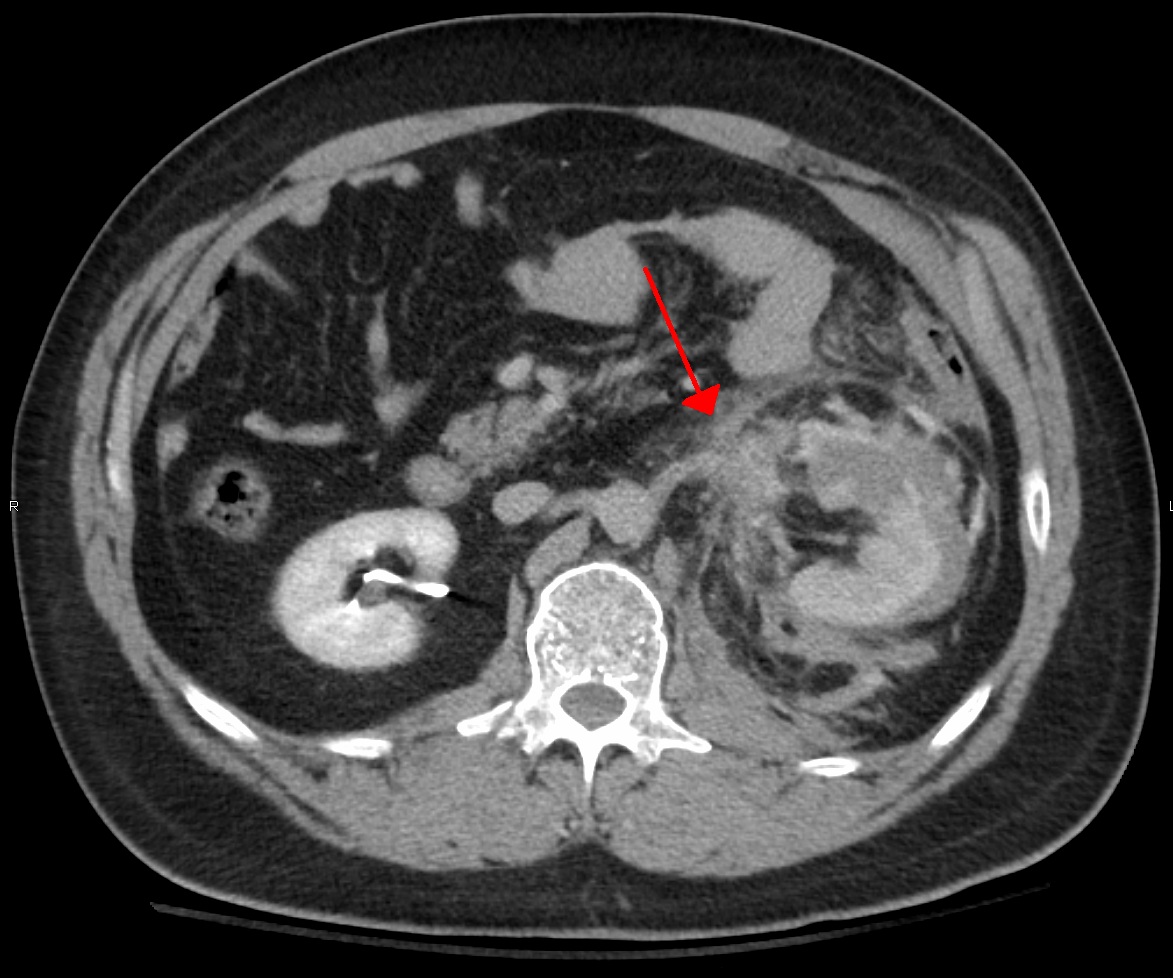
The kidney is injured in approximately 10 percent of all significant blunt abdominal trauma. Of those, 13 percent are sports-related when the kidney, followed by testicle, is most frequently involved. However, the most frequent cause by far is traffic collisions, followed by falls. The consequences are usually less severe than injuries involving other internal organs.
Diagnosis
In blunt injury, imaging is indicated if there is gross hematuria, or if the patient exhibits shock together with either gross or microscopic hematuria.
Investigation
The imaging modality of choice is contrast-enhanced, computed tomography (CT) which is readily available in most emergency departments of moderate or above size. Scan times have become shorter with each generation of scanners and current scans are quick and accurately demonstrate renal injuries together with associated injuries to other abdominal or retroperitoneal organs.
Online calculators have been developed that facilitate grading of renal traumatic injuries based on imaging findings according to AAST (American Association for the Surgery of Trauma) guidelines.
Treatment
Unlike ultrasound examination (FAST), CT provides anatomic and functional information that allows for accurate grading of the injury which is partly responsible for a growing trend toward conservative management (intravenous fluids, close monitoring, watchful waiting) of renal trauma. Conservative management does not apply in situations where extensive urinary extravasation or devitalized areas of renal parenchyma are found and especially if associated with injuries to other abdominal organs; these cases are complication-prone and much more likely to require surgery. That being said, a retrospective study suggests that primary conservative treatment of blunt kidney rupture seems to lead to less surgery, especially less open surgery, and less blood and renal parenchyma loss, compared to a strategy of initial surgery.
References
References
- (Jan 2008). "Kidney injuries in professional American football: implications for management of an athlete with 1 functioning kidney". Am J Sports Med.
- Itagaki, Michael W. (April 2004). "Kidney Trauma in Martial Arts: A Case Report of Kidney Contusion in Jujitsu". American Journal of Sports Medicine.
- (Apr–May 2010). "Sports and genitourinary traumas". Urologia.
- (February 2009). "Review of the evidence on the management of blunt renal trauma in pediatric patients". Pediatric Surgery International.
- (August 2005). "A need for reevaluation of sports participation recommendations for children with a solitary kidney". J Urol.
- (Jul 2012). "Sport-related kidney injury among high school athletes". Pediatrics.
- (2006-09-01). "Single Kidney and Sports Participation: Perception Versus Reality". Pediatrics.
- "Kidney Trauma Injury Score Calculator".
- (Nov 2009). "Kidney in danger: CT findings of blunt and penetrating renal trauma". Radiographics.
- (Jan 2001). "How to treat blunt kidney ruptures: primary open surgery or conservative treatment with deferred surgery when necessary?". Eur Urol.
This article was imported from Wikipedia and is available under the Creative Commons Attribution-ShareAlike 4.0 License. Content has been adapted to SurfDoc format. Original contributors can be found on the article history page.
Ask Mako anything about Blunt kidney trauma — get instant answers, deeper analysis, and related topics.
Research with MakoFree with your Surf account
Create a free account to save articles, ask Mako questions, and organize your research.
Sign up freeThis content may have been generated or modified by AI. CloudSurf Software LLC is not responsible for the accuracy, completeness, or reliability of AI-generated content. Always verify important information from primary sources.
Report