From Surf Wiki (app.surf) — the open knowledge base
Bioenergy
Renewable energy made from biomass

Renewable energy made from biomass
technology aspects to produce a type of renewable energy
Bioenergy is a type of renewable energy that is derived from plants and animals. The biomass that is used as input materials consists of recently living (but now dead) organisms, mainly plants. Thus, fossil fuels are not regarded as biomass under this definition. Types of biomass commonly used for bioenergy include wood, food crops such as corn, energy crops and waste from forests, yards, or farms. Bioenergy can also refer to electricity generated from the photosynthesis of living organisms, typically using microbial fuel cells and biological photovoltaics.
Bioenergy can help with climate change mitigation but in some cases the required biomass production can increase greenhouse gas emissions or lead to local biodiversity loss. The environmental impacts of biomass production can be problematic, depending on how the biomass is produced and harvested. But it still produces CO2; so long as the energy is derived from breaking chemical bonds.
The IEA's Net Zero by 2050 scenario calls for traditional bioenergy to be phased out by 2030, with modern bioenergy's share increasing from 6.6% in 2020 to 13.1% in 2030 and 18.7% in 2050. Bioenergy has a significant climate change mitigation potential if implemented correctly. Most of the recommended pathways to limit global warming include substantial contributions from bioenergy in 2050 (average at 200 EJ).
Definition and terminology
The IPCC Sixth Assessment Report defines bioenergy as "energy derived from any form of biomass or its metabolic by-products". It goes on to define biomass in this context as "organic material excluding the material that is fossilised or embedded in geological formations". This means that coal or other fossil fuels is not a form of biomass in this context.
The term traditional biomass for bioenergy means "the combustion of wood, charcoal, agricultural residues and/or animal dung for cooking or heating in open fires or in inefficient stoves as is common in low-income countries".
Since biomass can also be used as a fuel directly (e.g. wood logs), the terms biomass and biofuel have sometimes been used interchangeably. However, the term biomass usually denotes the biological raw material the fuel is made of. The terms biofuel or biogas are generally reserved for liquid or gaseous fuels respectively.
Input materials
Main article: Biomass (energy)

Wood and wood residues is the largest biomass energy source today. Wood can be used as a fuel directly or processed into pellet fuel or other forms of fuels. Other plants can also be used as fuel, for instance maize, switchgrass, miscanthus and bamboo. The main waste feedstocks are wood waste, agricultural waste, municipal solid waste, and manufacturing waste. Upgrading raw biomass to higher grade fuels can be achieved by different methods, broadly classified as thermal, chemical, or biochemical:
Thermal conversion processes use heat as the dominant mechanism to upgrade biomass into a better and more practical fuel. The basic alternatives are torrefaction, pyrolysis, and gasification, these are separated mainly by the extent to which the chemical reactions involved are allowed to proceed (mainly controlled by the availability of oxygen and conversion temperature).
Many chemical conversions are based on established coal-based processes, such as the Fischer-Tropsch synthesis. Like coal, biomass can be converted into multiple commodity chemicals.
Biochemical processes have developed in nature to break down the molecules of which biomass is composed, and many of these can be harnessed. In most cases, microorganisms are used to perform the conversion. The processes are called anaerobic digestion, fermentation, and composting.
Applications
Biomass for heating
Biofuel for transportation
Main article: Biofuel}}Based on the source of biomass, [[biofuel]]s are classified broadly into two major categories, depending if food crops are used or not:{{sfn, Pishvaee, Mohseni, Bairamzadeh, 2021
First-generation (or "conventional") biofuels are made from food sources grown on arable lands, such as sugarcane and maize. Sugars present in this biomass are fermented to produce bioethanol, an alcohol fuel which serves as an additive to gasoline, or in a fuel cell to produce electricity. Bioethanol is made by fermentation, mostly from carbohydrates produced in sugar or starch crops such as corn, sugarcane, or sweet sorghum. Bioethanol is widely used in the United States and in Brazil. Biodiesel is produced from the oils in for instance rapeseed or sugar beets and is the most common biofuel in Europe.
Second-generation biofuels (also called "advanced biofuels") utilize non-food-based biomass sources such as perennial energy crops and agricultural residues/waste. The feedstock used to make the fuels either grow on arable land but are byproducts of the main crop, or they are grown on marginal land. Waste from industry, agriculture, forestry and households can also be used for second-generation biofuels, using e.g. anaerobic digestion to produce biogas, gasification to produce syngas or by direct combustion. Cellulosic biomass, derived from non-food sources, such as trees and grasses, is being developed as a feedstock for ethanol production, and biodiesel can be produced from left-over food products like vegetable oils and animal fats.
Production of liquid fuels
-
Biomass to liquid
-
Bioconversion of biomass to mixed alcohol fuels
Comparison with other renewable energy types
Land requirement
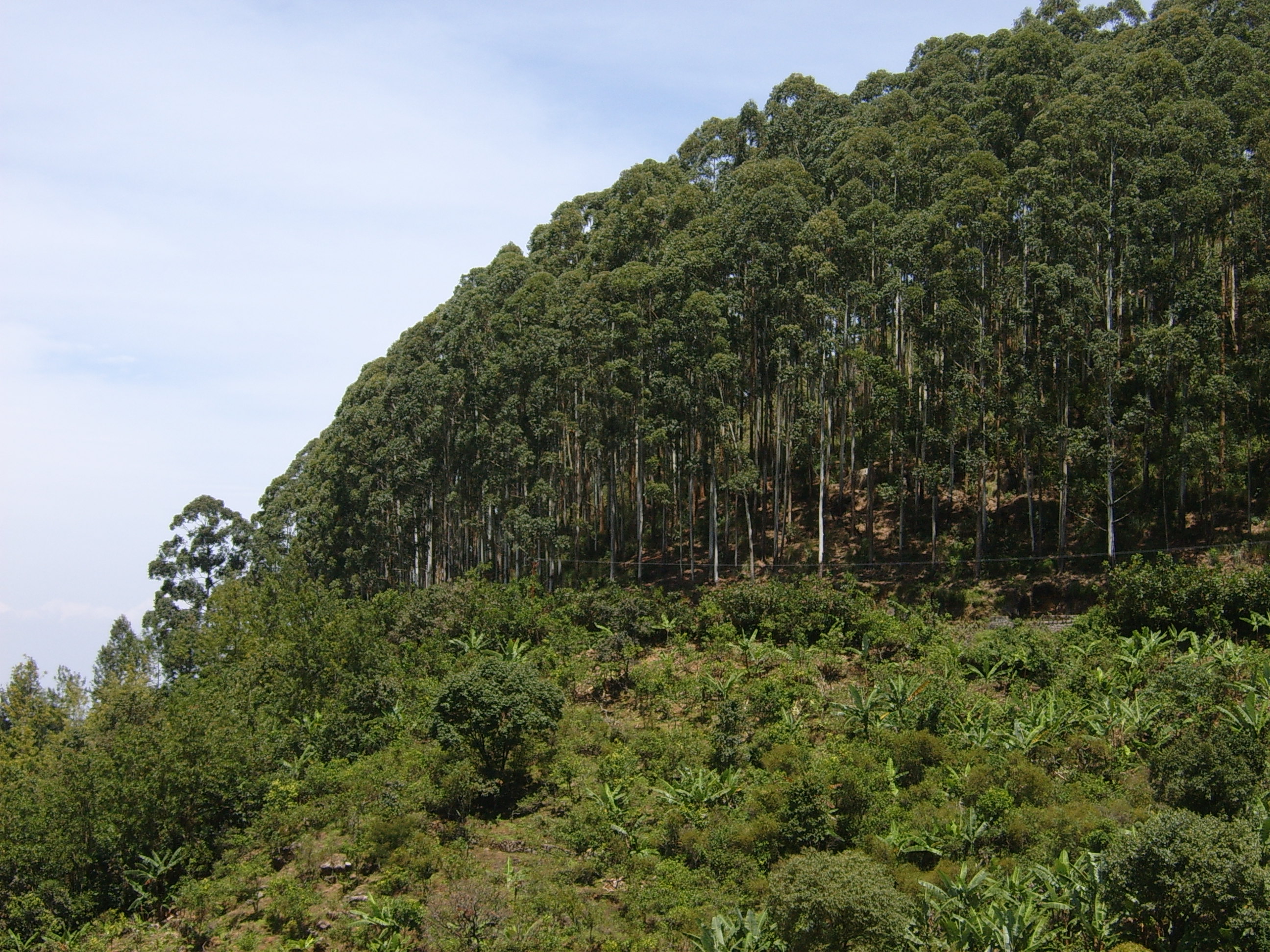
The surface power production densities of a crop will determine how much land is required for production. The average lifecycle surface power densities for biomass, wind, hydro and solar power production are 0.30 W/m2, 1 W/m2, 3 W/m2 and 5 W/m2, respectively (power in the form of heat for biomass, and electricity for wind, hydro and solar). Lifecycle surface power density includes land used by all supporting infrastructure, manufacturing, mining/harvesting and decommissioning.
Another estimate puts the values at 0.08 W/m2 for biomass, 0.14 W/m2 for hydro, 1.84 W/m2 for wind, and 6.63 W/m2 for solar (median values, with none of the renewable sources exceeding 10 W/m2).
Climate and sustainability aspects
Environmental impacts
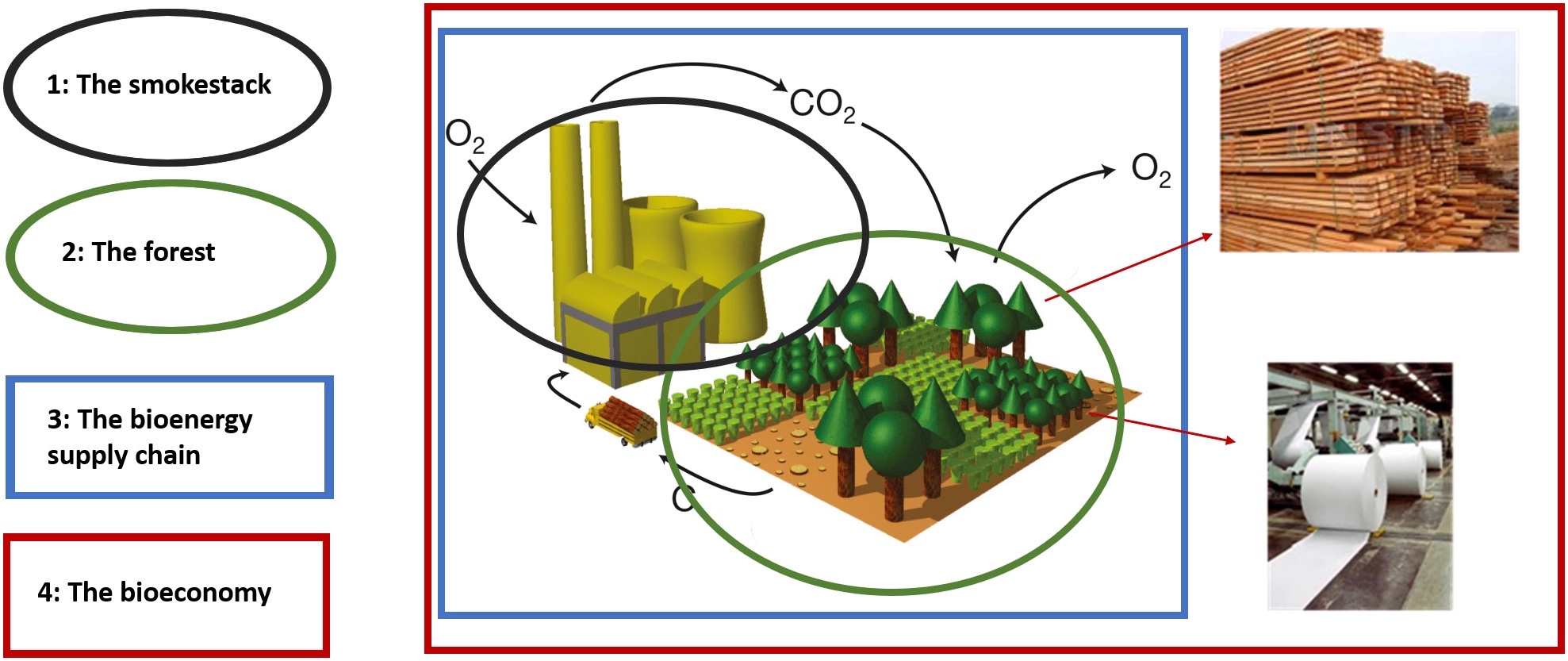
Main article: Biomass (energy)#Environmental impact}}Bioenergy can either [Climate change mitigation, [mitigate]] (i.e. reduce) or increase [[greenhouse gas emissions]]. Local environmental impacts can be problematic. For example, forests are sometimes cleared for the production of sugarcane-derived [[bioethanol]], like in the case of a large-scale project in Indonesia in 2025.{{cite news
Biomass production can create significant social and environmental pressure in the locations where the biomass is produced. The impact is primarily related to the low surface power density of biomass. The low surface power density has the effect that much larger land areas are needed in order to produce the same amount of energy, compared to for instance fossil fuels.
Long-distance transport of biomass have been criticised as wasteful and unsustainable, and there have been protests against forest biomass export in Sweden and Canada.
Scale and future trends
In 2020 bioenergy produced 58 EJ (exajoules) of energy, compared to 172 EJ from crude oil, 157 EJ from coal, 138 EJ from natural gas, 29 EJ from nuclear, 16 EJ from hydro and 15 EJ from wind, solar and geothermal combined. Most of the global bioenergy is produced from forest resources.
Generally, bioenergy expansion fell by 50% in 2020. China and Europe are the only two regions that reported significant expansion in 2020, adding 2 GW and 1.2 GW of bioenergy capacity, respectively.
Almost all available sawmill residue is already being utilized for pellet production, so there is no room for expansion. For the bioenergy sector to significantly expand in the future, more of the harvested pulpwood must go to pellet mills. However, the harvest of pulpwood (tree thinnings) removes the possibility for these trees to grow old and therefore maximize their carbon holding capacity. Compared to pulpwood, sawmill residues have lower net emissions: "Some types of biomass feedstock can be carbon-neutral, at least over a period of a few years, including in particular sawmill residues. These are wastes from other forest operations that imply no additional harvesting, and if otherwise burnt as waste or left to rot would release carbon to the atmosphere in any case."
By country
References
Sources
References
- (2012). "Renewable Energy Sources and Climate Change Mitigation. Special Report of the Intergovernmental Panel on Climate Change".
- "Bioenergy Basics".
- (June 21, 2018). "Biomass – Energy Explained, Your Guide To Understanding Energy". U.S. Energy Information Administration.
- (2024). "Challenges and opportunities to a sustainable bioenergy utilization in climate mitigation: A global perspective". Frontiers in Sustainable Energy Policy.
- (31 May 2021). "What does net-zero emissions by 2050 mean for bioenergy and land use? – Analysis".
- Smith, P., J. Nkem, K. Calvin, D. Campbell, F. Cherubini, G. Grassi, V. Korotkov, A.L. Hoang, S. Lwasa, P. McElwee, E. Nkonya, N. Saigusa, J.-F. Soussana, M.A. Taboada, 2019: [https://www.ipcc.ch/site/assets/uploads/sites/4/2019/11/09_Chapter-6.pdf Chapter 6: Interlinkages Between Desertification, Land Degradation, Food Security and Greenhouse Gas Fluxes: Synergies, Trade-offs and Integrated Response Options]. In: [https://www.ipcc.ch/srccl/ Climate Change and Land: an IPCC special report on climate change, desertification, land degradation, sustainable land management, food security, and greenhouse gas fluxes in terrestrial ecosystems] [P.R. Shukla, J. Skea, E. Calvo Buendia, V. Masson-Delmotte, H.- O. Portner, D. C. Roberts, P. Zhai, R. Slade, S. Connors, R. van Diemen, M. Ferrat, E. Haughey, S. Luz, S. Neogi, M. Pathak, J. Petzold, J. Portugal Pereira, P. Vyas, E. Huntley, K. Kissick, M. Belkacemi, J. Malley, (eds.)]. In press.
- IPCC, 2019: [https://www.ipcc.ch/site/assets/uploads/sites/4/2022/11/SRCCL_SPM.pdf Summary for Policymakers]. In: [https://www.ipcc.ch/srccl/ Climate Change and Land: an IPCC special report on climate change, desertification, land degradation, sustainable land management, food security, and greenhouse gas fluxes in terrestrial ecosystems] [P.R. Shukla, J. Skea, E. Calvo Buendia, V. Masson-Delmotte, H.- O. Pörtner, D. C. Roberts, P. Zhai, R. Slade, S. Connors, R. van Diemen, M. Ferrat, E. Haughey, S. Luz, S. Neogi, M. Pathak, J. Petzold, J. Portugal Pereira, P. Vyas, E. Huntley, K. Kissick, M. Belkacemi, J. Malley, (eds.)].
https://doi.org/10.1017/9781009157988.001 - IPCC, 2022: [https://www.ipcc.ch/report/ar6/wg1/downloads/report/IPCC_AR6_WGI_AnnexVII.pdf Annex I: Glossary] [van Diemen, R., J.B.R. Matthews, V. Möller, J.S. Fuglestvedt, V. Masson-Delmotte, C. Méndez, A. Reisinger, S. Semenov (eds)]. In IPCC, 2022: [https://www.ipcc.ch/report/ar6/wg3/ Climate Change 2022: Mitigation of Climate Change. Contribution of Working Group III to the Sixth Assessment Report of the Intergovernmental Panel on Climate Change] [P.R. Shukla, J. Skea, R. Slade, A. Al Khourdajie, R. van Diemen, D. McCollum, M. Pathak, S. Some, P. Vyas, R. Fradera, M. Belkacemi, A. Hasija, G. Lisboa, S. Luz, J. Malley, (eds.)]. Cambridge University Press, Cambridge, UK and New York, NY, USA. doi: 10.1017/9781009157926.020
- "Biofuels explained - U.S. Energy Information Administration (EIA)".
- "What Is Biomass Renewable Energy".
- link. (2009-10-26. Biomassenergycentre.org.uk. Retrieved on 2012-02-28.)
- (2014-05-29). "Biochemical Conversion of Biomass". BioEnergy Consult.
- (2015). "Biomass for heat and power: Technology brief E05". International Energy Agency – Energy Technology Systems Analysis Programme and International Renewable Energy Agency.
- (2018-12-01). "The spatial extent of renewable and non-renewable power generation: A review and meta-analysis of power densities and their application in the U.S.". Energy Policy.
- (2021). "Applying a science-based systems perspective to dispel misconceptions about climate effects of forest bioenergy". GCB Bioenergy.
- (7 April 2025). "World's largest deforestation project fells forests for bioethanol fuel, sugar and rice in Indonesia".
- "Energy Statistics Data Browser – Data Tools".
- WBA (2019) [https://www.worldbioenergy.org/uploads/191129%20WBA%20GBS%202019_HQ.pdf GLOBAL BIOENERGY STATISTICS 2019] World Bioenergy Association
- European Commission, Joint Research Centre (JRC), ''[https://op.europa.eu/en/publication-detail/-/publication/7931acc2-1ec5-11e9-8d04-01aa75ed71a1 Brief on biomass for energy in the European Union]'', Publications Office, 2019
- (5 April 2021). "World Adds Record New Renewable Energy Capacity in 2020".
- Brack, D. (2017) [https://www.chathamhouse.org/sites/default/files/publications/research/2017-02-23-woody-biomass-global-climate-brack-final2.pdf Woody Biomass for Power and Heat Impacts on the Global Climate]. Research Paper - Environment, Energy and Resources Department.
This article was imported from Wikipedia and is available under the Creative Commons Attribution-ShareAlike 4.0 License. Content has been adapted to SurfDoc format. Original contributors can be found on the article history page.
Ask Mako anything about Bioenergy — get instant answers, deeper analysis, and related topics.
Research with MakoFree with your Surf account
Create a free account to save articles, ask Mako questions, and organize your research.
Sign up freeThis content may have been generated or modified by AI. CloudSurf Software LLC is not responsible for the accuracy, completeness, or reliability of AI-generated content. Always verify important information from primary sources.
Report