From Surf Wiki (app.surf) — the open knowledge base
Baunscheidtism

The legitimacy of baunscheidtism as an effective medical practice was questioned by at least 1880, when a Melbourne practitioner named Samuel Fischer lost a lawsuit he brought against a patient who failed to pay him, based on the objection that Fischer (a bootmaker) was not a qualified medical practitioner.
Lebenswecker
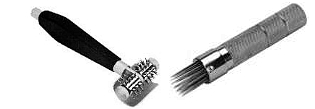
The lebenswecker ( in German) or "artificial leech" was a medical device invented by Baunscheidt to pierce the skin with many fine needles. Billed as being able to cure myriad illnesses, the lebenswecker was used on skin treated with toxic oil. The resulting inflammation was alleged to draw the body's attention away from the patient's illness, thus effecting a cure. The diseases that could allegedly be cured with the lebenswecker included whooping cough, baldness, toothaches, and mental disorders. The device's popularity was great enough to support a market for "counterfeit" versions of the lebenswecker that were produced by Baunscheidt.
References
References
- "Lebenswecker, an instrument used in homeopathic medicine, 1865-1875". [[Powerhouse Museum]] Collection.
- (March 16, 1880). "Sandhurst, from our own correspondent.". The Argus.
- Slater, Laurie. "Original Baunscheidt Lebenswecker by Droz". Phisick Medical Antiques.
This article was imported from Wikipedia and is available under the Creative Commons Attribution-ShareAlike 4.0 License. Content has been adapted to SurfDoc format. Original contributors can be found on the article history page.
Ask Mako anything about Baunscheidtism — get instant answers, deeper analysis, and related topics.
Research with MakoFree with your Surf account
Create a free account to save articles, ask Mako questions, and organize your research.
Sign up freeThis content may have been generated or modified by AI. CloudSurf Software LLC is not responsible for the accuracy, completeness, or reliability of AI-generated content. Always verify important information from primary sources.
Report