From Surf Wiki (app.surf) — the open knowledge base
Barakzai dynasty
1818–1978 ruling dynasty of Afghanistan
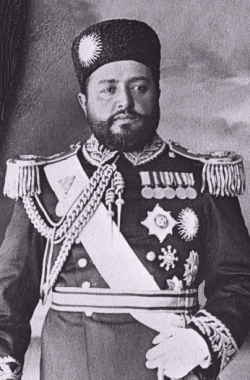
1818–1978 ruling dynasty of Afghanistan
| Emirate of Afghanistan Principality of Kandahar (1818–1855) |Emirate of Afghanistan (1823–1855) (Emirate of Kabul) (1855–1926) (Emirate of Afghanistan) |Flag of Herat until 1842.svg Emirate of Herat (1857–1863) |Kingdom of Afghanistan (1926–1973) |Republic of Afghanistan (1973–1978) (1973–1978) King of Afghanistan President of Afghanistan Sardar (Prince) of Afghanistan Father of the Nation Head of the House of Barakzai Ruler of Kandahar
The Barakzai dynasty, also known as the Muhammadzai dynasty ("the ruling sub-clan of the Barakzai"), ruled what is now Afghanistan from 1823 to 1978, when the monarchy ended de jure under Musahiban Mohammad Zahir Shah and de facto under his cousin Mohammad Daoud Khan. The Barakzai dynasty was established by Dost Mohammad Khan after the Durrani Empire of Ahmad Shah Durrani was removed from power. The Muhammadzai era was known for its progressivist modernity, practice of Sufism, peaceful security and neutrality, in which Afghanistan was referred to as the "Switzerland of Asia."
History and background
Political background
The Barakzai dynasty was the line of rulers in Afghanistan in the 19th and 20th centuries. Following the fall of the Durrani Empire in 1823, chaos reigned in the domains of Ahmad Shah Durrani's Afghan Empire as various sons of Timur Shah struggled for supremacy. The Afghan Empire ceased to exist as a single nation state, disintegrating for a brief time into a fragmented collection of small units. Dost Mohammad Khan gained preeminence alongside his brother, Sultan Mohammad Khan in 1823. Dost Mohammad Khan would found the Barakzai dynasty in about 1837. Thereafter, his descendants ruled in direct succession until 1929, when King Amanullah Khan and his brother Inayatullah Khan abdicated and their cousin Mohammed Nadir Shah secured the throne after defeating Habibullah Kalakani. The most prominent and powerful sub-clan of the Barakzai Pashtun tribe is the Mohammadzai, from which the 1823–1973 Afghanistan ruling dynasty comes.
Prior the seizing of the Durrani empire by the Barakzai dynasty, Loy Qandahar was captured by the Dil Brothers, Sher Dil Khan, Pur Dil Khan, Kohan Dil Khan, Mehr Dil Khan and Rahim Dil Khan, in the year 1818 and declared their independence, which lasted as an independent state until 1855, when Amir Dost Mohammad Khan unified Qandahar with Kabul.
At the start of Barakzai rule over Emirate of Kabul in March 1823, the Afghans lost their former stronghold of the Peshawar Valley to the Sikh Khalsa Army of Ranjit Singh at the Battle of Nowshera. The Afghan forces in the battle were supported by Azim Khan, half-brother of Dost Mohammad Khan. During the Barakzai era, Afghanistan saw much of its territory lost to the British in the south and east, Persia in the west, and Russia in the north. There were also many conflicts within Afghanistan, including the three major Anglo-Afghan wars and the 1928–29 civil war.
Definition and cadet branches
The Royal Barakzai or "Muhammadzai" are the descendants of the founder of the Barakzai dynasty the Emir ul Umara (Emir of all Emirs) Payindah Mohammed Khan, who plotted against the Durrani Imperial Family, proclaiming himself Emir. The hereditary title Sardar (Prince) is bestowed upon all descendants of Emir Payindah Mohammed.
Seraj
The Seraj cadet-branch are the descendants of Emir Dost Mohammed Khan, who alongside his predecessor and brother Sultan Mohammad Khan consolidated Barakzai rule in Afghanistan. The Seraj were mainly the Emirs of the first Emirate of Afghanistan that ended with the Saqqawist Coup led by Habibullah Kalakani. With support from the royal family, the Telai cadet branch killed Kalakani and re-established the second Barakzai Kingdom.
Telai
The Telai cadet-branch are the descendants of Sultan Mohammad Khan "Telai", 2nd Emir of Afghanistan succeeding his father Payindah Mohammed Khan. The descendants of His Royal Highness Prince Yahya Khan Telai (Yahya-Khel) to whom Nadir Shah and Zahir Shah belonged were closely related to Amanullah Khan through marriages.
Another Telai branch that had immense power in Afghanistan's military was that of His Royal Highness Field Marshal Prince Abdul Aziz Khan Telai and his children. Prince Abdul Aziz Telai was son of the Afghan King HM Sultan Mohammed Khan Telai and acted as a Field Marshal of the Afghan Army, preceding his grand-nephew Muhammad Nadir Shah as Minister of war under his other grand-nephew King Amanullah Khan. Prince Abdul Aziz additionally acted as Governor of Kandahar and Badakhshan. His eldest son was Prince Abdul Qayyum Khan, who acted as Governor of many central Afghan Provinces. Prince Abdul Qayyum Khan's son was the Afghan father of physics and Royal Afghan UN ambassador Professor Prince Abdul Khalek Khan Telai, who was a Murid (religious novice) of his father-in-law Mir Muhammad Jan son of Mir Fazlullah Agha. Prince Abdul Khalek's descendants consequently call themselves the Mir Muhammad Jan Khel and chose the surname Dakik (Persian for "Exact") after the Saur Revolution. Next to the title Sultan (above Sardar/Prince but below Shah/King), they also bear the title Mir and Sayyid to denote their descent to Muhammad through General Mir Muhammad Jan.
Another known son of Prince Abdul Aziz was Field Marshal Prince Amir Muhammad Khan Telai, who proclaimed himself Shah in exile in Peshawar contesting the rule of his rival cousin Mohammad Nadir Shah, siding with the British. His son Assadullah, whose nickname was "Sharza" became a general in the US Air Force, representing Telai interests in Washington DC.
Another well known son of Prince Abdul Aziz was Brigade General Sardar Abdul Ghafar Khan, who acted as commander of the Personal Royal Brigade of his cousin King Nadir Shah. Prince Abdul Ghafar Khan executed the Amanist Charkhi family, who had plotted against his cousin HM King Nadir Shah. These executions made by Prince Abdul Ghaffar Khan led to Ghulam Nabi Khan Charkhi's daughter convincing a Hazara Amanist called Abdul Khaliq Hazaragi to take revenge for the Charkhi family's massacre and murder King Nadir Shah.
Shaghasi

The Shaghasi cadet-branch is another prominent and powerful sub-tribe of Barakzai, descending from the brothers of Emir Sultan Mohammed Khan and Emir Dost Mohammed Khan.
Shaghasi Khel are descendants of Mirdaad Khan Barakzai, Işik Aqasi (Minister of the Royal Court "Chemberlain") during the reign of the Kandahari Sardars (Dost Muhammad Khan's brothers), as well as the reign of Dost Muhammad Khan 1863 – 1866 and 1868 – 1879. His father, Bazar Khan Barakzai was a local Barakzai chief, and his grandfather was Sardar Yasin Khan Omar Khanzai (Barakzai), resident of Maruf District (at that time part of Arghistan District) of Kandahar, and one of the notable Sardars of Kandahar during the reigns of Timur Shah Durrani and brother to Muhammad of the Mohammadzai. The Shaghasi's were even more powerful than the Mohammadzai's during the ruling of Emir Sher Ali Khan – Emir of Afghanistan, and Emir Amanullah Khan – Emir of Afghanistan (February 28, 1919 – 1926), later King of Afghanistan (1926 – January 14, 1929). Prominent Afghan historian, Abdul Hai Habibi denotes that during King Amanullah Khan's reign, the former governor of Kabul was Mahmoud Khan Yawar and the later one was Ali Ahmad Khan (both Shaghasi) Barakzai. Abdul Aziz Khan (later Minister of war, and Prime Minister, Mohammad Sarwar Khan and Abdul Karim Khan were Naib -ul- Hukuma's (all of them were Shaghasi) Barakzai. In Mazar-e-Sharif and Herat Abdul Karim and Mohammad Ibrahim Khan (later Minister) were also Khan Naib -ul- Hukuma's, and Abdul Rahman and Nik Mohammad Khan were Firqa Meshar (all of them were Shaghasi) Barakzai. Abdul Karim Khan in Paktya, and Dost Mahammad Khan Nazim (later Naib Salar, Sipah [[File:HRH Field Marshal Prince Abdul Aziz Khan Telai.jpg|thumb|Field Marshal Wazir Abdul Aziz Khan Shaghasi. Minister of war and interior affairs under [[King Amanullah Khan]]. ]]
Salar, Dar-ul-Adalat, and Hakim-e-Ala) in Ghazni, Uruzgan and Kandahar
were equally (Shaghasi) Barakzai, Mohammad Alam Khan in Lugar and Kuchi and other governors were the same. To the Shaghasi Khel is related King Amanullah Khan's mother Queen Sarwar Sultana Begum, Siraj ul-Khwatin, the Aliya Hazrat (b. at Kabul, 1875; d. at Istanbul, Turkey, 1965), eldest daughter of Loinab Sher Dil Khan Shaghasi, by his third wife, Benazir Begum, a lady from the Popalzai clan.
Ali Ahmad Khan Shaghasi (1883–1929) who was declared Emir of Afghanistan twice in 1929 son of General Loinab Khushdil Khan, sometime Governor of Kabul and Kandahar, by his wife Sahira Begum, daughter of Amir al-Mumenin, Amir al-Kabir, Amir Dost Muhammad Khan, Amir of Afghanistan, by his wife, a daughter of Agha Muhammad Qizilbash was also Shaghasi Barakzai. Ali Ahmad's sister, the Ulya Mukhadara Zarin Jan Begum was the mother of Humaira Begum who was the Queen consort of Afghanistan.
List of Barakzai rulers
Principality of Kandahar (1818–1855) Shaghasi Mirdaad Khan Barakzai' son of Bazar Khan Barakzai, grand son of Sardar Yasin Khan Barakzai, as his Işik Aqasi (Minister of the Royal Court "Chemberlain").
'''Sardar Pur Dil Khan'''' son of Sardar Payendah Khan, grand son of Sardar Jamal Khan Barakzai. '''Shaghasi Mirdaad Khan Barakzai'''' son of Bazar Khan Barakzai, grand son of Sardar Yasin Khan Barakzai, as his Işik Aqasi (Minister of the Royal Court "Chemberlain"). '''Shaghasi Mirdaad Khan Barakzai'''' son of Bazar Khan Barakzai, grand son of Sardar Yasin Khan Barakzai, as his Işik Aqasi (Minister of the Royal Court "Chemberlain"). Emirate of Afghanistan (Emirate of Kabul 1823–1855) (resigned) (1st reign) The Great Emir (deposed)
Son of Sardar Payendah Khan, grand son of Sardar Jamal Khan Barakzai Forged campaigns to re-unite Afghanistan which was divided due to the civil wars between the sons of Timur Shah Durrani. Reign disputed from 1839 to 1842 by Shah Shuja Durrani in the First Anglo-Afghan War
Son of Dost Mohammad Khan, grand son of Sardar Payendah Khan Barakzai (2nd reign) The Great Emir
Son of Sardar Payendah Khan, grand son of Sardar Jamal Khan Barakzai
'''Loynab Shir Dil Khan Shaghasi'''' son of Shaghasi Mirdaad Khan Barakzai, grand son of Bazar Khan Barakzai, as his Işik Aqasi (Minister of the Royal Court "Chemberlain") 1856.
Returned to the throne after the British and Shah Shuja were defeated in the First Anglo-Afghan War. Coined the term "Afghanistan" after an alliance with the British. Went on to defeat the remaining powers inside Afghanistan, reunifying the country after a brutal civil war lasting 70 years from 1793 to 1863 by the time of his death (1st reign) (deposed)
Son of Dost Mohammad Khan, grad son of Sardar Payendah Khan (2nd reign)
Son of Dost Mohammad Khan, grand son of Sardar Payendah Khan.
'''Mohammad Yusof Khan Shaghasi'''' son of Loynab Shir Dil Khan Shaghasi, grand son of Shaghasi, as his Işik Aqasi (Minister of the Royal Court "Chemberlain"). 1874 (deposed)
Son of Sher Ali Khan, grand son of Dost Mohammad Khan
Deposed during the Second Anglo-Afghan War Afghan Prince Charlie (deposed)
Son of Sher Ali Khan, grand son Dost Mohammad Khan. Defeated in the Battle of Kandahar against Abdur Rahman Khan and exiled at the end of the Second Anglo-Afghan War Light of the Religion and the Faith Bismarck of Afghanistan
Son of Mohammad Afzal Khan, grand son of Dost Mohammad Khan
'''Nazim Dost Mohammad Khan Shaghasi'''' son of Sardar Amir Mohammad Shaghasi, gran son of Shaghasi Mirdaad Khan Barakzai, as his Işik Aqasi (Minister of the Royal Court "Chemberlain"). Later Nazim (Leading Commander of Central Afghanistan), Nayabsalar (Lieutenant General), Sepahsalaar (General), the first Dar-ul-Adalat (Minister of Justice), Hakim-e-Ala (Great Governor) of Ghazni, Uruzgan and Kandahar during the reigns of Abdur Rahman Khan, Habibullah Khan, and Amanullah Khan.
Son of Abdur Rahman Khan, grand son of Mohammad Afzal Khan (deposed)
'''Nazim Dost Mohammad Khan Shaghasi'''' son of Sardar Amir Mohammad Shaghasi, gran son of Shaghasi Mirdaad Khan Barakzai, as his Işik Aqasi (Minister of the Royal Court "Chemberlain"). Later Nazim (Leading Commander of Central Afghanistan), Nayabsalar (Lieutenant General), Sepahsalaar (General), the first Dar-ul-Adalat (Minister of Justice), Hakim-e-Ala (Great Governor) of Ghazni, Uruzgan and Kandahar during the reigns of Abdur Rahman Khan, Habibullah Khan, and Amanullah Khan.
Son of Abdur Rahman Khan, grand son of Mohammad Afzal Khan
Son of Habibullah Khan, grand son of Abdur Rahman Khan
Kingdom of Afghanistan (1926–1929) (abdicated)
Son of Habibullah Khan, grand son of Abdur Rahman Khan (deposed)
Son of Habibullah Khan, grand son of Abdur Rahman Khan
Saqqawist Emirate and the 1928–1929 civil war Declared twice as King; rose in opposition to Kalakāni during the 1928–29 civil war; captured and executed
Kingdom of Afghanistan (restored; 1929–1973) (from 2004) {{Refn|"The late King was always fondly referred to by all Afghans, cutting across ethnic boundaries, as "Baba-e-Millat" or 'Father of the Nation', a position given to him in the country's Constitution promulgated in January 2004, about two years after the collapse of Taliban rule. The title of the 'Father of the Nation' dissolves with his death." (deposed)
Republic of Afghanistan (1973–1978) File:Dost Mohammad Khan of Afghanistan with his son.jpg|Amir-ul-Momineen, Amir-i-Kabir Dost Mohammad Khan, who established the Barakzai dynasty in 1823 File:King Zahir Shah of Afghanistan in 1963.jpg|Mohammed Zahir Shah, was the last King (Badshah) of Afghanistan, reigning for four decades, from 1933 until he was ousted by a coup in 1973, he belonged to the Mohammadzai tribe File:H.E. Dr. Abdul Khaliq Khan (UN).jpg|Sardar Abdul Khaliq Khan Telai, Prof. PhD (Sorbonne), Ambassador of Afghanistan to the UN, Pioneer of Physics in Afghanistan. He was great grandson of King Sultan Mohammed Khan Telai and a close ally of HRH Prince Daoud Khan supporting his Coup d´État. File:Barakzairulersofafghanistan.gif|Genealogy of the Barakzai rulers of Afghanistan from the Barakzai dynasty
Heads of the House of Barakzai since 1973
- Mohammed Daoud Khan As first president of Afghanistan, renouncing the title Shah after taking power (1973–1978)
- Abdul Khaliq Khan, for Saratanists as the lone Barakzai survivor of the Saur Purge (1978–1992)
- Mohammed Zahir Shah (17 July 1978 – 23 July 2007)
- Crown Prince Sardar Ahmad Shah Khan (1964 Constitution of Afghanistan) (23 July 2007 – 4 June 2024)
- Prince Muhammad Zahir Khan (4 June 2024 – Present)
Languages
The principal language of the Barakzai is Pashto. Formerly, Persian was used as the language for records and correspondence; until the late nineteenth century tombstones were also inscribed in Persian. The language of the Barakzai tribes in Pishin, Quetta, Gulistan and Dukki (District. Loralai) is just like the language spoken in Kandahar. Those who have settled away from Pishin speak local languages (Pushto), such as Multani or Saraiki in Multan, Hindko in Hazara, Urdu in Bhopal and Sindhi in Sindh. Barakzai, a dialect of Pashto, is the language spoken by Harnai Barakzai.
Religion
The Barakzai are adherents to the Sunni Sufi branch of Islam, following mostly the Hanafi school of Jurispudence and Maturidi school of theology. In the history Sardar Ata Mohammad Khan Barakzai, another brother of Sultan Mohammed Khan Telai, acting as Governor of Kashmir under Shah Shuja Durrani issued coins in honor of the Sufi Saint Nund Rishi and renovated his shrine. Some Barakzai including the Mir Muhammad Jan Khel sub-cadet branch of the Telai (known by the surname Dakik) are following the Hanbali school of jurispudence and Athari school of Theology.
Custodianship of the Hazrat Ali Mazar
As Sufis the Barakzais are devotees of Muhammad's cousin and son in law Ali ibn Abi Talib, who according to Afghans is buried in Mazar Sharif. The Emirs and Kings acted as custodians of the "Hazrat Ali Mazar". Kings who are buried in the Hazrat Ali Shrine Complex are the following:
- Dost Mohammed Khan
- Wazir Akbar Khan
- Sher Ali Khan
It is because of this emphasis made by the Barakzai that some claim that the Mosque in the Afghan Flag stands for the Hazrat Ali Mazar.
Anti-fundamentalism
Although many Barakzai were practicing the faith of Islam, and integrating conservative Sharia Law in their legal system, they were known for their anti-fundamentalist policies, regarding fundamentalists as primarily politically motivated, rather than religiously motivated.
Royal standards
National flags
Flag of Afghanistan pre-1901.svg|Flag of Afghanistan before 1901 Flag of Afghanistan (1919-1928).svg|Flag of Afghanistan after 1901 File:Flag of Afghanistan 1930.svg|Flag of Afghanistan during His Majesty King Zahir Shah's Kingdom Flag of Afghanistan (1974–1978).svg|Flag of Afghanistan under His Royal Highness Prince Daoud Khan's regime
Coat of arms
File:Emblem of Afghanistan (1919-1926).svg|Emblem of the Emirate of Afghanistan File:Emblem of Afghanistan (1931–1973).svg|Emblem of the Kingdom of Afghanistan File:Emblem of Afghanistan (1974-1978) new.svg|Emblem of Prince Daoud Khan's regime
Private standards
File:Royal standard of Afghan Kings(1931~1973).svg|Private Standard of His Majesty King Zahir Shah and Sardar Ahmad Shah Khan File:Flag of Afghanistan (1974–1978) (Variant).svg|Presidential seal of Daoud Khan
Contemporary role
After the fall of the Taliban in the year 2001, negotiations about the reestablishment of the Kingdom of Afghanistan were held, including negotiations about the re-installation of Mohammad Zahir Shah as the king of Afghanistan. However, pressure from the side of Ethnic Tajiks who threatened to revolt against Zahir Shah and pressure from the government of Pakistan on the question of the Durand Line, forced Zahir Shah to renounce his claim to the throne, he accepted the title of Baba-e-Millat (), which weakened his political role.
Since then Prince Ali of the Seraj cadet branch and Prince Nadir Naeem of the Yahya-Khel of the Telai cadet branch ran for Presidency of Afghanistan in 2009 and 2014.
Notes
References
References
- (2014). "An Intimate War: An Oral History of the Helmand Conflict, 1978–2012". Oxford University Press.
- Ende in Islam in the World Today: A Handbook of Politics, Religion, Culture, and Society, p. 259
- Herbe in All in the family, Absolutism, Revolution, and Democracy in Middle Eastern Monarchies, p. 199
- Ahmed in Afghanistan Rising Islamic Law and Statecraft Between the Ottoman and British Empires, p. 23
- (14 January 2022). "Meine Grossmutter, die afghanische Prinzessin". Neue Zürcher Zeitung.
- "Afghanistan". [[CIA]].
- Trousdale, William B.. (2021-03-08). "Kandahar in the Nineteenth Century". BRILL.
- Balland, D.. "BĀRAKZĪ". [[Columbia University]].
- Hadi in Afghan Experiences, Greenville 2016
- Buyers in Royal Ark, Afghanistan, Glossary
- Buyers in Royal Ark, Chapter: Telai III
- Adamek in Who is Who in Afghanistan
- Balland, D.. "BĀRAKZĪ". [[Columbia University]].
- Hotak, Muḥammad Maʻṣūm. (2008). "Afghan Shaghasis". Kandahar: Allama Rashad Publication Institute.
- Popalzai, Azizuldin Wakili. (1967). "Timur Shah Durrani". History Association.
- Habibi, Abdul Hai. (1984). "Constitutionalism movements in Afghanistan". Governmental press.
- Sistani, Abd. Azam. (2012). "Three Research Articles about the Three Historical Families of Kandahar".
- Maʻṣūm., Hotak, Muḥammad. (2008). "Afghan Shaghasis". Allama Rashad Publication Institute.
- Pierer's Universal-Lexikon, Band 9. Altenburg 1860, S. 636.
- (26 May 1929). "Amanullah Hungry in Flight to India". The New York Times.
- (18 October 1929). "Nadir Khan is Elected Amir of Afghanistan". The New York Times.
- (9 November 1933). "King of Afghanistan Is Slain at Kabul; Stable Boy Won Throne by Military Skill". The New York Times.
- Pakistan and the emergence of Islamic militancy in Afghanistan By Rizwan Hussain Page 16
- page 64 India and Central Asia By J. N. Roy, J.N. Roy And B.B. Kumar, Astha Bharati (Organization)
- Suri, Sohan Lal, `L/mdat-ut-Twankh. Lahore, 1885–89
- "Official website of Prince Sayyid Raphael Dakik".
- "Mazar-e Sharif, Afghanistan". ArchNet.
- Gilles (2005). "The Return to Political Fragmentation". Afghanistan: Revolution Unending, 1979–2002, p.330
- Grossmann in Inside the Pentagon: EXILED AFGHAN KING CONTESTS OTHER FACTIONS FOR POWER IN U.N. TALKS, Vol 17 No. 47
- (17 March 2014). "Sardar Muhammad Nadir Naeem – king's grandson withdraws".
- (17 November 2011). "Presidential candidate: Afghan Prince Seraj wants to revitalise tribes – WELT".
- {{usurped
This article was imported from Wikipedia and is available under the Creative Commons Attribution-ShareAlike 4.0 License. Content has been adapted to SurfDoc format. Original contributors can be found on the article history page.
Ask Mako anything about Barakzai dynasty — get instant answers, deeper analysis, and related topics.
Research with MakoFree with your Surf account
Create a free account to save articles, ask Mako questions, and organize your research.
Sign up freeThis content may have been generated or modified by AI. CloudSurf Software LLC is not responsible for the accuracy, completeness, or reliability of AI-generated content. Always verify important information from primary sources.
Report