From Surf Wiki (app.surf) — the open knowledge base
Bamyan Province
Province of Afghanistan

Province of Afghanistan
| Field | Value |
|---|---|
| name | Bamyan |
| native_name | |
| native_name_lang | fa |
| settlement_type | Province |
| image_skyline | Bamyan collage.jpg |
| image_caption | Various places in Bamyan province |
| image_map | Bamyan in Afghanistan.svg |
| map_caption | The location of Bamiyan province within Afghanistan |
| coordinates | |
| coor_pinpoint | Capital |
| subdivision_type | Country |
| subdivision_name | Afghanistan |
| seat_type | Capital |
| seat | Bamyan |
| leader_title | Governor |
| leader_name | Abdullah Sarhadi |
| leader_title1 | Deputy Governor |
| leader_name1 | Atiqullah Atiq |
| unit_pref | Metric |
| area_footnotes | |
| area_total_km2 | 18029.2 |
| population_footnotes | |
| population_total | 522205 |
| population_as_of | 2023 |
| population_density_km2 | auto |
| blank_name_sec1 | Main languages |
| blank_info_sec1 | Persian |
| timezone1 | Afghanistan Time |
| utc_offset1 | +4:30 |
| postal_code_type | Postal code |
| postal_code | 16xx |
| iso_code | AF-BAM |
| website |
the province in Afghanistan
Bamyan (Pashto, Dari: ), also spelled Bamiyan, Bāmīān or Bāmyān, is one of the 34 provinces of Afghanistan with the city of Bamyan as its center, located in central parts of Afghanistan.
The terrain in Bamyan is mountainous or semi-mountainous, at the western end of the Hindu Kush mountains concurrent with the Himalayas. The province is divided into eight districts, with the town of Bamyan serving as its capital. The province has a population of about 495,557 and borders Samangan to the north, Baghlan, Parwan, and Maidan Wardak to the east, Ghazni and Daikundi to the south, and Ghor and Sar-e-Pol to the west. It is the largest province in the Central region of Afghanistan.
It was a center of commerce and Buddhism in the 4th and 5th centuries. In antiquity, central Afghanistan was strategically placed to thrive from the Silk Road caravans that crisscrossed the region, trading between the Roman Empire, Han dynasty, Central Asia, and South Asia. Bamyan was a stopping-off point for many travelers. It was here that elements of Greek and Buddhist art were combined into a unique classical style known as Greco-Buddhist art.
The province has several famous historical sites, including the now-destroyed Buddhas of Bamiyan, around which are more than 3,000 caves, the Band-e-Amir National Park, Dara-e-Ajhdar, Gholghola, and Zuhak ancient towns, the Feroz Bahar, Astopa, Klegan, Gaohargin, Kaferan, and Cheldukhtaran.
History
Ancient history
Archaeological exploration done in the 20th century suggests that the geographical area of Afghanistan has been closely connected by culture and trade with its neighbors to the east, west, and north. Artifacts typical of the Paleolithic, Mesolithic, Neolithic, Bronze, and Iron Ages have been found in Afghanistan. Urban civilization is believed to have begun as early as 3000 BC, and the early city of Mundigak (near Kandahar in the south of the country) may have been a colony of the nearby Indus Valley civilization.
After 2000 BC, successive waves of semi-nomadic people from Central Asia began moving south into Afghanistan; among them were many Indo-European-speaking Indo-Iranians. These tribes later migrated further south to India, west to what is now Iran, and towards Europe via the area north of the Caspian Sea. The region as a whole was called Ariana.[[File:Detalle de frescos Bamiyan Afgánistan.jpg|thumb|Detail of the [[Buddhas of Bamiyan#Mural paintings|frescoes]] inside the caves of the [[Buddhas of Bamiyan|Bamiyan Buddha complex]]|left]]
The people shared similar culture with other Indo-Iranians. The ancient religion of Kafiristan survived here until the 19th century. Another religion, Zoroastrianism is believed by some to have originated in what is now Afghanistan between 1800 and 800 BC, as its founder Zoroaster is thought to have lived and died in Balkh. Ancient Eastern Iranian languages may have been spoken in the region around the time of the rise of Zoroastrianism.
By the middle of the 6th century BC, the Achaemenid Persians overthrew the Medes and incorporated Arachosia, Aria, and Bactria within its eastern boundaries. An inscription on the tombstone of King Darius I of Persia mentions the Kabul Valley in a list of the 29 countries that he had conquered.
In 330 BC, Alexander the Great seized the area but left it to the Seleucids to rule.[[File:BamyanBuddha Smaller 1.jpg|upright|thumb|The smaller [[Buddhas of Bamiyan|Buddha of Bamiyan]]. [[Buddhism in Afghanistan|Buddhism]] was widespread in the region before the [[Islamic conquest of Afghanistan]].]]
Afghanistan's significant ancient tangible and intangible Buddhist heritage is recorded through wide-ranging archeological finds, including religious and artistic remnants. Buddhist doctrines are reported to have reached as far as Balkh even during the life of the Buddha (563 BC to 483 BC), as recorded by Husang Tsang. It became the site of an early Buddhist monastery. Buddhism was by this time in "an expansionist mode, offering religious practices that spoke to the masses and an appealing style of illustrative art, backed by the subtle philosophy of the Mahayana sect". Many statues of Buddha were carved into the sides of cliffs facing Bamyan city. The two most prominent of these statues were standing Buddhas, now known as the Buddhas of Bamyan, measuring 53 and 40 meters high respectively, which were the largest examples of standing Buddha carvings in the world. They were probably erected in the 4th or 5th century A.D. They were cultural landmarks for many years and are listed among UNESCO's World Heritage Sites.
Medieval times
By the 7th century, when the Arabs first arrived, it was under the control of the Turk Shahis before being conquered in the name of Islam by the Saffarids in the 9th century. The Tang dynasty of China controlled large parts of the region during the reign of Emperor Taizong of Tang and Emperor Gaozong of Tang. The Tibetan Empire also extended its influence into the region. The region fell to the Ghaznavids followed by the Ghurids before the Mongol invasion in the 13th century. After the Mongol invasion, the area was ruled by Arghun Khan of Ilkhanate, later by the Timurids and Mughals.
In 1709, when the Hotaki dynasty rose to power in Kandahar and defeated the Persian Safavids, Bamyan was under the Mughal Empire influence until Ahmad Shah Durrani made it become part of the Afghan Durrani Empire, which became what is now the modern state of Afghanistan.
Modern history
20th century
In the 1980s, during the Soviet–Afghan War, the Hazara rebel leader Abdul Ali Mazari began a resistance movement against the Soviets in the region, Shura-e-Itifaq-e-Islami. In the early 1990s, there was an agreement to run Bamyan under a council of "local ethnic and political groups".
Later in the 1990s, the Taliban took control of the region and made their own government; one notable figure of this group was Mohammed Akbari, who effectively worked with the Taliban after meeting with one of their delegations in 1998 (and would later serve as an Afghan Parliament member in the 2000s). Some Hazaras allied with them. Bamyan was the main location for a rebellion against the Taliban, an alliance of armed Shiite groups named the Hizb-e Wahdat. This led to a struggle in the western province of Bamyan, Yakawlang, which was regarded by both sides as being key to control northern and central Afghanistan.
21st century
In 2000, the Taliban lost control of the district to local militias, but quickly took it back. To curb future rebellions, in early 2001 the Taliban arrested 300 civilian adult men and executed them publicly. The Supreme Leader of the Taliban at the time, Mullah Mohammad Omar, allegedly stopped more retribution acts in the area, but he did not forgive the rebellion. In March, Omar ordered the Taliban to destroy the Buddhas of Bamiyan, claiming they were symbols of idolatry. UNESCO called it a "crime against culture".
Later in 2001, the U.S. and NATO invaded Afghanistan, and local militias in Bamyan sided with them to fight against the Taliban. There was evidence that Taliban fighters started massacring many Hazaras there in October. The Taliban fled the region in December. NATO eventually created a new government in Afghanistan. In 2003, Bamyan was recognized as one of the safest provinces in the country, which allowed for civil rebuilding. Over the next few decades, women's rights would be restored. It became the area of the country most visited by tourists, and it elected Afghanistan's first female governor of a province, Habiba Sarabi, who created the Band-e-Amir National Park. A local Hazara named Haji Hekmat Hussein, a parliamentary candidate in the U.S.' new government, was secretly a Taliban intelligence officer who participated in the 2001 massacre. He would be arrested and jailed, but was released in 2020 as a part of the Doha Agreement between the U.S. and Taliban.
A small number of troops from New Zealand would be stationed there, and the Taliban insurgency started targeting them in 2008. The U.S. made a "protective belt" around the province that stopped anyone outside, including other Afghanis, from coming into Bamyan. Control of the belt was given to local militias, which caused conflict between various ethnic groups. By 2009, the regional Afghan National Police, who fought against insurgents, started running out of money, and had to be aided by U.S. and New Zealand troops.
By 2011, the Taliban in Bamyan started gaining strength, and there was concern over their future plans as NATO began their phased withdrawal from the country. The U.S. and NATO's combat mission in Afghanistan formally ended in 2014.
In 2021, the Taliban started an offensive to retake Afghanistan. They made significant advances by July, and two districts, Saighan and Kahmard, had been taken. There was an effort by police and local militias to keep the Taliban 60 miles away from Bamyan city, which the Afghanistan government believed could be the start of a turnaround for their military in the region. In August 2021, Ashraf Ghani's government collapsed, and the Taliban took Bamyan on August 15. Initially, there was a conflict between different Taliban members in the area of whether or not policies put in place in the province to show the new Taliban government would be more liberal or moderate in its ideology. Other Taliban members resented the locals who embraced those ideals in the prior 20 years. In July 2022, the Taliban forbid humanitarian aid into the province. In August 2023, they banned women from entering Band-e-Amir National Park.
Administrative divisions
| District | Capital | Population (2020) | Area in km2 | Pop. density per km2 | Ethnic composition |
|---|---|---|---|---|---|
| Bamyan | Bamyan | 94,855 | 1,798 | 53 | (76% Hazaras) (82% Shiites,) (16% Sayyids / Sadat), |
| Kahmard | Kahmard | 41,053 | 1,389 | 30 | 85% Tajiks, 14% Hazaras (8% Shiites, 6% Sunni Tatars), 1% Pashtuns. Used to belong to Baghlan Province. |
| Panjab | Panjab | 77,058 | 1,961 | 39 | 90% Hazaras |
| Sayghan | Sayghan | 27,103 | 1,729 | 16 | Used to be part of Kahmard District. |
| Shibar | Shibar | 33,348 | 1,372 | 24 | (50% Hazaras) (33% Shiites) (16% Ismailis,) (10% Sayyids / Sadat ),( 44% Tajiks. |
| Waras | Waras | 123,293 | 2,975 | 41 | 99% Hazaras, 1% Sayyids. |
| Yakawlang | Yakawlang | 68,821 | 4,579 | 15 | 50% Hazaras (8% Shiites, 48% Sayyids/ Sadat ), |
| Yakawlang 2 | 30,026 | 2,223 | 14 | Used to be part of Yakawlang District. | |
| **Bamyan** | **495,557** | **18,029** | **27** | (83.9% Hazaras) (71.1% Shiites,) (30.8% Sayyids/Sadat) |
Economy
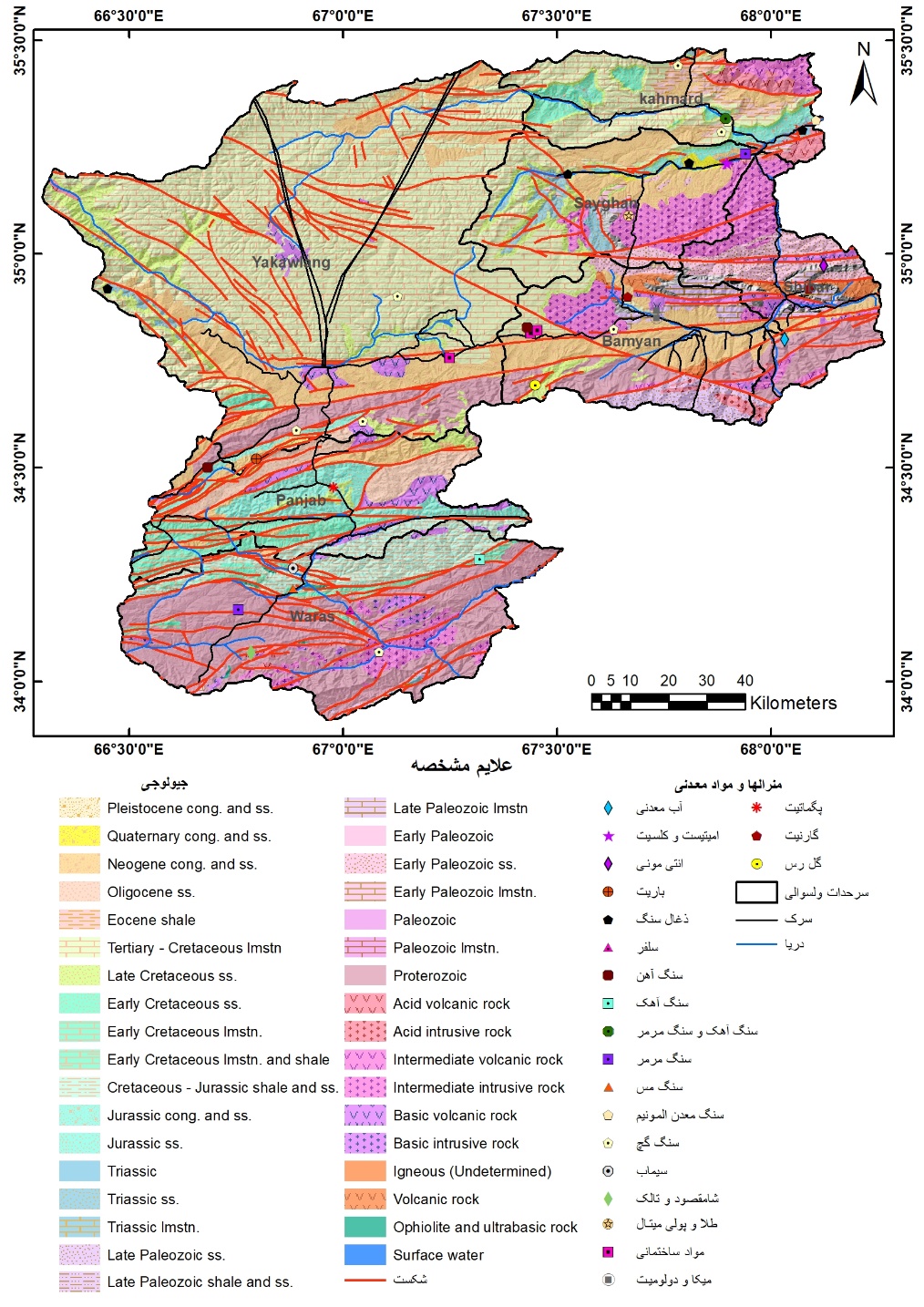
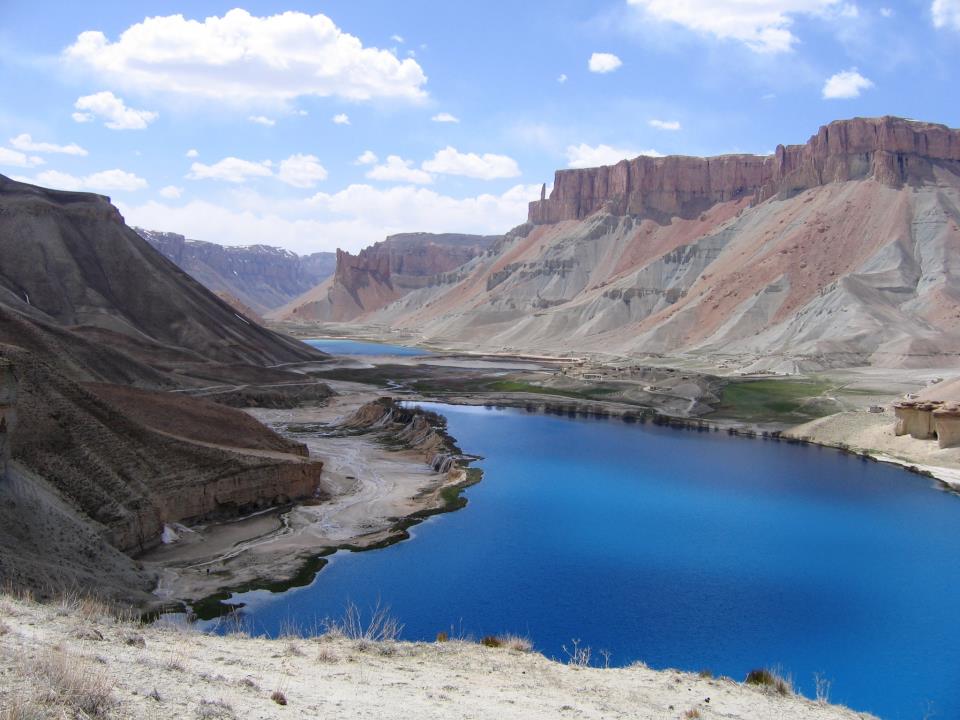
Agriculture
Bamiyan has been particularly famous for its potatoes. The region is also known for a "shuttle system" of planting, wherein seed potatoes are grown in winter in Jalalabad, a warm area of eastern Afghanistan, and then transferred to Bamyan for spring re-planting.
Tourism
Prior to the Soviet invasion of 1979, the province attracted many tourists. Bamyan is the first province in Afghanistan to have set up a tourist board, Bamyan Tourism. A feature of this developing tourist industry is based on skiing. The province is said to have 'some of the best "outback skiing" in the world and in 2008 an $1.2 million project to encourage skiing was launched by the Aga Khan Foundation (AKF) with the help of NZAID, New Zealand government's international aid agency. The province hosts the Afghan Ski Challenge, a 7 km downhill race over ungroomed and powdered snow, founded by Swiss journalist and skier Christoph Zurcher. Tissot, the Swiss watch manufacturer, is the principal sponsor.
Transportation
As of May 2014, the province was served by Bamyan Airport in Bamyan which had regularly scheduled direct flights to Kabul.
Demographics
Population
The province of Bamyan has an estimated population of around 496,000 people.
Ethnicity, languages and religion
The residents are Hazaras, Sadat/ Sayed followed by significant populations of Tajiks and Pashtuns.
| Ethnicity | Hazara | Tajik/ | |||
|---|---|---|---|---|---|
| Farsiwan | Pashtun | Sadat/Sayed | Others | *Sources* | Period |
| 2004–2021 | |
|---|---|
| (Islamic Republic) | |
| 67 – 70% | |
| 2020 EU | |
| 2018 UN | |
| 2015 CP | |
| 2015 NPS | |
| 2012 CSSF | |
| 2011 PRT | |
| 2011 USA | |
| 2009 ISW{{Cite web | title=Regional Command East |
| **Legend:** |
|---|
Education
Bamyan Province is home to the region's only university, Bamiyan University in the city of Bamyan. The school was founded in the mid-1990s, and largely destroyed under the Taliban and by US airstrikes. It was later refurbished by New Zealand Provincial Reconstruction Teams following the fall of the Taliban.
Gallery
File:090331-N-2903M-009.jpg|alt=090331-N-2903M-009|A valley in Bamyan province File:Band-e Amir in Bamyan, mountain cliffs.JPG|Band-e Amir in Bamyan, mountain cliffs File:Local in Bamyan area.JPG|Local in Bamyan area File:Overview of area in Bamyam, from Buddha statues.JPG|Overview of area in Bamyan, from Buddha statues File:Kallu Valley (Afghanistan) - Arsenic spring.JPG|Kallu Valley
Notes
References
References
- (7 November 2021). "د نږدې شلو ولایاتو لپاره نوي والیان او امنیې قوماندانان وټاکل شول".
- "2 Afghan Women Conquer Shah Foladi Peak in Bamiyan".
- "Independent Directorate of Local Governance".
- . (July 2023). ["Estimated Population of Afghanistan 2023–24"](https://ia600207.us.archive.org/3/items/1402-05/%D8%A8%D8%B1%D8%A7%D9%88%D8%B1%D8%AF%20%D9%86%D9%81%D9%88%D8%B3%20%DA%A9%D8%B4%D9%88%D8%B1%20%D8%B3%D8%A7%D9%84%20%201402%20%2005.pdf). *National Statistic and Information Authority (NSIA)*.
- "Bamiyan".
- "Estimated Population of Afghanistan 2020–21". Islamic Republic of Afghanistan, National Statistics and Information Authority.
- Library of Congress Country Studies on Afghanistan, [http://lcweb2.loc.gov/cgi-bin/query/r?frd/cstdy:@field(DOCID+af0002) Pre-Islamic Period], by [[Craig Baxter]] (1997).
- [[Nancy Hatch Dupree. Nancy H. Dupree]] (1973). ''An Historical Guide To Afghanistan'', Chapter 3 Sites in Perspective.
- "Afghanistan – John Ford Shroder, University of Nebraska". Webcitation.org.
- Bryant, Edwin F. (2001). ''The quest for the origins of Vedic culture: the Indo-Aryan migration debate''. Oxford University Press, {{ISBN. 978-0-19-513777-4.
- Afghanistan: ancient Ariana (1950), Information Bureau, p3.
- M. Witzel (2000), "The Home Of The Aryans", Festschrift J. Narten = Münchener Studien zur Sprachwissenschaft, Beihefte NF 19, Dettelbach: J.H. Röll, 283–338. Also published online, at [[Harvard University]] ([http://www.people.fas.harvard.edu/~witzel/AryanHome.pdf LINK]). p. 48. "The Vīdẽvdaδ list obviously was composed or redacted by someone who regarded Afghanistan and the lands surrounding it as the home of all Indo-Iranians (airiia), that is of all (eastern) Iranians, with Airiianem Vaẽjah as their center."
- Library of Congress Country Studies on Afghanistan, [http://lcweb2.loc.gov/cgi-bin/query/r?frd/cstdy:@field(DOCID+af0003) Achaemenid Rule, ca. 550-331 B.C.]
- (15 February 1989). "Chronological History of Afghanistan – the cradle of Gandharan civilisation". Gandhara.com.au.
- (13 April 2012). "''Afghanistan: Achaemenid dynasty rule'', Ancient Classical History". Ancienthistory.about.com.
- Nancy H. Dupree, [http://www.aisk.org/aisk/NHDAHGTK05.php#Top An Historical Guide to Kabul] {{webarchive. link. (July 27, 2011)
- "Silk Road Seattle – Bamiyan".
- Skaff, Jonathan Karam (2012). ''Sui-Tang China and Its Turko-Mongol Neighbors: Culture, Power, and Connections, 580–800''. Oxford University Press. p. 190. {{ISBN. 978-0-19-973413-9.
- [[Susan Whitfield. Whitfield, Susan]] (2004), ''The Silk Road: Trade, Travel, War and Faith'', Chicago: Serindia, {{ISBN. 978-1-932476-12-5
- Qazizai, Fazelminallah. (2022-12-12). "In Bamiyan, the Taliban Walk a Perilous Tightrope".
- Harding, Luke. (2001-03-03). "How the Buddha got his wounds". [[The Guardian]].
- Carroll, Rory. (2002-04-08). "Pits reveal evidence of massacre by Taliban". [[The Guardian]].
- "CNN.com – Mass graves reported in Afghanistan – April 7, 2002".
- John Pike. (2003-09-22). "Bamian". Globalsecurity.org.
- Faizi, Fatima. (March 30, 2020). "'I Didn't Know Whether to Mourn or to Celebrate': An Afghan Reporter's Girlhood Education".
- (2017-11-13). "Afghan girls run in country's only mixed-gender sports event".
- (2011-07-08). "Reporters – Bamiyan, the future for Afghanistan?".
- (2024-02-26). "Taleban targeting Kiwi troops – New Zealand News".
- Hodge, Nathan. "Danger Room With Afghanistan's Broke, Ammo-Starved Cops".
- "Bamyan fears return of Taliban".
- (2024-03-14). "Afghanistan War {{!}} History, Combatants, Facts, & Timeline {{!}} Britannica".
- (2021-07-26). "Local Militias Power Resistance to Taliban in Bamiyan".
- Cavaliere, Joshua Zitser, Victoria. "Taliban to retake power in Afghanistan 20 years after being ousted by US-led forces and the country's president has fled".
- (2024-02-26). "'Immediate target': Afghan civilians who helped Kiwi soldiers fear for their lives".
- (13 July 2022). "Taliban forbid entry of humanitarian aid into Afghanistan's Bamyan province".
- Kassam, Ashifa. (2023-08-27). "Taliban ban women from national park in Afghanistan". [[The Guardian]].
- (18 Sep 2002). "Kahmard District Profile".
- (17 Sep 2002). "Panjab District Profile".
- (18 Sep 2002). "Shibar District Profile".
- (Sep 17, 2002). "Waras District Profile".
- (February 2011)
- (8 March 2014). "For Ski Break Without Crowds (or Rebels), an Afghan Town Beckons (Published 2014)". The New York Times.
- Boone, Jon (27 April 2010) [https://www.theguardian.com/world/2010/apr/27/afghanistan-new-skiing-destination Afghanistan – the new skiing destination] guardian.co.uk
- 6 May 2011 [http://www.dawn.com/2011/03/13/afghanistans-bamiyan-hopes-to-attract-skiers.html Afghanistan's Bamiyan hopes to attract skiers] Dawn.com
- (27 Feb, 2012) [http://www.wanderlust.co.uk/magazine/news/afghanistan-hosts-second-national-ski-race Afghanistan set to host second national ski race] {{Webarchive. link. (2017-08-04 wanderlust.co.uk)
- Levinson, Charles (March 6, 2012) [https://www.wsj.com/articles/SB10001424052970203458604577263343870606130 Since Skiing Came to Afghanistan, It Has Been Pretty Much All Downhill] wsj.com
- 2014 Timetable, http://flyeasthorizon.com/flight-schedule/ {{Webarchive. link. (2018-10-03)
- "Bamyan {{!}} European Union Agency for Asylum".
- (2020). "Country Guidance: Afghanistan. Common analysis and guidance note". [[European Union Agency for Asylum]].
- Ramizpoor. (2018). "Afghan People’s Dialogue on Peace: Local Road Maps for Peace – Kabul and Surrounding Provinces". [[United Nations Assistance Mission in Afghanistan]].
- "Afghanistan National Drug Use Survey".
- "Bamyan - Program for Culture and Conflict Studies - Naval Postgraduate School".
- [https://reliefweb.int/report/afghanistan/bamyan-socio-demographic-and-economic-survey-highlights-results#:~:text=The%20average%20number%20of%20children,national%20level%20(7.3%20persons) United Nations]
- (2023-10-23). "State of Families CSSF Report: Bamyan, Afghanistan (2023)".
- (February 2011). "Afghanistan Provincial Reconstruction Team".
- (January 2011). "U.S. Army Afghanistan Smart Book, Third Edition".
- Recknagel, Charles (2001-12-31). "Afghanistan: Dream Of Hazara University Destroyed By War (Part 2) – Radio Free Europe / Radio Liberty 2011". Rferl.org. Retrieved 2011-02-13
- John Pike (2003-09-22). "Bamian". Globalsecurity.org. Retrieved 2011-02-13
This article was imported from Wikipedia and is available under the Creative Commons Attribution-ShareAlike 4.0 License. Content has been adapted to SurfDoc format. Original contributors can be found on the article history page.
Ask Mako anything about Bamyan Province — get instant answers, deeper analysis, and related topics.
Research with MakoFree with your Surf account
Create a free account to save articles, ask Mako questions, and organize your research.
Sign up freeThis content may have been generated or modified by AI. CloudSurf Software LLC is not responsible for the accuracy, completeness, or reliability of AI-generated content. Always verify important information from primary sources.
Report