From Surf Wiki (app.surf) — the open knowledge base
Bahawalpur (princely state)
State in South Asia (1748–1955)

State in South Asia (1748–1955)
| Field | Value | |
|---|---|---|
| native_name | {{nq | بہاولپور دی ریاست}} |
| conventional_long_name | State of Bahawalpur | |
| common_name | Bahawalpur | |
| status | *Sovereign state (1748–1833) | |
| common_languages | ||
| religion | ||
| ethnic_groups | **Majority** | |
| Punjabis | ||
| **Minority** | ||
| era | ||
| government_type | Hereditary monarchy | |
| event_start | Established | |
| year_start | 1748 | |
| event_end | Merged into West Pakistan | |
| date_end | 14 October | |
| year_end | 1955 | |
| event1 | Treaty of Amritsar | |
| date_event1 | 25 April 1809 | |
| event2 | Princely state | |
| date_event2 | 22 February 1833 | |
| event3 | Treaty of Ahmudpore | |
| date_event3 | 5 October 1838 | |
| event4 | Accession to Pakistan | |
| date_event4 | 9 October 1947 | |
| p1 | Mughal Empire | |
| s1 | West Pakistan | |
| flag_s1 | Flag_of_Pakistan.svg | |
| image_flag | Flag of State of Bahawalpur.svg | |
| image_coat | Coat of arms of State of Bahawalpur.svg | |
| image_map | Bahawalpur map.png | |
| image_map_caption | Bahawalpur State in the Imperial Gazetteer of India | |
| motto | {{Plain list | |
| * | paren | off}} |
| capital | Bahawalpur | |
| area_km2 | 45,911 | |
| area_label | After Treaty of Amritsar | |
| title_leader | Nawab | |
| leader1 | Bahawal Khan I (first) | |
| year_leader1 | 1748–1749 | |
| leader2 | Sadeq Mohammad Khan V (last) | |
| year_leader2 | 1907–1955 | |
| title_deputy | Prime Minister | |
| deputy1 | Richard Marsh Crofton (first) | |
| year_deputy1 | 1942–1947 | |
| deputy2 | A. R. Khan (last) | |
| year_deputy2 | 1952–1955 | |
| today | Punjab, Pakistan |
-
Princely state in subsidiary alliance with East India Company (1833–1858)
-
Princely state in subsidiary alliance with the British government under British Raj (1858–1947)
-
Princely state of Pakistan (1947–1955) Punjabis Minority
-
fa
-
fa
-
"Faithful Friend"
State of Bahawalpur{{efn|
The state was founded in 1748 by Nawab Bahawal Khan Abbasi. On 22 February 1833, Abbasi III entered into a subsidiary alliance with the British, by which Bahawalpur was admitted as a princely state. When British rule ended in 1947 and British Raj was partitioned into India and Pakistan, Bahawalpur joined the Dominion of Pakistan. Bahawalpur remained an autonomous entity until 14 October 1955, when it was merged with the province of West Pakistan.
History
The Kingdom of Bahawalpur was established by Bahawal Khan, who belonged to the Daudpotra tribe and had migrated from Shikarpur, Sindh in 1748.
As part of the 1809 Treaty of Amritsar, Ranjit Singh was confined to the right bank of the Sutlej. The first treaty with Bahawalpur was negotiated in 1833, the year after the treaty with Ranjit Singh for regulating traffic on the Indus. It secured the independence of the Nawab within his own territories and opened up the traffic on the Indus and Sutlej. The political relations of Bahawalpur with the British Raj were regulated by a treaty made in October 1838, when arrangements were in progress for the restoration of Shah Shuja to the Kabul throne.
During the First Anglo-Afghan War, the Nawab assisted the British with supplies and allowing passage and in 1847-8 he co-operated actively with Sir Herbert Edwardes in the expedition against Multan. For these services, he was rewarded by the grant of the districts of Sabzalkot and Bhung, together with a life-pension of a lakh. On his death, a dispute arose regarding succession. He was succeeded by his third son, whom he had nominated in place of his eldest son. The new ruler was, however, deposed by his elder brother, and obtained asylum in British territory, with a pension from the Bahawalpur revenues; he broke his promise to abandon his claims and was confined in the Lahore Fort, where he died in 1862.
In 1863 and 1866 insurrections broke out against the Nawab who successfully crushed the rebellions; but in March 1866, the Nawab died suddenly, not without suspicion of having been poisoned, and was succeeded by his son, Nawab Sadiq Muhammad Khan IV, a boy of four. After several endeavors to arrange for the administration of the country without active interference on the part of the Government, it was found necessary, on account of disorganization and disaffection, to place the principality in British hands. In 1879, the Nawab was invested with full powers, with the advice and assistance of a council of six members. During the Afghan campaigns (1878–80) the Nawab placed the entire resources of his State at the disposal of the British Indian Government, and a contingent of his troops was employed in keeping open communications, and in guarding the Dera Ghazi Khan frontier. On his death in 1899 he was succeeded by Muhammad Bahawal Khan V, who attained his majority in 1900, and was invested with full powers in 1903. The Nawab of Bahawalpur was entitled to a salute of 17 guns.
Independence of Pakistan
The predominantly Muslim population supported the Muslim League and the Pakistan Movement. After the independence of Pakistan in 1947, the minority Hindus and Sikhs migrated to India while the Muslim refugees from India settled in Bahawalpur state. After the independence of Pakistan, the Nawab of Bahawalpur Sadeq Mohammad Khan V proved to be very helpful and generous to the government of Pakistan. He gave seventy million rupees to the government and the salaries of all the government departments for a couple of months were also drawn from the treasury of Bahawalpur state. He donated his private property to the University of the Punjab, King Edward Medical College and the Mosque of Aitchison College, Lahore. At the time of independence, all the princely states of British India were given a choice to join either Pakistan or India or to remain independent, outside both. On 5 October 1947 the Nawab signed an agreement with the government of Pakistan according to which Bahawalpur State acceded to Pakistan, and the accession was accepted on 9 October. Thus the State of Bahawalpur was the first state to accede to Pakistan.
Demography
|1871|438699 |1881|573494 |1891|650042 |1901|720877 |1911|780641 |1921|781191 |1931|984612 |1941|1341209
In 1941, Bahawalpur had a population of 1,341,209 of whom 737,474 (54.98%) were men and 603,735 (45.02%) were women. Bahawalpur had a literacy rate of 2.8% (5.1% for males and 0.1% for females) in 1901. The bulk of the population (two-thirds) lived on the fertile Indus River banks with the eastern desert tract being sparsely populated.
Between 1916 and 1941, the population had almost doubled due to the Sutlej Valley Project when vast amounts of Bahawalpur territory were opened to irrigation. There was a migration of Muslims, Hindus and Sikhs to Bahawalpur from other parts of Punjab. These colonists were labelled non-Riyasatis as opposed to locals or "Riyasatis" and were systematically discriminated against in government appointments.
Religion
The state was predominantly Muslim. According to the 1941 census, Muslims made up 81.9% (1,098,814) of the state's population while Hindus numbered 174,408 (13%) and Sikhs numbered 46,945 (1.84%). While a majority of Muslims and Hindus had their origins in Bahawalpur, a considerable proportion of settlers were migrants from other parts of the Punjab. The Sikhs, on the other hand, were predominantly colonists who had migrated after the opening of canal colonies. The largest Muslim castes were Khokhar, Gujjar, Jat and Baloch. The Syeds were also prominent. Most Hindus were Aroras and Khatris with a minority of Jats and Bishnois in Minchinabad and Haroonabad. Half of the Sikhs were Jatt Sikhs and half were Labanas and Rai Sikhs.
| Religious | ||||||||||||||||||||||||||||||||||||||||||||||
|---|---|---|---|---|---|---|---|---|---|---|---|---|---|---|---|---|---|---|---|---|---|---|---|---|---|---|---|---|---|---|---|---|---|---|---|---|---|---|---|---|---|---|---|---|---|---|
| group | 1881 | 1891 | 1901 | 1911 | 1921 | 1931 | 1941 | Pop. | % | Pop. | % | Pop. | % | Pop. | % | Pop. | % | Pop. | % | Pop. | % | Islam [[File:Star and Crescent.svg | 15px]] | Hinduism [[File:Om.svg | 15px]] | Sikhism [[File:Khanda.svg | 15px]] | Jainism [[File:Jain_Prateek_Chihna.svg | 15px]] | Christianity [[File:Christian cross.svg | 15px]] | Zoroastrianism [[File:Faravahar.svg | 15px]] | Buddhism [[File:Dharma_Wheel_(2).svg | 15px]] | Judaism [[File:Star_of_David.svg | 15px]] | Others | Total population | 573,494 | 650,042 | 720,877 | 780,641 | 781,191 | 984,612 | 1,341,209 |
| 480,274 | 546,680 | 598,139 | 654,247 | 647,207 | 799,176 | 1,098,814 | ||||||||||||||||||||||||||||||||||||||||
| 91,272 | 90,013 | 114,670 | 109,548 | 114,621 | 149,454 | 174,408 | ||||||||||||||||||||||||||||||||||||||||
| 1,678 | 13,321 | 7,985 | 16,630 | 19,071 | 34,896 | 46,945 | ||||||||||||||||||||||||||||||||||||||||
| 254 | 17 | 0 | 15 | 1 | 12 | 351 | ||||||||||||||||||||||||||||||||||||||||
| 13 | 11 | 83 | 199 | 283 | 1,054 | 3,048 | ||||||||||||||||||||||||||||||||||||||||
| 3 | 0 | 0 | 2 | 8 | 20 | 0 | ||||||||||||||||||||||||||||||||||||||||
| 0 | 0 | 0 | 0 | 0 | 0 | 0 | ||||||||||||||||||||||||||||||||||||||||
| 0 | 0 | 0 | 0 | 0 | 0 | |||||||||||||||||||||||||||||||||||||||||
| 0 | 0 | 0 | 0 | 0 | 0 | 17,643 | ||||||||||||||||||||||||||||||||||||||||
| Note: British Punjab province era district borders are not an exact match in the present-day due to various bifurcations to district borders — which since created new districts — throughout the historic Punjab Province region during the post-independence era that have taken into account population increases. |
Legacy
The Nawabs donated portions of their land in Lahore to Punjab University, while the mosque at Aitchison College was also donated by the Nawab. The Bahawalpur Block of the King Edward Medical College was also donated by the Nawab.
Rulers
The rulers of Bahawalpur took the title of Amir until 1740, when the title changed to Nawab Amir. Although the title was abolished in 1955 by the Government of Pakistan, the current head of the House of Bahawalpur (Salah ud-Din Muhammad Khan) is referred to as the Amir. From 1942, the Nawabs were assisted by Prime Ministers.
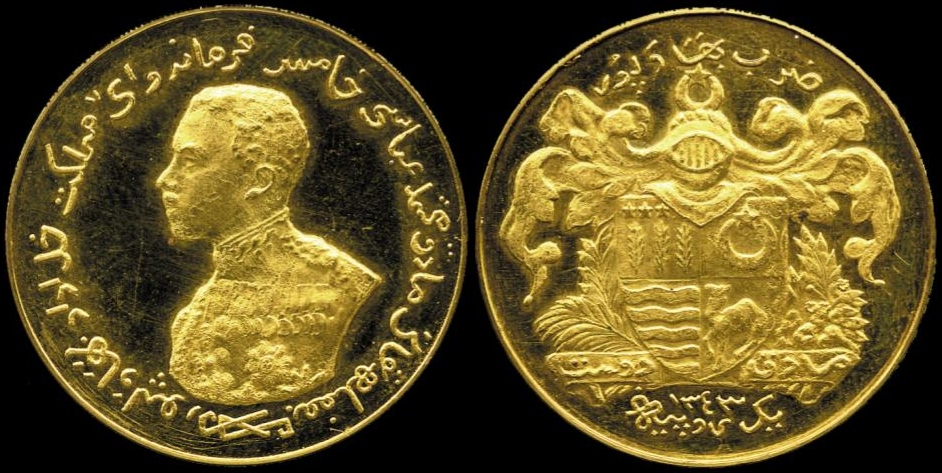
20th century onwards, Sadeq Muhammad Khan V was the Nawab and later Emir of Bahawalpur State from 1907 to 1966. He became the Nawab on the death of his father, when he was only three years old. In 1955 he signed an agreement with the Governor-General of Pakistan, Malik Ghulam Muhammad, under which Bahawalpur became part of the province of West Pakistan, with effect from 14 October 1955, and the Ameer received a yearly privy purse of 32 lakhs of rupees, keeping his titles. Other members of the present day form of the royal family include: HH Nawab Brig. Muhammad Abbas Khan Abbasi (Last Nawab of Bahawalpur, former Governor of Punjab); Nawab Salahuddin Ahmed Abbasi (Urdu: نواب صلاح الدین عباسی) who is a member of parliament in Pakistan. He is also the grandson of Sadeq Mohammad Khan V, who was the last ruling Nawab of the Princely State Bahawalpur. Prince Muhammad Bahawal (who studied at Aitchison College in Lahore, and graduated from King's College London with a degree in International Political Economy and joined PTI), Prince Falahuddin Abbasi (who died in London in April 2016 from cancer), Begum of Bahawalpur, Princess Aiysha Yasmien Abbasi and Princess Safia Nausheen Abbasi.
| Nawab Amir of Bahawalpur | Portrait | Tenure | After Formation of Princely State | State Abolished | |||||||
|---|---|---|---|---|---|---|---|---|---|---|---|
| Muhammad Bahadur Khan | 1689 – 1702 | ||||||||||
| Muhammad Mubarak Khan I | 1702 – 1723 | ||||||||||
| Sadeq Muhammad Khan I | 1723 – 1743 | ||||||||||
| Muhammad Bahawal Khan I | [[File:Stamp of Bahawalpur - 1947 - Colnect 299923 - Amir Muhammad Bahawal Khan I Abbasi.jpeg | 181x181px]] | 1743 – 1749 | ||||||||
| Muhammad Mubarak Khan II | 1749 – 1772 | ||||||||||
| Muhammad Bahawal Khan II | 1772 – 1809 | ||||||||||
| Sadeq Muhammad Khan II | 1809 – 1827 | ||||||||||
| Muhammad Bahawal Khan III | [[File:Nawab Mohammad Bahawal Khan of Daudputra.jpeg | 198x198px]] | 1827 – 1852 | ||||||||
| Sadeq Muhammad Khan III | 1852 – 1853 | ||||||||||
| Haji Fath Muhammad Khan | 1853 – 1858 | ||||||||||
| Rahim Yaar Khan Abbasi | 1858 – 1866 | ||||||||||
| Sadeq Mohammad Khan IV | [[File:Sadiq IV-2.jpg | 210x210px]] | 1866 – 1899 | ||||||||
| Mohammad Bahawal Khan V | [[File:Bharatpore maharajah.jpg | 202x202px]] | 1899 – 1907 | ||||||||
| Sadeq Mohammad Khan V | [[File:Sadeq Mohammad Khan.jpg | 217x217px]] | 1907 – 1955 | ||||||||
| Sadeq Mohammad Khan V | [[File:Sadeq Mohammad Khan.jpg | 217x217px]] | 1955 – 1965 | ||||||||
| Abbas Khan Abbasi | 1965 – 1988 | ||||||||||
| Salahuddin Ahmed Abbasi | 1988 – present |
| Tenure | Prime Minister of Bahawalpur | |
|---|---|---|
| 1942 – 1947 | ||
| 1948 – 1952 | ||
| 1952 – 14 October 1955 | ||
| 14 October 1955 |
References
References
- "History of Bahawalpur State and its Culture".
- Gilmartin, David. (2020-04-14). "Blood and Water: The Indus River Basin in Modern History". University of California Press.
- (1838). "Treaty concluded between the East India Company, and Nawab Ruk-uddaulah of Bahawalpur (Original in Persian, with English translation)". Foreign Department, Government of India.
- "Imperial Gazetteer2 of India, Volume 6, page 197 -- Imperial Gazetteer of India -- Digital South Asia Library".
- Bhargava, R. P.. (1991). "The Chamber of Princes". Northern Book Centre.
- (2015-10-08). "State and Nation-Building in Pakistan: Beyond Islam and Security". Routledge.
- Punjab Government. (1908). "Punjab States Gazetteers. Volume XXXVI A. Bahawalpur State. With Maps 1904".
- (1881). "Census of India, 1881 Report on the Census of the Panjáb Taken on the 17th of February 1881, vol. I.".
- (1881). "Census of India, 1881 Report on the Census of the Panjáb Taken on the 17th of February 1881, vol. II.".
- (1881). "Census of India, 1881 Report on the Census of the Panjáb Taken on the 17th of February 1881, vol. III.".
- (1891). "The Punjab and its feudatories, part II--Imperial Tables and Supplementary Returns for the British Territory".
- (1901). "Census of India 1901. [Vol. 17A]. Imperial tables, I-VIII, X-XV, XVII and XVIII for the Punjab, with the native states under the political control of the Punjab Government, and for the North-west Frontier Province.".
- (1911). "Census of India 1911. Vol. 14, Punjab. Pt. 2, Tables.".
- Kaul, Harikishan. (1911). "Census Of India 1911 Punjab Vol XIV Part II".
- (1921). "Census of India 1921. Vol. 15, Punjab and Delhi. Pt. 2, Tables.".
- (1931). "Census of India 1931. Vol. 17, Punjab. Pt. 2, Tables.".
- (1941). "Census of India, 1941. Vol. 6, Punjab".
- (2011). "From Physiology and Chemistry to Biochemistry". Pearson Education India.
- (2005). "The Role of Islam in the Legal System of Pakistan". Brill.
- (2007-12-01). "Who Was Who". Oxford University Press.
- (2011-10-03). "Viruses and human brain tumors: cytomegalovirus enters the fray". Journal of Clinical Investigation.
- McKeith, Eimear. (2008). "Defining Space, Eimear McKeith, Original Print Gallery, Dublin, February – March 2008". Circa.
- (24 May 2018). "Prince Bahawal Abbas Khan Abbasi joins PTI".
- (2016-08-16). "Prince Bahawal graduates from King's College". The Nation.
- Correspondent, A. (2016-04-10). "Falahuddin Abbasi dies". Dawn.
- "UK National Archives".

This article was imported from Wikipedia and is available under the Creative Commons Attribution-ShareAlike 4.0 License. Content has been adapted to SurfDoc format. Original contributors can be found on the article history page.
Ask Mako anything about Bahawalpur (princely state) — get instant answers, deeper analysis, and related topics.
Research with MakoFree with your Surf account
Create a free account to save articles, ask Mako questions, and organize your research.
Sign up freeThis content may have been generated or modified by AI. CloudSurf Software LLC is not responsible for the accuracy, completeness, or reliability of AI-generated content. Always verify important information from primary sources.
Report