From Surf Wiki (app.surf) — the open knowledge base
Avogadro constant
Conversion constant for amount of substance

Conversion constant for amount of substance
| Field | Value | ||
|---|---|---|---|
| above | Avogadro constant | ||
| image | [[File:Amadeo Avogadro.png | 150px | upright=1]] |
| caption | Amedeo Avogadro | ||
| label1 | Symbol | ||
| data1 | *N* | ||
| label2 | Exact value | ||
| data2 |
In chemistry, the Avogadro constant, commonly denoted N, is a conversion constant or ratio between an amount of substance and the number of particles that it contains. The particles in question are any designated elementary entity, such as molecules, atoms, ions, or ion pairs. It is an SI defining constant with the exact value (reciprocal mole). | doi-access = free
The Avogadro constant is used as a proportionality factor to define the amount of substance n(X), in a sample of a substance X, in terms of the number of elementary entities N(X) in that sample: : n(\mathrm{X}) = \frac{N(\mathrm{X})}{N_{\mathrm{A}}}.
The Avogadro constant N is also the factor that converts the average mass m(X) of one particle of a substance to its molar mass M(X). That is, . Applying this equation to 12C with an atomic mass of exactly 12 Da and a molar mass of 12 g/mol yields (after rearrangement) the following relation for the Avogadro constant: = (g/Da) mol−1, making the Avogadro number N = g/Da. Historically, this was precisely true, but since the 2019 revision of the SI, the relation is now merely approximate, although equality may still be assumed with high accuracy.
The constant N also relates the molar volume (the volume per mole) of a substance to the average volume nominally occupied by one of its particles, when both are expressed in the same units of volume. For example, since the molar volume of water in ordinary conditions is about 18 mL/mol, the volume occupied by one molecule of water is about , or about (cubic nanometres). For a crystalline substance, it provides as similarly relationship between the volume of a crystal to that of its unit cell.
Definition
The Avogadro constant was historically derived from the old definition of the mole as the amount of substance in 12 grams of carbon-12 (12C). By this old definition, the numerical value of the Avogadro constant in mol−1 (the Avogadro number) was a physical constant that had to be determined experimentally.
The historical relationship of the Avogadro constant to the molar mass of carbon-12, M(12C), and its atomic mass, m(12C), can be expressed in the following equation: N_{\text{A}} = \frac{M(^{12}\text{C})}{m(^{12}\text{C})} = \frac{12\text{ g/mol}}{12\text{ Da}} = \frac{\text{g/mol}}{\text{Da}} = (\text{g/Da})\text{ mol}^{-1}. Thus, N, the numerical value of N when expressed in mol, was equal to the number of daltons in a gram (g/Da), where the dalton is defined as of the mass of a 12C atom.
The redefinition of the mole in 2019, as being the amount of substance consisting of exactly elementary entities, means that the mass of 1 mole of a substance is now exactly the product of the Avogadro number and the average mass of one of the entities involved. The dalton, however, is still defined as of the mass of a 12C atom, which must be determined experimentally and is known only with finite accuracy. Thus, prior experiments that aimed to determine the numerical value of the Avogadro constant when expressed in reciprocal moles—i.e. the Avogadro number (now numerically fixed)—are re-interpreted as measurements of the numerical value in grams of the dalton.
By the old definition of mole, the numerical value of the mass of one mole of a substance expressed in grams (i.e., its molar mass in g/mol or kg/kmol), was precisely equal to the average mass of one particle expressed in daltons. With the new definition, this numerical equivalence is no longer exact, as it is affected by the uncertainty in the value of the gram-to-dalton (g/Da) mass-unit ratio. However, it may still be assumed for all practical purposes. For example, the average mass of one molecule of water is about 18.0153 daltons, and an amount of one mole of water has a corresponding macroscopic mass of about 18.0153 grams. Also, the Avogadro number is the approximate number of nucleons (protons and neutrons) in one gram of ordinary matter.
An amount of substance consisting of just a single elementary entity might be thought of as an "elementary amount", analogous to the elementary charge, . Letting denote this elementary amount, then . With the mole defined such that /mol, this can be rearranged as . Thus, , the reciprocal of the Avogadro constant. The fundamental definition of the Avogadro constant itself is therefore one per elementary amount (), independent of any macroscopic base unit chosen for the physical quantity. (Since there is an aggregate of an Avogadro number of elementary entities in one mole, the Avogadro constant can also be expressed (in terms of the mole) as an Avogadro number per mole—but this is not its "definition".) The Avogadro constant, a well-defined quantity value with dimension N, independent of the mole, is therefore a bona fide defining constant for the 2019 redefinition of the mole.
Introducing in place of , means that —amount of substance is an aggregate of elementary entities—which is easier to comprehend than "reciprocal Avogadro constants". Also the molar mass is then —the entity mass per entity, which is self-evident.
In older literature, the Avogadro number was also denoted N, although that conflicts with the symbol for number of particles in statistical mechanics.
History
Origin of the concept
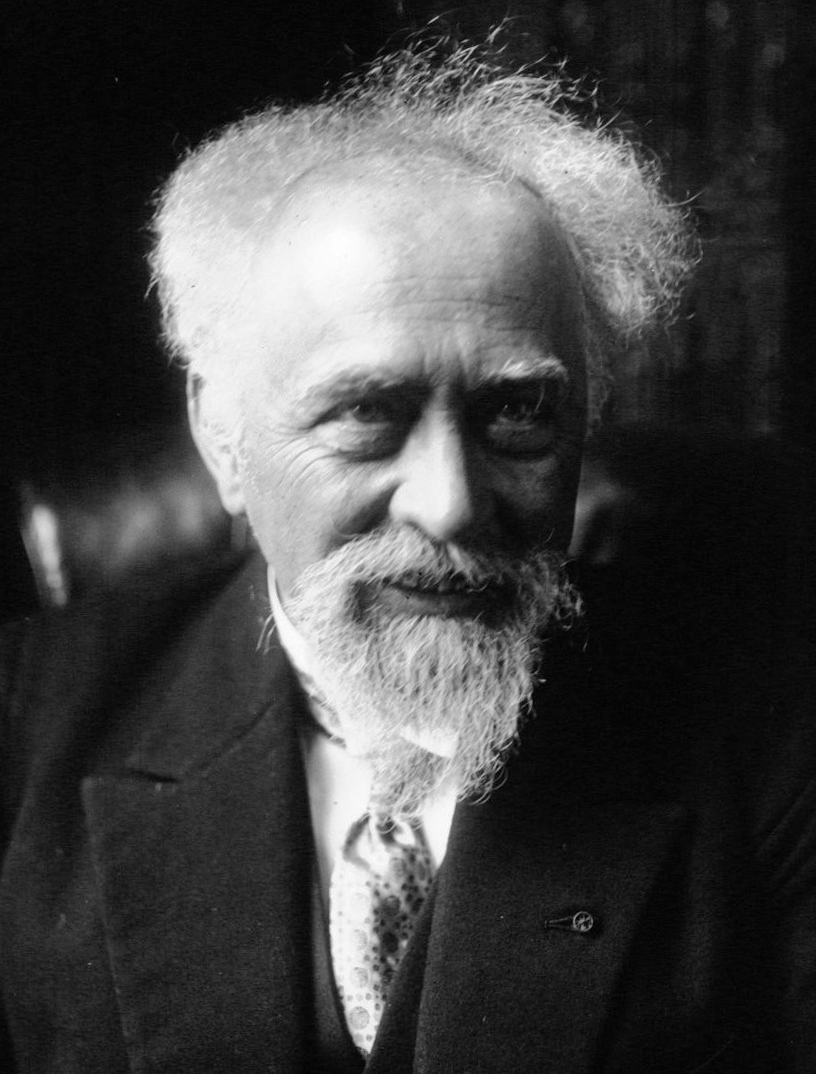
The Avogadro constant is named after the Italian scientist Amedeo Avogadro (1776–1856), who, in 1811, first proposed that the volume of a gas (at a given pressure and temperature) is proportional to the number of atoms or molecules regardless of the nature of the gas.
Avogadro's hypothesis was popularized four years after his death by Stanislao Cannizzaro, who advocated Avogadro's work at the Karlsruhe Congress in 1860.
The name Avogadro's number was coined in 1909 by the physicist Jean Perrin, who defined it as the number of molecules in exactly 32 grams of oxygen gas. This definition numerically equates the mass of a mole of a substance, in grams, to the mass of one molecule relative to the mass of a hydrogen atom. Because of the law of definite proportions, a hydrogen atom was the natural unit of atomic mass and was assumed to be of the atomic mass of oxygen.
First measurements
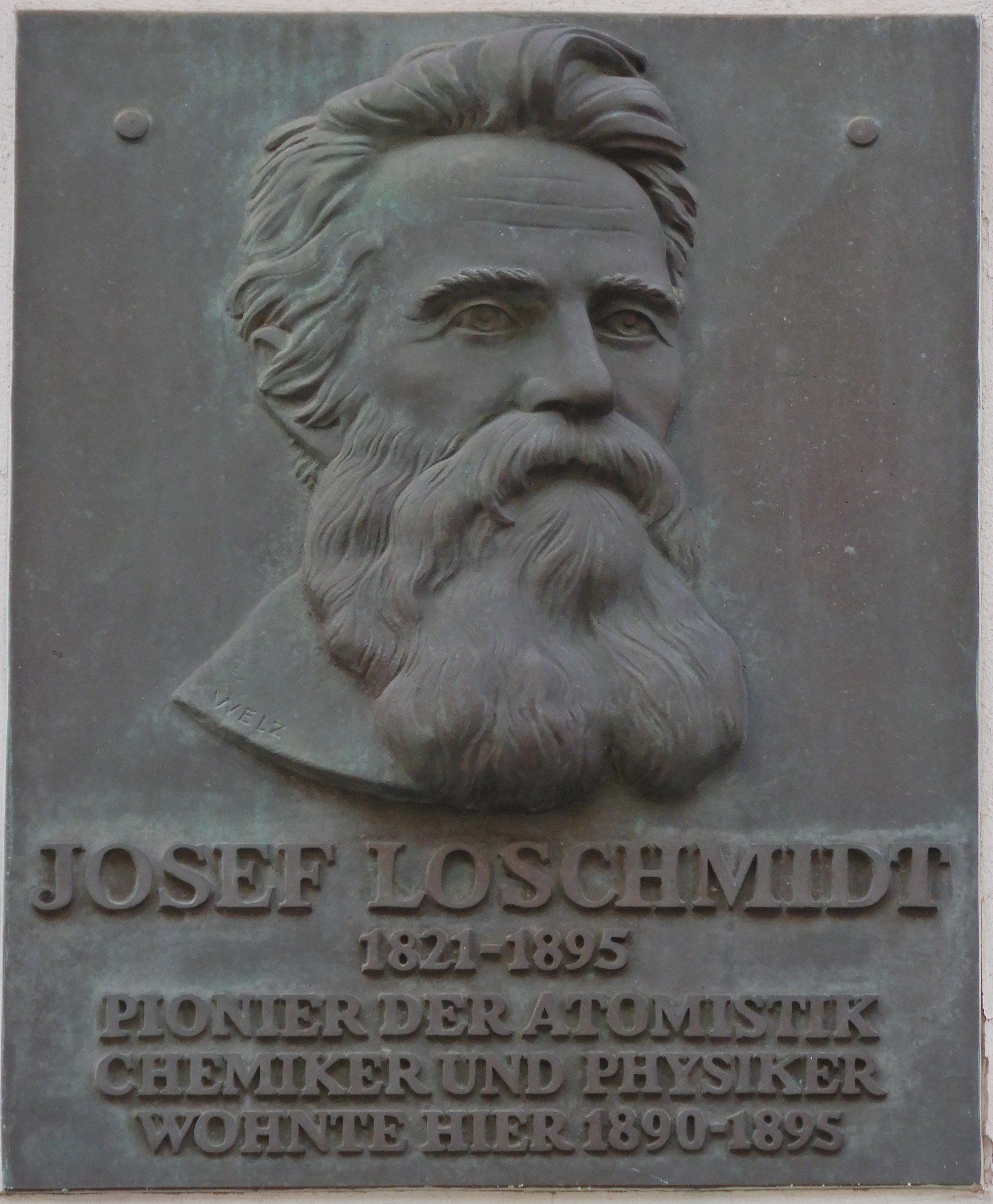
The value of Avogadro's number (not yet known by that name) was first obtained indirectly by Josef Loschmidt in 1865, by estimating the number of particles in a given volume of gas. This value, the number density n of particles in an ideal gas, is now called the Loschmidt constant in his honor, and is related to the Avogadro constant, N, by : n_0 = \frac{p_0N_{\rm A}}{R,T_0}, where p is the pressure, R is the gas constant, and T is the absolute temperature. Because of this work, the symbol L is sometimes used for the Avogadro constant, and, in German literature, that name may be used for both constants, distinguished only by the units of measurement. (However, N should not be confused with the entirely different Loschmidt constant in English-language literature.)
Perrin himself determined the Avogadro number, which he called "Avogadro's constant" (constante d'Avogadro), by several different experimental methods. He was awarded the 1926 Nobel Prize in Physics, largely for this work.
The electric charge per mole of electrons is a constant called the Faraday constant and has been known since 1834, when Michael Faraday published his works on electrolysis. In 1910, Robert Millikan with the help of Harvey Fletcher obtained the first measurement of the charge on an electron. Dividing the charge on a mole of electrons by the charge on a single electron provided a more accurate estimate of the Avogadro number.
X-ray crystallography
X-ray crystallography uses the diffraction of X-rays by a crystal to accurately measure the distances between layers in its lattice, from which the volume occupied by each atom can be determined. The Avogadro Project used this technique to measure the unit cell dimensions of extremely pure single-crystal spheres of silicon-28, with the goal of a more accurate silicon-based definition of the Avogadro constant.
SI definition of 1971
In 1971, in its 14th conference, the International Bureau of Weights and Measures (BIPM) decided to regard the amount of substance as an independent dimension of measurement, with the mole as its base unit in the International System of Units (SI). Specifically, the mole was defined as the amount of a substance that contains as many elementary entities as there are atoms in 12 grams (0.012 kilograms) of carbon-12 (12C). Thus, in particular, an amount of one mole of carbon 12 had a corresponding mass that was exactly 12 grams of that element.
By this definition, one mole of any substance contained exactly as many elementary entities as one mole of any other substance. However, this number N was a physical constant that had to be experimentally determined since it depended on the mass (in grams) of one atom of 12C, and therefore, it was known only to a limited number of decimal digits. The common rule of thumb that "one gram of matter contains N nucleons" was exact for carbon-12, but slightly inexact for other elements and isotopes.
In the same conference, the BIPM also named N (the factor that related the amount of a substance to the corresponding number of particles) the "Avogadro constant". However, the term "Avogadro number" continued to be used, especially in introductory works. As a consequence of this definition, N was not a pure number, but had the quantity dimension of reciprocal of amount of substance (N−1).
SI redefinition of 2019
Main article: 2019 revision of the SI
Before 2019, the mole was defined by the amount of substance in exactly 12 grams of carbon-12. Effective 20 May 2019, the BIPM defined the Avogadro constant N as the exact value , thus redefining the mole as the amount of a substance having exactly constituent particles of that substance. One consequence of this change is that the mass of a mole of 12C atoms is no longer exactly 0.012 kg. On the other hand, the dalton, Da ( unified atomic mass unit, u), remains unchanged as of the mass of 12C. Thus, the molar mass constant remains very close to but no longer exactly equal to 1 g/mol, although the difference ( in relative terms for the CODATA 2022 recommended value) is insignificant for all practical purposes.
Connection to other constants
The Avogadro constant N is related to other physical constants and properties.
- It relates the molar gas constant R and the Boltzmann constant k, which in the SI is defined to be exactly :
- :
- It relates the Faraday constant F and the elementary charge e, which in the SI is defined as exactly :
- :
- It relates the molar mass constant M and the atomic mass constant m currently
- :
References
References
- (June 2016). "Stanislao Cannizzaro {{!}} Science History Institute".
- (1997). "The reflection of X-rays by crystals". Proceedings of the Royal Society of London. Series A, Containing Papers of a Mathematical and Physical Character.
- BRAGG, W.L.. (1966). "The Diffraction of Short Electromagnetic Waves by a Crystal**Proceedings of the Cambridge Philosophical Society, 17, 43–57 (1913). Communicated by Professor Sir J. J. Thomson. Read 11 November 1912.". Elsevier.
- (2017-10-01). "Determination of the Avogadro constant by the XRCD method using a 28 Si-enriched sphere". Metrologia.
- David B. Newell and Eite Tiesinga (2019): [https://www.nist.gov/si-redefinition/meet-constants ''The International System of Units (SI)'']. NIST Special Publication 330, National Institute of Standards and Technology. {{doi. 10.6028/nist.sp.330-2019 {{s2cid. 242934226
- Perrin, Jean. (1909). "Mouvement brownien et réalité moléculaire". [[Annales de Chimie et de Physique]].
- Loschmidt, J.. (1865). "Zur Grösse der Luftmoleküle". Sitzungsberichte der Kaiserlichen Akademie der Wissenschaften. Mathematisch-Naturwissenschaftliche Classe. Wien.
- {{SIbrochure8th
- Bureau International des Poids et Mesures (2019): ''[https://www.bipm.org/utils/common/pdf/si-brochure/SI-Brochure-9-EN.pdf The International System of Units (SI)]'', 9th edition, English version, p. 134. Available at the [https://www.bipm.org/en/publications/si-brochure/ BIPM website].
- [https://www.feynmanlectures.caltech.edu/II_08.html#Ch8-S3-p4 Richard P. Feynman: ''The Feynman Lectures on Physics'', Volume II]
- Marvin Yelles (1971): ''McGraw-Hill Encyclopedia of Science and Technology'', Vol. 9, 3rd ed.; 707 pages. {{isbn. 978-0070797987
- 978-0486318585
- link. (2020-09-23 '' Available at the [https://www.bipm.org/ BIPM website].)
- H. P. Lehmann, X. Fuentes-Arderiu, and L. F. Bertello (1996): "Glossary of terms in quantities and units in Clinical Chemistry (IUPAC-IFCC Recommendations 1996)"; p. 963, item "[http://goldbook.iupac.org/terms/view/A00543 Avogadro constant]". ''Pure and Applied Chemistry'', vol. 68, iss. 4, pp. 957–1000. {{doi. 10.1351/pac199668040957
- (1992). "Atomic Weight: The Name, Its History, Definition and Units". [[Pure and Applied Chemistry]].
- Okun, Lev B.. (1985). "Particle Physics: The Quest for the Substance of Substance". OPA Ltd..
- 978-0486134659
- Avogadro, Amedeo. (1811). "Essai d'une maniere de determiner les masses relatives des molecules elementaires des corps, et les proportions selon lesquelles elles entrent dans ces combinaisons". Journal de Physique.
- [[Carl Wilhelm Oseen. Oseen, C.W.]] (December 10, 1926). ''[http://nobelprize.org/nobel_prizes/physics/laureates/1926/press.html Presentation Speech for the 1926 Nobel Prize in Physics]''.
- Virgo, S.E.. (1933). "Loschmidt's Number". Science Progress.
- (1974): ''[https://physics.nist.gov/cuu/Constants/historical1.html Introduction to the constants for nonexperts, 1900–1920]'' From the ''Encyclopaedia Britannica'', 15th ed.; reproduced by [[NIST]]. Accessed on 2019-07-03.
- Kotz, John C.. (2008). "Chemistry and Chemical Reactivity". Brooks/Cole.
- International Bureau for Weights and Measures (2017): ''[https://www.bipm.org/utils/en/pdf/CIPM/CIPM2017-EN.pdf Proceedings of the 106th meeting of the International Committee for Weights and Measures (CIPM), 16-17 and 20 October 2017]'', p. 23. Available at the [https://www.bipm.org/en/committees/cipm/meeting/106.html BIPM website] {{Webarchive. link. (2021-02-21 .)
- Pavese, Franco. (January 2018). "A possible draft of the CGPM Resolution for the revised SI, compared with the CCU last draft of the 9th SI Brochure". Measurement.
- (2014). "The IUPAC Compendium of Chemical Terminology".
- Michael Mosher, Paul Kelter (2023): ''An Introduction to Chemistry'', 2nd edition. Springer Nature. {{isbn. 9783030902674, 1067 pages
This article was imported from Wikipedia and is available under the Creative Commons Attribution-ShareAlike 4.0 License. Content has been adapted to SurfDoc format. Original contributors can be found on the article history page.
Ask Mako anything about Avogadro constant — get instant answers, deeper analysis, and related topics.
Research with MakoFree with your Surf account
Create a free account to save articles, ask Mako questions, and organize your research.
Sign up freeThis content may have been generated or modified by AI. CloudSurf Software LLC is not responsible for the accuracy, completeness, or reliability of AI-generated content. Always verify important information from primary sources.
Report