From Surf Wiki (app.surf) — the open knowledge base
Australian National University
National research university in Canberra, Australian Capital Territory

National research university in Canberra, Australian Capital Territory
| Field | Value | |
|---|---|---|
| name | The Australian National University | |
| image_upright | .7 | |
| caption | Coat of arms | |
| motto | ||
| motto_lang | lat | |
| mottoeng | "First to learn the nature of things" | |
| established | ||
| type | Public national research university | |
| academic_affiliation | {{hlist | |
| endowment | 346.25 [million](1-000-000) (2022) | |
| budget | 1.36 [billion](1-000-000-000) (2022) | |
| chancellor | Julie Bishop | |
| vice_chancellor | Rebekah Brown (interim) | |
| undergrad | 10,252 (2021) | |
| postgrad | 7,128 (2021) | |
| doctoral | ||
| students | 17,380 (2021) | |
| other | ||
| academic_staff | ||
| administrative_staff | ||
| colours | ANU Gold | |
| sporting_affiliations | ||
| sports_nickname | Owls | |
| mascot | Owl | |
| city | Canberra | |
| state | Australian Capital Territory | |
| postalcode | 2600 | |
| country | Australia | |
| campus | Urban, parkland and regional | |
| campus_size | 145 ha | |
| coordinates | ||
| logo_size | 200px | |
| website | ||
| logo | ANU logo.svg | |
| image_name | Australian National University coat of arms.svg |
|Group of Eight |IARU |APRU |AURA |UA
The Australian National University (ANU) is a public research university and member of the Group of Eight, located in Canberra, the capital of Australia. Its main campus in Acton encompasses seven teaching and research colleges, in addition to several national academies and institutes.
Established in 1946, ANU is the only university to have been created by the Parliament of Australia. It traces its origins to Canberra University College, which was established in 1929 and was integrated into ANU in 1960. ANU enrols 13,329 undergraduate and 11,021 postgraduate students and employs 4,517 staff. The university's endowment stood at A$1.8 billion as of 2018.
ANU counts six Nobel laureates and 49 Rhodes scholars among its faculty and alumni. The university has educated the incumbent Governor-General of Australia, two former prime ministers, and more than a dozen current heads of government departments of Australia. The latest releases of ANU's scholarly publications are held through ANU Press online. The entry requirements of many programmes are selective with high ATAR scores requirements. ANU has consistently been ranked as one of the best universities in Australia, ranking Number 1 in multiple university rankings as of 2023.
History
{{anchor|Australian Forestry School}}Post-war origins
Calls for the establishment of a national university in Australia began as early as 1900. After the location of the nation's capital, Canberra, was determined in 1908, land was set aside for the ANU at the foot of Black Mountain in the city designs by Walter Burley Griffin. Establishment of the university was disrupted by World War II but resumed with the creation of the Department of Post-War Reconstruction in 1942, ultimately leading to the passage of the Australian National University Act 1946 by the Chifley government on 1 August 1946.

A group of eminent Australian scholars returned from overseas to join the university, including Sir Howard Florey (co-developer of medicinal penicillin), Sir Mark Oliphant (a nuclear physicist who worked on the Manhattan Project), and Sir Keith Hancock (the Chichele Professor of Economic History at Oxford). The group also included a New Zealander, Sir Raymond Firth (a professor of anthropology at LSE), who had earlier worked in Australia for some years. Economist Sir Douglas Copland was appointed as ANU's first Vice-Chancellor and former Prime Minister Stanley Bruce served as the first Chancellor. ANU was originally organised into four centres—the Research Schools of Physical Sciences, Social Sciences and Pacific Studies and the John Curtin School of Medical Research.
The first residents' hall, University House, was opened in 1954 for faculty members and postgraduate students. Mount Stromlo Observatory, established by the federal government in 1924, became part of ANU in 1957. The first locations of the ANU Library, the Menzies and Chifley buildings, opened in 1963. The Australian Forestry School, located in Canberra since 1927, was amalgamated by ANU in 1965.
{{anchor|Canberra University College}} Canberra University College
Canberra University College (CUC) was the first institution of higher education in the national capital, having been established in 1929 and enrolling its first undergraduate pupils in 1930. Its founding was led by Sir Robert Garran, one of the drafters of the Australian Constitution and the first Solicitor-General of Australia. CUC was affiliated with the University of Melbourne and its degrees were granted by that university. Academic leaders at CUC included historian Manning Clark, political scientist Finlay Crisp, poet A. D. Hope and economist Heinz Arndt.
In 1960, CUC was integrated into ANU as the School of General Studies, initially with faculties in arts, economics, law and science. Faculties in Oriental studies and engineering were introduced later. Bruce Hall, the first residential college for undergraduates, opened in 1961.
Modern era
The Canberra School of Music and the Canberra School of Art combined in 1988 to form the Canberra Institute of the Arts, and amalgamated with the university as the ANU Institute of the Arts in 1992.
ANU established its Medical School in 2002, after obtaining federal government approval in 2000.
On 18 January 2003, the Canberra bushfires largely destroyed the Mount Stromlo Observatory. ANU astronomers now conduct research from the Siding Spring Observatory, which contains 10 telescopes including the Anglo-Australian Telescope.
In February 2013, financial entrepreneur and ANU graduate Graham Tuckwell made the largest university donation in Australian history by giving $50 million to fund an undergraduate scholarship program at ANU.
ANU is well known for its history of student activism and, in recent years, its fossil fuel divestment campaign, which is one of the longest-running and most successful in the country. The decision of the ANU Council to divest from two fossil fuel companies in 2014 was criticised by ministers in the Abbott government, but defended by Vice Chancellor Ian Young, who noted: ANU holds investments in major fossil fuel companies.
A survey conducted by the Australian Human Rights Commission in 2017 found that the ANU had the second-highest incidence of sexual assault and sexual harassment. 3.5 per cent of respondents from the ANU reported being sexually assaulted in 2016. Vice Chancellor Brian Schmidt apologised to victims of sexual assault and harassment.
The ANU had funding and staff cuts in the School of Music in 2011–15 and in the School of Culture, History and Language in 2016. However, there is a range of global (governmental) endowments available for Arts and Social Sciences, designated only for ANU. Some courses are now delivered online.
ANU has exchange agreements in place for its students with many foreign universities, most notably in the Asia-Pacific region, including the National University of Singapore, the University of Tokyo, the University of Hong Kong, Peking University, Tsinghua University and Seoul National University. In other regions, notable universities include Université Paris Sciences et Lettres the George Washington University, the University of California, the University of Texas, the University of Toronto in North America and Imperial College London, King's College London, Sciences Po, ETH Zürich, Bocconi University, the University of Copenhagen and Trinity College Dublin in Europe.
In 2017, Chinese hackers infiltrated the computers of Australian National University, potentially compromising national security research conducted at the university.
Campuses and buildings
.jpg)


The main campus of ANU extends across the Canberra suburb of Acton, which consists of 358 acre of mostly parkland with university buildings landscaped within. ANU is roughly bisected by Sullivans Creek, part of the Murray–Darling basin, and is bordered by the native bushland of Black Mountain, Lake Burley Griffin, the suburb of Turner and the Canberra central business district. The Acton campus is also home to three sports fields (South Oval, Fellows Oval and Willows Oval), six tennis courts (home to the ANU Tennis Club), two gymnasiums and a pool. Many university sites are of historical significance dating from the establishment of the national capital, with over 40 buildings recognised by the Commonwealth Heritage List and several others on local lists.
With over 10,000 trees on its campus, ANU won an International Sustainable Campus Network Award in 2009 and was ranked the 2nd greenest university campus in Australia in 2011.
Four of Australia's five learned societies are based at ANU—the Australian Academy of Science, the Australian Academy of the Humanities, the Academy of the Social Sciences in Australia and the Australian Academy of Law. The Australian National Centre for the Public Awareness of Science and the National Film and Sound Archive are also located at ANU, while the National Museum of Australia and CSIRO are situated next to the campus.
ANU occupies additional locations including Mount Stromlo Observatory on the outskirts of Canberra, Siding Spring Observatory near Coonabarabran, a campus at Kioloa on the South Coast of New South Wales and a research unit in Darwin.
Drill Hall Gallery
The Drill Hall Gallery is housed a drill hall dating from the 1940s, for use in training soldiers for the Second World War, and as base for 3rd Battalion, Werriwa Regiment. The interior was remodelled to create an art gallery in 1984, and in 2004 the building was heritage-listed. Temporary exhibitions of the national collection were held in the hall while the National Gallery of Australia was being built. ANU took over the hall in 1992 to exhibit its own collection of artworks, and also as a venue for temporary exhibitions.
There are four separate exhibition spaces, which provide the venues not only for exhibitions developed by or in collaboration with the university, but also to accompany major conferences and public events. The venue hosts both national and international exhibitions. Sidney Nolan's panorama, Riverbend, which comprises nine panels, ís on permanent display at the Drill Hall Gallery.
Governance and structure
University Council
ANU is governed by a 15-member Council, whose members include the Chancellor and Vice-Chancellor. Gareth Evans, a former Foreign Minister of Australia, was ANU Chancellor from 2010 to December 2019 and Brian Schmidt, an astrophysicist and Nobel Laureate, served as Vice-Chancellor from 1 January 2016 to 1 January 2024. Evans was succeeded as Chancellor by a fellow former Foreign Minister, Julie Bishop, in January 2020. Schmidt was succeeded as Vice-Chancellor by cultural anthropologist and Distinguished Professor Genevieve Bell in January 2024.
Constituent colleges
Main article: Academic structure of the Australian National University
ANU was reorganised in 2006 to create seven Colleges, each of which leads both teaching and research. Additional restructuring occurred in 2017, resulting in changes to the names and schools within the Colleges.
Arts, Humanities and Social Sciences
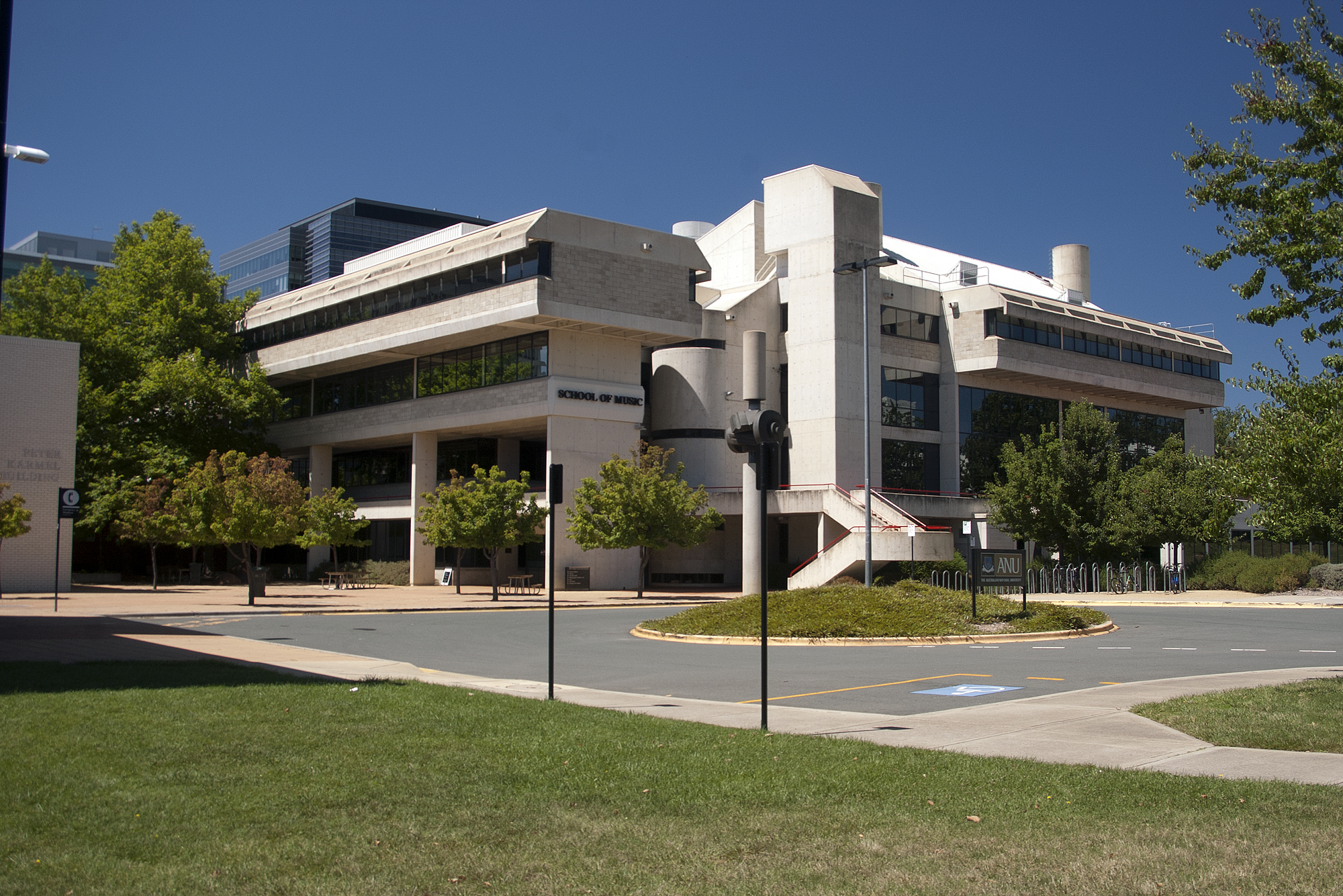
The ANU College of Arts and Social Sciences is divided into the Research School of Social Sciences (RSSS) and Research School of Humanities and the Arts (RSHA). Within RSSS there are schools and centres dedicated to History, Philosophy, Sociology, Politics & International Relations, Demography, Arab and Islamic Studies, and European Studies, as well as the Australian National Centre for Latin and American Studies, Centre for Aboriginal Economic Policy Research, and the ANU Centre for Social Research and Methods.
RSHA contains schools of Archaeology and Anthropology; Art & Design; and Literature, Languages and Linguistics, the latter of which include departments focusing on Linguistics & Applied Linguistics; English, Screen, Drama & Gender Studies; Languages & Cultures, and Classical Studies. RSHA also houses the ANU School of Music. In 2017, ANU ranked 6th in the world for politics, 8th in the world for Social Policy and Administration and 11th in the world for development studies.
The college is also home to the Australian Studies Institute.
The college's School of Philosophy houses the ANU Centre for Consciousness, ANU Centre for Philosophy of the Sciences, and ANU Centre for Moral, Social and Political Theory, an organisation whose purpose is to "become a world-leading forum for exposition and analysis of the evolution, structure, and implications of our moral, social and political life." Its president is Nicholas Southwood and key people include Seth Lazar, Geoff Brennan, Bob Goodin, Frank Jackson, Philip Pettit and Michael Smith.
Asia and the Pacific
The ANU College of Asia and the Pacific is a specialist centre of Asian and Pacific studies and languages, among the largest collections of experts in these fields of any university in the English-speaking world. The college is home to four academic schools: the ANU Crawford School of Public Policy, a research intensive public policy school; the School of Culture, History and Language, for studies of Asia-Pacific people and languages; the Coral Bell School of Asia Pacific Affairs, covering politics and international affairs of Asia and the Pacific; and the School of Regulation and Global Governance (RegNet, formerly the Regulatory Institutions Network), study of regulation and governance.
The college also houses the Australian Centre on China in the World, the Strategic and Defence Studies Centre, and the Council for Security Cooperation in the Asia Pacific, Australia. It has dedicated regional institutes for China, Indonesia, Japan, Korea, Malaysia, Mongolia, Myanmar, the Pacific, Southeast Asia and South Asia. The college hosts a series annual and biannual updates, on various regions in the Asia-Pacific. The Crawford School of Public Policy houses the Asia Pacific Arndt-Cohen Department of Economics, the Asia Pacific Network for Environmental Governance, the Australia-Japan Research Centre, The Centre for Applied Macroeconomic Analysis, the Centre for Nuclear Non-Proliferation and Disarmament, the East Asian Bureau of Economic Research, the Tax and Transfer Policy Institute, the ANU National Security College, the East Asia Forum publication and a number of other centres. The Crawford School of Public Policy also hosts offices and programs for the Australia and New Zealand School of Government. Many high performing Year in Asia program students gain the opportunity to travel to an Asian country of their choosing to study for one year specializing in one Asian language.
The college also has affiliation with Indiana University's Pan Asia Institute.
Business and Economics
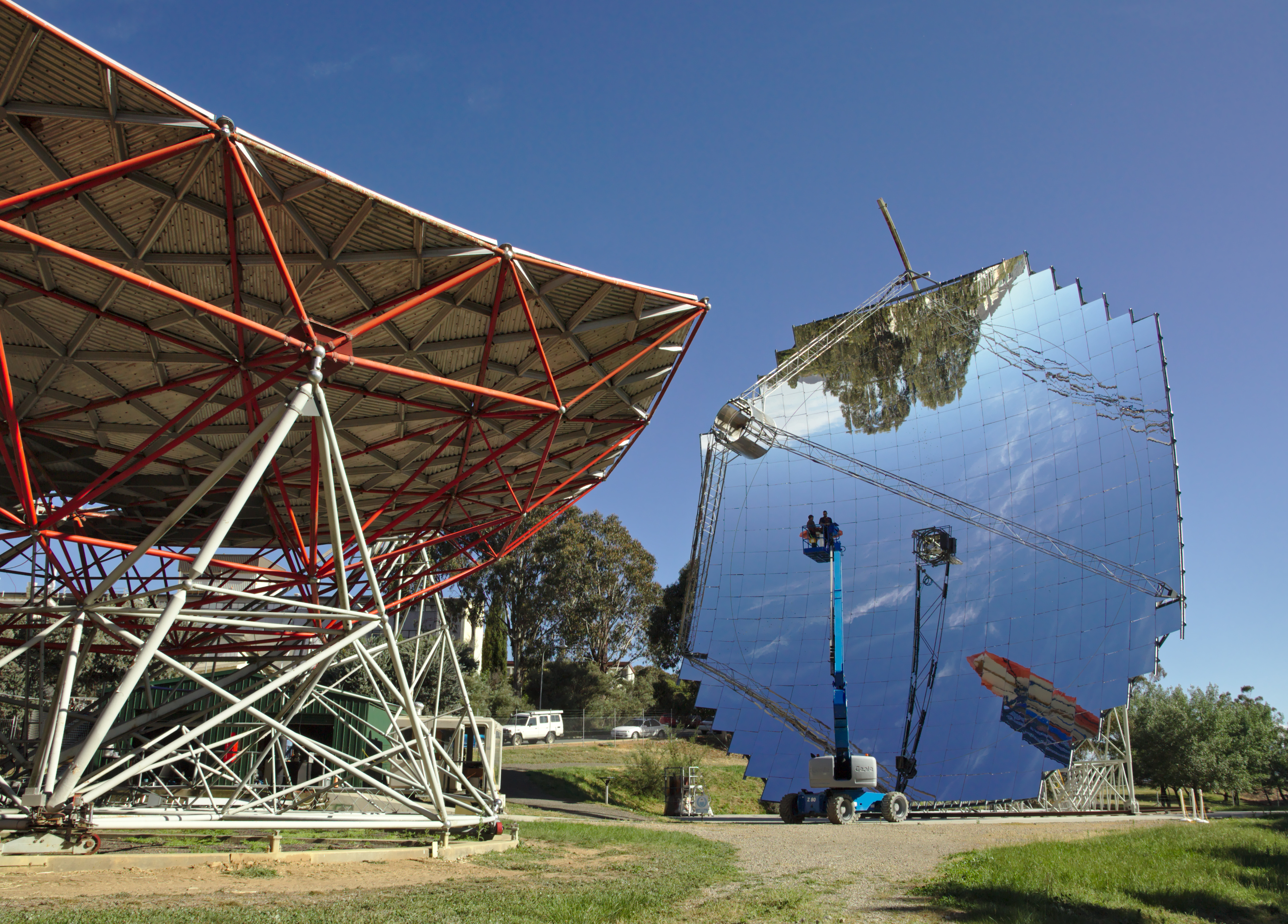
The ANU College of Business and Economics comprises four schools, which carry research and teaching in economics, finance, accounting, actuarial studies, statistics, marketing and management:
- Research School of Management
- Research School of Finance, Actuarial Studies and Statistics
- Research School of Accounting
- Research School of Economics
Dedicated research centres within these schools include the Social Policy Evaluation, Analysis and Research Centre; the Australian National Centre for Audit and Assurance Research; the ANU Centre for Economic History; the National Centre for Information Systems Research; and the ANU Centre for Economic Policy Research. The college is professionally accredited with the Institute of Chartered Accountants Australia, CPA Australia, the Australian Computer Society, the Actuaries Institute Australia, the Institute of Public Accountants, the Association of International Accountants, the Chartered Financial Analyst Institute and the Statistical Society of Australia Inc. It also has membership of the World Wide Web Consortium (W3C).
Systems and Society
Main article: ANU College of Systems and Society
The ANU College of Systems and Society brings together critical capabilities in understanding the modern interfaces between systems, technology, processes, the physical world, and the social world. The college comprises six academic units: the Australian National Centre for the Public Awareness of Science, Fenner School of Environment & Society, Mathematical Sciences Institute, School of Computing, School of Cybernetics, and School of Engineering. ANU is home to the National Computational Infrastructure National Facility and was a co-founder of NICTA, the chief information and communications technology research centre in Australia.
Research areas of expertise in the college include: Computing Foundations, Computational Science, Intelligent Systems, Data Science and Analytics, Software Innovation Institute, Cybernetics Education, Cybernetics Futures, Cybernetics Projects, Aerospace Engineering, Energy Engineering, Environmental Engineering, Information and Signals Processing, Mechatronics, Biodiversity and Conservation, Climate and Energy, Food soil water and agriculture, Forests and Fire, Indigenous people and the environment, Integrative methods and application, Urban systems and sustainability, Algebra and Topology, Analysis and Geometry, Applied and Nonlinear Analysis, Bioinformation Science, Computational Mathematics, Fusion plasma theory and modelling, Mathematical Physics, Stochastic analysis and risk modelling, Theoretical astrophysics, Public engagement and informal science, Public Policy and Science Advice, Responsible innovation and emerging technologies, Science media and culture, Theories and frameworks in science communication, and Topics in science communication.

Law, Governance and Policy
Main article: ANU College of Law, Governance and Policy
The ANU College of Law, Governance and Policy comprises the ANU Law School and ANU School of Legal Practice. The college covers legal research and teaching, with centres dedicated to commercial law, international law, public law and environmental law. In addition to numerous research programs, the college offers the professional LL.B. and J.D. degrees. It is the 7th oldest of Australia's 36 law schools and was ranked 2nd among Australian and 12th among world law schools by the 2018 QS Rankings. Students are given the chance to spend three weeks in Geneva concerning the institutional practice of International Law.
Science and Medicine
Main article: ANU College of Science and Medicine
The ANU College of Science and Medicine comprises the Research Schools of Astronomy & Astrophysics, Biology, Chemistry, Earth Sciences, and Physics. Under the direction of Mark Oliphant, nuclear physics was one of the university's most notable early research priorities, leading to the construction of a 500 megajoule homopolar generator and a 7.7 megaelectronvolts cyclotron in the 1950s. These devices were to be used as part of a 10.6 gigaelectronvolt synchrotron particle accelerator that was never completed, however they remained in use for other research purposes. ANU has been home to eight particle accelerators over the years and operates the 14UD and LINAS accelerators. Brian Schmidt (astrophysicist at Mount Stromlo Observatory) received the 2011 Nobel Prize for Physics for his work on the accelerating expansion of the universe.
The ANU College of Science & Medicine encompasses the John Curtin School of Medical Research (JCSMR), ANU Medical School, National Centre for Epidemiology and Population Health, and Research School of Psychology. JCSMR was established in 1948 as a result of the vision of Nobel laureate Howard Florey. Three further Nobel Prizes have been won as a result of research at JCSMR—in 1963 by John Eccles and in 1996 by Peter Doherty and Rolf M. Zinkernagel.
.jpg)
Finances and endowment
At the end of 2018, ANU recorded an endowment of A$1.8 billion.
Academic profile
ANU is a member of the Group of Eight, Association of Pacific Rim Universities, the International Alliance of Research Universities, UNESCO Chairs, U7 Alliance, Winter Institute. and Global Scholars Program.
ANU participates in the US Financial Direct Loan program. The RG Menzies Scholarship to Harvard University is awarded annually to at least one talented Australian who has gained admission to a Harvard graduate school. ANU and University of Melbourne are the only two Australian partner universities of Yale University's Fox Fellowship program. ANU has exchange partnership with Yale University, Brown University, MIT and Oxford University, and ANU has a research partnership with Harvard University.
Libraries and archives
Main article: Australian National University Library
The library of ANU originated in 1948 with the appointment of the first librarian, Arthur McDonald. The library holds over 2.5 million physical volumes distributed across six branches—the Chifley, Menzies, Hancock, Art & Music, and Law Libraries and the external Print Repository. Chifley and Hancock libraries are both accessible for ANU staff and students 24 hours a day.
|File: Chifley library at anu.JPG |Chifley Library |File: Menzies Library April 2018.jpg |Menzies Library |File: Hancock Library in July 2016.jpg |Hancock Library |File: ANU College of Law South Wing August 2013.jpg |Law Library contained within the ANU College of Law
Tuition, loans and financial aid
For international students starting in 2025, tuition fees range from to per academic year for award programs lasting at least one year. Domestic students may be offered a federally-subsidised Commonwealth Supported Place (CSP) which substantially decreases the student contribution amount billed to the student. The maximum student contribution amount limits that can be applied to CSP students are dependent on the field of study.
Since 2021, Commonwealth Supported Places have also been limited to 7 years of equivalent full-time study load (EFTSL), calculated in the form of Student Learning Entitlement (SLE). Students may accrue additional SLE under some circumstances (e.g. starting a separate one-year honours program) or every 10 years. Domestic students are also able to access the HECS-HELP student loans scheme offered by the federal government. These are indexed to the Consumer or Wage Price Index, whichever is lower, and repayments are voluntary unless the recipient passes an income threshold.
The university also offers several scholarships, which come in the form of bursaries or tuition fee remission.
Academic reputation
In the 2024 Aggregate Ranking of Top Universities, which measures aggregate performance across the QS, THE and ARWU rankings, the university attained a position of #57 (6th nationally). ; National publications In the Australian Financial Review Best Universities Ranking 2025, the university was ranked #5 amongst Australian universities.
; Global publications
In the 2026 Quacquarelli Symonds World University Rankings (published 2025), the university attained a tied position of #32 (4th nationally).
In the Times Higher Education World University Rankings 2026 (published 2025), the university attained a tied position of #73 (4th nationally).
In the 2025 Academic Ranking of World Universities, the university attained a position of #101–150 (tied 6–7th nationally).
In the 2025–2026 U.S. News & World Report Best Global Universities, the university attained a position of #86 (7th nationally).
In the CWTS Leiden Ranking 2024, the university attained a position of #238 (10th nationally).
Student outcomes
The Australian Government's QILT conducts national surveys documenting the student life cycle from enrolment through to employment. These surveys place more emphasis on criteria such as student experience, graduate outcomes and employer satisfaction than perceived reputation, research output and citation counts.
In the 2023 Employer Satisfaction Survey, graduates of the university had an overall employer satisfaction rate of 84.2%.
In the 2023 Graduate Outcomes Survey, graduates of the university had a full-time employment rate of 80.7% for undergraduates and 88.5% for postgraduates. The initial full-time salary was for undergraduates and for postgraduates.
In the 2023 Student Experience Survey, undergraduates at the university rated the quality of their entire educational experience at 79.4% meanwhile postgraduates rated their overall education experience at 72.5%.
Student life
Student associations
Australian National University Students' Association (ANUSA) is the students' union of the Australian National University and acts as a representative body for the undergraduate, postgraduate and research students. The Australian National University Union is another student association that manages catering, retail outlets and other amenities on behalf of all students.
Student media
''Woroni''

Woroni is a student publication at Australian National University. It was first published on 23 May 1947 under the title Student Notes: Canberra University College Students Association. On 14 February 1950, the name was changed to Woroni, which is derived from an Indigenous Australian word meaning "mouthpiece". Woroni is published bi-monthly in full colour magazine format, and features local news and opinion.
The magazine was originally published by the school's student association. An independent student organization called ANU Student Media was incorporated in October 2010, and has operated Woroni ever since. In 2012, an online radio station called Woroni Radio was launched, and a video production arm called Woroni TV was started in 2017.
This newspaper has been digitised as part of the Australian Newspapers Digitisation Program of the National Library of Australia. As of January 2015, issues dating from 1950 to 2007 are available via Trove. Digital versions of works published since 2011 are uploaded and available in colour on electronic publishing platform issuu.
''ANU Observer''
ANU Observer is another of the Australian National University's student news publications. Founded in 2017, ANU Observer is an online news site that covers breaking campus news, student life, student politics, arts and culture, sports, university policy and more. ANU Observer is an ANU student association, meaning all students are members by default (and can attend and vote at General Meetings.) Observer also produces a weekly podcast called Our Experts Have Observed, which can be accessed via Spotify or Apple Podcasts.
Residential halls and colleges
Main article: Residential colleges of the Australian National University
Eleven on-campus residential halls are affiliated with ANU—Bruce Hall, Burgmann College, Burton & Garran Hall, Fenner Hall, John XXIII College, Ursula Hall, Wamburun Hall, Wright Hall, Yukeembruk Village, Graduate House and Toad Hall. Together these residence accommodate for undergraduate and postgraduate students. Four UniLodge residences are also available to ANU students, situated just off campus—Davey Lodge, Kinloch Lodge, Warrumbul Lodge and Lena Karmel Lodge. In 2010, the non-residential Griffin Hall was established for students living off-campus. Another off-campus student accommodation was launched by UniGardens Pty, University Gardens located in Belconnen. Bruce Hall opened in 1961, and was the first undergraduate hall of residence at the university and the first mixed-gender undergraduate residence in Australia.
In 2014, 2019 and 2020 there were major protests organised by student leaders across all of the ANU's halls of residence against steep rent hikes, neglect of pastoral care support, and repeated failures to address issues relating to sexual assault and sexual harassment. Though supported by a majority of students living on residence, the ANU's response to past protests has been mixed, with many recommendations and requests for student consultations ignored. The outcome of the 2020 protests revolve around demands for stronger SASH policy, accountability surrounding tariff rises, and commitments to adequate pastoral care; the outcome of these protests is as yet unknown. Protests have been held since on the issue, with one high-profile one occurring on the same day as the annual Open Day in 2024. File:Kinloch Lodge January 2013.jpg|Kinloch Lodge File:Lena Carmal Lodge June 2013.jpeg|Lena Karmel Lodge File:UniLodge ANU - Davey Lodge in Civic.jpg|Davey Lodge File:AUS Canberra, Central, Australian National University 044.jpg|Wright Hall
Notable people
Main article: List of Australian National University people
Notable alumni
Politicians and public servants
- Mari Pangestu, the former Minister of Trade in Indonesia
- Glenys Beauchamp, Department of Industry secretary
- Kim Beazley Sr.
- Don Brash, former governor of the Reserve Bank of New Zealand
- Stephen Conroy
- Gordon de Brouwer, Department of environment secretary
- Craig Emerson
- Stephen Gageler, High Court of Australia judge
- Peter Garrett, Australian musician and former politician
- Gary Gray, politician
- Paul Grimes, Department of Agriculture secretary
- Jane Halton, Department of Finance secretary
- Bob Hawke, former Prime Minister of Australia
- Patricia Hewitt, former British Secretary of State for Health
- Chris Higgins, Treasury secretary
- Martin Indyk, former US ambassador to Israel
- Michael Keenan, politician
- Catherine King, politician
- Ilaïsaane Lauouvéa, elected member of the Congress of New Caledonia
- Renée Leon, Department of employment secretary
- Gordon Darcy Lilo, former Prime Minister of Solomon Islands
- Joe Ludwig
- Nick Minchin
- Chris Moraitis, Attorney-General's secretary
- Marty Natalegawa, former Indonesian foreign minister
- Geoffrey Nettle, High Court of Australia judge
- Barry O'Farrell
- Annastacia Palaszczuk
- John Pascoe, Chief Federal Magistrate
- Martin Parkinson, Prime Minister & Cabinet secretary
- Lisa Paul, Department of Education secretary
- Finn Pratt, Department of Social Services secretary
- Kevin Rudd, former Prime Minister of Australia
- Rod Sims, Australian Competition & Consumer Commission chairman
- Warren Snowdon, Prime Minister & Cabinet secretary
- Michael Thawley, Prime Minister & Cabinet secretary
- Damdin Tsogtbaatar, former Minister of Foreign Affairs of Mongolia
- Nick Warner, former Director-General of the Australian Secret Intelligence Service
Others
- Lê Viết Quốc, inventor of the doc2vec and seq2seq models in natural language processing, Vietnamese computer scientist and a machine learning pioneer at Google Brain
- Graham Tuckwell, investor and founder of ETF Securities, an Australian asset management firm
- Rob Scott, CEO of Wesfarmers, an Australian conglomerate
- Elizabeth Bryan AM, business executive and former CEO of Deutsche Asset Management
- Bettina Arndt, journalist
- John Bryant, Kellogg's CEO
- John H. Coates, mathematician
- Glyn Davis, University of Melbourne vice-chancellor
- John Deeble, economist
- Heribert Dieter, political economist
- Peter Drysdale, economist
- Ross Garnaut, economist
- Alan Gilbert, University of Melbourne vice-chancellor
- Stan Grant, political journalist
- Clive Hamilton, intellectual
- Cheong Choong Kong, former Singapore Airlines CEO
- Michael McRobbie, Indiana University president
- David Morrison, former chief of Army
- John Quiggin, economist
- Jennifer Robinson, human rights lawyer
- Andrew Tridgell, computer programmer public
- Tarisi Vunidilo, Fijian archaeologist |File: Hawke Bob BANNER.jpg |Bob Hawke, 23rd Prime Minister of Australia (1983–1991). |File: Kevin Rudd official portrait.jpg |Kevin Rudd, 26th Prime Minister of Australia (2007–2010, 2013). |File: Annastacia Palaszczuk 2016.jpg |Annastacia Palaszczuk, 39th Premier of Queensland (2015–2023). |File: Premier Barry O'Farrell - Flickr - Eva Rinaldi Celebrity and Live Music Photographer.jpg |Barry O'Farrell, 43rd Premier of New South Wales (2011–2014). |File: 120718-A-AO884-034 Australian Army Chief Lt. Gen. David Morrison cropped.jpg |Lt. Gen. David Morrison, Australian Chief of Army (2011–2015). |File: Don.Brash.jpg |Don Brash, New Zealand Opposition Leader (2003–2006) and Reserve Bank of New Zealand Governor (1988–2002). |File:Συνάντηση ΥΠΕΞ κ. Δ. Δρούτσα με ΥΠΕΞ Ινδονησίας Dr. R.M. Marty M. Natalegawa (5029794319) (cropped).jpg |Marty Natalegawa, 16th Foreign Minister of Indonesia (2009–2014).
Academics and staff
Notable past faculty include Mark Oliphant, Keith Hancock, Manning Clark, Derek Freeman, H. C. Coombs, Gareth Evans, John Crawford, Hedley Bull, Frank Fenner, C. P. Fitzgerald, Pierre Ryckmans, A. L. Basham, Bernhard Neumann, and former Indonesian Vice-president Boediono. Nobel Prizes have been awarded to former ANU Chancellor Howard Florey and faculty members John Eccles, John Harsanyi, Rolf M. Zinkernagel, Peter Doherty and Brian Schmidt. Notable present scholars include Hilary Charlesworth, Ian McAllister, Hugh White, Warwick McKibbin, Keith Dowding, Amin Saikal and Jeremy Shearmur.
|File: H. C. Coombs.jpg |H.C. Coombs, first Governor of the Reserve Bank of Australia. |File: MarkOliphantPortrait.jpg |Mark Oliphant, known for the co-discovery of tritium, helium-3 and nuclear fusion. |File: Howard Walter Florey 1945.jpg |Howard Florey, Nobel Prize in Medicine Laureate (1945) for his role in developing penicillin. |File: Boediono, official vice-presidential portrait (2009).jpg |Boediono, Vice President of Indonesia (2009–2014). |File: Ian Chubb.jpg |Ian Chubb, Chief Scientist of Australia (2011–2016). |File: Gareth Evans University of Melbourne.jpg |Gareth Evans, Australian Minister for Foreign Affairs (1988–1996). |File: Brian Schmidt.jpg |Brian Schmidt, Nobel Prize in Physics Laureate (2011) and former ANU Vice-Chancellor.
Honorary doctorate recipients
Notable Honorary Doctorate recipients have included former Australian public officials Stanley Bruce, Robert Menzies, Richard Casey, Angus Houston, Brendan Nelson, Owen Dixon, Australian notable persons Sidney Nolan, Norman Gregg, Charles Bean, foreign dignitaries Harold Macmillan, Lee Kuan Yew, Aung San Suu Kyi, Sheikh Hasina, K. R. Narayanan, Nelson Mandela, Desmond Tutu, Saburo Okita and notable foreign scientists John Cockcroft, Jan Hendrik Oort and Alexander R. Todd.
Controversies
2018 network compromise
The network of the university was subject to serious compromise from 9 November to 21 December 2018. ABC News reported that the initial breach occurred when a phishing message was previewed. After investigating, the university published a report on the incident. Cyber safety recommendations are generally applicable.
2023 campus attack
In September 2023, an ex-student stabbed two female students and assaulted a male student with a frying pan. There were several injuries but no fatalities. ANU Chancellor Julie Bishop later called for the ACT government to explain why the university was not informed of the risk beforehand.
College of Health and Medicine discrimination scandal
In May 2025, the university released the findings of an independent review led by former Victorian Police Commissioner Christine Nixon into gender and cultural issues within the College of Health and Medicine. The review revealed widespread bullying, harassment, sexism, racial discrimination, and nepotism across the college and its constituent schools, including the John Curtin School of Medical Research, the School of Medicine and Psychology, and the National Centre for Epidemiology and Population Health.
The review, based on interviews with 83 individuals and 67 written submissions, described a "remarkable tolerance" for misconduct, with reporting pathways often compromised by conflicts of interest. It identified entrenched dysfunction, a toxic "work until you drop" culture, and significant gender imbalances in senior academic positions. Since the commissioning of the review in 2024, the university closed the standalone College of Health and Medicine and merged it with the College of Science. Vice-Chancellor Genevieve Bell publicly apologised and committed to implementing all 17 recommendations, including structural reform and external monitoring.
Footnotes
References
References
- (6 Jan 1954). "ANU Coat of Arms".
- (February 2019). "ANU Governance Handbook".
- (8 July 2021). "ANU turns 75".
- (April 2023). "Annual Report 2022".
- (24 June 2024). "Message from the Chancellor and Vice-Chancellor".
- (31 January 2023). "University Executive".
- (31 January 2023). "Facts about ANU".
- "Colours".
- "Clubs Search".
- (25 September 2015). "Fwd: ANU Sport announce mascot". ANU Sport and Recreation Association.
- (31 January 2024). "Contact ANU".
- (31 January 2023). "Campuses & facilities".
- "Academic Structure". Australian National University.
- (22 September 2014). "Our history". Australian National University.
- "Quick stats". ANU.
- "ANU Annual Report 2018". ANU.
- "ANU by numbers: global alumni – ANU Reporter".
- "Nobel Prize winners". Australian National University.
- "ANU Press – ANU".
- "History of ANU". Australian National University.
- "Chancellors & Vice-Chancellors". Australian National University.
- "Ordinance establishing Canberra University College". [[Australian Capital Territory Legislative Assembly]].
- (2007). "Canberra University College". Australian National University.
- "Canberra Institute of the Arts". ANU Archives.
- "Institute of the Arts". ANU Archives.
- "History of ANU Medical School". Australian National University.
- "Mount Stromlo Observatory". Australian National University.
- "Telescopes". Australian National University.
- "Billionaire gives back with $50m uni donation". [[The Canberra Times]].
- Klee, Louis. (23 October 2014). "Students put the Coalition on notice over climate change". The Age.
- ANU Vice-Chancellor. (17 December 2015). "Farewell ANU".
- (3 October 2014). "ANU sale of fossil fuel holdings not enough: students".
- (1 August 2017). "Search how every university in Australia ranks for sexual harassment and assault". The Age.
- Bagshaw, Eryk. (2 August 2017). "'We should all be shocked' leader of university with worst results comforts students". The Sydney Morning Herald.
- (1 August 2017). "Sexual assault rate at ANU double that of universities nationally". ABC News.
- [http://www.canberratimes.com.au/comment/ct-editorial/puzzling-rationale-to-anu-budget-cuts-20160328-gnsrvu.html "Puzzling rationale to ANU budget cuts"] {{Webarchive. link. (19 October 2017 , ''[[The Canberra Times]]'', 29 March 2016. Retrieved 19 October 2017.)
- Rowan Callick, [http://www.theaustralian.com.au/higher-education/howard-warns-identity-politics-will-leave-history-students-in-the-dark/news-story/89a93da6ce9a230fb99b778f431f57e0 "ANU's Brian Schmidt faces test with language school cuts"], ''[[The Australian]]'', 6 April 2016. Retrieved 19 October 2017.
- William Sima, [http://www.smh.com.au/comment/anu-celebrates-excellence-in-asiapacific-studies-by-axing-it-20160327-gnrxt6.html "ANU celebrates excellence in Asia-Pacific studies by axing it"] {{Webarchive. link. (21 October 2017 , ''[[The Sydney Morning Herald]]'', 28 March 2016. Retrieved 21 October 2017.)
- Emma Macdonald, [http://www.smh.com.au/national/anu-asian-language-budget-cuts-may-see-top-academics-go-20160324-gnq4ow.html ANU Asian language budget cuts see top academics placed on fixed-term contracts] {{Webarchive. link. (22 October 2017 , ''The Sydney Morning Herald'', 29 March 2016. Retrieved 22 October 2017)
- "Giving to CASS".
- "Learning anytime, anywhere".
- [http://www.anu.edu.au/students/careers-opportunities/global-programs/exchange/list-of-exchange-partners ANU Exchange Partners] {{Webarchive. link. (24 March 2019 . Retrieved 24 March 2019.)
- (6 July 2018). "Chinese hackers breach ANU, putting national security at risk". [[The Sydney Morning Herald]].
- Borys, Stephanie. (8 July 2018). "Chinese hackers infiltrate systems at Australian National University". [[Australian Broadcasting Corporation]].
- "ANU Tour". Australian National University.
- (2018-02-13). "About Us".
- "ANU Heritage Strategy". Australian National University.
- "Acton Tree Trail". Australian National University.
- "Sustainability awards". Australian National University.
- "Australia's 10 greenest universities". The Australian.
- "Campus – About ANU". Australian National University.
- "About". ANU.
- "ANU Council". Australian National University.
- "Council membership". Australian National University.
- "ANU announces next VC".
- (1 August 2019). "Julie Bishop announced as next chancellor of Australian National University". [[Australian Broadcasting Corporation]].
- (1 August 2019). "Julie Bishop announced as next chancellor of Australian National University". [[ABC News (Australia).
- (2014-09-22). "Academic Colleges".
- "RSSS Schools". Australian National University.
- (11 March 2022). "Centre for Aboriginal Economic Policy Research".
- (22 March 2022). "ANU Centre for Social Research & Methods".
- "RSHA Schools". Australian National University.
- "Top Universities – Subject Guide". ANU College of Arts & Social Sciences.
- (30 March 2022). "About".
- "'Democratic duties' political philosophy forum in Canberra".
- (19 August 2008). "About Us".
- "Avery Kolers wins ANU fellowship — Department of Philosophy".
- "PPE Talk: Seth Lazar, "Moral Sunk Costs"".
- "Our story – College of Asia and the Pacific". Australian National University.
- "About Us". Australian National University.
- "About us : RegNet". Australian National University.
- "College at a glance – College of Asia and the Pacific". Australian National University.
- "Australian member committee of the Council for Security Cooperation in the Asia Pacific (Aus-CSCAP)". ANU Strategic & Defence Studies Centre.
- (15 September 2020). "Centres".
- "Year in Asia – College of Asia and the Pacific". Australian National University.
- "Welcome from the Inaugural Directors".
- "Schools & centres – ANU College of Business and Economics". Australian National University.
- "Professional organisations & accreditation – ANU College of Business and Economics". Australian National University.
- "Current Members". World Wide Web Consortium.
- "Research Areas – ANU College of Systems and Society". Australian National University.
- "ANU College of Law research centres". Australian National University.
- "ANU Brochure". Australian National University.
- "QS Rankings – Law". Quacquarelli Symonds.
- "International Organisations (Geneva)". ANU Law School.
- (2018). "Our history & achievements {{!}} ANU College of Science and Medicine".
- "The Big Machine". Australian National University.
- "The Accelerators of Nuclear Physics". Australian National University.
- (2017). "Our history & achievements {{!}} ANU College of Science & Medicine". Australian National University.
- "About us – JCSMR". Australian National University.
- "Partners".
- (11 November 2019). "2020 Winter Institute – ANU-NYU-PKU-UTokyo".
- "About the Global Scholars Program – Rice Online Learning".
- (8 November 2014). "US Financial Aid".
- (24 May 2016). "R.G. Menzies Scholarship to Harvard".
- "The Australian National University & The University of Melbourne, Australia – Yale Fox International Fellowships".
- "Australian National University | Study Abroad | Yale University". Studyabroad.yale.edu.
- "Study Abroad Financial Aid Agreements with Brown University {{!}} Financial Aid".
- (2022-02-01). "Australian National University (ANU) Exchange | University of Oxford". Ox.ac.uk.
- (2018-02-09). "strengthens its partnership with Harvard University". ANU.
- "Collections – ANU Library". Australian National University.
- "Branches- ANU Library". Australian National University.
- "Chifley Level 3 now open 24/7 – ANU Library – ANU".
- "Hancock Library is now open 24/7 – ANU Library – ANU".
- (11 October 2014). "International tuition fees".
- (16 November 2023). "5. Domestic and overseas students". [[Australian Capital Territory]].
- (30 July 2024). "Commonwealth supported places (CSPs)". [[Department of Education (Australia).
- (7 January 2025). "Student contribution amounts". [[Department of Education (Australia).
- (21 November 2024). "Student learning entitlement (SLE)". [[Department of Education (Australia).
- (10 January 2025). "HECS-HELP". [[Department of Education (Australia).
- "Scholarships".
- "University Results". [[University of New South Wales]].
- (14 November 2024). "Best Universities Ranking". [[Nine Entertainment]].
- "QS World University Rankings: Top Global Universities". [[Quacquarelli Symonds]].
- "World University Rankings". Inflexion.
- "ShanghaiRanking's Academic Ranking of World Universities". Shanghai Ranking Consultancy.
- "Best Global Universities Rankings".
- "CWTS Leiden Ranking". [[Leiden University]].
- "About". [[Australian Government]].
- Bridgestock, Laura. (19 April 2021). "World University Ranking Methodologies Compared".
- (May 2024). "2023 Employer Satisfaction Survey". [[Australian Government]].
- (May 2024). "2023 Graduate Outcomes Survey: National Report". [[Australian Government]].
- (May 2024). "2023 Student Experience Survey". [[Australian Government]].
- (2022-09-14). "WoroniWith Friends Like These: ANUSA to Absorb Postgraduates".
- Hindes, Adrian. (2019-03-25). "ANU Union Precinct To Open on Thursday".
- "Students' notes / Canberra University College. Students' Association.". Trove.
- "Woroni : journal of the Canberra University College Students Club.". Trove.
- Wood, Sally. (2017). "Dissent: The Student Press in 1960s Australia". Scribe Publications.
- (2018-12-17). "Australian National University Student Media".
- (31 July 2014). "Woroni: Edition 1, 2012".
- (26 October 2018). "Woroni {{!}} Woroni Wraps Up Everything! – 2018".
- "Newspaper and magazine titles". Trove.
- "Newspaper Digitisation Program". Trove.
- "Woroni (Canberra, ACT : 1950 - 2007)". National Library of Australia.
- (9 May 2017). "Woroni {{!}} Archives".
- "Governance".
- "Our residences {{!}} The Australian National University".
- "UniGardens, ANU & UC student accommodation and apartments, Canberra, Belconnen". UniGardens.
- Hargrave, Andrew. (2016-06-03). "Demolishing Bruce Hall a sad indictment on the ANU".
- (1963-10-22). "Huxley Talks On Dismissals". Canberra Times.
- (1969-07-02). "TO SCRAMBLE OR NOT". Woroni.
- Lansdown, Sarah. (2020-08-22). "ANU students feel pinch of residence tariff rise".
- "Review of ANU Residences' Response to Sexual Assault and Sexual Harassment – Staff Services – ANU".
- SnapWidget. "💰 The Rent is Too Damn High! 💰 ANU has sold off students for profit. More and more of us have to struggle to balance classes with our jobs in...".
- [https://www.abc.net.au/news/2019-10-02/anu-cyber-hack-how-personal-information-got-out/11550578 "Inside a massive cyber hack that risks compromising leaders across the globe"] {{Webarchive. link. (22 April 2020 . [[Australian Broadcasting Corporation). ABC]] News, Stephanie Borys. 2 October 2019.
- [https://www.abc.net.au/news/2019-10-02/the-sophisticated-anu-hack-that-compromised-private-details/11566540 "The ANU hack came down to a single email — here's what we know"] {{Webarchive. link. (16 May 2020 . [[Australian Broadcasting Corporation). ABC]] News, Stephanie Borys. 2 October 2019.
- [https://imagedepot.anu.edu.au/scapa/Website/SCAPA190209_Public_report_web_2.pdf "Incident Report On The Breach Of The Australian National University's Administrative Systems"] {{Webarchive. link. (23 July 2020 . Office of the Chief Information Security Officer. Undated; retrieved 6 May 2020.)
- (18 September 2023). "Man charged with attempted murder over stabbing of two female students at ANU".
- (21 September 2023). "ANU chancellor Julie Bishop demands answers over Monday's violent on-campus incident".
- (2025-05-27). "ANU review slams medical college's 'remarkable tolerance for bullying'". ABC News.
- (2025-05-27). "Nepotism, sexism, bullying rife at ANU's medical college".
This article was imported from Wikipedia and is available under the Creative Commons Attribution-ShareAlike 4.0 License. Content has been adapted to SurfDoc format. Original contributors can be found on the article history page.
Ask Mako anything about Australian National University — get instant answers, deeper analysis, and related topics.
Research with MakoFree with your Surf account
Create a free account to save articles, ask Mako questions, and organize your research.
Sign up freeThis content may have been generated or modified by AI. CloudSurf Software LLC is not responsible for the accuracy, completeness, or reliability of AI-generated content. Always verify important information from primary sources.
Report