From Surf Wiki (app.surf) — the open knowledge base
Aura (symptom)
Symptom of epilepsy and migraine

Symptom of epilepsy and migraine
| Field | Value |
|---|---|
| name | Aura |
| image | Migraine aura.jpg |
| caption | Artist's depiction of zig-zag lines experienced as part of a migraine aura phenomenon |
| field | Neurology, neuro-ophthalmology |
| types | Scintillating scotoma |
| differential | Persistent aura without infarction, retinal migraine, visual snow |
An aura is a perceptual disturbance experienced by some with epilepsy or migraine. An epileptic aura is a form of minor seizure.
Epileptic and migraine auras are due to the involvement of specific areas of the brain, which are those that determine the symptoms of the aura. Therefore, if the visual area is affected, the aura will consist of visual symptoms, while if a tactile sensory one, then tactile sensory symptoms will occur.
Epileptic auras are subjective sensory or psychic phenomena due to a focal seizure, i.e. a seizure that originates from that area of the brain responsible for the function which then expresses itself with the symptoms of the aura. It is important because it makes it clear where the alteration causing the seizure is located. An epileptic aura is in most cases followed by other manifestations of a seizure, for example a convulsion, since the epileptic discharge spreads to other parts of the brain. Rarely it remains isolated. Auras, when they occur, allow some people who have epilepsy time to prevent injury to themselves and/or others when they lose consciousness.
Migraine
The aura of migraine is visual in the vast majority of cases, because dysfunction starts from the visual cortex. The aura is usually followed, after a time varying from minutes to an hour, by the migraine headache. However, the migraine aura can manifest itself in isolation, that is, without being followed by headache. The aura can stay for the duration of the migraine; depending on the type of aura, it can leave the person disoriented and confused. It is common for people with migraines to experience more than one type of aura during the migraine. Some people who have auras have the same type of aura every time.
Auras can also be confused with sudden onset of panic, panic attacks or anxiety attacks, which creates difficulties in diagnosis. The differential diagnosis of patients who experience symptoms of paresthesias, derealization, dizziness, chest pain, tremors, and palpitations can be challenging.
Seizures
An epileptic aura is the consequence of the activation of functional cortex by abnormal neuronal discharge. In addition to being a warning sign for an impending seizure, the nature of an aura can give insight into the localization and lateralization of the seizure or migraine.
The most common auras include motor, somatosensory, visual, and auditory symptoms. The activation in the brain during an aura can spread through multiple regions continuously or discontinuously, on the same side or to both sides.
Auras are particularly common in focal seizures. If the motor cortex is involved in the overstimulation of neurons, motor auras can result. Likewise, somatosensory auras (such as tingling, numbness, and pain) can result if the somatosensory cortex is involved. When the primary somatosensory cortex is activated, more discrete parts on the opposite side of the body and the secondary somatosensory areas result in symptoms ipsilateral to the seizure focus.
Visual auras can be simple or complex. Simple visual symptoms can include static, flashing, or moving lights/shapes/colors caused mostly by abnormal activity in the primary visual cortex. Complex visual auras can include people, scenes, and objects which results from stimulation of the temporo-occipital junction and is lateralized to one hemifield. Auditory auras can also be simple (ringing, buzzing) or complex (voices, music). Simple symptoms can occur from activation in the primary auditory cortex and complex symptoms from the temporo-occipital cortex at the location of the auditory association areas.
Examples
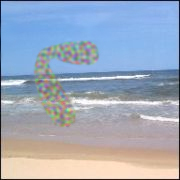

An aura sensation can include one or a combination of the following:
Visual changes
- Bright lights and blobs
- Zigzag lines
- Distortions in the size or shape of objects
- Vibrating visual field
- Scintillating scotoma
- Shimmering, pulsating patches, often curved
- Tunnel vision
- Scotoma
- Blind or dark spots
- Curtain like effect over one eye
- Slowly spreading spots
- Kaleidoscope effects
- Temporary blindness in one or both eyes
- Heightened sensitivity to light
Auditory changes
- Hearing voices or sounds that do not exist: auditory hallucinations
- Modification of voices or sounds in the environment: buzzing, tremolo, amplitude modulation or other modulations
- Heightened sensitivity to hearing
- Vestibular dysfunction causing vertigo
Other sensations
- Strange smells (phantosmia) or tastes (gustatory hallucinations)
- Heightened sensitivity to smell
- Synesthesia
- Déjà vu or jamais vu
- Cephalic aura, a perception of movement of the head or inside the head
- Abdominal aura, such as an epigastric rising sensation
- Nausea
- Numbness or tingling (paresthesia)
- Weakness on one side of the body (hemiparesis)
- Feelings of being separated from or floating above one's body (dissociation)
- Feeling of overheating and sudden perspiration
- Inability to speak (aphasia) or slurred speech
Animated depictions File:Scintillating scotoma - play.jpg|link=File:Scintillating zigzag scotoma.gif|Flickering animation of a scintillating scotoma, where the scintillations were of a zigzag pattern starting in the center of vision, surrounded by a somewhat larger scotoma area with distortion of shapes but otherwise melting into the background similarly to the physiological blind spot File:Firefly aura.gif|A "firefly" aura. This variant has been described in cases of persistent aura without cerebral infarction.
References
See http://en.wikipedia.org/wiki/Wikipedia:Footnotes for a discussion of different citation methods and how to generate footnotes using the and tags
References
- "Epilepsy auras".
- (1 October 2006). "Sudden Onset Panic: Epileptic Aura or Panic Disorder?". The Journal of Neuropsychiatry and Clinical Neurosciences.
- Perven G and So NK. (2015). "Epileptic auras: phenomenology and neurophysiology.". Epileptic Disorders.
- (2012-05-01). "The Localizing and Lateralizing Value of Auras in Lesional Partial Epilepsy Patients". Yonsei Medical Journal.
- (February 2011). "Localizing and lateralizing features of auras and seizures". Epilepsy & Behavior.
- Sharma S., Dixit V.. (2013). "Epilepsy – A Comprehensive Review". International Journal of Pharmacological Research & Review.
- Tuxhorn I. E. B.. (2005). "Somatosensory auras in focal epilepsy: A clinical, video EEG and MRI study". Seizure: European Journal of Epilepsy.
- Tuxhorn, I. E. B.. (2005-06-01). "Somatosensory auras in focal epilepsy: A clinical, video EEG and MRI study". Seizure.
- (November 1995). "Association of ipsilateral head turning and dystonia in temporal lobe seizures". Epilepsia.
- (1 February 2011). "Localizing and lateralizing features of auras and seizures". Epilepsy & Behavior.
- (20 February 2018). "Aura: Migraine's Odd Companion".
- "Patient's Guide to Visual Migraine - Brigham and Women's Hospital".
- (2017). "Alice in Wonderland Syndrome: A real life version of Lewis Carroll's novel". Brain and Development.
- (2017). "Alice in Wonderland Syndrome: A Historical and Medical Review". Pediatric Neurology.
- OD, By George T. Banyas. "Visual Aura and Scotomas: What Do They Indicate?".
- Liao, Sharon. "Causes of Temporary Blindness and Short-Term Vision Loss".
- (2021-08-16). "Photophobia: Causes, symptoms, and treatment".
- DiLonardo, Mary Jo. "Epilepsy: What is Seizure With Aura?".
- (2012). "Hearing voices: does it give your patient a headache? A case of auditory hallucinations as acoustic aura in migraine". Neuropsychiatric Disease and Treatment.
- (16 April 2018). "Subclinical vestibular dysfunction in migraineurs without vertigo". Acta Neurologica Scandinavica.
- (22 August 2016). "Phantosmia and Migraine With and Without Headache". Headache.
- "Can Being Sensitive to Smells Impact Migraine?".
- (11 January 2016). "Synesthetic associations and psychosensory symptoms of temporal epilepsy". Neuropsychiatric Disease and Treatment.
- (2010-07-01). "Two forms of deja vu experiences in patients with epilepsy". Epilepsy & Behavior.
- (August 2014). "Cephalic aura after frontal lobe resection". Journal of Clinical Neuroscience.
- "Abdominal Epilepsy in Children and Adults".
- (December 2007). "Ictal nausea with vomiting as the major symptom of simple partial seizures". Epilepsy & Behavior.
- (2006). "Somatosensory auras in refractory temporal lobe epilepsy". Epilepsia.
- (2025). "StatPearls". StatPearls Publishing.
- (2019-05-17). "Dissociation and depersonalization: Causes, risk factors, and symptoms".
- "Brain & Spine Foundation {{!}} Migraine".
- "Recognizing Aphasia During a Migraine Attack".
- Britt Talley Daniel. (2010). "Migraine". AuthorHouse.
- ,
This article was imported from Wikipedia and is available under the Creative Commons Attribution-ShareAlike 4.0 License. Content has been adapted to SurfDoc format. Original contributors can be found on the article history page.
Ask Mako anything about Aura (symptom) — get instant answers, deeper analysis, and related topics.
Research with MakoFree with your Surf account
Create a free account to save articles, ask Mako questions, and organize your research.
Sign up freeThis content may have been generated or modified by AI. CloudSurf Software LLC is not responsible for the accuracy, completeness, or reliability of AI-generated content. Always verify important information from primary sources.
Report