From Surf Wiki (app.surf) — the open knowledge base
Audio-Technica
Audio equipment company

Audio equipment company
| Field | Value | ||||||
|---|---|---|---|---|---|---|---|
| name | Audio-Technica Corporation | ||||||
| 株式会社オーディオテクニカ | |||||||
| logo | Audio-Technica logo.svg | ||||||
| image | Audio-Technica Headquarters.jpg | ||||||
| image_caption | Audio-Technica headquarters in Tokyo | ||||||
| type | Private KK | ||||||
| founded | |||||||
| Shinjuku, Tokyo | |||||||
| founder | Hideo Matsushita | ||||||
| location_city | Machida, Tokyo | ||||||
| location_country | Japan | ||||||
| key_people | Kazuo Matsushita (President) | ||||||
| products | {{Unbulleted list | Headphones | Microphones | Turntables | Phonograph cartridges | Wireless microphones | |
| industry | Audio equipment | ||||||
| homepage |
株式会社オーディオテクニカ Shinjuku, Tokyo
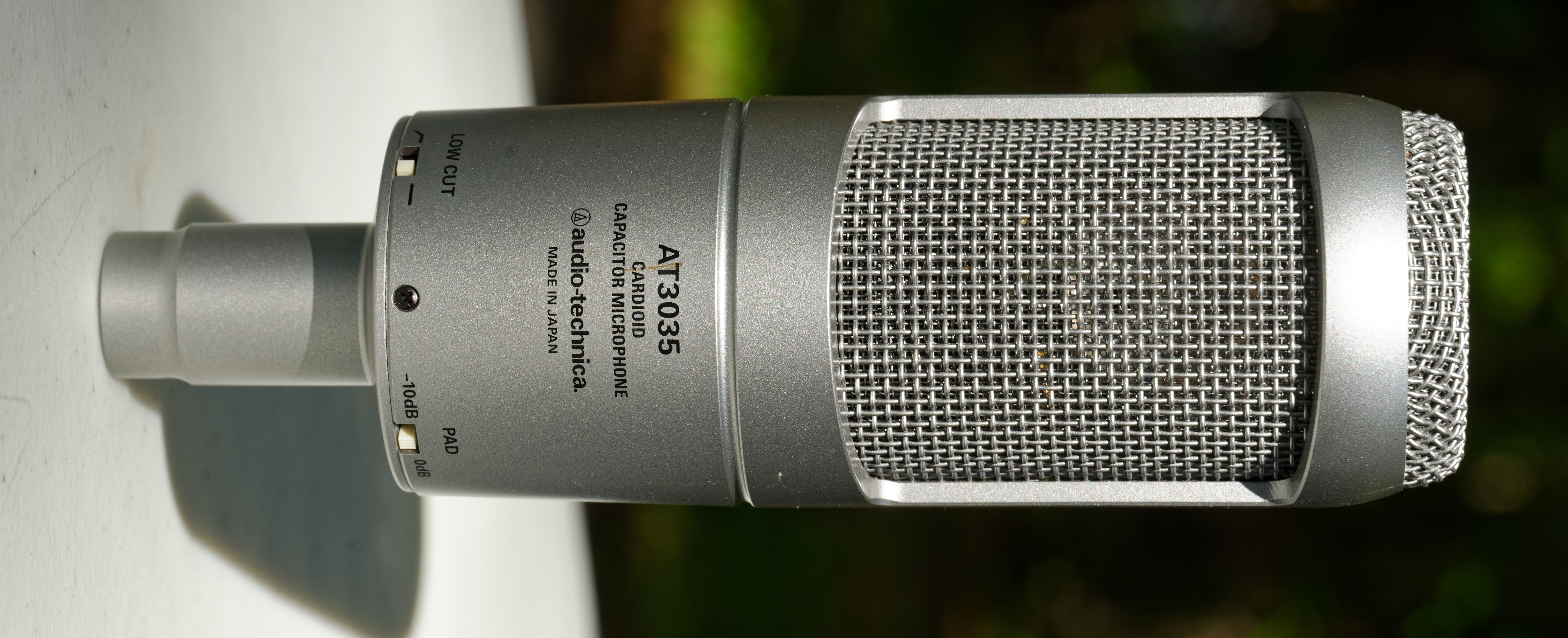
Audio-Technica Corporation (stylized as audio-technica) is a Japanese company that designs and manufactures professional microphones, headphones, turntables, phonographic magnetic cartridges, and other audio equipment.
Company history
Audio-Technica was established in 1962 in Shinjuku, Tokyo, Japan, by Hideo Matsushita as a phonograph cartridge manufacturer. Its first products were the AT-1 and the AT-3 MM stereo phono cartridges. Business rapidly developed, and Audio-Technica expanded into other fields. The headquarters and factory moved in 1965 to the current address in Naruse, Machida, Tokyo. In 1969, the company began exporting phono cartridges worldwide and launched the first microcassette recorders.
In 1972, Audio-Technica established its US arm in Fairlawn, Ohio, and started shipping VM phono cartridges to European manufacturers. In 1974, the company developed its first headphones, the AT-700 series, launched the same year. The AT-800 series of microphones were introduced in 1978, and in the same year, the UK establishment in Leeds began operation.
In the 1980s, with the growth in digital music formats threatening their core business of phonograph cartridges, Audio-Technica begun a period of diversification. Employee suggestions were solicited, with sushi machines among the ideas selected for further development.
In 1984, Audio-Technica introduced the ASM50 Nigirikko, a nigiri-forming appliance for home kitchens, which incorporated a turn-table like mechanism to deposit the nigiri onto. The market success of this product led the company to develop a range of sushi machinery for commercial and industrial use. Audio-Technica remains one of the largest manufacturers of sushi machines globally today, with products marketed under the brand AUTEC.
In 1986, the company developed RCA cables with high-purity copper produced from the continuous metal casting process, "Pure Copper Ohno Continuous Casting" (PCOCC), invented and developed between 1982 and 1985 by Atsumi Ohno. In the same year, the company launched the AT33ML/OCC phono cartridge, the first made with PCOCC materials. In 1988, another Audio-Technica subsidiary is founded in Taiwan.
In 1990s, Audio-Technica introduced several large-diaphragm condenser microphones for studio use: the AT4033 cardioid microphone in 1991, the AT4050 multi-pattern in 1995, and the AT4060 vacuum tube cardioid microphone in 1998; the AT895, a DSP-controlled five-element microphone array providing adaptive directional audio acquisition, was introduced in 1999. In 1996, the Southeast Asian establishment began operation in Singapore.
In 2008, the company celebrated the 20th anniversary of supplying microphones for US Presidential Debates. For their 50th anniversary, Audio-Technica celebrated at Consumer Electronics Show 2012, debuting their AT-LP1240-USB USB DJ Turntable and ATH-CKS55i.
In 2017, Audio-Technica Pure Digital Drive Wireless Headphone ATH-DSR9BT received CES Innovation Honoree Awards by using Trigence Dnote Technology.
In 2020, the company released several new products, including the ATH-CK3TW true wireless earbuds and the AT-XP7 DJ cartridge. The ATH-CK3TW earbuds feature Bluetooth 5.0 connectivity and a compact design, while the AT-XP7 cartridge is designed for use by professional DJs and features a durable design and excellent sound quality.
In 2021, Audio-Technica continued to expand its product line, releasing the ATH-CKR7TW true wireless earbuds and the AT-VM95E/H turntable cartridges. The ATH-CKR7TW earbuds feature a high-fidelity audio experience with the convenience of true wireless connectivity, while the AT-VM95E/H cartridges are designed for use with turntables and feature excellent tracking and audio reproduction.
Looking forward to 2022 and 2023, Audio-Technica has announced several upcoming releases, including the ATH-AWKT Kokutan and ATH-AWAS hybrid wood headphones. These headphones feature a combination of rare wood and high-quality audio technology for a unique listening experience. Additionally, Audio-Technica has announced the release of the AT-ART1000 Direct Power Stereo Moving Coil Cartridge, which is designed to provide the ultimate audio performance for vinyl enthusiasts.
Audio equipment supplier
Since the late 1990s, Audio-Technica supplied microphones and headphones for US television shows such as the Big Brother, Deal or No Deal, the Rock and Roll Hall of Fame inductions and several international events:
| Period | Event | Editions | |
|---|---|---|---|
| 1996–present | Summer Olympic Games | [Atlanta 1996](1996-summer-olympics), [Sydney 2000](2000-summer-olympics), [Athens 2004](2004-summer-olympics), [Beijing 2008](2008-summer-olympics), [London 2012](2012-summer-olympics) ,[Tokyo 2020](2020-summer-olympics) | |
| 2002–present | Winter Olympic Games | [Salt Lake City 2002](2002-winter-olympics), [Torino 2006](2006-winter-olympics), [Vancouver 2010](2010-winter-olympics), [Sochi 2014](2014-winter-olympics), [Pyeongchang 2018](2018-winter-olympics) [Beijing 2022](2022-winter-olympics) | |
| 1998–2013 | Grammy Awards | 1998–2013 | |
| 2019 | MotoGP | 2019 |
Technology

One of their most famous products was a battery-operated, portable record player called Sound Burger (Sold in the US as Mister Disc) that was sold globally in the early 1980s. The model was re-launched in 2022 initially as a limited edition product, but due to overwhelming demand was made available permanently.
In 2005, Audio-Technica developed "Uniguard", a method for making microphones resistant to radio frequency interference from cell phones, Bluetooth devices, wireless computer networks and walkie-talkies. 13 patents were involved in bringing the feature to fruition, as company engineers modified many different elements of microphone construction and operation. Over 50 existing Audio-Technica microphone models have been upgraded with the new RFI-resistant technology.
References
References
- "About Us". Audio-Technica.
- "Audio-Technica".
- "AUTECのヒストリー".
- "Why Did One of Japan's Longest-Lived Audio Companies Start Making Sushi Robots?".
- "Continuous metal casting".
- "Audio-Technica AT4050 ST".
- "Audio–Technica AT4060A".
- Fenlon, Wesley. (2012-01-12). "Article about Audio-Technica's 2012 CES presence". Tested.com.
- "Audio Technica 2012 CES Press Release about ATH-CKS55i Headphones". Audio-technica.com.
- "Audio-Technica's ATH-DSR9BT Pure Digital Drive Wireless Headphones and AT-ART1000 Direct Power System Phono Cartridge Win CES 2017 Innovation Honoree Awards".
- "Dnote Technology, 'Pure Digital' Audio".
- "About Audio-Technica".
- AVNetwork Staff. (2013-02-13). "GRAMMY Awards Show Uses Audio-Technica Microphones".
- Sports, Dorna. "Audio-Technica: capturing the sound of MotoGP™".
- "Sound & Video Contractor, January 1, 2006. John McJunkin. ''Audio-Technica UniPoint Line'': New improvements to a solid and reliable line of microphones". Svconline.com.
- [http://www.audiocourses.com/article2192.html Audio Courses dot com. ''Audio-Technica Provides UniGuard RFI Protection for New Engineered Sound Integ''] {{webarchive. link. (7 September 2008)
- "Audio Technica. ''Audio-Technica's UniGuard technology'': Protection from Radio Frequency Interference". Audio-technica.com.
This article was imported from Wikipedia and is available under the Creative Commons Attribution-ShareAlike 4.0 License. Content has been adapted to SurfDoc format. Original contributors can be found on the article history page.
Ask Mako anything about Audio-Technica — get instant answers, deeper analysis, and related topics.
Research with MakoFree with your Surf account
Create a free account to save articles, ask Mako questions, and organize your research.
Sign up freeThis content may have been generated or modified by AI. CloudSurf Software LLC is not responsible for the accuracy, completeness, or reliability of AI-generated content. Always verify important information from primary sources.
Report