From Surf Wiki (app.surf) — the open knowledge base
Arsenide
Anion
Anion
In chemistry, an arsenide is a compound of arsenic with a less electronegative element or elements. Many metals form binary compounds containing arsenic, and these are called arsenides. They exist with many stoichiometries, and in this respect arsenides are similar to phosphides.
Alkali metal and alkaline earth arsenides
The group 1 alkali metals and the group 2, alkaline earth metals, form arsenides with isolated arsenic atoms. They form upon heating arsenic powder with excess sodium gives sodium arsenide (Na3As). The structure of Na3As is complex with unusually short Na–Na distances of 328–330 pm which are shorter than in sodium metal. This short distance indicates the complex bonding in these simple phases, i.e. they are not simply salts of As3− anion, for example. The compound LiAs, has a metallic lustre and electrical conductivity indicating some metallic bonding. These compounds are mainly of academic interest. For example, "sodium arsenide" is a structural motif adopted by many compounds with the A3B stoichiometry.
Indicative of their salt-like properties, hydrolysis of alkali metal arsenides gives arsine: :Na3As + 3 H2O → AsH3 + 3 NaOH
III–V compounds
Main article: List of semiconductor materials
Many arsenides of the group 13 elements (group III) are valuable semiconductors. Gallium arsenide (GaAs) features isolated arsenic centers with a zincblende structure (wurtzite structure can eventually also form in nanostructures), and with predominantly covalent bonding – it is a III–V semiconductor.
II–V compounds
Main article: :Category:II-V compounds
Arsenides of the group 12 elements (group II) are also noteworthy. Cadmium arsenide (Cd3As2) was shown to be a three-dimensional (3D) topological Dirac semimetal analogous to graphene. Cd3As2, Zn3As2 and other compounds of the Zn-Cd-P-As quaternary system have very similar crystalline structures, which can be considered distorted mixtures of the zincblende and antifluorite crystalline structures.
Polyarsenides
Transition metal arsenides
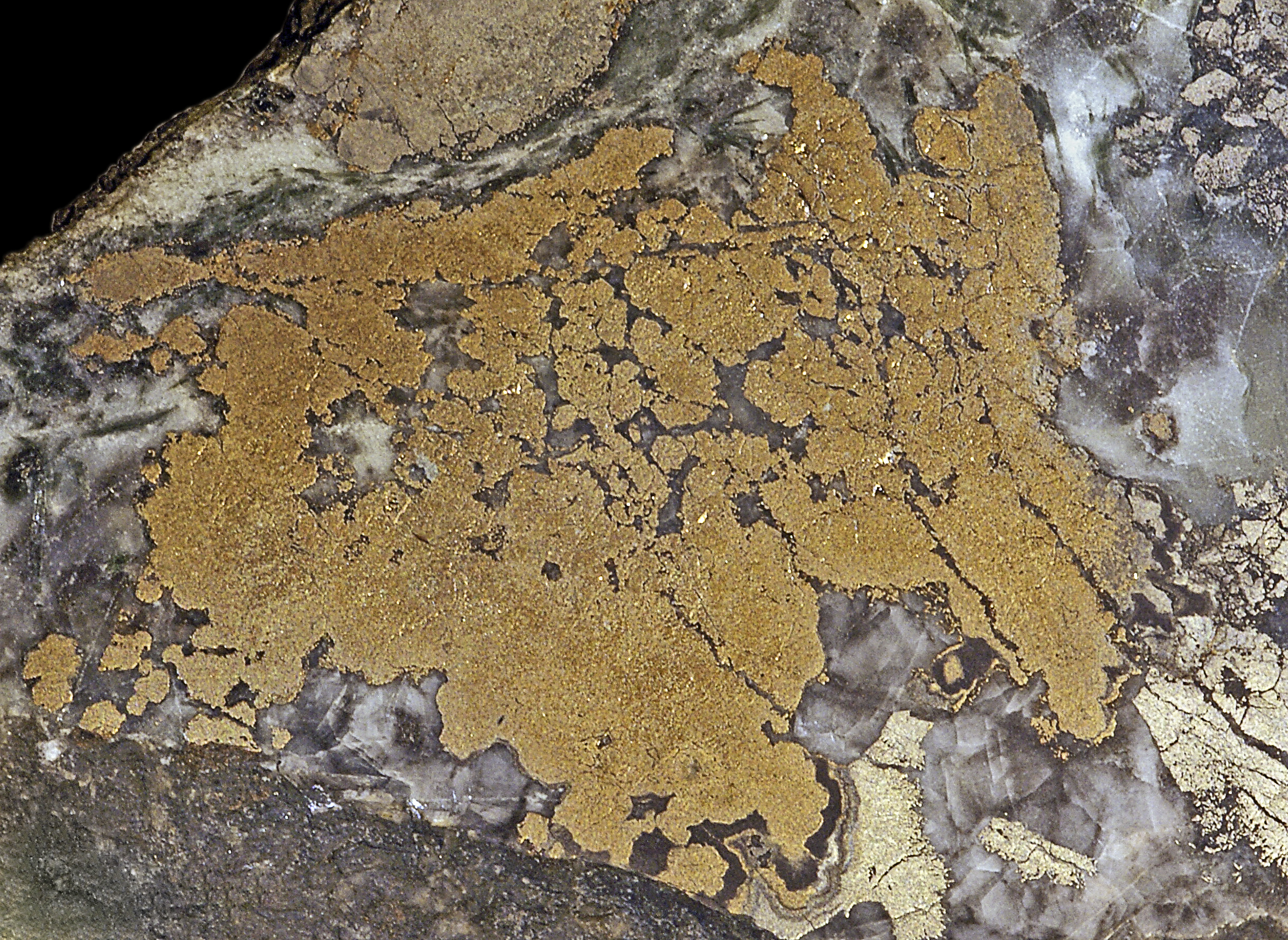
Arsenic anionics are known to catenate, that is, form chains, rings, and cages. The mineral skutterudite (CoAs3) features rings that are usually described as . Assigning formal oxidation numbers is difficult because these materials are highly covalent and often are best described with band theory. Sperrylite (PtAs2) is usually described as . The arsenides of the transition metals are mainly of interest because they contaminate sulfidic ores of commercial interest. The extraction of the metals – nickel, iron, cobalt, copper – entails chemical processes such as smelting that poses environmental risks. In the mineral, arsenic is immobile and poses no environmental risk. Released from the mineral, arsenic is poisonous and mobile.
Zintl phases

Partial reduction of arsenic with alkali metals (and related electropositive elements) affords polyarsenic compounds, which are members of the Zintl phases.
References
References
- {{Greenwood&Earnshaw
- (2014). "Observation of a three-dimensional topological Dirac semimetal phase in high-mobility Cd3As2". Nature Communications.
- (2014). "A stable three-dimensional topological Dirac semimetal Cd3As2". Nature Materials.
- (2014). "Compounds and solid solutions of the Zn-Cd-P-As system in semiconductor electronics". Inorganic Materials.
- (2011). "New compounds with (As7)3− Clusters: Synthesis and Crystal Structures of the Zintl Phases Cs2NaAs7, Cs4ZnAs14 and Cs4CdAs14". Crystals.
This article was imported from Wikipedia and is available under the Creative Commons Attribution-ShareAlike 4.0 License. Content has been adapted to SurfDoc format. Original contributors can be found on the article history page.
Ask Mako anything about Arsenide — get instant answers, deeper analysis, and related topics.
Research with MakoFree with your Surf account
Create a free account to save articles, ask Mako questions, and organize your research.
Sign up freeThis content may have been generated or modified by AI. CloudSurf Software LLC is not responsible for the accuracy, completeness, or reliability of AI-generated content. Always verify important information from primary sources.
Report