From Surf Wiki (app.surf) — the open knowledge base
Argon
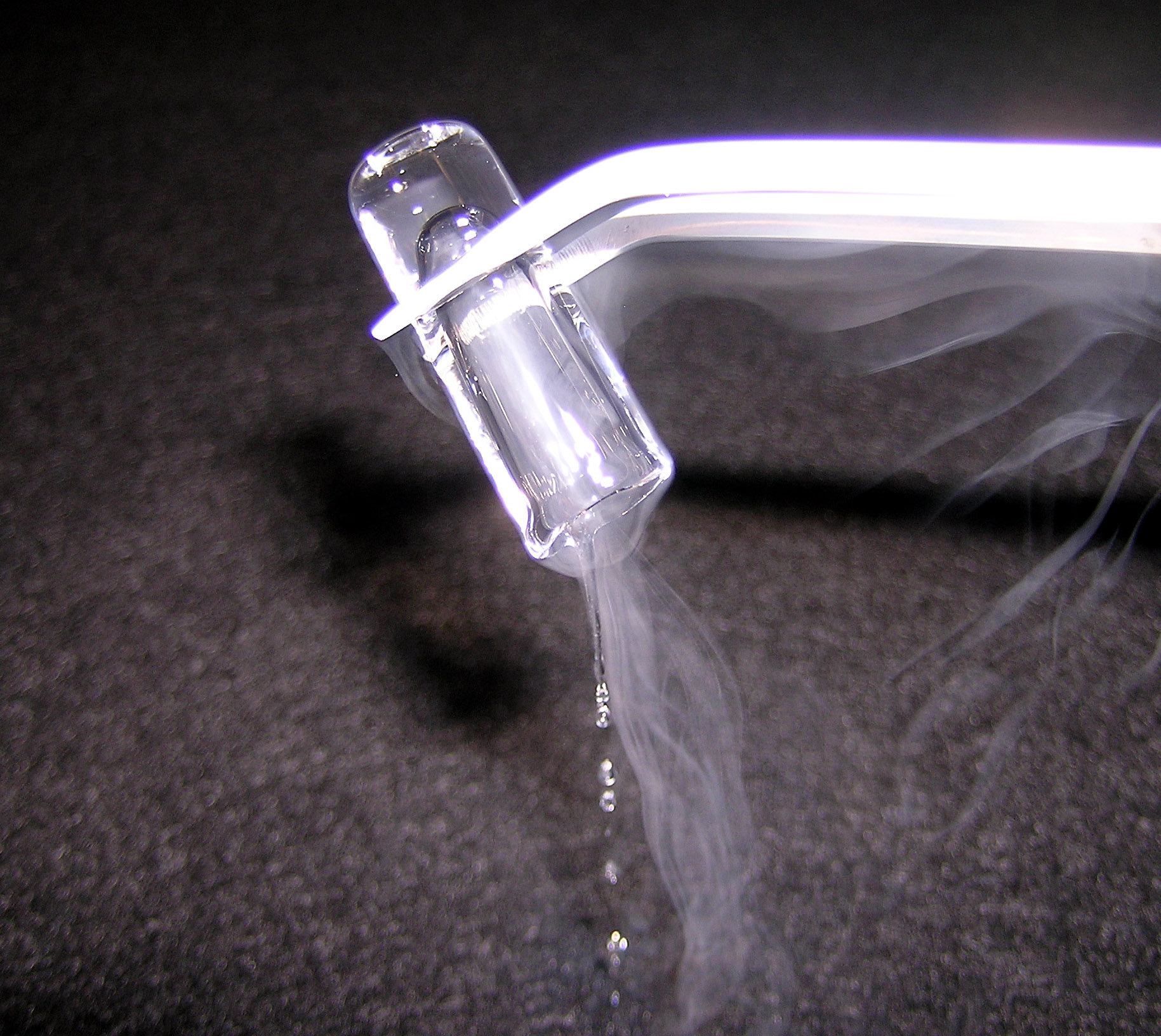
the chemical element
Argon is a chemical element; it has symbol Ar and atomic number 18. It is in group 18 of the periodic table and is a noble gas. Argon is the third most abundant gas in Earth's atmosphere, at 0.934% (9340 ppmv). It is more than twice as abundant as water vapor (which averages about 4000 ppmv, but varies greatly), 23 times as abundant as carbon dioxide (400 ppmv), and more than 500 times as abundant as neon (18 ppmv). Argon is the most abundant noble gas in Earth's crust, comprising 0.00015% of the crust.
Nearly all argon in Earth's atmosphere is radiogenic argon-40, derived from the decay of potassium-40 in Earth's crust. In the universe, argon-36 is by far the most common argon isotope, as it is the most easily produced by stellar nucleosynthesis in supernovas.
The name "argon" is derived from the Ancient Greek word ἀργόν, neuter singular form of ἀργός meaning 'lazy' or 'inactive', as a reference to the fact that the element undergoes almost no chemical reactions. The complete octet (eight electrons) in the outer atomic shell makes argon stable and resistant to bonding with other elements. Its triple point temperature of 83.8058 K is a defining fixed point in the International Temperature Scale of 1990.
Argon is extracted industrially by the fractional distillation of liquid air. It is mostly used as an inert shielding gas in welding and other high-temperature industrial processes where ordinarily unreactive substances become reactive; for example, an argon atmosphere is used in graphite electric furnaces to prevent the graphite from burning. It is also used in incandescent and fluorescent lighting, and other gas-discharge tubes. It makes a distinctive blue-green gas laser. It is also used in fluorescent glow starters.
Characteristics
Argon has approximately the same solubility in water as oxygen and is 2.5 times more soluble in water than nitrogen. Argon is colorless, odorless, nonflammable and nontoxic as a solid, liquid or gas. Argon is chemically inert under most conditions and forms no confirmed stable compounds at room temperature.
Although argon is a noble gas, it can form some compounds under various extreme conditions. Argon fluorohydride (HArF), a compound of argon with fluorine and hydrogen that is stable below 17 K, has been demonstrated.{{cite journal |display-authors=4 |name-list-style=amp |display-authors=4
History
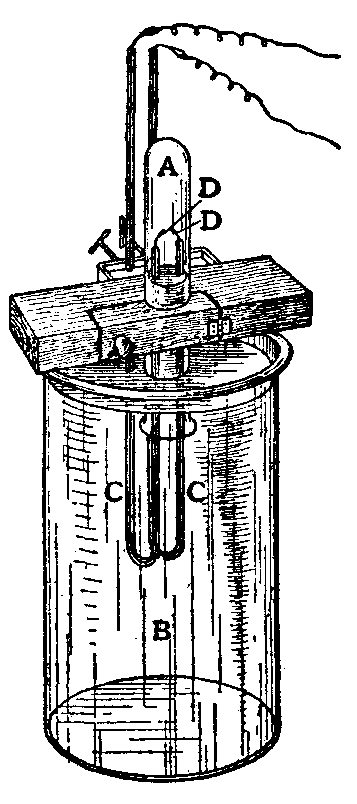
Argon (Ancient Greek ἀργόν, neuter singular form of ἀργός meaning "lazy" or "inactive") is named in reference to its chemical inactivity. This chemical property of this first noble gas to be discovered impressed the namers.
Argon was first isolated from air in 1894 by Lord Rayleigh and Sir William Ramsay at University College London by removing oxygen, carbon dioxide, water, and nitrogen from a sample of clean air.{{Unbulleted list citebundle| |author-link=Lord Rayleigh |author2-link=William Ramsay |doi-access=free
Before isolating the gas, they had determined that nitrogen produced from chemical compounds was 0.5% lighter than nitrogen from the atmosphere. The difference was slight, but it was important enough to attract their attention for many months. They concluded that there was another gas in the air mixed in with the nitrogen. |access-date = 1 February 2009
Prior to 1957, the symbol for argon was "A". This was changed to Ar after the International Union of Pure and Applied Chemistry published the work Nomenclature of Inorganic Chemistry in 1957.{{Unbulleted list citebundle|
Occurrence
Argon constitutes 0.934% by volume and 1.288% by mass of Earth's atmosphere. |access-date=14 January 2014 |access-date=8 March 2007 |url-status=unfit |archive-url=https://web.archive.org/web/20081007175238/http://elements.etacude.com/Ar.php |archive-date=7 October 2008
Isotopes
Main article: Isotopes of argon
The main isotopes of argon found on Earth are (99.6%), (0.34%), and (0.06%). Naturally occurring , with a half-life of 1.25 years, decays to stable (11.2%) by electron capture or positron emission, and also to stable (88.8%) by beta decay. These properties and ratios are used to determine the age of rocks by K–Ar dating. |access-date=7 March 2007 |archive-url = https://web.archive.org/web/20070509023017/http://www.geoberg.de/text/geology/07011601.php |archive-date = 9 May 2007
In Earth's atmosphere, is made by cosmic ray activity, primarily by neutron capture of followed by two-neutron emission. In the subsurface environment, it is also produced through neutron capture by , followed by proton emission. is created from the neutron capture by followed by an alpha particle emission as a result of subsurface nuclear explosions. It has a half-life of 35 days.
Between locations in the Solar System, the isotopic composition of argon varies greatly. Where the major source of argon is the decay of in rocks, will be the dominant isotope, as it is on Earth. Argon produced directly by stellar nucleosynthesis is dominated by the alpha-process nuclide . Correspondingly, solar argon contains 84.6% (according to solar wind measurements),
The atmospheres of Mars, Mercury and Titan (the largest moon of Saturn) contain argon, predominantly as .
The predominance of radiogenic is the reason the standard atomic weight of terrestrial argon is greater than that of the next element, potassium, a fact that was puzzling when argon was discovered. Mendeleev positioned the elements on his periodic table in order of atomic weight, but the inertness of argon suggested a placement before the reactive alkali metal. Henry Moseley later solved this problem by showing that the periodic table is actually arranged in order of atomic number (see History of the periodic table).
Compounds
Main article: Argon compounds
Argon's complete octet of electrons indicates full s and p subshells. This full valence shell makes argon very stable and extremely resistant to bonding with other elements. Before 1962, argon and the other noble gases were considered to be chemically inert and unable to form compounds; however, compounds of the heavier noble gases have since been synthesized. The first argon compound with tungsten pentacarbonyl, W(CO)5Ar, was isolated in 1975. However, it was not widely recognised at that time. In August 2000, another argon compound, argon fluorohydride (HArF), was formed by researchers at the University of Helsinki, by shining ultraviolet light onto frozen argon containing a small amount of hydrogen fluoride with caesium iodide. This discovery caused the recognition that argon could form weakly bound compounds, even though it was not the first.{{Unbulleted list citebundle|| |author-link=Neil Bartlett (chemist) |url-access=subscription |display-authors=4 |name-list-style=amp |display-authors=1
Solid argon hydride (Ar(H2)2) has the same crystal structure as the MgZn2 Laves phase. It forms at pressures between 4.3 and 220 GPa, though Raman measurements suggest that the H2 molecules in Ar(H2)2 dissociate above 175 GPa.
Production
Argon is extracted industrially by the fractional distillation of liquid air in a cryogenic air separation unit; a process that separates liquid nitrogen, which boils at 77.3 K, from argon, which boils at 87.3 K, and liquid oxygen, which boils at 90.2 K. About 700,000 tonnes of argon are produced worldwide every year. |access-date=12 September 2008
Applications

Argon has several desirable properties:
- Argon is a chemically inert gas.
- Argon is the cheapest alternative when nitrogen is not sufficiently inert.
- Argon has low thermal conductivity.
- Argon has electronic properties (ionization and/or the emission spectrum) desirable for some applications.
Other noble gases would be equally suitable for most of these applications, but argon is by far the cheapest. It is inexpensive, since it occurs naturally in air and is readily obtained as a byproduct of cryogenic air separation in the production of liquid oxygen and liquid nitrogen: the primary constituents of air are used on a large industrial scale. The other noble gases (except helium) are produced this way as well, but argon is the most plentiful by far. The bulk of its applications arise simply because it is inert and relatively cheap.
Industrial processes
Argon is used in some high-temperature industrial processes where ordinarily non-reactive substances become reactive. For example, an argon atmosphere is used in graphite electric furnaces to prevent the graphite from burning.
For some of these processes, the presence of nitrogen or oxygen gases might cause defects within the material. Argon is used in some types of arc welding such as gas metal arc welding and gas tungsten arc welding, as well as in the processing of titanium and other reactive elements. An argon atmosphere is also used for growing crystals of silicon and germanium.
Argon is used in the poultry industry to asphyxiate birds, either for mass culling following disease outbreaks, or as a means of slaughter more humane than electric stunning. Argon is denser than air and displaces oxygen close to the ground during inert gas asphyxiation.{{Unbulleted list citebundle| |access-date = 1 January 2010 |archive-url = https://web.archive.org/web/20110724195609/http://ps.fass.org/cgi/reprint/78/2/277.pdf |archive-date = 24 July 2011
Argon is sometimes used for extinguishing fires where valuable equipment may be damaged by water or foam.
Scientific research
Liquid argon is used as the target for neutrino experiments and direct dark matter searches. The interaction between the hypothetical WIMPs and an argon nucleus produces scintillation light that is detected by photomultiplier tubes. Two-phase detectors containing argon gas are used to detect the ionized electrons produced during the WIMP–nucleus scattering. As with most other liquefied noble gases, argon has a high scintillation light yield (about 51 photons/keV |display-authors= 4 |article-number= 065811 |name-list-style= amp
At Linköping University, Sweden, the inert gas is being utilized in a vacuum chamber in which plasma is introduced to ionize metallic films. This process results in a film usable for manufacturing computer processors. The new process would eliminate the need for chemical baths and use of expensive, dangerous and rare materials.
Preservative
Argon is used to displace oxygen- and moisture-containing air in packaging material to extend the shelf-lives of the contents (argon has the European food additive code E938). Aerial oxidation, hydrolysis, and other chemical reactions that degrade the products are retarded or prevented entirely. High-purity chemicals and pharmaceuticals are sometimes packed and sealed in argon.
In winemaking, argon is used in a variety of activities to provide a barrier against oxygen at the liquid surface, which can spoil wine by fueling both microbial metabolism (as with acetic acid bacteria) and standard redox chemistry.
Argon is sometimes used as the propellant in aerosol cans.
Argon is also used as a preservative for such products as varnish, polyurethane, and paint, by displacing air to prepare a container for storage.
Since 2002, the American National Archives stores important national documents such as the Declaration of Independence and the Constitution within argon-filled cases to inhibit their degradation. Argon is preferable to the helium that had been used in the preceding five decades, because helium gas escapes through the intermolecular pores in most containers and must be regularly replaced. |access-date=7 July 2009
Laboratory equipment
Argon may be used as the inert gas within Schlenk lines and gloveboxes. Argon is preferred to less expensive nitrogen in cases where nitrogen may react with the reagents or apparatus.
Argon may be used as the carrier gas in gas chromatography and in electrospray ionization mass spectrometry; it is the gas of choice for the plasma used in ICP spectroscopy. Argon is preferred for the sputter coating of specimens for scanning electron microscopy. Argon gas is also commonly used for sputter deposition of thin films as in microelectronics and for wafer cleaning in microfabrication.
Medical use
Cryosurgery procedures such as cryoablation use liquid argon to destroy tissue such as cancer cells. It is used in a procedure called "argon-enhanced coagulation", a form of argon plasma beam electrosurgery. The procedure carries a risk of producing gas embolism and has resulted in the death of at least one patient.{{cite web |access-date=10 January 2007 |archive-date=12 July 2021 |archive-url=https://web.archive.org/web/20210712040208/http://www.mdsr.ecri.org/summary/detail.aspx?doc_id=8248
Blue argon lasers are used in surgery to weld arteries, destroy tumors, and correct eye defects.
Argon has also been used experimentally to replace nitrogen in the breathing or decompression mix known as Argox, to speed the elimination of dissolved nitrogen from the blood.
Lighting
Incandescent lights are filled with argon, to preserve the filaments at high temperature from oxidation. It is used for the specific way it ionizes and emits light, such as in plasma globes and calorimetry in experimental particle physics. Gas-discharge lamps filled with pure argon provide lilac/violet light; with argon and some mercury, blue light. Argon is also used for blue and green argon-ion lasers.
Miscellaneous uses
Argon is used for thermal insulation in energy-efficient windows. |access-date=1 August 2009 |access-date=2 March 2009 |archive-url=https://web.archive.org/web/20090721035810/http://archive.rubicon-foundation.org/7962 |archive-date=21 July 2009 |url-status=usurped
Argon is used as a propellant in the development of the Variable Specific Impulse Magnetoplasma Rocket (VASIMR). Compressed argon gas is allowed to expand, to cool the seeker heads of some versions of the AIM-9 Sidewinder missile and other missiles that use cooled thermal seeker heads. The gas is stored at high pressure.{{cite web |access-date=1 February 2009 |archive-url=https://web.archive.org/web/20081222025556/http://home.wanadoo.nl/tcc/rnlaf/aim9.html |archive-date=22 December 2008
Argon-39, with a half-life of 269 years, has been used for a number of applications, primarily ice core and ground water dating. Also, potassium–argon dating and related argon-argon dating are used to date sedimentary, metamorphic, and igneous rocks.
Argon has been used by athletes as a doping agent to simulate hypoxic conditions. In 2014, the World Anti-Doping Agency (WADA) added argon and xenon to the list of prohibited substances and methods, although at this time there is no reliable test for abuse.
Safety
Although argon is non-toxic, it is 38% more dense than air and therefore considered a dangerous asphyxiant in closed areas. It is difficult to detect because it is colorless, odorless, and tasteless. A 1994 incident, in which a man was asphyxiated after entering an argon-filled section of oil pipe under construction in Alaska, highlights the dangers of argon tank leakage in confined spaces and emphasizes the need for proper use, storage and handling. |access-date = 29 January 2011
References
References
- In older versions of the periodic table, the noble gases were identified as Group VIIIA or as Group 0. See [[Group (periodic table)]].
- "Material Safety Data Sheet Gaseous Argon". Universal Industrial Gases, Inc..
- Cavendish, Henry. (1785). "Experiments on Air". Philosophical Transactions of the Royal Society.
- (2003). "Nature's Building Blocks: An A-Z Guide to the Elements". Oxford University Press.
- (2013). "Abundance and Isotopic Composition of Gases in the Martian Atmosphere from the Curiosity Rover". Science.
- (March 2013). "Main group coordination chemistry at low temperatures: A review of matrix isolated Group 12 to Group 18 complexes". Coordination Chemistry Reviews.
- (2014). "New high-pressure van der Waals compound Kr(H2)4 discovered in the krypton-hydrogen binary system". Scientific Reports.
- (2009). "The effect on turkey meat shelf life of modified-atmosphere packaging with an argon mixture". Poultry Science.
- (2001). "Fire Suppression with Inert Gas Agents". Journal of Fire Protection Engineering.
- (May 7, 2020). "Plasma electrons can be used to produce metallic films".
- (November 2007). "Investigation of 3 industry-wide applied storage conditions for compound libraries". Journal of Biomolecular Screening.
- Zawalick, Steven Scott "Method for preserving an oxygen sensitive liquid product" {{US patent. 6629402 Issue date: 7 October 2003.
- (31 August 2014). "WADA amends Section S.2.1 of 2014 Prohibited List".
This article was imported from Wikipedia and is available under the Creative Commons Attribution-ShareAlike 4.0 License. Content has been adapted to SurfDoc format. Original contributors can be found on the article history page.
Ask Mako anything about Argon — get instant answers, deeper analysis, and related topics.
Research with MakoFree with your Surf account
Create a free account to save articles, ask Mako questions, and organize your research.
Sign up freeThis content may have been generated or modified by AI. CloudSurf Software LLC is not responsible for the accuracy, completeness, or reliability of AI-generated content. Always verify important information from primary sources.
Report