From Surf Wiki (app.surf) — the open knowledge base
Apostolic Faith Mission of South Africa
Classical Pentecostal Christian denomination
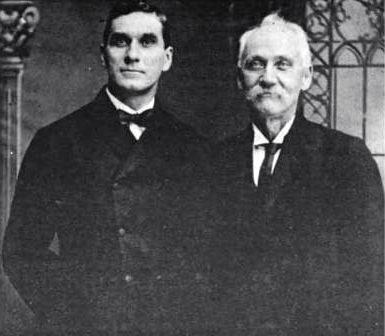
Classical Pentecostal Christian denomination
| Field | Value |
|---|---|
| name | Apostolic Faith Mission of South Africa |
| image | Apostolic Faith Mission of South Africa logo.png |
| main_classification | Protestant |
| orientation | Pentecostal |
| theology | Evangelical |
| polity | Mixed presbyterian and episcopal |
| founder | John G. Lake and Thomas Hezmalhalch |
| founded_date | 1908 |
| separations | 1919 Black Zionists, |
| 1928 Latter Rain Assemblies, | |
| 1958 Pentecostal Protestant Church | |
| associations | Apostolic Faith Mission International, |
| Pentecostal World Conference, | |
| South African Council of Churches, | |
| Evangelical Alliance of South Africa | |
| area | South Africa |
| members | 1.2 million |
| website | [www.afm-ags.org](http://www.afm-ags.org/) |
1928 Latter Rain Assemblies, 1958 Pentecostal Protestant Church Pentecostal World Conference, South African Council of Churches, Evangelical Alliance of South Africa The Apostolic Faith Mission of South Africa (AFM) is a classical Pentecostal Christian denomination in South Africa. With 1.2 million adherents, it is South Africa's largest Pentecostal church and the fifth largest religious grouping in South Africa representing 7.6 percent of the population. Dr. Isak Burger has led the AFM as president since 1996 when the white and black branches of the church were united. It is a member of the Apostolic Faith Mission International, a fellowship of 23 AFM national churches. It is also a member of the South African Council of Churches. The AFM is one of the oldest Pentecostal movement is South Africa with roots in the Azusa Street Revival, the Holiness Movement teachings of Andrew Murray and the teachings of John Alexander Dowie. The AFM had an interracial character when it started, but, as in American Pentecostalism, this interracial cooperation was short-lived. The decades from the 1950s to the 1980s were marked by the implementation of apartheid. After 1994, the white AFM moved rapidly towards unification with the black churches. By 1996, all the AFM churches were united in a single multi-racial church. The constitution of the AFM blends at the national level the elements of a presbyterian polity with an episcopal polity. Decentralization is a major feature of its constitution, which allows local churches to develop their own policies. The Apostolic Faith Mission displays a variety of identities and ministry philosophies, including seeker-sensitive, Word of Faith, Presbyterian, and classical Pentecostal.
History
Early history: 1908–1912
1913–1969: Divisions, institutionalization, accommodation
The return of Lake and Hezmalhalch to America was an important turning point for the AFM. Le Roux was elected its president in 1913, a role he filled until 1943. During his leadership, the AFM distanced itself from the black Zionist movement with its distinctive taboos and dress and began looking to the Dutch Reformed heritage and respectability.
Recent history
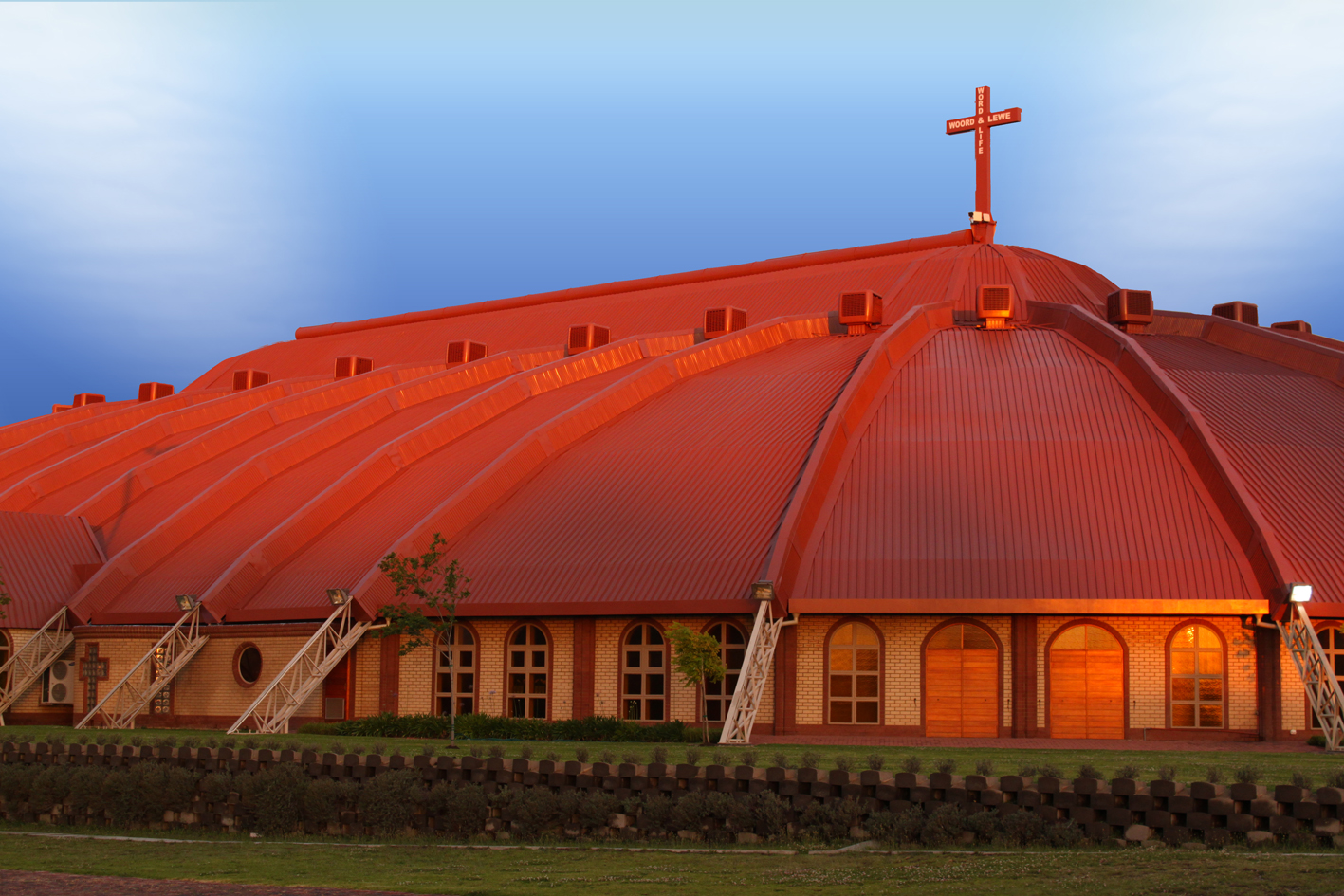
Since 1919, the black, coloured, and Indian sections of the AFM had developed as separate "daughter churches" or "mission churches". These were, however, dependent on the white church; the AFM's missions superintendent was the ex officio chairman of the daughter churches' Workers and Executive councils.
Beliefs
Local churches within the Apostolic Faith Mission display a variety of identities and ministry philosophies, including seeker-sensitive, Word of Faith, Presbyterian, and classical Pentecostal.
- God is the eternal and triune.
- God the Father is the author of creation and salvation.
- Jesus Christ is the only Son of God the Father. For the sake of humanity and its salvation, he became flesh, lived on earth and was crucified, died and was buried; rose from the dead and ascended to heaven, seated at the right hand of the Father.
- The Holy Spirit proceeds from the Father and the Son, convicts the world of sin, righteousness and judgement and leads in all truth.
- The Bible is the word of God, written by men inspired by the Holy Spirit. It authoritatively proclaims the will of God and teaches all that is necessary for salvation.
- All human beings are created in the image of God, but because of sin, this image is marred. It is the will of God that all people should receive salvation through faith in Jesus Christ.
- The baptism in the Holy Spirit with the initial evidence of speaking in tongues is promised to all believers. The gifts and fruit of the Spirit will be manifested in the life of a Christian, and a Christian should be a disciple of Jesus Christ living a consecrated and holy life.
- Jesus Christ is the Head of the Church which is constituted by the Holy Spirit and consists of born again believers. The Church is responsible for the proclamation and demonstration of the gospel and God's will to all people. As a charismatic community they fellowship with and edify one another.
- Believer's baptism by immersion and the Lord's Supper are instituted by Jesus Christ to be observed by the Church.
- At the time appointed by God, Jesus Christ will come to take away his Church.
- Jesus Christ will judge the living and the dead. There will be a resurrection of the body and eternal life for the righteous and eternal punishment for the wicked. There will be the new heaven and the new earth where God will reign in glory.
Worship

The AFM is a Pentecostal church and its liturgy reflects the ecstatic and experiential practices found in similar churches world-wide. Shouting, antiphonal singing, simultaneous and spontaneous prayer and dance are still commonly found in the worship services. The order of service is similar to other Pentecostal churches, for example the Assemblies of God. There is no formal order of service, but most churches follow a routine of congregational singing, an offering/tithe collection, prayer, a sermon and an altar call. During the service, congregants may operate in various spiritual gifts, such as a message in tongues, a prophecy and words of wisdom or knowledge, as inspired by the Holy Spirit. During the congregational singing part of a service, a believer's attitude of worship is often expressed through raising their hands in the orans posture. Regular services are generally held on Sunday mornings and evenings. During the week, there are sometimes prayer or small group meetings and other types of gatherings.
Organization
In 2000, the Apostolic Faith Mission adopted a new constitution which at the national level blends elements of its preexisting presbyterian polity with the "New Apostolic Paradigm", which moved it towards an episcopal polity. According to this philosophy, successful, proven Christian leaders and pastors fulfill the role of apostles. At the local level, decentralization is the major effect of this new constitution, which allows local churches to develop their own policies. In the adoption of its new constitution, the AFM looked to the Assemblies of God in Australia as a model.
Local and regional
Qualifications for membership are that one be born again, baptized, recognized as a member of a local assembly (church) and adhere to the Confession of Faith. Local assemblies are led by a pastor and governing body, of which the pastor is a member. In addition to being a member of the governing body, the pastor is the assembly's leader and "vision carrier". Every three years, each forum elects a regional committee from among its members and a regional leader from among its pastors. The committee acts as an executive and advisory body to the regional leadership forum. Each region is represented by its leader on the National Leadership Forum. Non-geographical regions, in the form of networks of local churches that share a peculiar ministry philosophy, also exist. These are normally led by the senior pastors of urban mega-churches, who network with a number of local assemblies nationwide that look to them for leadership and mentorship.
National
The AFM's national representative body is the triennial General Business Meeting. Its main function is the election of the national officers: president, deputy president, general secretary and general treasurer. The four national officers always represent the significant ethnic groups within the church. Each local assembly is entitled to send a pastor and a delegate as voting members. Additional voting members are members of the National Leadership Forum, members of standing committees, one additional member representing each church department and one additional representative of the church's theological training institutions. Before 2000, the General Business Meeting was known as the Workers Council, met annually, and possessed greater power. After the adoption of the new constitution, most of the body's power was transferred to the National Leadership Forum. It licenses pastors, sets standards for ministerial training and settles disputes. It also convenes the annual National Leadership Conference and the General Business Meeting. While it has power to create and implement regulations, over 50 percent of the regional leadership forums can veto a regulation within 90 days of its passage by the National Leadership Forum. The National Leadership Forum's members are the national officers, the regional leaders, leaders of church departments and a representative of the AFM's theological training institutions. It may appoint additional members at its discretion. The administrative affairs of the national church are under the oversight of the national officers.
Theological Training
Theological training in the AFM was done at four campuses. Pastor M.A. Vilakazi was the rector of the Theological Institute of Soshanguve north of Pretoria. Pastor. A. Govender was the rector of the AFMTS Covenant Campus in Durban. Pastor J.R. de Beer was the principal of the Sarepta Theological College in Kuils Rivier, Cape Town. Prof. Jan Hattingh was the rector of the Auckland Park Theological Seminary in Auckland Park, Johannesburg. These training institutions are in the process of being united, as decided by the General Business meeting of the AFM in 2007. The unification process brought division between the ATS Auckland Park Theological Seminary and the AFM. The ATS registration status was withdrawn by the DHE and students who entered since 2015 was considered by the AFM as "pipeline" students which means that they are given a grace period to complete their theological qualifications. The AFM's new approach to the training of their pastors is to enroll them at North-West University due to its partnership with them.
References
References
- "History of the Church". Apostolic Faith Mission of South Africa.
- [http://www.afm-ags.org/office_bearers.asp Office Bearers of the Apostolic Faith Mission of South Africa] {{Webarchive. link. (18 July 2010 . Accessed 2 September 2010.)
- Clark, Matthew. (2007). "Contemporary Pentecostal Leadership: The Apostolic Faith Mission of South Africa as Case Study". Cyberjournal for Pentecostal-Charismatic Research.
- (2002). "Public Attitudes in Contemporary South Africa". Human Sciences Research Council.
- Horn, Nico. (2006). "Power and empowerment in the political context of some Afrikaans-speaking Pentecostals in South Africa". Studia Historiae Ecclesiasticae.
- Robeck, Cecil M.. (2006). "The Azusa Street Mission and Revival: The Birth of the Global Pentecostal Movement". Thomas Nelson Inc..
- Maxwell, David. (1999). "Historicizing Christian Independency: The South African Pentecostal Movement c. 1908–60". The Journal of African History.
- Burger, Isak. (2008). "The Apostolic Faith Mission of South Africa 1908–2008". Apostolic Faith Mission of South Africa.
- Maxwell, "Historicizing Christian Independency", 249.
- Maxwell, "Historicizing Christian Independency", 246–248.
- Robeck, Cecil M.. (2006). "The Azusa Street Mission and Revival: The Birth of the Global Pentecostal Movement". Thomas Nelson Inc..
- Maxwell, "Historicizing Christian Independency", 250.
- Maxwell, "Historicizing Christian Independency", 248.
- From urban centers, the AFM spread to rural areas through returning labor migrants or native preachers. The interracial character of the AFM was, like American Pentecostalism, short-lived. One explanation for this shift was tensions over economic competition between poorer whites and blacks.Matthew S. Clark, "Two Contrasting Models of Missions in South Africa: The Apostolic Faith Mission and the Assemblies of God," ''Asian Journal of Pentecostal Studies'' vol. 8, no. 1 (2005): 144.
- Maxwell, "Historicizing Christian Independency", 259.
- Maxwell, "Historicizing Christian Independency", 252.
- Clark, "Two Contrasting Models of Missions in South Africa," 144–145.
- (2012). "'The Devil Who Heals': Fraud and Falsification in the Evangelical Career of John G Lake, Missionary to South Africa 1908–1913". African Historical Review.
- "Truth and Reconciliation Commission of South Africa Report, Volume 4". [[Truth and Reconciliation Commission (South Africa).
- Anderson, Allan. (2001). "Pentecostals and Apartheid in South Africa during Ninety Years 1908–1998". Cyberjournal for Pentecostal-Charismatic Research.
- Elphick, Richard. (1997). "Christianity in South Africa: a political, social, and cultural history". University of California Press.
- Menzies, William W.. (2005). "Church, identity, and change: theology and denominational structures in unsettled times".
- "Services". AFM Krugersdorp.
- Clark, "Two Contrasting Models of Missions in South Africa," 146.
- [http://www.afm-ags.org/constitution.asp ''Constitution of the Apostolic Faith Mission of South Africa''] {{Webarchive. link. (24 March 2010 '', a church incorporated in terms of the Apostolic Faith Mission of South Africa (Private) Act 24 of 1961, as amended'', p. 3. Accessed 2 September 2010.)
- The governing body appoints pastors. Local assemblies are organized into geographical regions. Regional leadership forums are representative bodies consisting of pastors and delegates from each local assembly.''Constitution of the Apostolic Faith Mission of South Africa'', p. 4.
- ''Constitution of the Apostolic Faith Mission of South Africa'', p. 6.
This article was imported from Wikipedia and is available under the Creative Commons Attribution-ShareAlike 4.0 License. Content has been adapted to SurfDoc format. Original contributors can be found on the article history page.
Ask Mako anything about Apostolic Faith Mission of South Africa — get instant answers, deeper analysis, and related topics.
Research with MakoFree with your Surf account
Create a free account to save articles, ask Mako questions, and organize your research.
Sign up freeThis content may have been generated or modified by AI. CloudSurf Software LLC is not responsible for the accuracy, completeness, or reliability of AI-generated content. Always verify important information from primary sources.
Report